China’s children must be alleviated from poverty

Source: China Daily Author: Pulsihed Time: May 27 ,2011 email Print this article

Children hold the promise of a country’s future, so there can never be too much importance attached to the question of child poverty.
However, despite various aid programs, the central government has yet to make an overall detailed plan to help children living in poverty.
But the inclusion of child poverty as one of the 10 major target groups for the government’s poverty alleviation efforts in the coming 10 years is an important step in the right direction.
It is estimated that the total number of children living in poverty is around 9 million nationwide, especially in the central and western regions.
Whether these children will be able to get access to what they need for their healthy growth both physically and spiritually will have a great bearing on the future of poverty alleviation in the country.
Giving these children a better upbringing so that they create a better adult life on their own will enable them to escape the poverty their parents lived in.
In addition, once equipped with enough knowledge and capability to help themselves tackle whatever difficulties come their way, they will become an important force for their hometowns’ economic development and social progress.
A detailed national plan is needed to alleviate child poverty and the central as well as local governments should allocate money from their coffers to ensure the plan succeeds.
A mechanism also needs to be established to make sure that the plan is implemented properly.
Experts should be organized to conduct investigations into child poverty and identify where and how the money should be spent to achieve the most desirable effects.
Despite the claim by some charity programs that 3 yuan (45 US cents) will provide a poverty-stricken student with a free lunch, a mechanism is needed to make sure that State welfare can be extended to more than just a free meal for children in poor rural areas.
Following the lead of some non-governmental organizations, hopefully, the central government and their local counterparts will take concrete action. And substantial progress can be made to help all children living in poverty.

Fujian Child Bride Trafficking Report

Putian, China Child Bride Trafficking Report
Women’s Rights in China   
 
by Jing Zhang
 
  
The written record of child brides in China began as early as the Three Kingdoms period. One of the great Yuan Dynasty tragedies, Dou’e Yuan, chronicled the tragic story of a girl who was sold into slavery. Ancient child bride practices originated mainly from gender discrimination, resulting in some poor families, unable to raise her daughters, selling young women to be raised and married to the sons of rich families. In addition, polygamy also contributed to the practice of child brides in traditional society.

With the development of modern culture, official governmental promotion of gender equality, and legally mandated monogamy, the practice of child brides has attracted wide condemnation. However, in the 21st century, this vice continues in China.  Not only has it persisted or been revived in some villages and municipalities, but it has actually intensified. Furthermore, the pattern of child trafficking has changed dramatically from buyers and seller families completing transactions directly by negotiating agreements, to today’s organized trade in kidnapped girls, committed by rings of human traffickers who profit enormously. Among the areas where the phenomenon of child brides is the most severe is in “Putian” in Fujian Province, where wide-spread human trafficking has been noted.[i]
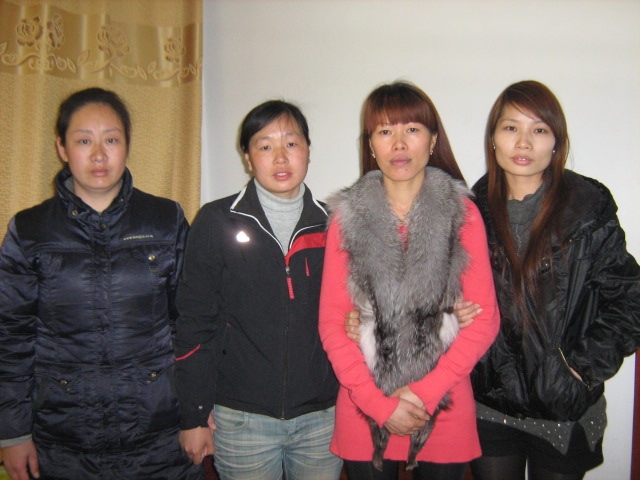
March 31, 2011 a father looking for his daughter (right), in Fujiancoastal villages. She disappeared after going to school at the age of 17. (Graphic by WRIC)
 
 
Major Center of Child Bride Trafficking

Putian is situated in the central coast of Fujian Province, population 306.97 million. The Putian area has a large number of trafficked women, many of whom lived the life of a child bride from a young age, and cannot find their loved ones in distant areas for various reasons. Some were sold when too young, and after years of helplessness, the memory of their original homes faded. From 2009 to 2011, during three separate campaigns, WRIC and associated organizations helped reunite three former child brides from Beigao of Putian with their loved ones in faraway Guizhou province. They had almost no memories of their hometowns, only vaguely recalling a few words of their original dialect. The three victims were transported on trains through circuitous routes from Guizhou to Fujian.  WRIC volunteers with these scanty clues tried to match these memories to maps to find similar sounding towns and hamlets.  Volunteers also turned to the media. Often after repeated efforts could volunteers reunite these trafficking victims with their biological parents.


Women’s Rights in China anti-trafficking campaign in Putian. Volunteers educating the public. Left is an image of the leaflets they are distributing.(Graphic by WRIC)

In October, 2010, hundreds of Putian women imitated the WRIC and spontaneously organized campaigns in Changle, Fujian to search for their families. These former child trafficking victims, who had become wives and mothers, continue to search for their families. 800 child brides registered on the website dedicated to Putian trafficking victims recently. They were all born from the 1970’s to the 1990’s and among the most determined and technology-savvy of the former victims.[ii]
 
 
 Trafficking victim’s self-organized family reunion campaign.   (Photos by WRIC)
 
 
 The WRIC volunteer group started an education campaign on March 27th along the entire Putian coast. Volunteers received six requests for assistance from six trafficking victims who were abducted at young ages. After local television and print media coverage, within a short period of time, nearly 30 young women made contact with WRIC volunteers to say they had been stolen as children and sold as child brides. Everywhere our volunteers talked with local residents, the answers were the same. In Town B, the average thirty year-old grew up with seven or eight siblings, even up to a dozen or more. Of these “siblings”, more than a quarter were bought and “adopted”. Almost every household raised child brides. In the coastal fishing communities, the One-Child Policy was largely ineffective. The villagers were not deterred by government fines.
Hundreds of Thousands of Trafficked Child Brides

Zhenping Village, Donghai Town is 30 kilometers away from Putian proper. Of 900 households in this settlement with a population of 4,300, there were nearly a thousand trafficked child brides.[iii]A notorious case of a child bride being beaten to death occurred in 2003. The village was widely reported as a “Child Bride Village” in the media. According to a 2005 survey, the local primary school had 60 sixth grade students including 33 girls. 14 of them were child trafficking victims, accounting for 42.4% of the total number of girls. The fifth grade had 31 girls. 7 were trafficked, accounting for 22.6% of the total number of girl pupils. [iv]

The government has never conducted any investigation on the problem of trafficked child brides. Using only the most conservative methods would still give shockingly high numbers of child brides in the Putian region.
  
Conservative Estimate Using Town D, Putian as an Example
In the 1980’s and 1990’s, rural Putian families had seven to eight children on average. The number could be even higher. Over a quarter of the children were bought. For example, Xiao Guangyan was kidnapped from Guizhou and raised in a household of eleven siblings, including three child brides. Peng Qinglan, another trafficking victim, had eight “siblings”, including two trafficked girls. Two of Wong Qinghua’s six “siblings” were bought. Wong Qinqin had many “brothers”. She was the bought child bride. 8 children in these four families were trafficked girls bought to be raised as child brides. Five of them were eventually married to their “adopted brothers” inside the family.

In the 1980’s the average Beigao family raised eight children. To use a conservative estimate, if four of these children have married and formed families by now, then the single family in the 80’s would produce five families today. Even if we exclude the possibility that 30-year old generation buying any additional child brides, the fact that the older generation bought at least one child bride per family was certain. In other words, one of every five Putian household today is formed with at least one former child bride. There are 16,000 households in Beigao. This gives a number of 3200 child brides in Beigao Town alone.

To use Beigao, an average sized township, as a baseline, Licheng District, which includes six townships including Beigao would have 19,200 child brides. There are six administrative districts in Putian City. Extrapolating from Licheng’s numbers would give an estimate of Putian’s child bride population at 120,000. (This number does not include trafficked boys.) In other words, the most conservative estimate gives a number of 120,000 child brides trafficked to Putian in the 1980’s and 90’s.
 
Two mothers looking for daughters (left) and two trafficking victims looking for biological parents (right).
(Graphic by WRIC)


 The Pessimistic Estimate Using Town D as an Example
In the 1980’s, during the most rampant period of its child trafficking trade, Beigao Town had a population of approximately 160,000[v]. If average household size was set at ten (eight children plus two parents), there would be 16,000 households. If an average family bought only one child bride, there would be 16,000 child brides in Beigao. Extrapolating with this number, Licheng District would have 96,000 child brides and the entire Putian region would have 576,000 child brides. In other words, the trafficked child bride population in Putian region amounts to nearly 600,000.
Beigao is not the township with the highest concentration of fishing villages in Putian. It is not among the towns where the child bride trafficking problem was the most severe. We use Beigao as an example for our calculation to get a more objective number. Coastal villages in Xiuyu District such as Litou and Pinghai had much higher proportions of trafficked women. In our campaigns in those areas, half the women we came into contact with had no memory of their childhood homes and origins, let alone their birth parents.
Based on the two estimates above, Putian’s child bride population ranges between 120,000 and 600,000. Even the lower estimate is shocking for a city the size of Putian. This number represents the suffering of 120,000 families and the sorrow of 120,000 girls and young women who lost their precious freedom.


25 years after her abduction, Xiao Guangyan (right) and Peng Qinglan finally found their biological parents. 
(Graphic by WRIC)


Four Major Factors of Rampant Human Trafficking

First, the coastal fishing villages were the traditional home base of overseas Chinese. Economic conditions are generally far better than the Chinese interior. Families in this area could afford fines for “illegal” surplus population.  Even government Family Planning Commission officials and their relatives purchase trafficked children with impunity.  Local residents compete to have children. Marriage ages are generally rushed, with girls usually at 17 and boys at 19. If not enough children were born, the family would buy both sexes. The boys are used to augment labor, girls to raise as child brides. The fishermen do not worry about the registration problem, especially after the end of rationing of clothing and basic foodstuffs.

In 2010, Beigao residents had average income of 19,068 yuan[vi]compared to the national average of 5,919 yuan[vii]. Governmental population policy fines were relatively affordable for the coastal fishermen who enjoyed early prosperity. Even today, new families typically give birth to more than three children.

Second, the fishermen’s family serves as the basic economic unit. A fishing boat had to be served by the hard physical labor of at least five or six men, who were usually father and sons. If it was impossible to produce sufficient number of boys, local families did not hesitate to buy boys. The number of men in a family was taken as a sign of pride. As a result, for a long time men in these fishing villages found it difficult to find wives, especially since local women tended to marry outside the villages. Bride prices are also extraordinarily high, to be paid to the woman’s family. A purchase of a trafficked young girl, even with the cost of years of rearing, is still more economical.


Putian’s economic structure, in addition to the rather unique single family fishing households, also included the manufacture of genuine or fake name brand footwear and clothing. There exists a large scale demand for labor, which is common throughout the coastal areas of Fujian. Similarly, human trafficking has been prevalent in these areas. Additionally, the coastal region of Fujian became centers of illegal drug trafficking. Beigao was named a focus point of the government’s anti-drug trafficking campaign.[viii]The Taiwanese fishing industry also added more demand for cheap labor from the Mainland, absorbing large numbers of local young males, giving additional incentive to local families to buy boys. Correspondingly more girls were trafficked into the region to become child brides to make up the gender imbalance.

Third, deep-rooted discrimination of girls and women persists. Many parents would not disclose to a boy they bought that he was “adopted”. But it was different for girls. To dispel their psychological reluctance to marry men who were reared as “brothers”, the family would easily disclose their origin as trafficked children. Local families almost uniformly inform them that they were from City B, another Fujian city.

The neighboring city of City B became an important transfer market of trafficked populations. Police had cracked a number of human trafficking rings that traded in City B. These criminal groups were usually organized by family. The kidnapping and transport of children was streamlined and comprehensive. Chongqing government reported on August 16, 2010 that it arrested, during a rescue operation in City B, 17 suspects, members of an extended family, who kidnapped 15 children whose ages ranged from 2 to 7.[ix]

Third, deep-rooted discrimination of girls and women persists. Many parents would not disclose to a boy they bought that he was “adopted”. But it was different for girls. To dispel their psychological reluctance to marry men who were reared as “brothers”, the family would easily disclose their origin as trafficked children. Local families almost uniformly inform them that they were from Changle, another Fujian city.

The neighboring city of Changle became an important transfer market of trafficked population. Police had cracked a number of human trafficking rings that traded in Changle. These criminal groups were usually organized by family. The kidnapping and transport of children were streamlined and comprehensive. Chongqing government reported on August 16, 2010 that it arrested, during a rescue operation in Changle, 17 suspects, members of an extended family, who kidnapped 15 children whose age ranged from 2 to 7.[x]

Fourth, the local government and police acquiesce and condone purchase of trafficking victims by local families. Authorities know that almost every household has a child bride, but never investigated the increase of unregistered population, sudden appearances of children in a family, because many of the purchasers were their friends and relatives. Neighbors and relations collaborate to keep their secrets. Similar situations exist in large areas of Fujian province. Protests to local authorities are unlikely to produce any result other than violent retaliation by human traffickers.
An official of the Putian Welfare Department, when talking about the case of the child bride who was beaten to death, that the government was aware of trafficked child brides in Pingyang village, but considered it outside of their jurisdiction. He said that if a girl was born outside of the legal quota, the Population Planning Bureau would be responsible. However, human trafficking was entirely the police’s concern. If the child brides are not registered with the government, the welfare departments had no methods to register them, since laws on adoption did not apply. The official considered that child brides in remote areas to be normal. He did not think reporters should have investigated this problem. “Would you help them find wives?”[xi]

Putian’s rapid economic rise in the last decades has progressed concurrently with the expanding child bride trafficking problem. As families witnessed the unhappy results of child bride unions, very recently the purchase of young girls solely for the purpose of child brides has abated somewhat from its formerly rampant level. However, nationally the problem has become more serious. Since 2005, northern provinces like Shaanxi, Shanxi, Henan and Shandong saw a sharp increase in missing girls. In Heilongjiang Province in May 200, nine girls went missing at the same time. Four were eventually rescued by the Heilongjiang police, but the rest remained missing. In October 2008 four students of the Commercial School in Jilin City went missing. Local police department would not take the case over a month later to manipulate crime statistics in the jurisdiction.[xii]
The number and price of trafficked girls have overtaken trafficked boys, as a result of the severe gender imbalance produced by the One Child Policy in poor rural areas. For the foreseeable future, trafficking in girls and young women would only increase due to the large and growing demand for brides in the countryside.

[i]Legal Daily, Apr. 13, 2011
[ii] http://www.cl163.com/xqr1.htm
[iii] http://www.geerga.com/node/179
[v]Guizhou governmental press, Haixia Dushibao, June 26, 2006
[vi]Putian City website.
[vii]Chinese National Statistical Bureau
[viii]Haixia Dushibao, June 26, 2006
[ix] http://www.xbpf.gov.cn/platform/news_view.asp?newsid=5013
[x] http://www.xbpf.gov.cn/platform/news_view.asp?newsid=5013
[xi] http://www.xiancn.com/gb/news/2005-12/23/content_748098.htm
[xii]Urban Evening Paper, Nov. 5, 2008

China hugely cuts number of HIV deaths

Source: http://www.telegraph.co.uk  Author: Peter Foster  Pulsihed Time: 19 May 2011 

China has “drastically” cut the number of deaths from HIV-Aids by handing out free anti-Aids drugs in an example that could encourage other Asian nations to tackle the disease more forcefully, a study published by The Lancet medical journal has shown.
The study praised the impact of Chinese government efforts to combat the disease Photo: GETTY
The death rates among HIV/Aids sufferers fell by 60 per cent when they were treated with anti-retroviral drugs, according to the study which was the first major assessment of a Chinese government scheme to hand out free anti-retroviral drugs.
China’s government launched the scheme in 2002 in a bid to restore public confidence after a scandal involving blood donations for profit left at least 250,000 innocent people infected with HIV in the 1990s.
The study praised the impact of Chinese government efforts to combat the disease and showed “the difference that can be made with high-level political commitment”, Hong Kong’s department of health said in *The Lancet Infectious Diseases.* However despite the reaching nearly 100,000 Aids suffers, China still has an estimated 740,000 people infected with HIV-Aids of which less than half have even been formally diagnosed with the disease, according to the World Health Organisation.
Ray Yip, the director of the Gates Foundation in China and an international HIV-Aids expert, said the *Lancet *study was really aimed at sending a clear message to other countries that were slow with dealing with HIV-Aids.
“We’ve known for 20 years that anti-retroviral drugs lower mortality rates, this isn’t news. *The Lancet* must believe that it is important to send a message to other countries to follow China’s example,” he told *The Telegraph*.
RELATED ARTICLES
Ban Ki-moon calls for ‘end to Aids’ by 2020 09 Jun 2011
“China is seen internationally as a late-responder to the Aids crisis and this is a clear example of what can be achieved.” The authors of the study concede that despite the improvement, much more work needs to be done in China to improve Aids care.
“Given the size of the country, and the geographical spread of individuals with HIV…China’s treatment coverage is remarkable,” said Professor Fujie Zhang from the National Centre for AIDS Control, “But it is far from the goal of complete coverage of people who meet the treatment criteria.” Dr Connie Osborne, the HIV program officer of the World Health Organisation in China, said that while a 60 per cent reduction in mortality was welcome, it still was not “good enough”, since if AIDS sufferers were caught earlier, the figure could rise to 80 per cent or better.
“It is important to remember that the great majority of those people dying of HIV in China are still dying before they receive any antiretroviral drug treatment at all,” she added.
Official Chinese government data shows that HIV-Aids has topped the list of deaths caused by notifiable infectious diseases every year since 2008, with nearly 80 per cent of those dying from HIV over the last five years receiving no anti-retroviral therapy.
International health experts in China say they would like to see an significant increase in the amount and effectiveness of screening for HIV-Aids in China in order to pick up sufferers before the develop full-blown Aids.
However the difficulties were illustrated by another report this week released by the International Labour Organisation (ILO) which showed how mainstream hospitals were routinely refusing to treat Aids sufferers.
One HIV-positive man interviewed for the report said that he was denied medical treatment for his back problem because of his HIV status in hospitals in Tianjin and Beijing and was forced to leave his job in a steel firm after his boss discovered he was infected.
“The doctor said at our hospital, many patients need surgery, and if other patients get infected, it will be a very bad thing,” said the man, who declined to be identified.
“At the second hospital … the doctor told me: ’I sympathise with your suffering but because of your status, I dare not operate on you’. I’ve visited many other hospitals and encountered similar denials and excuses such as a lack of equipment.”

Child Brides and Baby Trafficking

NTD reporters Li Ting and Zhou Ping                05-10-2011


The phenomenon of child brides resurges in China. New York-based NGO Women’s Rights in China’ director Zhang Jing investigated child brides.

In Putian area in Fujian Province alone, there are 120,000 to 600,000 child brides.In Shaoyang, Hunan Province, a dozen infants were seized and sold to foreigners by government officials.


As per Radio France International, Zhang Jing’s “Child Bride Investigation in Putian, Fujian” shows that there are groups systematically stealing and kidnapping children to sell as child brides. Prices are negotiated, and they are delivered.


According to Zhang’s investigation, in Putian alone, there are 120,000 to 600,000 child brides. In Changle, Fujian, girl trafficking is rampant. There are even criminal chains formed by families

to kidnap, transport and sell child brides. Zhang: “From trafficking and transporting, to price negotiating and even home delivery, it is all run by criminal groups. Even women and the elderly articipate in these. For example, a woman carrying two children wouldn’t look suspicious in general.”


Zhang concluded that local authorities are careless.This contributed to the spread of this social problem. The imbalanced birth rate of males and females are another cause of the child bride henomenon. The “gender imbalance” in China is deteriorating. It will make 20% of men unable to find spouses and leads to the phenomena of transnational brides and human trafficking.


China’s “one-child policy” and patriarchal tradition contributes greatly to its gender imbalance, Some parents abort, abandon or kill female babies, resulting in a declining birth rate of girls.


The “over-the-quota” babies are also unfortunate. On May 8, New Century magazine reported that over a dozen infants in Shaoyang, Hunan Province were taken away by family planning officials

for “being illegally born” and sent to an orphanage. The parents had to pay to redeem their children. To adopt a Chinese baby, foreign families often pay USD3,000 each just as fees. In China, orphanages collude with child traffickers to buy infants, label them as “abandoned babies”and send them to be adopted by foreigners.


Although “one-child policy” has serious aftermath, party leader Hu Jintao said recently that it would continue to be strictly enforced to maintain a low fertility level..


Officials deceive woman into having sterilization operation

Ms. Luo was born in 1983 in Guangxi province. She was married and moved to her husband’s village within Anqing City, Anhui province in 2001. She gave birth to a boy in 2002 and a girl in 2006.

The family was poor. Ms. Luo’s husband was unemployed. The burden fell entirely on her shoulders. Ms. Luo was a migrant worker for long periods of time. At midnight, January 30, 2007, while she was home for the Chinese New Year holiday, Ms. Luo was taken by officials including the village mayor, Women’s League commissioner and Birth Planning officials into a vehicle. The officials and agents brought her to the county seat for a sterilization operation. The tubal ligation procedure was hurriedly done under the name of another woman of the village. The officials deceived Ms. Luo that if the operation was done in other people’s name she would not have to pay the expenses. As a result, Ms. Luo didn’t even receive her own certificate of sterilization. In the same night, there was another woman undergoing sterilization in the clinic, also as a substitute.

A woman in Ms. Luo’s village, Fang, had two daughters at the time. In order to have a son Fang conspired with the village mayor to avoid the required sterilization. The mayor contacted Ms. Luo’s mother in law to propose using Ms. Luo as a substitute to meet the quota. If the family agreed, Fang was willing to foot the 2000 yuan medical bill as an incentive. In truth, tubal ligations as ordered by the Birth Planning Policy were paid for by the government. The suggestion of the mayor was a scam. The village authorities collected these fees solely for their own benefits. The mayor received money from Fang’s family for arranging the substitution, the precise amount of which was not disclosed by the parties.

Fang finally had a son in 2010. She had a sterilization operation. But it was not known whether the sterilization certificate carried Ms. Luo’s name.

In the five years since the hurried midnight tubal ligation, Ms. Luo developed serious side effects. She had been in constant pain in the operated area. Her mother in law tried to visit the mayor many times. But the mayor claimed that hospital mistakes were not the jurisdiction of the village government. Because Ms. Luo did not receive the requisite sterilization certificate, she could not receive any welfare mandated by the Birth Planning Policy. She could not even receive a checkup on post-operation side effects.

Ms. Luo’s husband was a member of an ethnic minority (Zhuang), which by law enjoyed more lenient Birth Planning Policy. However Ms. Luo could not receive any such benefits but unfair treatment. She had suffered years of pain from post tubal ligation complications. Worse, she could not prove the complications were results of the operation as the certificate was in another person’s name.

I interviewed Ms. Luo, her husband and mother-in-law. The family was extremely poor. The only electronics were a fan and an old television.

Hopefully it will be possible to provide her an OBGYN checkup and negotiate with the village Population Control Committee for the expenses of the medical treatment and a certificate of sterilization. If the village government refuses, then it would be necessary to find attorneys and enter the legal process.

Anti-Trafficking Campaign in the Dabieshan Mountains

In December, 2009, police in Qianshan County, Anhui broke a human trafficking ring. AGA volunteers on the recent anti-trafficking campaign visited the Qianshan law enforcement agencies to study the sources of the human trafficking trade’s demand. We learned that the six girls who were rescued after the ring’s demise were originally sold into three towns of the county. On July 1, 2011, AGA volunteers visited these towns and surrounding villages, distributing flyers and educational material along the way.

At Zhongban elementary school, the teacher told that the number of his female students is decreasing alarmingly. Some forty fifth-grade male students have thirty some female classmates. But in first grade, there are twenty boys to ten girls. The number of children has decreased. The ratio between boys and girls however have become even more lopsided. The owner of a restaurant we visited told us that Birth Planning Bureau policy had been very strict in the area. One “illegal” over-quota birth would bring fines equivalent to 60% of its income yearly for five years. Some families that gave birth “illegally” in order to have boys could not hope to afford the fines and went into hiding. If illegal births were discovered, village officials and Birth Planning agents too had to pay fines. To avoid these fines, local officials often lie in their reports to higher authorities.

We reached the most remote of the three towns after a three hour drive on mountain roads. The local elementary school displayed large trafficking prevention posters, a result of the problem’s severity in the area. It was vacation time so the school was empty other than several employees playing mahjong in the office. Because of the big case a year and half ago, people avoided us when asked about any questions we asked.

Jing’s Speech: CCP Crackdown on Jasmine Revolution Extends to Women and Children’s Organizations


WRIC Jing Zhang testified in Congress US                  May 13, 2011


WRIC Founder Jing Zhang (from right 4 ) testified in Congress US. From right 3: Harry Wu, Wei Jingsheng, Huang Ciping. (photo by WRIC)


In February of this year, inspired by the wave of democratic movements in the Arab World, the Chinese-language internet community gave birth to messages of the Jasmine Revolution. The Chinese Communist Government reacted in panic and severe crackdown, in blatant violation of the Chinese Constitution and the UN Charter. It dismissed international condemnation, arrested hundreds of dissidents, civil rights attorneys, artists including Jiang Tianyong and Ai Weiwei, even members of the public in the streets who happened to carry jasmine flowers. In Guizhou province, since March 18th, more than a dozen dissidents were arrested for more than a month without reason. One of them, Ms. Wu Yuqin had cancer. Her eighty-year-old mother was also arrested for defending her daughter. Two other women, Wang Lihong and Liang Haiyi, were also arrested and charged for expressing opinions related to the Jasmine Revolution. The Chinese government has also put non-governmental organizations and their workers under surveillance. The work of All Girls Allowed had suffered drastic impacts because of threats and harassment of the police and National Security Bureau.


WRIC Volunteers under Surveillance


Women’s Rights in China is a non-profit organization registered in the United States. WRIC operates many projects benefiting girl babies and orphans in a number of provinces in Mainland China. One of these, the Baby Shower Gift Program was a charitable project whose aim was the aid of rural Chinese mothers and baby girls. Every month we distribute funds to help families of baby girls buy milk and supplement the nutrition of pregnant women. The purpose of this aid was to encourage women who gave birth to girls, to combat traditional discrimination against women and to erase gender imbalance. More than 500 babies and orphans have benefited in this program. However, since March of this year, our workers and volunteers have been harassed by local police and security agents. They had been detained and interrogated multiple times and forced to divulge every detail of this program. Officials of local towns and villages disseminated rumors that workers were trouble makers who would be arrested by the police, which troubled and frustrated mothers who received aid.


Police in one province (to protect the personal safety of our workers, we elect not to identify the specific location.) not only conducted forced interrogations, but also sent two agents to record the aid distribution locations by video. They followed our workers on their visits to families in remote villages, “witnessing” the conversations between our workers and families receiving aid. When our workers and local families were talking at the doorstep, they would stand close by. When our workers entered local houses, they would enter and sit down as well. One may well imagine our workers and the rural families’ feelings. Some families requested to stop receiving aid in order to escape police attention. They feared that the attention would have long-lasting ill effects for the whole family. Many volunteers also backed out of this charitable project. They entered our work to do good for the local community but found themselves treated as felons under open police surveillance. Neighbors of our workers also became suspicious and opposed their work.


A police agent (black leather jacket) taping mothers receiving aid from WRIC the Rural baby Assistance Program. From Right was WRIC’s volunteer Li, Yuanlong. ((photo by WRIC))


A farmer whose family receive our aid was forcibly pushed into a police vehicle for interrogation. His cell phone was confiscated. The police threatened him, asking whether the aid carried any conditions, what the volunteers said to him, whether there was any encouragement to join Falun Gong. He was not released until an interrogation lasting hours after he was no longer deemed a “suspect”.


In another location of WRIC’s program, as a result of police harassment, field workers and some aid-receiving families requested an early end to the Baby Shower Gift. Hundreds of baby girls and their families would lose the 100 yuan per month assistance for milk, which carried no conditions. To a family whose monthly income was only between 300 to 500 yuan, this would represent a grave loss.


A field worker told me, “It’s hopeless. If we continue the program, we might get into prison. If the government wants to arrest someone, there’s no shortage of made-up charges. In China, it’s not easy to do good even if you want to. The government wants to watch everything. It doesn’t want to overlook any detail, even your though. They have all the money and all the manpower. That’s what it means to have a strong and glorious country.”


Arrests in Tiananmen Doesn’t Spare Pregnant Woman


The openings of the People’s Congress and the Political Consultation Congress in March coincided with the Jasmine Revolution. The government’s surveillance and oppression became even more rampant. Police arrested all “questionable personalities” found in sensitive locations Tiananmen Square and McDonald’s Restaurants and kept in detention centers such as Jiu Jin Zhuang( Short-term imprisonment center ) in Beijing. Ms. Nie Nina, a woman from Henan province, got in touch with us through difficulties. She has now been pregnant for five months. Her family house was forcibly demolished, she could find no redress from the local government. She was forced to petition the central government in Beijing and was beaten many times as a result. She had been put into administrative detention in Beijing’s Jiu Jin Zhuang center. On March 28th, Ms. Nie was transferred from Jiu Jin Zhuang to her local detention center for ten days. During this time, she suffered beatings, including to her head, from the hands of government agents.


On April 19th, Ms. Nie was again arrested and kept in Xiangcheng, Henan detention center. Seven to eight male government agents undressed her in the court yard of the detention center in front of 60 onlookers, leaving only the bra on her upper body. Afterwards, she was dragged to ultrasound exams and threatened with forced abortion. She was extremely frightened and greatly humiliated. In the end, because her pregnancy was deemed “legal”, she was spared an abortion after her family frantically called for help. During her three day detention, she was given no food or water by the authorities. One day her was suffering severe stomach pain from hunger, a woman working in the kitchen sneaked some bread to her. Government agents told her, “We’ll kill you if you go to Beijing to petition again. Police in Beijing told us to arrest you.”


Nie Lina, a pregnant woman from Xiangcheng, Henan, was arrested while petitioning in Beijing during the two sessions in March 2011 and was detained for 15 days. (Photo by WRIC)
​


I asked if she had visited sensitive locations with connection with the Jasmine Movement. She answered that she had no idea about any “jasmine”. Her only purpose was to uphold her rights by petitioning in Beijing.


Similarly, a victim of the Birth Planning Policy was detained in Jiu Jin Zhuang in March. A farmer’s wife from Nanping, Fujian province was forced to undergo tubal ligation, a sterilization operation several years ago. The doctor mistakenly severed the ureter tract of a kidney, leading to infections in her kidney system. Even when Beijing hospitals proved that the ureter tracked was medically severed, local government and hospital refused to compensate her, forcing her to petition the central government.


According to her, after multiple arrests, beatings and detainment, she was used as an example of “illegal petitioner in arrest” in the local television station’s program, which led to the destruction of her reputation and collateral punishment to her children and family. When she was taken into hospital in March for forced “treatment”, she lost all freedom. She was followed by agents even when she went home to pick up clothing. Local law enforcement agents threatened that if she petitioned the government again, her death would be in “murky” circumstances. She only recently knew that the nervous atmosphere was the result of something called “jasmine”. She said that one kidney was completely destroyed, her head was also beaten. She estimated that she would not have long to live and had no desire to persist in living. Hearing these words, the only things we could offer were comforting words and prayer.


Cutting Off Foreign Funding, Scholarships Stopped


The Orphan Scholarship Program is one of WRIC’s projects. As a result of the One Child Policy and bias against girls, many new born girls were abandoned by parents quickly after birth. Buddhist nuns in Tongcheng, Anhui province adopted many abandoned baby girls. WRIC provided scholarships and aid to more than twenty of these orphans according to their ages. Since the beginning of this year, the guardians of these orphans, the nuns suddenly became unenthusiastic about such assistance. They almost completely stopped accepting aid in February and March. After a special investigation, we discovered that the nun in charge of accepting the funding, a member of the Tongcheng Buddhist Association, received pressure from “talks” with local authorities. She was no longer willing to have any connection with economic aid from abroad, even charitable foreign Christian donations.


The central government announced its orphan assistance program many months ago. The funding was supposed to be retrospective to January of 2010. In our March, 2011 investigation, we discovered that even provincial-level welfare agencies had not seen the funding, let alone city-, county-, and township-level agencies. In the Tongcheng nunneries, not one has heard of such assistance.


We do not know whether the Orphan Scholarship Program had any connections with the government crackdown over the Internet Jasmine Revolution or the content of the conversations between Tongcheng police and the nuns, but the sudden change in the nuns’ attitude towards scholarship donations speaks to the pressure they were under. It also speaks to the Chinese government, especially local government’s suspicion of foreign charities and donations. This suspicion totally dismisses the needs of the most vulnerable group, the interests of the abandoned orphans. In other words, the Communist government, in order to maintain stability for its rule, not only controls dissidents, civil rights advocates and internet opinion, but also keeps surveillance over activities of foreign non-governmental organizations. As these organizations’ work mainly benefit women, children and disease patients, such controls led to direct suffering of these vulnerable communities.