Testimony of a Chinese Human Rights Defender: Inside China’s Brutal Prison System

Form:  HRIC                                                                          12-17- 2024


Original author: Xie Wenfei. ( https://wqw2010.blogspot.com/2024/12/blog-post_64.html)


“Killing someone here is as meaningless as killing a dog. We wouldn’t even need to bury you. We’d just take you straight to the crematorium and burn you. It’s very near here, you know.”


​​HRIC has translated the harrowing testimony of Xie Wenfei (谢文飞), a Chinese human rights defender whose courage and suffering expose the horrifying depths of the Chinese Communist Party’s (CCP) oppression. His statement was originally published in commemoration of Human Rights Day (10 December 2024). Xie, born in 1977 in Hunan Province, is known for his involvement in the Southern Street Movement, which advocates for democratic reform in China. His commitment to human rights has cost him his freedom, his health, and very nearly his life. In his statement, translated in full below, Xie depicts in graphic detail the brutal consequences faced by human rights defenders, pro-democracy activists, and intellectual dissidents who dare to confront the authority of the CCP.


On 29 April 2020, Xie published an article commemorating Lin Zhao, a dissident executed during the Cultural Revolution for her criticisms of Mao Zedong. By the evening, he had been seized. Xie was detained by the police in Chenzhou, Hunan, on charges of “picking quarrels and provoking trouble,” a deliberately vague and politically motivated accusation which the CCP levies against activists and critics. Thereafter, Xie was plunged into a nightmare of state-sanctioned physical violence, psychological torment, degradation and dehumanization in China’s detention centers and prisons. Xie’s testimony offers a stark reminder of the CCP’s disdain for basic human rights, and the chilling lengths it will go to in silencing political opponents.


Xie’s story demonstrates clearly why international actors—including governments, civil society organizations, and human rights defenders—must not look away. We must continue to hold the CCP accountable for its violations. The prison abuses described by Xie reveal the darker realities of a government which not only tramples on fundamental principles of human dignity but seeks to legitimize its authoritarian model under the guise of global leadership. This is not just China’s problem—it is a global problem. If Beijing is allowed to normalize this system while positioning itself as a global leader, it will embolden other authoritarian regimes and undermine the very foundations of international human rights. We cannot let China rewrite the rules. China’s authoritarian practices must not become further normalized on the world stage.


Xie’s testimony not only chronicles the inhumane treatment he suffered but also serves as a powerful reminder of the price paid by those who resist the CCP. Beijing’s official narrative of ‘progress’ and ‘prosperity’ rings hollow when confronted with testimonies like Xie Wenfei’s, which reveal a system built on brutality, silence, and fear. This is the truth behind the propaganda. His closing reflection, quoting Alexis de Tocqueville, reminds us that the treatment of prisoners reveals the true measure of a society’s civilization. What does this say about China under the CCP? And what does it say about us if we fail to act?


Original: https://wqw2010.blogspot.com/2024/12/blog-post_64.html


On Human Rights Day, I want to share my personal experiences as a human rights defender.


On the morning of 29 April 2020, I published an article titled A Memorial for Lin Zhao. [Editor’s note: Lin Zhao, 1932–1968, was a prominent Chinese dissident who was imprisoned and later executed for her criticism of Mao Zedong’s policies during the Cultural Revolution.] That same evening, two burly men dressed in black (each weighing about 90 kilograms, as I estimated) ambushed me. They were hiding in the dark, waiting. When I tried to avoid them, they seized me, and without saying a word, pinned me to the ground. They held me there for a long time. Once I was taken to the case-handling center, I noticed that their T-shirts bore the words “Branded Ironhead” on the chest.


What human rights can we speak of?


On 28 May 2022, I was transferred from the Zixing Detention Center along with 146 others to Chenzhou Detention Center. In Cell 401, because I refused to squat, one brute took advantage of my unguarded moment and slapped me sharply across the face. I kicked him away without hesitation, but this led immediately to a group of thugs attacking me. I was forced to fight back in self-defense.


Unexpectedly, a person nicknamed “Director Li” entered the room and, again catching me off guard, slapped me hard in the face. (This surprised me because, despite having been detained in several detention centers previously and serving over six years in prison, I had never been struck by a police officer before.) After he left, at least seven or eight thugs, emboldened by his implicit encouragement, swarmed and overwhelmed me. I was beaten until I was dizzy, my head pounding as if it would explode. Multiple lumps formed on my scalp. The whole world seemed to spin, and I could barely stay upright.


Deputy Director Li later took me to the interview room. When I requested medical treatment for my injuries, he coldly refused. He then ordered me back to Cell 401. I replied bitterly that they might as well beat me to death. His reply? “Killing someone here is as meaningless as killing a dog. We wouldn’t even need to bury you. We’d just take you straight to the crematorium and burn you. It’s very near here, you know.” (This was the first time I learned just how close the crematorium was.) My head throbbed so severely it felt as though it was about to burst, like the torment Sun Wukong, the Monkey King, endured when the monk Tang Seng chanted the tightening spell in Journey to the West. Writhing on the floor in pain, I succumbed to a combination of rage and despair and collapsed.


Li ordered that I be dragged into solitary confinement in Cell 6011. When I woke up, I found myself lying on a concrete floor with a puddle of water beside me. My head was near the toilet. My socks were worn through, and the only “bed” in the room was a single wooden plank cemented to the wall.


For several days, my head continued to ache intensely, and the lumps on my scalp showed no signs of subsiding. I pressed the alarm button repeatedly for four days, requesting medical attention, but I was ignored. A three-day hunger strike didn’t bring any results either. No one admitted I had been beaten.


What human rights can we speak of?


On 30 May 2023, I was transferred from the Zixing Detention Center to Chenzhou Prison. Upon our arrival, they forced the 14 of us from Zixing to strip naked and perform squatting frog jumps in unison. I refused. Within an hour of arriving, I was confined to a 0.18-square-meter iron cage on the second floor of the reception center. The indoor temperature that day was 30°C, and for over eight hours, I was given only a small spoonful of water, no food, and my clothes were drenched with sweat.


That evening, I was transferred to a “high-security” area on the fifth floor, where, for two weeks, I was confined to a 0.7-square-meter iron cage for over 15 hours a day. For six consecutive days, I was not allowed to bathe, and for several days, I was denied both water and access to the toilet. I started a hunger strike. This changed nothing.


In front of over a dozen people (eight in iron cages and several wearing green vests), Warden Liang declared: “This person (referring to me) should be locked up tightly. Don’t give him water. Don’t let him use the toilet. Just make sure he doesn’t die here.”


Outraged, I requested to be put on a tiger bench—a notorious torture device—as both an act of defiance and a way to expose the system’s cruelty. Within two hours, my “wish” was granted. After less than ten minutes on the tiger bench, my hands swelled up, sweat poured from my head, forming a stream, and my clothes were drenched. The bench, designed for someone 10 centimeters taller than me, required them to forcibly stretch me forward to cuff my hands, which was extremely painful and exhausting. Onlookers could see that my condition was dire.


Several hours after being released from the tiger bench, my right thumb was numb, and I couldn’t move it properly for five days. Even two months later, it still felt as though connected to a low-voltage electric current.


What human rights can we possibly speak of?!


On 8 June 2023, in a document required by the prison, I wrote: “Since my arrival at Chenzhou Prison on 30 May, I have not been treated as a human being. Regardless of whether I am an ordinary person, a detained prisoner, a political prisoner, or even someone convicted of the gravest crimes, I am a human, and therefore I am entitled to the most basic human rights. Individual human dignity is an integral part of humanity’s collective dignity, and the latter is composed of the former. Even if a prison aims to ‘reform’ individuals, it cannot do so at the cost of trampling on and sacrificing human dignity.”


On 25 June 2023, I was transferred to Changsha Prison in Hunan province. My two boxes of books were not allowed inside, and even my attempt to bring in a single copy of 300 Tang Poems and Collected Annotations of the Four Books was rejected under the guise of a “zero possessions” policy. This was a supervisory measure personally introduced by Prison Director Lei Jianhua, designed to showcase his ultimate authority.


In early July, a fellow prisoner, aged 42, from Liuzhou, Guangxi, who arrived at the detention center on the same day as me, died. No one was held accountable; nothing happened. For nearly two months in the detention center, we were forbidden to read or write. I requested three times to borrow Records of the Grand Historian from the bookshelf but was denied each time.


On 21 August 2023, after being assigned to the Fourth Division, I was subjected to the punishment of being pinned to the corridor floor for five days in a row – all because I had refused the arbitrary command to squat. This punishment was carried out as a display to “make an example” of me and my disobedience. On 27 August 2023, I was beaten by both prisoners and officers for refusing to sing “red songs” as ordered. [Editor’s note: These are revolutionary propaganda songs glorifying the Chinese Communist Party and its leaders, often used as a tool of political indoctrination.] Officer Xie, the tallest officer in the division, kicked me violently, and told me: “Because this is a political matter, I can hit you, and I won’t face any consequences. Go ahead and complain to the Commission for Discipline Inspection; complain to the procuratorate, or even the prison director—I don’t give a shit.”


What human rights can we speak of?


On 29 August 2023, I was denied access to the toilet for so long that when I was finally permitted during a group break, it took me 20 minutes to urinate in broken intervals. I was verbally punished by an officer that same day.


Then, every morning and afternoon when water was distributed, I was only allowed one-third to half the usual amount. I was permitted to use the toilet only once each morning and afternoon. Fortunately, a slightly kind-hearted “Aunt Wu” ensured the punishment was not strictly enforced. A week later, I was returned to “normal” access, but the rule of only being allowed to fetch water twice a day remained in effect until my release on 29 October 2024. Every morning and afternoon, I endured thirst for two to three hours before I could drink hot water. My severe prostatitis went untreated. From 21 August to 30 December 2023, I and others filed requests to use the toilet a total of eight times, five of which were outright denied.


What human rights can we possibly speak of? This was worse than being an animal.


In the 16 months I served at Changsha Prison, I read only five books—less than what I read in one month at Heyuan Prison. Either I was prohibited from reading or I had no time or energy to do so. My six-year practice of calligraphy was forcibly ended—I was never even allowed to touch a writing brush.


As I wrote in a letter to Director Lei, which will never receive a reply: from the moment my two boxes of books were left outside Changsha Prison’s gate, my prison life became a nightmare. For someone like me, who has read for over a decade, having books to read makes even hell bearable. Conversely, being deprived of books makes even heaven feel like hell. My thanks to the prison education office for providing me with Francis Fukuyama’s Political Order and Political Decay on 8 March 2024, after I was beaten on 3 March and left with no avenue for complaint. It slowly brought me back to life.


Before the strict implementation of the “9511” system in August 2024, we worked over 60 hours per week for 13 months. [Editor’s note: “9511” refers to a prison management system in which prisoners are required to work 9 hours per day for 5 days a week, devote 1 day to study or “re-education,” and are permitted 1 day of rest.]


After moving to the new Changsha Prison site on 23 March 2024, we were forced to work extra night shifts for over a month. Personally, I was fortunate to endure only one such shift; however, among the 170+ other prisoners in my group, dozens were forced to work night shifts daily. Those who failed to complete required tasks faced a range of different punishments.


At the new site, in pursuit of so-called “dining order,” our meals—served in stainless steel trays—were placed on stainless steel tables before our shifts ended. By the time we ate, the food was stone cold, even in March, when many prisoners still wore winter clothes due to poor health. My complaints yielded no improvement. I remembered how, over a decade ago, the pigs we raised at home had their swill warmed for them— they never ate cold.


As a human rights defender, I was reduced to a state worse than that of pigs.


What human rights can we speak of?


Many may cite Article 7 of the People’s Republic of China’s Prison Law, which ostensibly guarantees prisoners’ rights and dignity. But any clear-headed person knows how far we are from achieving a rule-of-law society—if anything, we are moving further away from it.


Furthermore, Director Lei openly stated at an assembly that our identity “is that of criminals, what people normally refer to as ‘bad people’ (I strongly protest this statement and will demand a public apology from Director Lei when the time is right). We are here ‘to be punished.” He even boasted that Changsha Prison was already the best in China, the number one in Hunan. If it were any better, Dickens-inspired citizens dissatisfied with everyday life would flock here.


Under Director Lei’s “enlightened leadership,” marked by his tyrannical authority, few dared to file complaints. Even if they did, as in my case—when I was beaten, I wrote to the procurator stationed at the prison, and requested to meet my lawyer Zhang Lei—the complaint was torn up before my eyes.


“In Chinese prisons, especially in Changsha Prison, do not speak to me of human rights!”


This is Changsha Prison’s resounding declaration!


French thinker Alexis de Tocqueville once said:


“The degree of civilization in a society can be judged by examining its prison system.”


Oh, how these words ring true.


— Human Rights Defender Xie Wenfei, Written at Great Personal Risk on Human Rights Day, 10 December 2024


BBC 100 Women 2024: Who is on the list this year?

The BBC has revealed its list of 100 inspiring and influential women from around the world for 2024.

Among them are stranded astronaut Sunita Williams, rape survivor Gisèle Pelicot, actress Sharon Stone, Olympic athletes Rebeca Andrade and Allyson Felix, singer Raye, Nobel Peace Prize laureate Nadia Murad, visual artist Tracey Emin, climate campaigner Adenike Oladosu and writer Cristina Rivera Garza.

From facing deadly conflicts and humanitarian crises in Gaza, Lebanon, Ukraine and Sudan, to witnessing the polarisation in societies that followed a record number of elections around the world, women have had to dig deep and find new levels of resilience.

BBC 100 Women acknowledges the toll this year has taken on women by celebrating those who – through their resilience – are pushing for change, as the world changes around them. The list also remains committed to exploring the impact of the climate emergency, highlighting climate pioneers who work to help their communities tackle its impacts.

Names are listed in no particular order.

Hollywood star Sharon Stone in shown in a sparkly strapless dress, with her arms on her waist and a shawl wrapped around her forearms, with her hair short and combed back.

Sharon Stone, US

Actress

Hollywood star Sharon Stone has made a mark both on and off screen over the past three decades.

The actress shot to fame in the early 1990s with the hit movie Basic Instinct, and starred in blockbusters such as Total Recall and Casino, for which she won a Golden Globe and was nominated for an Oscar.

Alongside her prolific acting career, Stone has carried out philanthropic work backing many causes, and she was recognised by Nobel Laureates with a Peace Summit Award for her activities in support of people with HIV.

Earlier this year, her achievements were further celebrated with the inaugural Golden Globe International Icon Award.

Resilience is a choice. You have to choose your flow. You either choose to get wound up or choose joy.

Sharon Stone

Social activist Aruna Roy is wearing a saree with her hair tied back behind her shoulders. She sits on a rattan chair with her right hand bandaged and her left hand lifted in the air as if she is in mid conversation.

Aruna Roy, India

Social activist

A campaigner for the rights of the poor in India, Aruna Roy left a career in the civil service to engage more directly with rural communities.

She is co-founder of grassroots organisation Mazdoor Kisan Shakti Sangathan (MKSS), which focuses on transparency and fair wages, and was instrumental in the enactment of a landmark 2005 law enabling citizens to demand government accountability.

Over four decades, Roy has been at the forefront of people-led initiatives, earning her multiple awards including the Ramon Magsaysay, often called the “Nobel Prize of Asia”.

She is president of the National Federation of Indian Women and this year she has published her memoir, The Personal is Political.

Obsessed with the grand design, we often fail to recognise the dream next door.

Aruna Roy

Film-maker Shin Daewe, smiling, wearing her long hair tied half back and a Myanmar-style cotton top with buttons straight down from the neckline and a chunky beaded necklace whilst crossing her arms.

Shin Daewe, Myanmar

Film-maker

Award-winning documentary maker Shin Daewe was arrested when found with a drone in her luggage.

She was put on trial this year in military-ruled Myanmar, accused of violating counter-terrorism laws. At a closed court, she was denied legal representation and sentenced to life imprisonment.

The film-maker has opposed military rule since 1988 and is no stranger to detention.

She has directed a dozen short documentaries, many of which have attracted international attention, including her film about the 2007 pro-democracy protests, where thousands of Buddhist monks joined the demonstrations against the junta.

Olympic shooter Kim Yeji wears uniquely designed glasses made up of three components, including a lens and a raised eye cover, used especially for shooting. Her hands are raised as if she is placing the glasses on her eyes. She wears a long-sleeved top layered with a T-shirt adorned with the South Korean flag.

Kim Yeji, South Korea

Olympic shooter

Charisma and sporting achievements brought Kim Yeji to the world’s attention this year.

The pistol shooter won silver in the women’s 10m air pistol at her first Olympics in July, having set the women’s 25m pistol world record only a few months earlier.

Videos of her soon went viral on social media, praising not only her skills, but also her ice cool demeanour, unbreakable concentration and sci-fi-inspired look with bespoke glasses to help with precision.

Kim Yeji has spoken openly about how she sees the responsibilities that come with motherhood. She is taking a break from the sport to spend time with her six-year-old daughter.

Through sports, we demonstrate resilience, teamwork, and determination – values that, in my opinion, extend far beyond the playing field to inspire broader societal change.

Kim Yeji

Comedian Naomi Watanabe with a hairstyle featuring a heavy fringe and lips cut out of her long hair, standing with a defiant expression and her arms on the hips.

Naomi Watanabe, Japan

Comedian

As one of Japan’s most famous influencers, Naomi Watanabe has paved the way for a new generation of women comedians in her country.

She has broken down barriers in male-dominated Japanese comedy, starring as a female main character and creating hit sketch shows.

Watanabe is also helping to change body stereotypes in Japan, spearheading a body-positive movement known as pochakawaii, which translates to “chubby and cute”. She launched one of Japan’s first brands to offer plus-size clothing.

After achieving great success in Japanese TV and film, she has now moved to the US to break on to the global comedy stage.

How do you stay resilient? I always think, ‘You don’t like me, that’s okay. Please give me a year and maybe I’ll change your mind.’ This is the mindset I always have.

Naomi Watanabe

Canadian computer scientist Sasha Luccioni who has shoulder-length blonde hair, pictured sat down wearing a short sleeve floral drape cardigan, jeans and a black top.

Sasha Luccioni, Canada

Computer scientist

In a world adapting to the fast-paced development of artificial intelligence (AI), the industry’s carbon footprint can often be overlooked.

Leading AI scientist Sasha Luccioni has helped create a tool so that developers can quantify their carbon emissions when they run code, which has been downloaded more than 1.3m times.

Luccioni is the climate lead for Hugging Face, a global start-up that works with open source AI models and wants to “democratise good machine learning”.

Her focus is on improving the sustainability of AI, and she is aiming to develop an “energy star rating system” that AI start-ups can use to compare their climate impact.

Climate campaigner Rosmarie Wydler-Wälti with has a chin-length bob and a scarf draped over her shoulders.

Rosmarie Wydler-Wälti, Switzerland

Teacher and climate campaigner

As a co-president of KlimaSeniorinnen – or Senior Women for Climate Protection – Rosmarie Wydler-Wälti led a nine-year battle against the Swiss government to win the first-ever climate case at the European Court of Human Rights.

With 2,000 other women, kindergarten teacher and counsellor Wydler-Wälti argued the Swiss government’s response to heatwaves linked to global warming prejudiced their right to health, and that their age and gender made them particularly vulnerable.

In April, the court ruled that the country’s efforts to meet emission reduction targets had been inadequate.

Although the Swiss parliament later rejected the ruling, the case set a new precedent for climate litigation.

Climate activist and singer Inna Modja wearing a pale drawstring hoodie, large hoop earrings, winged eyeliner and a large woven necklace. Her hair is styled in an afro.

Inna Modja, Mali

Artist and climate advocate

Climate justice advocate, musician and film-maker Inna Modja is a woman taking on many challenges – from campaigning against female genital mutilation to championing sustainability.

She produced and starred in The Great Green Wall, a documentary highlighting Africa’s ambitious efforts to control desert expansion and restore degraded lands in the Sahel, an area directly south of the Sahara Desert stretching from east to west across 12 countries.

As a goodwill ambassador for the UN’s Convention to Combat Desertification, Modja amplifies the voices of communities impacted by climate change.

She is also the co-founder of Code Green, a non-profit organisation that blends innovative tech and gaming to inspire positive action.

Resilience is about fostering the ability for women and girls to lead transformative solutions.

Inna Modja

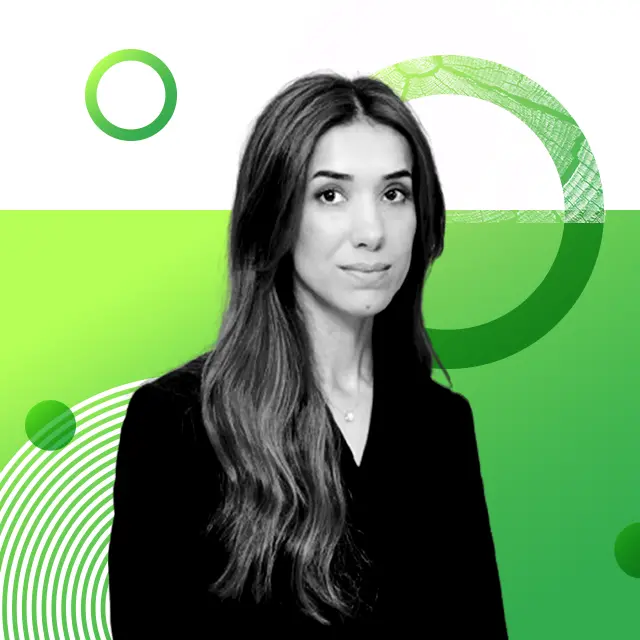
Nobel Peace Prize laureate Nadia Murad in a velvet dress with a top part made of sheer fabric and sequins, with her long hair neatly arranged.

Nadia Murad, Iraq

Nobel Peace Prize laureate

Now a leading advocate for survivors of sexual violence, human rights activist and Nobel Peace Prize winner Nadia Murad endured the Yazidi genocide in Iraq, carried out by the group calling itself Islamic State (IS) in 2014.

She was captured by IS militants, forced into slavery, and subjected to rape and abuse. Murad escaped after three months, and has recounted her ordeal to the world to raise awareness about conflict-related sexual violence.

She partnered with human rights lawyer Amal Clooney to hold IS accountable and launched Nadia’s Initiative to help rebuild communities and advocate for reparations for survivors.

Ten years after the Yazidi massacre, Murad continues to be a global symbol of resilience.

We must wield what I call ‘weapons of the spirit’ to fight for equality and justice: truth, hope, and compassion.

Nadia Murad

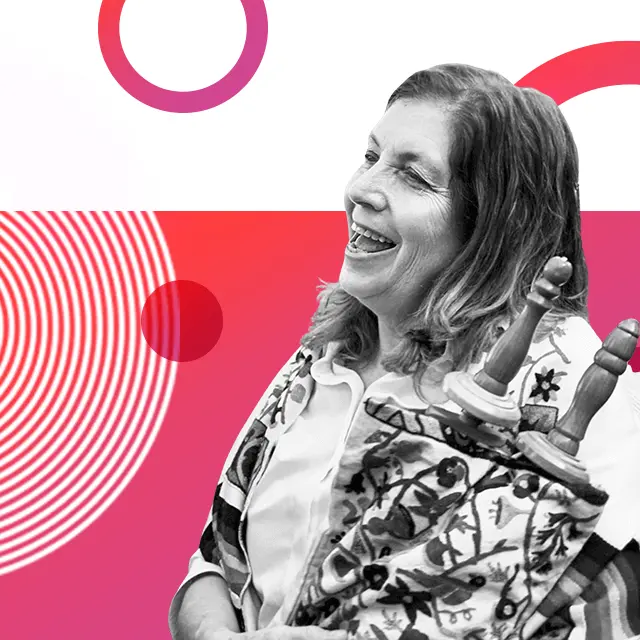
Israeli religious campaigner Anat Hoffman smiling with her mouth open and pictured wearing embroidered floral prayer shawl.

Anat Hoffman, Israel

Religious campaigner

Anat Hoffman has spent decades campaigning for gender equality and religious pluralism within Judaism.

She is a founding member of the Women of the Wall group, which seeks equal prayer rights for Jewish women at the Western Wall in Jerusalem’s Old City. Over the years, she has fought against rules barring women from wearing prayer shawls and reading from the Torah collectively.

Hoffman also served for 20 years as the executive director of the Israel Religious Action Center, the legal and advocacy arm of the Reform Movement that works to promote equality and social justice.

Prior to that, she held a seat on the Jerusalem City Council, where she challenged ultra-Orthodox policies.

Visual artist Tracey Emin’s selfie lying on a bed, with her head over a pillow, messy hair and full-rim glasses, in a pink circle design.

Tracey Emin, UK

Artist

In the 1990s, Tracey Emin rose to prominence for provocative pieces such as My Bed and Everyone I Have Ever Slept With 1963-1995, also known as The Tent, which invite people to reflect on their sexual experiences.

She has since become an instantly recognisable name in the art world, celebrated for her confessional and autobiographical style.

It’s now 25 years since My Bed was first exhibited in London, sparking much media debate. Once portrayed as the enfant terrible of British art, this year Emin has been made a dame for her contributions to the visual arts.

The artist has set up the Tracey Emin Foundation in Margate, UK, to nurture upcoming talent.

Being a woman right now, I think we need as much resilience as we can have. I think now is a time when there has to be greater unity and a greater fight for women.

Tracey Emin

Soup kitchen founder Margarita Barrientos with a big smile looking at the camera, in a jumper and jacket and with a scarf around her neck.

Margarita Barrientos, Argentina

Soup kitchen founder

From starting a soup kitchen for just 15 people, to now feeding more than 5,000 people a day, Margarita Barrientos is known for her dedication to the fight against hunger in Argentina, where 53% of the 46-million population are now living in poverty.

Born in one of the country’s poorest regions, Barrientos faced adversity from a young age. She founded her soup kitchen Los Piletones in 1996, growing it into a foundation which now operates a daycare centre, health centre, sewing workshop and library.

Her community service has received support from many businesses and celebrities – footballer Lionel Messi recently gave her a signed shirt to auction.

Singer-songwriter Raye made history at this year’s Brit Awards, winning six of the seven prizes she was nominated for. She also became the first woman to win songwriter of the year.

Raye, UK

Singer

Singer-songwriter Raye made history at this year’s Brit Awards, winning six of the seven prizes she was nominated for. She also became first woman to win songwriter of the year.

In 2021, Raye shared on social media that she had been in a seven-year battle with her record label Polydor to release her own album.

She presented her debut studio album My 21st Century Blues as an independent artist in 2023, to critical and commercial success.

She has spoken openly about the struggles she has faced both in the music industry and outside, including sexual assault, drug abuse, and body dysmorphia, and has called for fairer pay for songwriters.

Climate justice advocate Adenike Oladosu is wearing a striped blazer and standing to face the camera with her dark braided hair tied up on top of her head.

Adenike Titilope Oladosu, Nigeria

Climate justice advocate

Nigerian ecofeminist Adenike Titilope Oladosu is the founder of I Lead Climate Action, a grassroots initiative of women and youth to fight climate change.

She has worked to raise awareness about the environmental crisis affecting Lake Chad – at the junction of Nigeria, Niger, Chad and Cameroon – where shrinking water resources have exacerbated conflicts.

Oladosu’s work addresses both environmental and social issues, especially as they affect African women, whom she equips with skills in sustainable farming in areas where desertification directly impacts food security.

Taking part in multiple United Nations’ Climate Change Conferences from 2019 onwards, she has urged policymakers to prioritise climate resilience in Africa.

The climate crisis is a resilience issue that leaves us no option other than to win. To survive this crisis, we need critical investment in technology and innovation.

Adenike Titilope Oladosu

Make-up artist Olivia McVeigh wearing a black suit and chunky hoop earrings, and holding two long wigs in her hands, one blonde and one brunette.

Olivia McVeigh, UK

Make-up artist

After being diagnosed with alopecia, Olivia McVeigh began to explore the world of wigs. Trying out new styles and experimenting with alternative hair, she built an online platform to encourage and empower women facing hair loss.

With nearly half a million followers, she normalises wig-wearing along with raising awareness for alopecia and women’s health.

McVeigh, a make-up artist and influencer from Northern Ireland, began losing her hair in her teens.

She now holds wig workshops and shares the journey towards finding confidence again, creating a safe space for women with alopecia to come together and normalise the conversation around the condition.

Resilience is the crown that we women wear. We are forever able to adapt, transform and learn to thrive in our surroundings, no matter the circumstances.

Olivia McVeigh

Nun Eugenia Bonetti wearing glasses, a full nun’s habit and cardigan, and a necklace with a cross.

Eugenia Bonetti, Italy

Nun

Sister Eugenia Bonetti has helped manage more than 100 shelters and establish a network with nuns in Africa to support migrant women victims of human trafficking and exploitation.

She spent many nights assisting women who had been forced into the sex trade in Rome and became the president of Slaves No More, an organisation that raised awareness of human trafficking.

Bonetti was a missionary in Kenya for more than 24 years and helped train officials in various countries to develop anti-trafficking initiatives.

Before retiring, she was asked by Pope Francis to write the 2019 Way of the Cross, a key annual devotion for Catholics marking Good Friday at the Colosseum.

Museum manager Zhanylsynzat Turganbaeva sitting on the floor with one leg bent and an arm resting on top of it. She is wearing national Kyrgyz clothing consisting of an Elecheck (raised headgear worn by women), a chyptama (a sleeveless velvet waistcoat), and an embroidered belt over a floor-length, long-sleeved dress shirt.

Zhanylsynzat Turganbaeva, Kyrgyzstan

Museum manager

Preserving and revitalising Kyrgyzstan’s cultural heritage is a priority for Zhanylsynzat Turganbaeva.

She runs an ethnological museum in Bishkek, which features unique national artefacts and attracts large numbers of visitors.

Part of her philanthropic work involves the preservation of Kyrgyz literature, including the Epic of Manas, which tells the story of a warrior who is said to have united the 40 tribes of the Kyrgyz region.

One version of the Unesco-listed monumental poem consists of about 500,000 lines of verse and is arguably the longest epic in the world (20 times longer than Homer’s Odyssey). Turganbaeva’s work creates opportunities and resources for “manaschis”, entertainers who recite this Kyrgyz classic.

Immigration rights campaigner Guerline M Jozef with dark wavy hair and wearing a blazer, is standing with her hands crossed and looking into the camera.

Guerline M Jozef, Haiti

Immigration rights campaigner

Working at the intersection of politics and race in the US, Guerline M Jozef campaigns for immigrant rights.

She is the founder of the women-led Haitian Bridge Alliance, which focuses on people of African descent.

Under her guidance, the alliance filed criminal charges against Donald Trump this year, over baseless claims he made about Haitian immigrants “eating pets” in a speech in Springfield, Ohio, during his presidential campaign.

Jozef has long been an outspoken critic of the ongoing deportation of Haitians. Her organisation recently urged the Biden administration to stop sending back asylum seekers who come to the US fleeing gang violence on their home island.

Miner Annie Sinanduku Mwange wearing a headwrap and hoop earrings in and a intricate top with a lattice design.

Annie Sinanduku Mwange, DR Congo

Miner

As a woman in the Congolese mining business, Annie Sinanduku Mwange leads a grassroots movement to combat inequality and sexual harassment in the industry, where half of the workers in artisanal pits are women.

A leader of the national Women’s Mining Network Renafem, she asserts herself as a “mère boss”, or mother boss, putting women in charge of mining spots as a means to prevent sexual exploitation from male colleagues.

By investing in women’s livelihoods, she also hopes to reduce child labour in the field, as global demand increases for cobalt and other minerals needed for clean energy products like electric cars.

Musician Gaby Moreno with short-styled wavy hair, is posing with her left hand in her hair and looking away from the camera while smiling. She is wearing a shiny embellished dark blazer.

Gaby Moreno, Guatemala

Latin-pop musician

An acclaimed singer-songwriter in the Latin music scene, Guatemalan Gaby Moreno broke into the mainstream by winning the Grammy for Best Latin Pop Album in 2024.

Composed in two languages and taking influences from Americana, soul and Latin folk, her music and her emotive voice reflect her rich cultural heritage.

Moreno is also the first Guatemalan to become a Unicef goodwill ambassador, advocating children’s rights.

She recently launched a campaign to increase access to quality educational kits, in a country where 2.7m boys and girls are estimated to be outside the school system.

Nurse and school founder Rikta Akter Banu in a full length floral chador and headscarf, wearing gloves and clutching her hands together in front of her, with a stripy handbag around her wrist.

Rikta Akter Banu, Bangladesh

Nurse and school founder

In the remote area of northern Bangladesh where nurse Rikta Akter Banu lives, having an autistic or disabled child is seen as a curse.

When her own daughter, who is autistic and has cerebral palsy, was refused admission to their local primary school, she sold her land and built her own school instead.

The Rikta Akhter Banu Learning Disability School now enrols 300 students and has made a positive impact on the community’s views around disability.

While the school was initially built for children who are autistic or have a learning disability, it now caters for young students with a variety of intellectual and physical disabilities.

Svetlana Anokhina looks into the camera with clear big eyes, wearing prominent hoop earrings and two necklaces. She has short hair and is carrying a crossbody bag, of which only the strap is visible over her shoulder.

Svetlana Anokhina, Russia

Human rights campaigner

Svetlana Anokhina has spent years helping victims of domestic violence escape from Russia’s North Caucasus, a Muslim-majority region straddling Eastern Europe and Asia.

Along with other volunteers, she founded the Marem project in 2020. The initiative helps women at risk from Dagestan, Chechnya and other North Caucasus republics organise evacuations and find temporary accommodation, as well as providing them with legal and psychological support.

Anokhina herself decided to leave Russia in 2021, after Chechen and Dagestani security forces raided her women’s shelter.

Last year, the authorities opened a criminal investigation against her on charges of discrediting the Russian Armed Forces.

Senator Susan Collins with short hair and glasses, wearing a dark tailored short-sleeved dress with a chunky metal necklace and a pin with two small flags on her lapel.

Susan Collins, US

Senator

Currently in her fifth term representing the state of Maine, Susan Collins is the longest-serving Republican woman in the US Senate.

She has frequently worked across party lines to deliver landmark legislation. She is one of six senators responsible for introducing the Advancing Menopause and Mid-Life Women’s Health Act, which will invest $275m in menopause research, treatment, and public awareness over the next five years.

Collins also authored the National Alzheimer’s Project Act, which co-ordinates a plan to prevent and treat Alzheimer’s disease. She has worked to ensure funding for the project through to 2035, and that it takes into consideration wider underserved populations including individuals with Down’s syndrome.

Writer Shahrnush Parsipur with short hair wearing a dark attire and a light scarf, doing the victory sign with her right hand.

Shahrnush Parsipur, Iran/US

Writer and translator

One of Iran’s most prominent novelists, Shahrnush Parsipur has addressed taboo issues in her work, such as female sexual oppression and rebellion in a patriarchal society.

She began her career as a writer of fiction and producer on Iranian National Television and Radio, but resigned in protest at the execution of two poet activists before the revolution of 1979. This resulted in her first imprisonment.

Since the revolution, her work has been banned extensively in Iran and Parsipur was imprisoned again for openly referring to issues around virginity in her novel Women Without Men. This was later adapted into a feature film outside Iran.

Parsipur has recounted her experience of incarceration in her writing, and has lived in exile in the US since 1994.

Olga Rudnieva sitting on a chair crossing her legs, with short tied-back blonde hair and wearing a leather jacket. She is looking straight at the camera.

Olga Rudnieva, Ukraine

Founder, Superhumans Centre

Following Russia’s invasion of Ukraine, Olga Rudnieva felt she had to do something to help those wounded in the conflict.

People who had lost their limbs on the battlefield were seen as victims by many, but to Rudnieva they were “superhumans” who deserved all the help she could provide.

She set up the Superhumans trauma centre in Lviv, which she runs as CEO alongside a team of specialists. The centre provides prosthetic limbs to patients and has recently launched a rehabilitation centre.

More than 1,000 people have benefitted from their services during the first two years of operation.

Resilience is to wake up morning after morning to air sirens and keep fighting for your country. It’s rediscovering your ‘what for?’ instead of being stuck at ‘why me?’ It’s finding ways to do more, having less every day.

Olga Rudnieva

Singer Elaha Soroor posing and lookming serious while sitting on a chair barefoot and wearing a long V-neck dark dress, her mid-length hair to the front and with a thick fringe.

Elaha Soroor, Afghanistan

Singer and composer

At a time when the voices of women in Afghanistan are being erased from public life, singer Elaha Soroor wrote the anthem Naan, Kar, Azadi! (Bread, Work, Freedom!) to counter this suppression and send a message of encouragement.

The song premiered in October at the unprecedented All Afghan Women Summit in Albania.

In a career spanning film, theatre and music, the award-winning artist has often used her platform to champion women’s rights.

Soroor, who is from the Hazara ethnic minority, was discovered on the popular talent show Afghan Star in 2009. But she faced a violent backlash for pursuing a career in music and left the country in 2010.

Hijab-wearing musician Firda Marsya Kurnia with a nose piercing and wearing a black dress with leather detail, holding an electric guitar with her left hand in front of her.

Firda Marsya Kurnia, Indonesia

Heavy metal musician

Challenging gender and religious norms is something Firda Marsya Kurnia is comfortable with, as lead vocalist and guitarist in the all-female, hijab-wearing heavy metal band Voice of Baceprot.

Singing in English and Sundanese, one of the most widely spoken languages in Indonesia, the trio’s lyrics express their frustrations with patriarchy.

There has been pushback from more conservative Muslims, who did not respond well when the band ventured into heavy metal.

But the band have come a long way since they started 10 years ago at their village school in Garut, West Java. This year they performed at Glastonbury, the first Indonesian band in the music festival’s 54-year history.

Scientist Rosa Vásquez Espinoza in a sleeveless casual dress posing with her hands on her hips. She is smiling to the camera, with her long wavy hair to one side and draped over her right shoulder.

Rosa Vásquez Espinoza, Peru

Chemical biologist

Inspired by her grandmother’s wisdom as a healer, scientist Rosa Vásquez Espinoza has spent her career combining cutting-edge science and traditional knowledge to protect biodiversity in the Peruvian Amazon.

As the founder of Amazon Research International, she works with indigenous communities to explore the jungle’s untapped biodiversity.

Often travelling to remote ecosystems on the planet, Espinoza’s work includes discovering new bacteria in the Amazon’s legendary Boiling River, and leading the first chemical analysis of stingless bees and medicinal honey in Peru.

She is also an international ambassador of the Ashaninka people, one of the largest indigenous groups in South America.

Ecologist Brigitte Baptiste, with blonde curvy hair and a shiny top, is sitting with her arms crossed over her chest and shoulders, showing a tattoo across her left forearm.

Brigitte Baptiste, Colombia

Ecologist

As a transwoman biologist, Brigitte Baptiste explores the common patterns between biodiversity and gender identity.

She uses a queer lens to analyse landscapes and species in a bid to expand the notion of ‘nature’ to better protect ecosystems. In her 2018 TEDx talk, she used the Quindío wax palm, Colombia’s national tree, as an example of how “the change of sex and gender has been regularly reported by science” across the lifetime of species.

A renowned academic, Baptiste spent 10 years as director of the Alexander von Humboldt Institute and currently serves as president of Universidad EAN in Bogota, a higher-education institution focused on sustainable entrepreneurship.

She has also campaigned for better funding to get more LGTBQ+ people into higher education.

Gymnast Rebecca Andrade stands in a competition pose with her hand outstretched wearing a shiny gym leotard decorated with rhinestones. Her hair is worn in a tight bun and her eyes are adorned with winged eyeliner.

Rebeca Andrade, Brazil

Gymnast

Gymnast Rebeca Andrade’s total of six medals makes her Brazil’s most decorated Olympian (she also has nine world titles).

She won gold in the floor exercise in Paris 2024, beating the world’s most decorated gymnast Simone Biles. During the medal ceremony, Biles and fellow US gymnast Jordan Chiles bowed to the Brazilian, a gesture that went viral and became an emblem of this year’s Olympics.

One of eight children, until the age of 10 Andrade walked to practice sessions from her favela outside Sao Paulo, while her single mother cleaned houses to pay for her training.

Her rise has seen her overcome many severe injuries, and she has spoken openly about prioritising mental health.

To be resilient is connected to how we handle things that happen to us, and helping my teammates to see the good side even when things are really bad.

Rebeca Andrade

Writer Cristina Rivera Garza, with long curly hair and wearing chunky glasses, a buttoned jacket and trousers and a pair of shiny Dr Martens-style shoes.

Cristina Rivera Garza, Mexico/US

Writer

Prolific author Cristina Rivera Garza has been recognised with many awards over the years, including the 2024 Pulitzer Prize in the memoir category for her book Liliana’s Invincible Summer, which shines a light on the issue of femicide.

Through the story of her sister Liliana – murdered in 1990s Mexico by a former boyfriend who fled and was never brought to trial – the writer confronts the trauma of losing a loved-one and embarks on a quest for justice in a country with one of the highest femicide rates in the world.

Rivera Garza is also the founder and chair of the PhD programme in creative writing in Spanish at the University of Houston.

Messing with language continuously and thoroughly so that language may finally convey women’s side of the story may well lay the foundation for any kind of resilience.

Cristina Rivera Garza

Table tennis player Zhiying Zeng wearing a T-shirt with a logo of the Chilean flag and Olympic rings on it, holding a table tennis bat in front of her.

Zhiying (Tania) Zeng, Chile

Table tennis player

Chinese-Chilean table tennis player Zhiying Zeng – or Tania – made her Olympic debut at the 2024 Paris games at 58 years old.

It had been a long time coming: with her mother as a coach, she turned professional at the tender age of 12. She qualified for the Chinese national team but later moved to Chile, where she abandoned the sport for 30 years to focus on her businesses.

The Covid-19 pandemic saw Tania Zeng get back into table tennis.

By 2023 she was the highest-ranked woman in the sport in Chile, representing the country in the South American Championship and Pan American Games before accomplishing her “lifelong dream” of Olympic qualification.

Oscar-winning film director Chloé Zhao with long and wavy hair standing on a stage behind a podium with a microphone. There is a giant Oscar statue behind her.

Chloé Zhao, UK

Film director

Oscar-winning film director and writer Chloé Zhao is the first woman of colour – and one of only three women in history – to receive the academy’s best director award.

Born in Beijing, Zhao moved to the UK and the US. She describes herself as a nomad – a theme her award-winning film, Nomadland (2020), celebrates.

From representing an indigenous community in her early films to directing the most diverse cast to date in the Marvel Cinematic Universe, Zhao feels passionately about what connects us as human beings.

This year she has been on set directing an adaptation of Maggie O’Farrell’s acclaimed Shakespeare-era novel Hamnet, to be released in 2025.

If we don’t change the structure of the industry we’re working in, we’re just saying that we need to be exactly like men to have value. I don’t think that’s where our power lies.

Chloé Zhao

Actress Hend Sabry wears a figure hugging evening gown and her hair straight and sleek behind her shoulders. She wears a diamond necklace, earring and bracelet. She is not looking at the camera.

Hend Sabry, Tunisia

Actress

Actress Hend Sabry is one of the most famous women in Arab cinema. Her breakout role in the feminist film The Silences of the Palace (1994) explored the sexual and social exploitation faced by women in Tunisia.

She became the first Arab woman to serve as a judge at the Venice Film Festival in 2019.

More recently she starred in the film Four Daughters, which was selected as Tunisia’s entry for the Oscars in 2024 and was nominated for Best Documentary Feature.

In November, Sabry resigned as a goodwill ambassador for the UN, in protest at what she called the use of starvation as a weapon of war in Gaza.

It’s not just about surviving; it’s about rebuilding and finding purpose through the struggle… transforming pain into action.

Hend Sabry

Katalin Karikó, biochemist and Nobel laureate, with glasses on and smiling to camera, sitting behind a desk signing a book, with short hair, wearing a jacket and a necklace.

Katalin Karikó, Hungary

Biochemist and Nobel laureate

Hungarian biochemist Katalin Karikó’s acclaimed research on modified messenger RNA (mRNA) was used to create Covid-19 vaccines by BioNTech/Pfizer and Moderna.

It won her a Nobel Prize (shared with her colleague Drew Weissman) for her contribution to the “unprecedented rate of vaccine development during one of the greatest threats to human health in modern times”.

mRNA, the material responsible for translating our DNA into proteins, is extremely fragile and difficult to work with, but Karikó was convinced it could play a major role in medicine.

The technology was experimental before the pandemic, but has now been given to millions of people around the world to protect them against serious Covid-19.

Work towards your goals by always focusing on what you can do and not what others should do. If you fail, learn from it. Stand up and move on with the same enthusiasm.

Katalin Karikó

Kemi Badenoch wearing a suit jacket over a white collarless top. She is smiling towards and holding her hands clasped in front of her.

Kemi Badenoch, UK

Leader of the Conservative party

Elected leader of the Conservative Party in November, Kemi Badenoch is the first black woman to lead a major UK political party.

She is currently the Member of Parliament for North West Essex, and was previously business secretary and minister for women and equalities.

Badenoch was born in London to Nigerian parents, but grew up in Lagos, Nigeria, and in the US. She returned to the UK aged 16 due to the worsening political and economic situation in Nigeria, and took degrees in computer engineering and law.

Prior to her political career, she was an associate director of private bank Coutts and digital director of The Spectator magazine.

Fashion designer Yasmeen Mjalli pictured with curly shoulder-length hair, wearing a scalloped edged tank top and a sarong, with tattoos of snakes and foliage on both her arms and holding a camera with both hands.

Yasmeen Mjalli, Palestinian Territories

Designer

Fashion designer Yasmeen Mjalli’s creations are inspired by Palestinian life and traditions.

After growing up in the American South, she relocated to Ramallah in the occupied West Bank, where she launched her brand Nöl Collective in 2020.

Her fashion label works with family-run sewing workshops, local spice shops that provide natural dye agents, and women’s co-operatives to produce garments collectively. The tailors, weavers, embroiderers and carvers use traditional techniques, paying homage to the Palestinian craft of creating fabrics.

Mjalli has used her garments to tell stories about Palestinians. She has also addressed the street harassment experienced by women globally, painting the phrase “not your habibti” (not your baby) on denim jackets and T-shirts.

Rabbi Sharon Kleinbaum wears a pair of rimmed glasses and a necklace, posing with her arms folded across her chest and wearing a tailored polka dot jacket.

Sharon Kleinbaum, US

Rabbi

A pioneer within the Jewish community in New York, rabbi Sharon Kleinbaum has spent three decades inspiring change at the intersection of LGBTQ+ rights and religion.

Appointed in 1992 as the first female rabbi of the city’s Congregation Beit Simchat Torah, she has led the community through ups and downs – including the Aids crisis in the 1990s.

She oversaw an expansion of the congregation’s membership to include trans and non-binary people, and it is now believed to be the largest LGBTQ+ friendly synagogue in the US.

Kleinbaum, who retired this year, has been the leading force behind social justice projects and was appointed to the US Commission on International Religious Freedom by President Joe Biden.

Joy is an act of spiritual and political resistance.

Sharon Kleinbaum

Medical doctor Mahrang Baloch smiling while looking at the camera, with a dark scarf with stripes over her head and across her chest.

Mahrang Baloch, Pakistan

Medical doctor and political activist

Among hundreds of women across Pakistan taking part in demonstrations against alleged enforced disappearances in Balochistan province is Mahrang Baloch.

Her call for justice comes after her father was allegedly taken by security service officers in 2009 and found dead two years later with signs of torture.

In late 2023, Baloch led hundreds of women on a 1,000 mile (1,600km) march to the capital Islamabad to demand information on the whereabouts of their family members. She was arrested twice during the journey.

The medical doctor has since then become a prominent activist, under the banner of her own human rights group Baloch Yakjehti (Unity) Committee BYC. Her work in the field of human rights was recognised in the TIME100 Next 2024 list of emerging leaders.

Protesters from Balochistan province, scene of a long-running nationalist insurgency, say their loved ones have been taken and killed by Pakistani security forces, amid a counterinsurgency operation. The authorities in Islamabad deny these accusations.

Samia (not her real name) walking away from the camera, showing her back in a dark tunic and braided hair but not revealing her face.

Samia, Syria

Psychology counsellor

Psychology specialist Samia – whose identity the BBC is keeping anonymous to protect her personal safety – has been supporting Syrians facing the trauma caused by years of conflict.

The long-running civil war has killed hundreds of thousands of people, and many of those who survive have been left living in often dire conditions and dealing with mental health issues such as depression and anxiety.

Working at a mental health clinic managed by the International Rescue Committee, Samia runs counselling sessions for displaced people and their families in a refugee camp in north-eastern Syria.

Despite the scarce resources, she remains dedicated to improving her patients’ mental health and committed to promoting awareness in crisis settings.

Subin Park, founder of a Stair Crusher Club, sitting in her wheelchair wearing a oversized denim shirt and turning her head to smile at the camera.

Subin Park, South Korea

Founder, Stair Crusher Club

When wheelchair user Subin Park found that many places she wanted to go in Seoul were inaccessible, she set about using her skills as a former IT project manager to highlight the issue.

Park is the co-founder of the Stair Crusher Club, a non-profit project that collects information on wheelchair unfriendly routes and places with no step-free access in South Korea.

The project aims to create an accessibility map for their users.

So far over 2,000 citizens have contributed to their database through Stair Crusher Club events and 14,000 locations across the country have been vetted for accessibility.

Paralympian Zakia Khudadadi, who was born without her left forearm, jumping in a white taekwondo tracksuit with a belt and a vest that reads Paris 2024.

Zakia Khudadadi, Afghanistan

Taekwondo Paralympian

The first member of the Paralympic Refugee Team ever to win a medal, Zakia Khudadadi made history at the 2024 Paris games.

The athlete, who was born without one forearm, began practising taekwondo secretly at the age of 11 in a hidden gym in her hometown of Herat, in western Afghanistan.

She was initially denied the opportunity to compete at her first Paralympics in Tokyo following the Taliban’s return to power in 2021.

But with intervention from the International Paralympic Committee and the support of France, she was safely evacuated from Afghanistan and became the first Afghan sportswoman to participate in an international sporting event following the Taliban takeover.

My journey to the Olympic medal speaks of the power of resilience of Afghan women, of refugee women, of every woman. By not giving up, we continue to show there is nothing a woman cannot do.

Zakia Khudadadi

Journalist Hinda Abdi Mohamoud looking straight ahead, wearing a headscarf and a loose fitting floral robe and necklace, clutching her hands in front of her.

Hinda Abdi Mohamoud, Somalia

Journalist

A keen writer from a young age, Hinda Abdi Mohamoud kept a diary with stories about people fleeing violence in Jigjiga town, to Hargeisa.

Now she is the chief editor of Bilan, the country’s first and only all-women media team.

The team was formed to combat the high rates of sexism and harassment which Somali women face in the workplace – challenges recognised in a recent UN report.

Bilan aims to shine a light on social issues in one of the most dangerous countries in the world for journalists, covering stories such as Somalis living in hiding with HIV, abused orphans, and people with albinism shunned by their communities.

Engineer Enas Al-Ghoul poses next to a solar-powered panel, wearing a headscarf and a traditional long buttoned coat.

Enas Al-Ghoul, Palestinian Territories

Agricultural engineer

When water became scarce in Gaza due to the war, Enas Al-Ghoul felt she had to find a solution.

The agricultural engineer used recycled materials such as wood, glass and tarpaulins to create a solar-powered desalination device able to turn seawater into drinkable water.

The device has since become a lifeline for many living in tents in the Khan Younis area in the south of the Gaza Strip, as water and sanitation facilities have been damaged or destroyed by Israeli military action since October 2023.

Determined to use her skills to help displaced Palestinians, Al-Ghoul has also created a solar-powered cooker and learnt to recycle materials to create items such as mattresses and bags.

Wrestler Vinesh Phogat, with her hair cut just above her shoulders and arms crossed over her chest and wearing wrestling singlets with a small Indian flag logo printed on the left of the chest. She is looking directly at the camera.

Vinesh Phogat, India

Wrestler

A three-time Olympian, Vinesh Phogat is one of India’s most decorated wrestlers and a vocal critic of sexist attitudes towards women in sports. She has won medals in World Championships, Commonwealth and Asian Games.

This year Phogat became India’s first female wrestler to reach an Olympic final, but was disqualified after failing the weigh-in. She later retired from sport and has joined politics.

Outspoken about gender stereotypes, Phogat was the face of a months-long protest by Indian wrestlers against their federation chief, Brij Bhushan Sharan Singh, who was accused of sexually harassing female athletes – a charge he denied.

The protest made headlines when police detained Phogat and others during a demonstration.

The ability to pull yourself up after a bad day at work and give yourself grace is what being resilient is about.

Vinesh Phogat

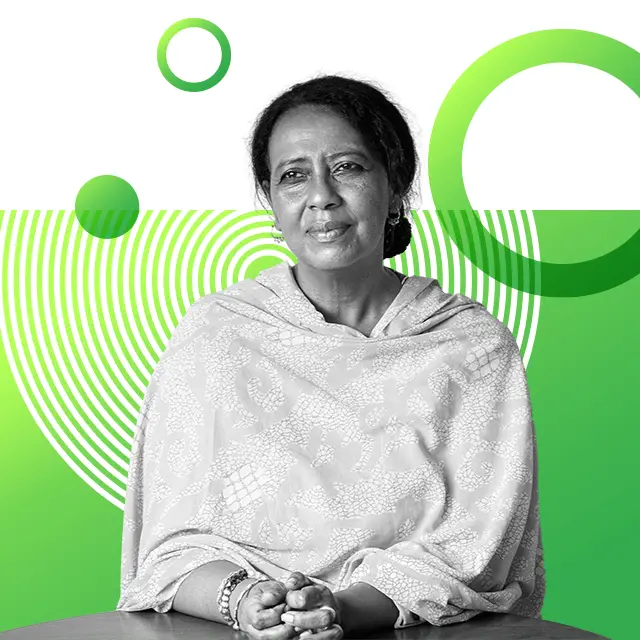
Activist Hala Alkarib sits at a table with her arms placed on top and her hands clasped together. She wears a poncho draped over her shoulders.

Hala Alkarib, Sudan

Activist against sexual violence in war

As regional director of the Strategic Initiative for Women in the Horn of Africa (SIHA), prominent activist and writer Hala Alkarib leads programmes that spotlight gender-based violence in the wider region.

Since war broke out in Sudan in April 2023, SIHA has been tracking conflict-related sexual violence, providing support to women and girls.

An October 2024 UN report warned of the “staggering” scale of the problem, and accused the paramilitary Rapid Support Forces (RSF) of “atrocious crimes”, accusations the RSF dismissed.

The report estimated that at least 400 survivors of conflict-related sexual violence had been referred to support as of July 2024, describing this as “the tip of the iceberg”.

Education entrepreneur Hamida Aman with short hair looking straight to camera and wearing a patterned, shiny jacket and dark shirt.

Hamida Aman, Afghanistan

Media and education entrepreneur

When Afghan girls were denied access to secondary education by the Taliban, media entrepreneur Hamida Aman decided to launch the Begum Academy, an online space offering free multimedia courses for students who were not able to attend school.

In the last year, the educational platform has provided more than 8,500 videos in Dari and Pashto, covering school curricula for grades seven to 12.

In March, Aman launched Begum TV, an educational channel broadcasting Begum Academy courses via satellite.

The service followed her Radio Begum project, a station made by women and for women, which was created after the Taliban takeover in 2021.

Noella Wiyaala Nwadei is dancing energetically with her mouth open. She is wearing loose fitting clothes, chunky jewellery and has her hair styled in structured braids around her head, forming a crown.

Noella Wiyaala Nwadei, Ghana

Afro-pop musician

Singer and songwriter Noella Wiyaala Nwadei is popularly known by her stage name Wiyaala, which means “the doer” in her Sissala language.

Recognised for her sense of fashion and unique style, the artist designs her stage dresses and accessories to showcase the traditions of her home region, in northern Ghana.

Many of her lyrics shed light on the exploitation of African women. Wiyaala has worked closely with UN agencies and the Ghanaian authorities to combat child marriage.

She has also built an arts centre, community radio station and restaurant to promote employment and creativity in her hometown of Funsi.

Nejla Işık resting her hands on a large stick held across her shoulders behind her head. She is wearing a dark sweater with a patterned hair tie and is looking at the camera.

Nejla Işık, Turkey

Village head and forest campaigner

Recently elected as the head of the İkizköy area in western Turkey, farmer Nejla Işık has led a struggle against deforestation for the past five years.

When the nearby Akbelen Forest came under threat due to proposals for a coal mine, Işık and other local women fought back with lawsuits and protests to stop the logging that would clear the land for mining projects.

At times their environmental campaign resulted in fierce clashes between the police and protesters standing guard to defend the woodland, but Işık and other villagers vowed to stand firm despite the challenges and threats they face, including being fined for entering the forest without permission (the fine was later cancelled).

Women at home, in the fields, on the streets, in the struggle… they are the ones beautifying the world, and undoubtedly, they will save it.

Nejla Işık

Chinese women’s rights advocate Feng Yuan with her hair tied back and wearing rimmed glasses and a black V-neck top with floral edging.

Feng Yuan, China

Women’s rights advocate

A longstanding advocate for women’s rights in China, Feng Yuan is the founding director of Equality Beijing. Set up in 2014, the organisation is dedicated to legal reform, capacity building and combating gender-based violence via a helpline.

In recent years, she has been supporting China’s MeToo survivors and providing training to employers to prevent sexual harassment in the workplace.

Feng worked as a journalist focusing on women’s issues from 1986 to 2006.

Since the mid-1990s, she has helped to set up various non-governmental initiatives around women and the media, HIV/Aids, leadership, and youth empowerment. She has authored and edited publications in China and beyond.

Campaigner Lourdes Barreto poses with her left hand up to the right side of her face, covering her chin. Her forearm shows a tattoo of letters and she wears a bracelet. Barreto looks at the camera with a smile, as she wears large, dangling earrings and a necklace.

Lourdes Barreto, Brazil

Campaigner for sex workers’ rights

The leading force behind many campaigns, Lourdes Barreto has spent her life fighting for better rights for sex workers in Brazil.

Having started her activism in Belém do Pará in the Amazon region, she then co-founded the Brazilian Network of Prostitutes in the 1980s – one of the first organised movements of sex workers in Latin America.

Barreto, who is now in her 80s, has been challenging prejudice for decades.

She was instrumental in establishing HIV prevention policies in the country and campaigned to prevent the spread of HIV among goldmining communities. In 2023, she published her autobiography.

May our stories be valued and not silenced. We women in the world, with our immense capacity to dream, to achieve, to think, to transform society.

Lourdes Barreto

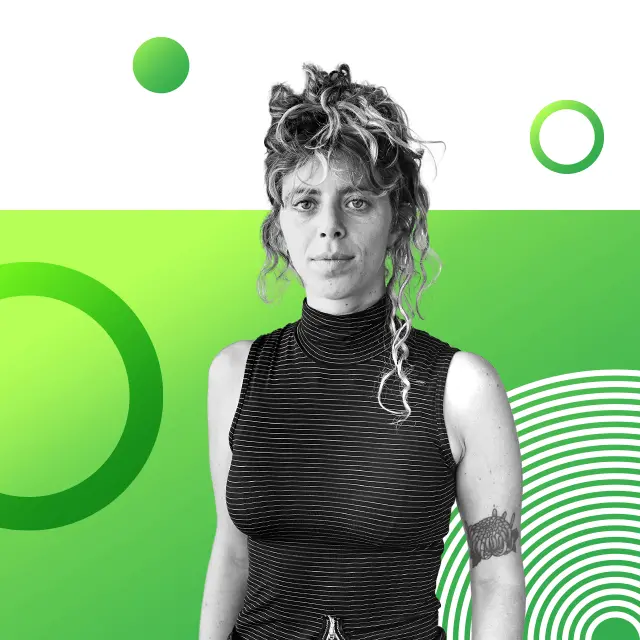
Israeli activist Danielle Cantor pictured wearing her curly hair up and with a stripy high neck sleeveless top.

Danielle Cantor, Israel/Palestinian Territories

Cultural activist

As a co-founder of Culture of Solidarity, a grassroots project that started during the pandemic, Danielle Cantor has worked to support vulnerable communities in Israel and the Palestinian Territories.

Together with co-founder Alma Beck, she runs the House of Solidarity, a space that has become an alternative hub for debate and cultural and educational activity about human rights violations in Israel and the Palestinian territories.

She recently authored and photographed Spreads, an art book which uses food culture to examine the nuances of identity politics of communities in the region.

Along with other members of the collective Women Peace Sit-In, Cantor has been taking part in demonstrations to call for an immediate ceasefire in the Middle East and a lasting peace agreement.

When women tap into their inherent empathy, we can truly recognise systems of injustice and reimagine our way forward.

Danielle Cantor

Sustainability entrepreneur Shilshila Acharya is sitting smiling at the camera and wearing a floral dress and pearl earrings.

Shilshila Acharya, Nepal

Sustainability entrepreneur

Shilshila Acharya runs one of the largest plastic recycling networks in Nepal. Her waste management business Avni Ventures employs staff from marginalised communities and focuses on getting more women into the green sector.

Acharya played a leading role in the 2014 No Thanks, I Carry My Own Bag campaign, which led to a ban on plastic shopping bags.

The climate and waste educator is also behind a big annual clean-up in the Himalayas to remove rubbish left by mountaineers, collecting 119 tonnes since 2019.

Through her work, some of this waste is reused by indigenous craftswomen to create baskets, mats and jewellery to support their livelihoods.

Kenyan runner Joan Chelimo Melly looking straight to camera with shoulder length braided hair, wearing a sport T-shirt with an Adidas and Tirop’s Angels logos on it.

Joan Chelimo Melly, Kenya/Romania

Long-distance runner

Celebrated for her achievements in long-distance running, Kenyan-born Romanian Olympian Joan Chelimo Melly won silver at the European Championships half marathon this year.

Beyond sport, she is a survivor of gender-based violence and seeks to use her personal experience to highlight the threats that athletes often face.

She co-founded Tirop’s Angels, an organisation of Kenyan athletes formed after the killing of her fellow runner and world record-holder Agnes Tirop in 2021, which campaigns against gender-based violence through a wide range of activities.

This year the murder of Olympic runner Rebecca Cheptegei by her former partner reignited calls for action against femicide in Kenya.

I believe that real change begins when we decide that our pain is not the end of our story, but the beginning of something greater.

Joan Chelimo Melly

Drawing on years of experience in neonatal units at Gaza’s main hospitals – most recently as director of the maternity centre in Al-Shifa Medical Complex – she trained other doctors and established emergency protocols to enable medics to provide life-saving treatments with very limited resources.

Shireen Abed, Palestinian Territories

Paediatrician

Israeli airstrikes and a drastic lack of resources did not stop Shireen Abed from taking care of newborn babies in Gaza.

She was displaced after the start of the Israel-Gaza war in 2023 as her flat was bombed, but the neonatal specialist continued to care for babies in nearby displacement camps.

Drawing on years of experience in neonatal units at Gaza’s main hospitals – most recently as director of the maternity centre in Al-Shifa Medical Complex – she established emergency protocols to enable medics to provide life-saving treatments with very limited resources, and trained other doctors.

Conditions forced her to leave Gaza with her two daughters earlier this year, but Abed continues to assist doctors on the ground remotely.

Fem-tech entrepreneur Nour Emam is sitting on a chair bent slightly forward towards the camera, with her hands resting on her knees. She has dark shoulder-length hair and is wearing a necklace and pale shirt.

Nour Emam, Egypt

Fem-tech entrepreneur

Sexual health educator Nour Emam focuses on topics like menstrual hygiene, reproductive health and sexual awareness, subjects which are often considered taboo in the Middle East and North Africa region.

Emam is the co-founder and CEO of Motherbeing, a fem-tech (female technology) company that provides hybrid services through a clinic in Cairo and a digital platform, with the ambition to improve women’s access to healthcare through technology.

She aims to empower women with evidence-based knowledge about their bodies, while facilitating access to reliable information on contraception and helping them navigate sensitive issues without fear of shame.

LGBTQ+ rights campaigner Ann Chumaporn (Waaddao) wearing a large bow-shaped headband, sparkling dress along with a sparkly necklace and a huge ruffle coat.

Ann Chumaporn (Waaddao), Thailand

LGBTQ+ rights campaigner

As Thailand signed a marriage equality bill into law this year and became the first country in South East Asia to recognise same-sex unions, Ann “Waaddao” Chumaporn had reasons to celebrate.

She had spearheaded efforts to get the bill through parliament, serving as a legal review commissioner in both the House of Representatives and the Senate.

A co-founder of Bangkok Pride and a queer lesbian activist from rural southern Thailand, Chumaporn has been advocating human rights and LGBTQ+ family rights for more than a decade.

During Thailand’s 2020 youth protests, she emerged as a leader in the pro-democracy Feminist’s Liberation Front: she faced eight political charges for her activism.

Rape survivor Gisèle Pelicot with her hair styled into a neat bob and wearing a flowery blouse.

Gisèle Pelicot, France

Rape survivor

By waiving her right to anonymity and allowing her story to reach the world, Gisèle Pelicot has become a symbol of courage and resilience.

Her former husband has admitted drugging and raping her when they were married, and recruiting dozens of other men to rape her as well. Most of the alleged rapes were filmed.

By law, Pelicot was entitled to anonymity, but she instead asked for the trial to be open and for the videos to be shown, in a bid to shift the “shame” back on to the accused. Some of the 50 other men involved in the case have admitted rape, but the majority say they only took part in sexual acts.

While the trial reaches its final stage, women across the world have been inspired by the French grandmother, who hopes her case will change French law and attitudes around rape and consent.

Photojournalist Christina Assi has long dark thick hair and is wearing a sweatshirt, while looking intently into the camera.

Christina Assi, Lebanon

Photojournalist

Photojournalist Christina Assi grew up in 1990s Lebanon – a time of constant instability in the aftermath of civil war – and this fuelled her drive to document conflict and cover the untold stories of war.

Her life took a tragic turn in October 2023, when she was severely injured in an Israeli strike in southern Lebanon while reporting.

The blast killed fellow journalist Issam Abdallah, five other colleagues were wounded and Assi would later have a leg amputated.

The experience led her to campaign for journalists’ safety, and she dedicated her participation in the 2024 Olympic torch relay in Paris to all the journalists who have died in the line of duty.

Data scientist Gabriela Salas Cabrera with long dark hair and wearing a white lab coat with the Mexico flag printed on the left sleeve.

Gabriela Salas Cabrera, Mexico

Programmer and data scientist

Her mother tongue, Náhuatl, was not available on Google’s widely used translation platform, until Gabriela Salas Cabrera got involved.

The engineer has collaborated with the tech giant on linguistics projects to integrate this and other indigenous languages of Mexico into Google Translate. The Náhuatl translator has already been released to the public earlier this year.

Salas’s work harnesses the power of artificial intelligence (AI) to amplify under-represented languages, as well as to boost the presence of indigenous women in the tech industry.

She specialises in object-oriented programming and AI, and is studying data science at Universidad Politécnica, in Madrid, Spain.

Female resilience is the flame that never dies, turning pain into purpose and lighting the way for those who follow.

Gabriela Salas Cabrera

Model Madison Tevlin posing and looking straight at the camera, in a party dress with different textures and prints, and with her hair tied back.

Madison Tevlin, Canada

Talk-show host and model

Starring in the campaign Assume That I Can, Madison Tevlin’s viral video took the world by storm this year, by shattering prejudices about people with Down’s syndrome.

The awareness campaign amassed more than 150m views and won awards for its positive impact, including a Gold Lion at the Cannes Lions Festival.

Actress and model Tevlin has featured in New York Fashion Week, spoken on inclusion at the Clinton Global Initiative, and received the Quincy Jones Exceptional Advocacy award.

She has hosted the award-nominated talk-show Who Do You Think I Am? and the 21 Questions podcast.

Resilience is never giving up even when I’m judged or overlooked or underestimated. It’s standing up for what I believe in and never giving up on myself or my community.

Madison Tevlin

Political activist and ex prisoner Lilia Chanysheva has her hair pinned back in a low bun and poses with her hands clasped in front of her. She wears a business suit and looks at the camera.

Lilia Chanysheva, Russia

Political activist and ex prisoner

One of 26 prisoners released in August this year as part of a large international prisoner exchange, political activist Lilia Chanysheva left Russia once she recovered her freedom.

Chanysheva used to head the office of late opposition politician Alexei Navalny in the Russian region of Bashkortostan. Her work involved investigating corruption and campaigning for fair elections and freedom of speech.

A successful financier, prior to working for Navalny she did tax consultancy for international firms in Moscow.

In 2021, she was arrested on extremism charges and sentenced to nine and a half years in prison. She served two years and nine months in jail before her release.

Women’s shelter manager Linda Dröfn Gunnarsdóttir, with curly blonde hair and a smart short blazer, standing with her hands in her pockets.

Linda Dröfn Gunnarsdóttir, Iceland

Women’s shelter manager

At the Icelandic Women’s Shelter, Linda Dröfn Gunnarsdóttir helps those who are forced to leave their homes due to domestic violence.

Iceland is a country that often tops the rankings as the “best place to be a woman”, but where gender-based violence rates remain persistently high.

As the centre’s general manager, she leads the project to open a new space that would be Iceland’s first purpose-built shelter for women.

Gunnarsdóttir says that 20 years ago, 64% of women who stayed at the shelter eventually went back to their abusers, but that figure is now down to 11% as a result of improved support and services.

Performer of funerary rites Pooja Sharma with her hair tied back wearing Indian salwar kameez with a shawl loosely around her neck and sandals on her feet.

Pooja Sharma, India

Performer of funerary rites

For the past three years, Pooja Sharma has been performing the last rites for unclaimed dead bodies in Delhi.

Her motivation comes from personal experience, having first performed the final rites for her brother after he was killed and nobody came to help with his funeral.

Sharma faced resistance from priests and her wider community, because this role is traditionally held by men in the Hindu religion.

Despite the backlash, she has performed funerary rites for more than 4,000 people from different faiths and religions, sharing her work on social media and championing the cause to give everyone the dignity they deserve in death.

Activist Kasha Jacqueline Nabagesera smiling to camera and wearing 1970s-style aviator glasses and a patterned silk jacket with a waistcoat and a shirt done up with a brooch.

Kasha Jacqueline Nabagesera, Uganda

Diversity and inclusion campaigner

Homosexual acts are illegal in Uganda, punishable by prison sentences – and LGBTQ+ advocate Kasha Nabagesera is fighting to change these repressive laws.

As an openly gay woman, she has made a profound impact campaigning against LGBTQ+ stigma across Africa.

Nabagesera has successfully sued newspapers and the Ugandan government for anti-LGBTQ+ rhetoric: she has twice challenged anti-homosexuality laws in Ugandan courts and is currently challenging a 2023 act.

Her academic journey includes a business degree from Nkumba University in Uganda, a fellowship from Stanford University, and contributions to diversity initiatives at high-level forums such as the UN, the European Parliament, and the African Commission.

UK Deputy PM Angela Rayner in a business suit smiling to the camera, standing in front of a union flag on a flagpole.

Angela Rayner, UK

Deputy Prime Minister

Holding one of the highest positions in UK politics, Angela Rayner became deputy prime minister following the July general election.

Born and raised in Stockport, Rayner was a carer for her mother from an early age and left school pregnant aged 16. She worked in social care for the local council and climbed the ranks to become a trade union representative.

Rayner was first elected to Parliament as Labour MP for Ashton-under-Lyne in 2015 – the first woman to represent the constituency – and later served as shadow minister for women and equalities, among other roles.

She is currently the secretary of state for housing, communities and local government.

Biologist Silvana Santos with short hair and wearing a white sleeveless top.

Silvana Santos, Brazil

Biologist

Pioneering biologist Silvana Santos attributes her ground-breaking discovery in the field of genetics entirely to chance – she met a family with an unknown disease on the very street where she lived.

She went on to identify the Spoan syndrome (spastic paraplegia, optic atrophy, and neuropathy), a rare genetic neurodegenerative disorder which causes progressive paralysis in north-eastern Brazil.

In the 20 years since she started her research in the town of Serrinha dos Pintos, Santos has helped residents affected by the condition to get a crucial diagnosis.

She studies the occurrence of rare genetic diseases and their relationship with marriages between people who are closely related in poor areas of rural Brazil.

How do we demonstrate the power of resilience? Realising that life is a cycle. In the torrid drought, we just survive. In the rainy season, we flourish and grow fruit.

Silvana Santos

Co-founder of Monumental Welsh Women Helen Molyneux, with short light hair, is wearing a suit blazer with her arms folded and smiling into the camera.

Helen Molyneux, UK

Co-founder, Monumental Welsh Women

Prior to 2021, there were no statues dedicated to named Welsh women in Wales.

In response, lawyer Helen Molyneux co-founded Monumental Welsh Women, a non-profit organisation that aims to improve public representation of Welsh women and celebrate their contributions and achievements.

Based on suggestions from members of the public, Molyneux and her team planned to erect a total of five statues of women, to ensure their stories are not forgotten.

The group have so far put up four – the first was Wales’ first black headteacher Betty Campbell in Cardiff, followed by writer Elaine Morgan in Mountain Ash, poet Cranogwen in Llangrannog, and suffragette Lady Rhondda in Newport.

Paralympian Tracy Otto pictured in competition with a concentrated look, with the bow up in one hand and a device over her head and into her mouth to release the arrows.

Tracy Otto, US

Archer

Attacked at home by her ex-boyfriend in 2019, Tracy Otto was left paralysed from the chest down and lost her left eye. Formerly an aspiring fitness model, she was determined to get back to being active.

In March 2021, Otto picked up a sport she had never tried before – archery. She hit the target with the first arrow she ever shot, and was hooked.

This year, she competed in Paris, her first Paralympic Games. Due to her disabilities, she uses her mouth to release arrows.

Nearly five years on, Otto also uses her experience as an advocate for survivors of domestic violence.

Road tripper and influencer Su Min is standing and turning her face to smile at the camera with dark hair which is tied up but with a few strands blowing across her face.

Su Min, China

Road tripper and influencer

At the age of 56 and escaping an abusive marriage, Su Min set off on a solo road trip around China, with just her car, a tent and her pension.

Her trip has taken her to more than 100 cities and 20 provinces since she started driving in 2020.

She has documented her entire journey and her story has ignited heated discussions on social media, as she inspired other middle-aged women, often referred to as “aunties” in society, by daring to go against the status quo.

She now has six million followers across her social media platforms and her life has been turned into a film – Like a Rolling Stone – released this year.

Katherine Martínez looking at the camera and wearing a floral top, with neatly combed straight hair.

Katherine Martínez, Venezuela

Human rights lawyer

Many of the young patients at the José Manuel de Los Ríos children’s hospital in Caracas, Venezuela, come from low-income and single-parent households.

Prepara Familia, a non-governmental organisation founded by Katherine Martínez, provides them with essentials: clothing, medical supplies, food and psychological support.

As a human rights lawyer, Martínez keeps records of what she and her team see as human rights violations against children and women caregivers in a hospital setting, to allow victims to seek compensation.

Faced with high rates of malnutrition in Venezuela, Prepara Familia also opened a centre to provide children and pregnant women with nutritional supplements and vitamins free of charge.

Johana Bahamón with long blonde hair, posing while sitting and wearing a high-neck jumper and jeans with the inscription “I believe in second opportunities” in Spanish.

Johana Bahamón, Colombia

Social activist

A visit to a Colombian prison transformed the life of actress Johana Bahamón, inspiring her to work for those who needed a “second chance”.

In 2012, she shifted her career from acting to advocating prison reform and founded Fundación Acción Interna, a non-profit organisation that supports Colombia’s prison population and those who have been released.

The foundation is reported to have reached more than 150,000 people and 132 detention centres across the country.

The social activist was also the promoter of the 2022 Second Opportunities Law, known as the Johana Bahamón bill, which established economic incentives to strengthen access to employment and training for people after prison.

Being resilient goes beyond getting up and moving forward after a difficulty; it is making the decision to transform it into an opportunity for personal growth.

Johana Bahamón

Politician Huang Jie, with a fringe, sitting behind a desk talking into a small microphone, as if presenting to an audience.

Huang Jie, Taiwan

Politician

Known for championing gender equality, Huang Jie made history in January this year when she won a seat in parliament and became Taiwan’s first openly LGBTQ+ legislator.

She has pushed major reforms during her political career, including advocating the rights of single women and lesbian couples to get fertility treatment and highlighting further laws needed to address the issue of period poverty.

After coming out publicly in 2023, she has spoken openly about the abuse she has faced. As a victim of deepfake pornography, she advocates strengthening existing laws to combat digital sexual violence.

True resilience lies in embracing diversity. The more voices we include, the stronger we become – especially those once considered weak, women and LGBTQ+.

Huang Jie

Journalist Plestia Alaqad has her hair tied back and is wearing a padded flak jacket with straps, with a radio lapel microphone attached just below her collar.

Plestia Alaqad, Palestinian Territories

Journalist and writer

Twenty-two-year-old Plestia Alaqad had recently graduated from university when the war in Gaza began. In the earliest days of the war, she posted a video of herself in her apartment during intense Israeli airstrikes.

It went viral, and she amassed four million followers on Instagram with subsequent Gaza updates, poems and diary entries. Her memoir based on these reports, Eyes of Gaza, will be published soon.

Alaqad is One Young World’s Journalist of the Year 2024. She has also campaigned for Palestinians at high-profile forums like the World Government Summit.

Alaqad left Gaza in November 2023. She has been awarded a scholarship for a master’s in media studies in Beirut.

Journalist Zhina Modares Gorji with long hair wearing a bandana and a dark turtleneck jumper, wearing a necklace and a big ring.

Zhina Modares Gorji, Iran

Women’s rights campaigner

Kurdish journalist and activist Zhina Modares Gorji co-founded the Zhivano Women’s Association in 2019, which uses education and protest to fight violence against women.

Arrested twice since the start of Iran’s Woman, Life, Freedom movement, Modares Gorji was initially sentenced to 21 years in prison on charges including “propaganda against the regime”. She is currently serving a reduced sentence of two years and four months.

Modares Gorji was a member of the One Million Signatures campaign to gather public support for legislation reform in Iran, addressing laws that discriminated against women.

She is behind a Kurdish women’s photography group, a women’s podcast and a children’s book featuring inspiring Kurdish women.

Farmer Olga Olefirenko smiling with free flowing long hair across the left side of her face, wearing a pale T-shirt and a light jacket.

Olga Olefirenko, Ukraine

Farmer

When her father died in 2015, Olga Olefirenko wanted to fulfil his dream of setting up a farm. After buying livestock, she began working but soon struggled financially and had to sell all the animals.

But she did not want to abandon the aspirations of her father – who was killed on the front line in Donbass while on duty as the commander for the navy’s special target forces.

Last year she put together a business plan to bid for funding from the Ukrainian Veterans Fund and was successful.

Olefirenko began running her farm again, with a focus on modernisation, the use of new farming technologies, and the creation of jobs for the local community, where she is seen as an inspiration for her initiative and leadership.

Writer Maria Teresa Horta, with short voluminous hair and big glasses in a flower-print shirt and smart jacket on top, looking into the camera.

Maria Teresa Horta, Portugal

Poet

Writer and journalist Maria Teresa Horta is one of Portugal’s most prominent feminists and author of many award-winning books, but she is perhaps best known as co-author of the internationally acclaimed Novas Cartas Portuguesas (New Portuguese Letters), written with Maria Isabel Barreno and Maria Velho da Costa.

The collection of fiction, poetry, and erotica was quickly banned in 1972 by Portugal’s authoritarian government and Horta and her fellow co-authors stood trial for obscenity and “abusing the freedom of the press”.

The case of the Three Marias, as they became known, made headlines and inspired protests worldwide.

Their trial ended after the 1974 Carnation Revolution brought down the regime – and this year marks the 50th anniversary of that historic moment.

Olympian Allyson Felix in a white jumpsuit, looking relaxed to the camera while sitting with her legs crossed on a mid-century style leather armchair.

Allyson Felix, US

Track and field athlete

With a record 20 World Championship medals and 11 Olympic medals to her name, Allyson Felix is the most decorated track and field athlete in history.

After having pre-eclampsia and giving birth to her daughter prematurely, she became a fierce advocate for maternal health rights. Now she has received a $20m grant from Melinda French Gates to advance maternal healthcare for black women in the US.

The retired athlete was instrumental in the creation of the first ever Olympic Village nursery, at the Paris 2024 games.

Also this year, she was elected to join the International Olympic Committee Athletes’ Commission and launched her own sports management company focused solely on women’s sports.

Resilience is about finding the strength and beauty to face tough situations head-on, and using every setback as fuel to keep moving forward.

Allyson Felix

Seamstress Dilorom Yuldosheva has wrapped her hair with cloth. She is wearing white earrings with a patterned top.

Dilorom Yuldosheva, Uzbekistan

Seamstress and businesswoman

Two years ago, Dilorom Yuldosheva lost both legs in a harvesting accident. But that did not stop her from dreaming big.

She wanted to learn new skills while also helping young Uzbek women make a living, so she decided to set up her own sewing business.

She learnt the basics of entrepreneurship and resource management and went on to train more than 40 apprentices. Within months, her company grew significantly, running free workshops and securing contracts to produce uniforms for workers and school children.

Her business has since become a source of income for her and dozens of other women.

Film director and writer Xuân Phượng wearing a jacket and large-bead necklace, with short, light hair and looking to the side of the picture.

Xuân Phượng, Vietnam

Film director, author, gallery owner

Approaching her 95th birthday, writer and director Xuân Phượng has lived a very full life.

She has experienced two wars in Vietnam, and fought for the country’s independence from France as a 16-year-old.

Having graduated as a doctor, she has been head of a clinic, a war correspondent and a film director for Vietnam Television, witnessing historic moments such as the fall of Saigon.

At the age of 62, rather than retiring, she started the Lotus Gallery – one of the first private galleries in Ho Chi Minh City – seeking to bring Vietnamese art to the world. She has gone on to nurture local artists to achieve widespread fame.

Obstetrician Safa Ali wearing a headscarf and a white medical coat with her arms crossed, and a round watch on her wrist.

Safa Ali, Sudan

Obstetrician

When heavy fighting broke out near her hospital in Sudan last year, Safa Ali refused to leave with her colleagues, despite the constant shelling.

A consultant in obstetrics and gynaecology, she helped evacuate volunteer staff and pregnant women to a safer location, amid violent clashes between the army and the paramilitary Rapid Support Forces.

Currently at Al-Saudi Maternity Hospital, the obstetrician performs Caesarean sections and treats women’s health issues under the challenges posed by ongoing conflict.

She also continues to train about 20 newly graduated female doctors in obstetrics to help mitigate the shortage of medical personnel.

I believe that through women’s resistance there is a promise of healing, justice and future where we no longer have to live in fear. It is their strength that reminds me hope still exists, even in the darkest moments.

Safa Ali

Mother and campaigner Einav Zangauker pictured with long hair and a white collared shirt on, speaking into a hand microphone as she holds a poster with a picture of her son and hostage, 24-year-old Matan Zangauker.

Einav Zangauker, Israel

Hostage release campaigner

Campaigner and single mother Einav Zangauker’s 24-year-old son Matan was taken hostage in the Hamas attacks of 7 October. Her son’s partner Ilana was kidnapped separately and eventually returned in a prisoner swap.

Since then, she has persistently brought attention to the hostage crisis, calling on leaders to take action and rallying the public to demonstrate week after week.

Zangauker has become an outspoken critic of the Israeli government for failing to find a way to bring the hostages home, even though she had previously voted for Prime Minister Benjamin Netanyahu’s ruling party.

She is demanding a ceasefire deal to secure the release of the remaining hostages.

Irish Traveller Movement activist Latisha McCrudden with long blonde hair, wearing a dark denim over shirt and floral shirt underneath.

Latisha McCrudden, Ireland

Irish Traveller Movement activist

She is only 20, but Latisha McCrudden has already established herself as a fierce advocate for the Irish traveller community.

As a member herself, she wants to fight taboos around ethnic minorities in Ireland and use her voice as a domestic abuse survivor to fight violence against women and girls.

A law student at the University of Galway, McCrudden serves as a member of the Irish Traveller Movement National Youth Forum, the National Women’s Council of Ireland, and Traveller support group, Mincéirs Whiden.

She hopes to run in the next local elections in 2029 and make a difference for the future of Ireland.

Architect Lesley Lokko with curly shoulder length hair, sitting down with a mug between her hands and wearing a polar neck jumper.

Lesley Lokko, Ghana/UK

Architect

Her work “to democratise architecture” has earned Lesley Lokko the Royal Institute of British Architects’ 2024 gold medal – one of the world’s highest honours in her field – making her the first black woman to receive the award since the institute’s founding in 1848.

She has championed bringing people of under-represented backgrounds into the industry over the past two decades.

The Ghanaian-Scottish academic also became the first woman of African descent to curate the Venice Biennale of Architecture, where she focused on the themes of decarbonisation and decolonisation.

She is the founder of the African Futures Institute in Accra, which explores the relationship between architecture, identity and race.

Resilience is the capacity to stay the course over the long-haul – even in the face of indifference, which is often harder to endure than opposition.

Lesley Lokko

Oncologist Georgina Long with her hair tied in a pony tail, wearing a suit jacket and with her arms crossed in front of her.

Georgina Long, Australia

Medical oncologist

Through targeted therapies and immuno-oncology, Georgina Long wants to see a world without cancer deaths.

As co-director of the Melanoma Institute Australia, Long rose to prominence in 2024 after she co-designed a world-first treatment that helped her colleague and friend, Richard Scolyer, remain cancer free, after he had developed a particularly aggressive type of brain cancer.

Long and her team – including the patient himself – discovered that immunotherapy worked better when a combination of drugs is used before surgery to remove the tumour.

Their cutting-edge work drew from many years of research on melanoma, credited with having saved the lives of thousands of patients with skin cancer diagnoses.

The leaders of the future should champion empathy and shared humanity, empowering people to challenge outdated systems and pursue innovative solutions to problems.

Georgina Long

AI expert Sneha Revanur with long black curly hair, smiling and looking off camera in a sleeveless waistcoat.

Sneha Revanur, US

AI expert

At just 20 years old, Sneha Revanur is already ahead of the game. She is the founder of Encode Justice, a global youth movement for safe, equitable artificial intelligence (AI) with more than 1,300 members across 30 countries.

Revanur’s work seeks to mitigate the threats posed by emerging technology and include young people in critical conversations.

She is a student at Stanford University and a summer fellow at the Center for AI and Digital Policy.

She recently became the youngest individual on TIME magazine’s inaugural list of the 100 most influential voices in AI.

We have the opportunity to get ahead of AI’s risks before they eclipse its revolutionary potential. To me, this is resilience: rising above the past to reimagine the future.

Sneha Revanur

Disability rights advocate Roxy Murray, standing with a walking stick, wearing long leather boots, a hat, and a leather skirt, along with a black T-shirt with the sentence “We are the future” printed on it.

Roxy Murray, UK

Disability rights advocate

Speaking openly about her experiences as a pansexual person living with multiple sclerosis (MS), Roxy Murray uses her platform to empower chronically ill people and challenge exclusion in the medical, charity and corporate sectors.

Murray’s activism uses her background in fashion, helping people transition to mobility aids with style and promoting visibility for people with disabilities from minorities and ethnically diverse groups.

She is the founder of The Sick and Sickening podcast, which shares unfiltered stories about living with disability and illness, from pain management to sexual health and body and sex positivity.

As a queer, brown and disabled woman, resilience is both deeply personal and profoundly collective. It’s about the strength to challenge systems that have marginalised people like me.

Roxy Murray

Astronaut Sunita Williams wearing a full Nasa space suit with the American flag on its arm, clutching her space helmet and smiling at the camera.

Sunita Williams, US

Astronaut

When Nasa astronaut Sunita Williams boarded the Boeing Starliner spacecraft on 5 June, she was expecting to embark on an eight-day mission to the International Space Station (ISS).

But following a series of technical faults on board, Williams and her colleague Barry Wilmore were informed they would not return to Earth until February 2025.

Williams, a retired Navy helicopter pilot and former record holder for the most spacewalks by a woman, became the first person to run a marathon in space in 2007.

Despite now being away from friends and family 250 miles (400km) above Earth, she has embraced the extended stay with resilience and an upbeat attitude, describing the spacecraft as her “happy place”.

Lawyer Ruth López wearing glasses, with her long curly hair tied in a ponytail draped over her right shoulder and wearing a silk shirt.

Ruth López, El Salvador

Lawyer

Passionate about law and justice, Ruth López is chief legal officer at Cristosal, an organisation that works to advance democracy across Central America.

She has been focusing on anti-corruption, electoral law and the protection of human rights in El Salvador.

A vocal critic of the country’s government and institutions, she has campaigned widely on social media to promote political transparency and public accountability supervised by citizens themselves.

Her work has become more prominent as, earlier this year, El Salvador re-elected president Nayib Bukele for a second term in office. Bukele, who saw his popularity soar following a crackdown on crime, has described himself as “the world’s coolest dictator”.

Heritage conservation engineer Harbia Al Himiary is wearing a black Niqab covering her whole face except for her eyes, which look directly into the camera.

Harbia Al Himiary, Yemen

Heritage conservation engineer

With many buildings of historical importance damaged after years of war in Yemen, engineer Harbia Al Himiary embarked on a mission to give them a new lease of life.

Working with other organisations such as the UN’s cultural agency, Unesco, she has restored dozens of residential and heritage buildings in Old Sana’a and across the country. Unesco has surveyed damage at more than 16,000 sites.

Her work in the field of heritage conservation has not only preserved historic sites but also improved the quality of life of many.

Al Himiary has also trained local residents in traditional building crafts and inspired young girls to get into the industry.

Campaigner Fawziah al-Otaibi has her tied back and is wearing a sleeveless flower-patterned dress.

Fawzia al-Otaibi, Saudi Arabia/UK

Women’s rights campaigner

Taking to social media to make her voice heard, Fawzia al-Otaibi has long campaigned for the end of the male guardianship system in Saudi Arabia.

But after being summoned by the authorities for questioning, she decided to flee the country.

Her sister Manahel al-Otaibi – also a women’s rights campaigner – was arrested and sentenced to 11 years in prison earlier this year, after being convicted of charges related to her clothing choices and the views she had expressed online, according to human rights groups. Her older sister, Maryam, has also been banned from travelling.

Al-Otaibi has campaigned relentlessly for Manahel’s release. A recent crackdown on dissent has seen many imprisoned in Saudi Arabia for social media posts.

Designer Sara Berkai with wavy dark hair sitting on a side chair looking forwards and wearing trainers and an oversized top.

Sara Berkai, UK/Eritrea

Designer of DIY science kits

An Eritrean born in Sudan and raised in London, Sara Berkai was the first in her family to attend university, where she studied child development.

She is the founder of Ambessa Play, a social enterprise that designs DIY educational kits for children, and encourages them to participate in toy design.

Berkai’s work offers out-of-school children in various countries an opportunity to access an education through play. She came up with the concept while teaching science, technology, engineering and maths (Stem) workshops to displaced children in Ethiopia and Eritrea in 2019.

Her innovative ideas have been recognised by her inclusion on the Forbes 30 Under 30 list for social impact, among other accolades.

Resilience is optimism in practice – a steadfast commitment to a better future, rooted in love.

Sara Berkai

Activist Kauna Malgwi with her hair styled with a turban and a striped tight fighting dress, standing with her hand resting on a rail.

Kauna Malgwi, Nigeria

Union leader for content moderators

Kauna Malgwi is a vocal activist for workers’ rights in the tech and artificial intelligence (AI) industry. The clinical psychologist leads the Content Moderators Union in Nigeria and raises awareness about all the invisible labour that goes into training AI systems.

In her former role as an outsourced content moderator for Facebook, Malgwi says she was exposed to videos of rape, suicide, and child abuse, which led to insomnia and paranoia.

She is one of 184 former moderators who have sued Facebook’s parent company Meta, as well as the company’s subcontractors in Kenya, for unlawful termination, after a whistleblower called out poor working conditions. Meta and the subcontractors have defended their employment practices.

She has testified at the European Parliament in support of content moderators’ rights.

Women can challenge and change the realities of our fractured world by bringing a holistic perspective that values both technological progress and mental wellbeing.

Kauna Malgwi

Photographer Maheder Haileselassie wears a loose fitting knitted jumper with three stars on it, assorted necklaces and clear rimmed glasses. She stands with her arms folded around her torso and she looks at the camera, while three of her photos hang in the background, out of focus.

Maheder Haileselassie, Ethiopia

Photographer

Working in a landscape of dried rivers and decimated crops, Ethiopian photographer Maheder Haileselassie documents how severe drought has pushed families in her country to give their daughters up to child marriage. Her work Between Yesterday and Tomorrow won her the 2023 Contemporary African Photography Prize.

Human rights organisations anticipate that the number of girls at risk of child marriage as a result of the climate crisis will increase globally by a third by 2050.

Haileselassie’s photography is informed by the history and experiences of the people she engages with every day, as well as her own.

Her work has been exhibited at many prestigious venues, including this year’s African Biennale of Photography.

Advocate Amanda Zurawski with medium-length hair sitting on a folding chair, smiling broadly and wearing a dark skirt and jacket suit.

Amanda Zurawski, US

Reproductive rights advocate

In August 2022, Amanda Zurawski discovered her waters had broken prematurely. Doctors told her the foetus would not survive.

Zurawski lives in Texas and was denied an abortion. Following the Supreme Court’s overturning of Roe v Wade two months earlier, the state had banned the procedure except in cases where the patient’s life was at risk. Three days later, she went into septic shock, and with her life in danger she was finally granted an abortion.

In March 2023, Zurawski and 19 other women with similar stories filed a lawsuit against the state – the first case brought by women denied abortions since the reversal of Roe v Wade. The Texas Supreme Court rejected the abortion ban challenge.

She now vows to continue the fight to “restore and protect reproductive rights in the country”.

Singer Hadiqa Kiani, with dark windswept hair and wearing a high neck sweater and hoop earrings, is looking at the camera with one lock of hair styled across the left side of her face.

Hadiqa Kiani, Pakistan

Singer and songwriter

One of Pakistan’s musical icons, Hadiqa Kiani is known for her versatile voice and her contributions to humanitarian causes.

Rising to fame in the 1990s, she became a celebrated force in the South Asian female pop music scene, as well as a United Nations Development Programme goodwill ambassador.

In response to the devastating 2022 floods in Pakistan, Kiani launched her Vaseela-e-Raah project, dedicated to aiding victims in the regions of Balochistan and South Punjab.

She urged the public to assist displaced families and last year, the project announced it had built 370 homes and other facilities in the affected areas.

Graphic designer Idania Del Río has short thick hair and is sitting with one hand resting on the side of her face. She is wearing a black and white horizontal striped top.

Idania del Río, Cuba

Fashion entrepreneur

Clandestina, co-founded by graphic designer Idania Del Río, is the first independent fashion brand from Cuba to sell its clothes online to a worldwide market.

The company was born when President Raúl Castro relaxed regulations for independent businesses and trade.

Made by a majority-female team of designers based in Havana, the products celebrate Cuban culture and aim to encourage an appreciation for the island’s creativity. Del Río incorporates upcycling into the company’s production chain and focuses on sustainable practices.

A graduate of the Havana Institute of Design (ISDI), she designed posters for galleries, theatres and festivals before starting her fashion business.

Yumi Suzuki in a motorised wheelchair, wearing hightop trainers and carrying a handbag on her lap.

Yumi Suzuki, Japan

Plaintiff in forced sterilisation lawsuit

Born with cerebral palsy, Yumi Suzuki was discriminated against from a young age. When she was 12 years old, she was subjected to a hysterectomy, a procedure to surgically remove her uterus.

From the 1950s to the 1990s, some people with disabilities like Suzuki were forcibly sterilised in Japan because of a eugenics law that was only repealed in 1996.

Suzuki and 38 other plaintiffs sued the government and, after years in the courts, she won her case. In July, Japan’s Supreme Court ruled the practice unconstitutional and ordered the government to pay compensation to the victims.

The authorities have acknowledged that 16,500 sterilisations were performed without consent.

Politician Hana-Rawhiti Maipi-Clarke looking off camera with long hair wearing a French beret, polar neck top and leather jacket over it.

Hana-Rawhiti Maipi-Clarke, New Zealand

Politician

At 22 years old, Hana-Rawhiti Maipi-Clarke became the youngest Māori woman ever elected to New Zealand’s parliament.

During her maiden speech, she famously performed the haka, a Māori ceremonial dance, and called for increased representation of indigenous voices. She recently led another haka that brought parliament to a halt to protest against a controversial bill.

Maipi-Clarke is a passionate advocate for Māori rights, cultural preservation, and environmental issues. At 17, she published her first book, about the Māori lunar calendar.

This year she received the prestigious One Young World Politician of the Year award for her efforts to amplify young indigenous voices in politics.

Women have to kick down the doors to places they know they are not invited to, whether that is on a local, national or global level within politics.

Hana-Rawhiti Maipi-Clarke

Farmer Naomi Chanda wearing a straw hat and a T-shirt that says “Camfed Association Zambia”. She has braided long hair and is posing with her hands in her trouser pockets.

Naomi Chanda, Zambia

Farmer and trainer

As an agriculture guide at a teaching farm, Naomi Chanda is on a mission to get her community to work using methods that respect and preserve the land.

She focuses on “climate-smart” skills – like drip irrigation which uses less water, or short-cycle crops – putting women at the heart of solutions for climate change.

With girls’ education NGO Camfed, Chanda helps teach some 150 young women how to adapt farming techniques and make them resilient in the face of the climate crisis in Zambia’s far north-east, where prolonged droughts and dramatic seasonal changes have had a devastating impact on smallholder farmers.

Black and white cutout images of sixteen women from the BBC’s 100 Women list are shown in a collage on a white background with coloured rings and circles in blues, oranges, greens and reds. The women are Japanese comedian Naomi Watanabe with a hairstyle featuring cutout lips, Oscar-winning film director Chloé Zhao with long and wavy hair, rape survivor Gisèle Pelicot with her hair styled into a neat bob, Hollywood star Sharon Stone in a sparkly dress, singer Wiyaala pictured while dancing, Paralympian Zakia Khudadadi in an taekwondo tracksuit and her arms in the air, engineer Enas Al-Ghoul wearing a hijab, singer Raye with short hair and wearing a sleeveless top , Nobel Peace Prize laureate Nadia Murad in a long dress, biologist Rosa Vásquez Espinoza posing with her hands on her hips, artist Tracey Emin wearing a long necklace, social activist Aruna Roy sitting on a chair, gymnast Rebeca Andrade celebrating with both her arms up, model Madison Tevlin looking straight at the camera, journalist Hinda Abdi Mohamoud with a hijab and floral top, climate justice advocate Adenike Oladosu wearing a striped jacket. All the images in this feature follow a similar style of a black and white cutout of the subject on differently coloured backgrounds.

What is 100 Women?

BBC 100 Women names 100 influential and inspiring women around the world every year. We create documentaries, features, news articles and interviews – stories that put women at the centre and are published and broadcast on all BBC platforms.

Follow BBC 100 Women on Instagram and Facebook. Join the conversation using #BBC100Women.

How were the 100 Women chosen?

The BBC 100 Women team drew up a shortlist based on names gathered through research and suggested by the BBC’s network of 41 World Service Languages teams, as well as BBC Media Action.

We were looking for candidates who had made headlines or influenced important stories over the past 12 months, as well as those who have inspiring stories to tell or have achieved something significant and influenced their societies in ways that wouldn’t necessarily make the news.

A pool of names was also assessed against this year’s theme of resilience. We wanted to acknowledge the toll this year has taken on women around the globe by selecting those who – through their resilience – are pushing for change and improving lives at community or global level. We also assessed names of women working in the field of climate change, from which a group of climate pioneers and other environmental leaders were selected.

We have represented voices from across the political spectrum and from all areas of society, and explored names around topics that split opinion.

The list was also measured for regional representation and due impartiality before the final names were chosen. All women have given their consent to be on the list.

Yashar Shohrct: Chengdu’s “White Paper Youth” Disappeared for the Second Time

Written by: Xiao Li        Editor: Yi Chuan                      11-30-2023.


WOMEN我们 :                             

A singer striving to create music in his mother tongue, Yashar’s¹ fledgling independent career was abruptly interrupted by Chinese state surveillance. In the spring of 2023, he released a song titled “Wake Up.” In the hunting scene he described, he was not the hunter, but the prey. “Unable to understand the fate etched on my forehead, loneliness took over–uneasiness, anxiety, worry, and fear.”


<iframe width=”560″ height=”315″ src=”https://www.youtube.com/embed/j0MBS3vpvuU?si=NearLHxLO4GiPr-N” title=”YouTube video player” frameborder=”0″ allow=”accelerometer; autoplay; clipboard-write; encrypted-media; gyroscope; picture-in-picture; web-share” referrerpolicy=”strict-origin-when-cross-origin” allowfullscreen></iframe>


On August 9, 2023, the day following the closing ceremony of the World University Games in Chengdu, Yashar, a young Uyghur man, was detained again. This was his second forced disappearance. Previously, in the winter of 2022, he had participated in the “White Paper Protest” on Wangping Street in Chengdu, to mourn his Uyghur countrymen who died in the Urumqi fire. Police arrested him that day, but he was released on bail after 21 days. Those who had previously been arrested for participating in the “White Paper Protests” are nowadays under strict surveillance, and must be careful in order to safeguard their freedom. However, throughout the second half of this year,* White Paper protestors across China have been arrested once again, creating a chilling effect.\


It’s difficult to determine the true reason behind Yashar’s second disappearance. On the surface, his re-detention seems to be related to his identity as a Uyghur. As a rap artist who expresses himself in his mother tongue, the police have seized upon fragments of his lyrics to label him an “extremist.”


Prisoner at the Border

Bole is a county-level city perched on Xinjiang’s border, at the northernmost tip of China’s “rooster’s tail.” It’s a remote outpost: 3,282 kilometers from Beijing, 524 kilometers from the regional capital Urumqi, and sharing a 95-kilometer frontier with Kazakhstan. Nestled north of the Tianshan Mountains, this land and its people are nourished by Lake Sayram.

As November ushered in the depths of autumn, a lawyer embarked on a grueling journey. A 4-hour and 20-minute flight from Beijing to Urumqi, followed by a 4-hour and 5-minute high-speed train ride, finally brought him to Bole. He met Yashar at the city’s detention center. This was Yashar’s first contact with the outside world in over three months since he was taken from Chengdu on August 7. Yashar’s friend, relaying the lawyer’s account of the situation, painted a grim picture: Yashar was in poor condition. His sunken eyes were filled with fear.

In Chengdu’s bustling teahouses, underground bars, and indie bookstores, Yashar stood out from the crowd. He was in his early twenties, with long legs, deep eyes, angular features, and a handsome Central Asian appearance. Yashar had been producing music in his native Uyghur tongue since he was a teenager. His creative process mirrored that of other rappers: he found rhymes in his personal experiences, wove through poetic narratives, and then set them to melodies. The only difference? Yashar’s lyrics were in Uyghur.

This is Yashar’s second disappearance. The first was on November 27, 2022. That night, he rushed to Wangping Street along the Jinjiang River in Chengdu and pushed his way to the center of the crowd. Kneeling down and raising a candle in his hands, he sang a lament in Uyghur, mourning the ten Uyghur people who had tragically died in the Urumqi fire days earlier. Plainclothes police and confrontational thugs quickly surrounded him. Some loudly accused this foreign-looking man of being an outside agitator, sent to undermine China. A few thugs pushed him to the ground, hurling what was likely the only English they knew—profanities—as they beat him. That night, Yashar and several other young people at the center of the crowd were taken away and charged with disturbing public order. After 21 days in criminal detention, Yashar was released on bail.

As with other protesters who have been arrested, criminally charged, or administratively punished, Yashar discovered that he had entered into the Chinese state surveillance network. On August 9, 2023, the day after the World University Games closed in Chengdu, police from Bole City in Xinjiang arrived and took him from his rented apartment. Just two weeks earlier, he had celebrated his 25th birthday.

Yashar’s disappearance was silent, and left no trace. There were no documents and no formal procedures. Neither his girlfriend in Chengdu nor his family in Xinjiang knew who had taken him—or where. Eventually, rumors from Xinjiang suggested he had been brought back to his hometown. It wasn’t until November 13, over three months later, when the investigation into his case concluded and was forwarded to the Bole City Prosecutor’s Office for review, that his lawyer finally obtained accurate information about the case. The lawyer then rushed to the border to meet with him.


The police accused Yashar of two crimes:

  1. Promoting extremism, and,
  2. Illegally possessing materials which promote extremism.

Since 2015, China has implemented strict legislative controls over Xinjiang residents. The charges against Yashar stem from new offenses added to Article 120 of the Criminal Law, which came into effect on November 1, 2015, as part of the ninth amendment. These charges carry a maximum sentence of five years in prison. Shortly after this major legal revision, on December 27 of the same year, the National People’s Congress passed the “Counter-Terrorism Law of the People’s Republic of China,” which took effect on January 1, 2016. This legislation imposed an unprecedented criminalization of the religion, culture, and daily life of ethnic minorities in the border regions.

The basis for Yashar’s ‘extremism’ charges mainly arises from a few Uyghur song lyrics he released publicly, as well as items allegedly found during a surprise search of his residence. However, according to those familiar with the case, the police didn’t actually find anything incriminating in his rented apartment.

“He posted his original songs (Uigga) on NetEase Cloud Music, which are still available. The police cherry-picked certain phrases and claimed they were problematic.”

Even though the evidence was weak, one friend pessimistically concluded that Yashar would likely face imprisonment. “In that place, with these charges, it’s unlikely that the Procuratorate won’t press charges.” The prosecutor’s review can be completed in as little as a month, after which Yashar could be formally indicted and sent to court.

Pray for luck for the son of Sayram Lake

Yashar attended university in Urumqi. His father is a public school teacher in Bole City, and his sister started college this year. The family struggles financially. When Yashar was first detained in Chengdu last year, his father had to wait for his paycheck from the school to afford the train fare to see him, and bring him warm clothes. Despite being located north of the Tianshan Mountains, Bole”s urban layout is indistinguishable from any third-tier Chinese city. The city center has a grid of streets with names such as Unity Road, Nation-Building Road, Red Star Road, Yan’an Road, Democracy Road, and Culture Road. The river in the city is called July 1st [Qiyi] Reservoir. Only the roads further from the city center bear [Uyghur] names like Sayram Lake Road or Haxar Road.

After being released on bail from Chengdu’s detention center [in 2022], Yashar told me about his hometown. Born in 1998, he received his compulsory education when border town teachers still taught in Uyghur. In Bole City, less than a hundred kilometers from the border, he didn’t need to download a VPN. He was admitted to Xinjiang University of Finance and Economics to major in computer science, and left Bole to continue further studies in Urumqi, the capital of the autonomous region. There, he was required to speak only Mandarin Chinese. Yashar recalls one night where he secretly called his mother in Uyghur, and was discovered and disciplined. The university confiscated his passport and assured him that it would be returned to him upon graduation—but he never received it back. Some of his friends who similarly lost their passports obtained travel documents to emigrate to Europe or Turkey. Yashar had similar opportunities but chose not to take them.

Yashar recounted witnessing a friend’s departure abroad, which led to the friend’s relatives and even neighbors being implicated and detained in “re-education camps” for quite some time. He feared that if he left, it would endanger his family and neighbors. His sister was still in school, and his father couldn’t afford to lose his job.

Yashar has been composing rap songs in Uyghur since he was a teenager.

His stage name is ‘Uigga’, which he once explained in a song means “lucky star.” His lyrics often reflect hardships which life has dealt him. For instance, when a friend committed suicide, he expressed deep regret and remorse. In 2019, participating in a rap competition in Xinjiang, he performed his original song “Maybe You, Maybe Me.” The lyrics read: “Of course, the first question is how to survive underground; life rides on your tired body, has it bent your spine too? I’m sorry there are too few people who can relax around you.”

Already, in 2017, when Yashar uploaded this song to the Internet, sharing Uyghur songs online in China was extremely difficult. He had to translate the lyrics into Chinese to prove the content was “harmless.” With the song’s upload, Yashar appended the following note to the lyrics: “I appeal to the relevant reviewers for leniency. This song and its lyrics contain no pornography, violence, political subversion, drugs, or any vulgar or illegal content. It’s a genuine reflection of my inner thoughts, and it tells a true story. Life is often tough, right? As the song title suggests, maybe you or I will face all kinds of difficulties in life. It’s not easy for anyone. I’ve worked very hard to translate these lyrics. I hope you can help more people hear this song. P&L! Love you all!” (Note: P&L stands for Peace & Love).

July 25th is Yashar’s birthday. Since 2019, he has uploaded a song around his birthday each year, depicting his state of mind. By July 25, 2023, he had released a total of five birthday songs. The lyrics within these consistently reflect themes of hustling and exhaustion in the face of life’s pressures: “Even with a spine deformed from pressure, I never stop, spending every minute hustling for survival”; “Depression is like a parasite, pressure from all sides like iron chains around my throat; reality is like an ultra-sharp razor, stripping away every fiber of my self-esteem and dignity.”

On July 25, 2022, he uploaded two birthday songs, expressing a desire to put in his resignation and run away. He introduced himself to his audience, saying, “I’m an artist and a wanderer, son of Lake Sayram, the pride of Bole”; “Going out and walking up to my motorbike, I don’t know my destination, but I always get where I want to be.” Yashar had also ventured into entrepreneurship with his own clothing brand and cultural company. In late November of that year, he recorded a music video which promoted his brand’s T-shirts.

Take to the streets for Urumqi

The slight improvements in Yashar’s life were soon shattered by the government’s iron fist at the protest. Later, he often joked about that night of November 27, 2022, when he was mistaken for a foreigner. The men beating him cursed him in English, and he wanted to retort: “I bet my Mandarin is better than yours.” After being thrown into the detention center, when other inmates saw that he was new and tried to bully him, Yashar simply took off his shirt and showed them the tattoos on his back. When he had explained why he was arrested, the other detainees, mostly arrested for theft or fraud, treated him with much more respect.

At 7:49 PM on November 24, 2022, a fire broke out in the locked-down Jixiang Yuan community complex in Tianshan District, Urumqi, Xinjiang. It claimed 10 lives, and 9 other people were injured.² A Uyghur mother and her four children died in the fire, trapped in a high-rise apartment with no means of escape. At the time, the woman’s husband and father of the children was detained in a “re-education camp” in Xinjiang, so he was unable to help them flee.

On November 25, following the fire, masses of citizens gathered on Urumqi’s streets, demanding an end to the lockdown. Ironically, in front of the People’s Government building, the leader waved the five-starred flag of the People’s Republic of China. The crowd sang the national anthem—the first Chinese song many had learned after losing their native language. Its opening line is: “Arise, ye who refuse to be slaves!” That night, clashes erupted between police and civilians on Urumqi’s streets. Many local residents began livestreaming their experiences on short-video platforms. In the early hours of that night, anyone who set their location to ‘Urumqi’ was able to see the faces of countless people crying. By the second half of the night, all of those accounts had been shut down.

The deaths in Urumqi, caused by senseless lockdowns, were a man-made tragedy. On November 26 and 27, 2022, Shanghai residents chose to gather on Urumqi Middle Road in the city center to mourn the victims of the fire. Having endured a nightmarish spring, these people emerged from their homes, violating the lockdown restrictions, and carried their trauma with them. They held A4 pieces of paper high above their heads—a blank sheet of paper, with nothing written on it, speaks louder than a thousand words.

On November 27, citizens in Guangzhou, Chengdu, Wuhan, Beijing, and other cities broke lockdown and gathered together, holding blank sheets of paper. In Chengdu, people assembled on Wangping Street near the Jin River, an area known for its food streets and riverside parks; a popular spot for drinking tea and chatting. That night, people held up white papers and illuminated phone screens, chanting “Give me liberty or give me death” and demanding an end to the lockdowns. They stayed well into the night. The protest was peaceful, tinged with the warmth and joy of long-awaited reunions. Some led impromptu dances, while couples shared tender embraces by the river.

Out of all the cities, Chengdu’s police acted the fastest. On the evening of November 27, they were instructed to use force to control the scene. They ruthlessly apprehended conspicuous figures, including Yashar, and detained them that very night on charges of “gathering a crowd to disturb public order.”

Initially, these ordinary people vanished without a trace. Their relatives rushed to Chengdu and scoured its various detention centers, but could not find their names on any records. Later, they were told that as political prisoners, their names had been changed to code numbers. Lawyers volunteered to assist but were unable to meet with the detainees until mid-December. However, by late December, news of the young people’s arrests near the Jin River was made public. Following external pressure and support, all of those known to the outside world were released. Most of the young people arrested in Chengdu, including Yashar, were put through criminal proceedings and released on bail after 21 days in custody.

Yashar recalled that during interrogation, he was singled out due to his Uyghur identity. He was repeatedly questioned about his motives for participating in the gathering. He insisted that he was simply sympathizing with his Xinjiang compatriots and wanted to mourn.

Yashar was just a drop in the wave of protests. After being arbitrarily deprived of freedom for three years, Han Chinese and Uyghurs became mirrors to each other, recognizing in their shared, inescapable misfortune the deep interconnection between their fates.

In Shanghai, police sealed off the surrounding neighborhoods and confronted the people gathered with shields. They formed cordons to encircle those unwilling to leave the central areas—allowing exits but no entries—to disperse the crowd. But people refused to leave; even when driven several blocks away, they sat around subway stations, still shouting and uploading live videos to social media. Several buses arrived, filled with armed police. They began beating and arresting reporters, and protesters were hauled onto the buses in batches. By the evening of the 27th, the street sign for “Urumqi Middle Road” had been removed.

In fact, protests in Guangzhou’s Haizhu District had been unfolding for weeks before November 27. Workers, having lost income due to prolonged lockdowns, had begun breaking through barricaded checkpoints since early November. On the evening of November 14, workers collectively breached the cordons of urban villages, gathering in the streets to protest control measures. Together, they overturned police cars and even mobbed the hazmat-suited workers known as “dabai”—“Big Whites.” By November 17, a photo of a woman being forced by police to kneel with her hands bound behind her back after she had broken through a checkpoint went viral on social media, sparking a wave of resistance. Haizhu District became a symbol of defiance, and on November 27, people holding blank sheets of paper converged on Haizhu Square.

In Beijing’s Chaoyang District, people began gathering along the Liangma River in the afternoon. Days earlier, Beijing authorities had announced a citywide “silent period,” evoking nightmarish memories of Shanghai’s lockdown and leaving residents feeling stifled to breaking point. On that not-yet-so-cold evening, people who had been confined at home for days rushed out to walk and breathe fresh air, raising white sheets of paper and shouting. Many wore smiles of excitement and satisfaction on their faces. These were all people who had been tormented during the three years of lockdowns, including but not limited to: film directors, publishers, media professionals, university teachers, ordinary white-collar workers, students, ethnic minorities, and sexual minorities. A group of girls arranged candles at a scenic spot by the river, presenting bouquets with mourning poems inscribed on them. Some sang, others recited sonnets, and some gave interviews to foreign media.

A woman of retirement age stood in the center of the crowd, and delivered a speech which included excerpts from the American Declaration of Independence. She was a survivor of the “June Fourth” crackdown in Tiananmen Square, and along with her husband, had served over a decade in prison. Every move they made was under intense police surveillance. That night, she told me that she and her husband lived near the Liangma River, and they had come downstairs after hearing the commotion only to find a crowd of young protesters. The couple was deeply moved, feeling as if they had been transported back to Tiananmen Square 33 years earlier. She said seeing young people dare to resist filled her with hope for China’s future.

Screenshot from an advertisement video Yashar shot for his brand’s cultural T-shirts.


“A pack of hunters”

In Shanghai, protesters were hauled away in buses on the night of November 27. They were taken to police stations for screening, and most of them were released. Some had their chat records confiscated and were criminally detained. In the weeks following the “White Paper Protests,” police in Shanghai often violated legal procedures, and forcibly checked the phones of passers-by on the streets. In Beijing, the police were more conflicted. The next day, they still seemed undecided on who to arrest. They used signal trucks to capture real-name mobile phone numbers and called each person individually. For those who were in the center of the crowds, or those whose videos were uploaded to foreign websites, they located them directly, and questioned them at home. Some were taken for blood tests—the step before being imprisoned in detention centers—but the police were suddenly notified to release them.

By early December, COVID restrictions were abruptly lifted, leading to a surge in infections. Around December 18, Beijing police began a formal crackdown, conducting door-to-door arrests with blank detention notices in hand. This sweep continued until Christmas Eve, with word spreading of over twenty people who had vanished. The authorities mainly targeted those who appeared to have prominent roles during the protests, but also picked up some who had kept a low profile yet remained on the police radar. These individuals were low-hanging fruit, readily scooped up to meet quotas for “nationwide law enforcement” or stability maintenance KPIs.

Following public outcry, most of those arrested were not prosecuted, and were released in late spring or the early summer of 2023. Some faced administrative penalties, while others were released on bail. All of them, however, were now “on the list”—marked as persons of interest for ongoing surveillance.

Their newfound freedom was precarious at best. Those under close watch could be hauled back in at any moment. “It’s hard to pinpoint exactly why Yashar was arrested,” one of his supporters said.

What can be ascertained is that after Yashar’s first arrest and release, his fledgling career as a singer composing in his native language was rudely interrupted by state surveillance. In the spring of 2023, he released a song called “Wake Up.” In the hunting scene he depicts, he’s not the hunter, but the prey. “Unable to understand the fate etched on my forehead, loneliness took over—uneasiness, anxiety, worry, and fear.”

On July 23, 2023, as his birthday approached again, he released a birthday song. Though brief, its lyrics were poignant: “How I long for a normal life, but the script I’ve been handed is a tragedy. I’ve become the story, just facing my reality.”

Five days after this song’s release, the World University Games opened in Chengdu. During this period, Yashar faced even tighter surveillance. According to his friends, the police had thugs tail him. Unwilling to quietly accept this blatant stalking, he confronted them and posted videos of the encounters on social media. Perhaps this behavior was deemed “too radical,” because on August 9, the day after the Games ended, he was taken away.

Yashar has always lived among Han Chinese communities and has many Han friends in Chengdu, including his girlfriend. The police view him as an “extremist,” perhaps simply because he’s an Uyghur who resists assimilation, and is unwilling to give up his mother tongue. Thus, for them, he is a perpetual source of instability.

Someone left a comment under one of his songs: “Uigga (Yashar) has a unique quality about him. If we were to compare him to a drink, he’d be like lemon-flavored soda. It’s slightly sour at first sip, not immediately pleasant but captivating. As you swallow, the fizz brings a refreshing sensation, hiding a subtle, sweet coolness. Just like his temperament, it may seem acerbic on the surface—but when you peel back the layers, it’s all tenderness and compassion for this world. If you’re willing to savor the whole taste, you might find yourself shedding a tear without even realizing it.”

1

This is the Uyghur language pronunciation of Yashar’s name in English. His official Uyghur ID card uses Chinese characters: Ya Xia Er · Xiao He Lati(亚夏尔·肖合拉提.).

2

The general belief is that the casualties from the fire were much more severe than the official reports indicate. This is due to China’s “zero-COVID” policy, which led to street lockdowns, preventing fire trucks from reaching the scene in time. Most residents were not allowed to leave their homes, and some residents of buildings where COVID incidents had occurred were also locked inside their apartments, unable to escape.