By Tiananmen Mothers English Translation by HRIC
We are a group of citizens who lost our loved ones in the June Fourth Massacre.
Thirty years ago, along Chang’an Avenue in front of the Tiananmen Gate in the Chinese capital of Beijing and in the city’s central thoroughfare, fully armed martial law troops used machine guns, tanks, and even dumdum bullets—which had been banned by the international community—to massacre unsuspecting and unarmed young students and citizens who were petitioning peacefully. The bloody carnage claimed thousands of vibrant lives and hurled thousands of families into an abyss of despair.
The massacre took place under the glare of the whole world. For years, many streets and alleys of Beijing were riddled with bullet holes and stained with blood. Thirty years later, while the criminal evidence has been covered up by the facade of “prosperity” made up of towering buildings and clustering overpasses, the hard facts of the massacre are etched into history. No one can erase it; no power, however mighty, can alter it; and no words or tongues, however clever, can deny it.
During the Great Famine of the 1950s and 60s, in which tens of millions of our compatriots starved to death, former Chinese President Liu Shaoqi warned Mao Zedong, “People are eating people—it will be written in books.” Considering this, we can’t help but wonder: Wouldn’t the People’s Liberation Army’s mass killing of innocent people in full public view also be recorded in history? How can these numerous murderers escape the trial of history in the end?
It has been 30 years since the June Fourth Massacre. While it may be just the blink of an eye in the great river of history, it can be an eternity in a person’s life—long enough for a newborn to become a parent himself. For 30 years, dust has risen and fallen, and the moon has waxed and waned, but nothing has soothed our trauma and pain inside. Our suffering is not limited to the massacre on the night of June 3-4, 1989. Over the last 30 years, the Chinese authorities have repeatedly torn open the deep wounds in our hearts and rubbed salt in them. Those in power had initially brashly claimed they would “kill 200,000 people to maintain stability for 20 years,” dispatching hundreds of thousands of field army soldiers to Beijing to kill and burn. But afterwards, the authorities shirked responsibilities and began the despicable and cowardly act of fabricating history. The government first characterized the June Fourth Massacre as “turmoil” and “counterrevolutionary riots,” before relabeling it a “political disturbance” several years later. However, in the 2018 compilation of The Chronicle of40 Years of Reform and Opening prepared by the Institute of Party History and Documentation, the June Fourth Massacre was again relabeled as “turmoil” and the “suppression of counterrevolutionary riots.” Aren’t all the confusion, flip-flopping, and backpedaling making the lies even more hideous?
Today, before the slain heroes of June Fourth—our most beloved—we must confide this: our tears are drained, our strength is exhausted, and our hearts are shattered. All our efforts to clear your names have yet to be successful. We are filled with guilt and remorse, and unbearable grief. Heavens, if you look down upon us, please grant us just a bit more strength and a few more tears, and allow us to wipe clean the mud and scum splashed onto the June Fourth martyrs even to this day! Great Earth, if you look up upon us, please grant peace to the departed in their rest and bring the martyrs justice. They were innocents who sacrificed their lives to the cause of opposing official profiteering and corruption, and most definitely not some “turmoil-inciting elements” or “counterrevolutionary insurgents.” Oh, history, if you are sentient, please soothe the wounds of the martyrs with your hands of justice and allow these pure and holy souls to rest in peace as soon as possible.
Oh, our most beloved, the only thing that we can say to comfort you is that even though you left us suddenly, and brought terrible calamity to each of your families, your loved ones have staunchly stood up with resolve and strength from your pools of blood. To honor the dignity of the dead and the living, we suppressed our grief and stood up tall. Under the martial law troops’ flashing butcher knives, we broke silence to publicly condemn the June Fourth massacre and the perpetrators of this national catastrophe, and to demand that the truth of your killing be revealed and the murderers be held accountable. Over the last 30 years, we have never given up, never stopped searching for those who share our fates, and never surrendered to our tragic lot. Through our mutual support and assistance, we built consensus in our difficult journey, and came together to form the Tiananmen Mothers. This unique community of sufferers, whose fates are bonded by June Fourth, has been steadfastly guarding your spirits in the storm.
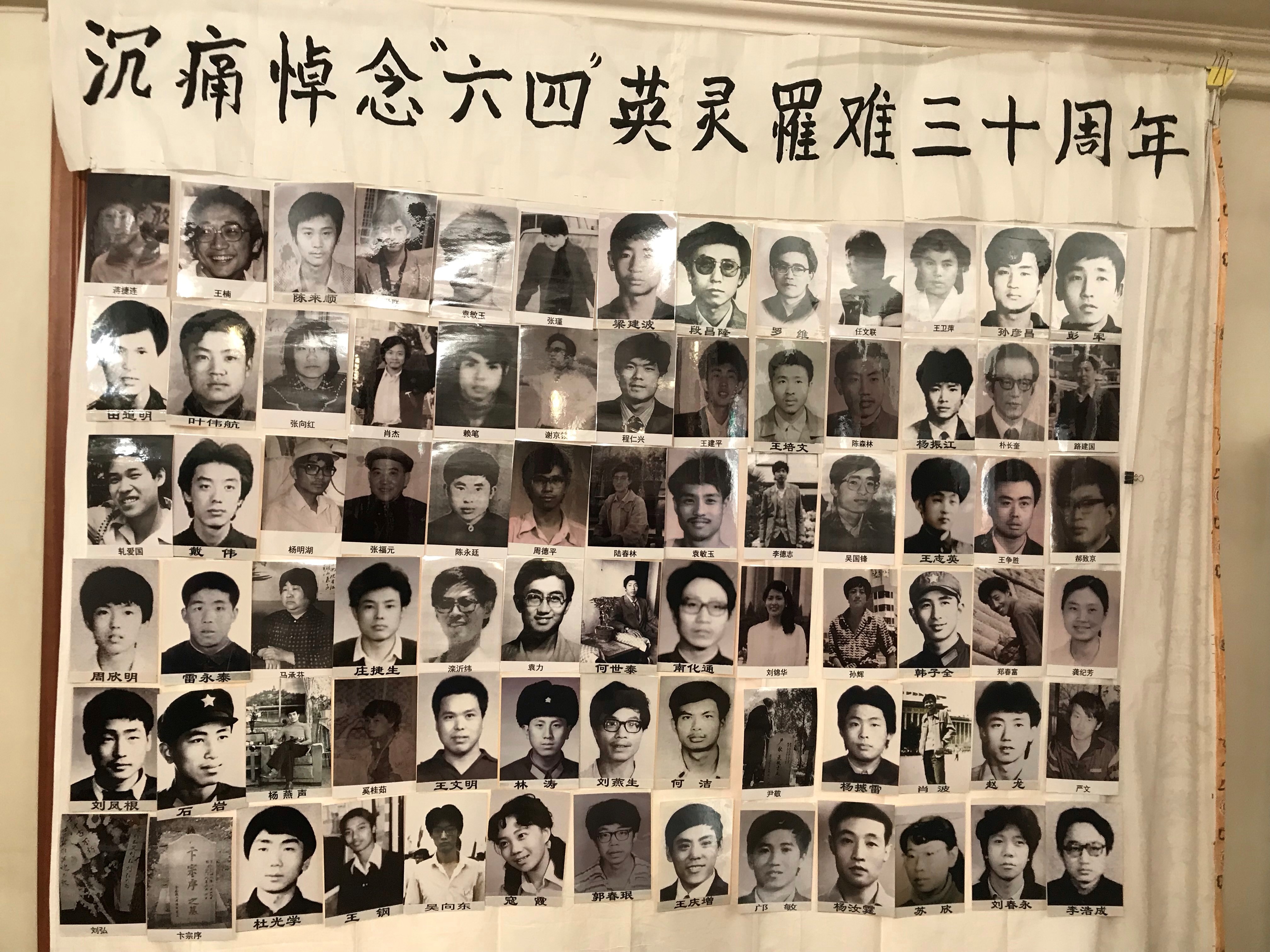
Thirtieth anniversary commemorative shrine honoring those killed in June Fourth.
II
We are the guardians of the souls of the June Fourth martyrs.
In order to defend the principle of “peace, rationality, and non-violence” that our loved ones had upheld before their death, the Tiananmen Mothers, since 1995, have sent joint open letters to the annual sessions of the Two Congresses—meetings of the National People’s Congress and Chinese People’s Political Consultative Conference—and the country’s leaders. In these letters, we have formally proposed our three demands to justly resolve June Fourth, namely: truth, compensation, and accountability. We have also proposed equal dialogue with the government, suggested dealing with June Fourth through legal procedures, and recommended principles such as tackling the more straightforward issues first before gradually solving the more difficult ones.
The Two Congresses come and go every year, as does the anniversary of June Fourth. Each year, we write our open letter and send it out by registered mail. However, we have never heard a single word back from the authorities, as if our letters were stones cast into the sea. Throughout the years, the delegates to the Two Congresses and the national leadership have treated our appeals with arrogance: They have pretended not to hear and have never paid any attention. All we have received in return for our goodwill and sincerity is ever harsher control on us family members of the victims by public security, domestic security, and national security agents.
Time is merciless, and the natural laws of life, aging, sickness, and death spare no one. Since 1995, 55 family members of our group who have joined in this long, hard struggle have died without seeing justice. One of the most tragic cases is that of our fellow group member Mr. Ya Weilin (轧伟林), whose son Ya Aiguo (轧爱国) was killed in the June Fourth Massacre. In 2012, the esteemed man, then 73, found it unbearable to continue to live after all these excruciating years and chose suicide in protest. He resorted to such a drastic measure in order to search for his beloved son in the other world. However, even this was unable to move the hearts of stone of those in power.
Our group members have passed away one by one, with another five gone in 2018! In our sadness and longing for our June Fourth martyrs, who died with unresolved grievances, we are reminded of the victims of the Second Sino-Japanese War. In recent years, the victims (including families of those killed in the Nanjing Massacre, germ warfare victims, and comfort women) have persisted in their requests for apologies and compensation by the Japanese government, and yet the Japanese courts have repeatedly rejected their just demands. On the one hand, the Japanese government has spared no effort to cover up the truth. On the other, it has engaged in delaying tactics in the hope that victims will age and die out one by one as the matter drags on. Its words and deeds have not only filled the victims with indignation but also compelled some Japanese scholars—as well as perpetrators—of conscience to take action to uncover the truth. The ugly deeds of the Japanese government and right-wing forces present a striking contrast with the conduct of the former Chancellor of West Germany Willy Brandt: In 1970, he knelt before the monument commemorating the Warsaw Ghetto Uprising in Poland to express remorse and apology. It was Hitler and the Nazis who were responsible for the Holocaust. And Willy Brandt was the chancellor of the free and democratic Germany many years later. In the normal course of things, there was no longer any relationship between them. But Brandt nevertheless took responsibility for the crimes of Nazi Germany and fell to his knees, apologizing to the slain Jewish people and the whole world. Brandt’s kneeling in Warsaw left the international community in awe, elevated the international image of the German nation, and allowed the country to return to the civilized world. For this gesture, Brandt was awarded the Nobel Peace Prize the following year. The kneeling in Warsaw also became an important milestone in the improvement of relations between West Germany and Eastern European countries after the war.
In the words of Brandt, “He who forgets or seeks to forget will become sick in his soul.” Elie Wiesel, Holocaust survivor and Nobel Peace laureate, once said, “If we forget, the dead will be killed a second time.” He further noted, “If we forget, we are guilty, we are accomplices. The rejection of memory . . . would doom us to repeat past disasters, past wars.” The juxtaposition of Japan and Germany is sobering: both murdered other nationals or ethnic groups, and were defeated in the Second World War, yet the polar opposite ways in which they dealt with their past atrocities are deeply thought-provoking. As for the successive Chinese governments, those slaughtered 30 years ago at the hands of martial law troops obeying orders were their fellow countrymen of the same race and ethnicity. In the face of such criminality and facts, can the government look the other way forever?
Those in power in China today are at a crossroads between two options. The first option is to do one’s utmost to cover up the crimes while burying one’s head in the sand—like the Japanese government—and to wait until family members of June Fourth victims age and die out, as if their death would obliterate June Fourth: the miscarriage of justice and unresolved questions. What the authorities fail to appreciate is that the covering up of crimes itself is a new offense. We are also convinced that even after all of us group members have passed away, we will have successors, those who will execute the will of history. Moreover, the longer this debt is owed, the higher the cost, and the more numerous the crimes!
The second option is to learn from Willy Brandt and face history head-on by taking the following actions: Express remorse for the government’s past crimes; hold sincere dialogue with June Fourth victim groups; resolve June Fourth through legal procedures; publicize the truth and number of casualties of the massacre; provide compensation for the victims; and conduct just trials of those responsible for the killings. Taking these measures will usher in a new era in which the tragedy of June Fourth will not be repeated. We the Tiananmen Mothers, the guardians of the souls of June Fourth, eagerly await the arrival of the new era!
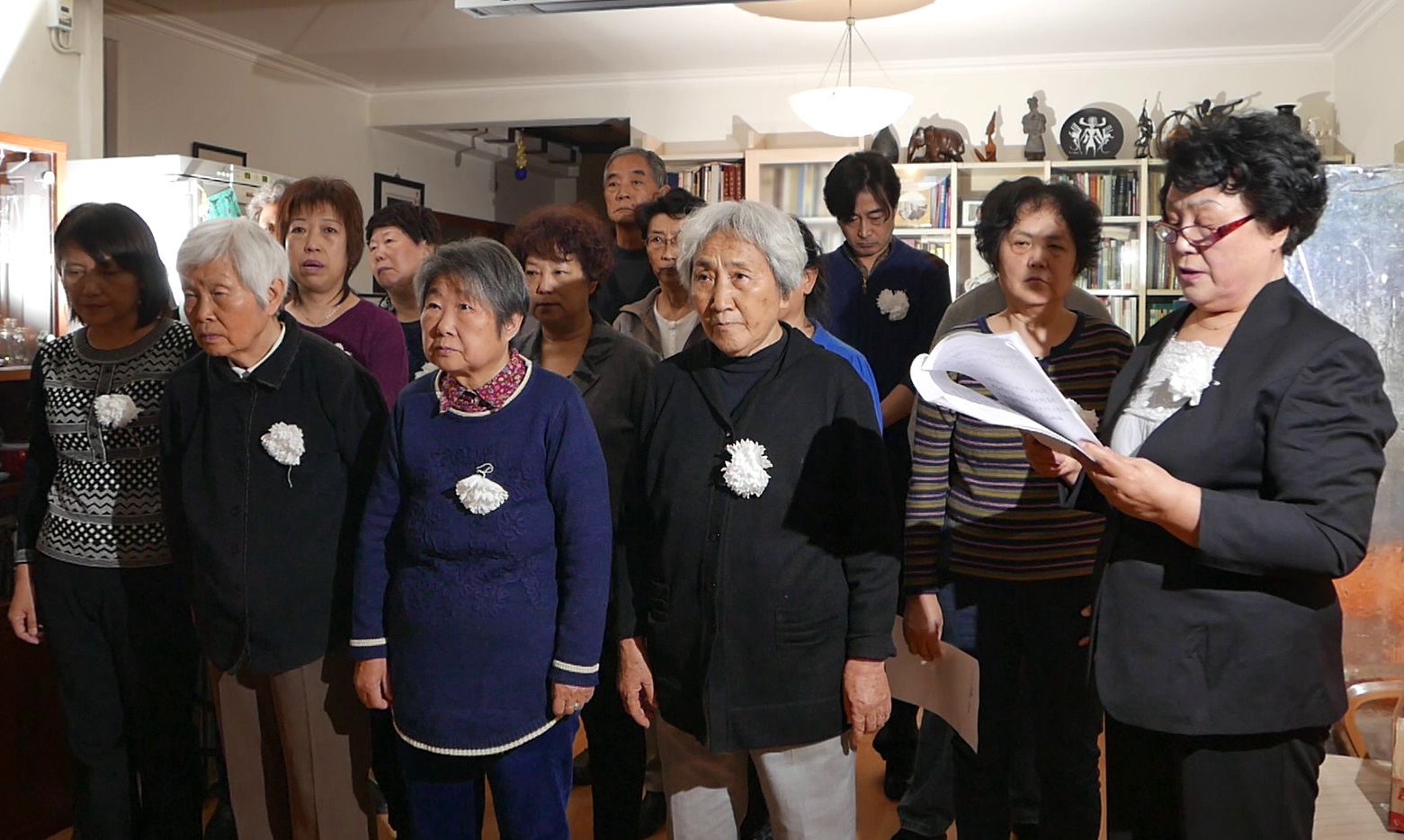
Members of the Tiananmen Mothers reading their essay,“Mourning Our Families and Compatriots Killed in the June Fourth Massacre”
III
We are staunch custodians of hope.
Our most beloved, we know that no matter how much we yearn for you, you will never be able to come home. What we are steadfastly holding out for is simply the long overdue justice. Over the past 30 years, we have looked out for one another in mutual help and support. In our 30 years of guarding the spirits of the deceased and holding on to hope, we have suffered no lack of disappointment and torment. But we will never give up and will continue to persevere! This is the only way for us to stay true to our conscience and honor the souls of the martyrs who died with unresolved grievances.
As we commemorate the souls of June Fourth victims, we want to ask the Chinese government and leaders the following questions.
You promote Marxism—the philosophical approaches of dialectical materialism and historical materialism, which call for comprehensive, complete, and accurate assessment of historical events and appraisal of historical figures. This makes us wonder: As the nation commemorated the 40th anniversary of Reform and Opening-up, why was there no mention of those who accomplished the extraordinary feats of restoring order from chaos and setting the Reform and Opening-up process in motion in China, namely, Hu Yaobang and Zhao Ziyang, former General Secretaries of the Communist Party of China, or of the likes of Wan Li and Xi Zhongxun? Instead, the authorities piled all credit for such historical achievements wholesale onto Deng Xiaoping, the executioner of the June Fourth, conferring upon him the exalted title of the “architect of Reform and Opening up”. Is such practice in line with historical materialism?
You fully affirm that “practice is the sole criterion for testing truth.” So, we would like to ask: Thirty years of practice have sufficiently proven that it was justifiable and legitimate for the students and citizens to petition to the government in protest of official profiteering and corruption in Tiananmen Square. What crimes could they have committed in exercising their constitutional rights? Thirty years of practice have sufficiently proven this: It was precisely the indiscriminate killing of innocent civilians and the suppression of the voice of justice against corruption that led the Chinese officialdom on the unobstructed fast track to corruption in the ensuing 30 years, where an expansive, cascading, unbridled, and utterly vicious corruption contest rages on.
Since the CPC’s 18th National Congress, an emphasis has been placed on “rule the country by law” and “judicial justice.” In particular, the country’s leaders have repeatedly vowed to “allow every citizen to enjoy judicial fairness and justice.” As mentioned above, since 1995, the Tiananmen Mothers have sent jointly signed letters to the annual Two Congresses and the nation’s leaders, in which we have formally proposed our three demands for the fair resolution of June Fourth—truth, compensation, and accountability—along with the recommendation to resolve June Fourth through legal procedures. We have also turned our demands on paper into practical action. On May 14 and May 21, 1999, right before the tenth June Fourth anniversary, we filed complaints against Li Peng, one of the perpetrators of the massacre, with the Supreme People’s Procuratorate. The two complaints were delivered by family members of the victims, which were accepted by the SPP. Our actions back then were consistent with the current government’s judicial reform efforts, but why haven’t we received a single response to this day?
You have been promoting the “Chinese Dream.” As Chinese citizens, and your compatriots, we too have dreams. The dream of the Tiananmen Mothers is the “June Fourth Dream.” We dream that one day, the nation can restore the name of the June Fourth martyrs and rectify the reputation of the 1989 patriotic democracy movement. Specifically, we call for the establishment of a national day of mourning on June 4 each year; the erection of June Fourth monuments and cemeteries to provide the slain souls a final resting place; and holding a state funeral for the victims so that the national trauma will not be forgotten and the June Fourth tragedy will not be repeated! Today, standing before the shrine of our most beloved and all of the June Fourth victims, we muster the greatest courage, unafraid of retaliation and repression, and loudly proclaim everything the June Fourth Dream of the Tiananmen Mothers entails.
We want to ask: When will our June Fourth Dream be realized? Or, when will this be put on your work agenda? When will the government start an equal dialogue with us family members of the victims? (We would like to take the opportunity to remind the current Chinese leaders of a letter written by the former CPC General Secretary Zhao Ziyang to the 16th National Congress while he was under house arrest. He proposed three recommendations for solving June Fourth, namely: “It’s better to resolve it earlier rather than later,” “solve it proactively rather than passively,” and “solve it by ourselves rather than having it solved by others.” Regrettably, his enthusiasm and wisdom were not tolerated by the leaders at the time and, instead, resulted in even more severe restrictions on his detention.)
In recent years, with the manner and air as befit a major power, you have widely promoted the concept of the “community of shared future for mankind” in the international community and the policy of “tilting public resources toward the vulnerable groups” domestically. We wish to know: As a group of Chinese citizens—your compatriots—are we, the Tiananmen Mothers, not a community of tormented destiny? Are we not a vulnerable group? Or does our fate lie outside the community of shared future for mankind? The majority of our group members live in the urban and rural areas in Beijing right among you, struggling for decades with the hardships of losing our loved ones. All of our country’s previous leaders have repeatedly turned a deaf ear to us as if nothing had happened and all was well. Over the last 30 years, has there been a single one of those in power who genuinely cared about or paid attention to us? And how could a government that has trapped us—your compatriots—in pain and suffering without true remorse and efforts to right its wrong be qualified to build a community of shared future for mankind? It would seem that establishing authority across the world would not be as easy as suppressing the people at home.
We have also noticed that not long ago, Chinese leaders repeatedly appealed to the Taiwanese compatriots that “people on both sides of the Taiwan Strait are all of one family” and that “family members don’t fight one another.” Actions speak louder than words. Your swift resolution of the horrific case of your killing your fellow countrymen would be more powerful than a dozen proclamations. Otherwise, how could you win the trust of the world? How would you earn the confidence of the international community and your family across the Strait?
Whenever we see government leaders give speeches about initiatives “for the people” on television, vowing to increase the “sense of happiness,” “sense of gain,” and “sense of security” among citizens, profound sadness and misery well up inside of us. We have to ask: where are our “three senses”? How can we obtain them?
Here, we wish to inform the Chinese leaders: Ever since our most beloved were brutally murdered by martial law troops 30 years ago, our families have borne the unbearable weight of tragedy, and the sense of happiness has just left us. Knowing that the dead cannot come back to life and that they died with unresolved grievances, how can we dare to speak of the luxury of happiness? As fathers and sons yourselves, you should not find it difficult to understand the pain in our hearts.
We might as well analyze the “sense of gain” a little. Whatever their age when our loved ones were killed, it’s very likely that they left behind a crying baby, loving wife, or aging parents. Thirty years ago, they might have been, or were probably soon to become, the pillars of their families. And today? In the 30 years following the loss of the pillars of our families, all that we have gained is endless hardship and suffering. The economic and psychological loss and damage we families of victims have suffered are impossible to describe with words or quantify with numbers. Even worse, the authorities have deprived some of our group members of various rights, including the right to work—for publicly denouncing the June Fourth Massacre, calling for the prosecution of the perpetrators, and demanding humanitarian relief for the families in need. We do not have a “sense of gain” whatsoever. On the contrary, all we have is a sense of deprivation.
The talk of the “sense of security” is even more ironic. The family members of June Fourth victims have been the most “secured” group in the country since the early 1990s, when we started to publicly condemn the massacre and demand the truth regarding the murderous act. Almost every signer of open letters has been living under the watchful eyes of the government’s political and legal organs. Subjecting us to the principle of “presumption of guilt,” the authorities send carloads of agents to stand guard in front of our homes and forbid us to go out or receive guests freely whenever a politically sensitive period rolls around. Even when they do let us leave our homes, there are police officers (or plainclothes agents) and vehicles on our tail. Our phones are tapped; our computers are hacked. Some of us even have surveillance cameras installed in and outside our homes. And some have been more than once called in by the police, put under residential surveillance and/or criminal detention, and even taken to the detention center in handcuffs. The authorities trample on those living outside Beijing with even greater impunity. Local police officers have gone straight to their doors and warned them outright not to sign the joint letters by the Tiananmen Mothers, or else their piddling subsistence allowance would stop coming.
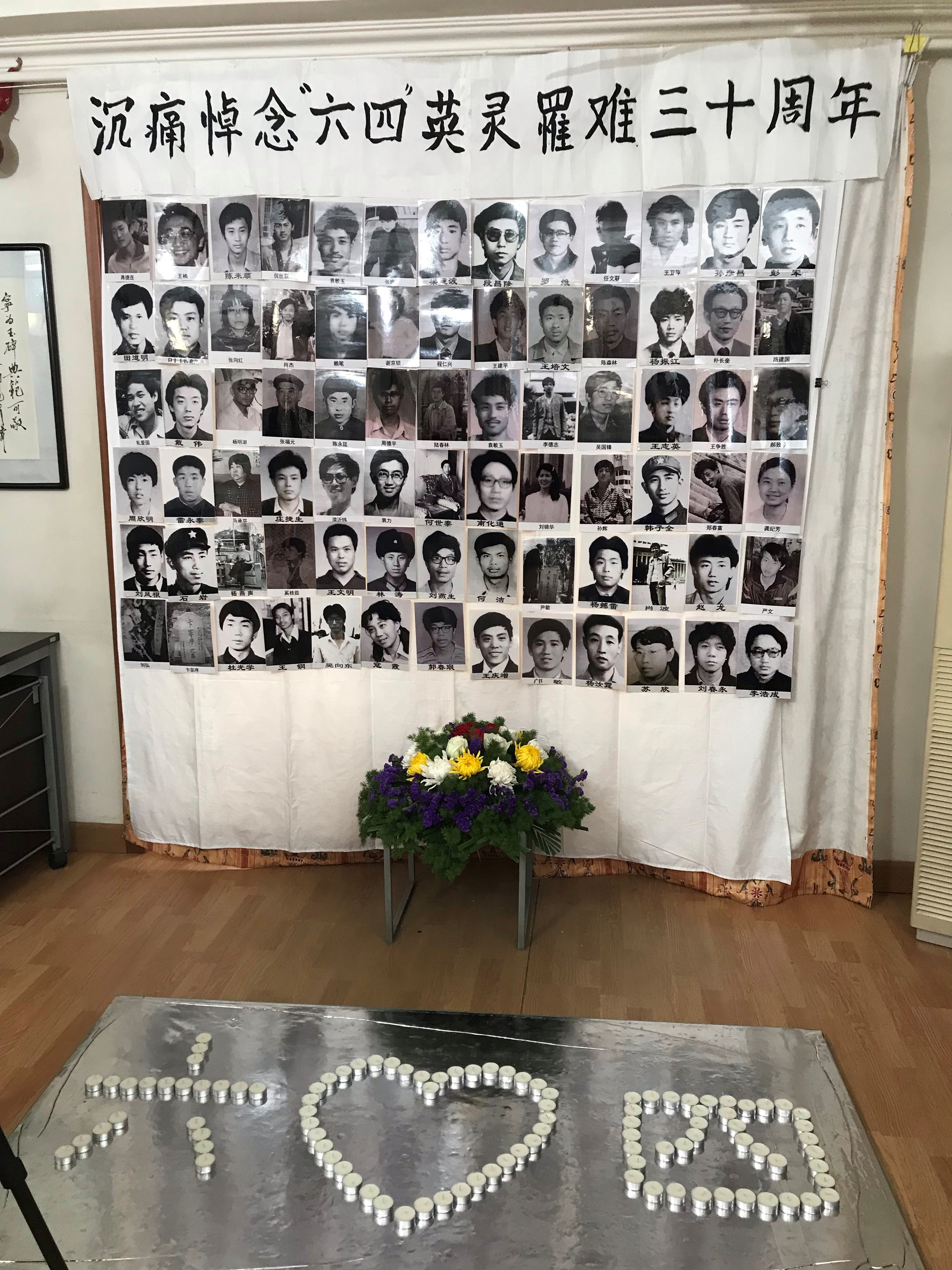
Thirtieth anniversary commemorative shrine honoring those killed in June Fourth.
IV
We are the guardians of the souls of the deceased and the custodians of hopes. Today we can proudly tell the spirits of the June Fourth martyrs: Our most beloved, we have not crumbled under intense political repression and will not be divided by the lure of individual gains. This is because your indomitable courage has always been with us!
You will also find solace in the fact that, throughout the long years, your families have not stood alone or in isolation—the world has not forgotten June Fourth. The international community of governments, key political leaders, and civil society groups, along with people of conscience at home and abroad, have continued to be concerned about you and the futures of your loved ones. Their concern has made us feel the glory and warmth of humanity.
As early as 1991, two years following your martyrdom, Nancy Pelosi, then U.S. Congresswoman and now Speaker of the House of Representatives, came to China. Under the glare of armed police standing guard in the streets, Pelosi courageously came to Tiananmen Square—where you had fallen—to unfurl a banner that reads, “To Those Who Died for Democracy in China.”
The United Nations has also expressed concern for us. In 1993, defying the Chinese government’s obstruction, the U.N. General Assembly extended a formal invitation to the family members of June Fourth victims to attend a human rights conference in Vienna with non-governmental organizations from around the world. But unfortunately, the trip did not come to pass.
In 1995, Hillary Clinton, then the U.S. First Lady and later Secretary of State, led a delegation to China to attend the World Conference on Women. She worked with several NGOs to obtain the release of family members of June Fourth victims being illegally detained by Chinese authorities.
In 1998, during their China visit, U.S. President Bill Clinton and the First Lady asked then-Chinese President Jiang Zemin for a meeting with representatives of the Tiananmen Mothers. Even though the meeting did not happen, it was remarkable that at the ensuing joint press conference, Clinton publicly stated his position on June Fourth from the historical perspective and expressed his hope that Jiang Zemin would be on the right side of history on this matter.
In 2008, when Frank-Walter Steinmeier, then Foreign Minister and now the President of Germany, visited China, his persistence eventually broke through the Chinese government’s obstruction and successfully led representatives of German lawmakers from both parties to meet with representatives of the Tiananmen Mothers.
To our knowledge, Václav Havel, the late former President of the Czech Republic, along with several Nobel Peace laureates and many unnamed others, nominated the Tiananmen Mothers for the Nobel Peace Prize multiple times to encourage us to carry on with our mission. We will not forget the invaluable humanitarian concern we received in our most difficult times from officials in foreign embassies in Beijing as well as journalists of many Western countries such as the United States, Great Britain, Germany, France, and Sweden.
Here, we would also like to recognize the fervor of journalists and citizens of Hong Kong. On June 4 every year, the candlelight vigil in Victoria Park always brings tears to our eyes.
And it is precisely due to the generous and politically unconditional humanitarian contributions by civil society human rights groups such as the Independent Federation of Chinese Students and Scholars (全美学自联), Human Rights in China (中国人权), and Hong Kong Alliance in Support of Patriotic Democratic Movements of China (港支联)—all regarded by the Chinese government as “hostile organizations”—and numerous friends at home and abroad that the hungry June Fourth orphans could grow up, finish school, and start their own families, that families in need were able to receive special care, and that ailing elders could get by year after year.
Such is the embodiment of universal love! We are immensely grateful yet can offer nothing in return. All we can do is forever remember the generosity in our hearts and pray to the Heavens for blessings to all of the kindhearted people in the world.
Our most beloved! Today, we have overcome a multitude of struggles and gathered here to commemorate you in silence. It has been 30 years, but we have yet to obtain justice for you and allow you to rest in peace. For this we feel enormous guilt. What we can do is uphold our three demands as our firm stance, safeguard the dignity of the dead and the living, maintain the independence of the group of family members of the victims, and be steadfast guardians of your souls and staunch custodians of hope.
May the flowers and candlelight bring your heroic souls some warmth and solace! May the dawn arrive soon, and may the Heavens protect the Chinese nation!
In tearful commemoration in advance of the Tomb-Sweeping Day of 2019,
Tiananmen Mothers
Signers (127):
| 尤维洁 You Weijie |
郭丽英 Guo Liying |
张彦秋 Zhang Yanqiu |
| 吴丽虹 Wu Lihong |
尹 敏 Yin Min |
郝义传 Hao Yichuan |
| 祝枝弟 Zhu Zhidi |
叶向荣 Ye Xiangrong |
丁子霖 Ding Zilin |
| 张先玲 Zhang Xianling |
周淑庄 Zhou Shuzhuang |
钱普泰 Qian Putai |
| 吴定富 Wu Dingfu |
宋秀玲 Song Xiuling |
孙承康 Sun Chengkang |
| 于 清 Yu Qing |
孙 宁 Sun Ning |
黄金平 Huang Jinping |
| 孟淑英 Meng Shuying |
袁淑敏 Yuan Shumin |
王广明 Wang Guangming |
| 刘梅花 Liu Meihua |
谢京花 Xie Jinghua |
马雪琴 Ma Xueqin |
| 邝瑞荣 Rui Ruirong |
张树森 Zhang Shusen |
杨大榕 Yang Dazhao |
| 贺田凤 He Tianfeng |
刘秀臣 Liu Xiuchen |
沈桂芳 Shen Guifang |
| 谢京荣 Xie Jingrong |
金贞玉 Jin Zhenyu |
要福荣 Yao Furong |
| 孟淑珍 Meng Shuzhen |
邵秋风 Shao Qiufeng |
谭汉凤 Tan Hanfeng |
| 王文华 Wang Wenhua |
陈 梅 Chen Mei |
周 燕 Zhou Yan |
| 李桂英 Li Guiying |
徐宝艳 Xu Baoyan |
狄孟奇 Di Mengqi |
| 王 连 Wang Lian |
管卫东 Guan Weidong |
高 婕 Gao Jie |
| 刘淑琴 Liu Shuqin |
孙珊萍 Sun Shanping |
刘天媛 Liu Tianyuan |
| 黄定英 Huang Dingying |
熊 辉 Xiong Hui |
张彩凤 Zhang Caifeng |
| 何瑞田 He Ruitian |
田维炎 Tian Weiyan |
杨志玉 Yang Zhiyu |
| 李显远 Li Xianyuan |
王玉芹 Wang Yuqin |
曹长先 Cao Changxian |
| 方 政 Fang Zheng |
齐志勇 Qi Zhiyong |
冯友祥 Feng Youxiang |
| 何兴才 He Xingcai |
刘仁安 Liu Ren’an |
齐国香 Qi Guoxiang |
| 韩国刚 Han Guogang |
庞梅清 Pang Meiqing |
黄 宁 Huang Ning |
| 王伯冬 Wang Bodong |
张志强 Zhang Zhiqiang |
赵金锁 Zhao Jinsuo |
| 孔维真 Kong Weizhen |
刘保东 Liu Baodong |
陆玉宝 Lu Yubao |
| 齐志英 Qi Zhiying |
方桂珍 Fang Guizhen |
雷 勇 Lei Yong |
| 葛桂荣 Ge Guirong |
郑秀村 Zheng Xiucun |
王惠蓉 Wang Huirong |
| 邢承礼 Xing Chengli |
桂德兰 Gui Delan |
王运启 Wang Yunqi |
| 黄雪芬 Huang Xuefen |
郭达显 Guo Daxian |
王 琳 Wang Lin |
| 刘 乾 Liu Gan |
朱镜蓉 Zhu Jingrong |
金亚喜 Jin Yaxi |
| 周国林 Zhou Guolin |
穆怀兰 Mu Huailan |
王争强 Wang Zhengqiang |
| 宁书平 Ning Shuping |
曹云兰 Cao Yunlan |
林武云 Lin Wuyun |
| 冯淑兰 Feng Shulan |
付媛媛 Fu Yuanyuan |
李春山 Li Chunshan |
| 蒋艳琴 Jiang Yanqin |
何凤亭 He Fengting |
奚永顺 Yan Yongshun |
| 肖宗友 Xiao Zongyou |
乔秀兰 Qiao Xiulan |
陆燕京 Lu Yanjing |
| 李浩泉 Li Haoquan |
赖运迪 Lai Yundi |
周小姣 Zhou Xiaojiao |
| 周运姣 Zhou Yunqi |
陈永邦 Chen Yongbang |
刘永亮 Liu Yongliang |
| 张景利 Zhang Jingli |
孙海文 Sun Haiwen |
王 海 Wang Hai |
| 陆三宝 Lu Sanbao |
姚月英 Yao Yueying |
任改莲 Ren Jianlian |
| 倪世殊 Ni Shishu |
杨云龙 Yang Yunlong |
崔林森 Cui Linsen |
| 吴卫东 Wu Weidong |
贾福泉 Jia Fuquan |
王德义 Wang Deyi |
| 朱玉仙 Zhu Yuxian |
石 晶 Shi Jing |
袁 刃 Yuan |
| 包丽梅 Bao Limei |
奚贵君 Qi Guijun |
钟俊华 Zhong Junhua |
| 轧爱强 Zha Aiqiang |
|
|
We are including the names of deceased fellow members in order to honor their wishes (55):
| 吴学汉 Wu Xuehan |
苏冰娴 Su Bingyan |
姚瑞生 Yao Ruisheng |
| 杨世钰 Yang Shizhen |
袁长录 Yuan Changlu |
周淑珍 Zhou Shuzhen |
| 王国先 Wang Guoxian |
包玉田 Bao Yutian |
林景培 Lin Jingpei |
| 寇玉生 Yan Yusheng |
孟金秀 Meng Jinxiu |
张俊生 Zhang Junsheng |
| 吴守琴 Wu Shouqin |
周治刚 Zhou Zhigang |
孙秀芝 Sun Xiuzhi |
| 罗 让 Luo Rang |
严光汉 Yan Guanghan |
李贞英 Li Yuying |
| 邝涤清 Kuang Tieqing |
段宏炳 Duan Hongbing |
刘春林 Liu Chunlin |
| 张耀祖 Zhang Yaozu |
李淑娟 Li Shujuan |
杨银山 Yang Yinshan |
| 王培靖 Wang Peijing |
袁可志 Yuan Kezhi |
潘木治 Pan Muzhi |
| 萧昌宜 Xiao Changyi |
轧伟林 Rolling Weilin |
刘建兰 Liu Jianlan |
| 索秀女 Suo Xiunü |
杨子明 Yang Ziming |
程淑珍 Cheng Shuzhen |
| 杜东旭 Du Dongxu |
张桂荣 Zhang Guirong |
赵廷杰 Zhao Tingjie |
| 陆马生 Lu Masheng |
蒋培坤 Jiang Peikun |
任金宝 Ren Jinbao |
| 张淑云 Zhang Shuyun |
韩淑香 Han Shuxiang |
石 峰 Shi Feng |
| 王桂荣 Wang Guirong |
隋立松 Yan Lisong |
田淑玲 Tian Shuling |
| 孙淑芳 Sun Shufang |
陈永朝 Chen Yongchao |
孙恒尧 Sun Hengqi |
| 徐 珏 Xu Jue |
王范地 Wang Fandi |
李雪文 Li Xuewen |
| 王双兰 Wang Shuanglan |
张振霞 Zhang Zhenxia |
肖书兰 Xiao Shulan |
| 谭淑琴 Tan Shuqin |
 中國婦權


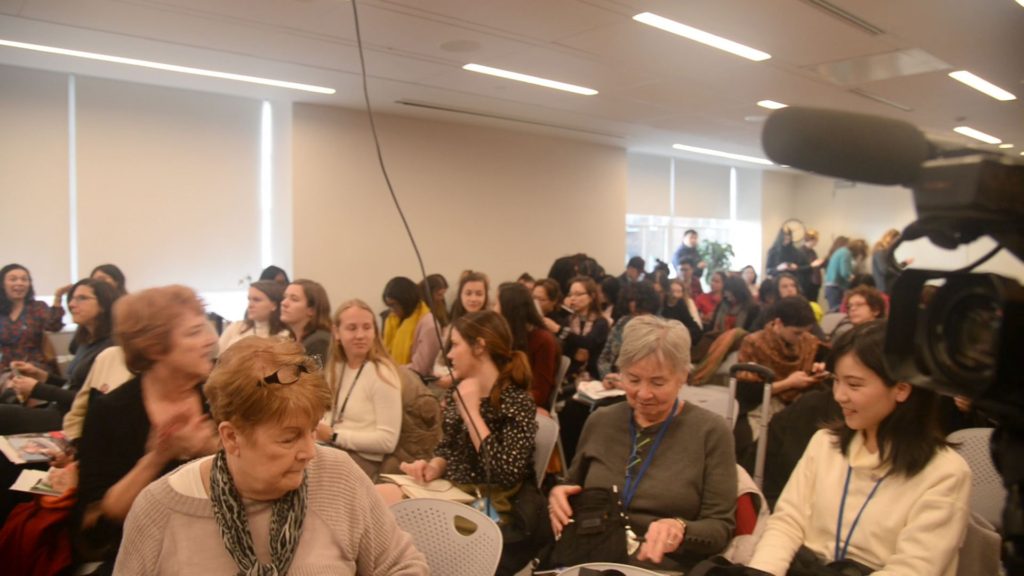
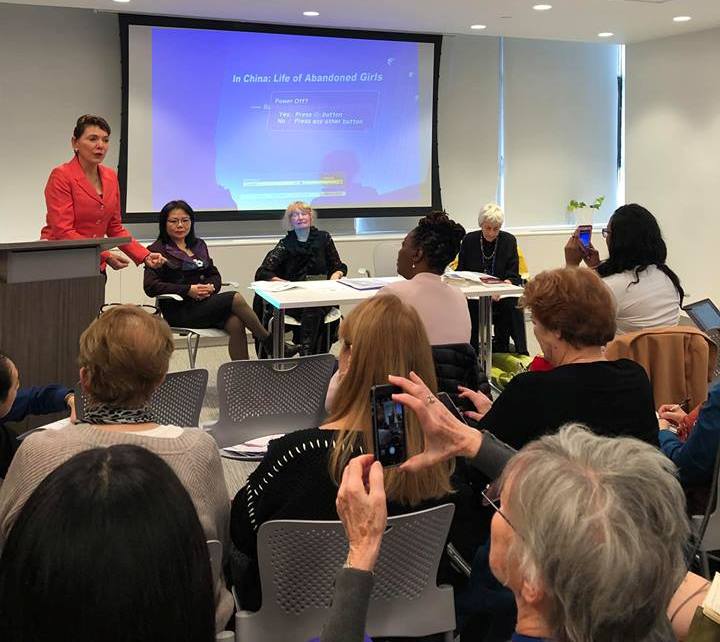
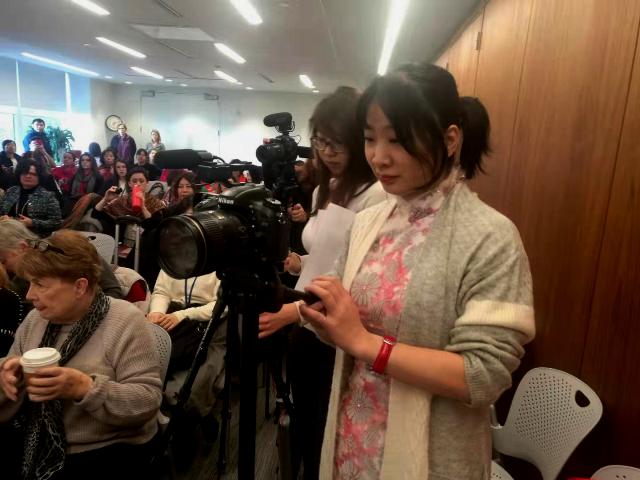
 Margaret Owen was speaking. (Photos by Yue Zhang)