An Urgent Appeal from Li Chengsong’s Family: Do Not Deport Him to China
——written by the family of Li Chengsong
——— Li Chengsong (second from left) at the second photo exhibition organized by Women’s Rights in China. (Related article)
We are writing as the family of Li Chengsong, deeply concerned for his safety and his future. We urgently appeal to the U.S. government, international human rights organizations, the legal community, the media, and the public to bring attention to his case.
Our plea is simple: ensure that he receives a fair hearing in his immigration proceedings, release him while his asylum case is pending, and do not deport him to China.
On the morning of August 27, 2026, Li Chengsong, a Christian, democracy activist, human rights defender, and member of the China Democracy Party, was detained by U.S. Immigration and Customs Enforcement (ICE) at a truck stop in Pennsylvania. He is currently being held at an immigration detention facility in Pennsylvania.
Li grew up attending church with his mother, and his Christian faith has been an enduring part of his life. In 2018, while attending services at Beijing’s Zion Church, he witnessed firsthand the persecution of its congregation. He also experienced harassment from the authorities, including phone calls and visits to his home. Despite this pressure, he remained committed to his faith and to the principles of freedom, human rights, and the rule of law.
For years, Li has spoken out for democracy and religious freedom in China and supported people facing persecution. He repeatedly contacted local government authorities to raise concerns about individuals in detention. He expressed support for Liu Xiaobo online and called for respect for freedom and human rights. He also took part in activities supporting Peking University students and others affected by the July 27 arrests of workers advocating for their rights in Shenzhen.
While living in Beijing, Li participated in pro-democracy activities near the North Fourth Ring Road and elsewhere. Alongside fellow democracy advocates Song Zaimin, Zha Jianguo, and Zhai Yanmin, he worked to draw attention to issues of democracy, human rights, and social justice in China.
After coming to the United States, Li continued this advocacy. He joined the China Democracy Party and took an active role in its activities, both as a participant and an organizer. These included a photo exhibition in Flushing highlighting abuses under Chinese Communist Party rule, rallies outside the White House and the Chinese Embassy in Washington, D.C., and commemorations of the June Fourth Tiananmen Square crackdown. He also volunteered at the June Fourth Memorial Museum and participated in the “Jasmine” demonstrations in New York’s Times Square. Throughout this time, he continued to speak out for persecuted Christians, democracy activists, and other people facing oppression in China.
His record reflects a longstanding commitment to these principles, demonstrated through years of advocacy and action.
As his family, we fear for his safety if he is returned to China. We respectfully ask the U.S. authorities to give full and careful consideration to his personal history, his Christian faith, and his years of involvement in democracy and human rights activism.
We make the following urgent appeals:
1. Release Li Chengsong while his asylum case is pending. We urge the U.S. authorities to handle his case fairly and in accordance with the law, and to release him immediately rather than subject him to prolonged detention while his claim is being considered.
2. Do not deport him to China. We call on the U.S. government to uphold its obligations under international human rights law and applicable U.S. law, protect his life and safety, and safeguard his right to seek asylum.
3. Maintain international attention on his case. We urge United Nations human rights mechanisms, international human rights organizations, and democratic governments to monitor his treatment and the progress of his case, and to speak out in support of his safety and rights.
4. Support his release and access to a fair asylum process. We ask human rights organizations, lawyers, advocates, and concerned members of the public to help secure his release and ensure that his asylum claim is heard through a fair, transparent process consistent with the law.
All we want is for our loved one to be safe, to receive the legal protections he is entitled to, and to be able to live in peace. We fear that returning him to China would expose him to persecution because of his faith, his beliefs, and his years of speaking out for freedom and human rights.
Please help bring attention to Li Chengsong’s case. Please speak up for his safety and his right to a fair hearing.
Above all, please do not send him back to a place where we fear he could face persecution.
Issued by: Zhou Mei, on behalf of Li Chengsong’s family
Contact to sign this appeal: Zhou Mei
Phone: +1 646-631-1668
Date: August 31, 2026
To signal your name to this appeal, please tag me on X:ZhouMei @yinjia761
Yesterday (March 7th), Arthur Liu, father of Alysa Liu, a Chinese-American figure skating champion, gave a speech at the June 4th Memorial Museum in Los Angeles. From an exile plagued by nightmares to the father of an Olympic champion who died without regrets, Arthur Liu shared his daughter’s journey to success. The event was packed, with almost half the audience standing. The two-hour speech was filled with enthusiasm, with some shouting “A source of pride for the Chinese people!” After the speech, audience members, including those from Hong Kong and Taiwan, eagerly asked questions.
Arthur Liu candidly admitted that he still couldn’t appreciate his daughter’s fashion sense, including her hair color and lip piercing.
Arthur Liu pointed out that after his daughter’s success, he faced the temptation of huge sums of money, but he refused because he believed in principles. America gave him a second life and provided him with the environment to pursue the American Dream. He believes that as long as one works hard, their dreams will eventually come true. Arthur Liu is a single father raising five children on his own. He claims to be the poorest lawyer, but even faced with the temptation of enormous wealth, he still chose surrogacy.
Alysa Liu is the eldest daughter in her family. She has four younger siblings (triplets and a youngest brother), all of whom came into the world through the same means (egg donation and surrogacy). Alysa Liu has stated that because she grew up in such a family environment, “not having a mother” is a normal part of her life, and she doesn’t feel she’s missing anything.
Arthur Liu strongly supports his daughter Alysa Liu’s participation in figure skating. (Alysa Liu Instagram)
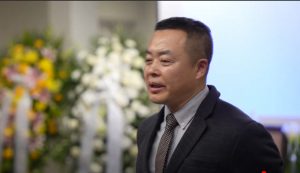
Arthur Liu’s speech in Los Angeles on March 7, 2026, hosted by Wang Dan (Right), a veteran of the June 4th Memorial Museum. (Image: WRIC)
Arthur Liu was shareong his parenting philosophy. (WRIC)
Alysa Liu knew she had three mothers when she was ten years old
Alysa Liu grew up in a “purely patriarchal” environment. She knew she had three mothers when she was ten years old.
Arthur Liu ‘s graying temples and deeply lined eyes betrayed the hardships he had endured. Dressed in a gray suit, he looked no different from any other lawyer. Sharing his daughter’s story, he mentioned his long-held desire to have children, leading him to have five children in the United States through surrogacy.
When Alysa Liu was six or seven, she asked him, “Why do I look different from my Chinese parents?” At the time, Arthur Liu was divorced from his Chinese ex-wife, and his reply was, “I’ll tell you when you grow up!” It wasn’t until his daughter was ten that the topic came up again, and he decided to be honest with her: “You have three mothers. Your life originally came from the white mother who donated eggs, the second mother was the surrogate mother who carried you, and the third mother is your legal mother.”
Arthur Liu said that Alysa Liu and the triplets’ surrogate mother are the same person. His family has always been very grateful to her for bringing them life and has even taken the children to Central California to meet her. Alysa Liu’s legal mother, Arthur Liu ‘s ex-wife, consistently supported his decision to use surrogacy. Even when he was busy with work, she often urged him to complete the procedures; it’s fair to say that without her, these children wouldn’t exist. In the children’s hearts, she is their mother. Alysa Liu visits her whenever she has the chance, and even invites her to spend the Lunar New Year with them
Alysa Liu expressed understanding and acceptance of her father’s choice.
Arthur Liu also shared the hardships and financial difficulties he faced in raising Alysa Liu. He said that when he first came to the United States, he worked two jobs a day, carrying boxes and washing dishes, and even suffered from mental health issues, having nightmares every night about still being on the run. But he remained strong and believed that everything could be overcome.
From the age of five, when Alysa Liu began to skate with ease and display her talent, their daily routine consisted of Arthur Liu waking up at 4:30 a.m., carrying his daughter to the car, driving to the skating rink for training, while he went to work at the law firm two blocks away. This seven-day-a-week training regimen continued without interruption.
A family of six squeezed into a one-bedroom apartment
At that time, the family of six lived in a one-bedroom apartment, with the five children sleeping in three bunk beds. However, Alysa Liu once said that those were her happiest days because the children were close to each other, crawling between their different beds. When he needed money, he borrowed from banks, spending over a million dollars to train his daughter in figure skating.
Alysa Liu could complete a two-and-a-half-lap jump at eight years old, a triple jump at nine and ten, and became the youngest U.S. Intermediate Women’s Champion at thirteen. Faced with such talent, he believed he would support her even if it meant selling everything he owned.
Alysa Liu said he was afraid of nothing and could overcome anything. In 1989, he wasn’t even afraid of death; now he could face death with a smile because he had trained an Olympic champion, and he had no regrets even in death. After his daughter’s success, he faced the temptation of huge sums of money, but he refused because he believed in principles. America gave him a second life and the environment to pursue the American Dream. He believed that as long as he worked hard, his dreams would one day be realized.
Despite being turned down by her coach for a comeback attempt, Alysa Liu insisted, “I want to come back.”
16-year-old Alysa Liu had retired from skating for two years due to years of high-pressure training, which had gradually turned her passion into a burden. During that time, she attended university, took her driving test, spent time in cafes, and even went trekking with friends to the Mount Everest Base Camp in Nepal.
In 2024, during a family trip, Alysa Liu rekindled her love for skating and hoped to return. However, her coach initially refused, arguing that she had been off for two years and advised against returning to avoid damaging her previous reputation. But the then 18-year-old decided to try anyway. One Friday, she took the train to her father, Arthur Liu’s, office and told him she wanted to return to skating.
Arthur Liu said that he outwardly appeared calm, but inwardly he was thinking that he would have to subsidize his daughter’s training expenses again. However, this time, someone was finally taking over the training; he only needed to be a father and a spectator, as his daughter had said.
When he saw his daughter on the ice displaying an attitude of “I want to come back, I want to skate, I want to share with everyone, regardless of the ranking,” he knew she wasn’t skating for him; his mission was complete. Seeing her win the gold medal felt like a scene from a movie—from retirement to Olympic champion, a story even a script wouldn’t dare write.
Arthur Liu stated that his daughter’s return to the ice this time was different from traditional figure skating, but he still couldn’t appreciate her hair color and the ringed upper lip. He felt that his once beautiful daughter was now somewhat incomprehensible. However, he also knew he held old-fashioned views, and his daughter represented a new trend. Seeing her unbound by traditional ideas filled him with pride.
Many parents at the event asked him for advice on raising children. Liu Jun explained that due to his busy work schedule, he adopted a more “free-range” approach with his children, resulting in their independence. His attitude is to respect their wishes, because doing what they truly love brings them immense enthusiasm and joy. Parents shouldn’t force them, but they should accompany their children as they persevere.
He directly answered questions from the audience.
He also hoped that Alysa Liu, as a role model for teenagers, could demonstrate the power of pursuing dreams, and that she could make greater contributions to society in the future.
When asked by an audience member about his views on the CCP’s infiltration and suppression of Taiwan, Arthur Liu directly stated that the demands of Taiwanese people are the same as ours; we support each other and resist authoritarian regimes.
In response to questions about the current situation in Hong Kong, Arthur Liu pointed out that the CCP must release all political prisoners and restore the rule of law to Hong Kong.
Arthur Liu also reminded Chinese people not to follow those with ulterior motives in discriminating against other ethnic groups, not to be anti-immigrant, and not to be used, because Chinese people are also one of the discriminated-against ethnic groups; we are immigrants. We cannot fall for their tricks.
Arthur Liu also appealed to everyone to uphold democratic ideals and safeguard their own beliefs.
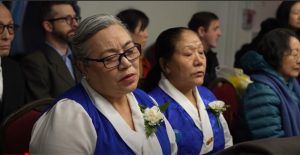
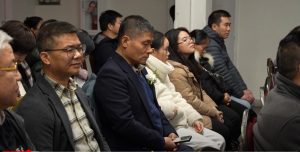
The event was packed, with almost half of the attendees standing. (Image: WRIC)
A BBC reporter, in their report, bluntly stated that an unusual battle was unfolding at the Milan Winter Olympics—not on the ski slopes or ice rinks, but online.
At the heart of this debate are freestyle skier Eileen Gu and figure skater Alysa Liu. They share many similarities: both are Chinese Americans born and raised in the United States, and both dominate their respective fields.
Social media is also abuzz with comparisons: Liu and Gu have similar backgrounds. Both are winter sports champions, both have parents who were early immigrants to the US—intellectually Chinese Americans—both are of mixed race, and both were raised by single-parent Chinese parents. However, they also have significant differences. Liu is simple and cheerful, while Gu is shrewd. This is evident in an early video of the two together. I believe this difference stems from the influence of their different family upbringings.
Eileen Gu (left) and Alysa Liu: Their drastically different paths in life amidst ice and snow. BBC Photo.
Former NBA player Enes Kanter Freedom posted on the X platform calling Eileen Gu a “traitor” and accusing her of “being born, raised, and currently residing in the United States, yet choosing to stand against her own country—China—one of the world’s worst human rights abusers.” He added, “You can’t enjoy the freedoms of an American citizen while simultaneously becoming a global public relations tool for the Chinese Communist Party.”
This is reminiscent of a statement Gu made in 2020 when facing questions about her nationality: “When I’m in the United States, I’m American, but when I’m in China, I’m Chinese.”
According to data from the sports business publication Sportico, Gu earned $23 million last year, almost entirely from endorsements.
Under Chinese law and Olympic regulations, she cannot legally represent two countries. According to Olympic regulations, Gu must be a Chinese citizen to represent China. However, her name is not on the U.S. National Archives’ list of people who have renounced their citizenship.
An article titled “5 Things You Didn’t Know About Eileen Gu” published on the German-language page of the International Olympic Committee in January 2021 mentions at the end that Gu holds “dual citizenship.” However, this conflicts with Chinese law: China does not recognize dual citizenship.
Red Bull, one of Eileen Gu’s sponsors, stated on its website in 2022 that she had renounced her U.S. citizenship, but the website removed this information after media inquiries. Eileen Gu herself has consistently refused to disclose her nationality.
Alysa Liu, a figure skater representing the United States and also born and raised in the U.S., has become the subject of praise on social media by Eileen Gu ‘s critics.
Alysa Liu has no ambiguous nationality, no “burden of two countries,” and no suspicion of supporting authoritarian regimes. On the contrary, her family is closely connected to the Chinese democracy movement.
Alysa Liu’s father, Arthur Liu (also known as Liu Junguo), was a key figure in the 1989 Tiananmen Square student movement and served as the chairman of the Guangzhou Students’ Autonomous Federation. He was later rescued by “Operation Yellow Bird” and went to the United States, where he is now a lawyer.
Wu Renhua, a scholar specializing in the Tiananmen Square protests of 1989, posted on the X platform that he and Alysa Liu ‘s father, Arthur Liu, were old friends with a friendship spanning over thirty years. He claimed that the CCP had attempted to bribe and win over Alysa Liu , but this was rejected by both Arthur Liu and Alysa Liu . After their attempts to bribe and win over her failed, the CCP resorted to harassment and intimidation, leading the FBI to take protective measures against Alysa Liu .
According to CNN, in October 2021, the FBI knocked on Alysa Liu ‘s door, stating that her father’s political background made the family a target for Chinese espionage.
In a recent cartoon created by Badiucao, a Chinese dissident artist residing in Australia, Arthur Liu is depicted as “Tank Man,” preventing the CCP from suppressing the democracy movement.
On February 11, Alysa Liu won a gold medal for the United States in the team figure skating event at the Italian Winter Olympics.
Her name was deleted from Beijing municipal budget documents.
Winning a silver medal would be something any athlete could be proud of, but Gu Ailing’s performance is becoming a sensitive topic on Chinese social media.
According to a report by The Wall Street Journal, a municipal budget released in early 2025 showed that the Beijing Municipal Sports Bureau planned to pay a total of approximately $6.6 million to Eileen Gu and another Chinese-American athlete, Zhu Yi (or Beverly Zhu), for that year. The document did not list their individual compensation, but as a three-time Olympic medalist, Gu’s share of the funding was likely larger.
The report stated that, in total, the Beijing Municipal Sports Bureau planned to pay Gu and Zhu nearly 100 million yuan (US$14 million) over the past three years. According to the budget, the most recent allocation was intended to help Gu qualify for the 2026 Milan Winter Olympics and achieve excellent results.
Shortly after Gu and Zhu’s names appeared in the budget document and attracted attention, they were removed.
This huge expenditure sparked heated discussion on social media in 2025, given the numerous economic difficulties facing China. Subsequently, related comments were also removed.
Clearly, this places an even heavier “national burden” on Gu’s shoulders.
After winning her second silver medal at the Italian Winter Olympics early Tuesday morning, Eileen Gu adopted a different stance, no longer discussing the “burden of two countries.” “Winning a medal at the Olympics is a life-changing experience, and doing it five times is even more difficult,” she said. “Looking at it from the perspective of ‘losing two gold medals’ is absurd. I’m showcasing my best skiing skills and performing unprecedented maneuvers, and that’s enough.”
Liu Fenglan, a woman from Hubei province, has been fighting for her rights for six years, enduring five forced admissions to mental hospitals.
Liu Fenglan alleges that between 2021 and 2026, she was repeatedly forcibly admitted to mental hospitals and subjected to torture including electric shocks and forced medication.
Liu Fenglan says she was forcibly admitted to a mental hospital five times, suffering severe torture.
Since being admitted to a mental hospital on October 28, 2021, by village secretary Wang, she has endured 175 days of detention, forced to undergo MECT (Mechanical, Electrically Interventional Therapy) seven times, subjected to bondage and abuse, and forced administration of 2,738 pills—at least 20 pills daily, far exceeding the dosage for actual patients. This resulted in her clothes being soaked with sweat, her throat being injured, and her livestreaming career being forced to stop.
To clear her name, she studied the “Mental Health Law of the People’s Republic of China,” learning that mental illness patients must voluntarily be hospitalized, and that no person or organization other than close relatives may forcibly admit them; otherwise, it is illegal.
On February 7, 2026, she released a cover of the song “Mental Hospitals Must Be ‘Beautiful’,” and netizens in the comments section expressed sympathy and support. Liu Fenglan, a resident, was forcibly placed in a mental hospital and subjected to “chemical torture” simply for legitimately defending her rights, abusing the power of village party secretary Wang Hongshan.
A recent case is that of Xu Xinrui, a female college student from Sichuan. Xu Xinrui was forcibly sent to a mental hospital for reporting the community secretary and had been detained for eight years by 2025. Even though the hospital claimed her “condition was stable,” she was trapped in a vicious cycle of never being discharged because she needed to be picked up by her workplace and both her parents were deceased. The hospital, in turn, received substantial medical subsidies as a result.
According to Minghui.org, Falun Gong has suffered severe persecution for 25 years, with a large number of practitioners dying from drug abuse in mental hospitals; in 2025 alone, 124 people died as a result of persecution, some of whom had been detained in mental hospitals before their deaths.
The anchor of the program “Deep Exposure” commented: In this 175-day illegal detention, medical ethics were utterly nonexistent. The hospital refused to provide medical records, and Wang Hongshan wielded boundless power. Behind this collusion between officials and businessmen, and between government and doctors, lies the complete collapse of grassroots governance. We must ask: Were these 2,738 nerve-destroying drugs intended to treat illness, or to silence witnesses?
The anchor commented that this case marks the extreme deterioration of local stability maintenance methods. They no longer address the demands of the people, but instead directly use drugs and electric shocks to eliminate those who raise them. We urge the international community and legal professionals to continue to pay attention, and not allow “being labeled mentally ill” to become a panacea for official retaliation.
See video: https://x.com/i/status/2022647259452838302
Visual Artists Guild to be presented on February 14, 2026 in front of the Consulate of the Peoples’ Republic of China in Los Angeles.
Visual Artists Guild condemns the 20-year prison sentence imposed on February 9 on Jimmy Lai, a Hong Kong media entrepreneur who stood up for freedom of the press and freedom of speech.
Mr. Lai’s prosecution was brought under the Hong Kong National Security Lawwhich Beijing imposed on Hong Kong and which took effect on June 30, 2020.
Mr. Lai’s trial was initially scheduled for December 2022 but was postponed to December 2023 so the Hong Kong government can manipulate the law to guarantee the conviction of Mr. Lai.
Under Hong Kong’s Constitution, the Basic Law of Hong Kong with the British common law system it preserves, it has long allowed for the participation of foreign lawyers and judges. However, the Hong Kong government deliberately tried every methods to ensure that Mr. Lai would not get a fair trial.
When Mr. Lai asked to have British lawyer, Timothy Owen to represent him, the Hong Kong government objected.
In November 2022 Hong Kong’s Court of Final Appeal ruled that the current law would allow Mr. Owen to represent Mr. Lai.
However, Hong Kong Chief Executive John Lee refused to accept the court’s rulings and requested Beijing to interpret the National Security Law. What John Lee did was to make a mockery of the Hong Kong judicial system. In Hong Kong’s Cantonese colloquial language, it was like asking the Dai Lo (Big Brother of the Mafia Triad) to intervene. As a result of Beijing’s interpretation, foreign lawyers and judges were barred from participating in national security cases.
In March 2024, Hong Kong legislators passed local national security legislation under Article 23 of the Basic Law, which grants additional powers to the Chief Executive in appointing judges in national security cases.
Further Mr. Lai was not granted a trial by jury which is a fundamental feature of the Basic Law of Hong Kong and Hong Kong’s long standing common law traditions.
Most glaringly is that the prosecution’s case which relied on alleged actions and speeches by Mr. Lai that took place prior to June 30, 2020—the date the Hong Kong National Security Law came into effect.
This retroactive application of criminal law runs counter to Hong Kong’s Common Law systems and international legal standards—NO CRIME WITHOUT LAW: Individuals should not be prosecuted for conduct that was not criminal at the time it occurred.
The case of Mr. Lai is a travesty of justice and should be universally condemned.
We therefore call for the immediate and unconditional release of Jimmy Lai.
We further urge the United States government to impose sanctions under the Global Magnitsky Human Rights Accountability Act on officials responsible for Mr. Lai’s prosecution and sentence.
Mr. Lai is a devout Catholic. Please pray for Jimmy Lai.
Submitted by Ann Lau
Chair, Visual Artists Guild
FOR IMMEDIATE RELEASE:
WHAT: Protest the Unjust Conviction of Jimmy Lai
Pleading for Jimmy Lai
WHEN: Saturday, February 14, 2026
1:00 p.m.
WHERE: Consulate of the Peoples’ Republic of China
443 Shatto Pl, Los Angeles, CA 90020
(Please note that the address on the poster for LA below is for passport close by)
(For San Francisco, please see poster)
ORGANIZER: US Hongkongers Club
In addition to Zhang Zhan, Ho Kwai-Lan from Hong Kong and Ming Ju-Cheng from Taiwan were also awarded the “Outstanding Contribution to Human Rights Award”.
Distinguished Chairman and Directors of the Chinese Democratic Education Foundation (CDEF), honored guests, and fellow colleagues:
Greetings to you all!
Today, on behalf of Ms. Zhang Zhan—who is currently suffering in a Chinese prison—I accept this profound honor: the 2025 “Outstanding Human Rights Contribution Award” presented by the Chinese Democratic Education Foundation. This distinction is a direct response to a warrior who fights for the freedom and sacrificed herself for the noble cause. It is also the most powerful and steadfast support for those “prisoners of conscience” in China who silently endure loneliness and suffering in prison, unable to speak for themselves.
President Feng Congde introduced the recipients of the “Outstanding Human Rights Contribution Award”—Ho Kwai-lan from Hong Kong, Zhang Zhan from China, and Ming Ju-cheng from Taiwan.
Zhang Jing, founder of the Women’s Rights in China, delivers a speech at the awards ceremony. (Image from the Democracy Education Foundation)
The photos (from left to right) show: Chen Chuangchuang, Zhao Changqing, Zhang Jing, Zhou Junhong, Zhou Fengsuo, and Zheng Yun. (Photos provided by Xuguang Wei)
A group photo of the foundation’s former and current board members, as well as guests invited to give speeches and accept the medals on their behalf. (Photo provided by Xuguang Wei)
Zhang Zhan, currently serving her sentence in prison, is unaware at this moment that she has been honored once again, nor can she come here in person to share this glory. For those who have lost their freedom under an authoritarian regime, her lack of knowledge may perhaps spare her from heightened mental and physical retaliation that such recognition often triggers within prison walls. However, I believe the power of this award can penetrate the distant iron gates and high walls, allowing Zhang Zhan to feel encouraged and warmed: across the ocean, all the colleagues of the Democratic Education Foundation share a heartbeat that resonates in harmony with hers.
Taking this opportunity, please allow me to briefly introduce Ms. Zhang Zhan.
Born in 1983, Zhang Zhan graduated from Southwestern University of Finance and Economics with a master’s degree. She served as a lawyer and a citizen journalist. In 2015, she was baptized as a Christian. Since 2018, she has been detained multiple times. The longest instance was in September 2019, when she used WeChat to forward information regarding the “Anti-Extradition Law” protests in Hong Kong and held a large umbrella on the streets of Shanghai with the words “Communist Party Step Down” written on it. Consequently, she was criminally detained by Shanghai police for 65 days. After her release, this woman—who could have lived a stable life in a prosperous city—chose the most difficult and perilous path.
In 2020, when Wuhan was mired in the panic and lockdown of the pandemic, Zhang Zhan traveled alone against the tide. She used her camera to record the truth of the lockdown and filmed the government’s trampling of human rights. With her fragile shoulders, she took up the great responsibility of morality, becoming one of the “kindling carriers” providing warmth to others in the bitter cold. For this, she was convicted of “picking quarrels and provoking trouble” and sentenced to four years. After her release in 2024, she continued to promote human rights, tell the truth, and assist other activists. Three months later, she was detained again. In September 2025, the Chinese government used the “pocket crime” of “picking quarrels and provoking trouble” to sentence her to another four-year term.
AZhang Zhan once said: “The problem of this country is a systemic one. Freedom is never free. I hope this country changes. I feel we should walk on bravely and persevere.”
Over the years, Zhang Zhan’s story has spread throughout the international community. In addition to this award, she has received honors from numerous overseas human rights organizations. In June 2023, the Congressional-Executive Commission on China (CECC) nominated three Chinese human rights figures as candidates for the Nobel Peace Prize, and Zhang Zhan was among them. Nominated alongside her were Peng Lifa, the protester on Beijing’s Sitong Bridge, and Li Kangmeng, the female student who acted bravely during the “White Paper Movement.” The Commission emphasized in its statement: “The courage of these heroes deserves to be honored by the whole world, and the international community must demand their unconditional release.”
Zhang Zhan’s experience is a microcosm of the thousands upon thousands of guardians of conscience since the establishment of the CCP. From Lin Zhao to Zhang Zhan, and many more unnamed women, they have paid a tragic price on the road to human rights, democracy, and freedom in China. They have sacrificed their youth and lost the joy of family life. Among them are mothers, daughters, and wives; they burn themselves to light up the dark night, leaving themselves covered in wounds.
Zhang Zhan once said: “As people who pay attention to the truth of this country, if we only stop at sadness without taking action to change this sad reality, then our emotions are cheap.”
Our sister Zhang Zhan, though imprisoned, is not sad because she is guided by her faith. Nor is she alone, because in the Americas, Europe, Asia, and Australia, voices are shouting alongside her across the globe. There are also many friends “walking the Way of the Cross with Sister Zhang Zhan,” passing on warmth through their actions. Prison can lock up Zhang Zhan’s body, but it cannot lock up the blessings and praise people have for her. It is everyone’s wish: Hold on, Sister! We are waiting for you to come home healthy.
I believe that if Zhang Zhan had the opportunity, she would surely come here in person to thank the colleagues of the Democratic Education Foundation, as well as all the fellow travelers and friends who are willing to “walk the Way of the Cross” with her.
Finally, I am deeply honored to accept this distinction on behalf of Ms. Zhang Zhan today. Once again, I thank the Board of Directors and all colleagues of the Democratic Education Foundation for honoring her. I am also proud of and pay my highest respects to Ms. He Guilan (Gwyneth Ho), who is currently in a Hong Kong prison, and Mr. Ming Juzheng, who has long spared no effort in promoting the ideals of democracy and freedom. Thank you all!
(Zhang Zhan is currently detained in the First Ward of the Shanghai Women’s Prison—the first stop for female prisoners’ reform, also known as the New Prisoner Area. Address: No. 1601 Zhangjing Road, Sijing Town, Songjiang District, Shanghai. Postcode: 201601)
Zhang Jing poses for a photo with Feng Congde, president of the China National Democratic Foundation, at the award ceremony held at the Father of the Democracy Memorial Hall. (Photo provided by the Women’s Committee of the Independent Chinese PEN Center)
Note: This article is based on a speech delivered by Jing Zhang at the China Action X-Space discussion regarding the Iranian opposition movement.
Summary Abstract: Human rights activist Zhang Jing offers a thought-provoking comparison of the women’s rights movements in Iran and China. By analyzing the “Women, Life, Freedom” movements in both countries and the systemic oppression under their respective regimes, Zhang Jing points out that despite the different forms of resistance, the struggle for women’s liberation is inextricably linked to the overthrow of bullying in a patriarchal society and dictatorial rule.
Before 1979, particularly during the Pahlavi dynasty, Iran’s women’s rights movement secured significant progress. Women gained the right to education, the right to vote, and legal protections within the family, including fairer laws regarding divorce and child custody.
However, the landscape shifted dramatically with the 1979 Islamic Revolution and the rise of Ayatollah Khomeini. The 1967 Family Protection Law was abolished, and new mandates—such as the compulsory hijab and strict public dress codes—were introduced. Consequently, women’s rights were curtailed, and their social status plummeted.
Women protestors, surrounded by men as a form of protection, march against the veil in Tehran, on March 10, 1979. Bettmann Archive Getty Images.
In 2006, various Iranian women’s groups across the political spectrum launched the “One Million Signatures” campaign, demanding an end to discriminatory laws. Under Iranian penal law, appearing in public without an “Islamic headscarf” is a criminal offense, punishable by fines or imprisonment.
From Silence to Resistance: “Woman, Life, Freedom”
Despite decades of activism, it wasn’t until around 2014 that feminists found a unifying focal point: the movement against the mandatory hijab. In December 2017, the issue exploded into a political firestorm when Vida Movahed stood atop a utility box on Revolution Street, silently waving a white scarf. This bold act inspired the “Girls of Enghelab Street.”
Vida Movahed, pictured lifting her head scarf into the air on Tehran’s Enghelab Street, is credited with sparking a wave of protests in Iran against the compulsory wearing of the hijab.Photograph by Abaca Press / Sipa USA via AP
The movement culminated in September 2022 following the death of Mahsa Jina Amini in the custody of the “morality police.” The powerful images of women and girls taking to the streets chanting “Woman, Life, Freedom” garnered global solidarity. The Iranian authorities responded with brutal repression, resulting in the unlawful killing of over 500 protesters and the weaponization of sexual violence to silence dissent.
Amidst heightened international tensions and frequent exchanges of barbs between the US and Iran, the Iranian regime has found a “legitimate” pretext for even harsher repression of the women’s liberation movement. As 2025 draws to a close, the Iranian women’s rights movement shows no signs of significant progress. according to the UN, the repression of women in Iran has intensified in recent years, despite the mass protests.
According to the UN, the repression of women in Iran has intensified in recent years, despite the mass protests.
Photo by Iran Human Rights Monitor.
Comparing the Struggles: Iran vs. China
While women in both Iran and China face oppression under some of the world’s most authoritarian regimes, the situation in China presents unique challenges in terms of international representation and survival at the grassroots level. In other words, the Iranian government, using faith and law, openly persecutes, sexually assaults, and even executes feminists; while the Chinese government, unable to control its own laws, cleverly uses lies to deceive the international community, leveraging state power to distort, smear, and attack feminists, relentlessly depriving them of their right to speak and replacing their voice at different levels, both domestically and internationally, until the space for women’s rights is compressed to its absolute minimum.
We can look at it from three main aspects:
The Monopoly of International Discourse
A prime example is Peng Liyuan, China’s First Lady, who serves as UNESCO’s Special Envoy for the Promotion of Education for Girls and Women. Despite her prominent position, she has consistently remained silent on the key figures and core demands of the grassroots women’s rights movement in China. In her public appearances, she has never addressed some of the most systemic cases that define today’s struggles—such as the Xuzhou “Chained woman” case, the Tangshan restaurant attack, and the alarming suicide rate among rural women in China (which has the highest suicide rate among its peer group in the world).
Peng Liyuan and state-led groups, including NGOs, have effectively hijacked women’s voices. They have crafted a glamorous facade of Chinese support for women’s rights to the world, masking the severe injustices faced by Chinese women in political, economic, and social spheres, and the real dangers faced by feminists.
Women’s Rights in China (WRIC) designed the poster.
WRIC designed the poster.
WRIC designed the poster.
WRIC designed the poster.
b. The Systematic Erasure of Grassroots Issues
Beyond institutionally suppressing and replacing grassroots feminist voices, the government also uses legal means to suppress feminist demands. In many #MeToo lawsuits, the vast majority of female plaintiffs are defeated, especially in cases supported by feminists.
Simultaneously, the government deploys a large and systematic online army funded by the government to distort, ridicule, and attack feminist ideas online, and to launch personal attacks and threats against feminist activists. Due to a complete lack of media and social support (only government-controlled media have a place in China), feminists are forced to “huddle together for warmth” in a small, isolated online circle. Landmark cases like the Xuzhou “chained woman” case were not only erased by the Great Firewall but also systematically suppressed by at least 200,000 officially supported women’s organizations from the central to local levels.
Furthermore, due to the government’s strict control over vocabulary and foreign news, even reporting on #MeToo and related movements is restricted. Moreover, it is no longer possible for grassroots feminist organizations to obtain funding from overseas feminist groups; any NGOs that received foreign funding were forced to disband or be forcibly banned years ago. Due to a long-standing lack of grassroots organization and planning, large-scale protests have been impossible, and women’s issues have been quietly excluded from the public sphere. Even symbolic performance art can lead to police harassment or arrest.
c. Differences in Direct Confrontation
Compared to the ongoing women’s street movements in Iran, social activism in China is relatively mild, often involving very small groups—rarely seen even in small groups of several people—and rarely receiving male support. In Iran, however, thousands of women take to the streets, undeterred by being beaten bloodied, often with large numbers of men stepping forward to share the batons and bullets of the police. In China, fierce resistance has devastating consequences, clearing the streets in minutes and bringing silence back.
Furthermore, in Iran, Naarges Mohammadi and her fellow inmates could burn their headscarves as a symbolic protest; but in Chinese prisons, any similar act would be life-threatening or result in life-threatening injuries. Moreover, due to the lack of organized grassroots forces in China, isolated activities often fail to generate a wider social response.
Conclusion: In Iran, the struggle is centered on visible symbols of oppression like the hijab. In China, the oppression is more systemic, rooted in the state’s total control over the narrative and the intentional atomization of activists. However, the fundamental truth remains: whether in Iran or China, as long as the current ruling regimes remain in power and until there is fundamental social change, true women’s rights will remain an impossibility.
Today, we are here to speak out for Zhang Zhan, a Chinese citizen journalist who has risked her life to uphold the truth.
Zhang Zhan, born in 1983 in Xianyang, Shaanxi Province, holds a Master’s degree in Finance, is a former lawyer, and a Christian. In 2010, she came to Shanghai as part of a talent recruitment program, where she could have lived a stable and respectable life. However, she chose to witness the darkness, focus on the vulnerable, and speak out for the persecuted. Because of this conscience, she has been repeatedly arrested, detained, and suppressed by the police. Yet, no intimidation can stop her from acting in justice and showing mercy. At the beginning of the COVID-19 outbreak in 2020, the Chinese government blocked information and prohibited independent reporting. Zhang Zhan, however, went to Wuhan alone. With a mobile phone, she documented the long lines outside hospitals, the fear and reality under the lockdown, and exposed how the Chinese government detained independent journalists and harassed patients’ families.
Photo taken by Zhang Yan on 12-13- 025, outside the Flushing Library in New York. (WRIC)
Photo taken by Zhou Mei on December 13, 2025, outside the Flushing Library in New York. (WRIC)
Qiu Yueyun has reading the stories of these heroines’ struggle. Photo by ZhangYan outside the Flushing Library, New York, 12-13- 2025. (WRIC)
Because she dared to speak the truth, she was arrested across provincial borders in May and sentenced to four years in prison for “picking quarrels and provoking trouble.” In the Shanghai Detention Center and Women’s Prison, she protested the injustice with a hunger strike, enduring torture including forced feeding, intubation, leg irons, and restraints. In court, she questioned the judge: “Don’t you think your conscience tells you it’s wrong to put me in the dock?” This was not only her cry for justice, but also a profound indictment of an era.
On May 13, 2024, Zhang Zhan was released from prison, but freedom did not return. She continued to be closely monitored, harassed, and followed. Just three months later, she was arrested again for traveling to Gansu to support human rights defenders. In September 2025, she was sentenced to four years in prison again on the same charge. Two four-year sentences—this is how the authorities punish those who speak the truth. But Zhang Zhan had already given her answer: She said, “Freedom is never free. The problem in this country is the system. I cannot stop because the evil has not stopped.” “If speaking out for one’s own survival is a crime, then I have no way to stop.” This is Zhang Zhan—a woman who refuses to remain silent, a citizen who values truth more than life itself, a soul willing to bear the shackles for freedom but unwilling to yield.
Today, we stand here for her to tell the world: Zhang Zhan is not a criminal. She is one of China’s bravest witnesses. Speaking the truth is not a crime, pursuing the truth is not a crime, conscience is not a crime. We also want to tell the persecutors: You can imprison her body, but you cannot imprison her beliefs; you can judge her, but you cannot judge freedom; you can silence her for a time, but you cannot make the world forget her. The Chinese Women’s Rights Movement solemnly calls on the Chinese government: Release Zhang Zhan! Stop persecuting citizen journalists! Restore dignity to press freedom! Let speaking the truth no longer be a crime!
Photo taken by Zhang Yan on December 13, 2025, outside the Flushing Library in New York. (WRIC)
Photo taken by Zhou Mei on December 13, 2025, outside the Flushing Library in New York. (WRIC)
2)In Support of He Fangmei
Today, we stand here to speak out for a mother, a courageous human rights defender—for He Fangmei, a Chinese woman who has suffered brutal persecution simply for protecting her child and seeking basic justice.
He Fangmei was born in Xinxiang, Henan Province in 1985. She is not a politician, not a social celebrity; she is just one of millions of ordinary mothers. However, her fate was completely changed on the day her daughter, just over one year old, suddenly became paralyzed after receiving the DPT vaccine. Faced with this sudden life-threatening disaster, she chose what all mothers would do—seek help from the government, seek treatment, and seek an explanation. But what she received was not assistance, but evasion; not the truth, but intimidation; not compensation, but repeated knocks on her door by the police. When she discovered countless families across the country suffering the same misfortune, she stood up and organized the “Vaccine Babies Home,” hoping to provide more treatment for victimized children and break the cycle of silence for more families. However, such good deeds became “crimes” under totalitarianism. She was detained, criminally detained, prosecuted, forcibly disappeared, and ultimately convicted.
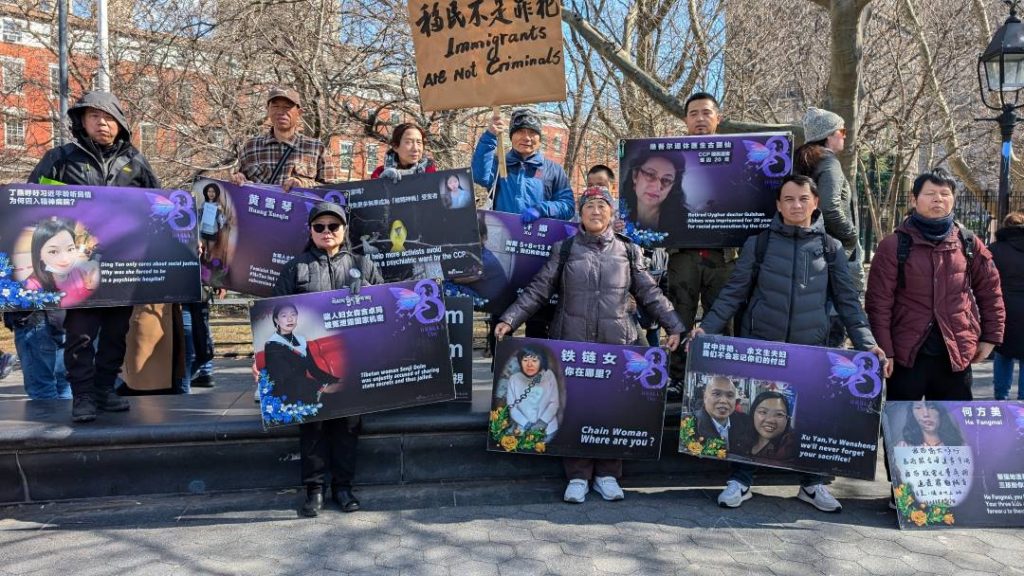
Zhang Yan (right) loudly recounts the story of He Fangmei (second from right on the banner; third from right are her three minor children who were once detained in a mental hospital) through a microphone. Photographed by Zhou Mei outside the Flushing Library, New York, December 13, 2025. (WRIC)
Banner image created by WRIC.
He Fangmei was placed under residential surveillance in a designated location for 18 months, giving birth to her infant daughter in a cold, confined environment. Shortly after giving birth, she was sentenced to a gruesome 5-year and 6-month prison term. Meanwhile, her torn family endured excruciating pain. Her husband was sentenced to five years in prison for supporting his wife’s activism; her two young daughters were hospitalized and then secretly moved, unable to be visited by relatives; her eldest son was placed in foster care elsewhere. A once complete and warm family was brutally crushed by the state apparatus. A mother seeking justice for her child has to pay the price of her entire family’s destruction? A citizen exercising their most basic rights has been met with imprisonment and nightmares?
We speak out here not only for He Fangmei, but also to tell the world: Under the rule of the Chinese Communist Party, if you dare to seek justice for children—you may be silenced; if you uphold the most basic human rights—you may be imprisoned, hunted down, and disappear.
Chinese women’s rights advocates strongly urge the Chinese government to: immediately release He Fangmei; guarantee the basic personal safety and visitation rights of her husband and children; stop persecuting vaccine victims’ families under criminal charges; allow lawyers to meet with them according to law and allow families to obtain information; and ensure that children harmed by vaccines receive genuine treatment, instead of becoming victims of political black boxes.
We stand with conscience, speak out for freedom, in the name of mothers, and in the name of humanity. For He Fangmei, for her children, for all those persecuted for their courage—we will not back down, nor will we remain silent. Our cries will not cease until He Fangmei is free.
Photo taken by Zhang Yan on December 13, 2025, outside the Flushing Library in New York. (WRIC)
3) In support of Gulshan Abbas
Today, we stand here for a most basic, yet deprived right—to let the world hear the name of Gulshan Abbas. Gulshan Abbas, Uyghur, retired doctor. She was not a politician, not an activist; she was simply an ordinary woman who spent her life practicing medicine, caring for patients, and protecting her community.
However—in September 2018, she was forcibly taken from her home. No reason, no notification, no legal process. From that day on, her life was silently erased, disappearing behind the high walls and iron curtain of Xinjiang. Her family searched desperately for two years without any news. It wasn’t until the end of 2020 that they were forced to learn the truth—Gulixian Abbas had been secretly sentenced to twenty years in prison.
The banner in the picture shows a Uyghur doctor Gulixian on the far left. Photographed by Zhang Yan on December 13, 2025, outside the Flushing Library in New York. (WRIC)
The banner image created by WRIC.
Twenty years—for a woman who had never committed a crime, never used violence, and was simply a retired doctor, this is not justice, this is punishment; not a verdict, but the destruction of her life.
What’s even more infuriating is that her arrest occurred exactly six days after her sister, Uyghur-American human rights activist Rushan Abbas, publicly revealed the truth about Xinjiang. This is not a coincidence. It is a warning, retaliation, and blatant political intimidation using a relative as a hostage.
Her sister once said, “I raised the microphone, and they took my sister away.” This is what Gulixian Abbas experienced. More than seven years have passed—where is she? Is she healthy? Is she still alive? No one knows.
When a country can imprison a retired doctor in the dark for twenty years, it can imprison anyone. When a regime uses relatives as hostages, it attempts to silence the voice of an entire ethnic group. We must face the truth—what the Uyghurs are suffering is a blatant genocide. Mass detention, forced labor, forced sterilization and abortion, forced marriage—systematically labeling an entire religious community as “criminal.” All of this is happening.
We solemnly appeal to the Chinese government: Immediately release Gulixian Abbas! Reveal her whereabouts! Allow her family and lawyers to visit her! Immediately cease the collective persecution of innocent Uyghurs under the guise of “counter-terrorism”! Gulixian cannot speak today, but we can. She cannot stand up today, but we can. Her freedom has not been restored, and our voices will not cease. As long as Gulixian is not free, we will not remain silent. Persecution of church pastors, denial of freedom of belief—the Chinese government’s trampling on the constitution is shameless!
Nobel Peace Prize laureate Corina Machado said today that the United States assisted her in arriving in Norway December 11, 2025, from her hideout in Venezuela, and expressed support for U.S. military action against her country, vowing to return home.
Machado missed the official award ceremony on December 10 but appeared publicly for the first time in nearly a year just hours later.
President Bush: Meeting with the Executive Director of the Venezuelan Civil Society Group Sumate. Oval Office. President George W. Bush met on May 31, 2005 with Maria Corina Machado, the Founder and Executive Director of Sumate. Sumate is an independent democratic civil society group in Venezuela. White House photo by Eric Draper.
The operation to transport her to safety involved significant coordination among multiple parties:
The extraction was orchestrated by the Grey Bull Rescue Foundation, a Florida-based nonprofit led by U.S. Army and Navy veteran Bryan Stern. The team managed a “land, sea, and air” mission that involved smuggling Machado through 10 military checkpoints in Venezuela while she was in disguise.
Machado confirmed that she received “support” from the United States government for her travel. This coordination reportedly included alerting the U.S. military to her sea route to ensure her small vessel was not targeted by airstrikes amid an ongoing U.S. pressure campaign in the Caribbean.
Escape Route: Machado traveled by a small skiff across the Caribbean Sea to the island of Curaçao in rough, pitch-black conditions. From there, she boarded a private jet that flew to Oslo, making a brief stop in Bangor, Maine.
While Machado was end route, her daughter, Ana Corina Sosa Machado, accepted the Nobel Peace Prize on her behalf. Upon her arrival at the Grand Hotel in Oslo at approximately 2:30 a.m., Machado was greeted by cheering supporters singing the Venezuelan national anthem.
Despite being declared a “fugitive” by the Maduro government for leaving the country, Machado has vowed to return to Venezuela with her award, though she has not disclosed a specific timeline for her return.
On International Human Rights Day, WRIC is reposting some media photos from six years ago as a commemoration. All photos are for non-commercial use. If there are any copyright issues, please contact us for correction. Many thanks!
The photos document the cases of 47 people, 12 Hong Kong residents, female representatives who were killed during the protests, and mothers who asked the police not to shoot their children…
Following the deadliest fire in Hong Kong’s history, which claimed at least 128 lives, mourners continued to lay flowers at the foot of the charred buildings. A three-day period of mourning began in Hong Kong on Saturday (November 29).
Same times, The devastating fire at # Hung Fuk Court in Tai Po claimed at least 128 lives. Citizens spontaneously formed the “Tai Po Hung Fuk Court Fire Concern Group” and launched an online petition demanding an independent investigation committee to thoroughly investigate the man-made disaster. However, the group’s social media accounts and online petition were all shut down after only about a day. According to the South China Morning Post, the group’s founder has been taken away by national security police. The Office for Safeguarding National Security of the People’s Republic of China in Hong Kong issued a statement expressing support for the Hong Kong SAR government’s severe punishment of those who “use disaster to disrupt Hong Kong.”
A citizen-organized “Tai Po Hung Fuk Court Fire Concern Group” has put forward four demands, including the establishment of an independent investigation committee to thoroughly investigate the man-made disaster. Some members distributed leaflets outside Tai Po Market MTR station on Friday evening (28th) to garner public support. The group had also been collecting signatures online, but the petition abruptly ended around 4 pm on Saturday (29th), with the final number of signatures remaining at 10,255.
The South China Morning Post, citing sources, reported that the group’s founder, Miles, was taken away by national security police. Independent Media also filmed Miles being taken back to his residence by police officers for questioning.
Freedom is doing what others had done for me on day of the imprisoned writer, Nov 15. At the @peninternational event, I held up a picture of Zhang Zhan 张展– citizen journalist who has been imprisoned again in China.
WRIC’s weekly exhibition (issue 3rd) was held yesterday, November 7, 2025, in Flushing, New York. This Saturday’s event aimed to support women suffering political persecution by the Chinese government. Attendees included Tonyee Chow Hang-tung(鄒幸彤), former vice chairman of the Hong Kong Alliance in Support of the Chinese Patriotic Democratic Movement and a lawyer; Xu Na(許那), a Falun Gong practitioner; and Gulshan Abbas(古麗仙), a Uyghur doctor.
Zhou Mei appealed for public attention to the persecution of women in China. Video: WRIC Li Yun
Members of the Chinese women's rights organization responsible for organizing this event, including Zhou Mei, Jiang Dingcheng, Wang Li, Zhang Yan, Qiu Yueyun, and Li Yun, gave up their weekend rest time to come to the Flushing Library to continue supporting their sisters in prison and raising public awareness of the human rights situation in China.
We firmly believe that even if our voices are weak, our persistent efforts will eventually be heard by our persecuted sisters. They will bravely step out of the darkness.
From left: Zhou Mei, Jiang Dingcheng, Wang Li, Zhang Yan, and Li Yun. Photo: WRIC Li Yun
Zhang Yan: Even if only one of them is left, they will still speak out for the sisters in China who are being persecuted.
In Flushing, a bustling commercial district in New York City, a organization Women’s Rights in China (WRIC)members held a rally to support Tara Zhang (张雅笛), a female student, and scholars Reyila Dawuti (热依拉·达吾提) and Siyu Feng (冯斯瑜), who have been persecuted by the Chinese authorities. We call on the international community to pay attention to China’s continued persecution of dissidents, ethnic minority scholars, and human rights advocates.
On October 25, 2025, members of the WRIC Association (from left to right): Yang Shisong, Mr. Li, Qiu Yueyun, Zhou Mei, Zhang Yan, and Wang Li, at an event outside the Flushing Library in New York. (Photo by WRIC Jiang, Dingcheng)
The Cost to the Younger Generation for Achieving Inter-ethnic Understanding
Tara Zhang is a 22-year-old Chinese student from Changsha, Hunan Province. She previously studied in France and was preparing to pursue a master’s degree in the UK. She is active on online platforms supporting Tibetan culture and the rights of ethnic minorities, and participated in founding or editing a Chinese-language platform called “Chinese Youth Stand for Tibet,” aiming to promote dialogue between Han and Tibetans and discuss ethnic issues.
On July 5, 2025, Tara Zhang returned to China to visit family, first going to Changsha, Hunan, and then to Shangri-La, Yunnan Province at the end of July.
Since July 30, she has lost regular contact with the outside world. Friends and her partner have tried to contact her multiple times without success, receiving only a few infrequent and unusual messages.
WRIC’s members (Start lift): Zhang Yan, Wang Li and Zhou Mei. (Photo by WRIC)
WRIC helps more Chinese people understand what is happening in China.
(Photo by WRIC)
(Photo by WRIC)
(Photo by WRIC)
(Photo by WRIC)
Human Rights Watch has explicitly stated that she was detained in Shangri-La, Yunnan on July 31, 2025, and called on the Chinese authorities to “immediately and unconditionally release” Tara Zhang.
The human rights lawyer hired by her mother to provide assistance to her family in Changsha was briefly detained by the authorities on September 16, and his mobile phone was reportedly confiscated.
Tara Zhang’s lawyer has not yet been allowed to meet with her, and outside access is restricted. She may be charged under Article 103, Paragraph 2 of the Criminal Law of the People’s Republic of China for “inciting secession and undermining national unity.” If convicted, she could face 5 years in prison, and if deemed a “leader/organizer,” the sentence could be up to 15 years.
Tara Zhang had activities focus on cultural understanding and inter-ethnic dialogue between young Han Chinese and Tibetan communities, challenging the Han-centric perspective and ethnic prejudice, and attempting to understand and respect the culture, language, religion, and historical experiences of ethnic minorities, rather than viewing the entire Chinese society from the perspective, interests, or cultural habits of the Han Chinese.
However, in the official Chinese context, any “decentralized” discussion of ethnic issues (especially those involving the independence of Tibetan religious culture in Tibet and Xinjiang) is considered a risk of “separatism” or “challenging national unity.”
Politicized Academic Research
Rahile Dawut is a renowned folklorist and anthropologist from the Xinjiang Uyghur Autonomous Region of China, who has long dedicated herself to the study of Uyghur culture, religious sites, and folk traditions. She previously worked at Xinjiang University and founded the Center for Minority Folk Culture Studies.
In December 2017, Rahile disappeared while traveling to Beijing. It wasn’t until 2019 that the outside world learned she had been detained by the Chinese authorities.
Human Rights Watch reported on September 22, 2023, that Professor Rahile was convicted of “endangering national security” in a secret trial in December 2018 and sentenced to life imprisonment.
The U.S. State Department issued a statement on September 29, 2023, condemning the Chinese government’s sentencing of Professor Rahile, calling it an “outrageous verdict,” and calling on the Chinese government to release her immediately.
She has long studied the folklore, religious sites, and cultural traditions of the Uyghur people in Xinjiang. The New York Times noted that “China had long funded her research. In 2000, she met with President Jiang Zemin at a conference as a representative of Uyghur scholars. Her last project before her disappearance was funded by the Chinese National Social Science Fund. But it seems that the breadth and significance of her work is what got her into trouble.”
[Image caption: From left: Jiang Dingcheng, Wang Li, Zhou Mei. (Image from WRIC)
Another persecuted woman, Siyu Feng, is also a scholar of “Uyghur women’s folk culture.” She studied at Hangzhou Foreign Language School in Zhejiang Province and pursued postgraduate studies at the School of Oriental and African Studies (SOAS), University of London. In February 2017, she visited the Xinjiang University Folk Culture Research Center and collaborated with Rahile.
In October 2017, she was investigated by local police in Urumqi, Xinjiang, on the grounds that Feng had “foreign software” installed on her OnePlus mobile phone. Although the software was a pre-installed program and she had not used it, she was still criminally detained, arrested, and subsequently disappeared between January and March 2018. According to human rights organizations, Siyu Feng was secretly sentenced to 15 years in prison by the Tianshan District Court in Urumqi on charges including “endangering national security.”
Activities involving the recording and publication of Uyghur cultural content have been deemed politically sensitive under the current policies of the authorities, especially in the context of intensified national security control in Xinjiang. Academic research involving Uyghur culture and religion has been excessively politicized, and even without any actual political action, it is classified as “endangering national security.” The boundaries between cultural research and politics have almost disappeared.
Their sentences are not due to criminal acts themselves, but because academic research and cultural preservation activities have been politicized in the sensitive environment of Xinjiang, China. The charges of “subverting state power,” “picking quarrels and provoking trouble,” and “endangering national security” are vaguely defined and can be broadly interpreted, and are also used as all-purpose tools for prosecution.
Tara Zhang, Reila, and Siyu Feng represent the courage of women, ethnic minorities, and academics in pursuing truth and freedom under an authoritarian system, and also the common predicament under such a system. They are not criminals, but voices in Chinese society that are huddled in the corners and need to be heard.
Zhang Yadi (22, online name Tara / @TaraFreesoul) is a young scholar from Changsha, Hunan, who has long lived and studied in France. She recently received a scholarship to pursue a Master’s degree in Anthropology at the School of Oriental and African Studies (SOAS), University of London, and was originally scheduled to begin her graduate studies in the UK in September 2025.
free_tara_yadi Follow Group.
Tara returned to Changsha on July 5 to visit her family. According to relatives, friends, and multiple sources, she has been out of contact since July 30 while in Shangri-La, Yunnan. Prior to her disappearance, she maintained regular communication with family and friends; however, her WeChat and other communication channels suddenly ceased.
These reports suggest she was taken back to Changsha by state security authorities on suspicion of “Endangering national security.” She has been missing for nearly tree months, and no credible information has been obtained regarding the circumstances of her detention or removal. Prior to her arrest, she had returned to China several times to visit her family; her last contacted her family members was on July 30.
On September 16, renowned human rights lawyer Jiang Tianyong traveled to Changsha, Hunan Province, to attempt to provide legal counsel to Tara’s mother. Shortly after arriving in Changsha, he was forcibly abducted by three unidentified individuals. He was fortunately released later that day. Zhang Yadi’s situation, and the legal and security pressures her family faces, have sparked sustained concern from overseas communities and human rights organizations.
The pictures are from Tara’s social platform.
Political Awakening and Activism
Years ago, while still in China, Tara gained her first true glimpse of “China beyond the Great Firewall” through VPNs, banned book websites, and other channels. She began to delve into psychology, sociology, political theory, and religious philosophy, gradually realizing that she was in a carefully packaged cocoon. From that time, Tara began to focus on Chinese politics, democratic movements, and the history of social movements, which is also how she first encountered the Tibetan issue.
Having studied abroad for many years, Tara has become a vocal advocate who, in the face of political oppression, continues to explore the world. She has extensively addressed topics banned within China, both online and offline. For example, she posted on social media to commemorate the victims of the June 4th Massacre in 1989. She has also been active at the White Paper protests and in the exile community, finding her voice and introducing Tibetan history, culture, and human rights issues to the Chinese-speaking world.
In November 2022, just three months after Tara arrived in France, the fire in Urumqi, China, sparked “White Paper Protests” across the country. Zhang Yadi immediately purchased white paper, candles, and printed signs to join the rally.
She held signs reading “Say No to the CCP” and “No Dictatorship, Want Elections.” “At that moment, I felt so proud. I felt I had been brave, that I had lived the way I wanted to live, and that my life had not been lived in vain,” Zhang Yadi later recalled in a podcast interview.
She was one of the earliest members of the online media platform “Chinese Youth Support Tibet Association.”
Voice and Vision
Writing under the pen name TaraFreesoul on X, Tara said: “The history of China’s southwest ethnic groups is a bloody story of Han Chinese colonization, brainwashing, enslavement, and intermarriage and assimilation of indigenous peoples.”
She wrote:”Behind the ‘building of a strong Chinese nation’ lies the blood and tears of various ethnic groups. Their own cultures have been suppressed and extinguished, their own mother tongues have been silenced and disappeared, and their own histories are not written by their own people. Everything is lightly glossed over with the phrase ‘Chinese Nation,’ as if nothing had happened, as if this land has been part of the Chinese Empire since ancient times.”
She once stated: “Supporting Tibetans is not just speaking for them, but also fighting for a path to freedom for ourselves.” Tara is a young person who gently criticizes government inaction and social injustice, and who staunchly sympathizes with vulnerable groups. Even so, she remains a dangerous figure in the eyes of the Chinese authorities. Expressing empathy and understanding, and documenting the stories of those suffering, is considered a “sin.”
She once said, “If China could be as free as Taiwan, that would be my greatest ambition in life.” Clearly, she was prepared for the price her vision might entail, but she may not have fully anticipated the CCP’s narrow-mindedness, its fragility, or loss of her freedom too fast.
— An appeal from a sister from the land of freedom
Zhou Mei, A Sister in Christ in US 10-12-2025
Dear Family in the Lord,
May the grace and peace of our Lord Jesus Christ be with us all!
Today, with a heavy heart, I invite everyone to join in interceding for the pastors and brothers and sisters of Beijing Zion Church. Recently, I learned that those pastors and members who once worshiped and served the Lord together have been taken away by the CCP police and lost their personal freedom because of their adherence to their faith. This news deeply pains my heart.
I joined Zion Church gatherings in 2017 and personally experienced the great persecution of 2018. In my moments of extreme weakness, when I was on the verge of falling, it was the pastors and brothers and sisters of Zion Church who supported me with faith and love, allowing me to stand firm in the persecution and experience the great power of the resurrection of the Lord Jesus. Now, by God’s mercy, I worship Him in a land of freedom, but I cannot forget the brothers and sisters who are still watching for the Lord in suffering.
They have done nothing wrong, yet they are now bound and isolated merely because they faithfully preach the Gospel, worship the true God, and shepherd the flock. But we know that their lives are in God’s hands, and their testimony is loud in heaven. Their bondage is suffering for righteousness’ sake; their silence is speaking by faith. They are not alone; we are their family.
Therefore, I sincerely call upon brothers and sisters in the Lord to rise up together in prayer to uphold them:
Pray for the strengthening of their faith, that they may stand firm in the Lord and not be shaken in times of trouble;
Pray for their physical health and safety, asking the Lord to protect them in everything they face in the detention center;
Pray for those who are watching over them, asking for God’s mercy, so that they may repent and turn to the true light;
Pray for their families, that the Lord Himself will comfort and provide, granting peace that surpasses all understanding;
Pray for the Church in China, that God may use this persecution to refine His people and raise up more faithful servants.
As it is said in Hebrews 13:3, “Remember those who are in prison, as though in prison with them, and those who are mistreated, since you yourselves also are in the body.”
Dear family, may we, in our freedom, not forget the suffering members, and in our peace, not cease praying for them. Let us be their companions in the Lord, be their voice, and be the watchmen kneeling before God.
We suffer with them in prayer and will also wait together for the glorious appearing of the Lord.
Victorious in the Lord. May the Lord remember our prayers!
Please, family in the Lord, intercede and share this!
Let us not only remember our suffering members in our hearts but also act to speak up for them.
Your one share may become a spark of prayer; your one post may ignite the watch of more people.
Please share, follow, and pray, so that more brothers and sisters may join us in kneeling before the Lord to watch over Beijing Zion Church and the Church in China.
Though scattered in different places, we are one family in the Lord.
The CCP has launched a new round of mass arrests against churches. The picture shows the Beijing Zion Church premises before and after being raided by the CCP police.
The convoy, featuring the Xi Jinping Virus Head sculpture, organized by the Liberty Sculpture Park in California, paraded through the heart of Flushing, a major Chinese enclave in New York City, on September 28, 2025.
A major rally was held in front of the Flushing Public Library, bringing together several religious, human rights, and pro-democracy organizations, including the New York Christian Justice League, Women’s Rights in China (WRIC) , and the Chines Democratic Party. The participants called for global accountability from the CCP for manufacturing and spreading the virus that led to a worldwide pandemic, demanding justice and compensation for the victims.
Xi Jinping’s virus sculpture parades through the streets of Flushing, New York, where there is a large Chinese community. (Source: WRIC)
Chen Weimin (right second)and his teammates of the Liberty Sculpture Park . (Source: WRIC)
Women’s Rights in China members (from left) Qiu Yueyun, Wang Li, Zhang Yan, and Zhou Mei at the September 28 gathering. (Source: WRIC)
The members of Women’s Rights in China (front row, from left) Jiang Dingcheng, Zhang Yonghong, Li Xinyan, and others at the September 30 gathering. (Source: WRIC)
Front row consists of Chen Weiming’s convoy members; Li Yun (right) from WRIC is in the third row first. (Source: WRIC)
Chen Weiming and Zhang Jing next to the library in Flushing NYC on September 28, 2025. (Source: WRIC)
Pastor Shao Jun, head of the New York Christian Justice League and one of the rally’s planners, had previously hosted and prayed with dozens of convoy members at his Rock Church on the afternoon of September 27.
Speakers at the September 28 rally included Chen Weiming and Jin Xiuhong (representing the convoy), as well as commentators Chen Pokong and Zhang Lin, and Zhang Jing, founder of Chinese Women’s Rights. Veteran democracy activists such as Wei Quanbao and Cai Guihua were also in attendance to show their support.
During the event, organizer Chen Weiming announced that he would be testifying as a witness in federal court on September 30 for the case concerning the CCP-linked espionage and sabotage that resulted in the destruction of the original “Xi Jinping Virus” sculpture at the California park. At that time, all personnel carrying the trailer of Xi Jinping’s virus sculpture will appear outside the Brooklyn Federal Court to support Chen Weimin and condemn the CCP spies’ crimes of vandalism against the sculpture park.
Following the assembly, the convoy members and volunteers were treated to lunch, which was prepared by Zhang Jing, Chen Pokong, Zhang Lin, and Ning Xianhua. Mr. Ning Xianhua, Chairman of the National Joint Headquarters of the China Democratic Party, personally cooked braised pork and mixed stir-fry to add to the lunch boxes, which were reportedly delicious.
The 14-vehicle convoy then continued its journey to Washington D.C., where members are scheduled to participate in another rally to continue advocating for freedom and justice.
Zhang Jing and veteran democracy activist Wei Quanbao before the rally. (Source: WRIC)
Xi Jinping’s virus sculpture parades through the streets of Flushing, New York, where there is a large Chinese community. (Source: WRIC)
In the blink of an eye, His Holiness the Dalai Lama is nearly 90 years old. It has been almost 20 years since I first had the good fortune to meet His Holiness, and he looks not much different from how he appears in TV news today. The two khatas His Holiness bestowed upon me, imbued with love, philosophy, and strength, I cherish permanently and have benefited from them throughout my life.
Jing Zhang was fortunate to be blessed by His Holiness the Dalai Lama in 2003.
In 1981, I first saw the name of His Holiness the Dalai Lama in a news report in a Macau newspaper. I vaguely remember it was about discussions between Chinese Communist Party (CCP) leaders and the Dalai Lama’s government-in-exile regarding the Tibet issue. At that time, all my understanding of Tibet and Tibetans was what the CCP had instilled: Tibet has been part of China since ancient times, and lamas are “parasites.” I secretly asked myself, if that were the case, why would senior CCP leaders like Hu Jintao go to great lengths to visit Tibetan areas and engage in talks with the “Dalai clique” abroad? Later, I learned that historical facts show Tibet has never been part of China since ancient times; the reason for “negotiations” was that seizing someone else’s homeland was illegitimate; the essence of “negotiations” was like a robber refusing to release hostages while demanding more ransom.
Later, the CCP propagated that “the country has reformed and opened up, welcoming all Hong Kong and Macau compatriots to return home to visit relatives and friends, with bygones being bygones.” I naively believed them and returned to China from Macau, a Portuguese colony, only to be sentenced to five years in prison for “counter-revolutionary propaganda and incitement.” After serving my sentence, I managed to go to Hong Kong and received asylum from the British Hong Kong government. During my stay in Hong Kong, I learned more about His Holiness the Dalai Lama. It turned out that His Holiness is not only the spiritual leader of Tibetan Buddhism, a Nobel Peace Prize laureate, and a world-class iconic figure, but also a sensitive and forbidden word for the CCP, a world-class important figure who must be censored and silenced.
In 1997, after Hong Kong’s sovereignty was handed over to China, I continued my exile, arriving in New York, becoming a true refugee. This allowed me to meet His Holiness the Dalai Lama multiple times. At that time, His Holiness was an elder exile, having been away from his homeland for nearly 50 years. We came from different generations, different ethnicities, different cultural and religious backgrounds, but we were all exiles who had left our homes due to persecution by the CCP. His Holiness’s openness, optimism, and humility deeply moved me, becoming one of the important driving forces that inspired me to overcome homesickness and uphold my conscience throughout the decades of my exile.
I once felt lost and frustrated by my exile life, and also depressed, even somewhat melancholic, due to my long-term focus on the suffering of rural Chinese women subjected to forced abortions. Once, my good friend Li Jianglin (author of 1959 Lhasa) told me that the Dalai Lama said, to “break free from the abyss of past suffering, one must first transform the inner self—weakening destructive emotions and strengthening good human nature.” Only then can one maintain infectious compassion and joy.
She said, you should listen to the Dalai Lama’s dialogues with psychologists and scientists. His Holiness told people that if you want to help others escape suffering, your emotions cannot follow their suffering and become trapped in it. You must transcend suffering and become an observer to rationally offer help and effectively assist more people. These words benefited me greatly. Soon after, I managed to detach myself from the plight and indignant emotions of women deeply suffering from China’s forced abortion policy. I repeatedly encouraged myself, remembering “only by transcending suffering can one effectively help others,” and ultimately successfully completed the recording, editing, and publishing of five books related to China’s family planning policy, truthfully documenting the stories of Chinese women and families who experienced fatal forced abortions, punitive fines, and even family ruin over nearly 40 years. I did not allow myself to remain in sympathy, empathy, and indignation, but instead sought to find the joy of doing good in daily life.
Through transcending suffering and rationally helping others, I understood the positive implications of His Holiness the Dalai Lama’s “Middle Way.” His Holiness, who had experienced catastrophic destruction, proposed the “Strasbourg Proposal” in his 1988 speech to the European Parliament to help his Tibetan compatriots avoid extinction. This proposal involved entrusting defense and foreign affairs to China, not seeking independence, but only seeking genuine autonomy in internal affairs—the “Middle Way.” This seemingly gentle approach is, in fact, a fishbone stuck in the CCP’s throat, sufficient to prevent the CCP from swallowing this nation, from annihilating the Tibetans, and to ensure the snow lion flag flies forever. The “Middle Way” strong-arm has continuously garnered sympathy, attention, and support from the international community. I see that the demand for an independent Tibet, while seemingly rightful, could provide the CCP with an excuse for genocide. In contrast, the “Middle Way” offers more enduring protection and flexibility.
Photo taken during a visit to Dharamsala in March 2008. (Photo from WRIC)
In 2010, I visited His Holiness the Dalai Lama’s residence in McLeod Ganj, on the outskirts of Dharamsala, India. I also learned more about Buddhist philosophy. His Holiness once said, what is Dharma? Dharma is like a medicine. When people are unwell or suffer from cancer, they need medicine for treatment; but when you are self-righteous, excessively greedy, and morally bankrupt, Dharma is good medicine. These words of wisdom have benefited me throughout my life.
With his profound wisdom, His Holiness has led Tibetans from a group of exiles to gradually establish an open, democratically elected government, complete with a robust administrative, legislative, and judicial system. It benefits from oversight by a free media and social services provided by non-governmental organizations (NGOs). Among these, the Tibetan Women’s Association is an organization I greatly admire and commend. They have done extensive social work and actively participated in international humanitarian activities. They are particularly outstanding in promoting women’s political rights, advocating for gender equality, and equal pay for equal work within the Tibetan community.
His Holiness was forced to leave his homeland and rebuild a home in Dharamsala, almost 70 years ago now. At 90 years old, the wise leader remains the spiritual head of the Tibetans. His Holiness’s daily life embodies the hope and blessings of the Tibetan people. As a younger generation Han Chinese exile, I sincerely wish His Holiness a long life, as enduring as the Southern Mountains, and hope to have the opportunity to meet him again and continue to benefit from his teachings.
Once again, I sincerely wish His Holiness good health and joy!
Ms. Fu Yuxia, a Chinese immigrant from Shanghai to the United States, was among a group of petitioners protesting in front of the Chinese Consulate in New York. On July 1, 2014, and March 7, 2016, Ms. Fu Yuxia was twice deliberately beaten and disabled by security guards employed by the Chinese Consulate, resulting in permanent shoulder injuries and severe emotional distress. In addition, several other petitioners who were present during the incidents also testified in court, stating that they were also beaten by the Chinese Consulate’s security personnel to varying degrees.
Ms. Fu Yuxia’s personal injury lawsuit against the security personnel employed by the Chinese Consulate and their company opened on July 3rd; the trial will continue on July 14th.
Some public opinion suggests that the Chinese Consulate security guards inflicted such heavy blows on peaceful Chinese petitioners, which should have been directly or indirectly instigated or tacitly approved by the Chinese Consulate; otherwise, they would not have acted so ruthlessly. In 2014, Fu Yuxia was unable to sue the Chinese Consulate, which enjoys immunity, allowing the security guard to act recklessly again. This is, in fact, the most open and blatant instance of transnational repression.
Plaintiff: Fu, YuXia
Defendants: Samuel Parkinson and Epic Security Corp.
Time: 10:00 AM, July 3, 2025, and July 14, 2025 Address: 2510 Court Square W Long Island City, NY 11101
Address: 2510 Court Square W Long Island City, NY 11101
The Long Island City Courthouse. Eagle file photo by Walter.
Joy Luk, a blind lawyer currently exiled in Toronto, Canada, is Hong Kong’s first and only blind lawyer, and a frontline warrior in Hong Kong’s democracy movement. In 2019, at less than 40 years old, she frequently appeared on the front lines of protests, big and small. Holding a megaphone, she stood between police lines and protestors, mediating and providing legal aid to arrested protestors. As a result, she became a target for the police and was often harassed. She left Hong Kong at the end of 2021, came to Canada, and was granted political asylum.
Currently, the indomitable Joy Luk has not only been admitted to the University of Toronto Faculty of Law but has also diligently attended every single class, completing the initial steps for national lawyer certification in Canada. Once other steps are completed, she will officially obtain her Canadian lawyer’s license. Recently, at the request of the Law Society of Ontario, she submitted an official recent personal photo, suggesting that Joy Luk is expected to officially begin her legal career in this foreign land within the year.
Image from South China Morning Post.
Joy Luk was born blind due to retinal atrophy caused by premature birth and studied at the Ebenezer School for the Blind from a young age. Later, with the advent of text scanners, the text from thick textbooks and reference books could be stored and then read by visually impaired students using speech software or braille displays. In her upper primary and junior secondary years, Joy developed a strong interest in law. She listened to “The Unwritten Law,” which was later adapted into a movie, and couldn’t help but imagine herself in the protagonist’s shoes, wondering if her own future would be similar. She found a braille version of the Basic Law in her school library and read it multiple times. She later earned a Bachelor of Laws from City University of Hong Kong and a Master of Laws in International Human Rights Law from the University of Hong Kong, becoming Hong Kong’s first blind lawyer. She interned at a law firm and was passionate about promoting democracy, human rights, and disability rights. She also worked in the complaints department of the Hong Kong Equal Opportunities Commission, handling discrimination and sexual harassment cases, putting her knowledge into practice.
In mid-November 2019, after the intense clashes at CUHK (Chinese University of Hong Kong) subsided, the conflict shifted to PolyU (Hong Kong Polytechnic University). The clashes escalated on the evening of the 16th, with riot police firing numerous tear gas rounds at protestors, who retaliated by throwing petrol bombs at the intersection of Chatham Road South and Austin Road. After much difficulty, lawyer Joy Luk arrived at Entrance A of the Polytechnic University. She painstakingly climbed over piled-up debris to enter the PolyU campus. She was mentally prepared for arrest, imprisonment, and disbarment. “If I’m disbarred because of this political movement, so be it,” she said.
Lawyer Joy Luk with Reverend Chu Yiu-ming. (Online)
Around noon on the 17th, the conflict between police and citizens intensified, with police deploying two water cannon vehicles and a ‘Rapier’ armored vehicle. Tear gas and petrol bombs flew back and forth. The scene was engulfed in flames and smoke. Around 3 o’clock, police again deployed two water cannon vehicles, firing long blue and clear water jets. Immediately after, police suddenly charged at the protestors. Instantly, shouts and reprimands filled the air, the scene was extremely chaotic, and protestors were forced back into the campus.
On November 10, 2019, Joy Luk was at Sha Tin MTR station where a group of protestors were “renovating” the station. The station was about to close its gates, and she just made it, lying down directly under the rolling gate to buy the protestors at least 10 more minutes to prepare. (Online image)
Image from the internet.
At the time, Joy Luk was at the front. This was completely different from the scenes she had experienced in the past: acting as a “tank man,” blocking between police and protestors, reasoning with police, and delaying time for protestors to escape. But this time, she was hit by a water cannon and injured. On the afternoon of the 17th, Joy Luk was hit by tear gas at the PolyU siege conflict site. Suffering from heart disease and asthma, and having gone without medication for an entire day and night, coupled with the attacks from water cannons and tear gas, her physical condition was very poor. Several students took her to the on-site first aid station. On the afternoon of the 18th, the police issued an order, demanding protestors leave by 10 PM, otherwise they would be considered guilty of “rioting.” At 6 PM, Joy Luk vaguely felt the danger escalating, and she advised a female student next to her to leave: “You are still young, you still need to study.”
Joy Luk is an international human rights lawyer; she decided to stay. She said, “When protestors are arrested, I can use my legal knowledge to inform them of their rights.”
As she recalled this civilized and orderly protest movement: “The true goodness and beauty of the crowd were truly moving, and as a visually impaired person, I felt it even more deeply. I still remember Denise Ho carefully holding my hand and guiding me through the crowd.” Denise Ho is a Canadian-Hong Kong pop singer who was arrested at the end of last year for having served as a consultant for Stand News. A few days later, Stand News announced its closure.
“The Hong Kong police’s use of violence to suppress everything precisely highlights the true spirit of this non-violent protest,” said Chu Kwok-chung of the Toronto Association in Support of Patriotic Democratic Movements of China (Toronto Alliance). He had strongly urged the Canadian government to expand the lifeboat scheme, ease conditions for political asylum, and expedite refugee approval procedures. The Toronto Alliance strongly urges the Canadian government to accelerate the processing of political asylum applications and relax the screening conditions for Hong Kong applicants. Chu Kwok-chung said: “Canada should pay more attention to the loss of freedom in Hong Kong, so that these brave Hongkongers can start new lives here.”
The persistence of the blind female lawyer is not just a story encouraging people to strive for personal success; it is a line in the epic of Hongkongers’ fight for freedom, a note in a tragic and heroic battle song, and an ordinary yet unforgettable inspirational deed.
Donate to support the blind lawyer’s living expenses during her studies, so she can continue to be a human rights lawyer:
In the annals of human civilization, art has always stood as an unwavering witness and profound reflector of its times. As the flames of war engulf Ukraine and countless lives grapple with the smoke and turmoil, Mr. Xu Weixin, a painter from China, has raised the powerful voice of art through his unique and tenacious endeavors. Wielding his paintbrush like a sword, he has undertaken the extraordinary feat of painting one piece every day, meticulously documenting the tears, blood, and triumphs of the Ukrainian people’s resistance against aggression. From the onset of the Russia-Ukraine war until today, he has created over 1,200 works. This remarkable achievement is not merely an artistic marvel but a resolute declaration of human conscience and justice.
A Journey of Artistic Witness
On the evening of June 6, 2025, within the historic walls of the Ukrainian Institute of America in New York City, Mr. Xu Weixin shared the deeply personal journey behind his “Ukraine: Every Day” series with an audience of international scholars, professors, NGO representatives, and friends. That day marked his 1,197th consecutive day of painting and his 1,197th piece chronicling the lives and events of war-torn Ukraine. Beginning in April 2022, as the conflict intensified and lives hung in the balance, Xu Weixin chose to stand with Ukraine through his art, condemning the aggressors and championing justice.
Xu Weixin confessed that in 2014, when Russia invaded Ukraine and annexed Crimea, he hadn’t paid close attention. However, Russia’s full-scale invasion in 2022 struck him as an act of bullying that fundamentally undermined the UN Charter and global order, threatening to ignite a much wider conflict. This realization spurred his decision to use his artistic talent to document the war daily, hoping to ignite broader awareness across various spheres.
This path, he admitted, has often been a solitary one. Despite bouts of illness or overwhelming fatigue, he has steadfastly honored his commitment: “paint Ukraine every day.” Balancing this immense dedication with his other professional obligations has been a formidable challenge.
Xu Weixin’s “Ukraine: Every Day” series has deeply moved countless strangers online. Among them is Ms. Jasmine, who, inspired by his art, has penned over 460 poems to accompany his paintings. These verses, overflowing with sincerity and a powerful sense of justice, are entirely devoid of any financial motive.
( Photos by Jing Zhang)
Xu, Weixin (the one in red) and his Chinese interpreter. ( Photos by Jing Zhang)
( Photos by Jing Zhang)
( Photos by Jing Zhang)
Six Themes: A Visual Epic of War and Humanity
Mr. Xu Weixin’s “Ukraine: Every Day” series transcends a mere collection of paintings; it is a profound visual epic woven with brushstrokes and vibrant colors. Xu distills the brutal realities of war and the enduring brilliance of humanity into six poignant themes. These scenes depict everything from domestic animals fleeing Russian bombardments to people, in their panic, prioritizing the safety of their beloved dogs. Every stroke is laden with deep reflection and emotion:
( Photos by Jing Zhang)
( Photos by Jing Zhang)
-Invasion and Slaughter/ A Silent Accusation:
Xu Weixin’s art confronts the raw brutality of war head-on, freezing on canvas the aggressors’ atrocities and the loss of innocent lives. His depictions—crumbling ruins or the desperate faces of victims—serve as silent indictments, questioning the inhumanity of war and awakening viewers to the priceless value of peace. These paintings are visceral historical markers, eternally reminding the world of the profound suffering war inflicts.
( Photos by Jing Zhang)
-Resistance and Combat:
An Unyielding Will: Amidst the smoke-filled battlefields, the Ukrainian people demonstrate an inspiring will to resist. Xu Weixin’s brush captures the heroic stances of frontline soldiers and the unwavering resilience of ordinary citizens engaged in resistance. Whether armed soldiers or civilians fighting for their homes, their figures are imbued with an indomitable spirit, showcasing their fearless courage in the face of tyranny.
-Righteous Aid/ Global Solidarity:
Ukraine’s struggle has resonated globally, drawing widespread empathy and support. Mr. Xu Weixin’s works frequently illustrate the international community’s solidarity with Ukraine, depicting the arrival of aid supplies from various nations or the steadfast support of international leaders. These images coalesce into a powerful current of warmth, underscoring the international community’s commitment to defending justice and foreshadowing the ultimate isolation of evil.
( Photos by Jing Zhang)
-Unyielding Ukrainians:
The Spirit of a Nation: The crucible of war has forged an even more resilient national spirit within the Ukrainian people. The Ukrainians in Xu Weixin’s paintings are not just victims of conflict but fierce protectors of their homeland. They might be ordinary citizens steadfastly performing their duties amidst the fighting or demonstrating their remarkable resolve to rebuild homes from the ruins. These artworks encapsulate the Ukrainian people’s unwavering pursuit of freedom, dignity, and independence.
-Sacrifice for Freedom: Eternal Remembrance:
Countless Ukrainian sons and daughters have made the ultimate sacrifice to defend their freedom and homeland. Mr. Xu Weixin’s work also pays profound homage to these brave martyrs. With solemn brushstrokes, he depicts their monuments; with deep, somber colors, he expresses his mourning and remembrance for the fallen. These paintings stand as eternal memorials, ensuring future generations never forget the immense price paid for liberty.
-Ukraine Will Endure:
A Chapter of Hope: Despite being consumed by war, Ukraine’s vitality has remained unbroken. Xu Weixin’s paintings ultimately culminate in themes of hope and rebirth. Children and their family dogs escaping bombardment, the wounded emerging from craters and rubble, and soldiers returning to the front lines after recovery—all convey the Ukrainian people’s extraordinary resilience and their unwavering aspirations for the future. They hold firm to the belief that their homeland will ultimately expel the invaders and reclaim peace and prosperity.
In the entire history of global art, it is truly unprecedented for an artist to continuously paint daily for a distant nation’s war with such remarkable frequency, tenacity, and unwavering dedication. Mr. Xu Weixin is not merely an artist; he is a courageous warrior who has immersed himself in the torrent of his times with his paintbrush. Each of his works serves as a poignant call for peace, a steadfast commitment to justice, and a heartfelt blessing for the people of Ukraine. This singular persistence is, in itself, a miracle. As host Vita Golod aptly put it: “Xu Weixin’s sincerity inspires the Ukrainian people like a war drum.”
Mr. Xu Weixin’s more than a thousand paintings, imbued with profound artistic power and the brilliance of humanity, will undoubtedly stand as a powerful prophecy of Ukraine’s eventual triumph. These works will be forever etched into the gallery of history, narrating the legendary story of a nation rising in adversity and ultimately achieving victory. We are incredibly fortunate to witness the creative endeavor of such an artist and are deeply moved by the resilience and hope he conveys. Xu Weixin has expressed his wish that, once Ukraine expels the invaders, his paintings might be exhibited in the National Historical Museum in Kyiv. We firmly believe this vision will soon become a reality.
After dessert, the paintings will be auctioned. All proceeds will go to Ukraine.
After dessert, the paintings will be auctioned. All proceeds will go to Ukraine.
After years in a Chinese prison, the journalist talks about freedom, falling foul of Chinese authorities and trying to make fried potato on her cell floor.
“That is a crotch shot!” says Cheng Lei, laughing at my phone’s screensaver. I tell her it’s a picture of my legs but she’s sceptical and laughs even more. You could be forgiven for expecting Cheng, 49, to be serious and sombre: the journalist spent three years and two months in prison in China for an absurd crime. Detained as a spy and kept in isolation for months, she was constantly watched by guards, and did not hear the voices of her two children for years.
But she displays a quick wit, a devilish sense of humour and a relaxed laugh. She switches between analysing the rise of the Ministry of State Security under President Xi Jinping, to laughing about how the ladies in her cellwould share a book about male yoga. Let’s just say it was not for the poses.
It’s the second day of winter, and the morning sun is warming Melbourne’s Botanical Gardens. We’re strolling past rows of camellias and rhododendrons.
Cheng says she picked this spot because of the colour. “Look at where we are” she says as tears well in her eyes. It’s been 19 months since she was released from prison and returned to Australia, thanks to intensive and high level diplomatic efforts by Australia during a period of worsening relations with China. She is still adjusting.
Cheng compares her freedom to ‘being a newborn’. Photograph: Charlie Kinross/The Guardian
“I compare it to being a newborn, so every sensation is very intense,” she says.
“It’s almost too much, but in a good way.”
Cheng’sbook about her time in prison, Cheng Lei: A Memoir of Freedom, is frank and – like her – funny, describing everything from the excruciating boredom and psychological torture she experienced in prison, to her secret orgasms (turns out, prison does not kill your libido). No topic is left off the table. Between jokes about menstruation and constipation, Cheng offers her readers a rare glimpse of the secret world of China’s state control. “It gives you an insight into how they think about espionage, about state security,” she says. “It’s about how insecure they are.”
In prison Cheng and other inmates slept on a piece of wood, the toilet walls were made of glass, and there was no caps for toothpaste tubes. Everything was grey. She recalls making a birthday sign for another prisoner, but eventhis was frowned upon by the guards. Prisoners were only meant to use pencils once a month to write letters home.
“We were underground, effectively in a coffin. And so tightly guarded,” she says.
A lot of the time, she was trying to escape boredom. She would ask the guards and her family and friends for new books – books that she could savour, that were long. So desperate was she for reading material she devoured a 700-page book on interest rates and even gave Einstein’s Theory of Relativity a crack.
“I read enough to realise I didn’t understand it,” she says.
Now, as she walks slowly through the gardens, she wipes away tears as she lists what she missed. Nature is something she keeps returning to. How much she still loves hearing Australian bird songs, and how, when she returned to Australia, going to the beach was one of the first things she wanted to do with her children, now 16 and 13.
When she was imprisoned, Cheng dearly missed the Australian bush and going to the beach. Photograph: Charlie Kinross/The Guardian
In prison, there were times she forced herself not to think about her children because it became too much to bear.
When she was given her prison sentence, she immediately calculated how old her children would be when she was released. She missed her daughter’s first day of high school, and cheering on her son at soccer. Missing them was more suffocating than her small cell.
“I didn’t know if I’d ever see them again,” she says. “They had to go … all that time not sure when I’d be back.”
So when Cheng stepped off the plane she immediately went back into “mum mode”, she says.
“I’m catching up on four years,” she says. “I just missed them so much.”
Cheng was born in China, but at the age of 10 her family migrated to Australia. She wanted to study journalism, but her father persuaded her to do commerce – there was no way Australian media companies would hire a Chinese reporter he said, half-joking that the popular and long-serving SBS TV presenter Lee Lin Chin wasn’t retiring any time soon.
But unfulfilled, she ended up doing an internship at the Chinese state media company CCTV, before heading to Singapore and then back to the rebranded state network CGTN in 2012.
Her life in Beijing was big and fast, she was a glamorous TV presenter, her show watched by millions. She interviewed everyone from the Australian ambassador to China, Geoff Raby, to David Beckham. She visited embassies and rubbed shoulders with China’s elite.
On 13 August 2020 she went to work thinking she was going to meet her boss about a new show proposal but instead walked into a meeting room filled with 20 people.
“I am informing you on behalf of the Beijing State Security Bureau that you are being investigated for supplying state secrets to foreign organisations,” one of them said.
They took her to her apartment, where they went through her rooms, confiscating all her electronic devices. Cheng says she was “naive” – she knew she had done nothing wrong, and thought she would be released in two or three days.
After almost a year in prison, Chengwas charged with espionage, but her crime was innocuous: sending a private text message, eight words long, seven minutes too soon. She had allegedly broken a media embargo on a speech by the Chinese Premier by texting Bloomberg journalist, and then friend, Haze Fan, that there would be “No growth target. GDP. 9 Min jobs target”.
Breaking a media embargo in Australia would merit, at most, a verbal slap from the boss and being dropped from a media list. It would be a shitty day at work, and you might need a whinge and a wine on the way home. But it wouldn’t be a life-changing crime.
The original document Cheng had been given did not have an embargoed time on it. A year later, the prosecutor told security officials gathering evidence against her that they had to prove it was embargoed for the case to go ahead.
“So they got the classification bureau to do up a document. Which they did, because they’re all on the same side, and the state must win at all costs.”
In China, national security trials are often conducted in secret, with sentences announced sometimes months after the trial. The conviction rate is more than 99%.
Months after her arrest, she was charged, and told how long her sentence would be two weeks before her trialwas due to finish.
Her friendHaze was also imprisoned, and Cheng could hear her down the corridor. By then, agents had combed through their 60,000 texts and interrogated her for hours on end about their friendship. She began to wonder if their friendship had been a dangerous transaction. Had she been used?
“Honestly, I went through a lot of anger. But then also wished she was in my cell, because she was more fun to talk to. She did suffer, and I want to talk to her, because I want some form of closure, and I want to find out what happened to her.”
Cheng says her arrest was more diplomatic pawn-playing than serious criminal conduct. “If it wasn’t [the embargo] they would have found something else,” she says. Now, after 19 months back at home, Cheng is a presenter on Sky News. In China, she is still hounded online by trolls, and state police haveused a picture of her for an advertisement recruiting people to work for them breaking spies.
Cheng is reflective. For her whole life she has straddled two cultures and two countries, and she is now defined by having been caught in the middle of frosty relations between the two. But in prison, with endless time, she taught herself how to change her thoughts.
“There was a time I was in solitude in a really hot cell. I switched my thinking from ‘Oh my gosh, this is horrible! Even my hair feels like it’s on fire’, to I imagine I love the heat.
“I was like, OK, I’m going to make chips. We got these horrible steamed potatoes and I would flatten them between bits of plastic packaging and then lay them out in the sun and check them every hour. It didn’t really work, they were still a bit chewy.
Cheng’s prison experience has left her a more thoughtful person who can adapt to her surroundings. Photograph: Charlie Kinross/The Guardian
“But it was something new and something fun.”
She now spends less time on Instagram and more time thinking about the people she loves. If someone honks at her, or she gets a traffic fine, she doesn’t feel the stress she might once have. She shrugs and moves on.
“I love that I got to a space where I can see adversity for what it is. It’s just a counterpoint,” she says. “You never feel happy if you’re happy all the time. Each annoyance is a chance to adapt.”
Cheng Lei: A Memoir of Freedom is out now through HarperCollins
Why you can rely on the Guardian not to bow to Trump – or anyone
I hope you appreciated this article. Before you move on, I wanted to ask whether you could support the Guardian’s journalism as we face the unprecedented challenges of covering this administration.
As Trump himself observed: “The first term, everybody was fighting me. In this term, everybody wants to be my friend.”
He’s not entirely wrong. Already, several large corporate-owned news organizations have settled multimillion-dollar lawsuits with the president in order to protect their business interests. Meanwhile, billionaires have intervened editorially in the news outlets they own to limit potentially unfavorable coverage of the president.
The Guardian is different: we have no interest in being Donald Trump’s – or any politician’s – friend. Our allegiance as independent journalists is not to those in power but to the public. Whatever happens in the coming months and years, you can rely on the Guardian never to bow down to power, nor back down from truth.
How are we able to stand firm in the face of intimidation and threats? As journalists say: follow the money. The Guardian has neither a self-interested billionaire owner nor profit-seeking corporate henchmen pressuring us to appease the rich and powerful. We are funded by our readers and owned by the Scott Trust – whose only financial obligation is to preserve our journalistic mission in perpetuity.
What’s more, in a time of rising, democracy-threatening misinformation, we make our fiercely independent journalism free to all, with no paywall – so that everyone in the US can have access to responsible, fact-based news.
With the administration already cracking down on free speech, banning reporters from the Oval Office, and the president and his allies pursuing lawsuits against news outlets whose stories they don’t like, it has never been more urgent, or more perilous, to pursue fair, accurate reporting. Can you support the Guardian today?
Tiananmen survivor Wang, Chaohua had give a speak.
Ann Lau, president of the Visual Artists Guild speaks.
On June 4, 2025, Zhang Jing, Chairwoman Women’s Rights in China, traveled from the New York headquarters to Los Angeles to join members of the organization’s Los Angeles branch at 8 p.m. in front of the Chinese Consulate for the Hong Kong Forum, commemorating the 36th anniversary of the Tiananmen Massacre. The event drew many Chinese residents in Los Angeles, who lit candles in the night to mourn the victims of June 4, 1989.
In her speech, Chairwoman Zhang emphasized that China Women’s Rights has always been committed to speaking out for women, and she placed special importance on this commemoration. She stated that remembering June 4 is not only about honoring history but also about advancing democracy and human rights today and in the future. During the event, many participants offered flowers, and representatives from the Hong Kong Forum sang memorial songs in Cantonese, expressing deep mourning for the deceased and a yearning for freedom. These heartfelt acts not only created a solemn and moving atmosphere but also underscored the vital role China Women’s Rights plays in promoting social justice and human rights. Through this commemoration, the organization hopes to draw greater attention to women’s rights in China and to the pursuit of fairness and justice in society.
On June 3, 2025, at 7:00 PM Pacific Time, Chinese communities gathered in front of the Chinese Consulate in Los Angeles to commemorate the 36th anniversary of the Tiananmen Massacre.
Su Shangwei, representative of the California Chapter of Women’s Rights in China, delivered the following remarks:
Thirty-six years ago in Beijing’s Tiananmen Square, the authoritarian regime ordered the military to carry out a bloody and brutal massacre against unarmed university students who cared deeply for their country and their people.
For every bereaved family, the pain of this tragedy is a wound that never healed. The images of bodies collapsing under gunfire, of tanks crushing the mangled flesh of students — these scenes became our collective nightmare.
The families of the victims have been crying out for justice for 36 years. The grieving parents who lost their children are now elderly; many have died in sorrow, never seeing any vindication for their loss. Some parents of the victims have already passed away, taking their pain with them to the grave. They never got to witness a so-called “reversal of June Fourth.” The path toward justice for the Tiananmen Massacre has only grown more distant and elusive.
We have a responsibility to let the people know the truth. A regime that maintains power through mass murder is evil beyond measure.
For 36 years, the Chinese Communist Party has been afraid of the truth. It has used the most ruthless methods to silence those who mourn the victims of June Fourth, charging them with “inciting subversion of state power.” The term “8964” is banned on the Chinese internet, and even lighting a single candle could lead to imprisonment under the charge of “picking quarrels and provoking trouble.”
Overseas, every year on June 4th, we gather to honor the victims and their families who have since passed. This is because the historical trauma etched in the hearts of the Chinese people will never be erased. It is also the echo of grief branded deep into the hearts of the victims’ loved ones.
History will never forget our innocent brothers and sisters who were so cruelly slaughtered.
We hope that through our struggle and efforts, our country can one day truly achieve democracy and constitutional governance. On that day, we will be able to build a memorial in Tiananmen Square, Beijing, to mourn and honor them.
(Editor’s Note from Human Rights in China (HRIC): On the 36th anniversary of the “June Fourth” Tiananmen Massacre, the Tiananmen Mothers group has authorized Human Rights in China to publish this statement, translated into English by HRIC. For more information on June Fourth and the Tiananmen Mothers, please visit HRIC’s web page on the topic of June Fourth. You may read the original Chinese version here.)
It has been 36 years since the 1989 June Fourth Massacre on Beijing’s Chang’an avenue. For every family who lost a loved one, the scenes of that year remain seared into our hearts. The bereaved will never forget. This atrocity, engineered entirely by the government of the time, remains one of the darkest chapters in human history. The pain it has caused has never left—it is a nightmare that time cannot fade.
Over the course of 36 years, we—the bereaved families of the victims—have weathered countless trials and hardships. Every family has changed beyond recognition. The middle-aged parents who lost their children are now in their 80s; many have passed away due to illness, and in some cases, both of the victims’ parents have died. They left this world burdened by an unending grief and longing for their innocent children. Redress of the June Fourth tragedy was their final wish. This most solemn duty—of seeking redress, fairness, and justice on behalf of their children and our own—has been entrusted to those of us who are still alive.
Since the 35th anniversary of the June Fourth Massacre in 2024, over the span of just one year, several more family members of victims have passed away. We mourn their passing here—and we ask the world to remember, always, the torment they carried for 36 years. In 1989, they cradled in their arms the mutilated bodies of their sons and daughters—gunned down by soldiers, mangled to pulp beneath tanks. Their screams of anguish shook the hearts of everyone present. It was terrible to witness. That summer, Beijing had become a hell on earth: drenched in the violence and the white terror wrought by the military, and shrouded in the cold, inhumane indifference of the state.
As parents frantically searched for the remains of their children, weeping in horror, the government celebrated its own violence—showering praise on the slaughter, pushing the grotesque narrative of having pacified “a counterrevolutionary riot,” and silencing dissent. A government that believes power comes from the barrel of a gun, and sustains its rule through bloodshed, is a government devoid of humanity.
We return each year to honor the dead and the loved ones they left behind, because this wound has never healed—not in the hearts of the Chinese people, and not in the hearts of the families. The pain is eternal. History will not forget the vibrant, innocent souls who were taken.
One of the victims, Tian Daomin, was 22 years old when he was killed. He was from Shishou City, Hubei Province, and was a student in the Management Department, class of 1985, at Beijing University of Science and Technology. After finishing his graduating thesis, he left campus with his classmates. On the morning of June 4th, at Liubukou in Xidan, he was crushed to death by a tank.
The university sent a telegram to notify the family. Upon receiving it, his parents were devastated, as if struck by a thunderbolt on a clear day. Their world collapsed. They were too overwhelmed to travel, so two nephews were sent to Beijing in their place to arrange the funeral.
After Tiananmen Square was cleared in the early hours of June 4th, the students withdrew in columns of four, moving west along Chang’an Avenue. Upon reaching Liubukou, Xidan, they encountered army units. Ordinary citizens from Beijing tried to protect the students and block the troops’ advance, and knelt down in front of the tanks. The military responded by firing tear gas laced with toxic chemicals, causing many students and civilians to lose consciousness and collapse. A line of tanks then rolled over the unconscious crowd. Tian Daomin was among them. A tank crushed half of Daomin’s forehead and one of his eyes; the other half of his forehead and one eye remained intact. His body bore no other wounds. He died instantly.
Tian Daomin’s mother, Huang Dingying, died of illness in the second half of 2023.
Tian Daomin’s mother, Huang Dingying, once said: “This has weighed on my heart for all these years. I cannot forget. I cannot accept it.”
Twelve years ago, when members of the Tiananmen Mothers visited Tian Daomin’s parents in Beijing, they expressed their heartfelt feelings about the June 4th tragedy: “We ask the central government to give us a clear and just answer. We believe the June Fourth massacre was fundamentally wrong. Our son was just a student—he did not violate any Chinese laws, he did not do anything to endanger the country. How could they use such cruelty against defenseless students and ordinary citizens? To this day, there has been no explanation. We hope the government will provide a resolution within our lifetime. If it fails to do so, we will never be at peace.”
Victim Zhou Xinming was only 16 years old when he was killed. He was a first-year student at the technical school of Xuehua Electrical Appliance Company. In the early morning of June Fourth, in front of the National Palace in Xidan, Chang’an Avenue, he was shot by soldiers while trying to rescue the wounded. The bullet was explosive. It tore through his ribs and detonated in his liver, pulverizing it. He was taken to Jishuitan Hospital in Beijing, but the doctors could do nothing. He died in the operating room at 5 a.m.
Zhou Guolin and Mu Huailan, photographed at a Spring Festival gathering of bereaved families.
Zhou Xinming’s father Zhou Guolin was a cadre member at the Beijing Transformer Factory and passed away from illness in 2020. His mother, Mu Huailan, who worked at the same factory, died of illness in January 2024. The couple had two children; Zhou Xinming was their younger son. They could have never imagined that their child, a 16-year-old boy in the prime of youth, not yet an adult, would die under the barrel of a soldier’s gun. Still less could they imagine that the military would use explosive bullets, banned under international law, which shattered Zhou Xinming’s liver beyond the possibility of treatment. This is a fact that is utterly outrageous.
Victim Xi Guiru, 24 years old, was an employee of the Beijing Exhibition Road Labor Service Company. She was shot in the left shoulder at the north entrance of the Erqi Theater in the early morning of June Fourth. She died at the People’s Hospital, leaving behind a young child.
A photo of Xi Guiru in daily life.
A photo of Xi Guiru with her mother, Tan Shuqin, taken in the 1980s. No photo remains of her father, who had long been bedridden due to illness.
Xi Guiru’s mother, Tan Shuqin, was an employee at the Beijing Exhibition Center. She passed away several years ago due to heart disease. Her father, Xi Yongshun, was a farmer in the outskirts of Beijing. After suffering a stroke, he was paralyzed and bedridden for over twenty years and died on December 10, 2023. Xi Guiru’s parents had one son and one daughter. Their daughter’s tragic death inflicted deep psychological pain on both parents.
Victim Wang Weiping had just graduated from Peking Medical University with a degree in clinical medicine. After the summer, she was set to begin work as a doctor in the obstetrics and gynecology department at Beijing People’s Hospital. She was shot at Muxidi while attempting to rescue the wounded. A bullet struck her neck. She fell, without even leaving behind a final word.
Her mother, Zhu Yuxian, passed away from illness in 2022. Two years later, her father, Wang Deyi, also died of illness in November 2024. Whenever we, the other bereaved families, visited them, they would shed sorrowful tears at the mention of their daughter, and bring out the treasured belongings she left behind to show us. They had raised a daughter who was kind-hearted, full of medical integrity, and brave.
There was originally a blank monument in front of Wang Weiping’s tomb in Wan’an Cemetery. Now, after the family’s careful restoration, golden characters reading “Wang Weiping’s Tomb” appear before us. People will remember this young woman who, in a moment of grave danger, risked her own life to rescue the dying and the wounded.
The couple Wang Deyi and Zhu Yuxian
Zhao Jinsuo, disabled survivor
Victim Zhao Jinsuo was shot in both knees in the early morning of June Fourth, at Fuxingmen. Two bullets struck his legs. Beijing residents rushed him to Xuanwu Hospital, where doctors managed to save his life—but both legs were left permanently disabled. He died of illness on December 25, 2024, at the age of 69. After the June Fourth massacre, he demonstrated rare courage by openly signing his name in support of the cause for justice.
In 2013, on behalf of the Tiananmen Mothers, Mr. Jiang Peikun drafted a collective statement articulating the group’s shared position. It provided a detailed appeal to the National People’s Congress, outlining a path toward resolving the June Fourth tragedy.
Resolving the June Fourth issue requires the start of political reform and a fundamental transformation of China’s political system. This hinges on repeated contestation among various political factions and forces, both domestic and abroad, and on the formation of a basic consensus between those in power and those outside of it, on various political demands. At present, such a consensus does not exist. Therefore, it must be pursued through dialogue and negotiation between the state and civil society. Whether these talks succeed or fail will ultimately be determined by the direction of public will and the conscience of the people.
As victims of the June Fourth tragedy, as members of the Tiananmen Mothers, we possess both confidence and patience. If our generation passes, the next will carry on. Our demands remain as follows:
(1) That the Standing Committee of the National People’s Congress establish a special investigation committee on the June Fourth incident to conduct an independent and impartial inquiry into the events in their entirety, and to publicly release its findings to the nation—including the full list and number of those killed.
(2) That the Standing Committee of the National People’s Congress instruct the relevant government departments to account for each victim on a case-by-case basis, in accordance with legal procedures; and that it draft and pass a special compensation law for the victims of the June Fourth incident, providing lawful compensation to victims and their families.
(3) That the Standing Committee of the National People’s Congress instruct the procuratorate to open a formal investigation into the June Fourth massacre and to pursue legal accountability for those responsible, in accordance with the law.
In short, our three demands are: truth, compensation, and accountability.
We have declared many times that the June Fourth issue must be handled peacefully and rationally, within the bounds of democracy and the rule of law. It must not be dictated by the will of any one party or individual, nor can it follow the old pattern of political campaigns where the government unilaterally declared “redress” after the fact. We understand that our rights and dignity—including those of our loved ones who were killed—are ours to fight for. They are not gifts from above; they are entitlements we must claim and protect ourselves.
For this reason, we urge the National People’s Congress to follow legal procedure and formally submit the June Fourth massacre as a special motion for deliberation and review, and to pass relevant resolutions aimed at securing a just resolution. In a single phrase, our position is this: Political problems must be solved through legal means. We believe legislation and judicial process are the only viable path to justice.
It has been 36 years since the June Fourth massacre. In order to secure fairness and justice for all the innocent lives that were taken, we—the families of the victims—have held our ground for 36 years. This massacre is not only a heavy burden on the hearts of the bereaved; it is a major historical event that weighs on the conscience of the entire Chinese people. Its gravity is not something that can be determined by any individual or political party. Yet, this national trauma has been deliberately covered up and marginalized on a national scale. It must be brought before the people so that the truth may be known. This is a matter of history—and it must be resolved through the law.
The current government has made strong commitments to constitutional governance and the rule of law. It is promoting greater public participation, democratic reform, and economic and social development. It has pledged to build a more inclusive, robust, and accountable democracy; to uphold the people’s role as the true subjects of power; to guarantee equal rights under the law; to respect and protect human rights; and to ensure that citizens enjoy extensive rights and freedoms in accordance with the law. Under these principles, it must also correct all acts that violate the Constitution and the law.
In light of this, we once again sincerely call for dialogue with the government. Political problems must be solved through legal means. The unresolved legacy of the June Fourth massacre should be addressed through legislation and judicial process, in a way that is fair and just. An objective reassessment of June Fourth is the government’s duty to history, to the people, to the families of the victims—and to the international community.
Initiation of dialogue would mark the beginning of resolving this historical wound. We believe that by addressing the June Fourth massacre, China can step into a new era—one no longer burdened by the weight of historical trauma.
This year marks the 10th anniversary of the death of Professor Jiang Peikun, a tenured professor at Renmin University of China. We, the “Tiananmen Mothers” group, extend our highest respect to Professor Jiang, the pioneer of our cause and one of the most courageous voices in our movement.
Signed by:
You Weijie, Guo Liying, Zhang Yanqiu, Wu Lihong, Zhu Zhidi, Ye Xiangrong, Ding Zilin, Zhang Xianling, Qian Putai, Wu Dingfu, Song Xiuling, Sun Chengkang, Yu Qing, Sun Ning, Huang Jinping, Meng Shuying, Yuan Shumin, Liu Meihua, Xie Jinghua, Ma Xueqin, Kuang Ruirong, Yang Darong, He Tianfeng, Liu Xiuchen, Shen Guifang, Xie Jingrong, Yao Furong, Meng Shuzhen, Shao Qiufeng, Tan Hanfeng, Wang Wenhua, Chen Mei, Zhou Yan, Li Guiying, Xu Baoyan, Di Mengqi, Wang Lian, Guan Weidong, Liu Shuqin, Sun Shanping, Liu Tianyuan, Xiong Hui, Zhang Caifeng, He Ruitian, Tian Weiyan, Yang Zhiyu, Li Xianyuan, Wang Yuqin, Fang Zheng, He Xingcai, Liu Renan, Qi Guoxiang, Han Guogang, Pang Meiqing, Huang Ning, Wang Bodong, Zhang Zhiqiang, Kong Weizhen, Liu Baodong, Qi Zhiying, Fang Guizhen, Lei Yong, Ge Guirong Zheng Xiucun, Gui Delan, Wang Yunqi, Huang Xuefen, Guo Daxian, Wang Lin, Zhu Jingrong, Wang Zhengqiang, Ning Shuping, Cao Yunlan, Feng Shulan, Fu Yuanyuan, Li Chunshan, Jiang Yanqin, He Fengting, Xiao Zongyou, Qiao Xiulan, Lu Yanjing, Li Haoquan, Lai Yundi, Zhou Xiaojiao, Zhou Yunjiao, Chen Yongbang, Liu Yongliang, Zhang Jingli, Sun Haiwen, Wang Hai, Lu Sanbao, Yao Yueying, Ren Gailian, Ni Shishu, Yang Yunlong, Cui Linsen, Wu Weidong, Shi Jing, Yuan Ren, Bao Limei, Xi Guijun, Zhong Junhua, Zha Aiqiang, Chen Weidong, Hao Jian, Zhang Suying, Lin Li, Duan Changqi (108 total signatories)
At the request of fellow sufferers, we have decided to append the list of deceased signatories from previous years to honor their final wishes:
Wu Xuehan, Su Bingxian, Yao Ruisheng, Yang Shiyu, Yuan Changlu, Zhou Shuzhen, Wang Guoxian, Bao Yutian, Lin Jingpei Kou Yusheng, Meng Jinxiu, Zhang Junsheng, Wu Shouqin, Zhou Zhigang, Sun Xiuzhi, Luo Rang, Yan Guanghan, Li Zhenying, Kuang Diqing, Duan Hongbing, Liu Chunlin, Zhang Yaozu, Li Shujuan, Yang Yinshan, Wang Peijing, Yuan Kezhi, Pan Muzhi, Xiao Changyi, Zha Weilin, Liu Jianlan, Suo Xiunv, Yang Ziming, Cheng Shuzhen, Du Dongxu, Zhang Guirong, Zhao Tingjie, Lu Masheng, Jiang Peikun, Ren Jinbao, Zhang Shuyun, Han Shuxiang, Shi Feng, Wang Guirong, Sui Lisong, Tian Shuling, Sun Shufang, Chen Yongchao, Sun Hengyao, Xu Jue, Wang Fandi, Li Xuewen, Wang Shuanglan, Zhang Zhenxia, Xiao Shulan, Tan Shuqin, Gao Jie, Jin Yaxi, Xing Chengli, Zhou Guolin, Hao Yichuan, Lu Yubao, Cao Changxian, Yin Min, Liu Qian, Lin Wuyun, Jin Zhenyu, Feng Youxiang, Wang Huirong, Zhu Yuxian, Zhang Shusen, Wang Guangming, Zhou Shuzhuang, Qi Zhiyong, Jia Fuquan, Huang Dingying, Xi Yongshun, Mu Huailan, Wang Deyi, Zhao Jinsuo (79 people in total)
Ann Lau, Chair of the Visual Artists Guild 05-05-2025
Dear Friend,
We are thrilled to be back in person.
After a few years of virtual events, we are excited to connect person-to-person.
Below is the information for our 36th Tiananmen Commemoration and Annual Award this year.
We want to take this opportunity to honor Freeman Ho who after coming to the U.S. in 1980, has devote much of his life to the human rights work for his fellowmen.
We are so excited that our 2013 honoree, poet Zhu Yufu have been released and came to the U.S. last year. We can finally present to him his Champion for Freedom of Speech Award.
We are also grateful that Yang Zili, probably the first Chinese to have his own website to discuss his ideas and is now in the U.S. after serving eight year in jail for exercising his freedom of speech.
We truly delighted that we have found the right person to represent all White Paper protesters in their courage to speak up in late 2022 against the draconian policy of Zero Covid.
To Join our event, please see below:
Sincerely,
Ann Lau
Chair, Visual Artists Guild
PRESS ADVISORY: For immediate release
What: Visual Artists Guild announces the 36th annual Tiananmen Commemoration and Award event for May 31, 2025
On Mother’s Day, Pay Tribute to Tiananmen Mothers!
Women’s Rights in China founder Jing Zhang will donate the “8964 Memorial Watch” that she has collected for 20 years to the June 4th Memorial Hall set up in LA.
Authoritarian regimes are innately adept at the creation of narratives. Indeed, the structure of authoritarianism is dependent upon the codification of a national myth—upon the expunging of “inconvenient” truths on the timeline, the rewriting and repression of history, and the attempted silencing of all those who aim to defy this erasure. Writers pose one of the greatest threats to this perpetuated silencing. By virtue of the writer’s place as record-keeper within their community and their nation, the very acts of writing, documentation, and storytelling become acts of inherent dissidence. Governments understand the role that writers play in promoting critical inquiry and cultivating visions of a better, more just world. They recognize the power of words to affirm historical truths, give voice to those whose narratives have been excised from the historical ledger, develop or maintain culture, and hold institutions to account. Repressive governments and ruling authorities throughout the world seek to suppress writers because it is writers who breathe life—and truth—into the stories that imperil a government’s control of both individual lives and national narratives. But democracies have been slow to understand that attacks on writers are both the precursor to and a consequence of broader attacks on human rights, democracy, and free expression. Throughout history, the targeting of writers has served as both a canary in the coal mine and a primary characteristic of authoritarian state censorship—it stems from similar motives and is a key strand in the intertwined DNA of democracy and free expression.
As geopolitics continue to shift and authoritarian tendencies spread to countries that were once considered safely anchored in openness, we are seeing that free expression, and therefore writers, are increasingly in the crosshairs of repression in a much wider range of countries. The Freedom to Write Index recorded writers in jail in 40 countries in 2024, more than in all previous editions, indicating that a growing number of countries—ranging from extremely closed authoritarian regimes to nascent democracies to nominally free societies with long traditions of open discourse—are seeking to clamp down on dissenting words and ideas.
Galal El-Behairy, an Egyptian poet and lyricist, remains jailed despite serving his full 3-year sentence. (Courtesy photo)
Of the 375 writers held behind bars for all or part of 2024, a growing number—80 in 2024, compared to 76 in 2023—are being detained without any charges at all, or have been charged and are awaiting trial. This trend is particularly apparent in China (33 cases), Egypt (9 cases), and Israel and the Occupied Palestinian Territory (8 cases). Other writers remain in custody after their sentences have been served, detained indefinitely in limbo as governments decline to release them. Egyptian poet Galal El-Behairy, for instance, served his full sentence as of September 2023, yet continues to be detained—according to his lawyer, this surpasses the maximum duration permitted under Egypt’s detention laws.
Of considerable concern are the conditions under which a large number of these unjustly jailed writers are held, as government authorities aim to further isolate them and erase their influence. The scholar and blogger Ilham Tohti, who has served a decade of a life sentence for writing about Uyghur rights in China, has been held incommunicado since 2017 with no access to his family and lawyers and is reportedly in poor health. In Iran, human rights activist, author, and Nobel Peace Prize laureate Narges Mohammadi, who has been sentenced multiple times to punish her words and advocacy, faced delays in receiving adequate medical care for several serious health concerns during 2024 and was only released temporarily after undergoing complex surgery including a bone graft in November. In numerous cases included in our Index, jailed writers are routinely subject to solitary confinement, abuse, torture, and the denial of medical care. We draw inspiration from jailed writers’ attempts to protest these conditions as well as official actions intended to silence them. The hunger strike undertaken by imprisoned essayist Xu Zhiyong, or the acts of civil disobedience by the women jailed in Iran’s Evin Prison, serve as potent reminders that even from behind bars, writers still have a voice.Despite the ongoing attempts to silence dissident voices and the escalating dangers to writers and free expression worldwide, the release of certain long-imprisoned writers in 2024 served as a beacon of hope to the international community. After the fall of Bashar al-Assad’s regime in Syria, poet and blogger Tal Al-Mallouhi emerged from one of Syria’s most notorious prisons, freed by rebel forces in December 2024. Al-Mallouhi, who had been targeted for poetry that she had written online about Palestinian rights, was once described as “the youngest known prisoner of conscience in the world.” The obfuscated circumstances surrounding her detainment in 2009 and horrific conditions she was subjected to sparked outrage. Today, al-Mallouhi is free after spending 15 years in prison, from the ages of 18 to 33.
The Global Picture
Writers Jailed Globally in 2024
20+ writers jailed in 2024
7-19 writers jailed in 2024
1-6 writers jailed in 2024
Sixty-two writers were newly jailed in 2024, bringing the total number in custody for exercising their free expression during the year to 375.
The number of writers jailed in 2024
Jailed writers were unjustly detained or imprisoned in connection with their writing, work, or related advocacy across 40 countries worldwide—the highest number of countries recorded in the Index’s six-year history. As in previous years, countries in the Asia-Pacific region jailed the highest number of writers, followed by the Middle East and North Africa (MENA)—the two regions together accounted for 76 percent of the total worldwide. Although relatively few writers are jailed in either the Americas or Sub-Saharan Africa, they face other threats to their speech, work, and advocacy, including physical attacks, forced displacement or exile, spurious legal charges, or verbal and online harassment.
PEN America’s Writers at Risk Database currently contains 975 active cases of writers at risk in 83 countries. These cases present a comprehensive picture of the threats that writers in all genres and on a range of platforms face when they criticize those in power or imagine alternate visions. In particular, the Database provides insights into the types of threats that writers face, including in those countries that do not necessarily use imprisonment and detention as their primary tactic of repression. The range of methods used to punish those who wield their pens and their words in ways that repressive governments do not like includes forcible disappearance, murder, continual harassment, and displacement/exile. In 2024 there were 51 cases of murder in the Database, 14 of forcible disappearance, and 143 cases where individuals were displaced or forced to flee from their countries because of their work or their identity as a writer.
The year 2024 showed an increase in transnational repression, as writers continue to seek refuge abroad to escape persecution. A total of 143 writers are currently in forced exile or otherwise displaced. Despite crossing borders to try to reach safety, at least 59 continue to face harassment, while their families at home remain vulnerable to intimidation and retaliatory measures.
Gender
The majority of writers behind bars during 2024 were men (84 percent), and men also make up the overwhelming majority of cases in the Database. Women comprise 16 percent of the 2024 Index count, as compared to 15 percent in 2023 and 14 percent in 2022. There were no cases identified as non-binary in the 2024 Index count. Countries that have detained the highest number of women writers and public intellectuals generally track closely with those who have jailed the highest total number of writers.
Collectively, authorities in China and Iran—the two countries that jailed the most writers during 2024—accounted for 23 of the 59 (39 percent) women writers in the 2024 Index. The global trend analysis over the past six years shows a clear uptick starting in 2022, which was tied primarily to the crackdown on protesters and the creative community in Iran, during which women were particularly targeted. For the past three years, Iran held the most women writers (13 in 2024) behind bars, reflecting the continued crackdown on women during and after the “Woman, Life, Freedom” protests and broader protest movement. In 2024, female writers were detained for opposing the mandatory hijab rules or writing in support of feminist ideas, and women political prisoners such as Narges Mohammadi engaged in sustained writing and activism on themes of women’s and human rights from behind bars. A higher than average proportion (>25 percent) of detained writers in Saudi Arabia, Israel and the Occupied Palestinian Territory, Russia, and Türkiye are also women, suggesting that women play a significant role in socio-political movements in these countries.
Professional designation
The most prevalent professions of those incarcerated in 2024 were online commentators (203), journalists (127), literary writers (115), activists (92), scholars (68), poets (67), creative artists (37), singer/songwriters (35), translators (14), editors (12), publishers (11), and dramatists (4). Many writers included in the Index and the Database hold multiple professional designations, reflecting the reality that their writing and expression take multiple forms across diverse platforms. The category of “journalist” includes news reporters as well as opinion writers and columnists; according to our methodology a journalist is only included in the Index if they also have another professional designation in the list, or primarily write opinion or commentary.
The high numbers of writers in the online commentator and journalist categories suggest that a significant proportion of the cases included jailing or other threats because of their writing commentary on politics or official policies, economic or social themes, or advocacy for a range of human rights.
Notably, individuals tagged as online commentators (a category that includes bloggers as well as those who use social media platforms such as Facebook or X/Twitter as a key vehicle for their expression) remained at the top of the list. This reflects the reality that in restrictive countries such as China, Vietnam, Iran, or Saudi Arabia, where offline platforms (such as newspapers, book publishers, etc) are almost wholly under state control or subject to heavy censorship (whether from the state or the writer self-censoring), the online space may provide the only outlet–even if subject to surveillance, censorship, and manipulation–for independent or dissenting voices. In addition, the global audience and instantaneous reach of online platforms means that authoritarian governments are particularly anxious to exert control over digital writing and communications. Thus, the vast majority of new 2024 cases in China were individuals writing online, and the numbers in other extremely closed political systems, such as Iran, Vietnam, and Saudi Arabia, also remained high. The number of online commentators has also increased significantly in our Index over time (from 80 in 2019 to 203 in 2024), suggesting that more and more writers globally are at risk or being jailed for their online expression.
Top 10 Countries of Concern
Writers Jailed in 2024
1. China* (118)
2. Iran (43)
3. Saudi Arabia (23)
3. Vietnam (23)
5. Israel** (21)
6. Russia (18)
6. Türkiye (18)
8. Belarus (15)
9. Egypt (10)
9. Myanmar (10)
*Including autonomous regions
**Including the Occupied Palestinian Territory
In 2024, there were few major shifts in the list of Top 10 countries jailing writers, reflecting continuing restrictions on free expression and dissent brought about by war and conflict. China and Iran remain by far the most inhospitable places in the world for writers exercising their free expression. The two countries jail the most writers, 118 and 43 respectively—or a combined 43 percent of the total count—and also occupy the top two positions in PEN America’s Writers at Risk Database. The positioning remained largely stable in Saudi Arabia, Vietnam, Israel and the Occupied Palestinian Territory, Russia, and Türkiye, all of which registered slight increases in the number of writers held in 2024. Belarus and Myanmar, both countries that had experienced wide-ranging political crackdowns in 2020 and 2021, registered fewer new cases and the release of some writers in 2024, despite an overall environment of repression. Meanwhile, Egypt rejoined the Top 10, driven by an increase in prolonged and arbitrary detentions targeting writers. This resurgence reflects a broader pattern of the state’s systematic weaponization of the legal system to suppress dissent, curtail freedom of expression, and silence independent literary and journalistic voices.
China
*Including autonomous regions
China remains the leading jailer of writers and public intellectuals. In 2024, the number of writers jailed in China rose again, jumping from 107 cases to 118—around a third of whom are primarily online commentators. Of the total number of writers, nine are female. Of these 118 writers, 33 are detained without charges or are in pre-trial detention.
This increase takes place in the context of an increasingly closed environment for free expression, including through technology and infrastructure that enables the Chinese government to censor, monitor, and control all digital information that flows within, and into and out of the country, especially within autonomous regions. This has expanded to include efforts to “standardize” language online. Alongside its impacts on free expression for writers in China, the government’s control over information—including disclosure on political offenses—means access to complete, up-to-date, and accurate information on imprisoned writers continues to be a significant challenge.
A revised State Secrets Law also came into force in May 2024, which further broadened Beijing’s purview. The Chinese government has also stepped up its policies of forced cultural assimilation, including the widespread use of Mandarin over minority ethnic languages and the “Sinicization” of religion.
Under the pretense of “national security,” authorities continue to target writers for writing about topics like democracy, criticism of the CCP, and the promotion of ethnic minority languages and culture. Just under half of the imprisoned writers during 2024 were Uyghur, Tibetan, or Mongolian, often arrested and imprisoned for vague charges that allege “separatism.” Among key Uyghur writers who remain imprisoned is Ilham Tohti—a Uyghur economist, blogger, 2014 PEN/Barbey Freedom to Write Honoree, and member of the Uyghur PEN Center—who has been detained incommunicado since 2017. 2024 marked the 10-year anniversary of an Umruqi court sentencing him to life in prison. While Tibetan writer and poet Gendun Lhundrub—whose whereabouts were unknown for three years—was released in November 2024, he continues to be surveilled and lives under severe restrictions. Mongolian writer Lhamjab A. Borjigin, who was arrested by Chinese authorities in independent Mongolia in 2023, remains detained.
During 2024, Chinese authorities also cracked down on themes that they had previously not censored, from the economy to online erotic fiction. Of eight cases new to the Index this year, authorities arrested three writing under the following pen names—Yuan Shang Bai Yun Jian, Yi Xie, and Ci Xi—for their homoerotic writing on the Taiwan-based adult fiction site, Haitang Literature.
Imprisoned writers face long-term sentences, denial of communication with family and friends, and ill-treatment, including credible accusations of torture and withholding of medical care. In October 2024, essayist and 2020 PEN/Barbey Freedom to Write Honoree Xu Zhiyong began a hunger strike in response to such conditions. In February 2024, Chinese courts gave Chinese-born Australian writer Yang Hengjun a suspended death sentence. Since his detention in 2019, his health has deteriorated significantly. In June 2024, Radio Free Asia reported on the hospitalization of Tibetan writer Thupten Lodoe following a severe illness.
Writers in Hong Kong, an administrative region of China, face an increasingly hostile environment for expression. In March 2024, the Hong Kong government passed a second national security law, the Safeguarding National Security Ordinance (also known as Article 23), which criminalized any act broadly interpreted as threatening national security. Alongside five others, Chow Hang-tung, an online commentator, was arrested for allegedly violating this law. After the passage of the law, news outlets also reported on schools reviewing and banning books in order to obey national security laws. In late 2024, the trial of Jimmy Lai, an opinion journalist and the founder of prominent Hong Kong newspaper Apple Daily who was charged and detained under the Beijing-imposed National Security Law in 2020, resumed.
Amidst this rise in jailed writers, the Chinese government has also strengthened its reach across its own borders, deepening the chilling effect on expression. Over the last year, human rights groups reported on transnational repression, including in Japan, Europe, and North America. Those who experienced transnational repression also described the harassment of family and friends still in China.
Iran
Iran remained in second place globally, jailing a total of 43 writers during the year, down from 49 in 2023. Of this total, 30 are men and 13 (30 percent) are women. This figure represents a continued decline in numbers from the sharp spike seen in 2022 when writers were caught up in a wide-ranging crackdown on protests and other forms of dissent, including by the creative community. However, this count is still considerably higher than prior to the “Woman, Life, Freedom” protests. This number suggests that writers are still playing a key role in advocating for political and social change, including challenging the mandatory hijab law and trying to end the use of capital punishment. Of the dozens of writers arrested after the “Woman, Life, Freedom” protests in late 2022, the majority were released either in late 2022 or 2023, though subject to conditions limiting their free expression. A significant number of the writers released have fled into exile.
New cases of writers and artists being detained were regularly reported in 2024, alongside additional sentences for those already behind bars. As in previous years, individuals from ethnic and religious minority communities, as well as female writers whose expression focuses on women’s rights issues, were particularly at risk. Kurdish writers, musicians, and artists continue to face acute, extreme repression and attack from Iranian authorities. Kurdish rapper Saman Yasin fled Iran in December 2024 two months after being placed on medical leave in prison. He was arrested and imprisoned in 2022 and charged with “war against God,” a conviction that carries a death sentence. Over the course of two years in prison, Yasin was subject to torture, lack of medical care for ailing physical health, mock execution, and psychiatric deterioration. Sasan Chamanara, a Kurdish singer-songwriter and online commentator, was arrested and detained in January 2024 and charged with “propaganda against the system.” He had previously been imprisoned and tortured for participating in the “Woman, Life, Freedom” protests and advocating for women’s rights at his concerts. Kurdish folk singer and songwriter Aram Baleki was arrested for unknown reasons and taken to an undisclosed location on December 20, 2024—sources trace his arrest to anti-government online posts, and his whereabouts are still unknown.
The government also furthered its crackdown on other ethnic minorities in 2024. Gilaki poet Peyman Farahavar was arrested and tortured in August 2024 for reasons related to his political poetry, which openly protests injustices and ecological issues in Iran. Like Saman Yasin, Farahavar too has been faced with the death penalty on charges of “war against god.” Baha’i poet Mahvash Sabet has been serving a 10 year sentence in Iran since July 2022, and has been subject to repeated torture, abuse, and solitary confinement. While in prison, she has written open letters on Baha’i rights and, in March 2024, she signed onto a letter from prison condemning gender apartheid in Iran. In December, Sabet was transferred to a hospital and granted medical furlough following heart surgery.
Mahvash Sabet is a literary writer and poet. Arrested several times between 2008-2017, she was most recently imprisoned in July 2022 as part of a crackdown on the Baha’i community in Iran. Sabet has been subject to repeated torture and medical neglect amongst a deliberate pattern of abuse by Iranian authorities. (Courtesy photo)
Female political prisoners continue to face punishments for their writing and advocacy against the compulsory hijab, prison conditions, and other human rights violations. On August 6, 2024, Nobel Peace Prize laureate Narges Mohammadi and several other women were attacked and brutally beaten by Iranian military forces and prison guards at Iran’s notorious Evin prison. The week of this attack, 30 people had been hanged by the regime, largely in connection with the “Woman, Life, Freedom” protests in 2022. The assault at Evin, which injured a number of jailed writers and activists, was seen as government retaliation against the women’s protest against executions in Iran.
Poet and activist Sepideh Rashnu was summoned repeatedly to serve her prison sentence during the year, but appeals kept her out of prison in 2024. Writer Golrokh Ebrahimi Iraee has been in and out of prison since 2019—in 2023 she and her fellow inmates began a hunger strike in solidarity with Narges Mohammadi, and today, she is still serving a seven-year sentence on charges of “collusion” and “propaganda.” Activist and literary translator Atefeh Rangriz was arrested and sentenced to nine years and seven months in prison on charges of “propaganda” and “spreading misinformation” due to a Telegram group where she published translations of Argentinian feminist Veronica Gago’s writing. Arrests of women writers also made up a significant number of new arrests in 2024. Scholar, publisher, and poet Hura Nibakht was summoned in June 2024 and accused of “insulting the Supreme leader” and “propaganda.” Two days later, she was arrested and sentenced to a year in Evin Prison, where she has faced retaliation after publishing a letter on women’s rights. Columnist and literary translator Sarvenaz Ahmadi was assaulted by prison guards while serving a six-year sentence in connection with the Mahsa Amini protests—she was denied medical leave for over two months after the attack, although she was granted a three day leave and later released on parole following a medical strike.
Meanwhile, longstanding political prisoners such as Narges Mohammadi continued to write and speak out from jail in support of political change and against human rights violations. In December, Mohammadi was temporarily released on medical grounds after facing deteriorating health for over five months and undergoing an operation on her leg in November. Rapper Toomaj Salehi, who was arrested in 2022 for his advocacy for women’s rights in his music and public statements, was also released in December 2024, but announced that he had been summoned to court again after releasing a new song in early 2025.
Saudi Arabia
Saudi Arabia continued to hold a large number of writers in prison in 2024, with several new cases reported, accounting a total of 23. The use of draconian sentences against social media users indicates authorities’ interest in closing all avenues for unsanctioned expression, and bloggers and online commentators face constant threat of online harassment, smear campaigns, arrest, and incommunicado detention. Many of those serving sentences have been jailed since Crown Prince Muhammad bin Salman launched a wide-ranging crackdown on perceived opposition in 2017. In 2024, Palestinian journalist and online commentator Hatem al-Najjar was detained in Saudi Arabia for nine months after pro-government social media accounts resurfaced his tweets from 2014 and flooded the internet with the hashtag “#Arrest_Hatem_AlNajjer.”
A significant percentage of online commentators were arrested and detained specifically for advocacy related to women’s rights and criticism of state-imposed regulations on women. In January 2024, blogger and social media influencer Manahel al-Otaibi, who was first arrested in 2022 for utilizing her platforms to voice her opinion on women’s rights in Saudi Arabia, was sentenced to 11 years in prison, partly for her public calls to end male guardianship rules across the kingdom. In September, she was stabbed in the face by an unknown woman in prison and held in solitary confinement for two weeks. Asma al-Subaie, an online commentator and scholar who spoke out against the guardianship system during her time as a university student, has been detained without charge since 2021.
Eight of the writers counted in the Index are serving extremely long sentences of at least 11 years. Economist and blogger Essam Al-Zamil is still serving a 15-year prison sentence after being charged with “joining a terrorist organization” in 2018. Fatima El-Shawarbi, an online commentator who tweeted about political prisoners, women’s rights, and economic issues from a pseudonymous social media account, is serving 30 years in prison after she was sentenced by the Criminal Court in 2023. Noura al-Qahtani, an online commentator and literary scholar, was first arrested in 2021 for “online activities” in which she condemned Saudi human rights violations and called for the release of political figures in Saudi Arabia. Al-Qahtani, who holds a PhD from Leeds University in the UK and has written articles for Al-Jazeera, is currently serving a 45-year prison sentence for “preparing, sending, and storing information, through the internet, seeking to harm public order” and “seeking the disturb the social fabric, national unity, social cohesion, and basic law.” Blogger and commentator Dawood al-Ali, who was sentenced to 25 years in prison by the Specialized Criminal Court in Riyadh in 2022, was released in 2024 after four years in detention under unclear circumstances. In many cases, Saudi authorities hold detainees for years without publicly stating the charges; when the charges are known they are often vague.
Once released, former prisoners’ ability to resume their writing and lives is circumscribed by conditions imposed on their release, including decades-long travel bans and prohibitions on returning to their former jobs or engaging in online expression. Examples include activist Loujain Al-Hathloul and columnist Eman Al-Nafjan—both detained in 2018 in relation to their women’s rights advocacy—who were eventually freed from prison but are today still subject to considerable restrictions on their freedom. Saudi authorities employ an extensive surveillance state, which not only effectively censors most criticism of the government but also prevents reporting on detention conditions and proceedings against detained writers. The ongoing impunity in the murder of Washington Post columnist Jamal Khashoggi, along with Saudi authorities’ well-documented attempts to target other dissidents abroad, further contributes to the chill.
Vietnam
In 2024, the Vietnamese government intensified its crackdown on free expression, with the number of jailed writers rising to 23, maintaining Vietnam’s position as the third-worst jailer of writers globally. The government intensified its use of vague legal provisions like Articles 117 and 331 of the Penal Code to target writers, journalists, and human rights defenders for peaceful expression, with these articles designed to suppress free expression and press freedom. Additionally, in November 2024, the Vietnamese government passed Decree 147/2024 which expanded surveillance capabilities and stricter controls on online content, further curbing free expression online.
Online commentator Nguyen Vu Binh was sentenced to seven years under Article 117 of the Vietnamese penal code. Binh, who was taken into custody by police in Hanoi on 29 February 2024, has been a contributing blogger to Radio Free Asia’s Vietnamese Service and was an honorary member of several PEN Centers. The recent defunding of the United States Agency for Global Media (USAGM) has severely impacted Radio Free Asia and similar networks, limiting their ability to support writers like Binh.
Vietnam continued to deny access to medical treatment to prisoners including imprisoned online commentator and Independent Journalist Association Vietnam (IJAVN) member Le Huu Minh Tuan, who was sentenced to 11 years. Since he was taken into custody, Tuan’s health has worsened significantly. He can no longer eat solid foods and struggles to walk; his relatives report he is “pale” and “only bone and skin.” Despite repeated pleas from his family for over a year, Tuan has not received adequate medical care. Tuan’s colleagues, IJAVN president Pham Chi Dung and vice president Nguyen Tuong Thuy remain behind bars, sentenced to 15 and 11 years respectively.
Vietnam continues to imprison writers, journalists, and dissidents for long periods of time including 2024 PEN/Barbey Freedom to Write Honoree Pham Doan Trang, who was sentenced to nine years in 2021 for “anti-state propaganda.” Authorities continue to deny her access to political, social, and international news, allowing her to watch only agricultural programs—a tactic that is clearly being used to punish her by depriving her of intellectual engagement and connection to the outside world.
Online commentator Dang Thi Hue, along with her friends and family, has faced ongoing harassment by the Vietnamese government. In May 2024, she was abducted by six individuals, one in a police uniform, and detained for over 24 hours. During interrogation, she was pressured to stop supporting prisoners of conscience and posting critical content on Facebook. After the interrogation, she was forced into hiding for her safety.
On September 20, 2024, Vietnamese poet Tran Huynh Duy Thuc was released eight months ahead of his scheduled release, just days before Vietnam General Secretary and President To Lam’s visit to the U.S. where he attended the 79th UN General Assembly session and met with U.S. President Biden. Thuc described his release as a “forced pardon” in a Facebook post after returning home, stating that he had been “carried out of the prison despite the objections of [his] fellow political prisoners.”
The Vietnamese government not only imprisons and threatens writers, but also suppresses everyday free expression by monopolizing traditional media like radio, television, and newspapers. Additionally, Vietnam controls the book industry by tightly controlling publishing, requiring pre-approval for content, censoring dissenting voices, and limiting access to independent or foreign publications. While the internet and platforms like Facebook and YouTube offer spaces for dissent, they are increasingly subjected to government censorship.
Israel
*Including the Occupied Palestinian Territory
In 2024, Israel escalated its targeted suppression of Palestinian voices, maintaining its position as the fifth worst jailer of writers, with seven new cases of administrative detention. The Israeli government’s ongoing weaponization of its counterterrorism law to silence dissent—particularly in the West Bank for criticism of its occupation of the Palestinian Territory and of the war in Gaza—has resulted in multiple arrests on charges of incitement or “sympathy with terrorist organizations.” Many of those arrested remain in prolonged administrative detention, held without formal charges or evidence against them, such as The Freedom Theatre producer and opinion writer, Mustafa Sheta, who has been in concurrent six month periods of administrative detention since December 2023.
Mahmoud Fatafta, a Palestinian columnist and political commentator, was arrested by Israeli security forces at a checkpoint near Abu Dis in the West Bank while traveling with his 10-year-old son. Authorities later cited a Facebook post—shared with his nearly 5,000 followers—in which he quoted Egyptian scholar Abdul Wahab al-Mesiri: “The more brutal the colonizer becomes, the nearer his end is.” This post was reportedly used as justification for his arrest and subsequent detention. The crackdown has extended beyond Palestinian voices to include Jewish-Israeli writers critical of state policy, such as prominent anarchist and anti-Zionist activist Yonatan Pollak, who was charged with incitement in July 2024 for a speech he gave in 2021 while receiving the Leibowitz Prize, as well as a Haaretz article he wrote in 2020.
Other writers, such as prominent feminist scholar and Hebrew University Professor Nadera Shalhoub-Kevorkian, have also come under intense scrutiny. Based in Haifa, Israel, she was briefly detained in April 2024 on suspicion of incitement, following comments made a month earlier during a podcast interview. During her arrest Shalhoub-Kevorkian was strip searched and handcuffed, her books were confiscated, and she was interrogated about her work. Prior to her arrest, she was suspended from her position at the Faculty of Law, but was later reinstated. In late 2023, she faced mounting pressure to resign after signing an open letter calling for a ceasefire in Gaza and characterizing Israel’s military actions as genocide—further underscoring the increasingly hostile environment toward critical and dissenting voices, even within Israel’s academic institutions.
The Educational Bookshop in East Jerusalem is a well established and leading bookstore focused on Palestinian culture and the political landscape of the region. In February 2025, Israeli authorities raided the bookstore and detained its owners for “disrupting public order” and accused them of selling books containing “incitement and support for terrorism” in reference to a children’s book titled From the Jordan to the Sea. (Courtesy photo)
As violence escalates in Gaza, the free expression, cultural and intellectual cost has been staggering. According to PEN International, this is the deadliest war for writers since World War II. By December 2024, PEN America had documented the deaths of at least 125 cultural figures as a result of Israel’s military campaign. This includes 24 writers, 83 professors, 12 poets, two songwriters, two filmmakers, one playwright, and one translator. These figures reflect not only the human toll of the war, but also its devastating impact on Gaza’s cultural and academic life.
According to the Committee to Protect Journalists, 84 Palestinian journalists and media workers were killed by Israeli forces in 2024—a record high, highlighting the lethal conditions under which Palestinian reporters have been working.
Russia
The Russian government’s crackdown on free expression continued into 2024, as authorities held 18 writers in prison or detention during the year. The overwhelming majority of writers have been jailed for their opposition to Russia’s war in Ukraine. The 2024 figure increased from 16 writers in 2023, the first year that Russia was ranked among the Top 10 jailers as a result of its expanding crackdown on anti-war expression after the full-scale invasion of Ukraine.
While most of the 18 writers counted in this year’s Index were already in custody at the start of 2024, authorities newly detained two writers in 2024. Vyacheslav Malakhov is a poet who publishes his works on Telegram in what one reader calls “poetic reporting.” He was arrested in January 2024 for “discrediting the army” after having been fined for his online posts in 2023. According to Malakhov’s lawyer, the case stems from a Telegram post about homophobia, chauvinism, and the hypocrisy of the Russian government. He was sentenced to two years in prison. Alexander Skobov, a renowned historian and author who regularly wrote opinion pieces online including the now defunct Grani.ru, was arrested in April 2024. Skobov is a Soviet-era dissident who, in the ‘70s and ‘80s, was forcibly confined in a psychiatric hospital for six years. His most recent imprisonment stems from his writing on Telegram about the 2022 Crimean Bridge explosion. A Russian military court ultimately sentenced the 67-year-old writer to 16 years in prison for “justifying terrorism” and “being a member of a terrorist organization.”
Several other writers already in pre-trial detention were sentenced during 2024, some convicted of spurious charges related to “terrorism.” Author and sociologist Boris Kagarlitsky was initially sentenced to a 600,000 ruble fine without prison time, but on appeal he was handed a five year sentence in a penal colony for his writing on the charge of “justifying terrorism.” Like historian Skobov, Kagarlitsky made comments about the Crimean Bridge explosion. Poet and theater director Zhenya Berkovich and playwright Svetlana Petriychuk, first arrested in May 2023, were each sentenced to six years in a penal colony in July 2024. They were convicted of “justifying terrorism” for their award-winning play Finist the Bright Falcon. According to the writers, they staged the play to prevent terrorism. Berkovich was also vocal against Russia’s war in Ukraine, and wrote poetry on Facebook. Writer Aleksandr Byvshev was sentenced to seven years in prison, which was reduced by two months on appeal, for a four-line poem posted on Facebook about Russia’s war in Ukraine. He was convicted of “incitement to terrorism” and dissemination of “false news” about the Russian army.
August 2024 saw the release of columnist Vladimir Kara-Murza, book editor and Radio Free Europe/Radio Liberty journalist Alsu Kurmasheva, and artist and author Alexandra Skochilenko, alongside American journalist Evan Gershkovich, in a prisoner swap. Since their release, Skochilenko, Kurmasheva, and Kara-Murza have all spoken publicly about their deprivation of human rightsin prison and readjusting to life. In the weeks before the August 1 exchange in Ankara, the Russian government handed down prison sentences of 6.5 years to Kurmasheva and 16 years to Gershkovich. Writers exiled from Russia still faced threats due to their writing and expression. On July 15, 2024 writer and journalist Masha Gessen was sentenced to eight years in prison in absentia. Journalist Mikhail Zygar, also in exile, was sentenced to 8.5 years in prison in absentia a week later. PEN/Barbey Freedom to Write Honoree Vlasyslav Yesypenko and Nika Novak, both journalists with Radio Free Europe/Radio Liberty, remain imprisoned in Russian-occupied Crimea and in Russia. Support for their releases is now impacted by the defunding of USAGM, which provided essential support and services to independent voices in the region.
Türkiye
Türkiye’s numbers increased from last year’s Index, jumping from 14 to 18 writers, as authorities cracked down on free expression and journalism on many different fronts over the course of the year. Turkish authorities weaponized broad anti-terror laws against journalists to accuse them of PKK membership and targeted them for arbitrary arrests. In 2024, the Turkish government also furthered its specific threats of continued harassment against writers, weaponizing ongoing trials and legal charges, and dragging out cases and re-trials for years.
In 2024, Türkiye saw an increasingly repressive crackdown on Kurdish writers and columnists. On February 27, 2024, columnist Oktay Candemir was arrested and detained for “financing terrorism” due to his articles at the pro-Kurdish news website Nupel. Candemir, who has been prosecuted 25 times in the last two years, was also investigated for “insulting a public official.” Months later, in December, Candemir was detained again after two Kurdish journalists were killed in a Turkish drone strike. On November 26, 2024, Bianet reporter and columnist Tuğçe Yılmaz was arrested and interrogated regarding her work on social media and her journalism, particularly focusing her time as a columnist for Yeni Özgür Politika, a pro-Kurdish paper based in Istanbul. She was released three days later, after police accused her of “terror propaganda” and “membership in a terrorist organization” for her work at the paper. Meanwhile, the attacks on Kurdish writers in Türkiye strengthened, as authorities weaponized broad anti-terror laws against journalists to accuse them of PKK membership and targeted them for arbitrary arrests and interrogations—Kurdish columnists like Mehmet Sahin continue to be tried for arbitrary arrests dating as far back as 2022.
This repression has extended beyond columnists and print journalists. A sentence for documentary filmmakers Cayan Demirel and Erugrul Mavioglu was upheld in April, after they were charged with “propaganda for a terrorist organization” following the release of a film focused on the daily life of three PKK members. On February 7, Bahar Kurt, a member of the activist rock band Grup Yorum, was detained for the fourth time in six years. While in prison, her arm was broken and she was hospitalized. Several of Grup Yorum’s members have faced relentless attack from the Turkish government, and have been targeted for their political writing, their participation in mass protests and university occupations, and their usage of Kurdish lyrics despite the government’s banning of the Kurdish language. Kurt’s bandmate, Ali Araci, has been in prison since 2023, and in 2024, was sentenced to 12 years and nine months in prison. As of March 7, 2025, he is on an indefinite hunger strike in prison. The Turkish government’s subjugation of Kurdish voices goes beyond the repression or persecution of dissident fervor—rather, it is a systematic erasure and de facto criminalization of any expression of Kurdish identity, language, culture, or historical existence.
Writer Pınar Selek, now living in exile in France, has faced a decades-long trial in absentia on politically-motivated charges. At the beginning of 2024, Türkiye sought her extradition from France. (G.Garitan / Wikimedia Commons)
The government has also continued cracking down on any public statements that are perceived to support Erdoğan’s political or ideological opponents. On October 23, 2024 columnist and online commentator Kazım Güleçyüz was arrested on charges of “terrorist propaganda” after tweeting a condolence message for late Turkish cleric Fethullah Gülen, one of Erdoğan’s long-standing political rivals. He was released two months later, but on March 4, 2025, he was convicted and sentenced to a year and three months in prison. Publisher and civil society leader Mehmet Osman Kavala is still serving a life sentence that was upheld on appeal in September 2023. 2024 also saw an uptick in transnational repression in relation to Turkish writers and dissidents. The Turkish government sought feminist writer Pınar Selek’s extradition from France in early 2024, and today, she is still the subject of an international arrest warrant. Her trial has been postponed time and time again, most recently to April 2025. Selek is not the only exiled Turkish writer subjected to continued harassment by the Turkish government. At least seven others who fled Türkiye to escape prosecution for exercising their free expression rights, are currently being targeted beyond the country’s borders, including Ahmet Dönmez who was assaulted in Sweden. Before the attack, he had tweeted that he was receiving death threats after writing about government corruption. Deniz Yücel, who is currently exiled in Germany was charged in absentia, including for “insulting the president.” The court hearings for these charges continue to be adjourned, leaving him in legal limbo. This trend reflects a broader, systematic pattern of transnational repression aimed at silencing independent thought and critical expression.
Belarus
During 2024, the Belarusian government continued to repress free expression rights in the country, with authorities holding 15 writers in jail in 2024, a small decline from 16 in 2023. Belarus has held 10 of the 15 writers behind bars since at least 2021, showing how the crackdown on dissent, literature, and creativity that followed the illegitimate 2020 presidential election of Aleksander Lukashenka continues to restrict the space for free expression in 2024. Authorities misuse overbroad laws against “extremism” to prosecute writers under the pretense of protecting Belarus’s national security from “incitement” of hatred or hostility. By continuing to write and publish in exile, writers in Belarus resist violations of linguistic and cultural rights from their own government, which favors Russian language.
Uladzimir Matskevich, a writer and philosopher, continued to serve his five year sentence. (Andrei Shutt / Wikimedia Commons)
In several cases, writers who diverge from the Belarusian government’s official historical and cultural narrative or engage in writing for social change have been jailed. Historian and author Ihar Melnikov was arrested in 2024 on the charge of “collaborating with an extremist organization” then sentenced to four years in a penal colony, reportedly for giving an interview to Euroradio while traveling to Poland. He has written several books on Western Belarus’ history. Nasha Niva reported that he was working on a book at the time of his detention; it was never published. Writer and philosopher Uladzimir Matskevich continued to serve his five-year sentence on multiple charges, including “leading an extremist organization,” in 2024. Matskevich is well-known for his writings on human rights and social change in Belarus and for co-founding the “Flying University,” which focuses on developing critical thinking skills and implementing them practically. In October 2024, United Nations experts warned that the 68-year-old philosopher’s health had dramatically worsened in prison. Poet Aleh Kacapaǔ, detained in 2023, is also serving a two-and-a-half year sentence in a penal colony for “extremism.” Little is known about the reason for his imprisonment. Kacapaǔ is the author of a poetry collection and published his works in magazines. PEN Belarus notes he was engaged in the popularization of Belarusian history and culture since at least the 1990s.
Some writers are serving harsh prison sentences on spurious charges of “inciting hatred” or even “treason,” while their writings are deemed “extremist” by the government and subsequently banned. Journalist and writer Katsiaryna Andreyeva is serving eight years and three months in a penal colony on bogus charges of “treason.” Her book Belarusian Donbas, co-authored with her husband Ihar Iljaš, was deemed “extremist” and banned in 2021. The book detailed the role of Belarusian citizens and organizations in Donbas, eastern Ukraine. Blogger Eduard Palchys founded 1863x.com, a website for historical and social commentary where he wrote under the pen name Jhon Silver, and ran a Telegram channel. He is serving more than 13 years in prison on multiple charges, including “inciting hatred” and calling for actions “aimed at causing damage to the national security of Belarus.” His Telegram channel was deemed “extremist” and his trial was held behind closed doors to, according to Belarusian authorities, prevent the spread of extremist materials. Further, Radio Free Europe/Radio Liberty journalist Ihar Losik remains imprisoned on charges of “organization of mass riots” and “incitement to hatred,” and his release will be impacted by the defunding of USAGM.
PEN Belarus recorded at least 1,348 violations of cultural rights and human rights of cultural figures during 2024. One of the most common violations documented was the designation of cultural materials as “extremist.” In addition to the targeting of individual writers in the country, the Belarusian government imposes censorship to control public narrative and culture by closing independent publishing houses, forcing the liquidation of literature and language non-profit organizations, and even targeting Belarusian writers in exile. For example, in October 2024, publisher and writer Andrey Yanushkevich’s bookselling website Knihaŭka was blocked in Belarus. Yanushkevich had been jailed in 2022 and fled to Warsaw to continue his work of publishing books translated into Belarusian, a language that has been discriminated against in Belarus as the state favors Russian language and culture.
Egypt
Egypt re-entered the Top 10 in 2024, rising from 11th place the previous year. The number of imprisoned writers nearly doubled, reaching 10—with six newly detained, four of whom have never previously been jailed. This surge reflects a renewed and systematic crackdown on public dissent, as authorities continue to deploy repressive tactics to silence journalists, bloggers, activists, and literary figures alike.
Among those targeted was Ashraf Omar, a cartoonist and translator known for his work with independent outlets like Al-Manassa and Mada Masr. He was arrested in July 2024 for satirical drawings criticizing Egypt’s economic policies. Omar remains in detention without trial, held on trumped-up national security charges, a tactic frequently used to stifle political commentary under the guise of protecting public order. In the same month, columnist Khaled Mamdouh was arrested following a raid on his home and forcibly disappeared for six days. He later appeared before the Supreme State Security Prosecution, facing sweeping, specious charges of “joining a terrorist group with knowledge of its objectives,” “financing a terrorist group,” and “publishing false news harmful to national security,” a constellation of charges routinely leveled against critical voices.
The state’s reliance on prolonged, arbitrary detention remains central to its repressive machinery. Blogger Alaa Abd El Fattah and poet Galal El-Behairy are emblematic of this strategy. Although Abd El Fattah, a dual Egyptian-British citizen, officially completed his sentence on September 29, 2024, he continues to be unlawfully detained and denied access to British consular visits. In response, his mother, prominent academic and human rights defender Laila Soueif, began an open-ended hunger strike to protest his continued detention. El-Behairy, likewise, remains behind bars despite having served his entire sentence and exceeding the legal maximum limit for pre-trial detention on new charges in September 2023.
Egypt sustains a climate of fear through relentless judicial harassment, smear campaigns, threats, physical violence, and travel bans. Poet and activist Ahmed Douma, released in August 2023, now lives under a de facto travel ban and has faced repeated physical assaults and intimidation. These examples highlight Egypt’s escalating violations and complete disregard for its own rule of law, as part of a broader effort to silence the country’s most courageous literary voices.
Myanmar
Although the overall environment for free expression and human rights in Myanmar remained grim in the fourth year following the February 2021 coup, the number of imprisoned writers decreased further in 2024 to 10, placing Myanmar in ninth place in the list of Top 10 countries of concern. Although journalists continue to be regularly arrested and sentenced, there were few new arrests for writers during the year, and five were released.
Free expression remains tightly controlled as the military continues to restrict news and information channels; limit rights of assembly and association; and arrest, detain, and prosecute influential voices in both the political and cultural realms, as well as dozens of journalists. Myanmar’s restrictive laws—including sections of the penal code covering false news, incitement, and hate speech; national security laws and the Unlawful Associations Act; and laws covering online communications—have been used to charge and sentence a broad range of dissenting voices, including writers and public intellectuals, which has chilled expression and the ability to write freely. Writers, intellectuals, and other creative artists have played a key role in voicing support for the broad-based opposition movement, and therefore remain at risk of being targeted for arrest and legal charges. Hundreds of writers, journalists, artists, activists, and public intellectuals, including many prominent or influential individuals, currently either operate from hiding within Myanmar, or have fled into exile in neighboring countries or further afield for their own safety and to avoid almost-certain arrest.
Shin Daewe, a documentary filmmaker, was sentenced to life imprisonment under Myanmar’s Counterterrorism Law; in January 2025, her sentence was reduced to 15 years. (Courtesy of Radio Free Asia)
Despite the continued decline in the number of imprisoned writers, new cases continued to be reported, and lengthy sentences have been handed down to individual writers, journalists, and creative artists who had been detained in the past several years. Most commonly, writers are targeted for covering subjects such as military operations and human rights abuses in conflict zones, corruption, political developments, or official policies. Wai Moe Naing, a writer and activist also known as Monywa Panda, was arrested in April 2021, and later found guilty of multiple counts of incitement; additional convictions on rioting and treason in 2023 and murder charges in May 2024 have resulted in a combined sentence of 74 years.The pioneering screenwriter and filmmaker Shin Daewe was arrested by the military in October 2023 at a bus terminal in Yangon after they discovered a drone in her luggage, which she intended to use to make a film. Through her work with Radio Free Asia (RFA), Shin Daewe used her platform to expose the harsh realities of life under Myanmar’s military regime. On January 10, 2024, she was sentenced to life imprisonment under the Counterterrorism Law, accused of funding and aiding terrorists; however, in January 2025, her sentence was reduced to 15 years during a broader amnesty during the 77th anniversary of Myanmar’s independence from British colonial rule. Similarly, columnist and VOA contributor Sithu Aung Myint was arrested in August 2021 on charges of incitement and defaming the armed forces, and was sentenced to three years of hard labor in October 2022. These cases highlight the growing risks to journalists and writers in Myanmar, especially as the defunding of USAGM threatens the essential support for organizations like RFA and VOA, which have been key platforms for independent writing and the protection of writers at risk.
Other countries of concern
Other key countries of concern—which each jailed seven writers during 2024—are Cuba, Eritrea, and Morocco.
In 2024, in addition to the seven writers held in detention in Cuba, a number of other cases of harassment were reported, which often took the form of multiple instances of brief arrests, detention, and interrogations. The Cuban government has long targeted singer/songwriters and musicians like Denis Solís González and Didier Almagro Toledo. In 2024, musician Marco Antonio Pintueles, released a song which criticized state censorship and the economic crisis in Cuba while serving his 12-year sentence for “sedition” charges related to his involvement in a peaceful protest. After the release of the new song, he was held incommunicado for six days. Gorki Aguila, a punk rock musician and songwriter, was detained at the airport in Havana and held for over 24 hours on charges of “contempt.” Today, many Cuban dissidents and former political prisoners are living in exile.
The seven writers held in Eritrea in 2024 represent the longest detentions of writers globally. Most have been held without trial for over 20 years, having been arbitrarily imprisoned in 2001 following a series of crackdowns on independent and foreign media as well as all forms of dissenting speech. Dawit Isaak, a dual citizen of Eritrea and Sweden, was arrested in 2001 following the media crackdown. He founded Eritrea’s first independent weekly newspaper, Setit. On July 21, 2022 the UN Working Group on Arbitrary Detention filed a complaint, calling on the Eritrean government to provide information about Isaak’s 20-year-long detention. Isaak is the longest-detained journalist in the world.
In July 2024, hundreds of journalists were released in Morocco after a mass royal pardon from King Mohamed VI on the occasion of his 25th anniversary on the throne. However, in the first half of 2024, Morocco still held seven writers in detention, with two additional cases since 2023. Online commentator Yassin Benchekroun, also known as “Yassin the Revolutionary,” was first arrested in 2023 on charges of “insulting legally organized and other constitutional institutions and disrespecting judicial decisions” after several Facebook posts in which he criticized the King and other government security services. Today, he is still imprisoned. Activist Youssef El-Hireche was arrested in March 2024 and later sentenced to 18 months in prison on various defamation charges related to Facebook posts, before being released as part of the royal pardon. Other pardoned writers—including online commentators and columnists Taoufik Bouachrine, Soulaiman Raissouni, and Omar Radi— have all experienced continued harassment, threats, and smear campaigns after their releases from prison, restricting their ability to continue their work or live freely within society. Another striking example is that of historian and journalist Maati Monjib, who, four years after his release, remains under an ongoing travel ban.
Trend Analysis
Over the past six years of producing the Writers at Risk Database and Freedom to Write Index, the trend is clear: writers are being jailed at a steadily increasing rate over that time period, from 238 cases counted in 2019 to 375 in 2024. This time span has also seen significant negative political developments in a number of key countries currently included in our Top 10 jailers of writers that have had an outsized impact on the climate for free expression and have resulted in sharp upticks in writers being jailed, most notably: the flawed August 2020 presidential election and widespread protest movement in Belarus, the February 2021 coup and anti-military civil disobedience movement in Myanmar, the “Woman, Life, Freedom” demonstrations that erupted following the custodial death of Mahsa (Jina) Amini in the fall of 2022 in Iran, the Russian-instigated war in Ukraine which began in February 2022, and Israel’s ongoing war on Gaza following the Hamas attack on Israel on October 7, 2023.
The trend lines track evenly for both our initially reported numbers and for the final numbers, with final numbers accounting for cases added retroactively in the years following their original year of arrest. These are cases which may not come to light or receive public attention immediately, and are likely to occur in the most politically repressive countries, where the media and information environment is severely restricted, where family members of a jailed writer are initially hesitant to speak publicly about a case to the media due to fear of repercussions or hope that staying quiet may lead to a relative’s release, or where there is little in the public record about a case (for example, a writer is being detained incommunicado and/or without published charges). Thus, the largest numbers of cases added retroactively over the past six years have come from China (particularly the Xinjiang region) and Saudi Arabia.
Conclusion and Recommendations
Conclusion
As this report shows, the importance of writers has never been more pronounced. They labor against the silence imposed by state repression, documenting the violence of authoritarian practices and excavating the buried truths of history. Their work not only challenges the narratives of power but also reaffirms the fundamental right to free expression—a cornerstone of democracy and human rights. In times of rapid political change, the role of writers in defending liberty becomes ever more critical.
Recent developments in the United States underscore the precarious nature of freedom of expression. The suppression of free expression has taken on an especially troubling dimension on college campuses where Palestinian and pro-Palestinian voices are being silenced, including via attempts to deport student activists, limiting discourse on issues of the war in Gaza and human rights. The arrests and continued detention of Mahmoud Khalil, Mohsen Mahdawi, and Rumeysa Öztürk (who co-authored an opinion piece about Gaza for her campus newspaper) —it would appear purely on the grounds of speech protected by the U.S. Constitution—not only undermines academic freedom but also stifles the critical exchange of ideas.
The impact of the defunding of the United States Agency for Global Media (USAGM) is equally significant. Its international broadcasts have not only played a vital role in keeping the public informed in extremely closed media environments but have also fostered a culture of accountability by challenging misinformation and promoting transparency. In an era where information can be both weaponized and suppressed, the ability to access independent, fact-based reporting stands as a critical defense against state-controlled narratives. In the other direction, the reporting by outlets such as Radio Free Asia, Radio Free Europe/Radio Liberty, and Voice of America on human rights violations in information black holes is often the only source of news for the global community when a writer in Xinjiang is detained, a blogger in Vietnam is sentenced for their expression, or a journalist in Crimea is jailed.
The defunding of USAGM also puts individual writers and journalists who wrote about sensitive issues from the U.S. at risk, as they now face uncertainty over their work status and delays in immigration processes, while others remain trapped in their home countries, targeted by state repression due to their association with USAGM-funded entities. Currently, at least eleven USAGM-funded staffers are imprisoned across the globe: five in Vietnam, two by Russia, one in Belarus, one in Azerbaijan, and two in Myanmar.
The decimation of USAID and the erosion of State Department-funded cultural and other programs have also had devastating effects on writers, activists, artists, and independent media across the globe. These initiatives have long served as lifelines for individuals and institutions working in repressive environments, offering not only resources but also protection and visibility. As funding dries up or is redirected, local organizations have been left vulnerable, creative communities are fractured, and vital cultural and journalistic infrastructure has begun to erode. This retrenchment underscores the urgent need to rebuild and reinforce these programs to ensure that global free expression does not become a casualty of shifting political tides.
In these transformative times, it is essential that governments, civil society, and stakeholders recognize that the incarceration or silencing of a writer represents a broader assault on the freedoms of all citizens. Strengthened protections for free expression are not just the responsibility of legal institutions—they are imperative for the protection of democracy and human rights.
Recommendations
Top 10 Countries of Concern
The Top 10 countries jailing writers should:
Immediately and unconditionally release all writers in detention for their speech, including those in pre-trial and administrative detention.
Drop charges and end prosecutions of writers related to their free expression rights.
Ensure writers in detention are held in conditions consistent with international human rights standards, including access to their family, legal representation and health care.
Lift legislative and other restrictions on free expression that are not consistent with international human rights laws and standards.
In cases where restrictions are imposed to protect national security and public order, ensure that the least intrusive restrictions are applied to realize those goals.
National governments that support global free expression
Governments that explicitly support free expression as a human right should actively seek ways to protect individual writers in countries where free expression is at risk, and ensure their voices can be heard. Governments should:
Support the creation of an international normative framework that recognizes the unique role that writers play in society preserving culture and defending free expression, and that advances their security and protection and freedom to write.
Support efforts to end impunity for human rights violations and crimes against writers exercising their free expression by calling for and supporting diligent and impartial investigations, speaking out about due process violations, and encouraging domestic efforts to hold perpetrators accountable.
During bilateral discussions with countries that have imprisoned writers for exercising their right to free expression, actively advocate for their immediate release. Emphasize the importance of ensuring these individuals receive adequate medical care, fair legal representation, and due process in accordance with international human rights standards.
Monitor criminal trials and other judicial and administrative proceedings against writers and speak out publicly about due process violations and unjust verdicts.
Seek information about writers at risk from independent sources, including family members, legal representatives, and civil society, in order to advocate on their behalf.
Where possible, provide financial and other forms of assistance directly to writers at risk and/or to civil society organizations that assist them. Comprehensive and flexible support should include:
The creation and expediting of special visas procedures or visa waivers that allow writers fleeing persecution to safely enter and legally remain in countries where they are safer, and procedures to extend such visas or issue special travel documents in cases where writers need to extend their exile due to ongoing risks at home.
Emergency and long term financial support that is sufficient to allow writers to protect themselves from persecution and to continue to write.
Recognize the diversity of writers and ensure that measures to protect and support them take into account gender, sexual orientation, religion, language, national origin, race/ethnicity, and other forms of discrimination that may affect issues of access and put individuals at greater risk.
These governments should also regularly press repressive states to:
Repeal laws that limit free expression, including those that criminalize speech and writing, and those that restrict the space for independent media and human rights organizations —e.g., “foreign agents” laws and those that undermine free and open access to the internet.
Stop the growing practice of transnational repression, prosecute foreign governments that target writers on their own country’s soil and ensure the safety of writers in exile in their countries who may be at risk of transnational repression.
Refrain from enacting “false” news and cybercrimes laws that can be used to target writers and undermine free expression.
Refrain from using counterterrorism, public security, and similar laws, to prosecute writers or the exercise of free expression.
Issue standing invitations to UN Special Procedures and actively facilitate visits from those whose mandates intersect with free expression.
Donors
Donors, whether they are private institutions or governments, have enormous power to promote free expression and protect writers, including by publicly condemning attacks against free expression and writers. They should:
Support the translation and publication of persecuted writers’ work.
Provide financial support for emergency assistance funds, residency and fellowship grants, and project awards.
Provide financial support to civil society organizations that work with writers and/or advocate for free expression.
Provide financial support for independent local and diaspora media.
United Nations Special Procedures
Special Procedures, as independent human rights experts, can use their roles to call attention to violations of free expression and the particular role that writers play in advancing free expression and the risks they face to do so. They should:
Monitor and report to the UN Human Rights Council on violations of free expression that intersect with their mandate, and follow up with the Council if it fails to act on areas of concern.
Use their public platforms and closed door high-level meetings to call for the immediate release of writers in prison and the end of any persecution and harassment.
If invited on a country visit, ensure that independent civil society experts, academics, and human rights activists are consulted and publicly push back if necessary on government efforts to control access.
UN entities should monitor and call out instances of retaliation against human rights defenders and others who cooperate with the special procedures and other UN mechanisms.
Methodology
About the Freedom to Write Index and the Writers at Risk Database
The 2024 Freedom to Write Index is a count of the writers who were held in prison or detention during 2024 because of their writing or for otherwise exercising their freedom of expression. Individuals must have spent at least 48 hours behind bars in a single instance of detention between January 1 and December 31, 2024. We define imprisonment when an individual is serving a sentence following a conviction, while detention is defined as individuals held in custody pending charges, or those held in pre-trial or administrative detention.
The cases included in the Index are drawn from PEN America’s Writers at Risk Database. The Index and Database also draw from PEN International’s Case Lists which reflect input from PEN Centers around the world. We also draw from press reports; information received directly and indirectly from the families, lawyers, and colleagues of those in prison; and data from other human rights, press freedom, academic freedom, and free expression organizations. The methodology behind the Index is explained in greater detail here.
Individuals in the Index and Database primarily write literature, poetry, or other creative writing; essays, nonfiction or academic writing; or opinion/analysis articles; or they provide online commentary. Journalists are included if they are also opinion writers or columnists. Scholars and activists are included where they also fall into one of the categories above or are opinion writers or columnists.
Speech is vetted in line with PEN International’s approach: “The Writers in Prison Committee works on behalf of those who are detained or otherwise persecuted for their opinions expressed in writing, including writers who are under attack for their political activities or for exercising their profession, provided that they did not use violence or advocate violence and racial hatred.” In practice, we also include hatred against ethnic or religious groups, LGBT groups, and gender in this caveat. This test means that we include writers in the Index and Database whose speech is offensive and inappropriate, but exclude writers who advocate violence or hatred. We make this determination by assessing as much written content as we are able to source and follow as far as is possible the principles set out in the Rabat Plan of Action. We assess this on a case by case basis.
The compiling of the data for the Index is an ongoing process and PEN America adds cases retrospectively. Forty-five cases were added retrospectively to the 2023 Index. These cases included individuals who were imprisoned in or before 2023, but whose imprisonment only became known to PEN America while we were compiling the data for the 2024 Index. While such cases occurred in 18 countries, most were found in two countries, China and Saudi Arabia.
The Freedom to Write Index is an essential component of PEN America’s long-standing Writers at Risk Program, which encompasses support for and advocacy on behalf of writers under threat around the world. Another flagship component of PEN America’s year-round advocacy is the PEN/Barbey Freedom to Write Award, given annually to an imprisoned writer targeted for exercising their freedom of expression. Of the 54 jailed writers who have received the Freedom to Write Award from 1987 to 2023, 46 have been released due in part to the global attention and pressure the award generates.
Acknowledgements
The Freedom to Write Index report was written by PEN America staff members: Karin Deutsch Karlekar, Hanna Khosravi, Asma Laouira, and Anh-Thu Vo. Asma Laouira is the manager of the Writers at Risk Database and prepared the data on writers in prison and at risk for publication.
The report was edited by Liesl Gerntholtz, Managing Director of the PEN/Barbey Freedom To Write Center. Summer Lopez, Interim Co-CEO and Chief Program Officer, Free Expression; Eileen Hershenov, Deputy CEO and Chief Legal Officer; and Kristen Shahverdian, Program Director, Campus Free Speech, provided essential review and guidance.
PEN/Barbey Freedom To Write Center interns, fellows, and consultants, including Amen Dilawar, BH, KA, Kyla Forde, NS, and ZB, provided essential support with research, data analysis, drafting, references, and fact-checking throughout the year.
PEN America is deeply grateful to PEN International—both the Secretariat and the Writers in Prison Committee (WiPC)—for its collaboration on this project. PEN America also thanks the Edwin Barbey Charitable Trust for their generous support.
So alarming is China’s rapidly falling fertility rate that Chinese Premier Li Qiang recently announced new policies to boost births. But with marriages having plummeted over the past decade and half, China’s pro-natalist agenda will inevitably fall short.
MADISON, WISCONSIN – New marriages in China reportedly plummeted by one-fifth last year, implying that the official number of births will likely fall from 9.54 million in 2024 to 7.3- 7.8 million in 2025. Thus, while China represents 17.2% of the global population, it will account for less than 6% of births – comparable to Nigeria.
Moreover, China’s fertility rate in 2025 is expected to fall to 0.9 births per woman (2.1 is the standard replacement level), just half of what officials predicted in 2016. So alarming is this demographic reality that early this month Chinese Premier Li Qiang announced that the government will be rolling out new policies to boost the birth rate.
But the marriage crisis will greatly undermine these efforts. Marriages already plummeted from 13.47 million couples in 2013 to 6.11 million in 2024 – albeit with some deviation in 2020-24, owing to the zero-COVID policy. Likewise, the overall marriage rate fell from 9.9 per 1,000 people to 4.3 over the same period, compared to 5.4 in Taiwan and 6.1 in the United States (2023).
Why is this happening? Unfortunately for the Chinese leadership, there is no single cause. Salient factors include the steady decline in China’s childbearing-age population; changes in lifestyle; the lingering effects of the (now-discarded) one-child policy on attitudes toward marriage and childbearing; the persistent oversupply of men; and high youth unemployment.
According to China’s 2020 census, 61% of babies are born to women aged 20-30. But the number of women in this cohort dropped from 111 million in 2012 to 73 million in 2024, and is expected to decline further, to 37 million by 2050. Even if the fertility rate were to rise somewhat, births would continue to fall rapidly.
Decades of sex-selective abortion in China have led to a shortage of brides and a soaring “bride price” (the groom’s family must, at a minimum, purchase a new apartment). While the typical biological sex ratio at birth is between 102 and 106 males per 100 females, China’s 2000 census showed a sex ratio (in 0-4-year-olds) of 120 nationally, 133 in Jiangxi Province, and 197 in Wuxue City, Hubei Province. Yet despite this profound asymmetry, there are still many “leftover women,” because many parents with a daughter (almost always an only child) have prioritized her education and economic independence over marriage, and placed excessive expectations on aspiring sons-in-law. The proportion of unmarried women aged 25-29 in China soared from 9% in 2000 to 33% in 2020 and 43% in 2023 – and this trend continues to accelerate.
When China implemented its one-child policy in 1980, it not only raised the barriers to marriage but also made divorce easier, further exacerbating the crisis. The divorce rate soared from 0.3 per 1,000 people in 1980 to 3.4 in 2019. Hence, in 2021, China implemented a new civil code, following the example of the United Kingdom and France, to require a 30-day cooling-off period for divorce. But while this reduced the divorce rate to two per 1,000 people, it had rebounded to 2.6 by 2023 – much higher than Japan’s rate (1.5).
The reproductive window for Chinese men and women is very short. A woman typically has 12% of her eggs left by age 30, and only 3% by 40. The risk of miscarriage increases from 10% for women under 30 to 20% at 35, 33-40% at 40, and 57-80% at 45. The chance of conceiving a child with Down syndrome increases with the mother’s age, rising from one in 2,000 at age 20 to one in 350 at age 35, and up to one in 30 at age 45. As the age of marriage is postponed, interest in raising children also declines.
That is why about two-thirds of babies worldwide are born to women aged 30 and under. In 2021, the mean age of mothers at first birth was 27 in the United States, 27 in Mexico, and only 21 in India. By comparison, the mean age at first birth for Chinese women has risen from 25 in 2000 to 28 in 2020, with an accelerating increase in recent years. In Shanghai, it increased from 30 in 2019 to 32 in 2024. Worse, the overall infertility rate in China has increased from 1-2% in the 1970s to 18% in 2020. More and more people are becoming infertile after marriage or after having their first child.
Traditionally Confucian-influenced regions have the lowest fertility rates in the world, partly because their overemphasis on education translates into an underemphasis on marriage and childbearing. As a result, such regions have a higher proportion of unmarried people overall, and the historical data suggest that it will be virtually impossible to boost their fertility rate even to 1.5 if the mean age of mothers at first birth exceeds 28.
Internationally, the legal minimum age for marriage is usually between 16 and 18. But in China, it was raised to 22 for men and 20 for women in 1980. People have grown so accustomed to marrying and having children later that lowering the age to 18 would do nothing now to boost the fertility rate.
The widespread postponement of marriage and childbearing, like the soaring proportion of unmarried people, is largely attributable to the government’s policies in pursuit of a talent dividend and “new quality productive forces.” These policies have led to an increase in undergraduate and postgraduate enrollment, from 2.21 million and 129,000, respectively, in 2000, to 10.69 million (much more than this year’s births) and 1.36 million in 2024. Meanwhile, China’s tertiary education enrollment rate has surpassed Japan’s, implying that its fertility rate will struggle to stabilize at Japan’s current level of 1.15.
Can China’s government resolve the contradiction between its economic ambitions and its demographic reality? Judging by its past efforts, no one should bet on it.
Yi Fuxian, a senior scientist at the University of Wisconsin-Madison, spear-headed the movement against China’s one-child policy and is the author of Big Country with an Empty Nest (China Development Press, 2013), which went from being banned in China to ranking first in China Publishing Today’s 100 Best Books of 2013 in China.
By Jing Zhang of Women’s Rights in China (WRIC) 03-18-2021
Editor’s Note: Due to the global pandemic of the Wuhan virus (COVID-19), the 65th session of the United Nations Commission on the Status of Women panel meeting in 2023 was held via video conference. China Rights founder and CEO Zhang Jing was invited to speak on “The True Situation of Women’s Social Status in China.” The full text of her speech is as follows. (Chinese version: https://wrchina.org/archives/11628 )
The 2021 Women’s History Month is being observed during the Wuhan virus pandemic, but this cannot halt our focus on the world’s vulnerable populations. Today, we gather online for the 65th UN Women’s Forum, with our focus remaining on the rights of women and girls. Here, I will share with you the true situation of women’s rights and status in China, as well as the root causes of the increasingly severe discrimination against women in China, hoping to provide the world with a more comprehensive understanding of China.
.1. No Women in the Top Tier of the Chinese Communist Party in 100 Years
In the 100-year history of the Chinese Communist Party (CCP) since its founding, no woman has ever been among the members of the Politburo Standing Committee, which holds the highest decision-making power. Only six women have been able to enter the Politburo, the second tier of the CCP’s decision-making circle, and three of them are the wives of the country’s president and premier. This gender-imbalanced political participation is one of the main reasons for the deprivation of women’s rights in China. For a long time, the formulation and implementation of CCP policies and laws have been controlled by a few male Politburo Standing Committee members. For example, the national policy of forced birth control, the One-Child Policy: in the early 1950s, the CCP encouraged women to have more children due to a shortage of soldiers after the war; for 40 years after the 1970s, women were forced to undergo birth control through inhumane means to ensure each family had only one child; in the 2010s, it was said that one or two children were allowed; and in the current stage of the 2020s, women are being vigorously encouraged and forced to have more children for the country. These laws and regulations, which control women’s wombs and the life and death of infants, are all decided by a few men in the Politburo Standing Committee of the successive CCP’s top leadership.
In the Chinese government’s propaganda, beautiful and healthy female images often appear, portraying them as intelligent, confident, and living freely amidst various challenges. However, the latest data reveals the true picture of discrimination against Chinese women. The World Economic Forum’s “Global Gender Gap Report 2020” ranked China 106th out of 153 countries, even lower than the status of women in some extremely impoverished areas of Africa. In 2015, Xi Jinping donated $10 million to UN Women and obtained the opportunity to speak at the opening ceremony of the gender equality meeting held at the UN World Women’s Summit in September of the same year. However, just a few months before he went to the UN to talk about equality to the world’s women, the Xi Jinping government arrested the “Feminist Five,” who were peacefully holding placards against sexual harassment, in order to silence dissenting voices among Chinese women. The situation of women’s rights in China under Xi Jinping’s rule is deteriorating year by year, and the social injustices and gender discrimination faced by Chinese women are becoming more widespread and prevalent.
Life: Women’s Rights in China (WRIC) and other women’s rights groups supported the five women’s rights activists in front of the UN in 2015. (Photo by WRIC)
Right: In September 2015, Zhang Jing and WRIC members protested in front of the United Nations in New York against Xi Jinping’s suppression of feminists while delivering a speech at the UN Women’s Summit. (Photo by WRIC)
II. Sexual Assault and Rape Cases Evolving into Social Structural Crimes
In recent years, although the Western Me Too movement has also swept into major Chinese cities, almost all Chinese Me Too victims have not been able to pursue court litigation due to economic reasons or intimidation. Most of them only complain online or remain silent. In March 2020, a Chinese blogger named @梁钰stacey posted a survey on female sexual assault, which received 45,000 votes in just a few days, with over 85% of women admitting to having experienced sexual harassment or assault, and thousands sharing their stories. Cases of women being sexually harassed by male colleagues or superiors and then being dismissed after complaining to higher-ups are common. A report submitted to the World Health Organization by a professor named Xiang Ming pointed out that about 11.5% of girls and 9.6% of boys in China are sexually abused, meaning at least 20 million children in China are sexually abused each year. Legal researcher Tian Gang pointed out that at least 21% of Chinese women have been raped, with marital rape cases reaching 24.7%. These data are all officially released; the unpublished data is believed to be even more alarming.
The situation of left-behind children, whose parents work in cities and live with their grandparents for many years, is very serious, with them being raped or gang-raped by relatives or older men in the village. The perpetrators are often influential village cadres or their relatives, and even if the victims’ parents come forward, it is difficult to file charges. These cases usually only attract a brief period of online attention and then fade away. In primary and secondary schools, cases of minors being collectively sexually assaulted or induced into prostitution by teachers are serious crimes that have been ongoing for many years. The government has not increased efforts to effectively punish the perpetrators, making these teachers, who are beasts in human clothing, act with impunity. Wang Yu, a Chinese lawyer who recently received the U.S. State Department’s 2021 International Women of Courage Award, once joined several feminists in holding a “If you want to open a room, find me, leave the children alone” protest in Hainan Province, which was in response to six elementary school girls being taken to a hotel and raped by their principal.
In 2013, feminist Ye Haiyan and lawyer Wang Yi held a sign in front of Wanning Primary School in Hainan to support six little girls who were raped. The sign read, “Principal, come to me to get a room, and leave the little girls alone.” (Internet photo)
A foreign-born male chauvinist culture, PUA (Pick-up Artist), has found fertile ground in China’s local male chauvinist environment, and has flourished with a vengeance, showing the misogyny and myths of sexual violence in a male chauvinist society. The PUA culture, which is considered misogynistic in Western countries and is rapidly declining, has grown rapidly in China, a hotbed of rape culture, in recent years. A PUA company called “Langji” had more than 400 employees and 100,000 paying members in 2017 alone; another PUA company called “Paoxue.com” had nearly 2 million members by 2018. This online course, which specializes in psychological and spiritual humiliation, and occasional seduction and rape of women, costs as much as 10,000 to tens of thousands of yuan per course, yet it is still flooded with those who fantasize about sexual violence. This makes it easy to understand why Chinese officials like Lai Xiaomin would have more than a hundred mistresses and still not be satisfied, or why powerful figures like Zhao Liping and Wang Huaizhong would kill their girlfriends in broad daylight.
In September 2020, a 60-year-old man named Xu from Leizhou City, Zhanjiang raped an 8-year-old left-behind girl from his neighborhood. Her 11-year-old brother took a picture of the incident, and the picture of the girl being sexually assaulted went viral on the Internet. A few months ago, the victim’s parents had called the police to accuse Xu of sexually assaulting their child, but the police said there was no evidence and did not file a case. In fact, the girl had been raped for two or three years. (Internet picture)
III. Sexual Abuse in Detention Centers Evolving into Systemic Government Crimes
Sexual assault and rape in China have evolved from individual crimes to collective and systemic criminal culture. Rape crimes have evolved into different forms at different levels, and have also developed from individual behavior to organized criminal patterns within the government system, especially in prisons and other places where women are forcibly concentrated.
In the 1980s, I personally witnessed male prison guards raping female inmates in a women’s prison in Guizhou. They were often taken away by prison guards for “separate labor,” and when they returned to the cell, they were exhausted and dared only to cry quietly. Those who privately discussed or revealed secrets would be publicly criticized, physically punished, or have their sentences extended. Later, a large number of female Falun Gong practitioners who were detained revealed that they had been sexually assaulted and subjected to organ harvesting. More recently, the sexual assault and rape of female prisoners in the Masanjia Women’s Labor Camp in Shenyang has been exposed. Over the decades, the systemic rape culture in places where women are imprisoned has gone from being relatively hidden to being open sexual crime.
The systemic rape or assault of women who have lost their freedom is not only rampant in mainland China but also spreading to its border regions.
In Xinjiang’s “re-education camps,” which hold 2 million people, Uyghur women are not only forced to sing and dance for Han Chinese administrators but also subjected to gang rape and rape. Several women who escaped from Uyghur “re-education camps” have spoken to the media about their experiences and what they saw and heard. Tursunay Ziawudun told reporters about her nine-month ordeal in the camps: masked men in suits repeatedly raped her in a dark room without surveillance cameras. Women in the camps were taken from their cells every night and raped by one or more masked Han Chinese men. She herself was tortured three times and gang-raped, each time by two or three men. Ms. Ziawudun is one of the very few victims who have been able to escape, and many more have not had the opportunity to tell their stories to the outside world. The facts that have been revealed also include the CCP’s population control of Uyghurs and its forced birth control policies for Uyghur women.
In Uyghur communities in Xinjiang, after the men in the families are taken to “re-education camps,” the wives and children are usually left at home. At this time, a Han Chinese “cadre” is often assigned by his superiors to live in the family, which is a method of the CCP’s “pairing and befriending” program. In recent years, the CCP has sent 1 million Han Chinese people into Uyghur families, appearing as civilians, to complete 24-hour precise monitoring of Uyghurs.
Tursunay Ziawudun, a Uyghur woman, tells her story in an interview with a BBC reporter.
(Screenshot from BBC)
In 2019, a Uyghur woman who escaped from a Xinjiang education camp to Taiwan was interviewed by Taiwan’s CTS News. She talked about her experience of being sexually assaulted and tried to hold back tears several times. (Screenshot from CTS News)
In Hong Kong, some young female protesters who opposed the government’s amendment to the Fugitive Offenders Ordinance have also been subjected to varying degrees of sexual harassment, sexual violence, and even rape by the police after being arrested. Even more appalling is the case of a 15-year-old girl who participated in the anti-extradition bill “street walk” (a phrase from Chen Yanlin’s last video) and was found naked and floating in a bay a few days after she disappeared. This vocational school girl, who was a good swimmer, was found floating in the sea in September 2019, at the height of the anti-extradition bill movement. In September 2020, under the pressure of the CCP’s National Security Law, the Hong Kong court only dared to rule that the girl’s “cause of death was suspicious,” and the case was closed, allowing the criminals to go unpunished. During arrests, Hong Kong police took the opportunity to grope and grab young girls’ bodies, some of which were accidentally captured on video or photos, but in most cases, no one saw what happened, or the criminal police officers thought they were in hidden corners, and the victims could not leave evidence.
A girl arrested during a counter-protest march in Hong Kong in 2020 was repeatedly grabbed and pinched on her private parts by police. (Hong Kong photo)
A girl arrested during a counter-protest march in Hong Kong in 2020 was sexually harassed by the police. (Hong Kong photo)
A 15-year-old girl who died of “suspicious causes” (Internet photo)
IV. Severe Workplace Discrimination, Blatant Everywhere
In the past 40 years, China’s economic growth has benefited men more than women, but women’s average income is still far lower than men’s. A Chinese recruitment platform said in its “2020 Report on Gender Pay Gap in Chinese Workplaces” that they tracked the salary ratios of urban employees in China for the five years leading up to 2020 and found that women’s salaries were only about 70% of men’s; the longer the seniority, the greater the gap between men’s and women’s salaries. This shows that women still face severe workplace discrimination, whether in university admissions, industry recruitment, or even civil service recruitment. According to Human Rights Watch, 11% of the positions in the Chinese government’s 2020 national civil service examination job list were limited to male applicants or prioritized male applicants, while in the 2018 and 2019 job lists, male-preferred or male-only positions accounted for 19%. China Rights has received complaints from many women in China about unfair treatment in job applications, including being required to sign a contract with the recruiter stating that they cannot become pregnant for at least five years when applying for journalism positions. Workplace injustice is so prevalent in cities, and it is even worse for female migrant workers from rural areas, whose income is 20% lower than male workers for the same amount of labor.
According to a sample survey of female migrant workers in private enterprises in 18 provinces by the Women Workers’ Department of the All-China Federation of Trade Unions, 29.6% of female employees in the chemical building materials industry were assigned work that was prohibited during pregnancy; 98% had no maternity insurance, and 72% had no medical insurance.
Data from China’s official All-China Women’s Federation shows that 22% of Chinese women believe that gender discrimination in employment is severe, and 59% of women believe that there is general gender discrimination in employment. A private “2020 Survey Report on the Status of Chinese Women in the Workplace” shows that 58.25% of women have been “asked about their marital and fertility status during the interview process,” 27% of women have encountered recruiters who limit job positions to men, 8.02% of women have experienced “workplace sexual harassment,” and 6.39% of women have been “transferred or demoted during their marriage and childbirth period.” It is worth noting that these surveys are officially allowed to be released to the public, and the actual data is much more severe than what can be published.
Discrimination not only occurs in the workplace; it appears in every corner of society. A court judge’s verdict reflects the blatant discrimination and bullying of women by male chauvinist society, from government law enforcement officials to the general public. In March 2021, a “blackmail case” in Jiangsu Province was shocking. A single woman had sexual relations with nine officials in five years, and the judge sentenced the woman to 13 years in prison, confiscating 3.726 million yuan and fining her 5 million yuan, which she had “blackmailed” from the nine men. In this case, the nine married men and superiors all became victims. The government profited 8.7 million yuan from the girl, and the girl was “prostituted” and sentenced to 13 years in prison. This verdict will encourage powerful officials to play with and sexually abuse women with impunity.
In addition, “naked loans” are prevalent in China, with loan companies colluding with gangs to conduct large-scale sexual abuse and usury targeting young female college students, covering tens of thousands of university and high school campuses across China. Poor students from rural areas cannot afford the high living and tuition costs in cities and cannot obtain financial support from government departments, so they turn to underground loans. Female students must take photos and videos of themselves holding their ID cards and performing erotic actions specified by the lenders as collateral for the loans. Once the principal and interest are overdue, the loan companies will publish the girls’ nude photos, videos, and personal information online, or the girls will be raped, gang-raped, and forced into prostitution to repay the debts, and some girls will commit suicide as a result. China Rights obtained electronic files in 2018-2019 that documented the sexual abuse of nearly 100 girls who took out loans from gangs, as well as their nude photos and videos. Considering the prevalence of collusion between the police and gangs in China, we, as an NGO, do not have the ability to ensure that the girls will not be subjected to secondary harm, so we have not published any victim interviews. Due to the Wuhan virus pandemic and public condemnation, the “naked loan” industry has shifted from public to hidden. In September 2020, the Ningbo police in Zhejiang Province released a naked loan case, which included 3TB of girls’ information and “naked loan” videos.
In June 2016, loan company staff publicly placed advertisements to recruit college students and promote “Jiedaibao” near the Wuhan University campus.
The borrower must take a photo and video of herself holding her ID card and her naked body, and then send it to the lender via mobile phone. (Online pictures)
The borrower must take a photo and video of herself holding her ID card and her naked body, and then send it to the lender via mobile phone. (Picture from Zhihu.com)
VI. Domestic Violence and Female Suicide are Commonplace
Data from China’s official All-China Women’s Federation shows that about 25% of the 270 million families in China experienced domestic violence in 2019; 157,000 women in China commit suicide each year, 60% of which are due to domestic violence. A woman in China is abused every 7.4 seconds; victims report to the police after being abused an average of 35 times; domestic violence accounts for more than 40% of female homicides; and most perpetrators of domestic violence are men. A semi-official Chinese women’s rights organization pointed out that in the more than 600 days from March 1, 2016, to October 31, 2017, there were 533 domestic violence deaths in China, including 635 adult and child deaths, an average of more than one domestic violence death per day, most of whom were women.
Since China’s divorce rate is alarmingly high, the new “Civil Code” in China in 2020 added a 30-day “divorce cooling-off period,” which is particularly unfair to women, as it may cause victims of domestic violence to suffer more violence or even death threats during the 30-day “cooling-off period.” A young Tibetan woman, Ram, who lived in a Tibetan rural area in Aba Prefecture, Sichuan Province, was killed in September 2020 when her ex-husband, who was prone to domestic violence, broke into her house with a knife and gasoline, poured gasoline on her, and died from severe burns two weeks later. She had been subjected to domestic violence for a long time and had repeatedly reported it to the police without success and without court protection.
Photo of Ram before his death. (Internet photo)
The world average male suicide rate is 25% higher than the female suicide rate, but China was once the country with the highest female suicide rate in the world, especially the suicide rate of female farmers, which was 60% higher than the male suicide rate. Scholars believe that the main reason for the decline in China’s high female suicide rate is economic reform and urbanization, which has kept female farmers away from the large amounts of deadly pesticide “omethoate” stored in every household. However, a serious problem is now at hand: when female migrant workers are driven back to the countryside by the government and return to their hometowns, where they have easy access to deadly pesticides, will the suicide rate reach a new peak?
The harm caused to migrant workers by the low-human-rights, low-cost economic development model that maintains high growth is borne primarily by rural women and children in China. In recent years, the Chinese government has determined that urban construction has become saturated and that the temporary use of cheap labor from migrant workers has been exhausted. Therefore, driving migrant workers back to their hometowns is the CCP’s established policy. In 2017, Beijing launched the most intense campaign to expel migrant workers in history. Under the pretext of a “fire,” the government destroyed the homes of more than 10,000 migrant workers and their families, whom the mayor of Beijing called “low-end population,” overnight, and entire neighborhoods were razed to the ground. Women and children cried helplessly on the streets, like scenes from a war. Since then, Beijing has had no migrant workers, only the beautiful city buildings built by migrant workers and city dwellers with urban household registration.
During the 2020 Wuhan virus pandemic, governments in major cities, under the pretext of controlling the epidemic, cruelly forced hundreds of millions of migrant workers and their families to return to the countryside, to their hometowns where only barren land remained. This is bound to be a new nightmare for rural women in China, who once had the world’s highest suicide rate. Unemployment, discrimination, helplessness, and the fact that they have missed their childbearing years after working in cities for many years, even if they are allowed to have children, the 70’s generation of women who cannot bear children for their husbands, will they inevitably return to the past of “a mouthful of pesticide and a clean break”? It is foreseeable that the suicide problem will become more serious. Without unemployment benefits, basic medical subsidies, or psychological counseling, coupled with the impact of the 2020 Wuhan virus pandemic, rural women’s living conditions for maintaining their families are even worse. The Chinese government turns a blind eye to the seriousness of the consequences and has no corresponding measures to prevent women’s suicide.
The cold wind in Beijing’s Daxing District overnight evacuated the homes of “low-end population” farmers, which reminded people of the areas destroyed by war. (Photo by Bryan Denton)
VII. Conclusion: Systemic Harm to Women
Scholars attribute China’s high female suicide rate to three main factors, also known as the three Cs: Communism, Confucianism, and Commercialism. I believe that commercialism is fundamentally not a major cause of suicide, especially for Chinese people who are accustomed to poverty, and there are few historical examples of people choosing to end their lives due to poverty. The 40-year-long forced birth control policy and the systemic policy and legal failures and crimes of the communist regime are the root causes of the resurgence of dregs in traditional culture, which has further lowered the social status of Chinese women, who are already heavily discriminated against, and led to their high suicide rate.
In Beijing’s little-known “China Women and Children’s Museum,” there is not a single exhibit of various contraceptives and drug samples that have subjected three generations of Chinese women to forced birth control; there is no data, stories, photos, or videos about the personal injuries and family deaths suffered by hundreds of millions of Chinese women in the national birth control policy, let alone the stories and records of 40 million fetuses who were forced to abort. The 40-year history of blood and tears, the largest massacre in human history, will quietly disappear from the Chinese mainland after the opening of the two-child policy, as if it never happened! It’s like the generation born in the 80s and 90s, who don’t even know about the Tiananmen Square Massacre in 1989. Covering up the truth of history with lies, suppressing human rights, and cracking down on those who tell the truth to achieve a balance of terror and divert public opinion are their most prominent skills.
Since taking office, Xi Jinping has called on Chinese women to be virtuous wives, “to take the initiative to assume the responsibility of educating children and taking care of their husbands in the family…” As a result, all walks of life in China, especially the education sector, have begun to vigorously promote traditional cultural garbage such as the “Tao Te Ching” and “Daughter’s Scripture,” which imprison people’s minds and discriminate against women, redefining women as housewives. These “feudal historical and cultural products,” which were once thrown into the eighteenth level of hell by Mao Zedong, have been brought out again by Xi Jinping as spiritual opium. Weakening women’s self-confidence and social roles helps the CCP stabilize its regime. Xi Jinping’s government’s severe crackdown on women who dare to stand up for their rights has made the male chauvinist social pattern more complete, and the living space for women’s rights has become narrower. The extremely small number of urban women’s rights advocates are mostly limited to expressing their demands through sporadic performance art and on the heavily censored internet. The road to women’s rights in China is bleak.
Due to the global pandemic of the Wuhan virus (COVI-19), the 65th UN Commission on the Status of Women panel meeting in 2021 was held via online video. The screenshot shows Zhang Jing speaking on behalf of Chinese Women’s Rights through an interpreter.
Committee for U.S. International Broadcasting (CUSIB)
Visual Artists Guild (VAG)
3-19-2025
President Trump has signed an executive order to revoke and drastically reduce the U.S. Agency for Global Media (USAGM) and its affiliated media organizations, including Voice of America (VOA), Radio Free Asia (RFA), Radio Free Europe/Radio Liberty (RFE/RL), Radio Marti (broadcasting to Cuba), and the Middle East Broadcasting Networks (MBN), which include broadcasts in Tibetan, Uyghur, and 48 other languages worldwide. We believe this will deeply shock and frustrate at least 500 million listeners around the world who lack freedom of speech. It means that the rare window through which they seek to understand the outside world and be understood by it will be closed. NGOs Women’s Rights in China (WRIC) and Committee for U.S. International Broadcasting (CUSIB) strongly urge President Trump to reconsider the decision to revoke USAGM. USAGM plays a crucial role in our country and the world. This soft power of international media is highly effective in countering propaganda in China and Hong Kong, where freedom of speech is suppressed.
Government-funded international medias, through the news, interviews, music, and educational programs, bring hope to countless people seeking freedom. Journalists thus become targets of dictators, with some frontline reporters being humiliated and detained during interviews. The awakening of generations of Chinese people over the past half-century owes much to VOA and RFA.
We understand that the agency has issues that need addressing. However, USAGM’s commitment through its soft diplomacy is also crucial to international human rights and U.S. leadership. The careers of dedicated journalists who risk their lives should not end here.
Dismantling these organizations not only harms American values but also ignores the urgent need of hundreds of millions of people worldwide for alternative media services like RFA, OCB (Radio Marti), RFE/RL, MBN, and OTF (Open Technology Fund). Without RFA’s critical role in translation services, the world would have even greater difficulty understanding the suffering of millions of Uyghur people in a timely manner. Especially as the Chinese Communist Party’s dictatorship aggressively expands its global propaganda apparatus, cutting these media outlets is detrimental to U.S. national interests. It is like handing a gift to America’s enemies or dictators.
Senior Beijing journalist Gao Yu, who has long been under surveillance, said upon learning that over a thousand VOA journalists were ordered to stop working, “The thought that VOA’s Chinese website won’t be updated the next day is more than just regret; it’s heartbreaking.” She posted on X on March 16, “This American action is like self-strangulation, giving way to Chinese state media and its external propaganda. For the vast majority of Chinese listeners who watch VOA over the Great Firewall, this is tantamount to building an impenetrable frozen wall in front of them.”
Renowned Chinese human rights lawyer Pu Zhiqiang said, “It’s very regrettable. Since 1989, listening to the Chinese programs of overseas media like VOA has become my habit. Back then, there was no internet or mobile phones; we bought shortwave radios to listen to ‘enemy stations’ because freedom of the press is crucial…”
Ms. Chen, a WRIC volunteer in Yunnan, China, said, “It’s unbelievable. After all, VOA and RFA are the most convenient media for directly conveying our voices to the international community and governments. Especially in countries without freedom of speech, we desperately lack honest media to tell us the true outside world.”
In stark contrast, the propaganda machines of the Chinese Communist Party’s external propaganda apparatus immediately rejoiced, saying, “VOA, you’ve met your day!”…
Meanwhile, the Chinese government is using state power to launch a massive “Telling China’s story well” propaganda offensive in democratic countries like the U.S. Xinhua News Agency’s overseas social media editorial department (Hai Mei Shi 海媒室) is using deep media integration with various overseas forces to aggressively promote the CCP’s international influence, aiming to dominate as a powerful, new, all-encompassing international media. In 2023, “Hai Mei Shi” was awarded the “National Pioneer Worker” honorary title by the CCP. The CCP also uses foreign propagandists and AI to spread rumors and sow discord on online social platforms, and employs infiltration and transnational repression to lure, induce, threaten, and intimidate politicians and Chinese dissidents in Western democratic countries.
Reporters Without Borders (RSF) 2024 World Press Freedom Index ranks China 172nd out of 180 countries and regions, making it one of the least free countries for press freedom in the world. Hong Kong ranked 70th in 2018, but in the four years since the implementation of the National Security Law in 2020, Hong Kong’s Press Freedom Index has plummeted to 135th.
China remains the world’s largest jailer of journalists, currently detaining 119 journalists, including 10 from Hong Kong. Since 2019, dozens of Hong Kong’s free media outlets and pro-democracy groups have been forced to close.
In conclusion, we strongly urge the Trump administration to carefully consider the disposition of media outlets like VOA. They are one of America’s active and advantageous soft power tools. The U.S. needs to use this soft power to undermine and divide hostile forces, and to allow the people of dictatorial countries to hear the American voice, see the world beyond the firewall, and understand the values of human rights, democracy, and freedom. Only then can America’s core values be promoted, and America remain invincible.
Ye Bing, a Beijing-based reporter for Voice of America (VOA) Chinese, and his assistant Allen were detained by Chinese police in 2018 when they visited retired professor Sun Wenguang in Jinan city Shandong China. VOA reporter Ye Bing visited China during the two sessions in 2018. (VOA data)
The picture is from the CCP party media “Qizhi Net” (旗幟網).
(Videos are at the back. All images and videos are copyrighted by Women’s Rights in China)
Women’s Rights in China(WRIC) members express solidarity with sisters in prison China.
On March 8, 2025, on International Women’s Day, various women’s groups and individuals in New York City gathered and marched through Manhattan. The assembly took place at 11 AM at Washington Square Garden, followed by a march to Union Square Park. Over 10,000 people participated, including elderly individuals, children, and male supporters. Along the way, chants and songs were heard, and once they reached Union Square on 14th Street, people took turns speaking, expressing their demands. Female participants were particularly joyful, celebrating Women’s Day and fully expressing their voices.
In addition to gathering, singing, and dancing at the two public squares, what drew attention were the various signs and cartoons raised by the people. The content of the signs can be categorized into three main themes: first, promoting feminism; second, advocating for LGBTQ rights; and third, expressing dissatisfaction with the current policies of Donald Trump in the U.S. There were also more niche slogans, such as those supporting NGO group Women’s Rights in China (WRIC) , including solidarity with female human rights defenders and female political prisoners in China, as well as supporting Ukraine.
Before the event, some organizations that registered for the march had planned to bring more radical or violent cartoons or signs with provocative messages. However, after receiving a polite email from the event organizers, who expressed concerns about the potential for police interference due to concerns about the signs being considered inappropriate in a public space, the organizers requested participants to avoid such materials to prevent disrupting the atmosphere for other participants. As a result, this year’s march was smaller than the one held eight years ago, and the banners and signs were relatively more subdued.
The most eye-catching banners were those held up by our organizations WRIC, which had slogans in Chinese and English. During the event, many people asked if the women depicted on the signs were in prison, so we explained the situation to them. They all expressed their support.
The main slogans on our banners represent two categories of women who jailed by CCP: one is women who were wrongly imprisoned in mental hospitals by the Chinese government because of their human rights work, such as Li Yixue and He Fangmei ; the other is political prisoners like Wang Xueqin and Chow Hang-tung. Including women from Xinjiang, Tibet and other ethnic groups.
However, Zhang Jing, president of the WRICO organization, said: “I am a little disappointed that the immigration issue has not received more attention. In fact, it is one of the focuses of widespread social attention in recent years.” There were very less slogans related to immigration this time: “Immigrants are not criminals!” This was proposed by our Chinese Women’s Rights Organization. Of course, many people at the meeting also agreed with this message. During Trump’s first term in 2016, New Yorkers’ March focused on a wider range of issues, and even the Communist Party of the United States set up a booth at the rally.
After many years, the WRIC group participated in this large-scale march again. Although the participants were mostly the difference of members, but our mission and demands remain unchanged.
International Women’s Day on March 8 is a day to commemorate the struggle for equal rights for women. However, in China, the freedom, dignity, and even lives of countless women are bound and stripped away by cold iron chains. Three years ago, the “Chain Woman” case remains unresolved, with the truth still being distorted and covered up; the case of Li Yixue, who was forcibly sent to a mental hospital, is the latest in a series of publicized incidents of women suffering similar fates. Like many others, she continues to face threats of either silencing or being sent back to a mental hospital, and her lawsuit against the mental institution has disappeared without a trace. The so-called “pocket crime” of “subversion of state power” has unjustly caused thousands of women with ideals and aspirations to suffer imprisonment.
The basic rights of Chinese women are being stripped away, ignored, and even destroyed, to a degree more dangerous than 20 years ago. Around the year 2000, although Chinese society was not particularly friendly to women’s rights and support from the government was scarce, at least intellectuals in China were able to publish articles supporting women’s rights in some official media outlets, and feminists could freely write to expose injustices against women in social fields such as the workplace, promotions, and domestic violence. Women’s rights groups funded by overseas private foundations and the UN have a certain scale and have achieved a lot.There was also a wide public space for feminist writing, including those advocating for sexual liberation. However, in the more than ten years since Xi Jinping came to power, although laws and regulations seem to be continuously added or amended, grassroots organizations and educational institutions have launched campaigns to study the “Three Obedience’s and Four Virtues” and the concept of “male superiority and female inferiority.” The feudal culture that had been rejected for many years has resurfaced in today’s China, and the protection of women’s basic rights and feminist thought has seen a shocking regression. Women holding signs against sexual harassment are being arrested and imprisoned one by one, and advocating for women’s rights can only be done through humorous, roundabout expressions in comedy shows. The disconnect between legislation, law enforcement, and education in China is affecting the progress of society as a whole. As the Constitution stipulates, people have freedom of speech, assembly, and demonstration, but in reality, Chinese people have none of these freedoms. Those who exercise these constitutional rights are either enduring torture in prisons or are on their way to prison.
With the deterioration of China’s economic and political environment, the situation of Chinese women has become more difficult. The degree and method of suppression of women who fight for their rights and dare to speak out are the most horrible in decades. In addition to the hasty settlement of the Xuzhou “Chain Woman” case that attracted national attention three years ago and the whereabouts of the victim are unknown, in the case of a female master’s degree student in Heshun County, Shanxi, the government insisted that she was “lost” and “taken in” despite being trafficked and raped. Many departments are also suspected of publicly falsifying and shielding the interest chain, but the whole case has also been left unresolved. A primary school teacher in Guyuan City, Ningxia raped and molested at least 15 primary school girls, and was convicted of multiple crimes and sentenced to only 13 years. A middle school teacher in Baise, Guangxi, sexually assaulted an underage girl, causing her to commit suicide after suffering from depression for several years. The suspect has only been suspended from his job. The so-called “Education Camps” and “Pomegranate Flower Project” implemented by the Chinese government in Xinjiang, and the “Tibetan Children’s Boarding School” expanded in Tibetan areas, have caused a large number of Uyghur and Tibetan children to be separated from their parents, affecting the physical and mental health of countless children.
Despite the surge of the #Metoo movement in countries around the world, there are very few Chinese women who dare to stand up and accuse victims of sexual harassment, especially when facing defendants with money and power, it is difficult for victims to obtain legal support. For example, Zhou Xiaoxuan sued CCTV host Zhu Jun for sexual harassment. After years of legal wrangling , she eventually lost the case due to “insufficient evidence.”
Even worse, Chinese police blatantly sent human rights activists to mental hospitals for detention, such as Wang Liqin, He Fangmei (including her young son and two younger daughters), Ding Yan, Dong Yaoqiong, Li Tiantian, Wu Yanan, Li Yixue, etc. The police and hospital personnel who violated the law and tortured innocent people mentally and physically were rarely investigated and prosecuted. Women who dared to speak out for freedom have tragically sacrificed their own freedom, such as Huang Xueqin, Zhang Zhan, Xu Na, Wang Hongxia, Gu Lixian, Senji Zhuoma, Xu Yan, etc., as well as Hong Kong’s Gwyneth Ho Kwai-lam, Winnie Yu, Carol Ng Man-yee, Jessica Chu, Claudia Mo, Helena Wong, Tonyee Chow, Prince Wong, Alice Wong, Carol Ng, Tiffany Yuen, etc. Currently, more than 1,600 female political prisoners are detained in Chinese prisons.
On the occasion of celebrating International Women’s Day, we cannot forget or remain silent. We call on governments, human rights organizations, women’s groups, media, legal circles and all Chinese people with conscience to pay more attention to the basic rights of Chinese women, speak out for their personal freedom and freedom of speech, and urge the Chinese government to improve the social, political and economic status of women, so as to promote the change of a social culture that discriminates against women.
Our appeal is:
Release all political prisoners in prison. Freedom of speech is not subversion of state power and cannot be convicted. Judicial errors must be corrected.
Immediately amend the law and legislate to ensure severe punishment of criminals of sexual harassment, sexual assault, rape and domestic violence, especially those who commit sexual crimes against minors.
Strictly enforce laws and regulations on domestic violence, sexual harassment, sexual assault and rape, and investigate the legal responsibilities of those who neglect, neglect and misjudge related cases.
The Chinese government must strictly investigate the criminal activities of the profit chain of abduction and trafficking in similar cases such as the “Chain Woman” and publish the true investigation results of all similar cases.
The legal responsibilities of those involved in the arbitrary detention of human rights activists and dissidents in mental hospitals, including police and medical staff, must be investigated.
We believe that justice may be late, but it cannot be absent forever!
The Lunar New Year 2025 is coming, and the members of Women’s Rights in China(WRIC) New York members gathered for a meal on the second day of the Lunar New Year (February 1). Instead of choosing a restaurant, they chose to launch it in members’ homes for at least two reasons: full freedom to chat, no time limit; secondly, the food is healthy and clean, and the cooking skills are no less than those in restaurants. Everyone talked freely, talking about personal experiences, life in the United States and the current international situation, and also discussed whether WRIC could establish a temporary shelter.
WRIC wishes all members and volunteers in the world a happy and healthy new year! Salute to WRIC veterans Gao Yu, Su Changlan, Li Hui, Li Yuanlong, Chen Qitang, Zhou Weilin and Liu Feiyue who are still without freedom in China!
A dozen members gathered at Zhang Yan’s home. Qiu Yueyun was the chef, and Wang Li and Zhang Yan were the helpers. At the last stage of making dumplings, Attorney Zhang and Mrs. Li also made their own dumplings. They were all experienced in making dumplings. The dumpling skins they rolled were really thin. Wang Li’s stuffing was first-rate and the dumplings were very fragrant. The food you make yourself is delicious and healthy. The seafood was not absent. The other dishes were all delicious. The beef brisket and radish stew, the twice-cooked pork, Zhang Yan’s hand-dried bacon, Wang Li’s ketchup prawns, and the dumplings at the end were very popular. Everyone felt very great. The three or four children were also very happy. The neighbor brought a baby and became a little happy fruit. From one or two o’clock in the afternoon to eleven o’clock in the evening, a meal took seven or eight hours. There was very little dessert and watermelon left.
There was no extravagant setup, but the warmth and comfort were felt by all. Unfortunately, members who were far away, such as Yao Cheng, couldn’t attend. Wu Ting, though not living in New York, had planned to come with her husband but mistakenly got the time wrong, thinking the gathering was on Sunday instead. She must have regretted missing the opportunity to taste the handmade air-dried bacon.
WRIC members in New York had a joyful and happy time on the second day of the 2025 Lunar New Year.
This little baby girl who appeared in the show is so cute!
JOE, who was speaking, was an early volunteer for Chinese women's rights. From an overseas student to someone who sympathized with and supported the democracy movement, and now is running for mayor of New York City, her life has been a series of huge leaps.
We forgot to take photos of the air-dried bacon, twice-cooked meat, meat balls and chocolate cheese cake below, and when I remembered, there were only a few left.
Ms. Jianglin Li, a Chinese-American historian and expert on contemporary Tibetan history, died of illness at her home in Georgia, USA, on Christmas Eve 2024 at the age of 68. Ms. Jianglin Li worked at the New York Public Library after obtaining a double master’s degree in 1988. She began studying Tibetan history in 2004 and wrote six historical books, including “1959: Lhasa! – How the Dalai Lama Escaped” and “When the Iron Bird Flies in the Sky: The Secret War on the Qinghai-Tibet Plateau from 1956 to 1962”, which brought distorted and omitted historical facts to light and recorded them in history, and also left a valuable legacy for contemporary Tibetan history research. Jianglin Li is indeed a brave and outstanding Chinese-American woman. Her death not only made her loved ones and friends deeply saddened, but also brought irreparable losses to international Tibetan history research.
The memorial ceremony for contemporary Tibetan historian Ms. Li Jianglin on January 12, 2025.
On Monday, Hong Kong’s National Security Division of the Police took away Hong Kong Public Opinion Research Institute Chairman and CEO Robert Chung, along with two staff members of the Institute, for questioning. As of the time of writing, they had been detained for more than 30 hours, and it was reported that they were released in the evening and early morning hours. On Tuesday (14th), the National Security Division took further action and “invited” Dr. Chung Kim Wah’s wife, Wu Liping, and his son, Zhong Zixi, to the police station for questioning. Zhong Zixi left the Mong Kok Police Station around 12:30 PM, while his wife left the Tin Shui Wai Police Station around 1:00 PM. Neither of them responded to questions from local reporters.
In response to inquiries from Chasing News in the UK, Chung Kim Wah stated that he would not respond at this time.
Hong Kong Chief Executive John Lee, Secretary for Security Chris Tang, and the National Security Division, in a press release issued at 11:37 PM on Monday, avoided mentioning the surprise investigation involving the public opinion research institute or Chung Kim Wah. They only stated that the investigation concerns suspicions that an individual may have used their organization to assist a fugitive who has fled abroad and is suspected of continuing to engage in activities that endanger national security. They also invited one of the board members and two staff members from the affected organization to the police station to assist with the investigation, and noted that “no one has been arrested at this stage.”
At a press conference before the Executive Council meeting on Tuesday (14th), Chief Executive John Lee was asked about balancing the need to abide by the law and cooperate with overseas organizations. He responded: “Regarding actions that endanger national security, I have said many times that we must strictly enforce the law, and we will pursue all individuals involved in crimes that harm the nation. If any individual or organization has any connection with or provides support or assistance to individuals who endanger national security, we will conduct a thorough investigation and pursue the matter to the end.”
According to the National Security Law, the Hong Kong police can apply to the court to extend the detention of those arrested for national security-related crimes from 48 hours to 7 days. If necessary, they can apply for another extension of 7 days, meaning that the relevant individuals may not be released on bail until 16 days after being taken away, or they could face formal charges and court proceedings. During the first two days of detention, arrestees may be prohibited from meeting with any lawyers.
Dr. Chung Kim Wah.(Photo courtesy of the internet)
The Hong Kong Police National Security Division previously raided the Hong Kong Public Opinion Research Institute, seizing computers, servers, and other materials. The Chairman and CEO of the Institute, Robert Chung, has filed a lawsuit in the High Court, requesting the police to return the materials. (Photo courtesy of Reuters)
January 13, 2025 is the 93rd birthday of Cardinal Zen Ze-kiun, the retired bishop of the Catholic Diocese of Hong Kong. Cardinal Zen Ze-kiun was involved in the “612 Humanitarian Support Fund” case in May 2022. The Hong Kong government accused the fund of not registering as a society as required and was fined HK$4,000 by the court; he was also accused of “conspiring to collude with foreign forces.” Bishop Zen was subsequently granted bail to attend the funeral mass of Pope Benedict XVI in the Vatican. After returning to Hong Kong, he was sent to the hospital for treatment due to breathing difficulties on January 22, the first day of the Lunar New Year, and was discharged on March 19.
He currently looks rather thin, but in good spirits. He said that since his serious illness, every day since then has been a gift from God.
On January 12, 2025, the Tibetan Administration in North America and the NGO Women’s Rights in China held a memorial ceremony for contemporary Tibetan historian Ms. Li Jianglin at the Tibetan Cultural Center in New York. More than 60 Chinese and Tibetan friends from all over North America mourned Li Jianglin. White roses and her favorite lilies were placed around Li Jianglin’s portrait. The venue was simple, solemn, solemn and warm.
The service began with the monk Langjie Ciren Geqi reciting prayers and chanting sutras to comfort the soul and offer blessings for Li Jianglin. Dressed in red and yellow robes, the monk’s deep and resonant chanting seemed to transcend time and space, directly accompanying Jianglin as she journeyed toward the ultimate paradise.
Li Jianglin’s husband, Mr. Ding Hongfu, sent a mourning message, deeply grieving for his beloved wife. Jianglin’s only daughter, accompanied by family members, quietly mourned her mother at the service.
Mr. Gesang Ciren, President of the New Jersey Tibetan Association, Ms. Tenzin Awang, President of the Tibetan Middle Path People’s Movement Organization in New York, and Li Jianglin’s close friends, including He Qinglian, Cheng Xiaonong, Hu Ping, Chen Poking, Jin Hehui, Huiyun, and others, shared stories of Jianglin’s life and her academic achievements.
In addition to the He Qinglian couple, those who sent floral tributes included Beiming and Zheng Yi, Feng Congde and the Democratic Education Foundation, the Women’s Rights in China, the Chinese Youth Stand for Tibet, as well as Mr. Ma Jian and Mr. Zhang Pu from the UK.
Tibetans in plain clothes also attended the memorial ceremony.
Photo by Women’s Rights in China.
Photo by Women’s Rights in China.
The memorial service began with a slideshow of photos depicting Li Jianglin’s life and work, sharing moments of joy from her life. (Provided by Women’s Rights in China)
Dr. Li Hengzhen read the mourning speech on behalf of Mr. Ding Hongfu, grieving for his beloved wife. Mr. Ding began by expressing his gratitude and eternal remembrance for all the friends who had helped Jianglin in various ways.
He wrote: In 2012, I accompanied her on a secret trip to the Tibetan areas in Sichuan, Qinghai, and Gansu. We personally witnessed the scenes of Tibetan people being suppressed. By the Yellow River, we reached several Tibetan settlements where people had been brutally killed during their escape. She and I had repeatedly cross-checked the descriptions of the Tibetans, Google satellite maps, and contemporary printed atlases, and confirmed that it was indeed this place. Now it is just a vast plain. It was a rainy day, with the sky high and the clouds low, the chill cutting through to the bone. Nearby, there was a Buddhist stupa, and several elderly women were walking around it in prayer. Perhaps, they were the survivors of those settlements. Jianglin gazed at the Yellow River in the distance, suddenly kneeled on the ground, and cried out in the pouring rain. She shouted: “Your suffering, I will tell the world. I promise, I will tell the world!”
This was her – a woman who appeared gentle on the outside but was strong on the inside.
Mr. Ding continued: Jianglin and I were always together, never apart. When I drove out, she was always by my side. Day by day, we were always seen together. We went to Europe for conferences, to India for interviews, sharing a piece of bread and a bottle of water. We admired the landscapes of the Indian subcontinent and gazed at the Himalayan starry skies together. We complimented each other and admired each other. We had many, many plans, dreams, and ambitions, but we never expected life to come to such an abrupt halt. My dear wife, my beloved, you are my whole life, you are my entire world. Jianglin, wait for me there. I will come to be with you soon, never to part again, and never to let you feel lonely again.
Dr. Li Hengzhen read the eulogy of Mr. Ding Hongfu in mourning for his beloved wife. (Photo by Women’s Rights in China)
Tsering Gyatso of the Tibetan Representative Office in North America pointed out that Ms. Li is an outstanding historian who has devoted her life to recording and studying the modern history of Tibet. She is not only a scholar, but also a seeker of historical truth. We just saw in the video that Ms. Jiang Lin’s works such as “Lhasa 1959” and “When the Iron Bird Flies in the Sky” are all based on rigorous historical research. She has a very high status in the hearts of Tibetans. Ms. Jiang Lin’s contribution goes far beyond the scope of academics. She is a guardian of historical truth and a practitioner of the spirit of humanitarianism. Her pursuit of truth and her spirit of upholding justice will always inspire us and will always be a role model for the new generation to pursue justice.
Tsultrim Gyatso of the Tibetan Mission in North America: Li Jianglin is the guardian of the historical truth. (Photo from China Women’s Rights)
Economist and a close friend with Jinglin, Ms. He Qinglian said,In the face of the Chinese Communist Party’s complete suppression of any discourse on Tibet, the most difficult part was collecting materials in Tibet. Jianglin interviewed many survivors of the 1959 uprising, and this was indeed fraught with many challenges and hardships. This is not something that could be written in the comfort of an office or library.
She continued: In Chinese culture, historical works are held to very rigorous standards, requiring the three elements of talent, history, and virtue, all of which must be present. In this regard, I believe Li Jianglin’s book is truly deserving. First, she succeeded in collecting materials, particularly some that had never been gathered before, and some that will be difficult for future generations to access due to the narrowing of the time window. One of the key aspects of her work is the oral history. Li Jianglin’s book fills a gap and clarifies historical facts.
Ms. He Qinglian said that Li Jianglin’s book fills a gap in history. (Photos by Women’s Rights in China)
Mr. Gesang Tsering, Chairman of the New York New Jersey Tibetan Association, presented a white khata to Li Jianglin’s portrait to show his respect for Jianglin. He called on Chinese friends to study the Tibetan issue like Teacher Jianglin did and tell more and wider Chinese people about the real situation in Tibet. Here I would also like to say that Teacher Li Jianglin’s lifelong efforts were her good deeds, and she will go to a bright world in the next life.
Mr. Gesang Tsering (Left) hopes that everyone will tell more Chinese people the true situation in Tibet like Teacher Jiang Lin. (Photo by Women’s Rights in China)
Hu Ping said:Li Jianglin achieved extraordinary accomplishments in her lifetime, with two major contributions. In addition to her outstanding contributions in researching the Tibet issue and publishing several remarkable historical books, another significant contribution was the irreplaceable role she played at the Flushing Library. Among the cultural activity centers for overseas Chinese, New York stands out, and within New York, the cultural hub for the Chinese community is undoubtedly Flushing. Flushing is home to a library, and the library had Li Jianglin…
While serving as the project coordinator at the International Information Center of the Flushing Public Library in Queens, New York, Li Jianglin organized over a hundred lectures and forums, providing an invaluable platform for Chinese people from across the Taiwan Strait and advocates of freedom and democracy. These events attracted tens of thousands of attendees, both Chinese and international, and were widely reported by Chinese and English-language media. She was also the first to introduce the Chinese film “Better to Live Miserably than to Die Well” on AIDS in China to the United States, and she promoted an online campaign to help AIDS orphans in mainland China. This demonstrated her deep sense of conscience and compassion.
Additionally, Mr. Hu Ping read the mourning speech on behalf of the President of the Independent Chinese PEN Center, Mr. Cai Chu, to honor Li Jianglin:
We were deeply saddened to learn of the passing of Ms. Li Jianglin on Christmas Eve of 2024. On behalf of all the members of the Independent Chinese PEN Center, President Cai Chu extends heartfelt condolences to Ms. Li’s family and offers our deepest sympathies.
Li Jianglin was an early member of the Independent Chinese PEN Center and served as the center’s deputy secretary-general. She made outstanding contributions to the cause of freedom and independent writing, and she was deeply loved and respected by the members.
Since 2004, Ms. Li devoted herself to the independent study and writing of Tibetan history, publishing six historical works, including “1959: Lhasa! – How the Dalai Lama Fled” and “When the Iron Bird Flies in the Sky: The Secret War on the Qinghai-Tibet Plateau, 1956–1962”. Her works corrected distorted historical facts, filled gaps in international Tibetan history research, and highlighted the courage and determination of an independent scholar and conscience-driven writer who faced the truth of history and wrote with unflinching integrity.
Ms. Li’s outstanding academic achievements and objective, fair historical character earned her widespread praise from both the Tibetan and Han communities, as well as from the international Tibetan history research community. She was hailed as a brave and outstanding Chinese writer, and she became a source of pride for the Independent Chinese PEN Center and for Chinese female writers.
Her passing represents an irreplaceable loss for both the independent writing community abroad and the field of Tibetan history research, which brings deep regret and sorrow to the members of the PEN Center.
The PEN Center will encourage its members to carry on Ms. Li Jianglin’s legacy, working to promote cultural exchange between the Han and Tibetan peoples, and urging writers and scholars to actively engage in independent research and free writing on Tibetan history and culture, producing more excellent works.
Hu Ping said that Li Jianglin had made extraordinary achievements in her life, mainly in two major contributions. (Photo by Women’s Rights in China)
Tenzin Ngawangshi, the president of the New York New Jersey chapter of the Tibetan Middle Way People’s Movement, said: We commemorate Ms. Li Jianglin and thank her for her selfless dedication and contribution to the study of Tibetan history. I know that many people present today have witnessed Ms. Jianglin’s contribution to the Tibetans, which also shows the support of everyone present for the Tibetans. Your support and dedication means the world to us, and I would like to take this opportunity to express my deepest gratitude to each and every one of you. (Photo by Women’s Rights in China)
Chen Pokong said:Before we left China, we had little understanding of the Tibet issue and the situation of the Tibetan people. At best, we were unaware, and at worst, we were misinformed or misunderstood. Even regarding the Dalai Lama and his followers, there were many misconceptions. However, after coming abroad, through international information, through contact and exchange with Tibetans, and by listening to their true voices, we were transformed. We now understand Tibet and its people better, and we have greater respect for the pursuit of justice by the common people. Many of our theories about human rights were shaped by the opinions of exiled writers and activists, who are all engaged in a common struggle for Tibet. Li Jianglin was one of them. She made the world aware of the suffering faced by Tibetans, and Li Jianglin’s name will be remembered in history.
(Photo by Women’s Rights in China)
Jing Zhang , President of the WRIC ,Jinglin’s one of a close friend, shared her sisterly bond with Jianglin. She said:We had many things in common: both came from families of CCP cadres, both became what the CCP viewed as “rebellious traitors”, and both were like wandering ghosts in Chinese culture who cannot return to their self roots. The most important commonality between us was that we both believed that the CCP regime must change. Wherever there is freedom, there we will make a home.
I remember that year when she secretly returned to China, traveling to Tibetan areas in Qinghai, Tibet, and several other provinces to interview and verify information. Using Google Maps, she compared the sites of bombing raids carried out by the Chinese Air Force during the so-called “liberation” of Tibet, targeting Tibetan settlements. I remember when I saw her off at JFK Airport in New York, we made a pact: if she didn’t return on time, it would mean something had happened to her, or that she had been arrested by the CCP. In that case, I could start calling for help to locate and release her. Fortunately, she escaped unharmed and returned safely, though her computer was confiscated by the national security agency. Luckily, she had backed everything up beforehand.
In the following days, while Jianglin, who researched history and religion, became more focused on uncovering the true history of Tibet and the politics of the United States, I remained fixated on human rights and women’s rights issues in China, unable to let go.
Finally, I want to tell everyone that, before she passed away, Jianglin told her beloved Ding Hongfu: “I have forgiven everyone, and I ask everyone to forgive me.” I believe that by “everyone,” Jianglin meant both the people she had wronged and those who had wronged her. Jianglin let go of it all, and she passed away peacefully.
Jing Zhang said: I know she has gone to a paradise where there will be no more pain, but I still can’t let her go and feel sad. (Photo from Women’s Rights in China)
Dr. Cheng Xiaonong, a political commentator and theorist, emphasized in her brief speech that Li Jianglin has left a valuable legacy for history and will also have a profound impact on the future Tibetan world. (Photo from Women’s Rights in China)
Huiyun, a young friend Jiang Lin made in recent years, shared the whole process of her relationship with Jiang Lin. They met because of Jiang Lin’s book 1959 Lhasa. Before Jiang Lin died, Huiyun and several other young people were waiting by her side. Huiyun was also very sad. But she said: Jiang Lin passed away very peacefully. She passed away very quietly. Please also wish her peace of mind.
Huiyun shared the whole process of her relationship with Jiang Lin. (Photo from Women’s Rights in China)
Wang Anna, founder of Guang Media, recalled that in 2015, she found the book “When the Iron Bird Flies in the Sky” in Tianyuan Bookstore in Hong Kong. She was very shocked. The book was very good, so she bought several copies and brought them back. Later, every time she went to Hong Kong or had friends from Hong Kong, she asked them to go to Tianyuan Bookstore to buy this book and “Lhasa in 1959”. This was her earliest deep impression of Jiang Lin.
Anna Wang called on scholars coming to the United States from China to be like Jiang Lin and to pioneer new historical research in their own way.(Photo from Women’s Rights in China)
WRIC Board Member Huang Ziyin read a passage from Li Jianglin’s 1959 Lhasa preface:
In March 2008, the Lhasa riots broke out again, marking the third such uprising in Lhasa in nearly 50 years. During the riot, a young man from Lhasa shouted, “We are the ones you killed 49 years ago. We have come back.” This statement had a profound impact on me. How many Chinese people understand the pain embedded in those words? This statement also tells us that we cannot avoid history. We must re-examine the events of 1959, looking at them from a different perspective. We must separate propaganda from historical facts and understand what truly happened in Lhasa in March 1959. Otherwise, we will never understand the pain of Zheng Mingzhu, and we will never comprehend why uprisings in Tibet occur roughly every 20 years.
An ancient saying goes, “Use history as a mirror to guide one’s work.” Standing before the mirror of history, we can not only see the past and present, but also the future. I believe, as Han Chinese, we should clean the mirror of history, wiping away the stains of weakness and the illusion of glory painted by propaganda. We should remove the dust that has accumulated over the years on the truth of historical facts, so that we and our descendants can clearly see what really happened in the past. Only by doing so can we say we want to turn evil into good, and we can discern right from wrong. Only then can we achieve the inherent goodness in our hearts.
This book represents a small effort I have made. I humbly present it to the readers and hope it serves as a starting point for further discussion. I hope more eyewitnesses will share their experiences and memories, and I hope more historical data will be published. I would be more than happy to correct any mistakes or omissions in this book.
Ms. Huang Ziyin read a passage from Li Jianglin’s preface to “1959 Lhasa” with great emotion.(Photo from Women’s Rights in China)
Dr. Jin Hehui, an economist and another close friend of Li Jianglin, along with the Yun couple, also traveled a long distance to attend the memorial. Dr. Jin said:Li Jianglin was a scholar of religion, and she had done extensive research on Jewish architecture and history. At that time, she might have proposed some viewpoints that were quite shocking to us.
Dr. Jin recalled: There was a question that Jianglin often asked. She would say, from the history of the establishment of Israel, why was there no God? Why did Moses not cross the Jordan River? This was a profound religious question she had an understanding of, and the reason, she believed, was that God did not appear in Jewish history. The reason was that a person born into slavery could not establish a free nation, so God did not let Moses cross the Jordan River. The ones who could cross the obstacle were the people who grew up during 40 years of wandering in freedom—the generation cultivated by Jesus—who could establish a free nation.
So, I think, just like you, we all grew up under the education of the CCP. At the beginning, our thoughts were all enslaved; none of us were free. If we want to establish a free country, we must first become free individuals. In the process of becoming a free person, we must give up many things, and we must also learn to think as free people. This means we must have respect for humanity, care for others, yearn for freedom, and have the courage to face everything, including the cruelty and inhumanity we see far too often.
Dr. Jin said, I believe the evidence you see is that, as someone from a “red family,” in the end, Li Jianglin used her books to tell and declare to everyone that she was a free person. Ultimately, she possessed a free soul, a pure soul. She was someone who had the qualification to cross the Jordan River.
Dr. Jin Hehui said that Li Jianglin has a free and pure soul. (Photo from Women’s Rights in China)
Some audience members who came from far away to attend the memorial service gave brief speeches, and some brought flowers to place in front of Jiang Lin’s portrait to mourn her. Zhao Lanjian, Rong Wei and others gave speeches to express their respect for Jiang Lin.
(Photos from Women’s Rights in China)
(Photos from Women’s Rights in China)
At the end of the memorial service, a video of messages from some of Li Jianglin’s friends, pen pals and netizens around the world was played. (Photos from Women’s Rights in China)
As the monks chanted, the participants silently blessed Jiang Lin. (Photos from Women’s Rights in China)
From : The Bereaved “Tiananmen Mothers” in Beijing 01-04-2025
On December 28, 2024, bereaved families of the Tiananmen Square Massacre victims gathered in Beijing for the first time since their annual meetings were disrupted by the pandemic. The atmosphere was heartfelt and emotional as the families reunited after several years apart, exchanging sincere greetings and rekindling a deep sense of connection.
The Tiananmen Mothers’ New Year’s Gathering on December 28, 2024. Mother Liu is second from the left in the front row; Mother Qi is in the center.
However, the reality remains harsh and sorrowful. Time has etched its mark on everyone. Many elderly parents, now burdened by declining health, are no longer able to attend these gatherings. Though their hearts remain with others who have lost children, their voices are heard only when fellow bereaved families visit to convey messages of care and support. The once-young spouses and siblings of the victims—who were in their twenties and thirties 35 years ago—now find themselves in their sixties and beyond, their graying hair and weathered faces bearing the weight of decades of grief and hardship.
Looking back, many bereaved family members have passed away without ever seeing justice for their loved ones who were unjustly killed. This is the cruel and heartbreaking reality. Over just the past decade, from 2014 to today, significant changes have occurred within this community.
The Tiananmen Mothers’ gathering on February 2, 2015. Mr. Jiang Peikun is all the way to the right in the front row, and Ms. Ding Zilin is third from the right in the second row.
The Tiananmen Mothers’ New Year’s Gathering on December 28, 2024. Mother Liu is second from the left in the front row; Mother Qi is in the center.
Photos from the 2014 gathering capture the now-deceased Xu Jue, Yin Min, Gao Jie, Wang Shuanglan, Tan Shuqin, and Feng Youxiang; six individuals who are no longer with us. The final pre-pandemic gathering took place at the end of 2019, after which these meetings were put on hold. At the 2025 Lunar New Year gathering, notable attendees included “Mother Liu” and “Mother Qi,” elderly women now in their eighties and seventies, accompanied by their husbands. These parents represent some of the few remaining survivors in a community that continues to diminish with time.
At the event, You Weijie, a member of the support team, delivered a heartfelt speech. She shared that in November, she and her colleagues visited elderly parents of victims in Beijing and reached out to bereaved families living outside the city, through letters and WeChat. As part of their efforts, they distributed the last remaining donations received years ago from compassionate Hong Kong citizens, hoping these small gestures could offer comfort and support. Tragically, the past two years have seen the loss of several bereaved family members. One father, Wang Deyi, passed away just a day before they had planned to visit him, and another, Zhao Jinsuo, a disabled man battling lung cancer, died on Christmas Day. He had intended to attend this gathering if not for his passing. These unexpected losses served as poignant reminders of life’s fragility, deeply affecting the group.
Ms. You recognised the presence of two mothers who exemplify the resilience of this community: the 80-year-old “Mother Qi” and the 70-some “Mother Liu,” who attended alongside her husband. Together with siblings, spouses, and disabled survivors, they form a steadfast but dwindling group. Ms. You expressed profound gratitude to the justice-minded individuals who have provided steadfast support over the years. While the government remains silent, the memory of the 1989 Tiananmen Massacre and the unwavering call for justice continue to resonate among the public and within this determined community.
The Tiananmen Massacre, which occurred 35 years ago in 1989, remains a painful and unresolved chapter in history. As 2025 begins, the 36th anniversary draws near, but the future for those seeking justice remains uncertain. Plans for collective memorial activities – including those marking the 25th and 35th anniversaries – have been repeatedly thwarted by the authorities. These occasions were intended as moments for bereaved families to grieve openly and demand accountability, yet police interference has left an enduring sense of loss and unfulfilled resolution. Mourning innocent loved ones is a fundamental human right—morally, emotionally, and legally—and should never face obstruction.
We call upon all who cherish peace, oppose violence, and uphold justice to stand with us in condemning the government’s brutal actions, which saw military force used to kill unarmed civilians. Until the authorities acknowledge the Tiananmen Massacre, apologize to the victims’ families, and confront this atrocity with honesty, we will continue to fight for dignity, justice, and the rights which should be afforded to every human.
The Tiananmen Mothers’ New Year’s Gathering in 2019.
Original author: Xie Wenfei. ( https://wqw2010.blogspot.com/2024/12/blog-post_64.html)
“Killing someone here is as meaningless as killing a dog. We wouldn’t even need to bury you. We’d just take you straight to the crematorium and burn you. It’s very near here, you know.”
HRIC has translated the harrowing testimony of Xie Wenfei (谢文飞), a Chinese human rights defender whose courage and suffering expose the horrifying depths of the Chinese Communist Party’s (CCP) oppression. His statement was originally published in commemoration of Human Rights Day (10 December 2024). Xie, born in 1977 in Hunan Province, is known for his involvement in the Southern Street Movement, which advocates for democratic reform in China. His commitment to human rights has cost him his freedom, his health, and very nearly his life. In his statement, translated in full below, Xie depicts in graphic detail the brutal consequences faced by human rights defenders, pro-democracy activists, and intellectual dissidents who dare to confront the authority of the CCP.
On 29 April 2020, Xie published an article commemorating Lin Zhao, a dissident executed during the Cultural Revolution for her criticisms of Mao Zedong. By the evening, he had been seized. Xie was detained by the police in Chenzhou, Hunan, on charges of “picking quarrels and provoking trouble,” a deliberately vague and politically motivated accusation which the CCP levies against activists and critics. Thereafter, Xie was plunged into a nightmare of state-sanctioned physical violence, psychological torment, degradation and dehumanization in China’s detention centers and prisons. Xie’s testimony offers a stark reminder of the CCP’s disdain for basic human rights, and the chilling lengths it will go to in silencing political opponents.
Xie’s story demonstrates clearly why international actors—including governments, civil society organizations, and human rights defenders—must not look away. We must continue to hold the CCP accountable for its violations. The prison abuses described by Xie reveal the darker realities of a government which not only tramples on fundamental principles of human dignity but seeks to legitimize its authoritarian model under the guise of global leadership. This is not just China’s problem—it is a global problem. If Beijing is allowed to normalize this system while positioning itself as a global leader, it will embolden other authoritarian regimes and undermine the very foundations of international human rights. We cannot let China rewrite the rules. China’s authoritarian practices must not become further normalized on the world stage.
Xie’s testimony not only chronicles the inhumane treatment he suffered but also serves as a powerful reminder of the price paid by those who resist the CCP. Beijing’s official narrative of ‘progress’ and ‘prosperity’ rings hollow when confronted with testimonies like Xie Wenfei’s, which reveal a system built on brutality, silence, and fear. This is the truth behind the propaganda. His closing reflection, quoting Alexis de Tocqueville, reminds us that the treatment of prisoners reveals the true measure of a society’s civilization. What does this say about China under the CCP? And what does it say about us if we fail to act?
On Human Rights Day, I want to share my personal experiences as a human rights defender.
On the morning of 29 April 2020, I published an article titled A Memorial for Lin Zhao. [Editor’s note: Lin Zhao, 1932–1968, was a prominent Chinese dissident who was imprisoned and later executed for her criticism of Mao Zedong’s policies during the Cultural Revolution.] That same evening, two burly men dressed in black (each weighing about 90 kilograms, as I estimated) ambushed me. They were hiding in the dark, waiting. When I tried to avoid them, they seized me, and without saying a word, pinned me to the ground. They held me there for a long time. Once I was taken to the case-handling center, I noticed that their T-shirts bore the words “Branded Ironhead” on the chest.
What human rights can we speak of?
On 28 May 2022, I was transferred from the Zixing Detention Center along with 146 others to Chenzhou Detention Center. In Cell 401, because I refused to squat, one brute took advantage of my unguarded moment and slapped me sharply across the face. I kicked him away without hesitation, but this led immediately to a group of thugs attacking me. I was forced to fight back in self-defense.
Unexpectedly, a person nicknamed “Director Li” entered the room and, again catching me off guard, slapped me hard in the face. (This surprised me because, despite having been detained in several detention centers previously and serving over six years in prison, I had never been struck by a police officer before.) After he left, at least seven or eight thugs, emboldened by his implicit encouragement, swarmed and overwhelmed me. I was beaten until I was dizzy, my head pounding as if it would explode. Multiple lumps formed on my scalp. The whole world seemed to spin, and I could barely stay upright.
Deputy Director Li later took me to the interview room. When I requested medical treatment for my injuries, he coldly refused. He then ordered me back to Cell 401. I replied bitterly that they might as well beat me to death. His reply? “Killing someone here is as meaningless as killing a dog. We wouldn’t even need to bury you. We’d just take you straight to the crematorium and burn you. It’s very near here, you know.” (This was the first time I learned just how close the crematorium was.) My head throbbed so severely it felt as though it was about to burst, like the torment Sun Wukong, the Monkey King, endured when the monk Tang Seng chanted the tightening spell in Journey to the West. Writhing on the floor in pain, I succumbed to a combination of rage and despair and collapsed.
Li ordered that I be dragged into solitary confinement in Cell 6011. When I woke up, I found myself lying on a concrete floor with a puddle of water beside me. My head was near the toilet. My socks were worn through, and the only “bed” in the room was a single wooden plank cemented to the wall.
For several days, my head continued to ache intensely, and the lumps on my scalp showed no signs of subsiding. I pressed the alarm button repeatedly for four days, requesting medical attention, but I was ignored. A three-day hunger strike didn’t bring any results either. No one admitted I had been beaten.
What human rights can we speak of?
On 30 May 2023, I was transferred from the Zixing Detention Center to Chenzhou Prison. Upon our arrival, they forced the 14 of us from Zixing to strip naked and perform squatting frog jumps in unison. I refused. Within an hour of arriving, I was confined to a 0.18-square-meter iron cage on the second floor of the reception center. The indoor temperature that day was 30°C, and for over eight hours, I was given only a small spoonful of water, no food, and my clothes were drenched with sweat.
That evening, I was transferred to a “high-security” area on the fifth floor, where, for two weeks, I was confined to a 0.7-square-meter iron cage for over 15 hours a day. For six consecutive days, I was not allowed to bathe, and for several days, I was denied both water and access to the toilet. I started a hunger strike. This changed nothing.
In front of over a dozen people (eight in iron cages and several wearing green vests), Warden Liang declared: “This person (referring to me) should be locked up tightly. Don’t give him water. Don’t let him use the toilet. Just make sure he doesn’t die here.”
Outraged, I requested to be put on a tiger bench—a notorious torture device—as both an act of defiance and a way to expose the system’s cruelty. Within two hours, my “wish” was granted. After less than ten minutes on the tiger bench, my hands swelled up, sweat poured from my head, forming a stream, and my clothes were drenched. The bench, designed for someone 10 centimeters taller than me, required them to forcibly stretch me forward to cuff my hands, which was extremely painful and exhausting. Onlookers could see that my condition was dire.
Several hours after being released from the tiger bench, my right thumb was numb, and I couldn’t move it properly for five days. Even two months later, it still felt as though connected to a low-voltage electric current.
What human rights can we possibly speak of?!
On 8 June 2023, in a document required by the prison, I wrote: “Since my arrival at Chenzhou Prison on 30 May, I have not been treated as a human being. Regardless of whether I am an ordinary person, a detained prisoner, a political prisoner, or even someone convicted of the gravest crimes, I am a human, and therefore I am entitled to the most basic human rights. Individual human dignity is an integral part of humanity’s collective dignity, and the latter is composed of the former. Even if a prison aims to ‘reform’ individuals, it cannot do so at the cost of trampling on and sacrificing human dignity.”
On 25 June 2023, I was transferred to Changsha Prison in Hunan province. My two boxes of books were not allowed inside, and even my attempt to bring in a single copy of 300 Tang Poems and Collected Annotations of the Four Books was rejected under the guise of a “zero possessions” policy. This was a supervisory measure personally introduced by Prison Director Lei Jianhua, designed to showcase his ultimate authority.
In early July, a fellow prisoner, aged 42, from Liuzhou, Guangxi, who arrived at the detention center on the same day as me, died. No one was held accountable; nothing happened. For nearly two months in the detention center, we were forbidden to read or write. I requested three times to borrow Records of the Grand Historian from the bookshelf but was denied each time.
On 21 August 2023, after being assigned to the Fourth Division, I was subjected to the punishment of being pinned to the corridor floor for five days in a row – all because I had refused the arbitrary command to squat. This punishment was carried out as a display to “make an example” of me and my disobedience. On 27 August 2023, I was beaten by both prisoners and officers for refusing to sing “red songs” as ordered. [Editor’s note: These are revolutionary propaganda songs glorifying the Chinese Communist Party and its leaders, often used as a tool of political indoctrination.] Officer Xie, the tallest officer in the division, kicked me violently, and told me: “Because this is a political matter, I can hit you, and I won’t face any consequences. Go ahead and complain to the Commission for Discipline Inspection; complain to the procuratorate, or even the prison director—I don’t give a shit.”
What human rights can we speak of?
On 29 August 2023, I was denied access to the toilet for so long that when I was finally permitted during a group break, it took me 20 minutes to urinate in broken intervals. I was verbally punished by an officer that same day.
Then, every morning and afternoon when water was distributed, I was only allowed one-third to half the usual amount. I was permitted to use the toilet only once each morning and afternoon. Fortunately, a slightly kind-hearted “Aunt Wu” ensured the punishment was not strictly enforced. A week later, I was returned to “normal” access, but the rule of only being allowed to fetch water twice a day remained in effect until my release on 29 October 2024. Every morning and afternoon, I endured thirst for two to three hours before I could drink hot water. My severe prostatitis went untreated. From 21 August to 30 December 2023, I and others filed requests to use the toilet a total of eight times, five of which were outright denied.
What human rights can we possibly speak of? This was worse than being an animal.
In the 16 months I served at Changsha Prison, I read only five books—less than what I read in one month at Heyuan Prison. Either I was prohibited from reading or I had no time or energy to do so. My six-year practice of calligraphy was forcibly ended—I was never even allowed to touch a writing brush.
As I wrote in a letter to Director Lei, which will never receive a reply: from the moment my two boxes of books were left outside Changsha Prison’s gate, my prison life became a nightmare. For someone like me, who has read for over a decade, having books to read makes even hell bearable. Conversely, being deprived of books makes even heaven feel like hell. My thanks to the prison education office for providing me with Francis Fukuyama’s Political Order and Political Decay on 8 March 2024, after I was beaten on 3 March and left with no avenue for complaint. It slowly brought me back to life.
Before the strict implementation of the “9511” system in August 2024, we worked over 60 hours per week for 13 months. [Editor’s note: “9511” refers to a prison management system in which prisoners are required to work 9 hours per day for 5 days a week, devote 1 day to study or “re-education,” and are permitted 1 day of rest.]
After moving to the new Changsha Prison site on 23 March 2024, we were forced to work extra night shifts for over a month. Personally, I was fortunate to endure only one such shift; however, among the 170+ other prisoners in my group, dozens were forced to work night shifts daily. Those who failed to complete required tasks faced a range of different punishments.
At the new site, in pursuit of so-called “dining order,” our meals—served in stainless steel trays—were placed on stainless steel tables before our shifts ended. By the time we ate, the food was stone cold, even in March, when many prisoners still wore winter clothes due to poor health. My complaints yielded no improvement. I remembered how, over a decade ago, the pigs we raised at home had their swill warmed for them— they never ate cold.
As a human rights defender, I was reduced to a state worse than that of pigs.
What human rights can we speak of?
Many may cite Article 7 of the People’s Republic of China’s Prison Law, which ostensibly guarantees prisoners’ rights and dignity. But any clear-headed person knows how far we are from achieving a rule-of-law society—if anything, we are moving further away from it.
Furthermore, Director Lei openly stated at an assembly that our identity “is that of criminals, what people normally refer to as ‘bad people’ (I strongly protest this statement and will demand a public apology from Director Lei when the time is right). We are here ‘to be punished.” He even boasted that Changsha Prison was already the best in China, the number one in Hunan. If it were any better, Dickens-inspired citizens dissatisfied with everyday life would flock here.
Under Director Lei’s “enlightened leadership,” marked by his tyrannical authority, few dared to file complaints. Even if they did, as in my case—when I was beaten, I wrote to the procurator stationed at the prison, and requested to meet my lawyer Zhang Lei—the complaint was torn up before my eyes.
“In Chinese prisons, especially in Changsha Prison, do not speak to me of human rights!”
This is Changsha Prison’s resounding declaration!
French thinker Alexis de Tocqueville once said:
“The degree of civilization in a society can be judged by examining its prison system.”
Oh, how these words ring true.
— Human Rights Defender Xie Wenfei, Written at Great Personal Risk on Human Rights Day, 10 December 2024

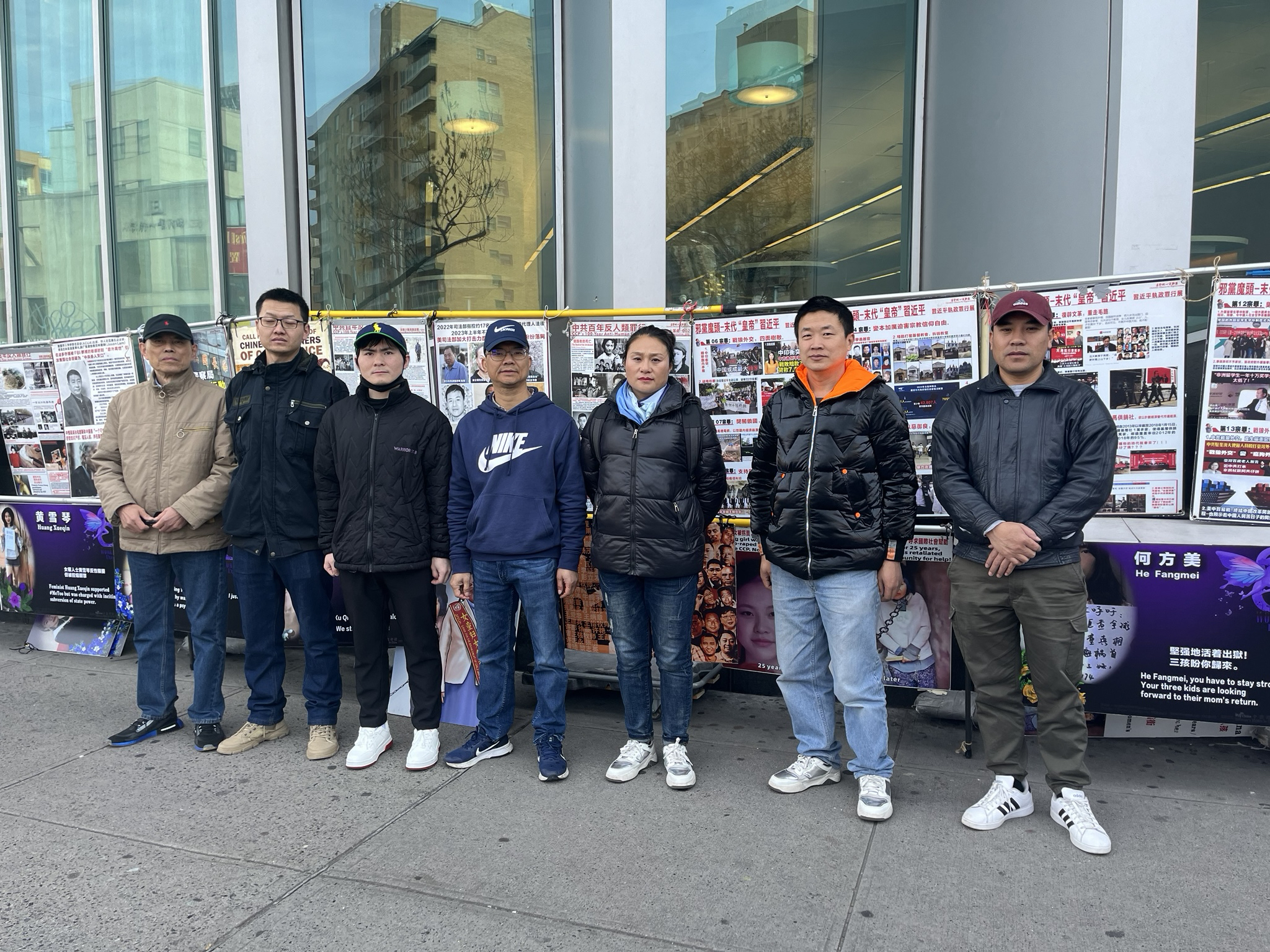

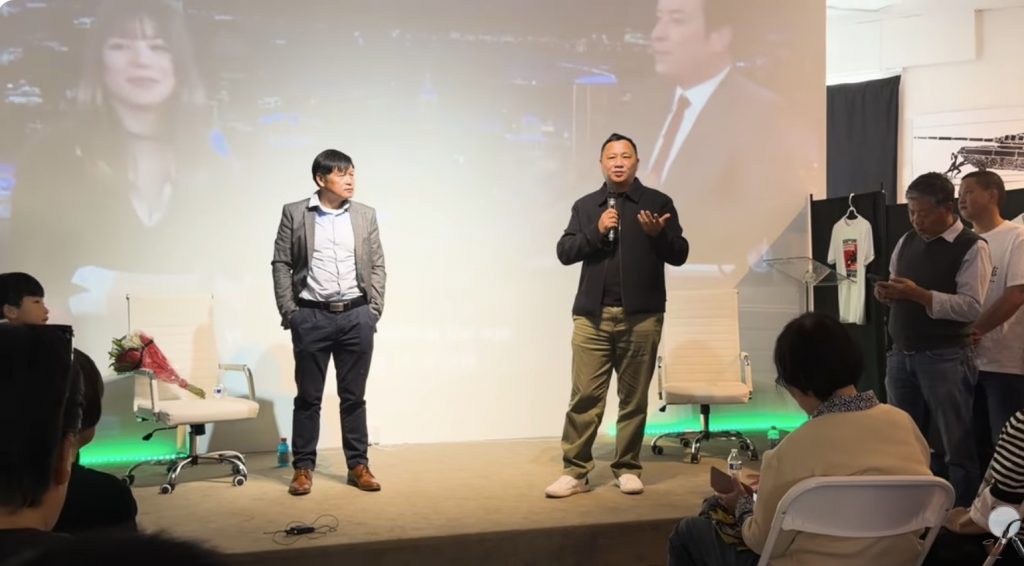
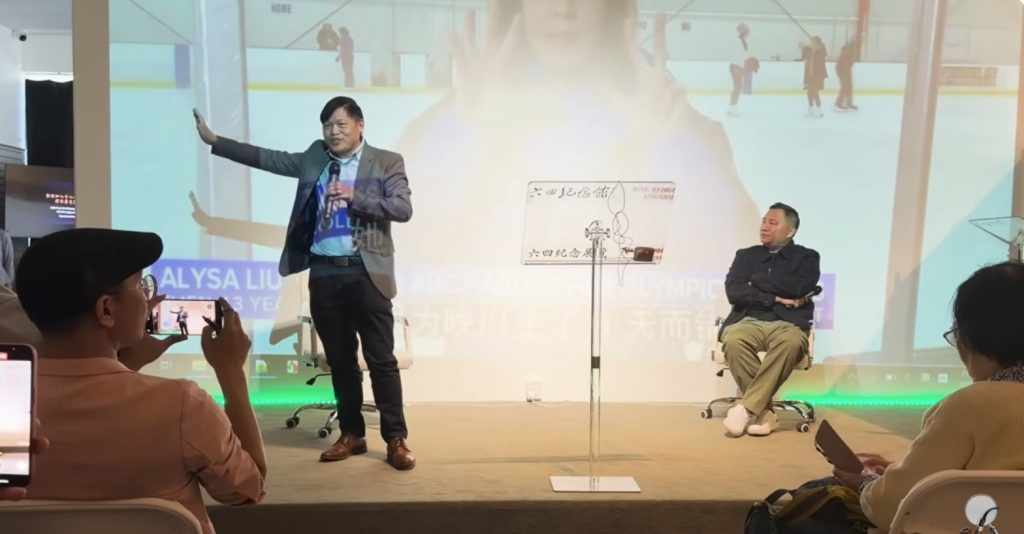
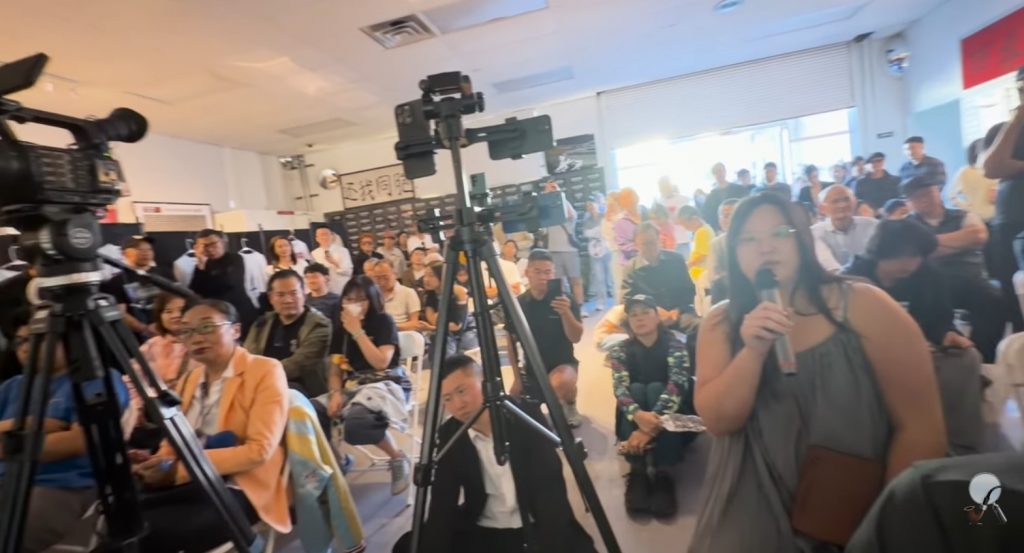


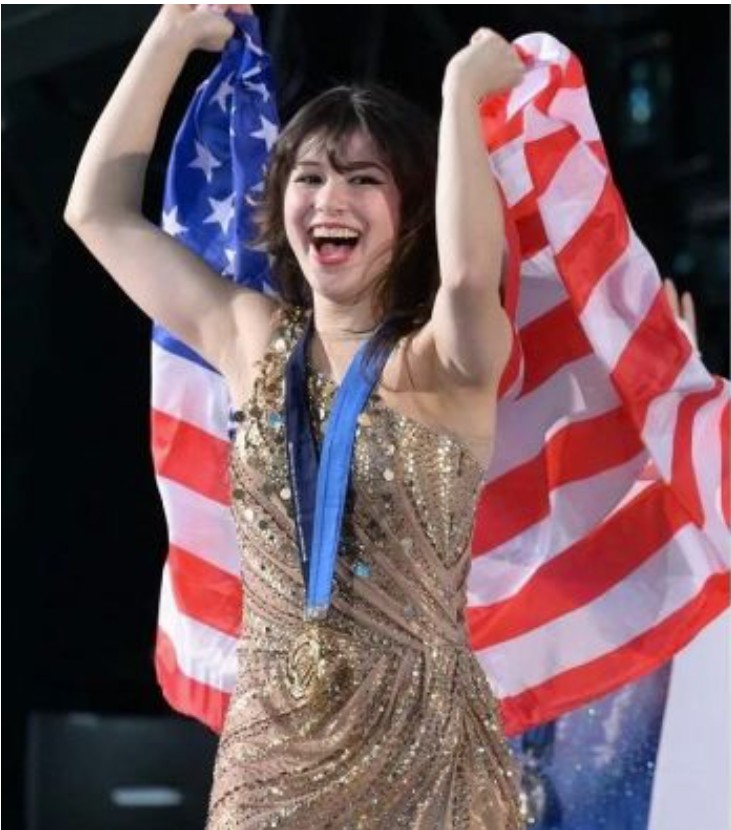
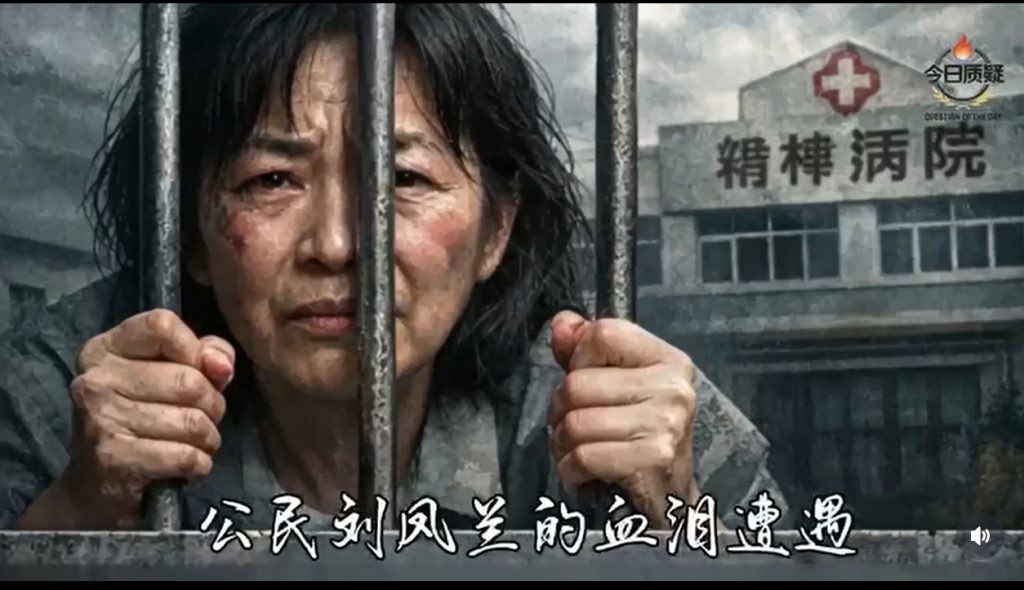
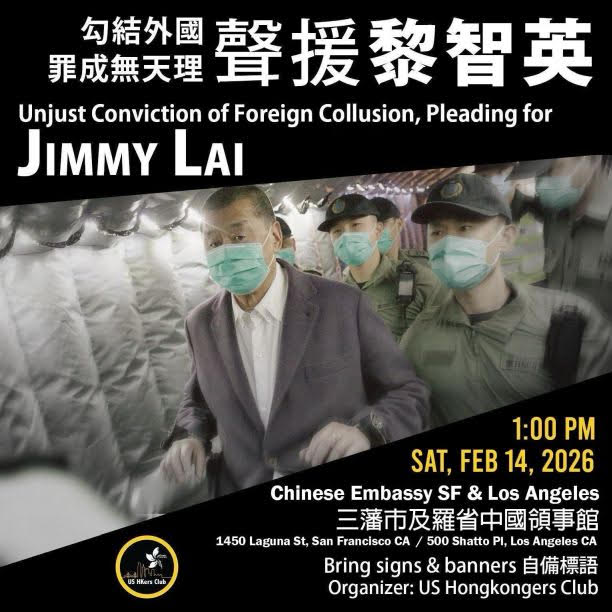


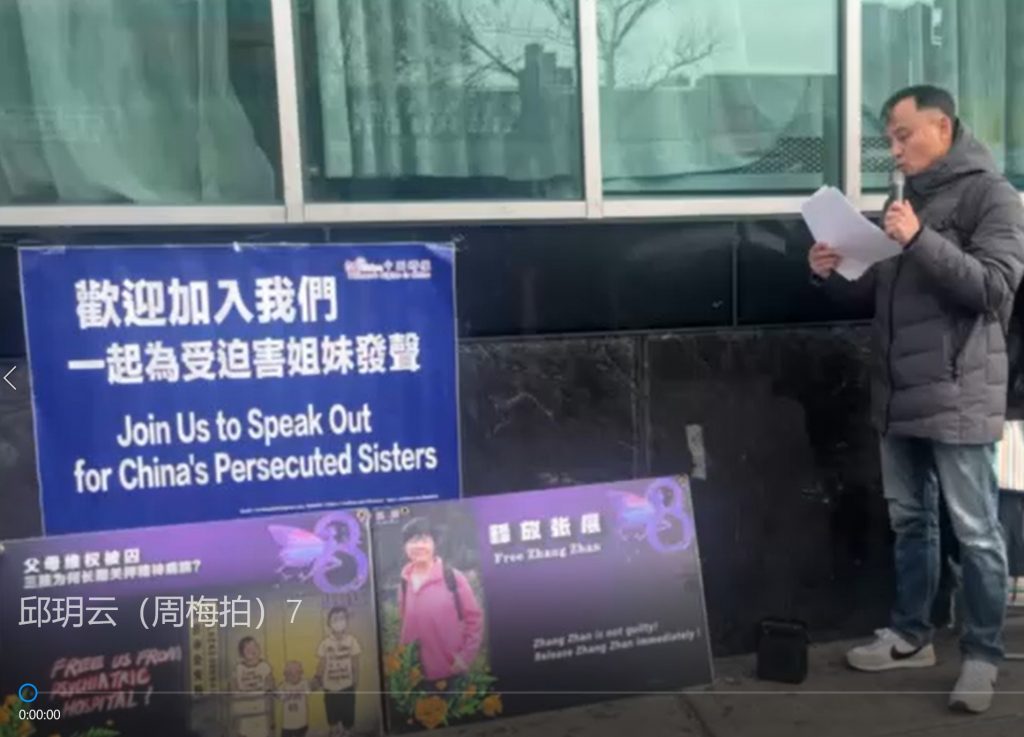

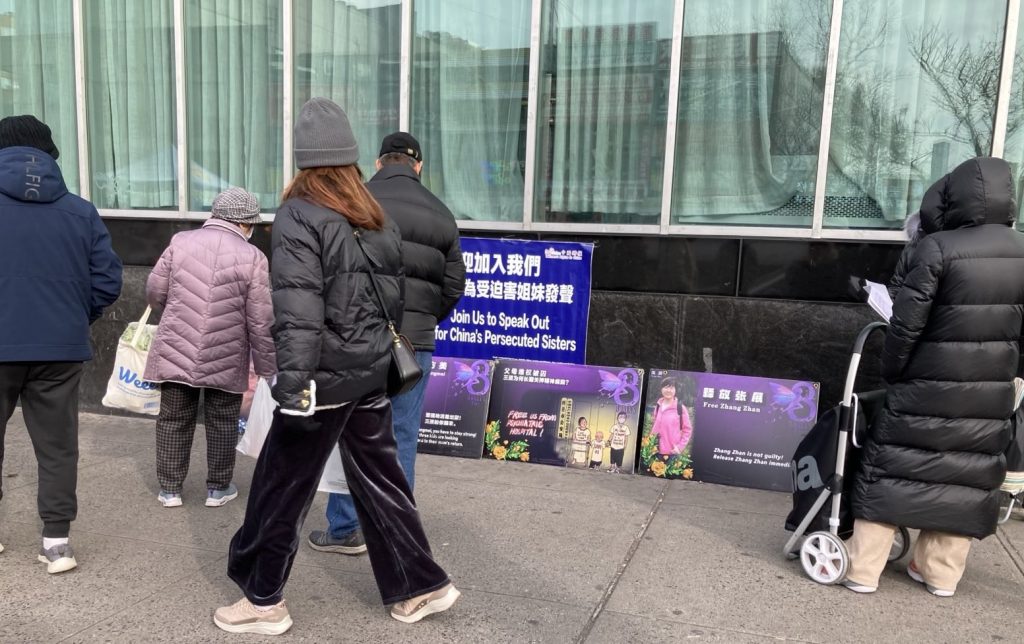

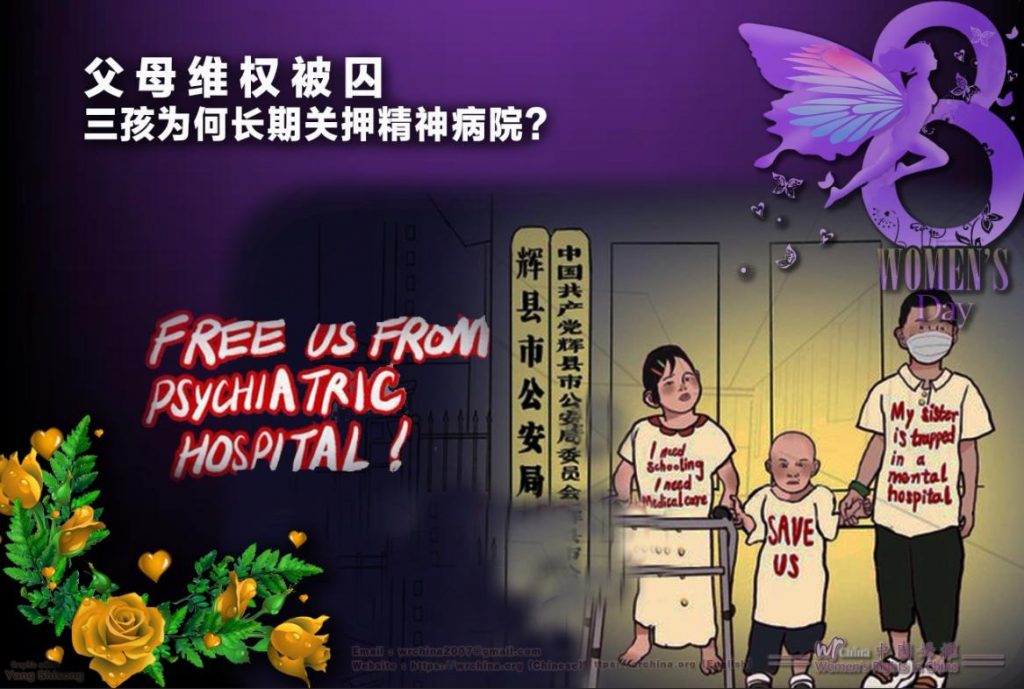


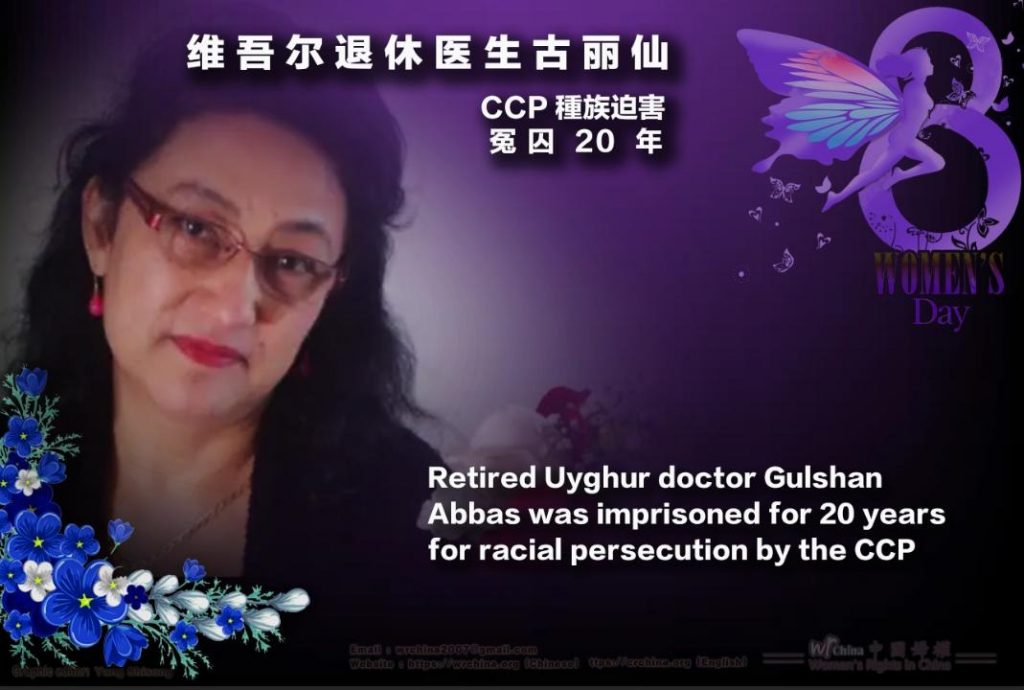

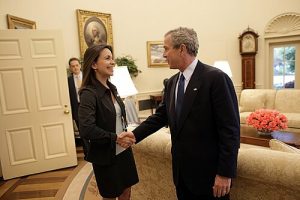


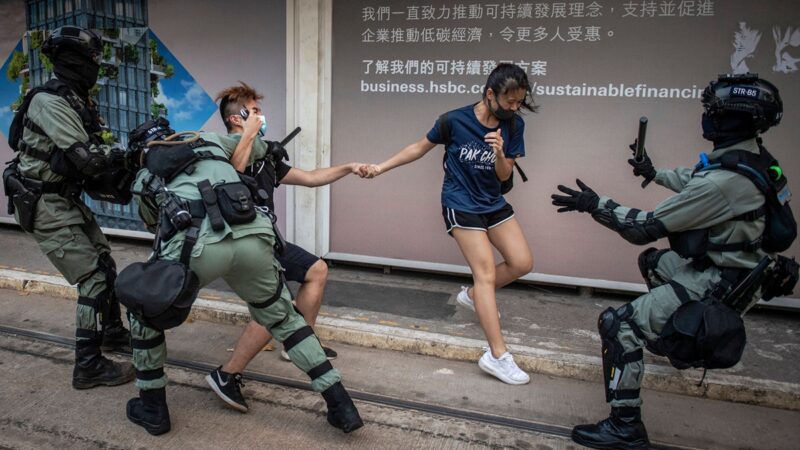
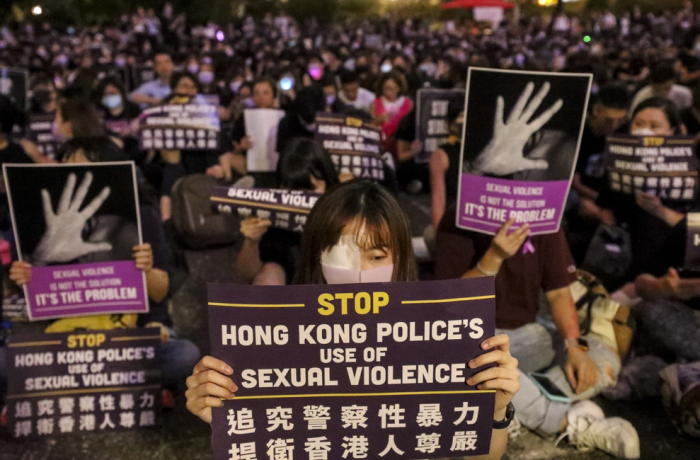
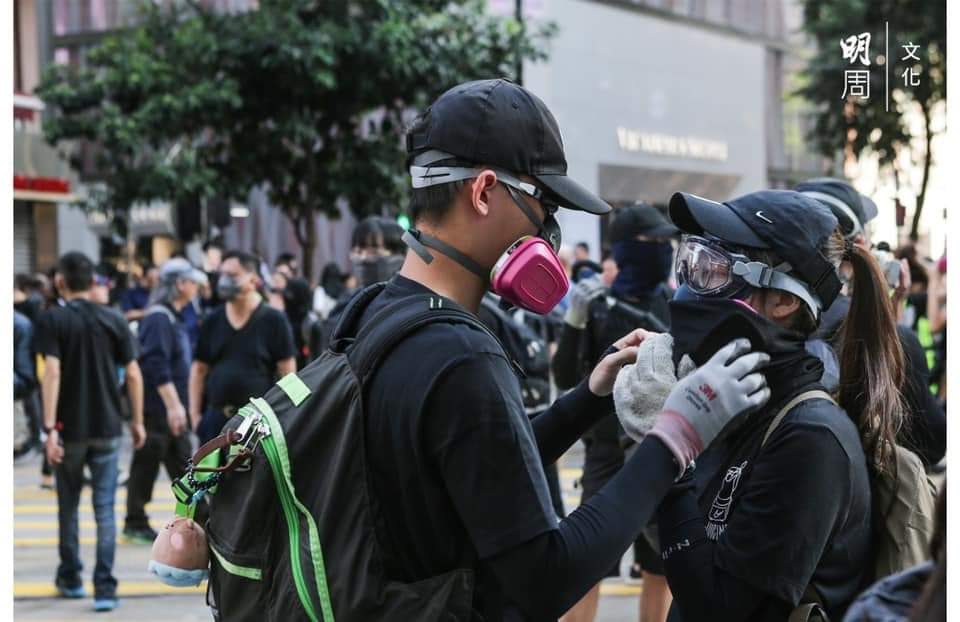
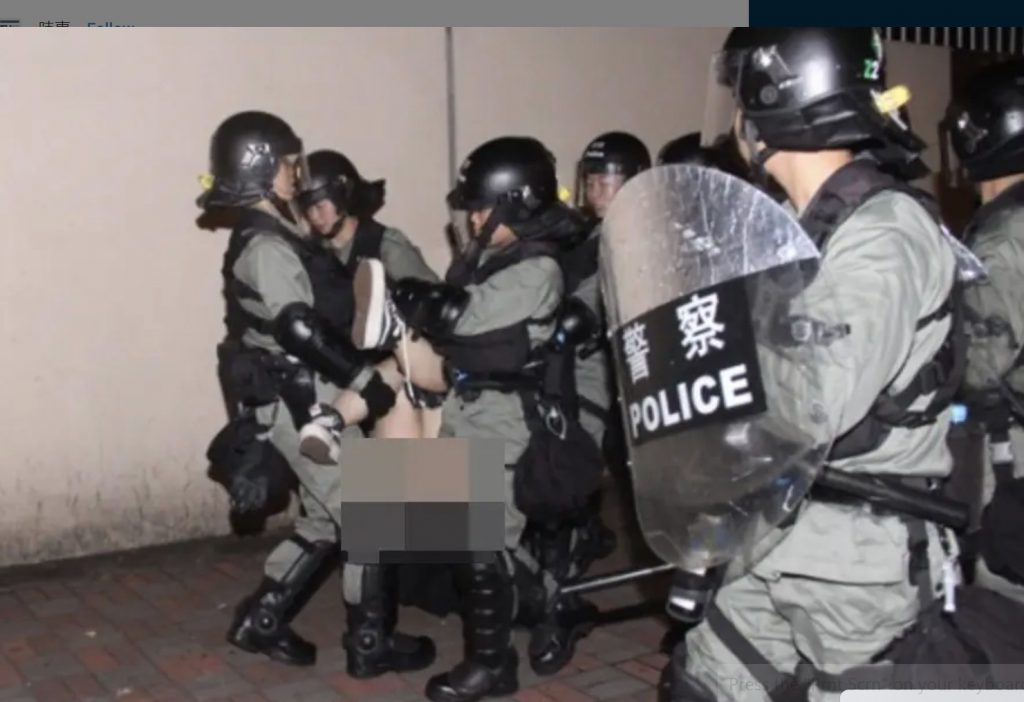
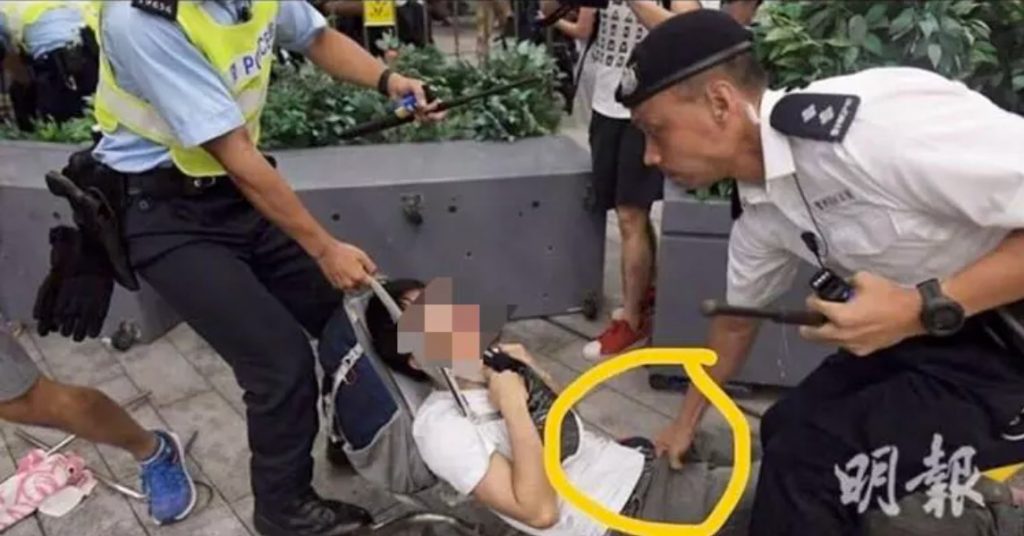

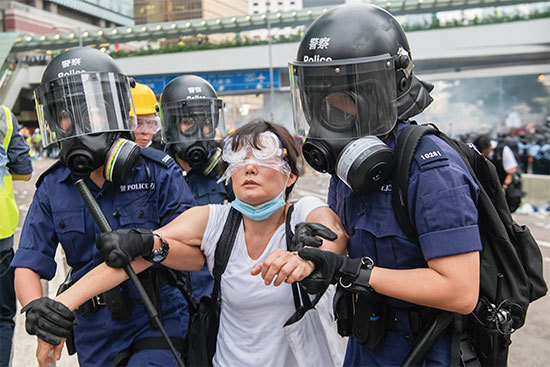
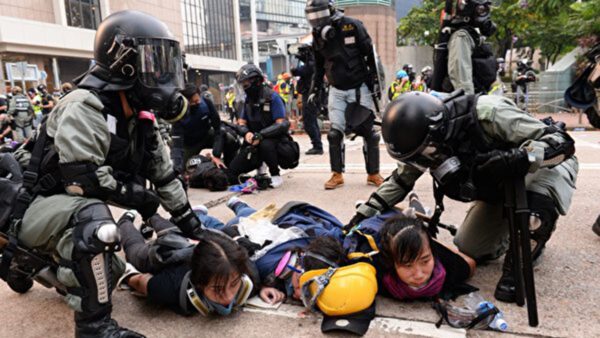
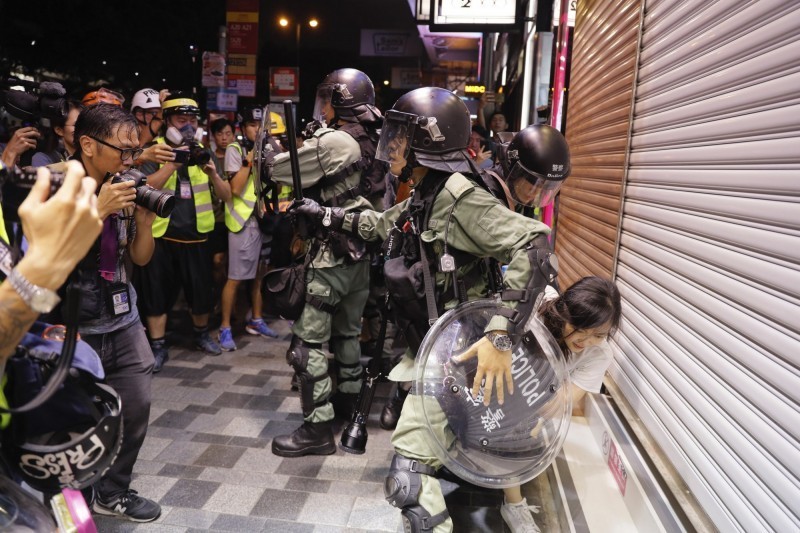
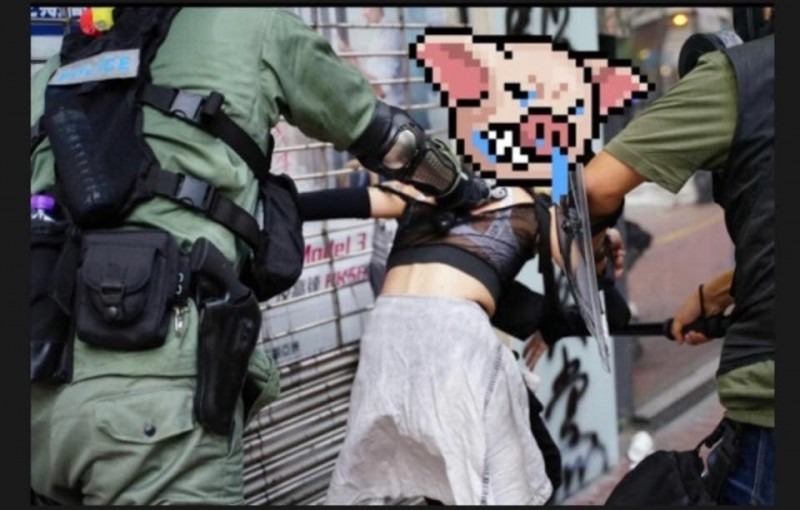


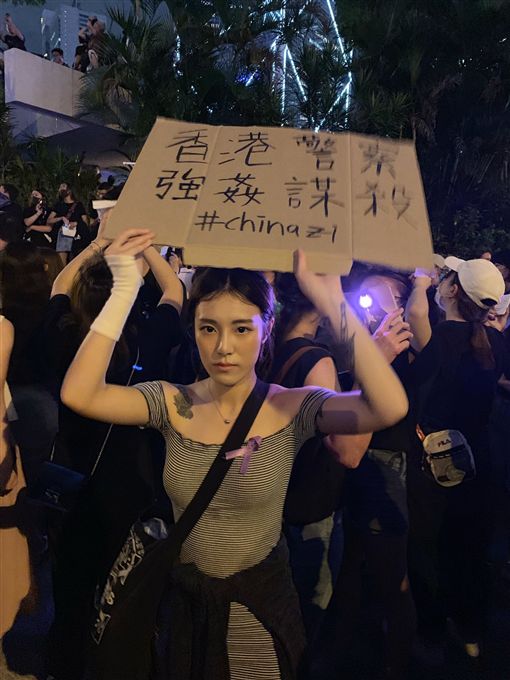
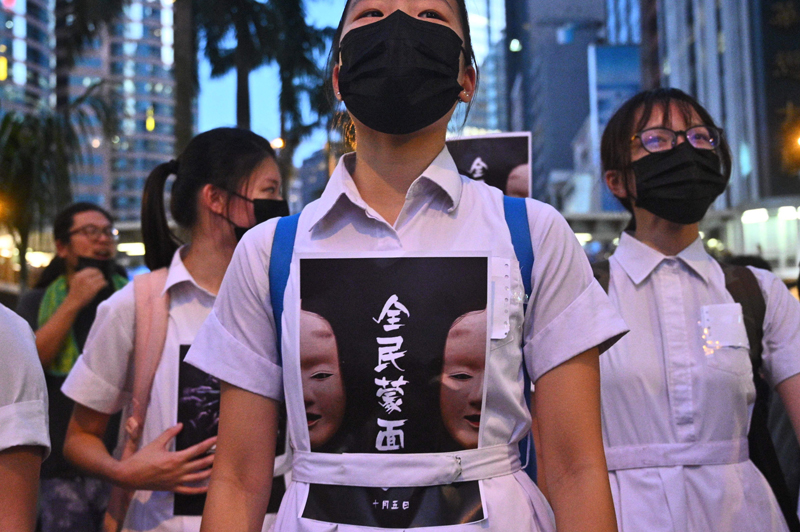
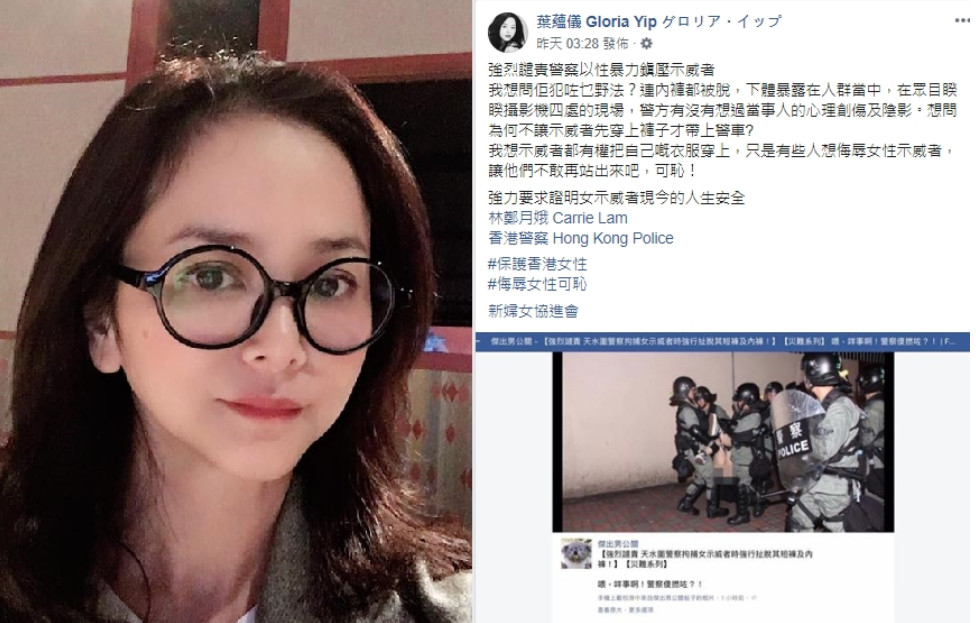
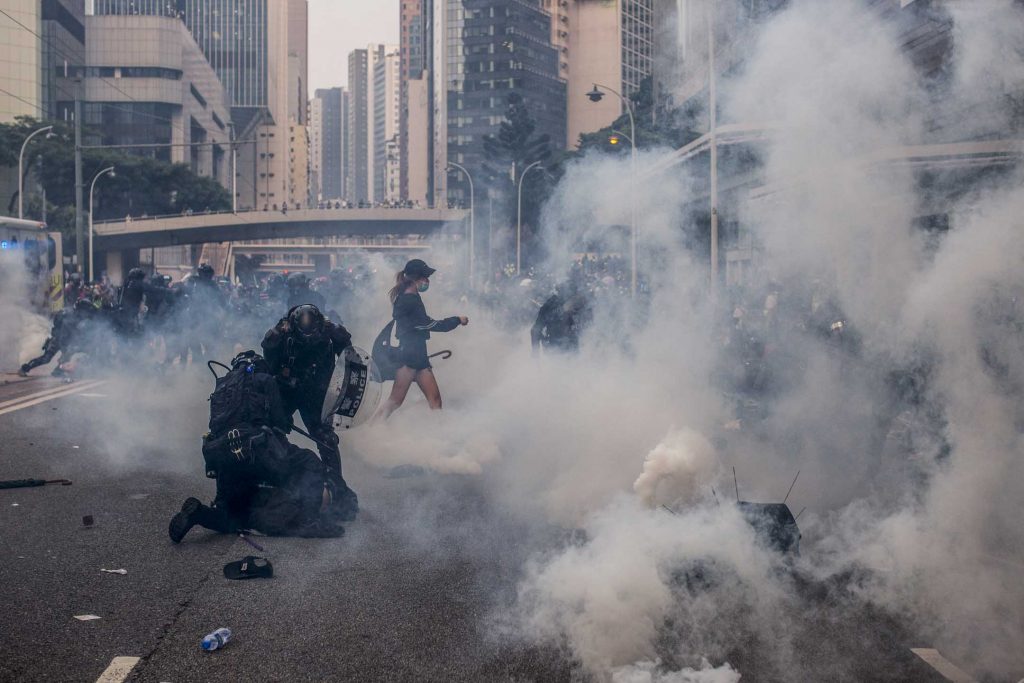


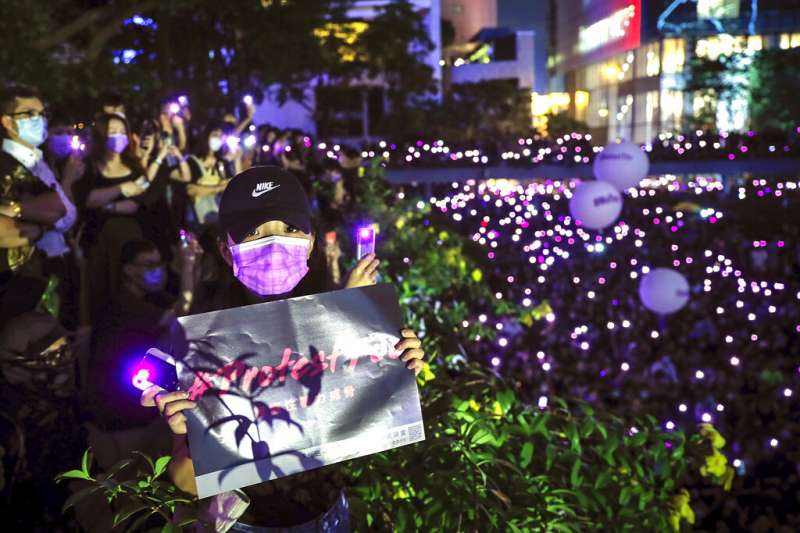
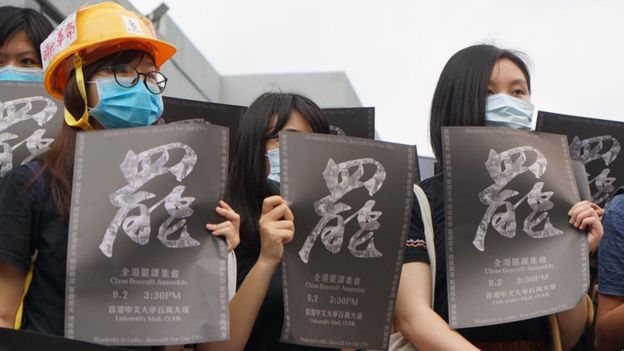
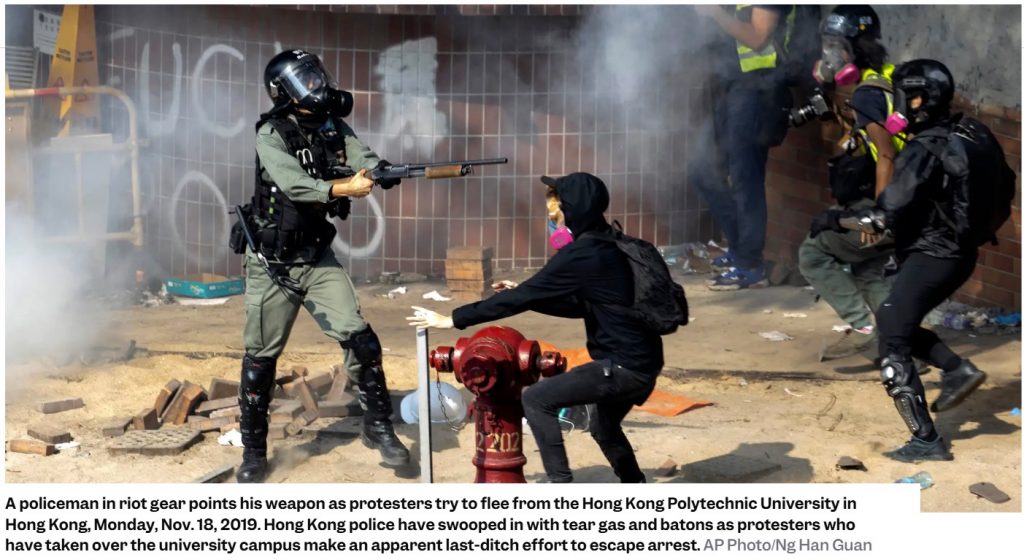
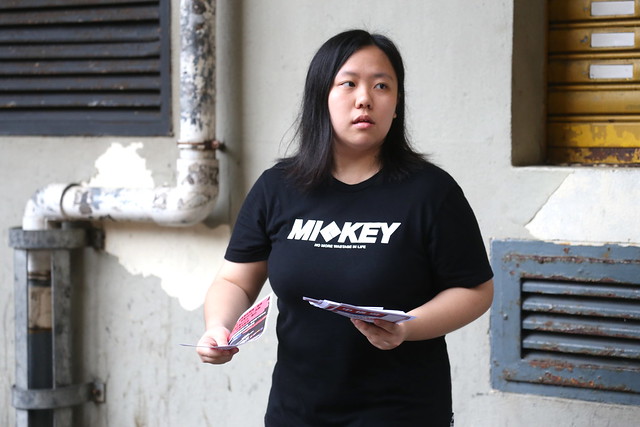


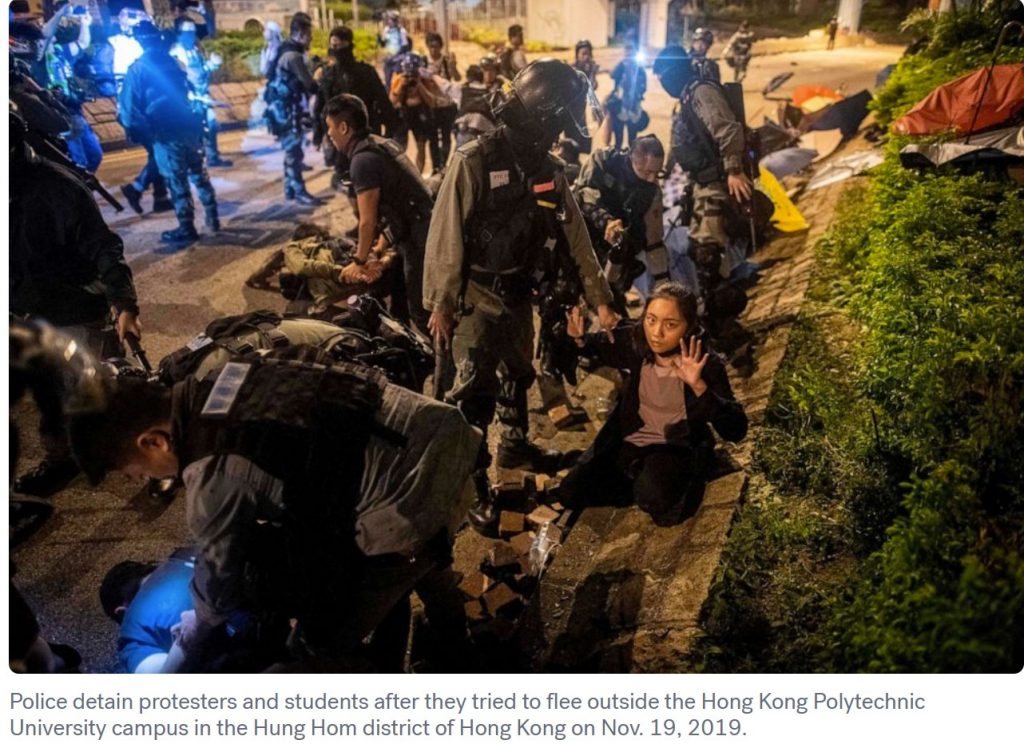
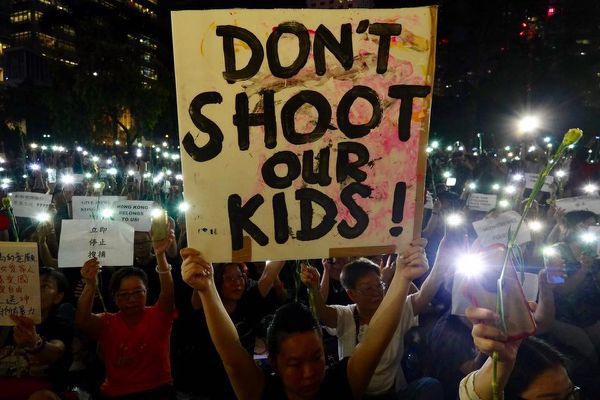



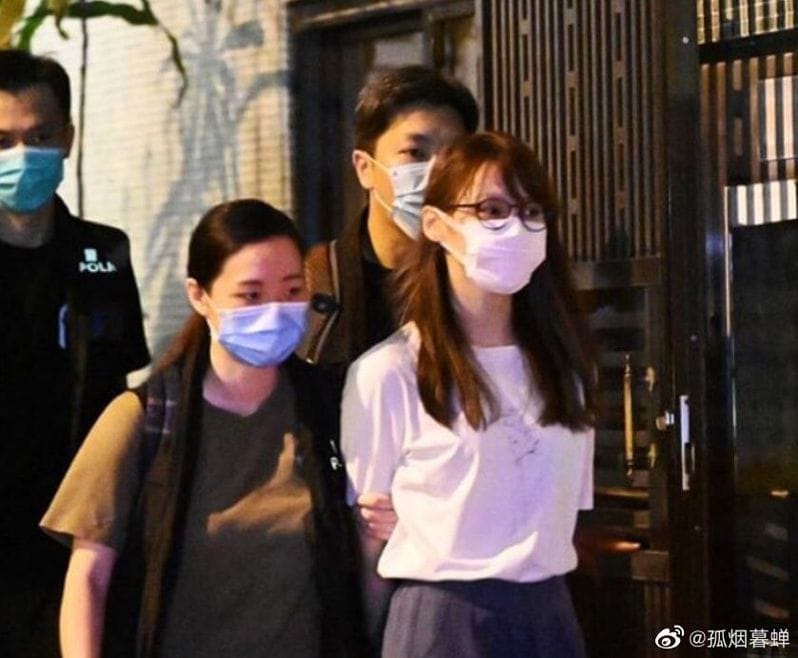
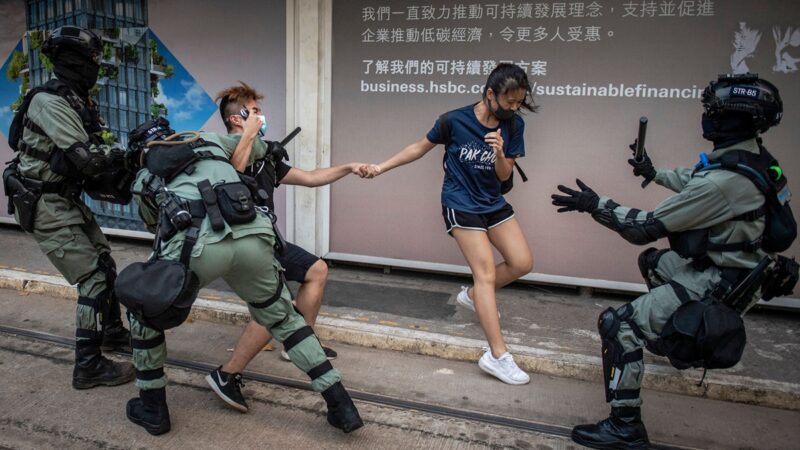

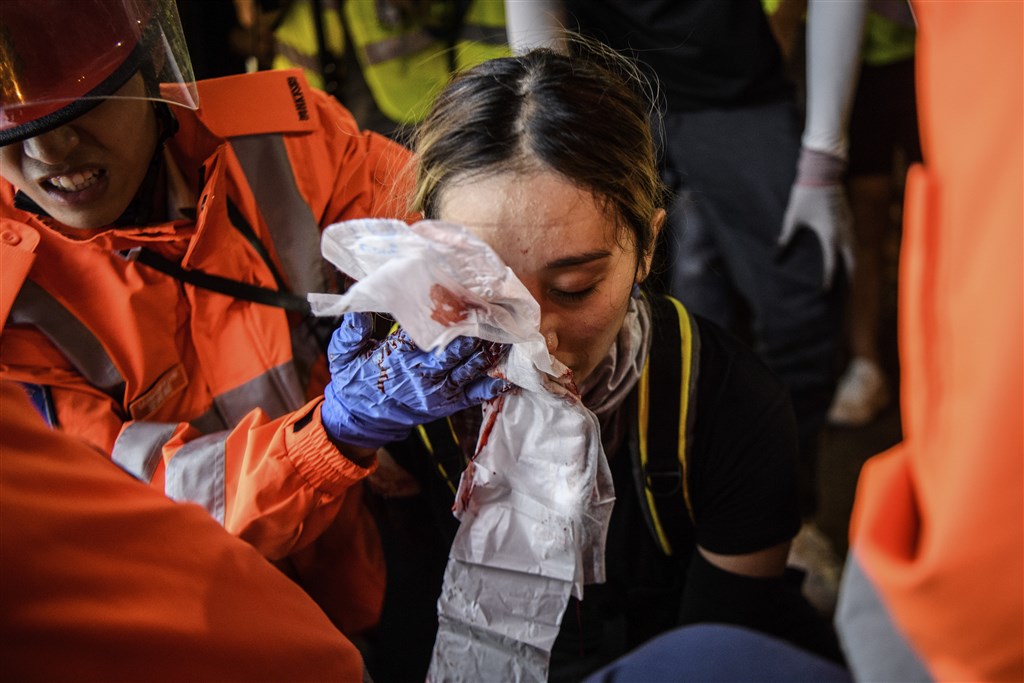
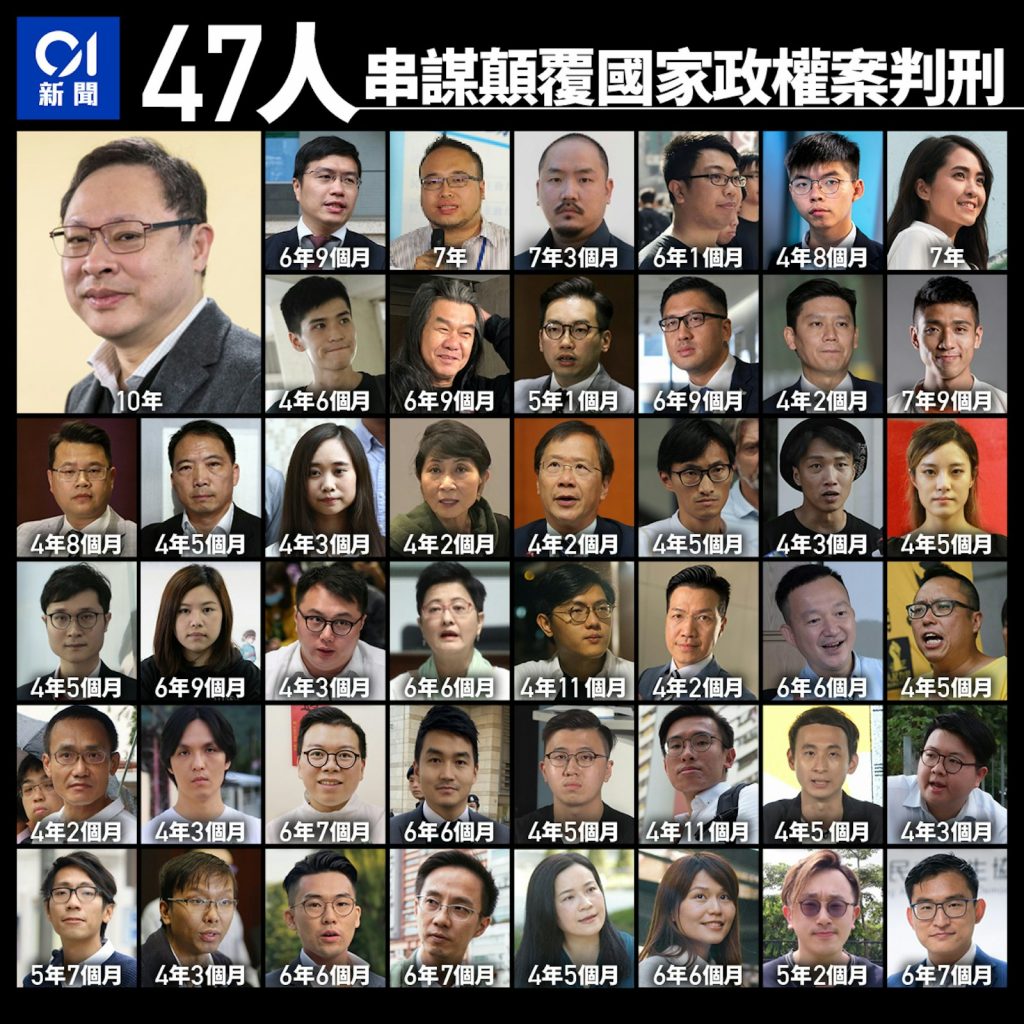
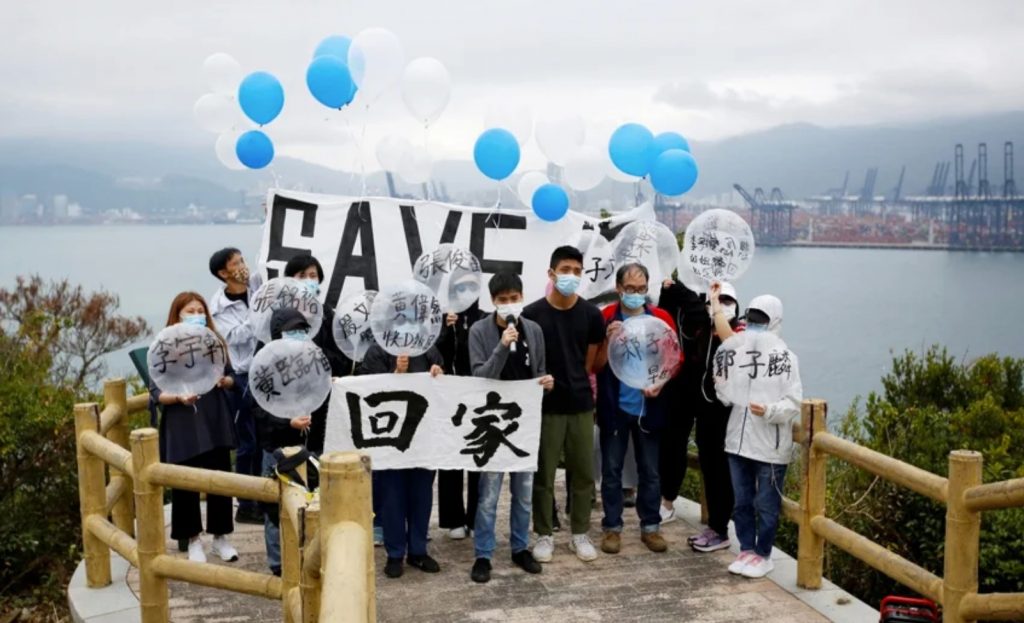
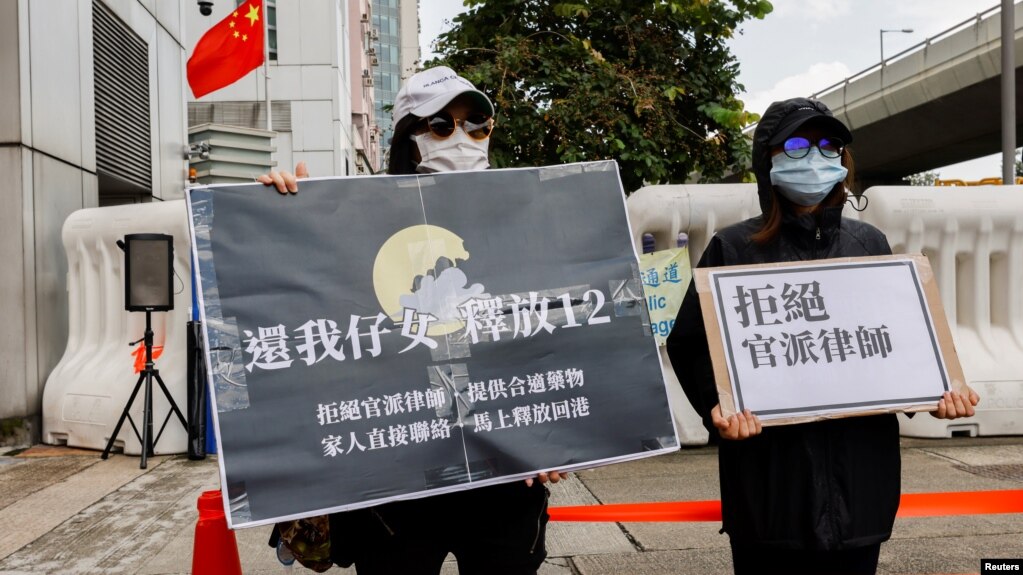
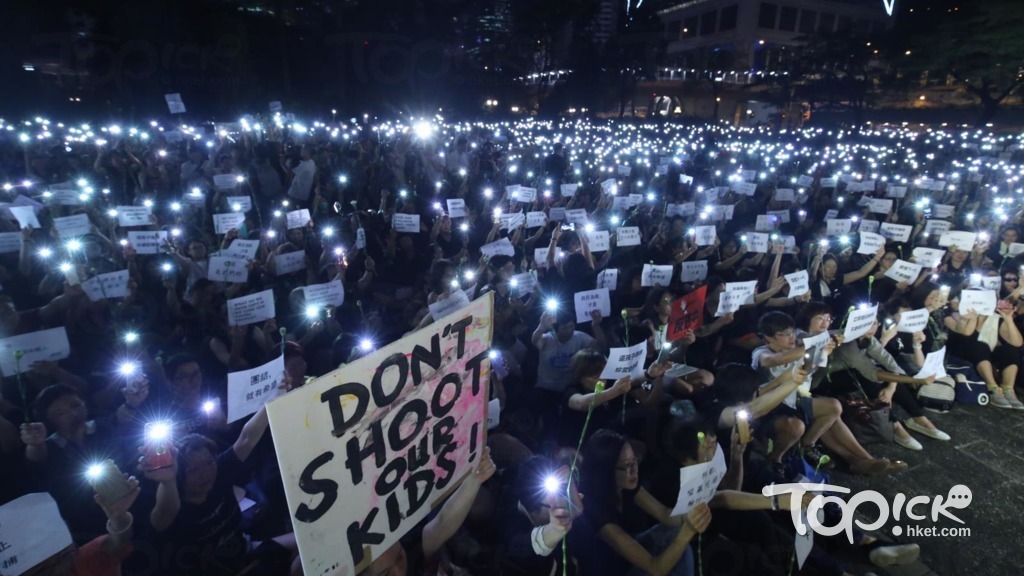
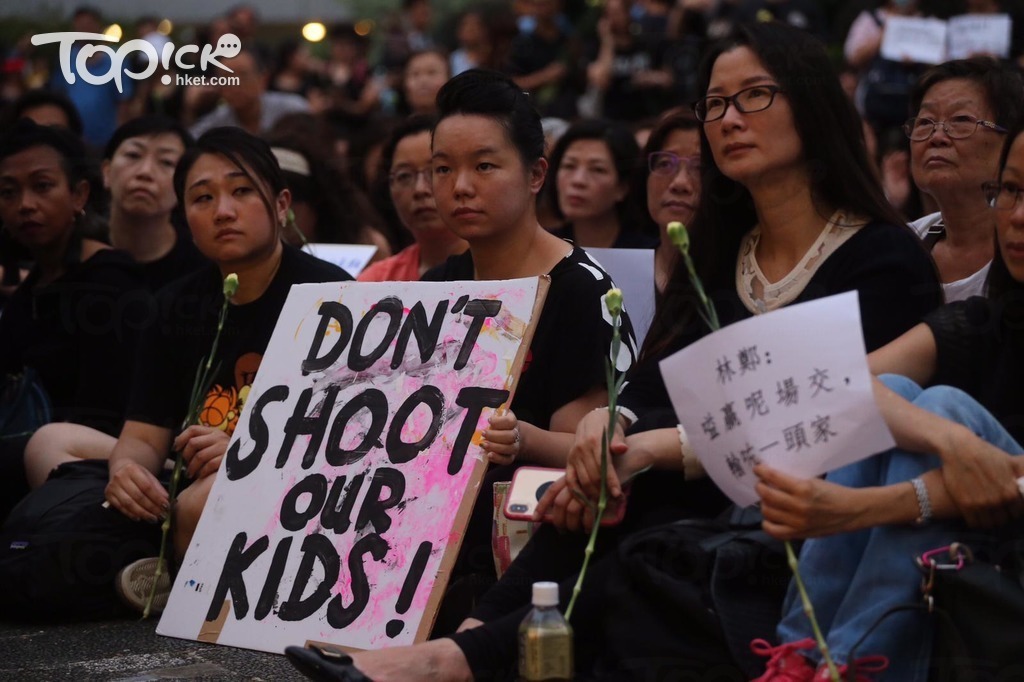
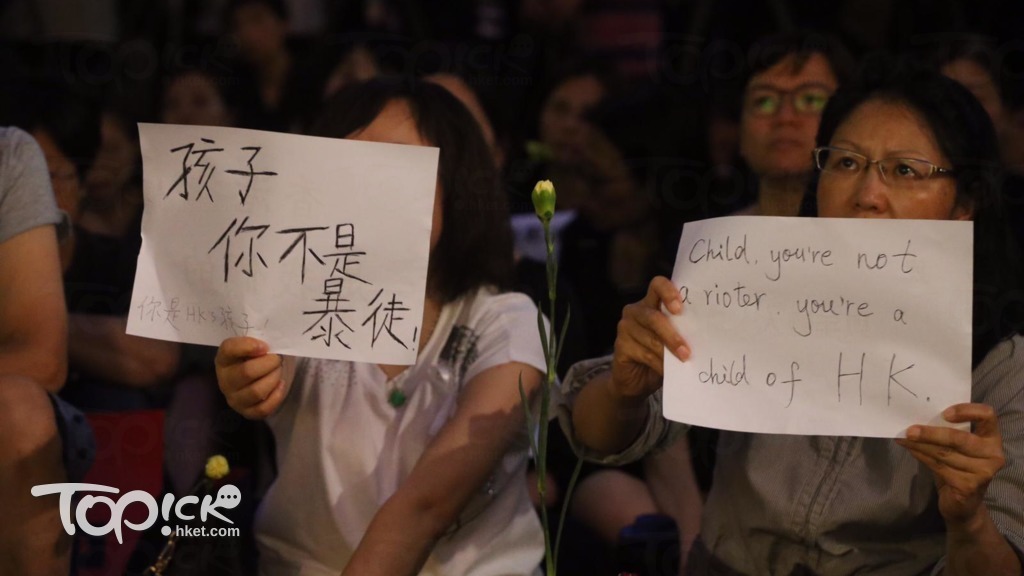
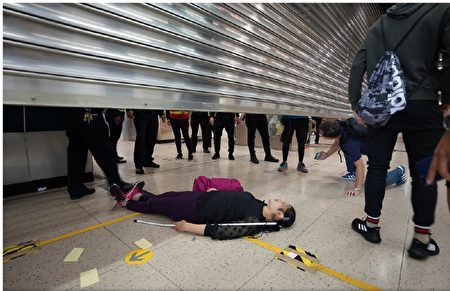

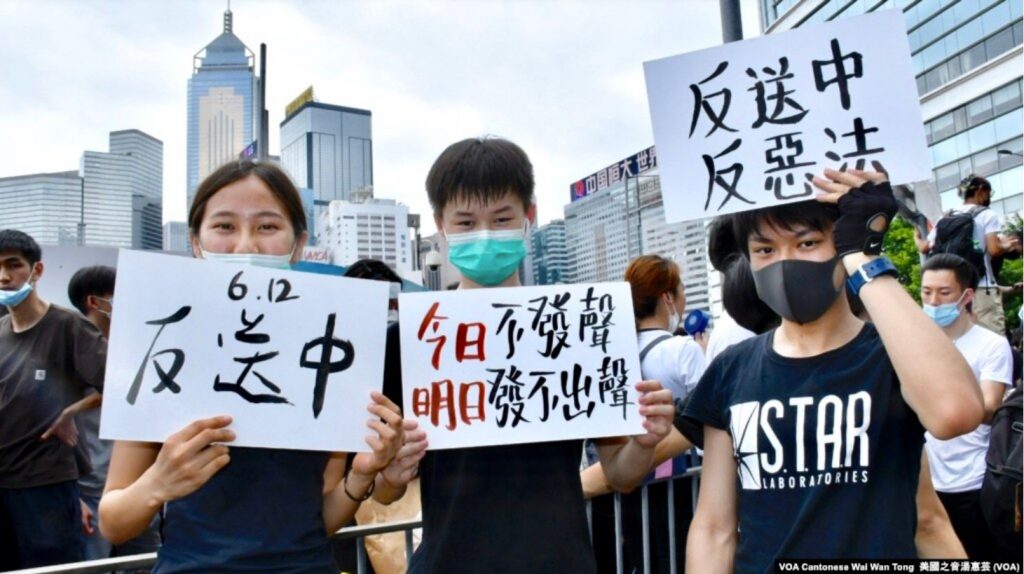
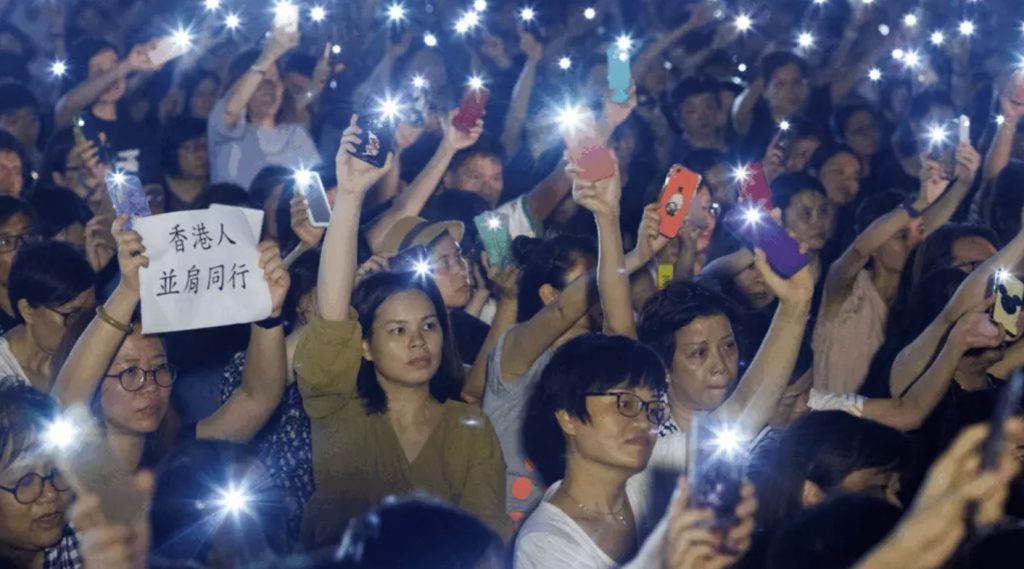
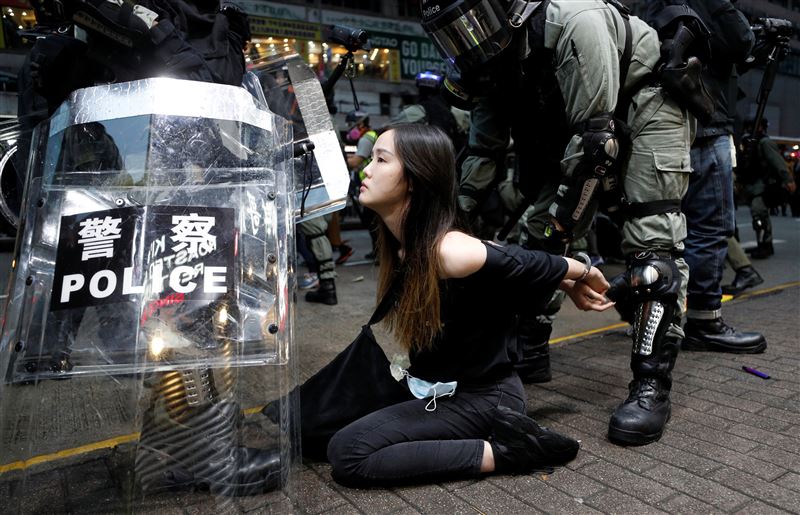
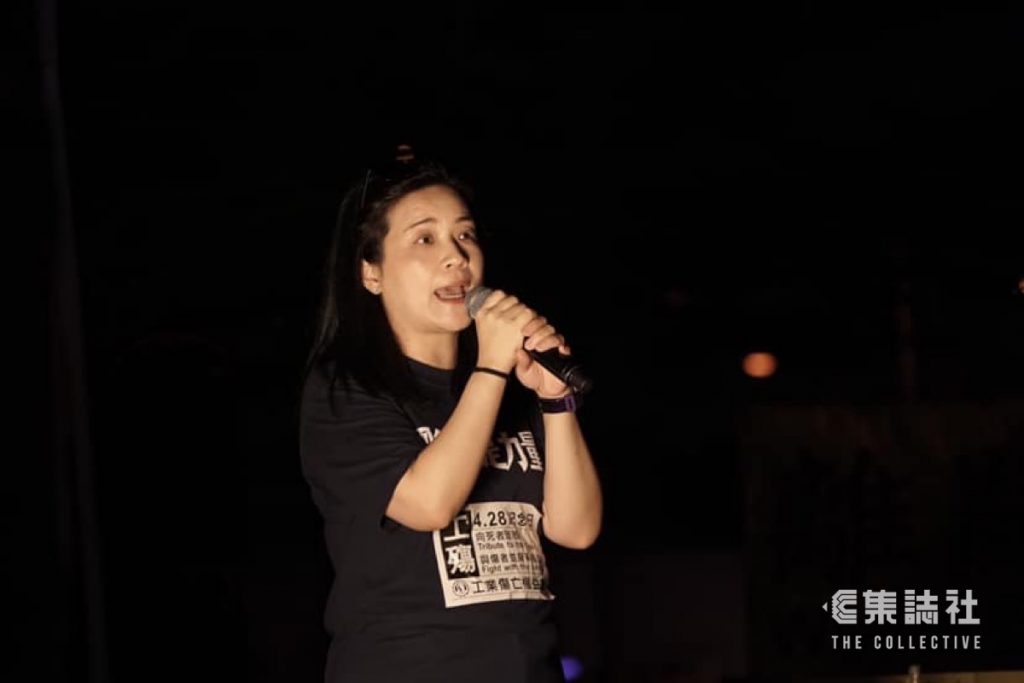
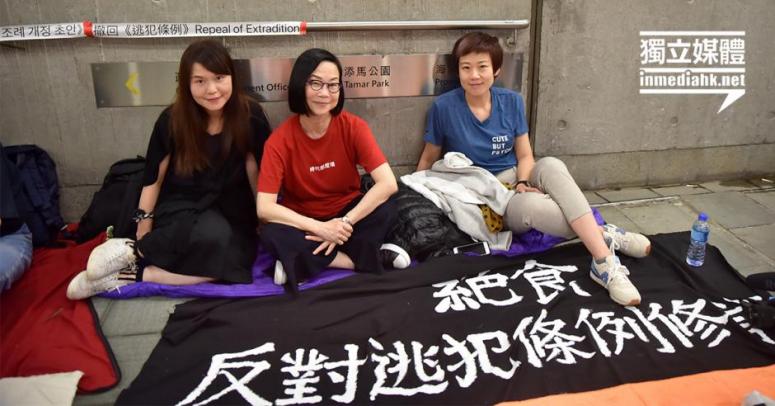
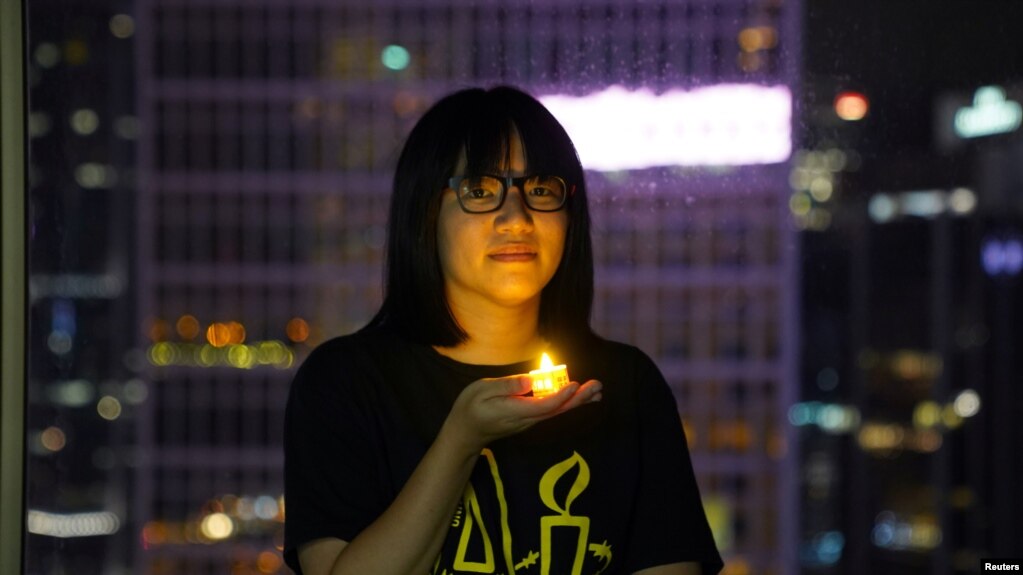



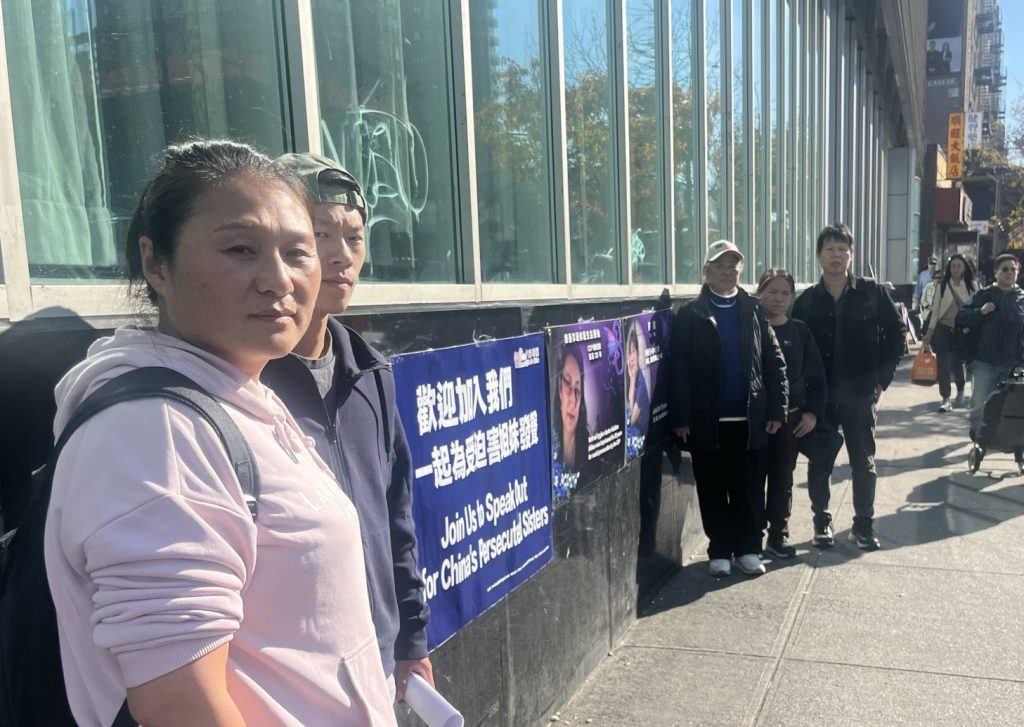
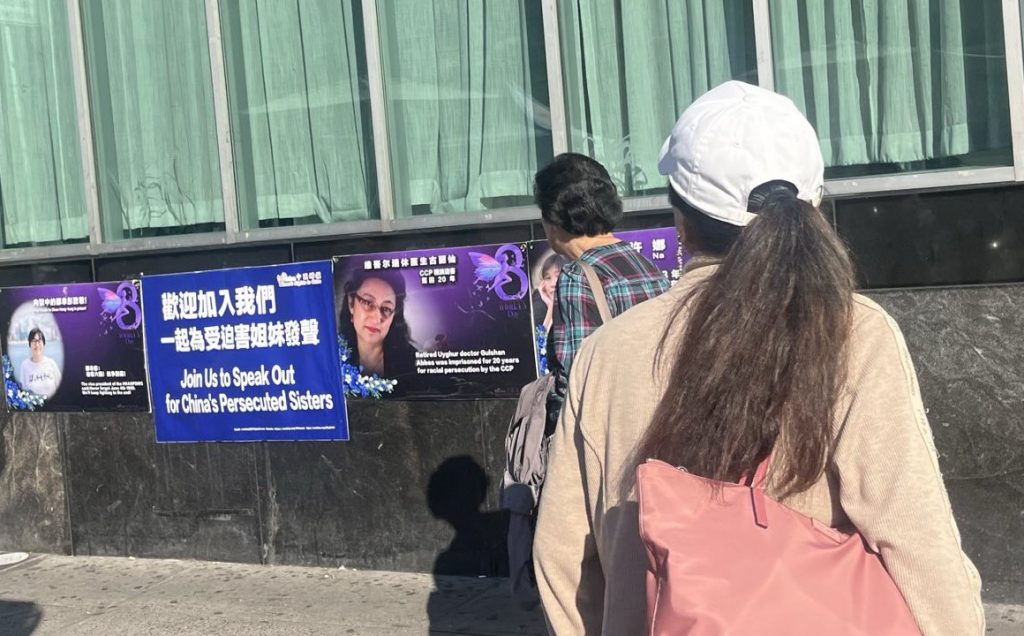


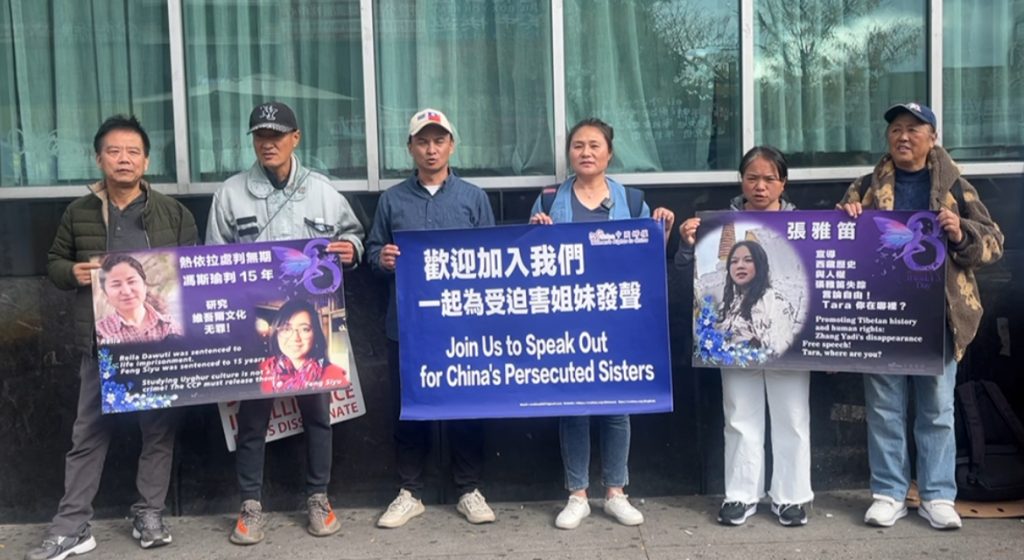

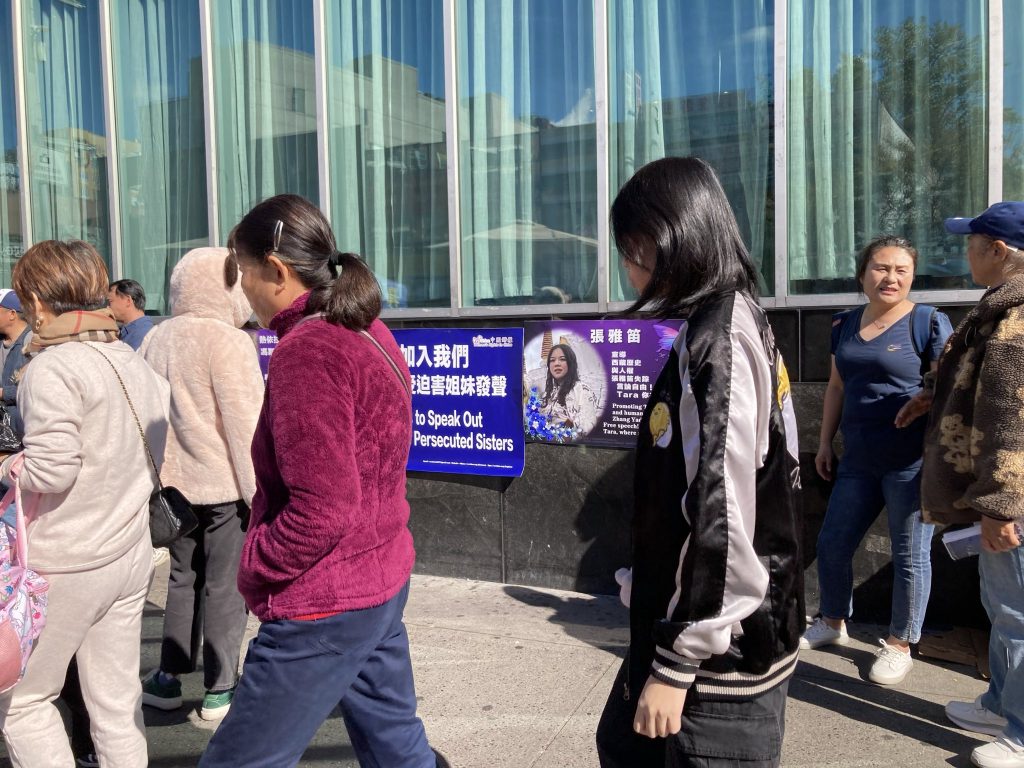

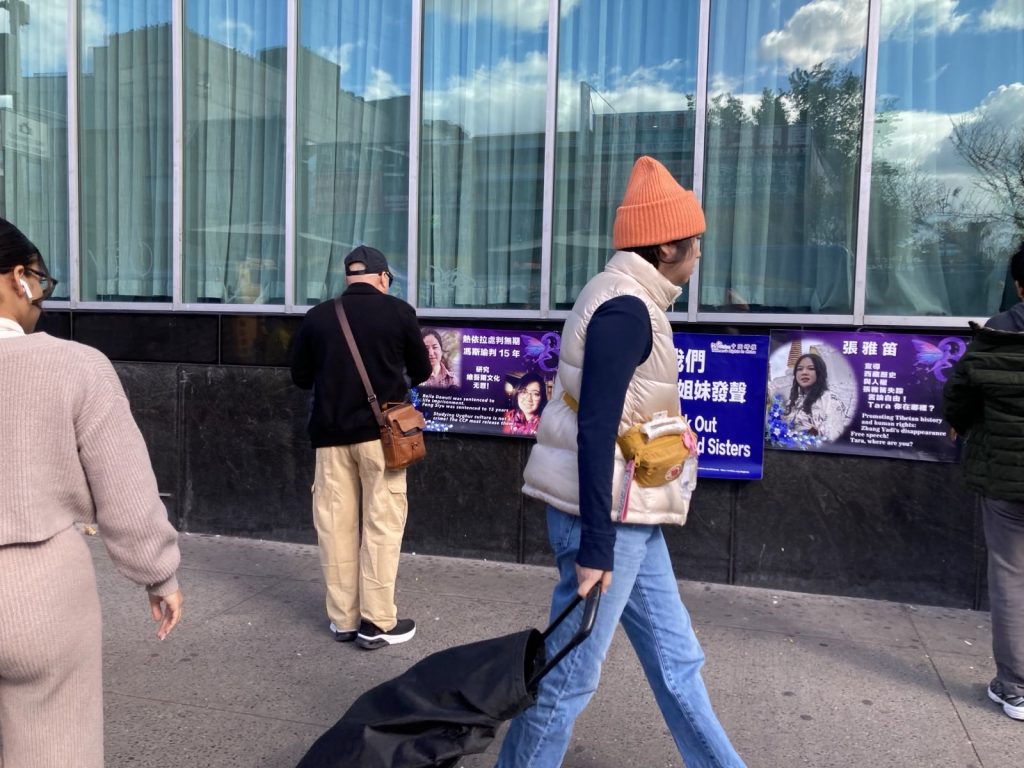


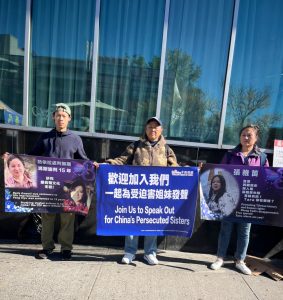


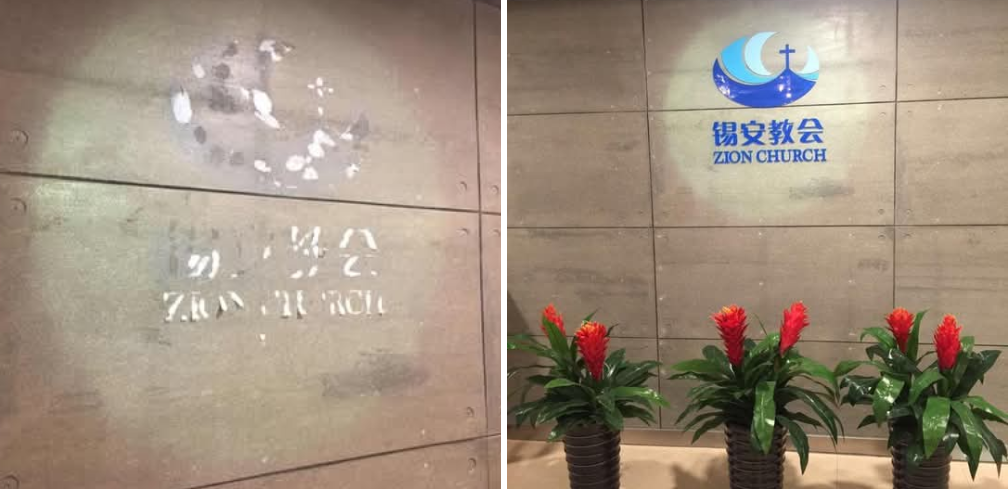

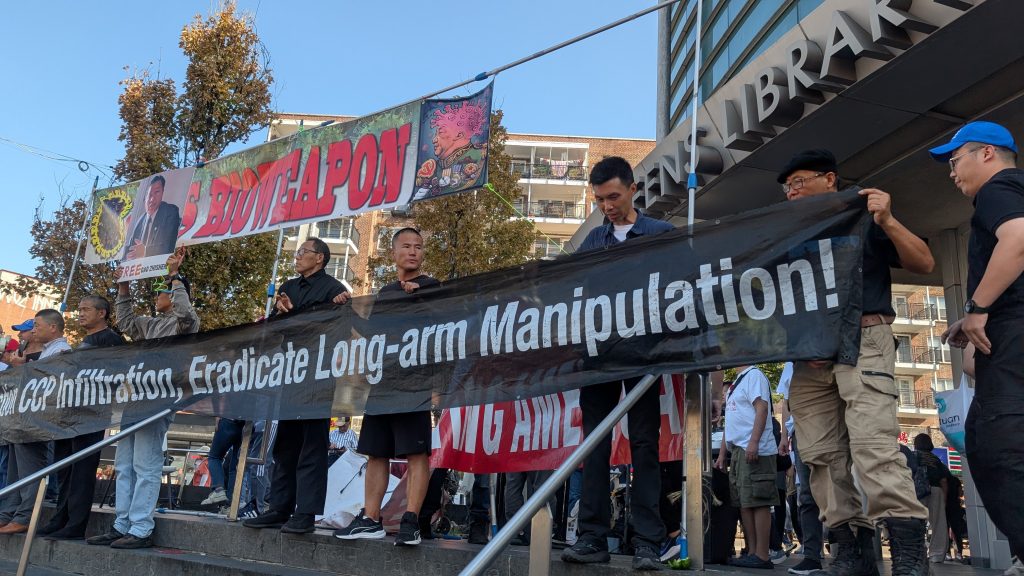

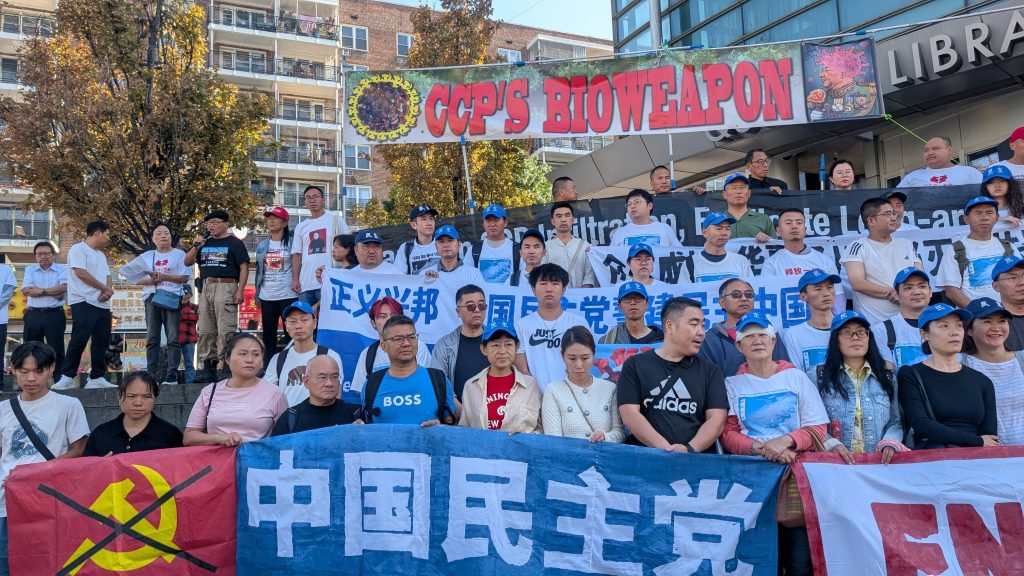
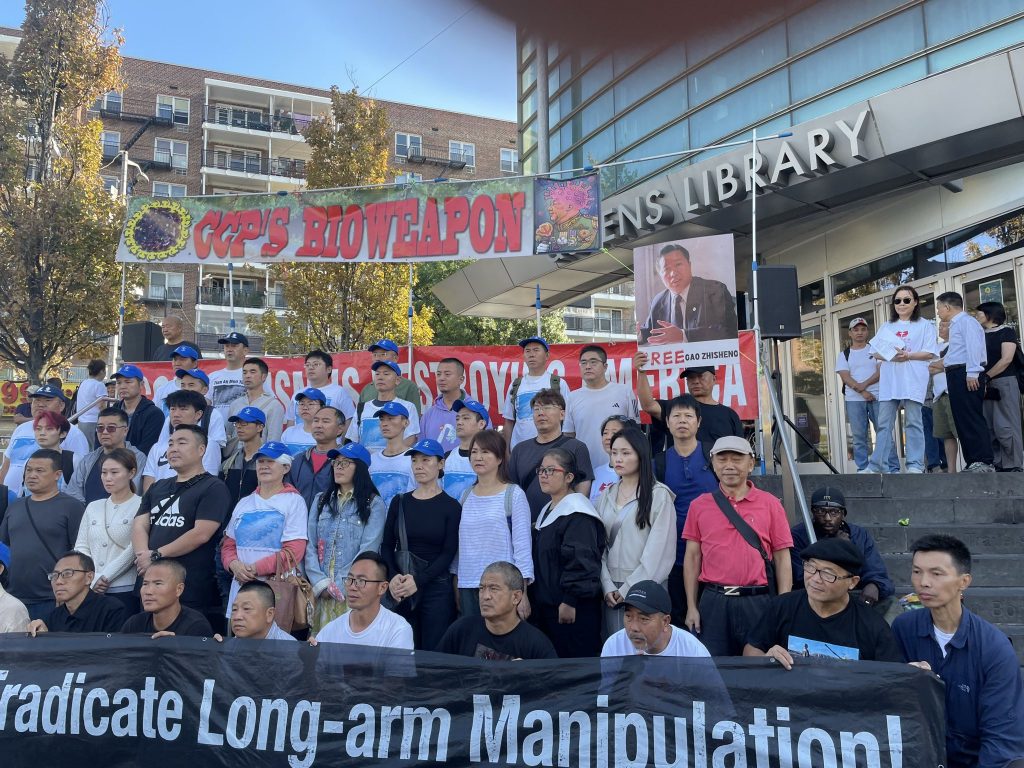
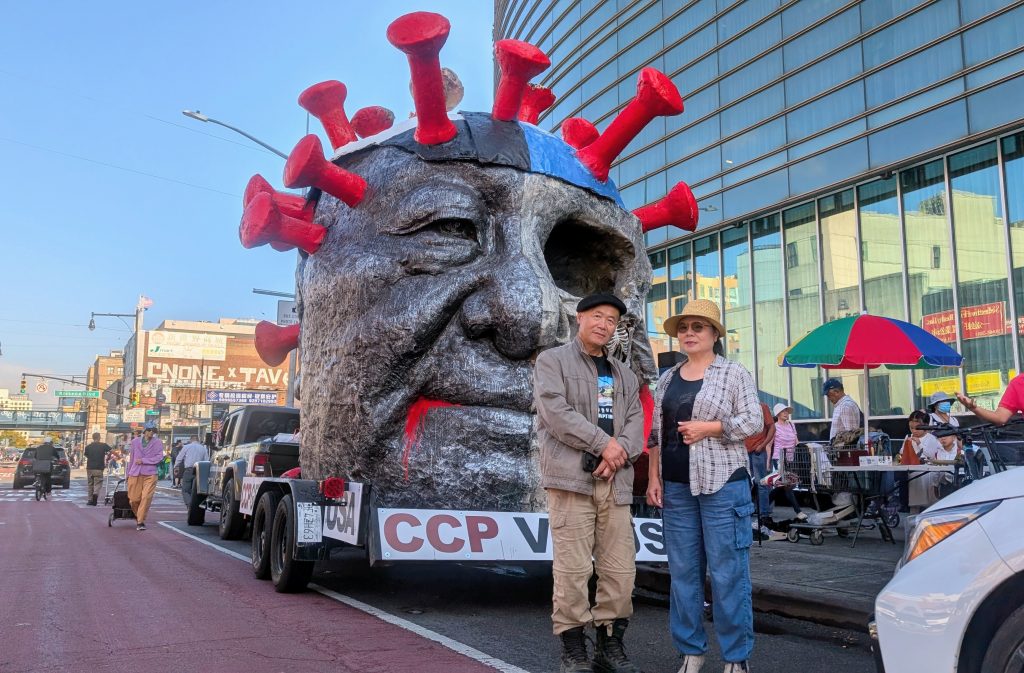


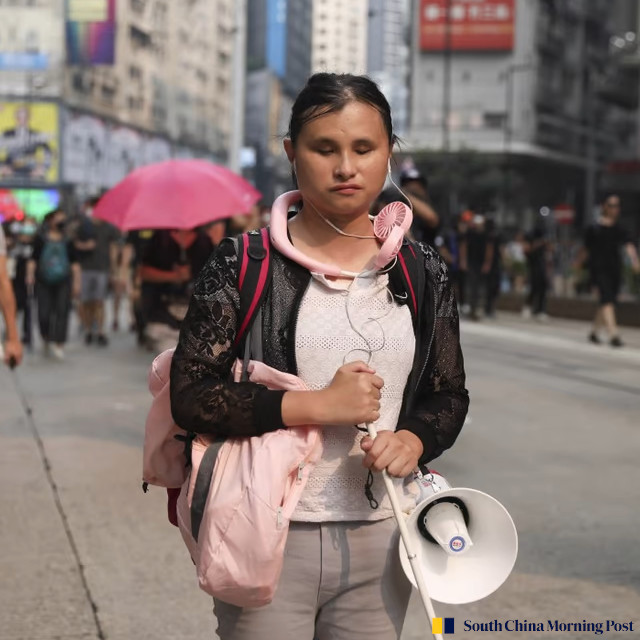

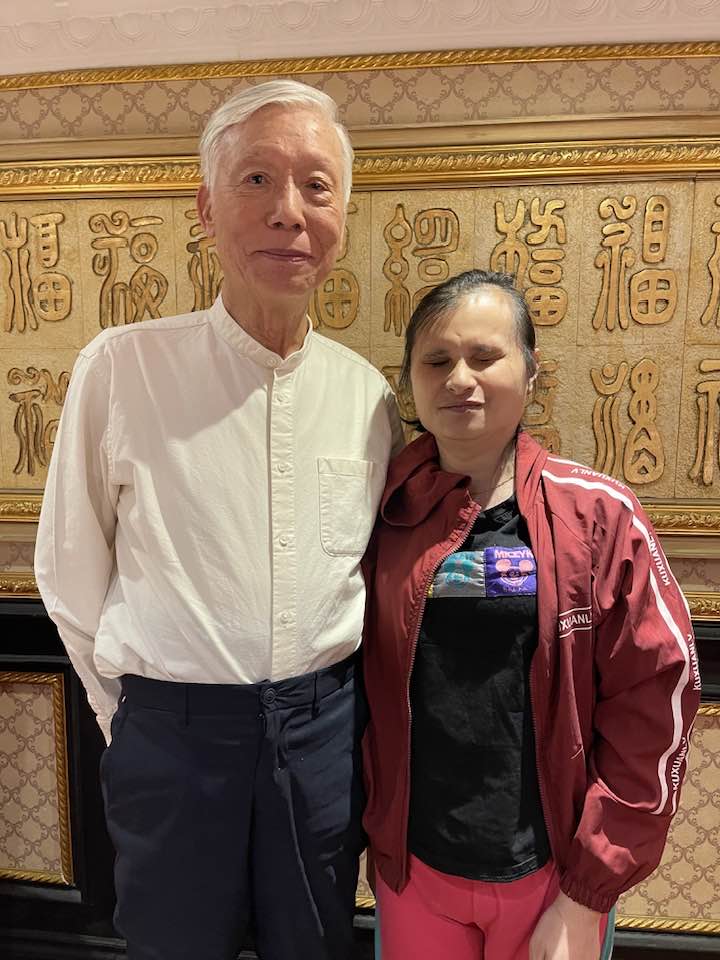





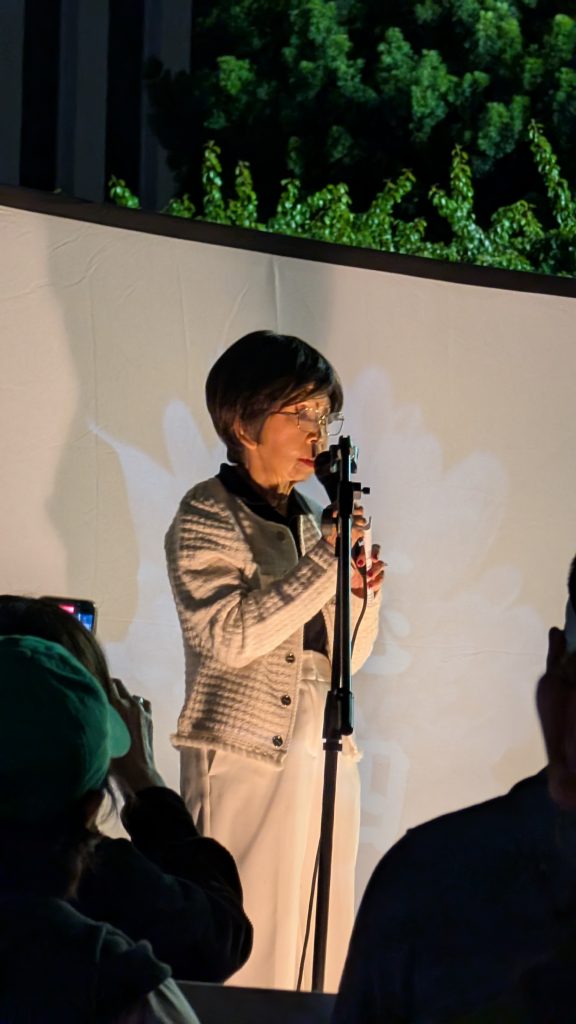

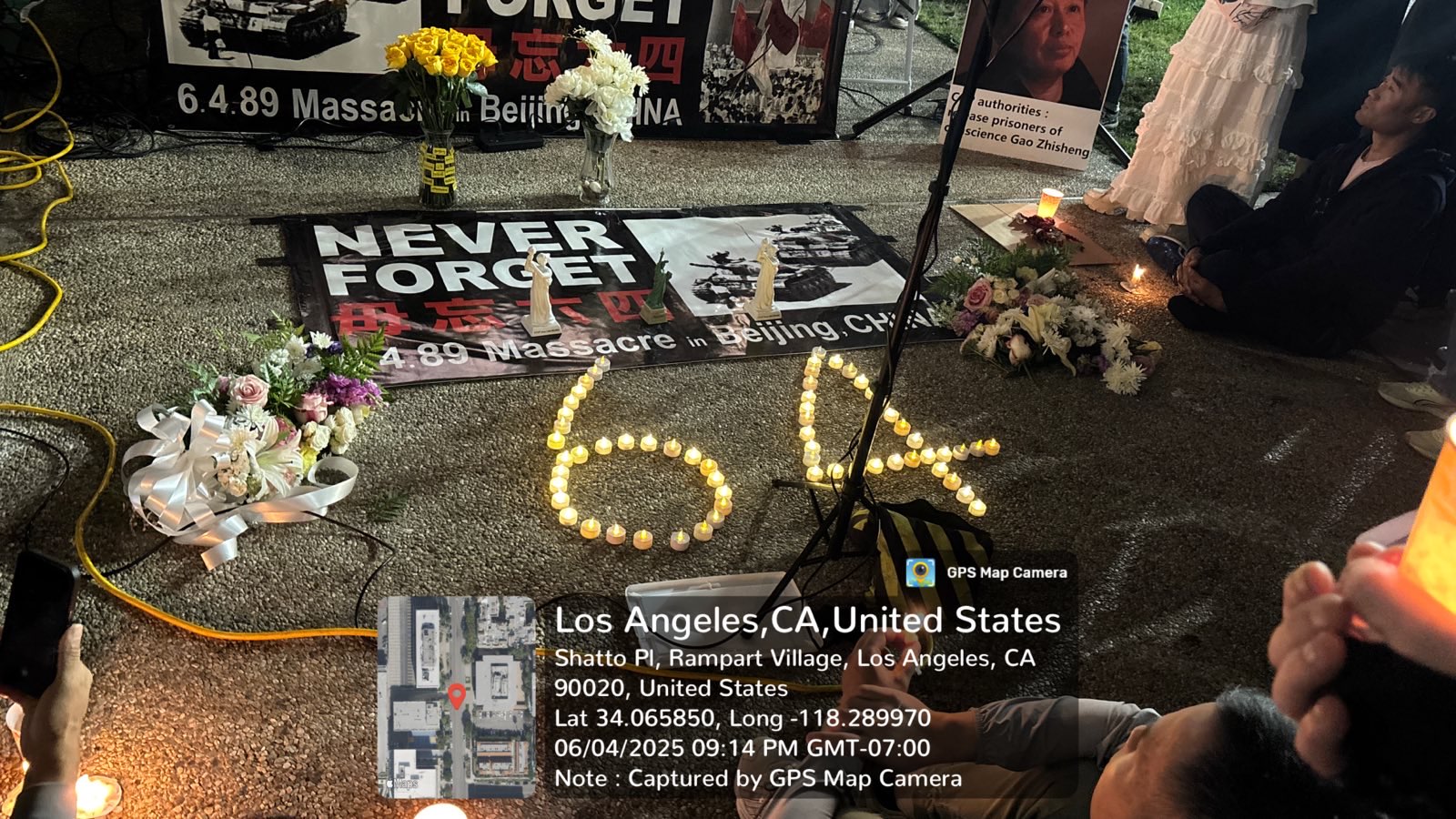


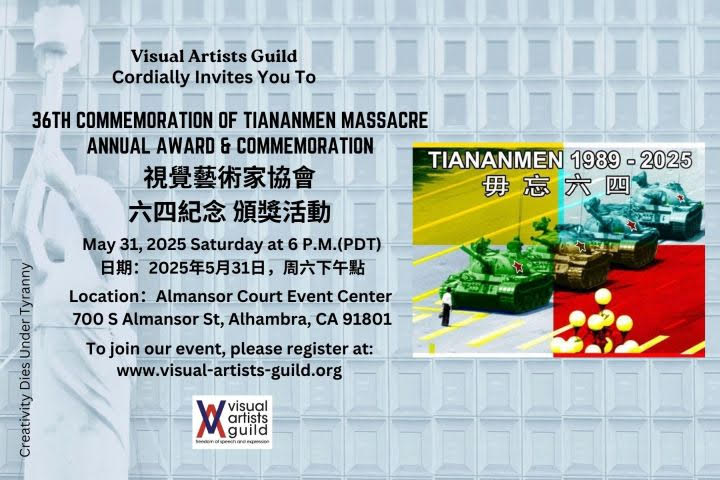


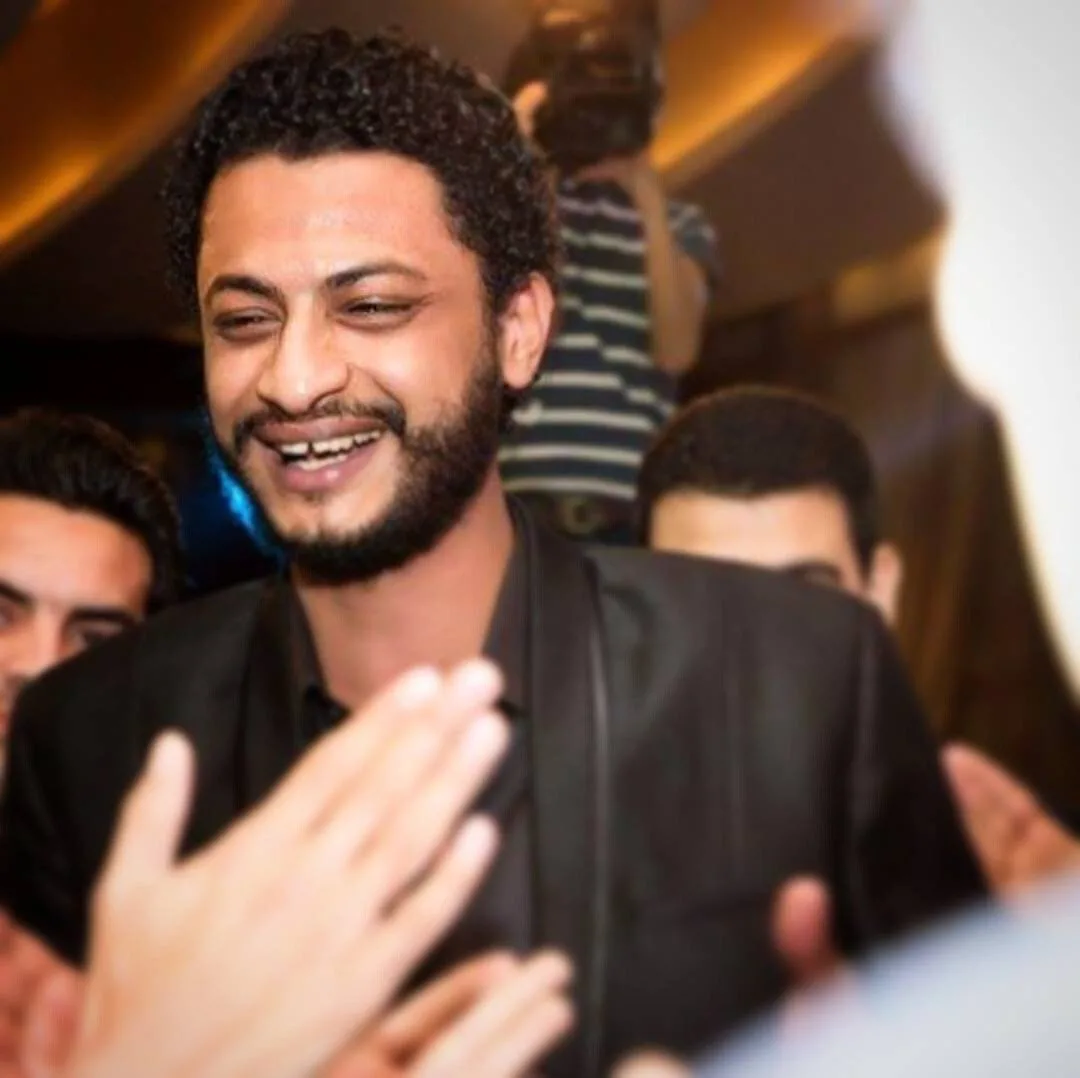 Galal El-Behairy, an Egyptian poet and lyricist, remains jailed despite serving his full 3-year sentence. (Courtesy photo)