(proPublica is a nonprofit newsroom that investigates abuse is of power.)
WRIC Editor’s Note: The death of Candace, a young girl from Texas, USA, easily reminds Chinese Americans of the era of China’s “Family Planning”. At that time, women who were “illegally” pregnant were criminals; if the doctors try to saved your life, they would be fired or prosecuted for shielding criminals. The One-Child Policy was terminated in 2016, but Chinese women are facing the same situation: as long as women are pregnant, no doctor dares to abort them, regardless of whether they were raped or not. We see that in the near future, Chinese women will lose their lives like Nevaeh Crain, because of pregnancy syndrome that may cannot be treated in time by hospitals, or died for violating the law.
Candace Fails holds a photograph of her daughter Nevaeh Crain, who died last year after seeking help from two hospitals for pregnancy complications. Credit: Danielle Villasana for ProPublica.
Candace Fails screamed for someone in the Texas hospital to help her pregnant daughter. “Do something,” she pleaded, on the morning of Oct. 29, 2023.
Nevaeh Crain was crying in pain, too weak to walk, blood staining her thighs. Feverish and vomiting the day of her baby shower, the 18-year-old had gone to two different emergency rooms within 12 hours, returning home each time worse than before.
The first hospital diagnosed her with strep throat without investigating her sharp abdominal cramps. At the second, she screened positive for sepsis, a life-threatening and fast-moving reaction to an infection, medical records show. But doctors said her six-month fetus had a heartbeat and that Crain was fine to leave.
Now on Crain’s third hospital visit, an obstetrician insisted on two ultrasounds to “confirm fetal demise,” a nurse wrote, before moving her to intensive care.
By then, more than two hours after her arrival, Crain’s blood pressure had plummeted and a nurse had noted that her lips were “blue and dusky.” Her organs began failing.
Hours later, she was dead.
Fails, who would have seen her daughter turn 20 this Friday, still cannot understand why Crain’s emergency was not treated like an emergency.
But that is what many pregnant women are now facing in states with strict abortion bans, doctors and lawyers have told ProPublica.
“Pregnant women have become essentially untouchables,” said Sara Rosenbaum, a health law and policy professor emerita at George Washington University.
Texas’s abortion ban threatens prison time for interventions that end a fetal heartbeat, whether the pregnancy is wanted or not. It includes exceptions for life-threatening conditions, but still, doctors told ProPublica that confusion and fear about the potential legal repercussions are changing the way their colleagues treat pregnant patients with complications.
In states with abortion bans, such patients are sometimes bounced between hospitals like “hot potatoes,” with health care providers reluctant to participate in treatment that could attract a prosecutor, doctors told ProPublica. In some cases, medical teams are wasting precious time debating legalities and creating documentation, preparing for the possibility that they’ll need to explain their actions to a jury and judge.
Dr. Jodi Abbott, an associate professor of obstetrics and gynecology at Boston University School of Medicine, said patients are left wondering: “Am I being sent home because I really am OK? Or am I being sent home because they’re afraid that the solution to what’s going on with my pregnancy would be ending the pregnancy, and they’re not allowed to do that?”
There is a federal law to prevent emergency room doctors from withholding lifesaving care.
Passed nearly four decades ago, it requires emergency rooms to stabilize patients in medical crises. The Biden administration argues this mandate applies even in cases where an abortion might be necessary.
No state has done more to fight this interpretation than Texas, which has warned doctors that its abortion ban supersedes the administration’s guidance on federal law, and that they can face up to 99 years in prison for violating it.
ProPublica condensed more than 800 pages of Crain’s medical records into a four-page timeline in consultation with two maternal-fetal medicine specialists; reporters reviewed it with nine doctors, including researchers at prestigious universities, OB-GYNs who regularly handle miscarriages, and experts in emergency medicine and maternal health.
Some said the first ER missed warning signs of infection that deserved attention. All said that the doctor at the second hospital should never have sent Crain home when her signs of sepsis hadn’t improved. And when she returned for the third time, all said there was no medical reason to make her wait for two ultrasounds before taking aggressive action to save her.
“This is how these restrictions kill women,” said Dr. Dara Kass, a former regional director at the Department of Health and Human Services and an emergency room physician in New York. “It is never just one decision, it’s never just one doctor, it’s never just one nurse.”
While they were not certain from looking at the records provided that Crain’s death could have been prevented, they said it may have been possible to save both the teenager and her fetus if she had been admitted earlier for close monitoring and continuous treatment.
There was a chance Crain could have remained pregnant, they said. If she had needed an early delivery, the hospital was well-equipped to care for a baby on the edge of viability. In another scenario, if the infection had gone too far, ending the pregnancy might have been necessary to save Crain.
Doctors involved in Crain’s care did not respond to several requests for comment. The two hospitals, Baptist Hospitals of Southeast Texas and Christus Southeast Texas St. Elizabeth, declined to answer detailed lists of questions about her treatment.
Fails and Crain believed abortion was morally wrong. The teen could only support it in the context of rape or life-threatening illness, she used to tell her mother. They didn’t care whether the government banned it, just how their Christian faith guided their own actions.
When they discovered Crain was pregnant with a girl, the two talked endlessly about the little dresses they could buy, what kind of mother she would be. Crain landed on the name Lillian. Fails could not wait to meet her.
But when her daughter got sick, Fails expected that doctors had an obligation to do everything in their power to stave off a potentially deadly emergency, even if that meant losing Lillian. In her view, they were more concerned with checking the fetal heartbeat than attending to Crain.
“I know it sounds selfish, and God knows I would rather have both of them, but if I had to choose,” Fails said, “I would have chosen my daughter.”
Fails says that Crain, shown here as a child with her mother, was “the gravity” in her life. “She would put her arms around me like she was the adult and I was the kid and tell me I was strong.” Credit:Danielle Villasana for ProPublica
“I’m in a Lot of Pain”
Crain had just graduated from high school in her hometown of Vidor, Texas, in May of 2023 when she learned that she was pregnant.
She and her boyfriend of two years, Randall Broussard, were always hip to hip, wrestling over vapes or snuggling on the couch watching vampire movies. Crain was drawn to how gentle he was. He admired how easily she built friendships and how quickly she could make people laugh. Though they were young, they’d already imagined starting a family. Broussard, who has eight siblings, wanted many kids; Crain wanted a daughter and the kind of relationship she had with her mom. Earlier that year, Broussard had given Crain a small diamond ring — “a promise,” he told her, “that I will always love you.”
On the morning of their baby shower, Oct. 28, 2023, Crain woke with a headache. Her mom decorated the house with pink balloons and Crain laid out Halloween-themed platters. Soon, nausea set in. Crain started vomiting and was running a fever. When guests arrived, Broussard opened gifts — onesies and diapers and bows — while Crain kept closing her eyes.
Around 3 p.m., her family told her she needed to go to the hospital.
Broussard drove Crain to Baptist Hospitals of Southeast Texas. They sat in the waiting room for four hours. When Crain started vomiting, staff brought her a plastic pan. When she wasn’t retching, she lay her head in her boyfriend’s lap.
A nurse practitioner ordered a test for strep throat, which came back positive, medical records show. But in a pregnant patient, abdominal pain and vomiting should not be quickly attributed to strep, physicians told ProPublica; a doctor should have also evaluated her pregnancy.
Instead, Baptist Hospitals discharged her with a prescription for antibiotics. She was home at 9 p.m. and quickly dozed off, but within hours, she woke her mother up. “Mom, my stomach is still hurting,” she said into the dark bedroom at 3 a.m. “I’m in a lot of pain.”
Fails drove Broussard and Crain to another hospital in town, Christus Southeast Texas St. Elizabeth. Around 4:20 a.m., OB-GYN William Hawkins saw that Crain had a temperature of 102.8 and an abnormally high pulse, according to records; a nurse noted that Crain rated her abdominal pain as a seven out of 10.
Her vital signs pointed to possible sepsis, records show. It’s standard medical practice to immediately treat patients who show signs of sepsis, which can overtake and kill a person quickly, medical experts told ProPublica. These patients should be watched until their vitals improve. Through tests and scans, the goal is to find the source of the infection. If the infection was in Crain’s uterus, the fetus would likely need to be removed with a surgery.
In a room at the obstetric emergency department, a nurse wrapped a sensor belt around Crain’s belly to check the fetal heart rate. “Baby’s fine,” Broussard told Fails, who was sitting in the hallway.
After two hours of IV fluids, one dose of antibiotics, and some Tylenol, Crain’s fever didn’t go down, her pulse remained high, and the fetal heart rate was abnormally fast, medical records show. Hawkins noted that Crain had strep and a urinary tract infection, wrote up a prescription and discharged her.
Hawkins had missed infections before. Eight years earlier, the Texas Medical Board found that he had failed to diagnose appendicitis in one patient and syphilis in another. In the latter case, the board noted that his error “may have contributed to the fetal demise of one of her twins.” The board issued an order to have Hawkins’ medical practice monitored; the order was lifted two years later. (Hawkins did not respond to several attempts to reach him.)
All of the doctors who reviewed Crain’s vital signs for ProPublica said she should have been admitted. “She should have never left, never left,” said Elise Boos, an OB-GYN in Tennessee.
Kass, the New York emergency physician, put it in starker terms: When they discharged her, they were “pushing her down the path of no return.”
“It’s bullshit,” Fails said as Broussard rolled Crain out in a wheelchair; she was unable to walk on her own. Fails had expected the hospital to keep her overnight. Her daughter was breathing heavily, hunched over in pain, pale in the face. Normally talkative, the teen was quiet.
Crain’s boyfriend, Randall Broussard, and mother at Fails’ home in Vidor, Texas Credit:Danielle Villasana for ProPublica
Back home, around 7 a.m., Fails tried to get her daughter comfortable as she cried and moaned. She told Fails she needed to pee, and her mother helped her into the bathroom. “Mom, come here,” she said from the toilet. Blood stained her underwear.
The blood confirmed Fails’ instinct: This was a miscarriage.
At 9 a.m, a full day after the nausea began, they were back at Christus St. Elizabeth. Crain’s lips were drained of color and she kept saying she was going to pass out. Staff started her on IV antibiotics and performed a bedside ultrasound.
Around 9:30 a.m., the OB on duty, Dr. Marcelo Totorica, couldn’t find a fetal heart rate, according to records; he told the family he was sorry for their loss.
Standard protocol when a critically ill patient experiences a miscarriage is to stabilize her and, in most cases, hurry to the operating room for delivery, medical experts said. This is especially urgent with a spreading infection. But at Christus St. Elizabeth, the OB-GYN just continued antibiotic care. A half-hour later, as nurses placed a catheter, Fails noticed her daughter’s thighs were covered in blood.
At 10 a.m., Melissa McIntosh, a labor and delivery nurse, spoke to Totorica about Crain’s condition. The teen was now having contractions. “Dr. Totorica states to not move patient,” she wrote after talking with him. “Dr. Totorica states there is a slight chance patient may need to go to ICU and he wants the bedside ultrasound to be done stat for sure before admitting to room.”
Though he had already performed an ultrasound, he was asking for a second.
The first hadn’t preserved an image of Crain’s womb in the medical record. “Bedside ultrasounds aren’t always set up to save images permanently,” said Abbott, the Boston OB-GYN.
The state’s laws banning abortion require that doctors record the absence of a fetal heartbeat before intervening with a procedure that could end a pregnancy. Exceptions for medical emergencies demand physicians document their reasoning. “Pretty consistently, people say, ‘Until we can be absolutely certain this isn’t a normal pregnancy, we can’t do anything, because it could be alleged that we were doing an abortion,’” said Dr. Tony Ogburn, an OB-GYN in San Antonio.
At 10:40 a.m, Crain’s blood pressure was dropping. Minutes later, Totorica was paging for an emergency team over the loudspeakers.
Around 11 a.m., two hours after Crain had arrived at the hospital, a second ultrasound was performed. A nurse noted: “Bedside ultrasound at this time to confirm fetal demise per Dr. Totorica’s orders.”
When doctors wheeled Crain into the ICU at 11:20 a.m., Fails stayed by her side, rubbing her head, as her daughter dipped in and out of consciousness. Crain couldn’t sign consent forms for her care because of “extreme pain,” according to the records, so Fails signed a release for “unplanned dilation and curettage” or “unplanned cesarean section.”
But the doctors quickly decided it was now too risky to operate, according to records. They suspected that she had developed a dangerous complication of sepsis known as disseminated intravascular coagulation; she was bleeding internally.
Frantic and crying, Fails locked eyes with her daughter. “You’re strong, Nevaeh,” she said. “God made us strong.”
Crain sat up in the cot. Old, black blood gushed from her nostrils and mouth.
Fails visits the grave of her daughter and granddaughter, Lillian Faye Broussard, in Buna, Texas. Credit:Danielle Villasana for ProPublica
“The Law Is on Our Side”
Crain is one of at least two pregnant Texas women who died after doctors delayed treating miscarriages, ProPublica found.
Texas Attorney General Ken Paxton has successfully made his state the only one in the country that isn’t required to follow the Biden administration’s efforts to ensure that emergency departments don’t turn away patients like Crain.
After the U.S. Supreme Court overturned the constitutional right to abortion, the administration issued guidance on how states with bans should follow the Emergency Medical Treatment and Labor Act. The federal law requires hospitals that receive funding through Medicare — which is virtually all of them — to stabilize or transfer anyone who arrives in their emergency rooms. That goes for pregnant patients, the guidance argues, even if that means violating state law and providing an abortion.
Paxton responded by filing a lawsuit in 2022, saying the federal guidance “forces hospitals and doctors to commit crimes,” and was an “attempt to use federal law to transform every emergency room in the country into a walk-in abortion clinic.”
Part of the battle has centered on who is eligible for abortion. The federal EMTALA guidelines apply when the health of the pregnant patient is in “serious jeopardy.” That’s a wider range of circumstances than the Texas abortion restriction, which only makes exceptions for a “risk of death” or “a serious risk of substantial impairment of a major bodily function.”
The lawsuit worked its way through three layers of federal courts, and each time it was met by judges nominated by former President Donald Trump, whose court appointments were pivotal to overturning Roe v. Wade.
After U.S. District Judge James Wesley Hendrix, a Trump appointee, quickly sided with Texas, Paxton celebrated the triumph over “left-wing bureaucrats in Washington.”
“The decision last night proves what we knew all along,” Paxton added. “The law is on our side.”
This year, the U.S. Court of Appeals for the 5th Circuit upheld the order in a ruling authored by Kurt D. Engelhardt, another judge nominated by Trump.
The Biden administration appealed to the U.S. Supreme Court, urging the justices to make it clear that some emergency abortions are allowed.
Even amid news of preventable deaths related to abortion bans, the Supreme Court declined to do so last month.
Paxton called this “a major victory” for the state’s abortion ban.
He has also made clear that he will bring charges against physicians for performing abortions if he decides that the cases don’t fall within Texas’ narrow medical exceptions.
Last year, he sent a letter threatening to prosecute a doctor who had received court approval to provide an emergency abortion for a Dallas woman. He insisted that the doctor and her patient had not proven how, precisely, the patient’s condition threatened her life.
Many doctors say this kind of message has encouraged doctors to “punt” patients instead of treating them.
Since the abortion bans went into effect, an OB-GYN at a major hospital in San Antonio has seen an uptick in pregnant patients being sent to them from across Southern Texas, as they suffer from complications that could easily be treated close to home.
The well-resourced hospital is perceived to have more institutional support to provide abortions and miscarriage management, the doctor said. Other providers “are transferring those patients to our centers because, frankly, they don’t want to deal with them.”
After Crain died, Fails couldn’t stop thinking about how Christus Southeast Hospital had ignored her daughter’s condition. “She was bleeding,” she said. “Why didn’t they do anything to help it along instead of wait for another ultrasound to confirm the baby is dead?”
It was the medical examiner, not the doctors at the hospital, who removed Lillian from Crain’s womb. His autopsy didn’t resolve Fails’ lingering questions about what the hospitals missed and why. He called the death “natural” and attributed it to “complications of pregnancy.” He did note, however, that Crain was “repeatedly seeking medical care for a progressive illness” just before she died.
Last November, Fails reached out to medical malpractice lawyers to see about getting justice through the courts. A different legal barrier now stood in her way.
If Crain had experienced these same delays as an inpatient, Fails would have needed to establish that the hospital violated medical standards. That, she believed, she could do. But because the delays and discharges occurred in an area of the hospital classified as an emergency room, lawyers said that Texas law set a much higher burden of proof: “willful and wanton negligence.”
During the strict family planning era, China had a large number of cases of baby trafficking. However, today when the number of births is no longer controlled by the government, China has once again seen a baby trafficking industry chain. A 14-day-old baby boy was traded on the streets of Jiangyin City, Wuxi City, Jiangsu Province, and was sold for 150,000 yuan. The intermediary said that more than ten babies have been sold this year. The police said that the relevant suspects have been controlled and will thoroughly investigate the clues of the crime in other provinces and cities in China.
The New York-based NGO China Women’s Rights submitted a report on missing children in China to a hearing committee of the U.S. Congress on anti-child trafficking in 2011 during the most rampant family planning period in China. (The picture is the cover of the anti-trafficking report)
According to Red Star News, a 14-day-old baby boy was sold for 150,000 yuan on the street in Jiangyin City, Wuxi, Jiangsu Province on the evening of October 19, 2024. Among them, the seller’s driver took a bag of 78,000 yuan in cash, and the rest was the agency fee.
The male agent surnamed Su who arranged the transaction said that he has successfully sold more than ten babies this year, and has successfully sold two cases every month recently, “80,000 yuan last month.”
The agent said that the baby came from “the big brother who pushed it directly to me.” The “big brother” is the team leader and a relative of the intermediary. He established an intermediary company in Linfen, Shanxi. Six people, including the intermediary, are the company’s “executives” responsible for baby trafficking-related work.
After the baby trafficking was exposed, the Jiangyin Public Security Bureau reported on Sunday (20th) that it had controlled the 22-year-old male intermediary surnamed Su. The Wuxi police acted quickly and stopped the tragedy from continuing. The police arrested the Feng couple and others who bought the baby, and the baby has been rescued. But behind the baby trafficking, there is often a mature profit chain. For example, the intermediary Su mentioned that “he has successfully sold more than ten babies” and the source of the babies was “recommended by the big brother.” In other words, there is an organized and divided criminal gang behind it.
According to the report, the adoptive parent is an 18-year-old woman surnamed Li who works in Jiangyin; she gave birth to a son on October 6. Because she was unable to raise him, she posted information online through her cousin-in-law surnamed Xue to find an adopter. After seeing the information, the intermediary surnamed Su contacted the Feng couple in other provinces who had adoption needs, and then traded face to face in Jiangyin.
The notice also stated that criminal compulsory measures have been taken against the relevant suspects in accordance with the law, and the case is under investigation. The clues of crimes in other provinces and cities will also be thoroughly investigated.
According to Jimu News, behind this trafficking case lies an extremely mature, large-scale, and clearly divided black industry chain. From contacting buyers and sellers to handling the “laundering” of birth certificates, to the final transaction link, the entire process is a “corporate” operation.
The report said that the root cause of the repeated crackdown on the evil of trafficking in babies is that the Chinese people have given rise to a deformed “market demand” due to the “preferring sons over daughters” ideology and other reasons.
So many memories come back when I see Dr. Gao’s life laid out in this book in photographs and their captions and in emotional and reflective poems.
Some are memories of stories she told me: medical school, a happy marriage, children,and the intense urgency of her work in the obstetrics department. Then, the horrible years of unjust suffering during the cultural revolution, when she was beaten and a subtotal gastrectomywas performed to stop the bleeding. She was never able to eat like a normal person after that,surviving on repeated small meals of bland food. Next was the life of labor reform at the Xing Mountain Quarry. Then came three years in labor re-education camp, and finally in 1973 the satisfaction of having the Zhengzhou Municipal Revolutionary Committee formally state that the sentence was in error. She was exonerated and her reputation was restored. From there she returned to her Important clinical and teaching work, where she longed to go.
The 1980s were a period for Dr. Gao of great professional success and distinction, with nationwide recognition as an outstanding doctor and teacher. Yet always, saving the patients who were most ill was her passion and commitment. Even after retirement, she continued to lecture and write in her mission of teaching rural women how to avoid sexual diseases.
In 1996, she had an encounter with a woman with a mysterious and incurable illness. It turned out to be AIDS. This encounter set her off on a search to find out how the woman got sick, and this led her to the rural villages, where she discovered the blood scandal that was spreading the fatal disease among the men and women of Henan villages. Working with her friend Du Cong, she visited the villages tirelessly, attended the dying, held the sick children in
her lap, delivered medicine paid for with her retirement money. One family at a time, she sat in the village houses and watched people die, comforted the babies who were infected in the womb and their grieving mothers. At the same time, she distributed booklets on how to avoid AIDS to the villagers and lectured widely on the problem in Chinese universities.
In 2007, Dr. Gao came to the United States to lecture, and I met her at Columbia when I served as the host for her lecture. A photograph in this book reminds me of this, my first meeting in what turned out to be a long friendship. It was also on this trip that Dr. Gao met Secretary of State Hillary Clinton—a relationship Dr. Gao treasured deeply.
In China, Dr. Gao’s fame continued to grow, as she spoke and wrote on the AIDS issue and continued to visit the villages and care for the AIDS orphans. But pressure on her grew, and in 2009 she had to leave China for the last time. After spending a short time in Texas, she came to New York in March 2010 and soon moved to apartment C8D at 3333 Broadway, where she spent the last 13 years of her life.
Pictures in this book show her apartment and how hard she worked writing many more books, some on her life, some on China’s recent history, some on sexual health. Seeing pictures of her on campus, taking a walk around her building, on the subway station, caring for her beloved plants in her apartment – these remind me of some happy times she had when her health was still good, even though she had now become an exile and could no longer serve her beloved patients in the Henan villages. She was still very popular in China – with the people, not the government. Students and visitors from China would come by the apartment to help her with her writing or to take her out for a walk.
But sadly, the pictures show us her declining health. In 2013, she began to need part-time home health aides. Then she was hospitalized for pneumonia, one of several hospitalizations, and then needed full-time health aides. Still, she was thrilled when Hillary Clinton came to visit her at the apartment in 2019. A photograph in the book reminds me that I was there on that happy occasion.
Dr. Gao continued to write, up to the very end. She had finished one more book, which as I write this is due to be published in the near future.
This book of photos, captions, and verses reminds me of the rare privilege and pleasure that came to me, when Dr. Gao came to New York. I was fortunate to know her better and better as the years went by, and to experience her strength, determination, moral clarity, and her love and care for the poor, the weak, and those who suffer.
Topic: How Should the Overseas Democratic Movement Respond
to the Serious Infiltration by the CCP?
Date: Sunday, October 13, 2024, from 2:00 PM to 4:30 PM
Location: 136-20 38th Ave, 12th Floor, Flushing, NY 11354
Contacts: Zhang Jing / Shao Jun (wrchina2007@gmail.com)
In recent years, the U.S. law enforcement agencies have taken actions to combat and curb the CCP’s infiltration into the United States. One after another, the CCP’s agents and informants infiltrating the overseas democracy movement have been arrested and prosecuted. Additionally, the CCP’s agents or proxies infiltrating the New York State Governor’s Office and New York City Mayor’s Office have been exposed or prosecuted. The CCP’s longstanding espionage network in the U.S. is frequently uncovered,. And we believe that in given time, the CCP’s infiltration and subversion efforts in the U.S. will completely fail.
The overseas Chinese democracy movement has historically been a major target of the CCP’s infiltration, division, and destruction. It is also a critical battlefield that China’s democratic forces must defend. Faced with the CCP’s infiltration, sabotage, bribery, and attempts to induce defections, how should the overseas democracy movement position itself? How can it enhance its ability to identify threats and maintain autonomy? More importantly, how can it persevere, grow, and thrive amidst such hostile encirclement? The seminar, co-hosted by the Overseas Democracy Movement Joint Conference, the Women‘s Rights in China, and the Christian Alliance for Righteousness, will explore and discuss these issues in depth, and further expose the CCP’s united front tactics, inducement strategies, and infiltration methods.
We warmly welcome the public to attend and invite media outlets to cover the event.
Zhang Xiaoning, the murderer of pro-democracy activist and lawyer Li Jinjin in Flushing NY, attends a hearing at the Queens Supreme Court NY. File photo 8/29/2024.
Editor’s note: Jing Zhang’s speech on the issue of some Chinese exiles becoming CCP agents at the “Future China Forum” in Washington DC on September 23, 2024
Democracy is a lofty ideal; the democratic movement is a series of actions to realize this ideal. We, the exiled democracy activists, are a group of activists from different families and educational backgrounds, with different motivations for participation, but who have reached a basic consensus and formed various groups. Every participant, especially the organizers, promotes the values of democracy, freedom and human rights through speeches, articles and various self-media platforms. While seeking recognition from others, they also declare their own commitments and expectations. These are great motivations to encourage others to actively participate in overthrowing the CCP’s tyranny.
Jing Zhang gave a speech at the “Future China Forum” in Washington DC on September 23, 2024。
Recently, several leaders of Chinese dissident groups in exile have been prosecuted by judicial institutions in Europe and the U.S., accused of acting illegally as foreign agents or spies for the Chinese Communist Party. This has shocked and frustrated all involved in the democracy movement, causing significant harm and a credibility crisis for our overseas efforts.
New participants who have gone through untold hardships to pursue democracy and freedom suddenly discovered that the leader of their organization turned out to be a CCP informant and spy; old democracy activists also suddenly discovered that their old comrades who had experienced the same imprisonment and exile as them, and who had held protests and condemned tyranny together, had lost their integrity in their later years and became tools for the CCP to infiltrate. Once upon a time, we spent the Mid-Autumn Festival together to comfort each other’s homesickness; we went on outings with our families together. We were comrades-in-arms and friends. But it was these “friends” who, without our knowledge, secretly handed over all our information (as long as the CCP wanted it) to the CCP’s secret police in exchange for their own interests. Our political views, family situations, and personal likes and dislikes expressed in public events, private gatherings, or casual conversations may become the price they pay to the CCP’s national security to seek credit and reward. Tang Yuanjun, former chairman of the New York Democratic Party, Wang Shujun, founding secretary general of the “Hu Yaobang and Zhao Ziyang Memorial Foundation”, Guo Jian, former director of the German Democratic Front, and others are such a group of trash who harmed their comrades and friends and betrayed their conscience.
Let’s not talk about the distant past, let’s talk about the two prosecuted CCP agents in New York who we know.
We are not surprised that Wang Shujun was found to have worked for the Chinese Communist Party’s intelligence agencies for many years, because Wang Shujun has been actively participating in the activities and gatherings of top anti-communist democracy activists overseas for a long time, while freely traveling between China and the United States. His organization and activities are not affected at all. This has long been criticized in our democracy movement circle, and everyone knows it tacitly, but some people are embarrassed to say it, and some people cover it up for the sake of covering up.
In May 2017, Wang Shujun received the “World Chinese Outstanding Talent Award” awarded by the “World Chinese Investment Foundation” and the Chinese Communist Party’s official media “Wen Wei Po” in Hong Kong. It’s funny that almost no one in our circle knew what kind of special and outstanding talents Wang Shujun had among the Chinese people in the world. Even the pro-communist overseas Chinese groups and leaders in New York didn’t know who Wang Shujun was at the time. It wasn’t until Li Jinjin, the president of the “Memorial Hu Zhao Foundation”, was killed in 2022 that Wang Shujun was prosecuted as an illegal agent of the Chinese Communist Party. He became famous. We have also confirmed our suspicions. His ironclad criminal facts are disgusting.
What confuses new democracy activists is not that Wang Shujun was convicted of four crimes, but that some democracy activists said that the content of the report Wang Shujun passed to the Chinese Communist Party intelligence personnel was public and they did not feel hurt. Some people also defended Wang Shujun’s behavior. Perhaps they cannot distinguish the boundary of criminal behavior regulated by American law, or perhaps they are used to being hurt and have become a little numb. In other words, we, the democracy activists, do not have the ability to remove the blood-sucking leeches that have long been infiltrated by the Chinese Communist Party and tightly attached to our bodies. The US law enforcement agencies have helped us remove them, but some people actually say that they do not feel that the leeches attached to their bodies are harmful.
So far, the “harmlessness theory” in the democracy movement circle has become very popular, leaving supporters and new participants confused and unable to distinguish right from wrong. Wang Shujun violated many U.S. laws and disrupted the public order that the public must abide by. This is an offense to both Americans and Chinese living in the United States, not to mention that we ourselves are the direct offenders or victims. Injury is not necessarily just physical injury, but also mental injury and damage to rights. It is precisely because our basic rights such as personal privacy have been damaged that Wang Shujun and his ilk can travel between China and the United States and receive medals and bonuses issued by the CCP.
For many years, there has always been some confusion of principles within our democracy movement on major issues of right and wrong.
For example, when the Tiananmen Square massacre murderers did not apologize or pay compensation, student leaders who escaped from China early on took the lead in launching the “forgiveness theory” in the United States to forgive Deng Xiaoping, Li Peng and other murderers. Although they may not have ulterior motives to deliberately blur the focus of the essence, and they should not deliberately curry favor with the criminals, such cognition is enough to cause confusion in the thoughts and the bottom line of right and wrong among the democracy activists, making it easier and more unscrupulous for the CCP to infiltrate, alienate and disintegrate the democracy movement organizations.
Mr. Wang Dan recently made a direct clarification on Ms. Dai Qing’s remarks that confused right and wrong and portrayed Deng Xiaoping as a leader with democratic ideas, so that the younger generation can understand the truth, distinguish right from wrong, and not be misled. Wang Dan’s timely restoration of historical right and wrong is a responsible act and is worth promoting.
Unlike Wang Shujun, Tang Yuanjun was once our fellow traveler, comrade-in-arms and friend. From the moment he jumped into the cold waters of the Taiwan Strait, he knew that he was on a road of no return. He knew that his parents would grow old and his brother would have difficulty walking. He had already made a well-thought-out choice between pursuing his own ideals and fulfilling his family responsibilities. In New York, Tang Yuanjun became a leader of the democracy movement. He promised to uphold his ideals, resist the tyranny of the Chinese Communist Party, and encourage and call on the party members they organized to overthrow the authoritarian regime of the Chinese Communist Party.
Around 2014, Tang Yuanjun changed from agreeing with violent revolution to overthrow the CCP to an extreme advocate of “peaceful, rational and non-violent”. In his view, the democracy movement must reflect every day, and adhering to “peaceful, rational and non-violent” is the only way out for China. He never forgets to remind people at every democracy movement meeting, even at friends’ gatherings, that we must reflect and “be peaceful, rational and non-violent”. It has become his motto, and he speaks it casually. For this reason, I have repeatedly asked Tang Yuanjun: When should we reflect? When has the democracy movement ever been violent? Why don’t you say “peaceful, rational and non-violent” to the CCP?
In the end, the fact we see is that Tang Yuanjun not only betrayed his ideals and promises, deceived many party members, betrayed his comrades and friends, but also betrayed his wife (divorced this year). It is unclear whether Tang’s wife, who was then a staff member of the US Congressional and Executive Committee on China (CECC), also became the price tag for Tang to obtain benefits from the CCP.) Tang Yuanjun’s disorderly life is believed to have made him an easy target for the CCP. This cannot be covered up by just the word “homesickness”.
From a tolerant perspective, even if he cannot discipline himself, breaks his promise, has no spirit of responsibility, and chooses to withdraw from the democratic movement, we can still consider him to have some basic conscience as a human being. However, this is not the case.
Over the past few decades, many exiled democracy activists have been allowed to return to China for various reasons, such as homesickness or mourning. Some have been invited to tea or forced to kneel briefly after writing a letter of guarantee not to speak out against CCP.
After returning to the United States, some of them have withdrawn from the democracy movement circle on their own; some have been vague but eventually disappeared. These are still considered to be people with conscience. At least they no longer harm their fellow activists. We can understand and forgive them. Of course, there are also those who use personal social platforms and the media to sing praises for the CCP in various ways.
However, when their phased tasks are completed, they generally leave the democracy movement. The few long-term latent professional agents are another matter. If Tang Yuanjun took the risk only because he was homesick, at least after returning to the United States, he should not continue to accept the instructions of the Chinese National Security Bureau to do things that go against his conscience, and should not use his identity as a leader of the democracy movement as a cover, and continue to use the public or private personal information of his colleagues and hundreds of party members before and after as bargaining chips with the Chinese National Security Bureau. There are not many cases like Tang Yuanjun who shamelessly used his identity as a leader of the democracy movement to do things for the CCP until he was exposed by the FBI.
More importantly, Tang Yuanjun committed a crime of conscience and morality that is unforgivable. In the case of Tang Yuanjun, regardless of whether he is convicted or sentenced to a long or short sentence in the future, his moral responsibility is much greater than the legal responsibility, and it is difficult to forgive him easily.
Some people say that murderers can be forgiven, so why can’t Tang be forgiven?
Even from God’s perspective, anyone and anything in the world can be forgiven conditionally, not to mention that we are mortals and can only judge whether a person’s behavior can be forgiven according to the laws and morals in real society.
Legally, there are juries to judge and judges to sentence; while the moral court is in everyone’s heart, making decisions according to the socially agreed value judgments and moral bottom line. Tang Yuanjun cheated and betrayed again and again, and cheated and betrayed again. If he hadn’t been caught, it is unknown how many times and for how many years he would have continued. Tang Yuanjun betrayed his promise and conscience, and affected and hurt multiple organizations and an entire group. This is of course different from a murderer. In addition to violating the law, Tang Yuanjun has a greater moral responsibility. He owes a debt of conscience and must be judged by the moral court.
As a participant in the Chinese democracy movement who has been in exile abroad for decades, I believe that many of you here, like me, have experienced the pain of wanting to return to China to visit your elderly parents or to see your loved ones for the last time before they leave.
However, faced with the unreasonable demand that you must shut up if you want to go back, we all made the right choice: where there is freedom, there is home. I would rather suffer than be a dog with a broken spine. We have regrets and owe our families, but in the end we kept our conscience, resisted the deception of the evil Chinese Communist regime, and fulfilled our promises and expectations. After experiencing the hardships of life, we still sail freely in the ocean of our hearts, trying our best to fulfill our promises and never losing our way. The reward for decades is a life of peace of mind, and our glory lies in the ordinary.
On August 28, China ended an overseas adaption program that had been in place for more than three decades.
Confirming the policy shift last week, Chinese Foreign Ministry spokesperson Mao Ning said the decision was “in line” with international trends.
The girl on the cover of a book published in 2014 by the NGO organization “Women’s Rights in China” is one of the twin sisters adopted by an American family. (Photo by WRIC)
( See more: https://www.amazon.com/Orphans-Shao-Jiaoming-Pang-ebook/dp/B016P8VUBS/ref=sr_1_1?crid=1VFO3PTWK3I56&dib=eyJ2IjoiMSJ9.8Hd9m2pm1zZ151pIi9mQsg.0XEZ-_htXtIf64Tg6_7f_4YPOQP-xYsuWBZrMeb7baY&dib_tag=se&keywords=orphan+of+the+shao&qid=1725943556&s=digital-text&sprefix=orpghan+of+the+shao%2Cdigital-text%2C62&sr=1-1)
Faced with a shrinking population, China has stopped sending children overseas for adoption. However, many families with pending applications are now in limbo.
“We express our appreciation to those foreign governments and families who wish to adopt Chinese children for their good intentions and the love and kindness they have shown,” Mao said.
Yi Fuxian, a Chinese demographer and senior scientist at the University of Wisconsin-Madison, told DW that this decision reflects a landmark shift in China’s population policy.
“Previously, they [the government] viewed a newborn as a burden, now they see it as a resource,” he said.
Once a ‘solution’ to China’s one-child policy
When China officially opened its doors to international adoptions in 1992, the country was scrambling to curb its rapid population growth under the draconian “one-child” policy.
https://p.dw.com/p/4kQJ4
China is running out of babies
Restricted to a single child, many Chinese families were eventually forced to abandon their children — mostly girls and babies with disabilities — or else face high fines.
As a result, China became a major source of international adoptions. Over the past three decades, more than 160,000 Chinese children have been adopted into families worldwide.
Around half of these children arrived in the United States, according to China’s Children International (CCI), an international organization created by and for Chinese adoptees.
At the time, it was a win-win situation for the Chinese government, Yi told DW.
“Since [Beijing] viewed the population as a burden, international adoption effectively transferred this burden abroad.”
China’s population problem
Decades later, China is now facing a shrinking population with one of the lowest fertility rates in the world.
China: Can collective weddings boost the birthrate?
https://p.dw.com/p/4kQJ4
In 2023, new births in China fell by 5.7% to roughly 9 million, and the birth rate was a record low of 6.39 births per 1,000 people. The total population also dropped by over 2 million, the second straight year of decline.
After scrapping the in 2016, China began encouraging families to have two or three children. Despite these efforts, many young Chinese wom one-child policyen remain unconvinced about having children due to the high cost of childcare, concerns about job security and an uncertain future as growth in the world’s second-largest economy slows.
“In the past, a smaller population was seen as better… now the populatioone-child policyn decline has brought about a sense of fear,” Yi said, adding that China’s decision to stop sending children overseas for adoption is part of its response to a growing demographic crisis.
With an aging population, China’s inter-country adoptions have already steadily decreased over the past few years.
Authorities have instead prioritized domestic adoptions in recent years, according to a commentary published by the Global Times, China’s state-affiliated tabloid. As domestic adoptions now make up nearly 90% of all adoptions in China, the article said terminating foreign adoptions has become “an inevitable step. ”
Pending adoption applications left in limbo
With the decision last week, it is unclear what will happen to foreign families waiting for years on pending Chinese applications. In a phone call with US diplomats in China, Beijing said it “will not continue to process cases at any stage” other than those cases covered by an exception clause, the Associated Press reported on Friday.
Last week, the Chinese Foreign Ministry said that exceptions would only be allowed in cases of the “adoption of a child or stepchild of blood relatives of the same generation who are within three generations of foreigners coming to China to adopt.”
China’s population shrinks for first time in decades
https://p.dw.com/p/4kQJ4
During the COVID pandemicChina imposed travel restrictions and suspended international adoptions. From 2020 to 2022, no Chinese children were sent to the US for adoption, and only 16 children were adopted from China last year, according to US official statistics.
Due to the pandemic shutdown, many foreign families who had been matched with a Chinese child for adoption have been waiting for at least four years for the process to complete. The same disappointment goes for children in China waiting for adoption.
A Chinese dissident running an influential X account shared several screenshots of Chinese social media posts written by “staff working in the relevant field.” The accounts of these sources were anonymized.
One of the posts said, “These children in China … They know there are families waiting to bring them home. They’ve received birthday and Christmas gifts, clothes, family photos, letters, and some even had FaceTime calls, but now all of that has been cut off.”
“We will write to ambassadors, government officials, and others to see what more can be done,” the post said, “praying that the doors will be opened.”
Recently in the Caribbean, a sex trafficking investigation began after the Dominican Consulate received details that a woman was allegedly being held against her will and sex trafficked at an apartment by a known sex trafficking ring. AMERIPOL Colombia and the Dominican National Police (DNP) then got involved.
At the request of the DNP, OUR Rescue stepped in to support their investigational efforts. We provided surveillance support at the apartment in question. The information gathered, including informants who verified that the location was known for illicit sexual activities, helped authorities get a search warrant approved.
In May of this year, the DNP executed that search warrant. When they did, officials found the woman locked in a room inside the apartment. Both of the alleged traffickers were arrested, and the woman was safely removed from the situation. OUR Rescue Survivor Care was on scene to support the woman immediately, providing her with basic needs.
During the operation, DNP officials discovered substantial evidence on the trafficking ring’s logistics, including several names and phone numbers that will be investigated further. Transnational Crimes (DEIDET) and the Specialized Prosecutor’s Office for the Illicit Trafficking of Migrants and Human Trafficking are continuing their joint efforts, working to identify additional survivors and dismantle the criminal organization for good.
Suspect, boy believed to be travelling in a white Tesla with license plate GVMK 536.
Quebec provincial police issued an Amber Alert for a five-year-old boy just before 4 a.m. ET on Tuesday, expanding the alert to Ontario a few hours later.
65 years old suspect Ruixue Yang and another female defendant were charged with three counts of kidnapping on the 28th. It is rumored that Yang Ruixue may be the boy’s grandmother and the incident may be a family dispute.
Police are asking for help in locating Shi Gao Getty, who was taken from the municipality of Brossard on Montreal’s South Shore Monday night.
They believe he is travelling in a white 2024 Tesla 3 vehicle registered in Ontario with licence plate GVMK 536.
The boy is described as three feet, six inches tall and weighs around 42 pounds. He has brown hair, brown eyes and was last seen wearing a blue T-shirt.
The Sûreté du Québec (SQ) says its main suspect is 65-year-old Yang Ruixue, who it says is known to the family.
It is said that Yang Ruixue once served as a member of the Beijing Municipal People’s Congress.
SQ spokesperson Sgt. Benoit Richard says information gathered during the investigation suggests the suspect and child could be in Ontario, possibly heading to the Toronto area.
The SQ asked the Ontario Provincial Police (OPP) to issue the alert in its region.
A New York City-based Chinese-American pro-democracy activist has been charged with spying on fellow dissidents in New York for the Chinese government, according to an indictment unsealed in Manhattan federal court last week.
One of Yuanjun Tang’s alleged marks was a Congressional candidate who was forced to pull out of the race, according to the indictment, claiming at the time he was the victim of a smear campaign.
Tang, 67, was arrested after federal prosecutors said he secretly worked for the Chinese Ministry of State Security (MSS) from 2018 to 2023 and conspired to work as a foreign agent of China without properly registering with US authorities, according to court documents.
Tang, a resident of Flushing, is a naturalized American citizen who was imprisoned in China after the deadly 1989 pro-democracy protests in Beijing’s Tiananmen Square.
Pro-democracy activist Tang,Yuanjun was attended a meeting of pro-democracy activists in Germany in 2007. Photo by Zhang Jing (Photo by Jing Zhang)
In 2002, he defected to Taiwan and was then granted political asylum in the US where he has regularly worked with fellow Chinese dissidents.
Since moving to the city he has demonstrated against the Chinese government, including in monthly protests in front of the Chinese consulate in Manhattan. However, the complaint charges he has actually been collecting information to send back to the communist Chinese government.
“Specifically, Tang regularly provided information Tang had gathered about individuals and groups viewed by the People’s Republic of China (PRC) as potentially adverse to the PRC’s interests, particularly US-based Chinese democracy activists and dissidents [to his handler],” according to court papers.
Among his targets was a Chinese pro-democracy activist who ran for Congress in 2022, court documents say.
Xiong Yan, a pro-democracy activist and Iraqi war veteran, ran for Congress in Brooklyn in 2022. But Yan dropped out of the race, exclusively telling The Post at the time he knew he was the victim of spying by unregistered Chinese agents.
Yan, a pastor, also said he was the victim of a smear campaign that included setting him up with a prostitute, which left him unable to raise money in his community.
The Post first revealed that Chinese spies, working out of an office above a Chinatown noodle shop in Lower Manhattan, were allegedly spying on their own nationals in “Operation Foxhunt.”
In addition to the unofficial Chinese police station in the city, there are some 100 clandestine Chinese police stations around the world, according to a report by Safeguard Defenders, a Madrid-based non-profit.
Yan Xiong, a student leader at Tiananmen Square, said he knew he was a target of Chinese spying during his aborted campaign for Congress in 2022.Stephen Yang.
As part of his alleged espionage work, Tang traveled twice to Macau and once to China between 2019 and 2023 for face-to-face meetings with his handlers, the complaint says.
In exchange for cash, Tang provided the Chinese government with information about pro-democracy events in the US, court papers say.
In one instance in April 2022, Tang met with an MSS officer who installed his phone with a “bug” that allowed all photos and videos to be transmitted directly to his handlers in China, the complaint says.
Editor’s Note: Sign up for CNN’s Meanwhile in China newsletter which explores what you need to know about the country’s rise and how it impacts the world.
A 1980s-era poster in China reads: “To rejuvenate the nation, control the population growth.” David Pollack/Corbis/Ge tty Images
“What are your parents’ names?”
Fang, then a third grader, hemmed and hawed at the simple question as her teacher waited impatiently, unaware the 9-year-old was caught in a dilemma.
Since preschool, Fang had been officially registered as the daughter of her eldest uncle – an attempt by her birth parents to circumvent harsh penalties for having a second baby under China’s controversial one-child policy that was enforced from 1980 to 2015.
“I really had no idea which parents I was supposed to name,” Fang told CNN years later, using a pseudonym for privacy reasons.
Since then, Beijing has gradually lifted the birth caps from one to two children, then to three in 2021, in a bid to arrest a looming demographic crisis.
The one-child rules have gone, but the wounds of the past cast long shadows. A new generation of women like Fang, haunted by their parents’ struggles and their own sacrifices as children under the one-child policy, now eye parenthood with reluctance – making Beijing’s current pro-birth push a tough sell.
Fang was born in the 1990s – when the one-child limit was at its strictest – and became a big sister just a year later, when her mother “illegally” became pregnant again. To avoid punishment, the family sent Fang to live with extended family members, while her mother pretended her second pregnancy was her first.
Fang, now 30 and married, doesn’t want children at all.
“All the fears, drifts and insecurity felt throughout my own childhood have, more or less, played a part in my current call,” she said.
Sacrifices of eldest daughters
Keeping their firstborn secret spared Fang’s parents ruinous fines, job loss and even forced abortion and sterilization – the heavy price for having an “unauthorized” second child, another daughter.
Fang was finally allowed to return home at age 10 – but was still registered as her eldest uncle’s daughter and told to “stick with her official registration” whenever she was asked about her parents.
After the one-child policy was dismantled in 2015, Fang’s parents tried for another child. Fang sensed their unstated wish for a son, but her mother gave birth to a girl – her third.
Over 30 years of China’s one-child policy, an estimated 20 million baby girls “disappeared” due to sex-selective abortions or infanticide, according to Li Shuzhuo, director of the Center for Population and Social Policy Research at China’s Xi’an Jiaotong University.
A billboard encourages Chinese couples to have only one child in Beijing on January 1, 1983.
Bettmann/Getty Images
Twenty-five-year-old Yao, the eldest of three siblings, shared a similar childhood marred by the policy and asked CNN to use only her surname for privacy reasons.
She was born in a rural village in northeastern Shandong, one of the 19 provinces that allowed rural couples to have a second child – if their first was a girl – during the single child policy’s reign.
This “one-and-a-half child policy” variant, introduced in 1984, reinforced the traditional Chinese preference for sons by implying that girls were worth “half” as much as boys, as noted in a leading Chinese academic study published last year.
Yao’s first sibling was a girl – allowed under the policy – but then her mother fell pregnant with a third child – a forbidden one – and soon fled to another village with Yao’s sister, leaving Yao in the care of her grandparents.
Yao said her mother was forced to keep her pregnancy secret to avoid a potential forced abortion. But after the “extra baby” arrived, she sought to officially register him as her son – and paid a crushing fine of 50,000 yuan (about $7,000).
For Yao, it meant losing her mother’s companionship for nearly a year when she moved out to carry her son to term.
“I was only a first grader then and had no one to walk me to and from school,” Yao recalled.
“I felt all alone at that time.”
CNN is unable to independently verify Fang’s and Yao’s accounts.
From one to three – or none?
Since the shift to a three-child policy in 2021, Beijing has been running national campaigns to foster a “pro-birth culture” as China’s population shrinks and grays at an alarming rate.
Posters and slogans once warning of the perils of having more than one child have been replaced with ones encouraging more births. Local governments have rolled out a flurry of policy incentives, from cash handouts and real estate subsidies to the extension of maternity leave.
The policy U-turn, from birth limits to birth boost, has left Yao “speechless.”
“How ‘well-planned’ the family-planning policy is!” Yao mocked. “(The government) used to slap us for having two (babies) and now expects us to have three?”
Fang said she was “somewhat nettled” by Beijing’s initiatives to spur births, arguing: “Having kids or not is purely a woman’s personal choice, not out of any policy, be it a stick or a carrot.”
In May, China’s National Health Commission issued a dozen “birth-friendly theme posters” to local bureaus, calling for a “widespread dissemination” from social media to community parks.
The move was met with wry comments online, referencing past one-child slogans like “Fewer kids, happier lives,” and, “If you want to be rich, have fewer children and plant more trees.”
A billboard says, “Implement three-child policy and optimize population growth” in Yichang, Hubei province of China, on January 17, 2024.
CFOTO/Future Publishing/Getty Images
These chants are not just recounted for ridicule – people have found new resonance with the ruling Chinese Communist Party’s old teachings and are now acting on them earnestly.
Last year, the country’s total fertility rate (TFR) – meaning the average number of children a woman delivers during her reproductive years – stood at around 1.0, according to the 2024 China Birth Report from the YuWa Population Research Institute, a China-based think tank.
That’s far lower than the 2.1 rate needed to maintain a stable population, or the “replacement rate” in demographic terms, and ranks as the second lowest among the world’s major economies.
The birth deficit is even grimmer in China’s richest city, Shanghai, where roughly half of all women do not have children throughout their reproductive periods, based on the city’s 2023 TFR figure (0.6) announced in May.
Rock kicked off cliff
Yi Fuxian, an expert on China’s demographics at the University of Wisconsin, says the country faces three major obstacles to reversing its shrinking population: low fertility desire, high child-raising costs and a climbing infertility rate.
Of these, “the sole challenge Beijing has any capacity to impact is the affordability issue,” Yi said.
Last month, the Communist Party proposed boosting incentives, including childbirth subsidies and more affordable childcare, at a key meeting of party leaders.
Yet, debt-stricken local governments – including many that are struggling to recover from three years of strict pandemic controls and a loss of revenue from a real estate crash – can only carry them out on a shoestring budget, dooming the party’s birth boost attempt, according to Yi.
The cost of raising a child to age 18 in China is 6.3 times its gross domestic product (GDP) per capita – second only to its neighbor South Korea at 7.79 times, according to a YuWa report.
The hefty price tag means some people are putting off parenthood until later in life, when their fertility and openness to child-rearing might be on the wane.
“China has fallen into a ‘low-fertility trap’ and the figure will only dip further,” warned Yi.
A “low fertility trap” describes a self-reinforcing cycle, where low fertility rates (typically under 1.5) drive population aging and economic stagnation – which further deter childbearing and sink the figure even lower.
“China’s fertility rate should have been falling naturally as its economy advances, like a giant rock gradually rolling down along a hillside,” Yi said. “But the one-child policy kicked the rock right down the cliff – it’s extremely hard to lift the rock back now.”
‘State violence’
Online discussions in China about childbirth decisions are often dominated by economic concerns, but some have also thrown shade at the country’s one-child policy by sharing decades-old receipts for over-quota birth fines on Xiaohongshu, China’s version of Instagram.
“Childbearing isn’t just a financial matter,” said Lü Pin, a prominent Chinese feminist.
“Coercive family planning, as a form of state violence, has scarred women deeply … and people just haven’t got over it yet,” added Lü, who’s pursuing a doctorate in women and politics at Rutgers University in the United States.
People pose next to a newly renovated statue with two more kids added to the original one-child family design in Hankou Park, Wuhan, in China’s Hubei province on January 5, 2024.
Stringer/AFP/Getty Images
Forced abortion and sterilization, arguably the most ghoulish facet of China’s one-child “social engineering,” have left an indelible mark on hundreds of millions of Chinese women, physically and mentally.
According to state-owned news outlet The Paper, between 1980 and 2014, 324 million Chinese women were fitted with intrauterine devices (IUDs) and 107 million underwent tubal ligations to prevent pregnancy.
Decades after the one-child policy’s introduction in 1980, those contraceptive devices – only meant to remain in women’s bodies for five to 20 years – have long outlived their safe stay.
But family planning officials, who once had performance targets to push women to fit IUDs after having their first child, now lack similar incentives to remove those devices in a timely manner, demographer Sun Xiaoming told The Beijing News, a state-linked newspaper.
“The government has stretched its hands far enough – even into common folks’ bodies!” Yi said.
Lü added that Beijing had not conducted any “open self-reflection, nor even admission (of the state-inflicted trauma).”
“Now it expects women to forget all this and embrace its lurch to birth boost? Fat chance.”
CNN’s Jessie Yeung, Nectar Gan and Simone McCarthy contributed to this story.
After cooperating with the New York Christian Justice Alliance to hold a street education photos exhibition for more than a year, the New York NGO organization ” Women’s Rights in China”(WRIC) independently established a new round of long-term street activity projects to be launched in May 2024, namely in the Chinese community in New York. Dozens of pictures and text display boards – “Records of the CCP’s Massacre of Civilians Atrocities Over the Years” — are displayed in the downtown area of Flushing NY, as well as display boards supported women in prison who were politically persecuted.
Since April 24, the New York-based NGO Women’s Rights in China (WRIC) has independently set up a long-term street activity project, namely, in the downtown area of Flushing, where there is a Chinese community in New York, it exhibited dozens of pictures and texts titled “Record of The CCP’s Atrocities of Massacring Civilians Throughout the Years” and supported women in prison who were politically persecuted.
The pictorial exhibition “Record of The CCP’s Atrocities” is set up in sidewalk of the Main Street Flushing Library building. It consists of 21 display boards, each 6 feet tall and 4 feet wide. The exhibition starts with the “Land Reform Movement” in 1949 after the establishment of the CCP and includes 21 major political movements up until the suppression of the 2019 Hong Kong “Anti-Extradition Law Amendment” protests. Each board lists the name, time, location, number of victims, and death toll of each political movement, accompanied by historical photos that vividly illustrate the CCP’s brutal persecution of the Chinese people over the years. Additionally, there are 15 boards featuring female rights activists and political dissenters who are either still in prison or recently released. Examples include He Fangmei and her husband, who were imprisoned for seeking justice for their daughter disabled by a toxic vaccine in 2018, and whose three children were long-term confined in a psychiatric hospital (details at: https://wrchina.https://crchina.live-website.com/wric-protests-detention-and-disappearance-of-he- fangmeis-daughterso); former chairperson of the Hong Kong Alliance in Support of Patriotic Democratic Movements of China, Chow Hang-tung, who was charged with multiple crimes against national security in 2019 (details at: https://crchina.live-website.com/international-womens-day-salute-to-hk-female-political-prisoners/ ); and Chinese women’s rights defender Huang Xueqin (details at: https://crchina.live-website.com/who-is-huang-xueqin/https://wrchina.org/archives/16878).
We welcome like-minded friends to join us in our struggle for the rights of Chinese women and children! Unless it rains, we’ll see you there.
Every Saturday, 9:00 AM – 5:00 PMBeside the Flushing Library, Main Street & Kissena Blvd, New York.
First, from the conservative Iran authoritarian perspective, female liberation is a significant symbol of Westernization and secularization, so it’s necessary to implement gender taboos and oppression of females.
Photo fome online.Protests grow violent in Iran over death of Mahsa Amini. (ABC News)
Before the Islamic Revolution of 1979, Emperor Pahlavi promoted modernization and Westernization policies in Iran. One policy was to liberate females, including establishing an association for “liberating women from the hijab” in 1935 and issuing a decree known as Kashf-e hijab, banning all veils, including the chador, in 1936. He also declared the date of the decree to be Women’s Liberation Day. Therefore, the hijab and all policies for liberating women act as the symbol of Westernization in Iran’s history and political culture.
Since Khomeini took office, to eliminate and deter Westernization and secularization, the Islamic Republic has implemented a lot of policies restricting female rights and strictly enforced dress codes. Khomeini regime even declared the hijab mandatory for all women from the age of 12. The penalty for not wearing the hijab was up to a year in prison. Now, Iran’s morality police prowl the streets in vans to detain those with “inappropriate” clothing. Government, schools, companies, and all organizations have the responsibility to supervise females’ dress, which causes massive and constant suppression of females. However, the Islamic Republic thinks that a little bit of progress in female rights and a little bit of increase in female power and social status means the beginning of Westernization and secularization. So, continued pressure on females and allocating power, rights, or economic access along gender lines are a significant guarantee to prevent Westernization. As a result, all females become the scapegoat for the anti-West by the Islamic Republic.
According to the Selectorate Theory, the authoritarian leader only needs to secure the support of Winning Coalitions to remain in power instead of securing the support of all people. In Iran, The winning coalition included the leaders of religion and the government, and they all are fundamentalists. So, defending the fundamental Islam doctrine is critical to overcoming the trust and support for Winning Coalitions. Any authoritarian leader will spend a massive budget to protect the stability and legitimacy of the regime. Even though Iran’s economy was declining, after careful calculation of costs and benefits, Iran’s authoritarian regime thought it was reasonable to spend more money on head-covering laws and secure the support of Winning Coalitions.
Furthermore, Iran always thinks of itself as the leader of the Islamic world, and some Iranian politicians want to reestablish a unified Islamic empire. Iran supports almost all Islamic terroristic organizations, such as Hamass, Houthis, and Hezbollah. Iran’s ambition is at the whole MENA, and its followers are all fundamentalists in MENA. To gain an international impact in MENA, Iran must forced to implement head-covering laws to enhance its fundamentalism’s image. In this way, Iran can receive a global reputation and authority. So, Iran spent enormous resources on hijab regardless of costs.
The hijab, a little costume in the West, ultimately became an incredible symbol of religion and politics in Iran. The hijab law also became a horrible symbol of gender apartheid and authoritative suppression. To comprehensively control the females, who are half the population of Iranea, strengthen the dictatorship’s authority at home, and enhance the regime’s international influence, Iran has brutally enforced head-covering laws that outweigh the economic cost. Iran’s atrocities must be strongly condemned by international society and deserve historical justice judgment.
About author:
Baosheng Guo is a Chinese political commentator and dissident. He is also a junior at George Washington University’s Elliott School of International Affairs. His research interests center on Asia, the relationship between the US and China, China politics, the democratic movement in China, and the security of the Taiwan cross-Strait.
A joint report by Hong Kong Democracy Council and Students for a Free Tibet
July 2024
Foreword
On November 15, 2012, Xi Jinping stood before thousands of members of the Chinese Communist Party in his first public speech as the leader of the unfree world. He vowed to fulfill one ultimate goal: the “great revival of the Chinese nation.” During the 11 years between the day Xi gave that speech and the day he attended the dinner hosted by US-China Business Council and National Committee on US-China Relations in San Francisco on November 15th, 2023, Xi’s repressive, hardline policies have changed China beyond recognition, for the worse.Under Xi’s reign of terror, the National Security Law imposed by the CCP in 2020 has eradicated any semblance of democracy in Hong Kong. Thousands of bright student leaders, brave youth activists, opposition politicians, and journalists have been arrested. As of May 31, 2024, Hong Kong Democracy Council’s database had documented 1,875 political prisoners in Hong Kong. In occupied Tibet, a vast system of colonial boarding schools has separated over 80 percent of Tibetan students from their parents. Along with other extreme attacks on Tibetan identity, these policies threaten the very continuation of Tibet’s language, culture, and way of life.
But the CCP has shown that its ambitions extend much further: over the past decade, China has invested great effort in strengthening its long arm of control through tactics of transnational repression. In November 2023, on the streets of San Francisco, this transnational repression took the form of alarming cases of physical violence and harassment by organizations and individuals affiliated with the Chinese government, aimed at intimidating and discouraging activists from confronting Xi during his visit. Countries around the world have identified China’s transnational repression as a direct threat to freedom everywhere, yet there remains a significant gap between rhetoric and action. This report by Hong Kong Democracy Council and Students for a Free Tibet emphasizes the urgency of enacting meaningful measures against transnational repression. Each case outlined in this report represents a brazen attempt by the Chinese government to stamp out dissent in broad daylight on American soil.
As masked thugs with metal poles openly roamed the streets of San Francisco, Tibetans, Hong Kongers, Uyghurs, and Chinese democracy activists, some as young as 16 years old, were often left to fend for themselves. Rather than hopelessness, though, what we witnessed was the sheer grit and resilience of our communities: a determination by activists and human rights defenders to exercise our right to free speech and peaceful protest. We saw young people using creative tactics to outsmart one of the world’s best resourced authoritarian governments, while documenting everything along the way. Activists used mass group chats and buddy systems, Hong Kongers shared useful tips gleaned from their dark experiences protesting in the streets of Hong Kong, and Tibetans spread their resilient sense of community developed through decades of organizing in exile.
During the 11 years since Xi took power, while he has relentlessly chipped away at any remaining spaces to advance democracy and freedom, community organizers and youth activists fighting against China’s colonial rule have learned one crucial lesson: we can stand together, or perish alone. In our shared struggle, we bring our cross-movement spirit from the streets of San Francisco to this report. Hong Kong Democracy Council and Students for a Free Tibet jointly publish “Exporting Repression: Attacks on Protesters During Xi Jinping’s Visit to San Francisco in November 2023.”
HKDC Executive Director Anna Kwok and SFT Executive Director Pema Doma
July 30, 2024
Executive Summary
This report documents acts of transnational repression (TNR) carried out by supporters of the Chinese Communist Party (CCP) against protesters during the visit to San Francisco in November 2023 of Xi Jinping, President of the People’s Republic of China. In all, 34 cases of harassment, intimidation, and assault are presented.
The report shows the mobilization and involvement of the CCP’s “united front” network in the United States (US). In many cases, united front groups and figures were present during acts of assault, intimidation, and harassment, and some actively participated in them. The report also documents coordination among CCP supporters that suggests direction and planning. Their actions created a pervasive atmosphere of intimidation that not only had a deterrent effect on protests throughout the duration of Xi’s stay but also interfered with protesters’ exercise of their free speech rights.
Most of the victims of the attacks were American citizens and residents, and all but one of the victims of the attacks had roots in China, East Turkestan, Hong Kong or Tibet. All were targets of TNR in San Francisco for demonstrating their opposition to Xi and the CCP. Some had previously been targets of repression in their homelands, or targets of CCP TNR, or both.
The report also examines the response mechanisms of US policymakers and law enforcement authorities at both federal and local levels. Despite strong awareness of CCP TNR at the federal level and a general commitment to countering it, agencies were unprepared to do so in San Francisco. Local law enforcement authorities exhibited a lack of awareness of TNR, were often unresponsive when alerted to the attacks, and took little and inadequate action in response to the attacks. The result was that protesters were insufficiently protected and perpetrators have not been held accountable.
This report makes 18 recommendations to the White House, relevant federal agencies, Congress, state and local authorities, and the United Nations, and includes the following recommendations:
This report makes 18 recommendations to the White House, relevant federal agencies, Congress, state and local authorities, and the United Nations, and includes the following recommendations:
This report makes 18 recommendations to the White House, relevant federal agencies, Congress, state and local authorities, and the United Nations, and includes the following recommendations:
–Investigate whether united front groups in the US are acting as unregistered foreign agents of the PRC in violation of the Foreign Agents Registration Act.
–Implement additional vetting for diplomatic visas issued to PRC applicants and screening for applicants connected to TNR activities.
–Offer protection to groups on US soil that are subject to TNR, including by expediting asylum cases and upgrading the existing Deferred Enforced Departure program for Hong Kongers to a Temporary Protected Status (TPS) designation.
-Pass legislation creating resources to combat TNR, such as the Transnational Repression Policy Act (H.R. 3654/S.831), the Stop Transnational Repression Act (H.R. 5907), the Combating Transnational Repression Act of 2024 (H.R. 7443), the Law Enforcement Support and Transnational Repression Hotline Act (H.R. 7433), and the Strengthening State and Local Efforts to Combat Transnational Repression Act (H.R. 7439).
–Maintain relations with a diversity of Asian American, Native Hawaiian, and Pacific Islander (AANHPI) groups representing different political views and identities and conduct due diligence on these groups’ backgrounds.
Methodology
This report is based primarily on the testimonies of 26 protesters and one journalist who were present in San Francisco during Xi Jinping’s visit from November 14 to 17, 2023, as well as on video and photographic evidence provided by protesters. Media reports and social media posts have also been of some assistance.
We have attempted to document all cases of harassment and intimidation of and assault on protesters that we came across. All cases described in detail have been substantiated by testimonies of participants and witnesses and/or video and photographic evidence.
We have attempted to identify those involved in attacks on protesters through the use of open-source research and facial recognition technology.
We have identified some groups and individuals as belonging to the Chinese Communist Party’s “united front,” meaning that evidence was found indicating that they have associated with Party organs and/or officials and/or representatives of the People’s Republic of China, and have taken actions aligned with the Party’s agenda. In most cases that evidence was found in reporting by Chinese-language media and on websites of Party organs or united front groups.
We have attempted to contact all of those identified in the report as CCP supporters as well as private security firms perceived to be associated with CCP supporters through email, telephone calls and letters. We notified them that they are mentioned in the report, asked if we might ask them some questions, and offered them the opportunity to respond and comment. As of May 15, 2024, most have not responded. None has responded affirmatively. In many cases, these groups and individuals have little to no online presence or website. Many of the email addresses and phone numbers they have made available online or in tax documents proved to be incorrect, out of date, or inoperative. In the first instance, we contacted them by telephone or email at the numbers and addresses that could be found. Where that did not succeed, and in cases where post addresses could be found, we sent letters to them. Only two could be reached by phone. Both made clear they did not wish to speak with us. One responded to email inquiries. None responded to letters. Of those identified in the report as being present on the streets of San Francisco during Xi’s visit, we have not been able to find contact information for three leaders of united front groups, one CCP member based in the PRC, and one convicted felon with no known united front leadership position.
We have also reached out to the San Francisco Police Department, the South San Francisco Police Department, and the San Mateo Sheriff’s Office for information and comment.
Where we have received responses, we have included those in the report.
The URLs of sources cited in the report were operative as of April 4, 2024. They were also saved at Internet Archive on or before that date.
Introduction
In November 2023, Xi Jinping, President of the People’s Republic of China (PRC), came to San Francisco to attend the Asia-Pacific Economic Cooperation (APEC) summit and meet United States (US) President Joe Biden. During Xi’s stay in the city from November 14 to 17, hundreds of Chinese, Hong Kongers, Tibetans, and Uyghurs demonstrated against Xi and the CCP’s harsh crackdown in their homelands.1 Dozens of protesters were harassed, intimidated, and assaulted. These attacks were carried out by CCP supporters or those acting on their behalf in what appeared to be an organized and coordinated manner. Leaders of united front groups in the US that have been linked to the CCP were involved in the attacks. The attacks constitute transnational repression (TNR) as they targeted opponents of the CCP in the US. Although the US government has identified countering TNR as a top priority, awareness and preparation on the part of law enforcement authorities in San Francisco appeared inadequate.2
This report describes the attacks on protesters in detail and is based primarily on interviews and testimonies of 26 protesters and one journalist, most of whom were victims of harassment, intimidation, and assault, as well as on photographic and video evidence. It highlights the attacks as a serious instance of transnational repression. It also identifies united front figures involved in the attacks. The report calls on the US government as well as local governments and law enforcement authorities at both the federal and local levels to identify shortcomings and improve efforts to:
1. prevent and counter transnational repression;
2.protect the rights of protesters and human rights defenders; and
3.hold perpetrators of transnational repression accountable.
The protesters were from different backgrounds. Most have their origins in China, East Turkestan, Hong Kong, and Tibet. Many are American citizens, and almost all reside in the US. This is a story that needs to be told because it is part of the history of these peoples—Chinese, Hong Kongers, Tibetans, Uyghurs—fighting for their freedom and their human rights, but it also needs to be told to assist authorities in the US and other countries to more effectively counter CCP transnational repression on their own soil.
At the center of the report is a detailed, chronological narrative of the attacks perpetrated by CCP supporters on protesters while Xi Jinping visited San Francisco. Preceding that are brief sections on the CCP and its overseas united front and on the US government’s prioritization of countering TNR in general and CCP TNR specifically. Following the chronological narrative are sections on responses and reactions to the attacks in San Francisco, analysis, and recommendations.
The CCP and Its Overseas United Front
In order to understand the transnational repression that took place in San Francisco, it is important to understand the network of organizations that enabled the repression and appeared to coordinate in organizing it.
The CCP puts enormous effort and resources into exerting influence and control over what it considers to be Chinese diaspora communities around the world, including not just Chinese immigrants and their families but also Hong Kongers, Taiwanese, Tibetans, and Uyghurs living abroad.
These efforts to control diaspora communities are closely tied to the CCP concept of the “united front” (統一戰線), the idea that the cultivation of support of and loyalty to the Party at home and abroad is central to maintaining the CCP’s power. To that end, the CCP employs both a set of directly-controlled party organs and a larger number of loosely linked overseas groups to carry out its united front strategy. In practice, the term “united front work” (統戰工作) is used rather elastically and can refer to activities carried out by both official agencies and informally associated overseas groups.3
United Front: Main Organs and Overseas Affiliates
Though these types of organizations are often grouped together as part of a loosely-defined “CCP united front,” this report takes care to differentiate between the two:
Specifically, this report uses the term “united front” (capitalized) to denote organizations which are constituent parts of the Chinese Communist Party, fully folded into Party infrastructure and directly controlled and operated by CCP authorities. On the other hand, this report uses the term “united front” (lowercase letters) to describe overseas groups which may not necessarily have formal ties with the CCP and its united front agencies, but are often used to carry out the CCP’s agenda.
The united front Work Department (中共中央統一戰線工作部/UFWD) is the CCP organ formally in charge of the CCP’s united front strategy. Its work is supplemented by that of the All-China Federation of Returned Overseas Chinese (中華全國歸國華僑聯合會/ACFROC), a key united front organization that, in 2018, was designated by the CCP as the main organ responsible for relations with overseas Chinese.4 ACFROC maintains provincial and municipal offices within the PRC that help maintain relations with Chinese expatriates from these localities. This report documents several connections between members of united front groups and local ACFROC offices.
PRC embassies and consulates also play a key role in cultivating united front groups overseas, often providing them with guidance and direction at key junctures. This report documents many instances in which key figures in united front groups met with or participated in events together with high-ranking PRC consulate officials.
Typically, CCP officials overseeing united front groups prefer that they preserve a facade of autonomy from CCP united front organs like the UFWD and ACFROC, as well as from PRC consulates. As noted by Anne-Marie Brady, an academic and expert on the overseas united front, the CCP “wants to avoid being seen to ‘lead’ [領導] the overseas Chinese community, but rather prefers to be seen to ‘guide’ [引導] them.”5
In actuality, however, united front groups rarely if ever deviate from the CCP’s official stance on any matter. Generally speaking, CCP united front officials strive to create a situation where overseas united front groups will know the Party’s will and do the Party’s bidding without requiring official direction or supervision. Brady notes that “[t]he goal of successful overseas Chinese work is to get the community to proactively and even better, spontaneously, engage in activities which enhance China’s foreign policy agenda.”6
Because of this strategy, civic organizations in diaspora communities may have united front links. united front groups may take the form of hometown associations, business associations, Chinese Students and Scholars Association chapters at foreign universities, or associations for the so-called “peaceful reunification of China” (the CCP’s preferred term for its efforts to bring Taiwan under CCP rule). Groups of this nature tend to display strong signs of united front links, and often have members who maintain close communication with CCP united front organs and appear at public events with PRC officials.
These groups also often seek to cultivate relations with politicians and officials—especially local politicians and officials—in the countries in which they operate, claiming to broadly represent the political views and concerns of the “Chinese community” or even the “Asian community,” crowding out a far more diverse representation of voices, especially those with views different from the CCP’s. In the US, local politicians and officials often meet these united front groups without appearing to be aware of their links to the CCP. While there is no official public list of united front organizations, organizations that exhibit many of the characteristics mentioned above appear frequently in this report as they and their leaders were present on the streets of San Francisco during Xi Jinping’s visit.
Additionally, many Chinese-language media outlets which are widely read in diaspora communities are nowadays controlled or influenced to one extent or another by the CCP or by businesses and interests loyal to the CCP.7 As such, they too may be considered part of a broader united front strategy. Much of the information about united front groups found in this report comes from pro-CCP Chinese-language diaspora media.
United Front: Understanding its Goals through the 1989 Tiananmen Massacre, 2008 Beijing Olympics, and 2019 Hong Kong Pro-Democracy Protests
While CCP efforts to cultivate the loyalty of overseas Chinese to the regime date back to the founding of the PRC in 1949 and even before, the current objectives of CCP united front work are multifaceted. The development of these new objectives can be traced to the 1989 Tiananmen Massacre, which marked a turning point in CCP relations with the diaspora.
In 1989, many overseas Chinese were shocked and outraged by the Tiananmen Massacre on June 4. The CCP realized it had a significant problem on its hands: criticism and doubts about the regime’s legitimacy were widespread at home and abroad. The political crisis led the CCP to increase its efforts to cultivate the loyalty of groups in Chinese-origin communities abroad, with the goal of securing the CCP’s political power among overseas Chinese.
The 1990s in particular, but also the following decades, have been a boom time for the development of the united front in the US. This development coincided with increased migration from the PRC to the US and a large increase in the number of Chinese students at US universities. Recent migrants and Chinese students became the main targets of united front work and often the main groups tasked with carrying it out. The PRC also experienced rapid economic growth in this period, allowing the CCP to exert greater influence around the world, including on diaspora communities.
While the earlier model of united front work focused on securing the CCP’s political power and exerting the CCP’s influence, the united front work this report examines in San Francisco includes a broader range of goals; among them, astroturfing public support for the CCP in the United States and neutralizing public displays of opposition.
These objectives of CCP united front work have been observed as far back as the 2008 global Olympic torch relay.8 The CCP considered the Beijing Olympics of 2008 as China’s grand coming-out to the world, and its global Olympic torch relay the glorious prologue. Therefore, when large numbers of protesters turned out during early stops on the torch’s tour and seriously damaged the effectiveness of the propaganda campaign, the CCP rapidly mobilized united front groups in Australia and Japan to ensure that the same wouldn’t happen in those places. The torch relay in San Francisco was also targeted for united front mobilization. These mobilized united front groups gathered to display overseas support for CCP leadership and to identify, manage, and neutralize any signs of opposition to CCP leaders and policies (i.e., protests).
The CCP regarded these efforts as so successful that they still serve as the template for overseas public events the CCP considers to be related to its core interests, such as foreign visits of top Party leaders and sovereignty over East Turkestan, Hong Kong, Taiwan and Tibet.
It is important to the CCP that it hide its controlling hand in the mobilization of overseas support. For the global Olympic torch relay stops in Australia and Japan in 2008, CCP officials and their agents initially boasted of their mobilization efforts, but when the Party began to perceive an international media backlash amid accusations of “rent-a-crowds,” it did what scholar James Jiann Hua To referred to as a “public ‘about face’ on openly supporting” these groups. Consequently, according to To, Chinese state media reports “emphasized that students had mobilized themselves and established the rallies at their own will,” and statements by PRC officials either “denied any involvement or deflected questions surrounding the embassies’ provocation of [overseas Chinese] nationalism. Furthermore, student groups were instructed to deny any links between the rallies and the embassy…”9 Since then, the same denial has followed countless welcoming parades and events.
The mass protests in Hong Kong in 2019 were another moment when the CCP felt its political leadership challenged and threatened, not just in Hong Kong but globally. Hong Kongers around the world showed support for the protests, with demonstrations in dozens of cities. The CCP mobilized the united front to counter these protests. According to a report by Alliance Canada Hong Kong, threats against and harassment of Hong Kong demonstrators were reported in 25 cities worldwide, including Australia, New Zealand, Japan, Germany, Denmark, France, the United Kingdom, Ireland, Canada and the US.10
This report describes a repeating pattern of attacks on protesters during Xi Jinping’s 2023 visit to San Francisco. This pattern is defined by the following aspects:
1. United front groups and figures involved in the CCP-supporting and counter-protest efforts are non-state actors. While their exact relation to the CCP as an institution may be somewhat vague or unclear, they are not formally, openly, or explicitly incorporated into Party structures. In other words, the CCP is effectively “outsourcing” repressive actions.
2. There are clear and well-documented connections between (i) the state organs of the PRC such as embassies and consulates, (ii) united front organs that are formal parts of CCP infrastructure in the PRC, and (iii) overseas united front groups that are informally connected to the party structure.
It is worth noting that while the pro-CCP public assemblies “welcoming Xi” were intended to present a peaceful face of “patriotic” support for China and for good relations between China and the US, in fact their motives also involved neutralizing any manifestation of opposition to Xi or the CCP. The strong motive to neutralize dissent has led to repressive actions including of harassment, intimidation, and assault, and as such, has resulted in acts of transnational repression. It is further worth noting that not all individuals associated with these groups participated in harassment, intimidation and assault.
Attacks on Protesters as a Form of Transnational Repression
While many different forms of CCP TNR against Chinese, Hong Kongers, Tibetans and Uyghurs have been documented, attacks on protesters at public events is a particular form of CCP TNR that has received relatively little attention, a gap which this report seeks to fill.
There is copious documentation of CCP transnational repression targeting diaspora communities, to which the protesters who were attacked in San Francisco belong. Cases of TNR against Hong Kongers include not only the harassment and intimidation at the 2019 global solidarity protests mentioned above but also the arrest warrants and bounties issued for exiled Hong Kongers in 2023 (for more on that, see below) and the extraordinary assault on a Hong Kong protester by Chinese consulate staff in Manchester, England in October 2022.11 Tibetans and Uyghurs in the diaspora have also been targeted for TNR, as recent detailed reports have shown.12
Freedom House, which monitors transnational repression worldwide, notes that “China conducts the most sophisticated, global, and comprehensive campaign of transnational repression in the world. Efforts by the Chinese Communist Party (CCP) to pressure and control the overseas population of Chinese and members of minority communities are marked by three distinctive characteristics. First, the campaign targets many groups, including multiple ethnic and religious minorities, political dissidents, human rights activists, journalists, and former insiders accused of corruption. Second, it spans the full spectrum of tactics: from direct attacks like renditions, to co-opting other countries to detain and render exiles, to mobility controls, to threats from a distance like digital threats, spyware, and coercion by proxy. Third, the sheer breadth and global scale of the campaign is unparalleled. Freedom House’s conservative catalog of direct, physical attacks since 2014 covers 214 cases originating from China, far more than any other country.”13
The US Government on Countering Transnational Repression
All cases of transnational repression documented in this report took place in the United States. Federal authorities in the US have articulated as a priority countering TNR in general and CCP TNR specifically and have taken some measures to do so in practice. This section reviews the US government’s main statements on the matter and actions taken prior to November 2023. After documenting the cases of TNR that occurred in San Francisco, the report will identify governmental shortcomings in responding to and preventing TNR.
The United States has identified countering transnational repression as a national security and human rights priority. Statements to that effect can be found in the National Security Strategy, the Department of Justice’s (DoJ) strategy on countering nation-state threats; the webpage of the Federal Bureau of Investigation (FBI) focusing on TNR; the Declaration of Principles to Combat Transnational Repression at the 2023 Summit for Democracy, and other official documents.
The White House and the Department of State
The US National Security Strategy of 2022 states, “Together with our allies and partners, we are… holding states accountable for violations and abuses of human rights, including… countering transnational repression [emphasis added], and standing with people around the world on the front lines of the fight for dignity, equality and justice.”14
In 2023, one year after the publication of the National Security Strategy, the US was one of 11 countries that endorsed the Declaration of Principles to Combat Transnational Repression at the Summit for Democracy.15 The US has also reported on CCP TNR in its annual Country Reports on Human Rights Practices.16 In January 2024, the US asked about CCP TNR at the PRC’s Universal Periodic Review at the United Nations Human Rights Council.17
In 2022, the Department of State took action against PRC officials involved in TNR.18 On three occasions in 2023, the Department of State issued statements denouncing PRC transnational repression in response to the arrest warrants and bounties of HK$1 million each issued by the Hong Kong national security police against Hong Kongers in exile, some of whom reside in the United States and one of whom is an American citizen.19
The Department of Justice and the Federal Bureau of Investigation
In February 2022, the Assistant Attorney General for National Security at the Department of Justice announced a new Strategy for Countering Nation-State Threats. While naming four states as particularly problematic, the strategy says “the government of China stands apart… The PRC government threatens our security through its concerted use of espionage, theft of trade secrets, malicious cyber activity, transnational repression[emphasis added], and other tactics to advance its interests — all to the detriment of the United States and other democratic nations and their citizens around the world.”20
The FBI’s definition of transnational repression is the following: “When foreign governments stalk, intimidate, or assault people in the United States, it is considered transnational repression.”21
Much of the DoJ and FBI’s work countering transnational repression focuses on cases perpetrated by individuals acting on behalf of the PRC. From the start of 2020 to January 2024, at least 78 individuals were charged with federal crimes related to CCP TNR for a variety of actions including harassing and threatening Chinese pro-democracy activists, operating an illegal overseas Chinese police station, conducting an online harassment campaign against Chinese dissidents, and attempting to forcibly repatriate a Chinese national living in the US. They have been charged with various crimes, such as acting as an agent of a foreign government without providing notification to the US Attorney General, stalking, transmitting interstate threats, committing interstate harassment, obstructing justice, and bribery, among others.22
Limitations and Challenges
In spite of the US government’s classification of countering transnational repression as a priority and its related law enforcement efforts, a Government Accountability Office report of October 2023 concluded that the US government is failing in its efforts to counter transnational repression.
Currently, there is no specific law criminalizing TNR. FBI officials say gaps in US law limit the bureau’s ability to counter TNR. At the same time, no government-wide definition of TNR has been established either by agencies or through legislation.
There is a lack of coordination between federal, state, and local authorities. While federal authorities and officers are aware of TNR as an issue and a concept, local authorities and officers, who are often the first to encounter victims of TNR, are neither trained nor equipped to handle TNR. Thus, cases of TNR are sometimes treated as “ordinary” crimes without identifying the actual or potential involvement of foreign actors, including foreign governments.23 (See the “Analysis” and “Recommendations” sections below for further discussion.)
It is clear that countering transnational repression—and TNR carried out by the CCP in particular—is a priority for federal authorities, but they have so far been silent in regard to the harassment and intimidation of and assaults on protesters in San Francisco during Xi Jinping’s visit.
Attacks on Protesters in San Francisco
Overview
Hundreds, if not thousands, of CCP supporters were mobilized and transported to San Francisco to “welcome” Xi Jinping. Some came from the Bay Area, while others traveled from as far away as southern California; Portland, Oregon; Seattle; Philadelphia; and New York. It appears that their transport and accommodations were paid for. The mission of “welcoming Xi” was framed as a glorious patriotic duty. united front groups and their leaders were mobilized. Chinese students at universities in the Bay Area and in other areas of California were recruited through chapters of Chinese Students and Scholars Association with close ties to PRC consulates.
It appears that the purpose of the mobilization of large numbers of CCP supporters was twofold: firstly, to show strong support for Xi Jinping; and secondly, to obscure, neutralize, and, if possible, eliminate any sign of opposition. The ultimate aim was to present a “sea of red” to the “great leader.” Toward that end, the large numbers were crucial. They were used to crowd out and drown out protesters. Among the large numbers, those who would adopt more aggressive measures could blend in and hide. Ordinary items, especially flags and flagpoles, were deployed by some CCP supporters as weapons against protesters. Flags were regularly used to obscure protesters, both to prevent others from seeing them and to block views of assaults. Flagpoles were regularly used to stab and hit protesters. Protesters interviewed for this report frequently had the impression that the actions of CCP supporters were orchestrated and coordinated to a high degree.
This report documents 34 cases of harassment and intimidation of and assault on protesters that occurred over the course of the four days (November 14–17, 2023) that Xi Jinping was in San Francisco . These actions include threats, attempts to prevent protest, physical attacks and beatings, thefts of cell phones, and incidents of stalking. Other incidents of harassment, intimidation, and assault were reported by the media and/or on social media and are mentioned in the report. The FBI’s definition of transnational repression—“when foreign governments stalk, intimidate, or assault people in the United States”—is certainly applicable in this instance, as many or all of these acts were perpetrated in San Francisco by people taking part in a coordinated mobilization campaign with links to the CCP.24
Significantly, most incidents of harassment, intimidation, and assault occurred at locations where Xi Jinping was present or expected to be—in particular, the San Francisco International Airport on his arrival on November 14 and his departure on November 17; and three places in downtown San Francisco: the St. Regis San Francisco Hotel, where the Chinese delegation was reported to be staying; the Hyatt Regency Hotel, where Xi attended a banquet held in his honor by US business groups; and the Moscone Center, venue of the APEC summit.
Generally, the actions taken by law enforcement authorities to prevent the attacks, to protect victims of the attacks, and to apprehend and hold accountable perpetrators of the attacks were inadequate. In some cases, police officers appear to have witnessed an attack but to have taken no action. In other cases, protesters reported the attacks to police officers either while they were ongoing or immediately after they took place, but police officers declined to take action. In still other cases, police officers attempted to separate the CCP supporters from the protesters, though they only did so in response to urgent requests from protesters. Where police continued to monitor the situation, the safety of the protesters improved; where they failed to do so, protesters were attacked in the very areas police had set up to protect them. While activists were threatened before Xi Jinping’s visit and law enforcement agencies were made aware of the threats, little to no preventive actions were taken. Police officers on the scene often appeared to have little awareness of the dynamics of what was happening before their eyes and appeared at times indifferent or even hostile and callous toward protesters’ appeals for protection. On only one occasion did anyone interviewed for this report witness a CCP supporter—a man who tried to cross a police barricade to approach protesters—being taken into custody by the police for an aggressive action toward protesters. The inadequate action by law enforcement authorities put protesters in the position of having to take their own precautions, without which, some protesters interviewed for this report believed, things would have been much worse.
The following section traces the incidents of harassment, intimidation, and assault in chronological order:
1.November 11: threats to activists before Xi Jinping’s arrival;
2.November 12 to 14: mobilization and transport of CCP supporters;
3.November 14: Xi Jinping’s arrival at the San Francisco International Airport; harassment and intimidation at the airport and along the expected route of his motorcade; an assault at the St. Regis, where the Chinese delegation is reported to be staying;
4.November 15: another assault at the St. Regis; multiple attacks at the Hyatt Regency, where a banquet for Xi Jinping is held;
5.November 16: multiple attacks near the Moscone Center where Xi attends the APEC summit; and
6.November 17: multiple attacks at the San Francisco International Airport when Xi Jinping departs.
Interspersed with accounts of the events as they unfolded are identifications and profiles of united front figures and groups that, to varying extents, were associated with and/or involved in the harassment and intimidation of and assaults on protesters.
Saturday, November 11
Three days before Xi’s arrival in San Francisco
Threats against activists were made even before Xi Jinping’s arrival on November 14.
Threat against Yao Cheng
At least one Chinese activist residing in the United States, Yao Cheng (姚誠), reported that, on November 10, his daughter was summoned to a Ministry of Public Security office in Anhui Province and instructed to tell him not to go to San Francisco to participate in protests. Yao’s message to the Anhui PSB was, “You inviting her to tea [a common euphemism for interrogation in the PRC] is actually a threat to me.”25
Threats against Uyghurs
Uyghurs also reported cases of Uyghurs in East Turkestan and/or the PRC being contacted by PRC authorities and instructed to tell their relatives living in the United States not to attend any protests against Xi Jinping in San Francisco. A Uyghur leader in the US has confirmed these cases but has said that the Uyghurs in the US whose families were contacted in the PRC do not wish to go on the record about the incidents. The use of families in the PRC/East Turkestan to convey threats to Uyghurs in the diaspora is a well-documented tactic of the CCP.26
Threats against Anna Kwok
On the morning of November 11, Hong Kong Democracy Council Executive Director Anna Kwok announced on social media that she had arrived in San Francisco and was going to protest against Xi Jinping.27
In response, about 12 hours later, she was inundated with online threats. Some encouraged others to apprehend her. Others threatened kidnapping. One said, “Can somebody drop her unconscious body at the Chinese consulate/embassy?”28 The threats, all sent from what appear to be pseudonymous accounts, appeared to be coordinated. The accounts shared and commented on each other’s comments. Many used the same image: her face on a Hong Kong Police Force wanted poster that offered a bounty of HK$1 million for information or assistance leading to her arrest. The US Department of State and governmental authorities in other countries had already denounced the arrest warrants and bounties against Hong Kong activists in exile as transnational repression. 29
Kwok said, “All the comments appeared at once. Most of the comments encouraged others to act on the arrest warrant and bounty and hunt me down; they didn’t say they’d do it themselves. They sought to rile up lone wolf patriots who would be mad enough to do it. That way, [those who made the posts on social media] wouldn’t have to pay the legal consequences themselves. It was the same group of 10 or so accounts making the threats. I assume they were coordinated and instructed.”30
She reported the threats to the Federal Bureau of Investigation on the morning of November 12, sending screenshots as evidence. On November 14, an agent at the FBI’s San Francisco office contacted her. She was told to call 911 if she faced any life-threatening event. The agent told her that the FBI had contacted relevant authorities in San Francisco about the incident and provided San Francisco Police Department precincts with her name and photo.31
Over the following days, Kwok said, “There were multiple moments when I knew others were threatened and harassed. When I reached out to the FBI, likely because I was the one who had well-documented threats prior to the occasion, I was the ‘person of interest’ in the system. In other words, the process catered more toward my safety and well-being instead of protecting all protesters on site. When asked about actions they could take, the options are limited. The FBI could not intervene in the on-site command chain of local law enforcement. When I spoke to the police on site, they were not equipped with knowledge of the situation; nor did they understand that this was transnational repression happening before their eyes. Some of them were even unaware of the fact that there were two sides and one was intimidating the other. The FBI agents wanted to help but struggled to find the mechanisms to do so”.
November 12 to 14
and other days leading up to Xi Jinping’s arrival
In the days leading up to Xi Jinping’s arrival in San Francisco on November 14, reports began to emerge that large numbers of CCP supporters were being transported to San Francisco from southern California, New York, and Philadelphia. (Later, evidence of groups from Portland, Oregon; Seattle, Washington; and the San Francisco Bay Area itself also emerged.)
Mobilization of Chinese Students through CSSAs
Hundreds of Chinese students were bused in from California universities, including the University of California (UC) at San Diego, UC Santa Barbara, UC Los Angeles, and California State University, Northridge.32
Chinese Students and Scholars Association (中國學生學者聯合(誼)會) branches at California universities were used to recruit Chinese students to “welcome” Xi, as could be seen in messages circulating among students and scholars at California universities.
CSSAs have a record of surveilling and reporting on Chinese students. They are collectively overseen by the CCP’s united front Work Department and are often controlled, funded, and/or closely watched by Chinese embassies or consulates. The US Department of State says, “…the CCP created the Chinese Students and Scholars Association (CSSA) to monitor Chinese students and mobilize them against views that dissent from the CCP’s stance. That directive has not changed.”33 The United States-China Economic and Security Review Commission says CSSAs “receive guidance from the CCP through Chinese embassies and consulates—governmental ties the CSSAs frequently attempt to conceal—and are active in carrying out overseas Chinese work consistent with Beijing’s united front strategy.”34
An email message from “BCSSA Official” at UC Berkeley told Chinese students that transport to welcoming events for Xi Jinping and meals would be arranged and provided.
Berkeley CSSA students were later seen on November 14 at the “welcome” gathering for Xi Jinping near the San Francisco International Airport. As many as 45 students posed for group photos with the Berkeley CSSA banner.
A message addressed to “executive committee members” said that CSSA representatives at University of Southern California were informed by the Chinese consulate in Los Angeles that Xi Jinping would be visiting and that students belonging to the USC CSSA were invited. Students were expected to stay in San Francisco for three or four days, the duration of Xi’s visit, and, “for everyone’s safety,” would not be allowed to go out on their own or engage in separate activities. This message also said that all travel, accommodation, and food expenses would be covered, notified students that this “glorious mission” was a significant duty, and advised addressees not to share the contents of the message with others. The message also said that once people signed up, they could not withdraw.
The same message addressed to executive committee members of the USC CSSA was also sent to the UCLA CSSA executive committee members.
A video posted online by a Chinese student in the US confirms that, while the event was coordinated by CSSAs, the buses and meals were provided by the PRC Consulate.35 A Chinese student who traveled to San Francisco said the PRC Consulate paid for flight tickets from New York City and accommodations.36
It is highly likely that CSSAs at other California universities and in other states were used to mobilize Chinese students in a similar fashion.
Many young people who were presumably students were, in particular, gathered along the airport access road with PRC flags on November 14, the day of Xi Jinping’s arrival.
Mobilization and Transport of Other united front Groups
In fact, over the course of the four days of Xi Jinping’s visit to San Francisco, students in general did not appear to make up a large percentage of the CCP supporters at events and locations other than those at the airport on November 14. The majority of CCP supporters appeared to be associated with other united front groups.
It was reported by Chinese-language media with good relations with the CCP supporters that between 16 and 20 buses transported about 800 CCP supporters from southern California to San Francisco. The daily cost of each bus rental was at least $5,000. At least 400 rooms were reserved at five different hotels at a rate of at least $150 a night. The entire mobilization from southern California alone was said to have cost hundreds of thousands of dollars. Almost 1,000 CCP supporters from New York and other areas were transported to San Francisco. The report estimated that altogether as many as 10,000 CCP supporters from various regions would gather in San Francisco.37
Overseas Chinese from southern California were also reported to have hired 10 armed, uniformed security guards to “maintain order on site.”38 Over the coming days, security guards who appeared to be associated with CCP supporters were present at all but one of the locations where protesters were harassed, intimidated, and assaulted. At least two private security firms were employed.39 The guards of one firm dressed in distinctive black suits that protesters came to recognize. The guards of the other wore uniforms, and many appeared strikingly young. (For more details on these security firms, see below). Apart from a united front leader from southern California who claimed to have hired the 10 guards mentioned above, it is unclear who exactly hired the security guards. In response to our query regarding who hired the security firms, a representative of one of the firms said, “I recommend contacting the Chinese consulate directly for the details you’re looking for.”40 The security guards were seen at times to be working with individuals who may have had direct ties to the PRC. The guards’ exact responsibilities and purpose often appeared unclear; at times, they themselves appeared not to know. Some protesters reported that the security guards acted aggressively towards them and asserted the authority to determine where they were and were not allowed to be, while other security guards appeared to have little idea of what they were doing or remained inactive in response to incidents of harassment, intimidation, and assault.
united front groups that traveled from southern California to San Francisco include the All American Chinese Association41 (南加華人華僑聯合總會/美國南加州華人華僑聯合總會), the Chinese American Unity Alliance (洛杉磯華埠大聯盟), and the Taishan Friendship Association of Southern California (南加台山聯誼會).42
Other united front groups that traveled to San Francisco include the Philadelphia Fujian Association (費城福建同鄉會), the American Lianjiang Association (美國連江同鄉會; Lianjiang is a county in Fujian Province), the American Fujian Association (美國福建同鄉會), the North American Zhejiang Overseas Chinese Association (北美浙江華僑聯盟社團), and the Los Angeles-based Beijing Association USA (美國北京聯合會).43
While some united front groups seek to obscure their close links with CCP entities and officials, others proudly display them. For example, on the front page of Beijing Association USA’s website are two letters congratulating it. One is from the All-China Federation of Returned Overseas Chinese (中華全國歸國華僑聯合會), the top-level CCP united front group tasked with overseeing relations with overseas Chinese that is mentioned in the Introduction above. The other is from China Overseas Friendship Association (中華海外聯誼會), the external name of the 9th Bureau of the CCP’s united front Work Department, one of two UFWD bureaus tasked with overseeing overseas Chinese affairs.44
Beijing Association USA was one of many united front groups seen lining the route to the Filoli Estate where the meeting between Xi Jinping and President Biden took place on November 15.45
Another group present along the Filoli route on the 15th was the America Cultural Center Of Chinese Minorities (美國中華民族文化中心) based in Arcadia, California.46
Like many united front groups in the US, the America Cultural Center Of Chinese Minorities has a minimal public profile, but it is registered as a 501(c)(3) nonprofit.47
united front Leaders Who Organized Mobilization and Transport
Two individuals were prominent among united front leaders who organized the mobilization and transportation of CCP supporters to San Francisco.
One of these individuals is Charles Lu Qiang (鹿強). Chinese-language media outlets Sing Tao and World Journal reported that he organized the mobilization of CCP supporters from southern California. The other is John Chen Shanzhuang (陳善莊) who reportedly organized the mobilization of CCP supporters from New York.
Brief profiles of these two individuals reveal their ties to the CCP. Tracing these ties helps to indicate how the CCP uses united front groups to carry out its agenda abroad.
Charles Lu Qiang (鹿強), a travel agent based in the Los Angeles area, reportedly organized the transport of 16 to 20 buses of CCP supporters from southern California to San Francisco. Lu utilized the resources of his travel agency to secure transportation.48
As recently as September 2023, two months before Xi Jinping’s visit to San Francisco, Lu attended the 11th National Congress of Returned Overseas Chinese (第十一次全國歸僑僑眷代表大會) in Beijing, where Xi Jinping and other top CCP leaders spoke.49
Lu has served as an overseas committee member of the Shanghai Overseas Chinese Association (上海市僑聯), a local group of the All-China Federation of Returned Overseas Chinese (中華全國歸國華僑聯合會) in Shanghai. 50 ACFROC (中國僑聯 [簡稱]) is the top-level CCP united front group responsible for maintaining relations between the CCP and overseas Chinese.51
In 2015, Lu was one of 38 overseas Chinese invited to attend the main annual session of the Chinese People’s Political Consultative Conference (中國人民政治協商會議; CPPCC), the very highest united front organ of the CCP and an advisory body to the PRC government composed of some of the highest-profile CCP supporters. An invitation to an overseas Chinese to attend the annual session of the CPPCC is considered recognition of exceptional contributions to united front work abroad; only “well-known leaders in their host countries” are invited to attend. Lu claimed the conference had an especially good democratic atmosphere. The CPPCC session took place in the Great Hall of the People in Beijing.52
Lu is the honorary founding chairman of the Roundtable of Southern California Chinese-American Organizations (RCAO; 美國南加州華人社團聯合會[簡稱南華聯]). As of 2022, RCAO was a coalition made up of at least 170 member organizations. At a ceremony in 2022 inaugurating its 10th leadership team—of which Lu is part in his capacity as honorary founding chairman—Zhang Ping, the then-Consul General of the PRC consulate in Los Angeles, expressed admiration for the work of the RCAO as well as gratitude to its past and present leaders. Lu is prominent among them in photos of the event. In one, he stands next to Zhang Sujiu, daughter of General Zhang Zhizhong, whom Mao Zedong appointed to several high-ranking positions in the early decades of the PRC. Zhang herself is, like Lu, an honorary chair of RCAO.53
Lu is also reputed to be a major convener of “patriotic” gatherings of overseas Chinese in southern California to “oppose Taiwan and Hong Kong independence.”54
In addition to having transported 16 to 20 buses of CCP supporters to San Francisco, Lu Qiang himself, along with hundreds of other CCP supporters, was apparently present along the route to the Filoli Estate where the Xi-Biden meeting was held on November 15.55
John Chen Shanzhuang (陳善莊), (sometimes spelled “John Chan” in English) reportedly played a leading role in mobilizing CCP supporters from New York. He is reported to be the chair of Asian American Community Empowerment (美國亞裔社團聯合總會).56 He was interviewed on the streets of San Francisco during Xi Jinping’s visit, and the accompanying photograph shows him wearing a lapel pin of the American Chinese Commerce Association (HK) (美國(香港)旅美華人總商會), another group of which he is the chair.57
On November 8, only days before he led CCP supporters to San Francisco, Chen met Deputy Consul General Wu Xiaoming (吳曉明) of the PRC consulate in New York.58 The occasion was a ribbon-cutting ceremony for a new office for his organization, Asian American Community Empowerment. Wu publicly praised Chen, indicating a close relationship between PRC officials and Chen as a leader of united front groups.
Chen has been a leader of united front activities in New York City for upward of three decades, regularly organizing public gatherings to express support for PRC government positions on matters ranging from the US bombing of the PRC embassy in Belgrade in 1999 to the Falun Gong.59 In March 2023, Chen was prominent at a protest of CCP supporters in New York City against the visit to the US of the Taiwanese then-president Tsai Ing-wen.60
In 1999, he co-founded the American Fuzhou Langqi United Association (美國福州琅岐聯合總會). He is also listed as the chairman of the American Chinese Commerce Association (美華總商會會長), which shares a website with the American Chinese Commerce Association (Hong Kong) (美國(香港)旅美華人總商會), of which he is also president. Besides the organizations mentioned above, he is also reported to be the convener of an organization called Coalition of Asian-Americans for Civil Rights (CAACR) (亞裔維權大聯盟).61
In San Francisco, Chen led supporters in “welcoming” Xi outside the St. Regis Hotel, where the Chinese delegation was staying, on November 14. Some of them harassed and intimidated protesters.62
Besides united front figures like Lu Qiang and Chen Shanzhuang, who reportedly organized the mobilization and transport of CCP supporters to San Francisco from, respectively, southern California and New York, several other prominent united front leaders participated in the “welcoming” of Xi Jinping in San Francisco. They will be noted as they appear in the timeline of events below.
Patterns emerge that resemble previous mobilizations of the overseas united front to neutralize protesters going back to the Olympic torch relay in 2008:
–The united front groups have strong ties with the PRC government and are organized by individuals with a record of strong ties with the PRC government.
–Their mobilization is organized and transport and accommodations are provided.
–Those associated with united front groups, including Chinese students, are exhorted to fulfill their patriotic duty and take part in a “glorious mission.”
While a small percentage of CCP supporters who showed up on the streets of San Francisco directly engaged in acts of harassment of and assault on protesters, the mobilization of large numbers was meant to “flood the zone,” taking up space especially in locations where Xi was present. This was effected both to ensure support for Xi and to neutralize potential protests. The CCP supporters blasted patriotic songs and slogans on megaphones at high volume and sought to obscure any views of protesters and their banners and flags. Within the crowds of CCP supporters, many of whom were quite passive, were smaller numbers of people who were tasked or who took it upon themselves to more aggressively harass, intimidate, and even assault protesters. A number of those who did not directly take these more aggressive measures were nevertheless sometimes perceived as complicit with those who did, if they used, for example, their PRC flags to block any view of the harassment, intimidation, and assault. Kennedy Wong, a Hong Kong protester and member of Hong Kong Democracy Council, said, “I was quite frightened because we were outnumbered by CCP supporters; more importantly, some of them were very aggressive.”63
On several occasions, protesters changed their plans due to safety concerns. Tibetan and Uyghur groups had originally planned to march on November 15 to the Hyatt Regency, where Xi was the guest of honor at a banquet, but when they saw the large numbers of CCP supporters gathered outside the hotel and an absence of separate protest zones, they decided against this course of action as they feared it could lead to a potentially violent confrontation. Several dozen Tibetans proceeded to the area near the Hyatt Regency, but many Tibetan elders along with Tibetans with children left.64 (In fact, those protesters who did brave the crowds of CCP supporters were attacked, as shall be seen.) Once on site, protesters quickly developed protocols and strategies to ensure their safety. Often, the effort required of protesters to protect themselves from pro-CCP attackers distracted significant attention from their original objective, namely, protesting against Xi Jinping. All protesters interviewed for this report said they felt in significant danger and were on constant high alert for attacks, stalking, and other forms of harassment, intimidation, and violence. The mobilization of the united front as well as more aggressive agents affiliated with the CCP did, in fact, deter protest and create an unsafe environment for protest, thus interfering with protesters’ free speech rights as well as infringing their basic human right to freedom of peaceful assembly.
Tuesday, November 14
First day of Xi’s Visit to San Francisco
Xi Jinping arrived at the San Francisco International Airport. He and the Chinese delegation were rumored to be staying at the St. Regis hotel. Hundreds of CCP supporters lined the route from the airport to the hotel and also gathered near the hotel. Some protesters also went to the airport, a few were present along the route of Xi’s motorcade, and a few more were near the hotel. The first incidents of harassment, intimidation, and assault occurred on this day.
Among the serious incidents of the day were these:
–the harassment and intimidation of Uyghur camp survivor Tursunay Ziyawudun and other Uyghurs at the San Francisco International Airport;
–the harassment and intimidation of Chinese activist Li Huanjun on the route from the airport to the St. Regis;
–the assault on Chinese activist Jia Junwei outside the St. Regis.
Near San Francisco International Airport
Beginning in the morning, both CCP supporters and protesters gathered along the airport access road in anticipation of Xi’s arrival. They remained there until shortly after 3 p.m. when Xi was reported to have arrived. Many of the CCP supporters on the airport access road on this day appeared to be students, presumably recruited through CSSAs.65
Elements appeared — intimidation by numbers and utilization of flags and flagpoles — that would become familiar in subsequent days. In particular, CCP supporters used their superior numbers to hound and crowd out protesters, attempting to block or obscure both protesters and their banners and flags from the road. Unmarked white trucks delivered massive flagpoles and PRC flags to the CCP supporters.66 While at first glance, use of flags and flagpoles may seem relatively mild as a form of repression, they were consistently singled out by protesters interviewed for this report as among the items most frequently used to harass, intimidate, and assault. The flags were often enormously large and used to cover protesters, both so that their protest could not be seen and so that assailants could not be seen attacking them. The flagpoles were used to hit and stab protesters. PRC flags and flagpoles appear to have been CCP supporters’ weapons of choice throughout Xi Jinping’s visit, presumably because their dual purpose provided a cloak of plausible deniability.
Topjor Tsultrim, Communications Coordinator at Students for a Free Tibet, reported that CCP supporters near the airport pushed into areas where protesters were gathered and surrounded them, apparently at the direction of their leaders or organizers. The CCP supporters attempted to unfurl a large banner in front of the protesters so as to block view of them from the road where Xi was expected to pass. They yelled at the protesters and blared megaphones in their faces. They did not chant slogans; they just had pre-recorded chants and patriotic songs blaring on a loop out of loudspeakers. They persistently tried to drape their flags over the protesters.67
Security guards on the side of the CCP supporters placed themselves in between the CCP supporters and the protesters and asserted, “This is our space,” “our” clearly referring to the CCP supporters. This was the first appearance of security guards. They would be seen wherever CCP supporters appeared in the coming days. They were dressed in all-black suits. (Other security guards employed by another firm would also be seen working for the CCP supporters at another location this same day.) One news report featured an interview with a security guard who was said to work for the Chinese consulate at the scene of confrontations between protesters and CCP supporters.68 Lu Qiang, the united front leader from southern California, told a Chinese-language publication that he had hired security guards.69
The security guards in all-black suits were employed by a firm called Critical Synthesis Security, apparently based in San Francisco.70 Several protesters were confused by these guards’ role in the streets during Xi Jinping’s visit. According to the reports of several protesters, the guards themselves appeared at times confused, or even unenthusiastic, about their role. Some protesters said some guards appeared to assert authority that went beyond anything they could conceivably be legally entitled to.
Another pattern seen at the airport that would recur in subsequent days was that, while protesters were happy and often eager to speak with journalists, CCP supporters more often than not declined to do so and were media-shy. They often appeared uncomfortable answering questions about their reasons for being at a public demonstration.71 Almost all reports that exist in which views of and information about CCP supporters are presented are in Chinese-language media with a pro-CCP slant.72
Harassment and Intimidation of Uyghur Camp Survivor Tursunay Ziyawudun and Other Uyghurs
Of particular note is the harassment of Uyghur camp survivor Tursunay Ziyawadun and other Uyghurs.73 CCP supporters attempted to surround her and use PRC flags to cover the flag of East Turkestan she was carrying.
This episode is redolent with ironic symbolism: having escaped from both a CCP concentration camp for Uyghurs and other Turkic Muslims and CCP-ruled East Turkestan, Tursunay found herself harassed once again by people loyal to the regime who had persecuted her, but this time on American soil. The CCP supporters who harassed her most likely had no idea of who she was or what she had been through. The feeling that they, as Uyghurs and other targeted peoples, had come to the US to escape persecution at the hands of PRC authorities and now here they were experiencing it again in the US was a sentiment shared by many of the protesters in San Francisco who were originally from China, East Turkestan, Hong Kong and Tibet.
On the Route from the San Francisco International Airport to the St. Regis Hotel
Along the route from the San Francisco International Airport to the St. Regis Hotel, where the Chinese delegation was rumored to be staying, many CCP supporters, as well as some protesters, awaited Xi’s motorcade.
Harassment and Intimidation of Li Huanjun
One protester in particular posted a video of herself being harassed and intimidated along the route on the afternoon of November 14.74 Her name is Li Huanjun (李煥君).75
Li Huanjun’s family were victims of forced demolition in the PRC. After years of advocating on their behalf and suffering persecution, Li went into exile.76 She had blocked Xi’s motorcade on two of his previous visits to the US.77
In the video she posted of events on November 14, Li Huanjun can be seen being jostled by CCP supporters. They repeatedly hold a large PRC flag in front of her to hide her from view. Whenever she attempts to get away from them, they follow her and continue to hold the flag in front of her. Near the end of the video, she is hit in the head with a flagpole. She says she was also pinched on the arms, waist, and other places multiple times.78
Here, then, is the already-familiar pattern of flags being used to obscure protesters, flagpoles being used as weapons, and the repeated jostling.
Several elements of united front operations, as well as some united front figures, can be seen in this video. For that reason, it is worth dwelling on some detail.
Near the end of the video (01:27), a man with a mohawk appears from behind a flag. He is Chen Longkui (陳隆魁), one of the people who held the flag that was used to cover Li Huanjun.
According to articles in Chinese-language pro-CCP publications, based on information provided by an official at the united front Work Department of Guilin City, Chen came from Guilin in the Guangxi Zhuang Autonomous Region in the PRC to the US in the 1980s to study, later settling there. As of September 2023, he was president of the Guilin Qiaozi Enterprise Federation (桂林僑資企業聯合會), board chair of the Guangxi Tourism Development Group (廣西景區通旅遊發展有限公司), and an overseas committee member of the All-China Federation of Returned Overseas Chinese (中國僑聯/中華全國歸國華僑聯合會/AFROC). AFROC is the same organization to which Lu Qiang (see above) belongs, the top-level united front group with overall responsibility for overseeing relations with overseas Chinese.79 In fact, Chen attended the same event as Lu, the 11th National Congress of Returned Overseas Chinese, in September 2023 in Beijing, just two months before Xi Jinping’s trip to San Francisco. Xi Jinping and other top CCP officials addressed this Congress, and Chen posed for a photo in the Great Hall of the People in Beijing.80
Another man who appears prominent and centrally in the video in which Li Huanjun is harassed and intimidated is also a united front leader.
His name is Jing Dongsheng (靖東升). He is reported to be the president of the united front group, Oregon Association for the Promotion of the Peaceful Unification of China (俄勒岡州中國統一促進會),81 Executive Chairman of the Oregon National Day Organizing Committee (俄勒岡州國慶籌委會),82 and the Honorary Chairman of the American Chinese United Association Oregon Chapter (美華總會俄勒岡州分會).83 Associations for China’s “peaceful unification” are prototypical united front groups affiliated with the China Council for the Promotion of Peaceful National Reunification, which was set up by the united front Work Department. In November 2019, Jing hosted a delegation from the China Council for the Promotion of Peaceful National Reunification led by its Deputy Secretary-General Sun Lingyan (孫凌雁), a meeting reported on by the Alliance for China’s Peaceful Reunification, USA.84 In August 2022, he hosted a banquet to welcome Zhang Jianmin, the Consul General of the PRC consulate in San Francisco (中國駐舊金山總領事張建敏), to Oregon.85
In addition to having participated in the harassment and intimidation of Li Huanjun, Jing Dongsheng appears also to have been a “scout,” one of the people apparently stationed at various “sensitive” locations where Xi’s delegation stayed or was expected to appear around San Francisco to keep a lookout for protesters. He appears in this video posted by Ma Yongtian (馬永田) photographing her with his camera in a taunting manner.86
Ma Yongtian is from Jilin Province. Her factory was forcibly seized in 2001, and since then, she has been seeking compensation. She was arrested in 2017 in Florida for blocking Xi Jinping’s motorcade.87 In San Francisco, she was searching for a place where she might do the same when she came across these scouts. Not only is Jing Dongsheng present, so are other recognizable united front figures. Two of them appear together with him in the same frame, as can be seen in the following photo:
These two were seen elsewhere on the streets of San Francisco as well. One is named Yu Yingqiang (余穎強; to the left in the above photo). He was seen acting as a lookout near the Hyatt Regency Hotel on November 15 and was among the crowd of CCP supporters that assaulted Tibetan protester Chemi Lhamo near the airport on November 17. On the evening of November 15, Yu assaulted an elderly Hong Kong protester near the Hyatt Regency where a banquet for Xi Jinping was being held (see below for details).88 The other man is Rong Junwu (容鈞武; in the middle of the above photo). He was part of a group of CCP supporters that assaulted several Chinese protesters near the Moscone Center on November 16 and at the San Francisco International Airport on November 17 (see below for details).
It seems that, like Jing Dongsheng, both of these men are from the Portland, Oregon, area.89
Jing Dongsheng has also been seen at united front street demonstrations on other occasions. In March 2023, he was among the CCP supporters protesting against Taiwan’s then-president Tsai Ing-wen’s visit to Los Angeles. There he can be observed with the other two united front figures, He Konghua (何孔華) and Chen Zhaojin (陳兆進), both of whom showed up in San Francisco (see below for information about their activities in San Francisco during Xi Jinping’s visit), as well as with Rong Junwu.
In this photo taken in Los Angeles, the woman in sunglasses and carrying a megaphone is He Konghua, the leader of the Beijing Association in San Francisco. The man to her left in the white jacket is Rong Junwu, who was scouting and also part of the group that assaulted Chinese protesters in San Francisco where he wore the same white jacket. The man to his left is Jing Dongsheng, and the man behind He Konghua and holding a phone is Chen Zhaojin, another united front figure from San Francisco. Newsweek reported that the pro-CCP demonstrators against Tsai were offered $400 each by Deputy Consul Li Chunlin of the Chinese consulate in Los Angeles for each day of the protest.90
Jing Dongsheng also attended a united front protest against Taiwan then-Vice President William Lai Ching-te’s visit to San Francisco in August 2023.91 Another united front figure, Yang Baohai (楊寶海; he also goes by the name, Liu Baohai/劉寶海) also attended. Yang would later be seen on November 15 among a group attacking Tibetan protesters outside the Hyatt Regency Hotel (see below).
The other scouts in Ma Yongtian’s video are the men dressed in similar black tracksuits.
Men in black tracksuits were spotted repeatedly conducting similar scouting activities in the downtown San Francisco area during Xi Jinping’s visit.
Several protesters suspected that these men had been assigned to look out for and report on “troublemakers.”
They did not always restrict themselves to scouting alone. Circling back to the video of the harassment and intimidation of Li Huanjun, a man in a black tracksuit top is holding the flag being used to cover Li.
He turned and looked at Li (who was holding the camera):
Also in that video, security guards can be seen cooperating with the CCP supporters. A group of security guards links hands with one another to prevent Li Huanjun from approaching the street.
Judging by their uniforms and shoulder badges, these security guards work for a different company than those from Critical Synthesis, who dressed in black suits and could be seen at many incidents of harassment and intimidation of and assault on protesters on all days of Xi Jinping’s visit to San Francisco. These guards appear younger and wear the shoulder badge of the National Protective Service Private Security, a group that advertises itself as working in the San Francisco Bay Area.92
As in several other incidents of harassment and intimidation of and assault on protesters by CCP supporters, rather than intervene to protect the victim, the security guards assisted the perpetrators.
Near the St. Regis (125 3rd St, San Francisco)
The St. Regis San Francisco Hotel is where Xi Jinping and the PRC delegation were reported to be staying. For that reason, it attracted both CCP supporters and protesters.
Xi Jinping was reported to have touched down at San Francisco airport at 2:30 pm, and Xi was reported to have arrived at the St. Regis around 3:30 or 4 p.m. on November 14.93
Trouble outside the hotel began earlier that afternoon. Large numbers of one CCP united front group, the American Chinese Commerce Association (Hong Kong) (ACCA (HK), 美國(香港)旅美華人總商會), as well as members of another united front group, Chinese Anti-Cult World Alliance (全球華人反邪教聯盟), were present. The chair of ACCA (HK), John Chen Shanzhuang (the united front leader profiled earlier in this report who organized the transport of many from New York) was present.94 CCP supporters blared the PRC national anthem on a loop on loudspeakers and attempted to outshout and sometimes surround the protesters with PRC flags.95 Most of the protesters were effectively harassed out of the area by Xi’s supporters.
Assault on Jia Junwei
Around this time, a protester named Jia Junwei (賈俊偉) said she was attacked by a group of CCP supporters in the vicinity of the St. Regis Hotel. Jia said she was protesting because her home in the PRC had been demolished by corrupt elements (腐敗分子), and her father had been imprisoned and “persecuted to death” in custody. She held up a handmade banner that told this story.
Jia said that a CCP supporter named Li Huahong snatched her banner, dragged her into an area surrounded by other CCP supporters who held up their large PRC flags so that no one could see what was happening, pulled her hair, and hit her in the head. She lost consciousness but could still feel that she was being hit in the head by what felt like flagpoles. She believed this was done to her because Xi Jinping’s motorcade was expected to arrive at the hotel, and the attackers didn’t want Xi to see her. Jia also believed the CCP supporters were ordered by members of the PRC Embassy to attack her. People she believed to be members of the PRC Embassy first took photos of her, then pointed and gestured at her. It was only after they pointed and gestured at her that the people with PRC flags came over and surrounded her. The apparent leader of the attack, Li Huahong, wore an earpiece and headphones and carried a loudspeaker. After Jia was attacked, an ambulance came to the scene, and first responders attended to her.96
In these photos, the CCP supporters can be seen surrounding Jia and attempting to block view of her with PRC flags.
In the following photo, CCP supporters have taken Jia ’s banner and are surrounding her. Jia is the one wearing the black backpack and gray pants. Strikingly, a police officer stands in a position from which he must have a view of what is occurring but does nothing to intervene.
Only after Jia has been knocked to the ground unconscious does a police officer come to her aid.
Six elements of this attack fit a pattern seen repeatedly over the days of Xi Jinping’s visit:
1.an attack on solitary and isolated protesters by a group of CCP supporters;
2.swarming of victim by multiple CCP supporters;
3.the use of PRC flags to obscure the attacks;
4.the use of flagpoles as weapons to hit and stab protesters;
5.heightened aggression and violence when Xi Jinping is believed to be in the vicinity so as to ensure that he cannot see any signs of protest; and
6.an apparent leader, often wearing an earpiece, who appears to be directing the CCP supporters.
After the attack, Jia said she was nauseated and had no appetite. She later went to Los Angeles where she visited a hospital and was diagnosed with symptoms “consistent with a concussion.” She was issued concussion discharge instructions and prescribed medication.97
Li Huahong, Prominent Leader of united front Group and an Alleged Assailant
The person whom Jia Junwei identified as her main attacker was Li Huahong (李華紅). Jia says Li snatched her banner, dragged her into the encirclement of PRC flags, pulled her hair, and hit her in the head. After Jia fell to the ground, Li kicked her in the waist. Jia claimed Li was the leader of the attack. She wore an earpiece and headphones and held a loudspeaker.98 She is the woman in the photo above with the white megaphone strapped to her shoulder.
Li was alleged to be involved in other attacks on subsequent days. On November 15, outside the Hyatt Regency Hotel where a banquet was held in Xi Jinping’s honor, she was among a group of CCP supporters, some of whom later attacked protesters.
On November 16, Ge Kaiying (葛開英) reports that she was attacked at noon by Li Huahong on Fourth Street in downtown San Francisco. She was alone and said Li recognized her from her presence at protests on previous days. According to Ge, Li stepped on her feet, then grabbed a box from her. When Ge tried to recover her belongings, Li hit her.99
On November 16, China Democracy Party leader and protester Chen Chuangchuang (陳闖創) was pepper-sprayed in the face by an assailant who suddenly rushed at him (see below). Right before the incident, Chen had noticed Li Huahong, whom he recognized because they both live in Chinese communities in New York City.
Chen reports that, on November 15, Li was chatting with someone from Chen’s group, though she did not know that person was a protester. She told this person that she was being paid about $200 a day to be in San Francisco and, after “welcoming Xi” on November 14, had been treated to a lobster dinner.100
Li Huahong is a prominent united front figure. Since the founding of the Chinese Anti-Cult World Alliance (全球華人反邪教聯盟, CACWA), Li has represented herself as its chairperson.101 According to its mission statement in its Certificate of Incorporation in New York State, as a not-for-profit corporation, CACWA is dedicated to “expos[ing] Falun Gong as an evil and dangerous threat to society.” CACWA is a branch office or affiliate organization of the China Anti-Cult Association (中國反邪教協會, CACA). CACA is officially a private organization in the PRC, but it “has close ties with the CCP and is generally perceived as part of its apparatus.”102 CACA has created branch offices or affiliate organizations such as CACWA around the world to conduct “comprehensive suppression overseas.”
According to the Human Rights Law Foundation, “CACWA’s chairpersons and affiliates have…been implicated in numerous instances of violence, death threats, and property destruction targeting Falun Gong practitioners…”103
Both Li and other members of CACWA were convicted in 2013 of assaulting Falun Gong practitioners and people they suspected of being associated with Falun Gong in 2011 in New York City.104
Li Huahong was wearing a CACWA vest when she assaulted Jia Junwei on November 14 (see photo above). A man wearing a CACWA jacket was part of a group that attacked Tibetan protesters inside a parking garage across from the Hyatt Regency Hotel on November 15.
A CACWA banner was hung on a barricade near an attack on Tibetan and Hong Kong protesters on the street across from the Hyatt Regency on November 15.
Wednesday, November 15
First day of Xi’s Visit to San Francisco
Xi Jinping arrived at the San Francisco International Airport. He and the Chinese delegation were rumored to be staying at the St. Regis hotel. Hundreds of CCP supporters lined the route from the airport to the hotel and also gathered near the hotel. Some protesters also went to the airport, a few were present along the route of Xi’s motorcade, and a few more were near the hotel. The first incidents of harassment, intimidation, and assault occurred on this day.
Among the serious incidents of the day were these:
–an assault on Chinese activist Wang Wei outside the St. Regis;
–harassment of Tibetan activist Tsela Zoksang and the Tibetan protesters accompanying her as she climbed a flagpole outside the Hyatt Regency;
–an attack on four Tibetan activists in a parking garage across from the Hyatt Regency by a group of 10 to 15 men;
–an attack on Hong Kong and Tibetan protesters at the designated protest area that had been set up for them by police across from the Hyatt Regency;
–an assault on an elderly Hong Kong protester near the Hyatt Regency and
–the stalking of Tibetan protesters by the same group of men who attacked the designated protest area as the protesters left the area near the Hyatt Regency at the end of the protest.
On the Route from Downtown San Francisco to the Filoli Estate
The route from downtown San Francisco to Filoli, where the Biden-Xi meeting took place, was lined with CCP supporters who were bused there from their accommodations. Their positioning along Cañada Road suggests that they were alerted to the route that Xi’s motorcade would take to reach Filoli, as there are two possible routes, and the attendees were all lined up along the route the motorcade eventually took. Some Chinese protesters also gathered there. Scuffles broke out among some CCP supporters and Chinese protesters as the CCP supporters used their numbers to try to deny space to the protesters, crowding them out, and attempting to ensure that they could not be viewed from vehicles passing on the road.105
Rally and March Protesting against Xi Jinping
In the morning, Chinese, Hong Kong, Tibetan, and Uyghur protesters gathered at the Chinese consulate of San Francisco for a rally. Afterwards, more than one thousand protesters marched through downtown San Francisco.106 The march was accompanied by police officers.
The rally and march were one of the few occasions during the days of Xi Jinping’s visit in San Francisco when protesters were not attacked, harassed, or intimidated by CCP supporters. This is primarily due to three factors:
It did not go anywhere near where Xi Jinping was expected or scheduled to be.
It was accompanied by a significant deployment of police officers.
It was large.
Conversely, most of the incidents of harassment, intimidation, and assault occurred near locations where Xi Jinping was present or expected to be and where CCP supporters outnumbered protesters. At those locations, there were large deployments of police officers, but more often than not, police did not appear to regard the protection of citizens as their primary duty, and their apparent indifference signaled to CCP supporters that they would not be held accountable for their actions.
Only when arriving in downtown San Francisco, at Market and Third Streets, did the marching protesters meet CCP supporters who had already started to gather in large numbers in the vicinity of the Hyatt Regency Hotel, about one block away. The hotel was the venue of the banquet for Xi to be held that evening. The large contingent of Tibetans, hundreds strong, as well as a group of Uyghurs, had originally planned to go to the Hyatt Regency to protest in the evening, but a significant portion of them were dissuaded from doing so by the sight of the large number of CCP supporters already gathering there. The CCP supporters had formed a physical wall of people that appeared to block passage to the Hyatt Regency. They feared there might be confrontations, and, for the sake of the safety of the protesters, they decided it was best to avoid that possibility. Students for a Free Tibet Executive Director Pema Doma said, “We’d originally wanted 500 Tibetans marching toward Tsela’s flag-raising action [see more on that below], but, when we saw how many CCP supporters there were and how aggressively they behaved, we decided it was too confrontational to lead the large protest. This was around 4 or 5 p.m. We said to the Tibetans, anyone who feels unsafe can go home; anyone who wants to stay, we will continue to protest. Nearly all the elders and children decided to return home, and a small contingency of mostly young adults remained to have our voices heard.”107 A smaller group of Uyghurs also decided to leave for the sake of safety.108 This is a clear instance of the large numbers of CCP supporters, who had already harassed, intimidated, and assaulted a number of protesters, having a deterrent effect on protest. Some Hong Kong and Tibetan activists would later go to the Hyatt Regency to protest, and their experience would substantiate the fears of the Tibetans and Uyghurs who did not go.
Assault on Wang Wei
While the march was taking place, Chinese activist Wang Wei (王維) was assaulted near the St. Regis Hotel at about 11 a.m.109 Like Jia Junwei the day before, Wang was not accompanied by other protesters, and his isolation appears to have emboldened his attackers.
Wang Wei testified that he noticed some CCP supporters and started taking videos of them because he feared attack and thought filming them might act as a deterrent or at least provide evidence in case of attack. He wore a “Free China” sticker on his arm and believed this excited their animosity. He and they exchanged sharp words. Then the CCP supporters began attacking him. There were some middle-aged men and a woman wearing a blue cheongsam. She shoved Wang three times. He warned the group that if he was pushed again, he would take action. After another shove, he stuck out a leg, and the men surrounded him and started beating him. They pushed him to the ground. The attackers then surrounded him with their large PRC flags and continued to strike him. One of them stabbed him with the tip of a metal flagpole. Still lying prostrate on the ground and realizing he was all alone, Wang grabbed the leg of a person who tried to kick him. After he grabbed the leg, others began kicking him as well, and continued to punch him. Wang became disoriented and felt as if he were going to faint. Only later did he learn that he was able to escape due to two white women who broke things up. They placed themselves between Wang and his assailants. They asked him if he was okay and helped him to call the police. Later, an ambulance came and took Wang to the hospital, where he received treatment. He and friends had originally planned to return to Los Angeles, where he lives, that evening, but then discovered that one of the tires of his car had been punctured by two large screws. He didn’t know whether or not this was done deliberately.
In the video above, a young security guard from the National Protective Service Private Security, a company allied with the CCP supporters, makes a feeble attempt to intervene but almost immediately desists. He then turns to a police officer standing on the other side of the black metal fence separating the sidewalk from the road, apparently to point out the assault to him. The police officer takes no action.
On November 21, Wang returned to San Francisco to file a report about the assault with the police . As of February 1, 2024, when he was interviewed for this report, he had not heard back from the police about whether or not they had taken any action.111
Wang Wei identified the people in the following photographs as his attackers.
The attack on Wang Wei involved four united front leaders from the Seattle area. One of them, the woman dressed in the blue cheongsam who precipitated the attack on Wang, is named Zhuo Ma (卓瑪), also known as Wengxi Zhuoma (翁西卓瑪), also known as Youyong (游泳).113
She is President of the Sichuan Association of Washington State (美國華盛頓州四川同鄉總會), a united front group in the Seattle area. According to her bio on a pro-CCP website, she was born into a “revolutionary family” in China and came to the US in 2010. She “welcomed” Xi Jinping on a previous visit of his to the US in 2015 as part of the “special team” of Liang Guoyao (梁國堯), a prominent united front leader who holds multiple positions related to his place of origin, Guangdong Province.114
China Democracy Party (中國民主黨) leader Chen Chuangchuang (陳闖創), who would himself become a victim of assault by CCP supporters the following day, the 16th, said that Zhuo Ma confronted a group of protesters around 9 a.m. on the morning of the 15th, about two hours before the assault on Wang Wei, and, at that time, admitted that she was a member of the Chinese Communist Party.115
A second assailant of Wang Wei from the united front network in the Seattle area is Guo Jianwei (郭建偉).
In the video above, Guo can be seen punching Wang Wei (see 1:00).
He is president of the Henan Association of Washington State (華州河南同鄉會), a united front group in Seattle. In a speech given at an event celebrating the fourth anniversary of the Henan Association in March 2019, Guo boasted of his organization’s ties to the Henan Province Overseas Chinese Association (河南省僑聯), a united front group based in Henan Province, as well as to the Henan Province Zhi Gong Party (河南省致公黨).116 The China Zhi Gong Party is one of the eight minor parties of the PRC under the control of the united front Work Department. According to united front expert Anne-Marie Brady, “The Zhi Gong Party is a united front link to liaise with overseas Chinese communities…”117 It is a member of the Chinese People’s Political Consultative Conference, the top-level united front body.118 Guo was also present in Los Angeles at an April 2023 protest against Taiwan’s then-president Tsai Ing-wen’s visit to the US and can be seen standing alongside He Konghua (何孔華), a prominent San Francisco united front leader who also appeared among CCP supporters at the San Francisco International Airport on November 17, the day of Xi’s departure (see above and below).119 Also attending that protest against Tsai with Guo Jianwei and He Konghua, were two other united front figures, Jing Dongsheng and Rong Junwu, both of whom were active on the streets of San Francisco during Xi Jinping’s visit as well (see above). Guo also appears briefly in a video of the April 2023 Los Angeles protest against Tsai made by the satirical comic LeLe Farley.120
A third united front leader from the Seattle area involved in the assault on Wang Wei is Fang Weixia (方偉俠), chair of the Association for China’s Peaceful Reunification of Washington State (華盛頓州中國統一促進會會長). He can be seen punching (see 1:00) and kicking (see 1:13) Wang Wei in the video above.
In September 2019, Fang spoke at an event celebrating the 70th anniversary of the founding of the PRC. Zou Yonghong (鄒永紅), Deputy Consul General of the PRC consulate of San Francisco, also spoke at that event. Guo Jianwei (see above) was also present on that occasion.121 In June 2022, he met Consul General Zhang Jianmin at the PRC consulate in San Francisco. The latter recognized Fang’s work as head of the Association for China’s Peaceful Reunification of Washington State to promote US-China relations and China’s “peaceful reunification.”122
Lastly, a fourth united front leader involved in the assault on Wang Wei is Chen Wenshen (陳文深). He first appears at the 00:47 mark in the video above.
Chen is vice president of the Seattle-area Fujian Chamber of Commerce and Industry in Washington State (華州福建工商會). In March 2019, Zou Yonghong (鄒永紅), Deputy Consul General of the Chinese consulate of San Francisco, attended and spoke at the founding ceremony of the Chamber, as did other united front figures including Fang Weixia (方偉俠; see above), president of the Association for China’s Peaceful Reunification of Washington State (華州中國統一促進會會長), and Jing Dongsheng (靖東升; see above), president of the Oregon Association for China’s Peaceful Unification (俄勒岡州中國統一促進會).123
Bald-headed Chen was, according to protesters, probably the most ubiquitous and easily recognizable united front figure on the streets of San Francisco during Xi Jinping’s visit. He seemed to show up just about everywhere that protesters went. Chen was seen by protesters at the scenes of five incidents of harassment, intimidation, and assault in San Francisco during Xi Jinping’s visit.
At flagpole in front of Hyatt Regency, November 15At the designated protest area near the Hyatt Regency, November 15Attempting to snatch an “End CCP” placard near Moscone Center, November 16Together with Guo Jianwei preventing police and protesters from reaching Chen Chuangchuang’s assailant near Moscone Center, November 16Among the scrum of CCP supporters who assaulted Chemi Lhamo at the airport, November 17At the bridge near the airport, November 17
In November 2019, Chen was among a group of united front figures in Seattle that welcomed a visiting delegation from the China Council for the Promotion of Peaceful National Reunification (中國和平統一促進會; CCPPNR) from Beijing at an event with the Association for China’s Peaceful Reunification of Washington State (華州中國統一促進會), the united front group of which Fang Weixia is the president.124125 The ACPR’s affiliation with the CCP and PRC was stated explicitly at the meeting by Sun Lingyan, the Deputy Secretary-General of the CCPPNR, who said that then-member of the Politburo Standing Committee of the Chinese Communist Party and then-Chair of the National Committee of the Chinese People’s Political Consultative Conference Wang Yang was its president and that the executive vice-president was the Minister of the united front Work Department.126127
At least six other people appear to have participated in the assault on Wang Wei (see video above).
The Hyatt Regency Hotel
On the evening of November 15, the National Committee on United States-China Relations and the United States-China Business Council, in cooperation with the Asia Society, the Council on Foreign Relations, the United States Chamber of Commerce, and the China General Chamber of Commerce-USA,128 held a banquet for Xi Jinping at the Hyatt Regency Hotel in downtown San Francisco. Hundreds of CCP supporters gathered outside the hotel as well as dozens of Chinese, Hong Kong and Tibetan protesters. While US business and political elites feted Xi, at least eight protesters were assaulted by CCP supporters, several violent attacks occurred, and an atmosphere of intimidation was pervasive outside the hotel.
The banquet was attended by more than 300 US business executives129 as well as high-level political figures. Individual seats at the banquet went for $2,000 each, while companies could purchase eight seats at a table plus one seat at Xi Jinping’s table for $40,000.130 The host organizations are among those that have, for decades, been in the forefront of advocating a US policy of so-called “engagement” with China, which in practice has meant a prioritization of business, finance, and trade interests to the detriment of other important issues, such as national security and human rights. Unsurprisingly, no one spoke about the latter issues at the banquet, and no one advocating for human rights or a higher prioritization of national security was present.131
Xi Jinping received a standing ovation132 from the business executives and political leaders, a spectacle the PRC state propaganda organ CCTV covered with relish.133
The first speech of the evening was given by Marc Casper, who is both Chairman of the U.S.-China Business Council, and Chairman, President, and CEO of Thermo Fisher Scientific.134 Thermo Fisher has for years been criticized by human rights groups for selling DNA identification technology to repressive public security organs in China, Tibet, and Xinjiang.135 In fact, one of the institutional authors of this report, Students for a Free Tibet, has campaigned extensively against Thermo Fisher’s helping PRC authorities to steal Tibetan DNA.136 During the banquet, over which Caspar presided, SFT members were attacked by CCP supporters no more than several hundred yards away.
Among those attending the banquet were representatives of the host organizations as well as many prominent US business executives137 and California political elites.138 In accordance with the evening’s decorum, nothing controversial was mentioned.
Many of those interviewed for this report—especially, but not exclusively, those residing in California—believed the emphasis by high-profile and influential California politicians on “good relations” between California and the US on the one hand and China on the other has contributed to the complacent environment that led to authorities in San Francisco being unprepared for, and perhaps unconcerned about or indifferent to, the attacks perpetrated by CCP supporters on the city’s streets.
California Governor Gavin Newsom was among the first to greet Xi Jinping as the latter stepped off his jet at San Francisco International Airport on November 14.139
Before the banquet for Xi at the Hyatt Regency, Newsom presented Xi with a Golden State Warriors jersey. This occurred while residents of his state were being beaten by Xi Jinping’s supporters outside.
In October 2023, just weeks earlier, Newsom visited Hong Kong and China, where he met Xi. The visit was heavily criticized by 20 California-based groups representing Hong Kongers, Taiwanese, Tibetans and Uyghurs as well as 43 other Chinese, Hong Kong, Taiwanese, Tibetan, Uyghur, and human rights groups in a joint letter to Newsom.140 In the lead-up to Newsom’s trip, he ruled out discussing human rights with his counterparts in Hong Kong and China. Human Rights Watch called on him to do so.141 Eventually, after pressure from bipartisan political leaders and human rights groups, his office reported that he raised the issue, though it did not report specifically to whom he spoke or in what context.142 HKDC Executive Director Anna Kwok attempted to arrange a meeting with Newsom while both were in San Francisco during Xi Jinping’s visit. The meeting did not occur; instead, Newsom’s office sent her a link to its press statement about his trip to the PRC.143
To date, no California politicians–neither the mayor of San Francisco nor the governor of the state nor any other prominent political figures–have said anything about the harassment, intimidation, or assaults that were enacted by CCP supporters in San Francisco during Xi Jinping’s visit.144
Chair Mike Gallagher (R-WI) of the House Select Committee on the CCP wrote to the hosts of the banquet criticizing them and requesting information about the dinner, including a full guest list and breakdown of proceeds.145
Harassment, Intimidation, and Attempted Attack on a Flagpole Protester
Shortly after 3 p.m., before the start of the banquet, Students for a Free Tibet Grassroots Coordinator Tsela Zoksang and a group of young Tibetan protesters went to the front of the Hyatt Regency Hotel, where Tsela began to climb a flagpole. They had excited very little attention from the CCP supporters as they passed through the crowd, but once she began to climb the flagpole, the CCP supporters suddenly realized she and her companions were protesters and began attacking them.
According to Tsela, “When I first began to go up the flagpole, I spent about 30 to 45 minutes just hovering a bit above head level. I didn’t go further during that time because of technical difficulty with the webbing that took some time to troubleshoot. Most CCP supporters initially assumed I was one of them. But once I unfurled the banner reading, ‘Dictator Xi, Your Time Is Up,’ they began to get rowdy and the situation rapidly escalated. Like me, plenty of young Tibetans were ‘camouflaged,’ but once I began unfurling the banner, things descended into chaos. The CCP supporters began grabbing at the banner. It was held up by tent poles, which they got hold of and began wielding like weapons. They waved huge Chinese flags in my face and used their flagpoles like weapons. Because I was holding on to the banner, I was pulled every which way, and the CCP supporters grabbed at my legs. But CCP supporters were going after Tibetan protesters far more than they were going after me. Lots of young Tibetans were pushed and shoved to the ground. I saw one person shoved to the ground and two whacked in the face and poked in the eye with flagpoles. My banner was snatched away. But I had a flag. I resolved the technical issue with the webbing and began to climb up. I got to about 25 to 30 feet above the ground and took out the flag.”146
In this video, Tsela can be seen to have climbed to that height. The large PRC flags previously blocking her from view at a lower height can be seen below her.
Tsela would remain on the flagpole holding out the Tibetan flag from 3:15 p.m .to 8:45 p.m. while the banquet went on inside the hotel.
A 17-year-old Tibetan protester who went to the flagpole with Tsela and stood near its base as she scaled it said, “We were a group of about a dozen teenagers. CCP supporters pulled our shirts. I was pushed, shoved, and pulled.”147
Topjor Tsultrim, Communications Coordinator with Students for a Free Tibet, corroborated Tsela’s report that CCP supporters pulled at her legs and tried to cover her with huge PRC flags: “One grabbed my friend’s butt and groped her, then accused us of pushing him. A CCP supporter followed me with a loudspeaker blasting propaganda into my ear. His own security guard told him to back off. There were several men who seemed to be calling the shots. They had earpieces and tried to take [Tsela’s banner] and kept snatching at her.”
Topjor also singled out a woman in a purple jacket.148
After Tsela ascended the flagpole, this woman and her accompanying security guard tried to prevent Topjor from leaving the area near the base of the flagpole by repeatedly moving to stand in front of him and telling him he could not leave. Later in the evening, Topjor saw her at a checkpoint outside the Hyatt Regency. At this point, the police officers at the checkpoint were allowing only hotel workers and banquet guests to enter the hotel. The woman in the purple jacket told the police officers, “Let me through,” showed her badge, and was allowed to enter the hotel. This gave Topjor the impression that she may have been associated with, or even a part of, the Chinese delegation accompanying Xi Jinping at the banquet that evening. Topjor saw her also on the 14th of November near the airport when Xi was due to arrive in San Francisco and again on the 17th when he was to depart. Then, too, she was accompanied by security guards who appeared to be acting as her bodyguards. She was liaising with a police officer who appeared to be showing her his contact details, which she entered into her phone. Another man stepped in front of Topjor and instructed him that he was not allowed to videotape this interaction, despite it taking place on a public sidewalk and with an on-duty police officer.149 In both locations she was accompanied by what appeared to be her own personal security guard (for more on her at the San Francisco International Airport on November 17, see below).
Sonamtso, who is on the international board of directors for Students for a Free Tibet, was among those who accompanied Tsela. She said that, even after Tsela ascended the flagpole, Tibetans on the ground continued to be harassed and intimidated: “CCP supporters used giant flags and tried to tie them to the black metal fence the police had put up. One of us put up the Tibetan flag. They removed it. They tried to block us from public view. There was a woman in green constantly trying to obscure our view. She was really into this, like it was the only thing she was tasked with. She continued to shove the Chinese flag in front of us. That went on for some time. I tried to communicate with police about what was happening, and I pointed her out to them. I told the police, You have to do something. They’re all over, and we’re not allowed to move.” The police gave the Tibetans an ultimatum: Go to a designated protest zone on the other side of the street or leave. Sonamtso wanted the Tibetans to be safe but was afraid that moving away from Tsela would leave her more vulnerable. Eventually, the Tibetans agreed to move.150
The woman in green can be seen incessantly hitting protesters with her small flags in the video below. Eventually, a police officer directs her to back away. The woman in purple, suspected of being affiliated with the Chinese consulate or delegation, meekly attempts to intercede on behalf of the woman in green.
The woman in green appears to be associated with the American Fujian Association (美國福建同鄉會; AFA, sometimes rendered into English—including by the group itself—as the Fukien American Association). She has appeared together with Chen Heng (陳恆), the chair of AFA, at AFA events. 151
In San Francisco, they also stood side by side, as can be seen in this screenshot:
Chen himself was present at the flagpole, and, in fact, played a high-profile role, at one point attempting to snatch the “Dictator Xi, Your Time Is Up” banner from Tsela (at 00:15 in the video).
Chen Heng is an associate of John Chen Shanzhuang, the united front leader from New York who was reported to be responsible for mobilizing and transporting CCP supporters from there to San Francisco to “welcome” Xi. Chen Heng appears in the background of this photo of Chen Shanzhuang outside the St. Regis.
Chen Heng has appeared alongside Chen Shanzhuang on other occasions as well, such as at the CCP supporters’ protest against Taiwan’s then-president Tsai Ing-wen’s visit to New York in March 2023.
L—Chen Heng; R—John Chen Shanzhuang
Chen Heng is also an associate of Harry Lu Jianwang (盧建旺), who was arrested by the FBI in April 2023 for his role in operating an undeclared police station of the Chinese government in Chinatown in Manhattan.152 According to the complaint against Lu and a co-defendant, “the defendants worked together to establish the first known overseas police station in the United States on behalf of the Fuzhou branch of the MPS [Ministry of Public Security].” Lu is reported to be one of three co-chairs of the Fujian Association, along with Chen Heng and Chen Lundong. When asked by a reporter about Lu’s arrest, Chen Heng said he was surprised to learn of it.153 The complaint alleges that , since 2015, Lu “[has been] directed to assist the PRC government’s repressive activities on U.S. soil.” One of the examples given is this: “In 2015, during PRC President Xi Jinping’s visit to the United States, Lu participated in counterprotests in Washington, D.C. against members of a religion that is forbidden under PRC law.” That activity appears similar to what his Fujian Association Co-Chair Chen Heng was doing in San Francisco. In the following undated photo, Chen Heng is seen sitting to the right of the current Mayor of New York, Eric Adams. On Adams’ other side is Wu Xiaoming, Deputy Consul General of the Chinese consulate of New York City, and next to him, Harry Lu Jianwang.
Another figure from New York who can be seen in the video above (from 00:19 to 00:33) attempting to snatch the “Dictator Xi, Your Time Is Up” banner from Tsela is Shi Yong Wei (施雍偉). He does so right after Chen Heng makes the attempt, and, in fact, he gets a better grip on it than Chen Heng did, nearly managing to snatch it.
Shi is reportedly a convicted felon. He was arrested by the FBI in September 2003 for extortion.154 According to his own account, published in his book, The Son Of Qinghua: Shi Yong Wei’s 15-Year Prison Saga After Being Falsely Convicted In The U.S. Federal Legal System, Shi spent 15 years in federal prison.155
In October 2023, weeks before Xi Jinping’s visit to San Francisco, he appeared at an art exhibition standing behind Huang Ping (黄屏), the Consul General of the Chinese consulate in New York.156
Chen Heng also appears in a video (at 8:04) by the satirical vlogger LeLe Farley taken in front of the Hyatt Regency on the afternoon of November 15.157 That video shows another united front figure present at the scene, Wang Jianming (王建明). From 8:21 to 8:52, Wang comes into the frame holding a megaphone in his right hand and an American flag in his left. (Among CCP supporters in San Francisco, megaphones were typically held by organizers or leaders.) He is president of the Pennsylvania Association for China’s Peaceful Unification (賓州中國和平統一促進會).158 He may have led the delegation of CCP supporters from Philadelphia that was reported to be present in San Francisco during Xi Jinping’s visit.
At the end of the evening, when Tibetan protester Tsela Zoksang came down after five hours of clinging to the flagpole, she was cited by the San Francisco police for “trespassing.” Police told her they did this at the behest of the Hyatt Regency. This is the only known law enforcement action taken in response to a suspected criminal offense outside of the Hyatt Regency on November 15.159
Parking Garage Attack
Tsela was still up the flagpole, about 25 to 30 feet in the air, when four Tibetan protesters were attacked in the Hearst Parking Center, a parking garage across from the Hyatt Regency. The protesters unfurled, from one of the higher floors, a large banner about 30’ x 15’ in size. It read, “Dictator Xi Jinping, Your Time Is Up! Free Tibet.”
Only minutes after unfurling the banner, protesters suddenly felt a violent tug on it from below. Because of the size and weight of the banner, it had special straps through which to put one’s hands in order to hold it up. The sudden violence of the tug was such that it lifted three of the four protesters off the ground. Because they had their hands through the straps, they could not immediately let go of the banner, and one of them was lifted off of the ground and almost pulled over the side of the building, which most likely would have resulted in a fatal fall. His hands were lacerated in the incident.
Later, when he had the opportunity to confront his attackers, he shouted at them, “I almost died because of you.” For the sake of safety, the protesters extracted their hands from the banner straps and let it fall. Then they went downstairs to look for it. They found it lying on a lower floor and tried to unfurl it again. As they did, they were attacked by about 15 masked men. The attackers ripped the banner out of the protesters’ hands and ran away. The protesters ran after them and took a video.160 The video begins the moment after the attackers ripped the banner from the protesters’ hands and shows them running to the elevator in the parking garage.
In the videos, approximately 10 attackers can be seen in the elevators, the doors of which the protesters were able to momentarily hold open with their feet in order to confront them and attempt to identify them.
In the lobby, the face of another attacker was caught on video.
This is him in the elevator with his face masked, taken just before the above photo:
He was later seen outside among the CCP supporters standing right next to Li Huahong, the founder of the Chinese Anti-Cult World Alliance (CACWA) who led the attack on Jia Junwei outside the St. Regis on November 14.
A third attacker in the parking garage wore a CACWA jacket.
The attackers eventually managed to close the elevator doors on the protesters who had been confronting them and disappear while a few other attackers descended a nearby spiral ramp intended for cars.
After that, one of the Tibetan protesters, Chemi Lhamo, Campaigns Director with Students for a Free Tibet, unfurled a Tibetan flag from the parking garage. As she did so, she was watched by a man in a green shirt who disappeared and then returned with two security guards employed by the parking garage. The security guards told her and the other Tibetan protesters to leave the parking garage. Chemi Lhamo said, “Why is he [the man in the green shirt] allowed to be here but not me? Didn’t you see we got attacked by 15 people?” One security guard took two of the Tibetan protesters and ushered them away. The other tried to take Chemi Lhamo. The man in the green shirt ripped the Tibetan flag out of Chemi Lhamo’s hands, though she warned him not to. The next day, November 16, Chemi Lhamo happened to encounter the man in the green shirt on the street near the Moscone Center, the main APEC venue, and took a video of him from which the following screenshot was taken:
The security guard put Chemi Lhamo’s arms behind her back and pushed her to the elevator doors. She said, “Let go of me. You’re hurting me.” The security guard led her out of the parking garage through a California Pizza Kitchen restaurant on the ground floor and to the street, where Chemi Lhamo spotted some of the same men who had attacked her and the others in the parking garage. The men quickly fled, blending into the crowd of CCP supporters gathered there.
Chemi Lhamo says the group of men seemed trained and that they seemed to act with military discipline. Their faces were covered by masks. They clutched at their masks to make sure they stayed on and tried to avoid appearing on camera. They appeared to have gotten the parking garage security guards to carry out work on their behalf.
While the attack was occurring, Students for a Free Tibet Executive Director Pema Doma was outside on the street. One of the Tibetan protesters inside the garage called her on the phone and told her about the attack. She went to the police and told them that a group of men in the parking garage were assaulting her friends. She recalls the police officer replying that there had been fighting all day long there and the police didn’t care about breaking up fights. Pema Doma responded, “It’s not a fight. It’s a group of adults hurting four young people.” The police officer then said that the young people shouldn’t have gone into the parking garage in the first place. At that point, one of the Tibetan protesters who’d been attacked in the parking garage appeared and urgently asked the police for help, saying his friends were still inside but he had lost them and didn’t know where they were. The police replied that they couldn’t do anything. Several of those with SFT then managed on their own to find the other Tibetan protesters who had been inside the parking garage. The police took no action in response to the reports about the incident.161
At about 6:30 p.m., Hong Kong protesters were followed and photographed by a man in a suit whom they suspected of being affiliated with CCP authorities. This occurred near the intersection of Market and Third Streets in San Francisco and lasted for about five minutes.162
When one Hong Kong protester tried taking a photo of the man in response to his surveillance, the man moved his phone away from them, apparently to avoid being photographed, but then moments later again began filming them. This pattern repeated itself three times. Only when one Hong Kong protester stepped toward him did he turn away and walk off, though he turned back repeatedly to look at them. The man has been identified as He Yong (何勇), a Communist Party branch secretary, and the vice-chair and secretary general of China Zhongguancun Precision Medicine Science and Technology Foundation (中關村精準醫學基金).163 By definition, as a party secretary, he would be a member of the CCP. The foundation describes itself as a charitable organization but emphasizes that it “adheres to the overall leadership” of the CCP and “establishes grassroots organizations of the Party…strictly enforcing political discipline, political rules and organizational discipline, and gives full play to its political core role.”164 He also appears to be the president of the Beijing Huaxian Chamber of Commerce (北京滑縣企業商會會長).165 It is unclear what role He Yong was playing on the streets of San Francisco, but the Hong Kong protesters regarded him as acting suspiciously and perhaps surveilling them.
A united front figure who was seen in the crowd of CCP supporters near the Hyatt Regency on the 15th and whom protesters suspected of being an organizer or coordinator is Chen Zhaojin (陳兆進).
On the following day, the 16th, he was involved in a scuffle with Chinese protesters near the Moscone Center, where several assaults occurred. In a screenshot of a video of the scuffle, he can be seen wearing what appears to be a walkie-talkie on his belt.
This increased the suspicion of some protesters that he had an organizing or coordinating role among CCP supporters.
Chen Zhaojin is reportedly the vice-president of the San Francisco Bay Area Association for the Peaceful Reunification of China (旧金山湾区中国统一促进会第一副会长).167 He is also reportedly a member of the Youth Committee of the All-China Federation of Returned Overseas Chinese (中国侨联青年委员会委员).168
In these official capacities, he has toured various places in the PRC, including Guangdong, Tianjin, Xiamen and even Xinjiang. In Guangdong, he met CPPCC officials.169 In Xiamen, he met a local representative of ACFROC.170 As leader of a delegation from the San Francisco Bay Area Association for the Peaceful Reunification of China, he met the deputy director of the Liaison Department of ACFROC.171 In Xinjiang, he was part of a delegation of “overseas Chinese.” They were exhorted to return to their countries of residence and counter accusations of genocide and gross human rights abuses. About the visit, Chen Zhaojin said, “The local people have a high evaluation of the Chinese Communist Party. They know that a good life comes from the strong leadership of the Chinese Communist Party and the strong support of the country.” He hoped he could get more people to visit Xinjiang and see for themselves.172 These visits were reported on the official websites of the All-China Federation of Returned Overseas Chinese, its local branches, and the Xinjiang branch of the united front Work Department.
On August 31, 2023, just a little over two months before Xi’s visit to San Francisco, Chen Zhaojin attended the 2023 New Generation of Overseas Chinese Guangzhou Roundtable (2023年新生代海外僑胞廣州圓桌會) where he was among seven “representative individuals” from the new generation of overseas Chinese to give a speech.173 His speech is published on the website of the Guangdong Provincial Committee of the China Zhi Gong Party (中國致公黨廣東省委員會), the united front political party which is used to maintain relations with united front figures abroad.174 In it, he mentions that he is a native of Guangzhou and lives in the Bay Area and that he has participated in “a series of patriotic activities” of overseas Chinese since the age of 19. Chen also attended some of the same pro-CCP protests in 2023 against Taiwan political leaders as other united front figures from the west coast.175
Barricade Attack
The next attack occurred later that evening, between 7:30 and 8 p.m. Its target was the Hong Kong and Tibetan protesters gathered in the designated protest zone that had been set up by the police on the corner of Third and Jessie Streets to separate the CCP supporters and protesters gathered around the flagpole. The attack was carried out by a group of about a dozen CCP supporters and appears to have been premeditated. The group was photographed creeping up Jessie Street toward Third armed with metal poles that looked like flagpoles.
One of the attackers can be seen in this video holding at least five poles. This same man was seen later with only one pole. Later, some other CCP supporters around the area also had poles with them.
Photo taken from the protest zone
As the group of CCP supporters came to the corner of Third and Jessie Streets, where the designated protest zone was demarcated by metal barriers, they confronted the protesters.
HKDC Executive Director Anna Kwok, who was in the designated protest zone, said that police lined Third Street, separating both protesters and CCP supporters from the Hyatt Regency, and that, originally, there was a small group of police officers at the intersection of Third and Jessie Streets, between the Hong Kong and Tibetan protesters on one side of Jessie and the CCP supporters on the other side. But, after a while, those police officers disappeared, and “things went downhill after that. Thugs appeared between 7:30 to 7:50 p.m. and tried to provoke violence.”176
About ten minutes before they attacked, around 7:20 p.m., a single person, coming along Third Street from the other direction, entered the designated protest zone, where he was seen taking photos of protesters at close range. He was confronted by Hong Kong protesters, at which time, he fled.
As he was fleeing, other men prevented protesters from giving chase. One of those men was the bald-headed Chen Wenshen, vice-president of the Fujian Chamber of Commerce and Industry of Washington State (華州福建工商會) in the Seattle area (see above), who had been present at the attack on Wang Wei outside the St. Regis Hotel earlier that day, as well as near the flagpole at the Hyatt Regency, and would again be seen near the Moscone Center on the 16th and at the San Francisco airport on the 17th, all locations where incidents of harassment, intimidation, and assault occurred.
About 10 to 15 minutes after that, the attackers attempted to enter the designated protest area. Some videos of the incident appear to show what might be characterized as a “melee” or “scuffle” involving both CCP supporters and protesters, but as the sequence here shows, it was the CCP supporters who attempted to violently encroach upon the designated protest zone set up by the police, and, while the attackers were armed, the protesters were not. Once attacked, some young Tibetan protesters attempted to defend the protest zone, pushing back against the attackers. In interviews, they said their reason for doing so was that some of the people in the protest zone were women and others were older, including some parents, and they wanted to protect them. They were also aware of death threats having been made against HKDC Executive Director Anna Kwok and were intent on protecting her.177 Kwok, in turn, was aware of their solicitude: “Tibetans and others surrounded me to protect me; due to the threats, we prepared for the possibility of targeted kidnapping.”178
The attackers used umbrellas and metal poles to hit protesters and stab at them. One man can be seen in the video trying to separate his flagpole from its flag, presumably so as to better use it as a weapon. They also threw water bottles full of water as well as sand.
SFT Campaigns Director Chemi Lhamo, who had just been attacked in the parking garage, was bruised by a flying water bottle full of water that hit her on the chin.179 The following photo, taken on November 20, five days after the incident, shows the bruise on Chemi Lhamo’s chin.
A 17-year-old Tibetan was cut in the arm with a sharp object.
In an interview, another 17-year-old Tibetan said, “I got hit in the head three to four times by metal flagpoles. I got sand thrown in my eyes. I was blinded for about five minutes. They started hitting us. We backed up. They put a big flag in front of my face. Then I got hit again. A lot of people got hit, not just me. Another person was hit four times.”180
HKDC Executive Director Anna Kwok said, “The police… on Third Street were reluctant to move. They didn’t want to leave their positions. We screamed and shouted at them, but none paid us any attention…. I contacted the FBI and said there was danger.181 They asked if anyone called the police. I said the police officers on site were no help. They asked if I had means to leave the area. I said, ‘I cannot leave other people behind, we want to stay and peacefully protest without violence or fear.’ They said they wanted to see if a plan could be put in place if it became more dangerous. In the end, we relied on ourselves to continue through the night.”182
The attackers who came up Jessie Street appear to have been joined by some who came across Jessie Street from the other side, where a banner for the Chinese Anti-Cult World Alliance had been hung.
In fact, while none of those who crept up Jessie Street and then attacked the protesters were dressed in CACWA attire, at least two CACWA-attired CCP supporters can be seen involved in the attack on protesters in the designated protest zone.
CACWA founder and leader Li Huahong herself was present at the scene and a part of the group that carried out the attack.
She had already participated in the attack on Jia Junwei on November 14 (see above) and had earlier on November 15 taunted protesters in the designated protest zone while standing next to a man who had been involved in the attack on Tibetan protesters in the parking garage (see above).
Unlike in the parking garage attack earlier, many of those who attacked protesters in the designated protest zone did not wear masks.
One of the attackers is Yang Baohai (楊寶海; he also goes by the name, Liu Baohai/劉寶海), who was seen elsewhere on the streets of San Francisco during Xi Jinping’s visit..
One of the victims of an attack by pro-CCP supporters submitted this photo, taken earlier in the day, and identified both figures in it as involved in the attacks. The one on the left is Yang Baohai.
Yang Baohai is also pictured near the flagpole that Tsela climbed in front of the Hyatt Regency. In this photo, he is nearly swallowed up by the huge PRC flag being used to block the view of Tsela.
He was also seen near the San Francisco International Airport on November 17.
Yang Baohai is reportedly the president of the Bay Area Fujian Ren Association (福建人在灣區聯誼會), a united front group in the San Francisco Bay area.183 In April 2021, Yang Baohai met Chen Heng, vice-chair of the Fukien American Association, in New York City at an event that was videotaped and posted online.184 Chen Heng was also present on the streets of San Francisco, attempting to snatch the banner from the Tibetan protester on the flagpole outside the Hyatt Regency on the 15th.
Yang Baohai has appeared at various pro-CCP demonstrations together with other united front figures.
Yang was photographed by a Chinese-language media outlet at a protest against the visit of then-vice president of Taiwan William Lai Ching-te (賴清德) to San Francisco on August 16, 2023.185 The outlet reports that Yang held a megaphone and led CCP supporters in chanting slogans. He told the publication that he is Fujianese. The publication reported that “nearly 100” CCP supporters protested outside the Hyatt Regency.186 The united front leader from Oregon, Jing Dongsheng was also at that protest. During Xi Jinping’s stay in San Francisco, Jing participated in the harassment and intimidation of one protester and appeared to act as a scout on the lookout for protesters as well (see above).
Yang also participated in a united front protest against the visit of then-president of Taiwan Tsai Ing-wen to Los Angeles in April 2023. There, he’s pictured with a united front figure from San Francisco, He Konghua (何孔華), who was at the airport on November 17, the day of Xi’s departure (see below). Two other united front figures, Jing Dongsheng and Chen Zhaojin, were also on the streets of San Francisco and attended that anti-Tsai protest. CCP supporters were reportedly paid $400 each to demonstrate against Tsai.187
On August 20, 2019, Yang Baohai organized a demonstration against Hong Kong solidarity protests in San Francisco in support of the mass pro-democracy protests in Hong Kong going on at that time. On May 27, 2021, members of his group tried to bar Hong Kong protesters from participating in an “anti-Asian hate” rally in San Francisco that Yang was involved in organizing. The following sentences need to be separated by a period: “The Hong Kongers held signs reading, “Liberate Hong Kong,” “Free Uyghurs,” and “CCP is the real racist.” The attempt by members of Yang’s group to prevent Hong Kongers from joining the anti-Asian hate rally led to verbal and even physical altercations.188
Yang also participated in the planning of the premiere of the film, “My Motherland and Me,” to celebrate the 70th anniversary of the founding of the PRC in October 2019,189 and participated in a Lunar New Year celebration in San Francisco together with Deputy Consul General Zou Yonghong, Director Wang Yiming, and Consul Song Yutong of the PRC Consulate General in San Francisco.190
Stalking Incident
After the protest ended, some of the protesters who left the designated protest zone were stalked by the same group of people who had attacked them there. A little more than a dozen attackers followed them for blocks down Market Street. There were about a dozen Tibetan protesters altogether: some women in their twenties, including SFT Campaigns Director Chemi Lhamo, along with some older people and teenagers. While many protesters were leaving the area at about the same time, the stalkers chose to target the youngest Tibetan protesters. As the group of protesters passed an alleyway, they saw the CCP supporters who had attacked them. When the CCP supporters saw them, one of them threw down his cigarette and led the others in following the protesters, which gave the protesters the impression the CCP supporters had been waiting for them to pass. The CCP supporters dragged their metal poles on the ground, making a scraping noise that the protesters believed was intended to intimidate them. When they were certain the CCP supporters were following them, the protesters began videoing them.
A number of the stalkers are clearly recognizable from the photos and videos of the attack in the designated protest zone. Because of the harassment and attacks at the Hyatt Regency, the Tibetan protesters had heightened their vigilance, and this group of protesters had made arrangements to chaperone some in the group to the subway and others to a van waiting to pick them up. The CCP supporters smirked and laughed at the protesters as they followed them.
Stills from the above video
At one point, Chemi Lhamo told a bystander they were being followed, hoping that the bystander might assist them.
The bystander did not initially appear to be part of the group of stalkers nor did he appear to be East Asian, according to Chemi. The bystander said he was with “them,” referring to the stalkers. He then joined the group of stalkers. Chemi said it was a strange and inexplicable incident that gave her the impression that the stalkers were from the area and perhaps part of a gang or other local organization.
The protesters reported the stalking to two police officers who were standing on the street.
One officer replied that, since it was a free country, the police couldn’t
just stop people on the street.191 Chemi also informed the officers that the people following them “have been assaulting people.” The officers failed to act. The stalkers passed the officers and walked in front of the protesters. Because of this and the officers’ inaction, the protesters decided to turn around and walk in the opposite direction of where they had intended to go. They communicated by phone with the other Tibetan protesters they had planned to rendezvous with and arranged to be picked up at a different location.192
SFT Executive Director Pema Doma was in communication with the group by phone and arranged to have them picked up. She said, “Those involved experienced this as a very scary incident. It was most traumatic for the young people. It causes long-lasting fear: Is somebody following me still?”193
Assault on Chow Kai-hong
Also near the Hyatt Regency on the evening of the 15th, a 74-year-old Hong Kong protester named Chow Kai-hong / Zhou Qihong (周啟鴻; also commonly referred to as Chow Baak 周伯, 伯 meaning “uncle”) was assaulted. The attack occurred outside The Hearst Building on Third Street near its intersection with Market Street and just down the block from the Hyatt Regency. At least five men were involved in the attack. One man shoved Chow to the ground.
Chow says that, throughout the incident, he tried his best to protect his head and chest He had a pacemaker and didn’t want the assailants to damage it. His right shoulder, right hand, left shoulder, and right leg were injured in the attack.195
The man who pushed Chow to the ground has been identified as Yu Yingqiang (余穎強; in English, he appears to go by Wing Yu).
Yu appeared elsewhere on the streets of San Francisco, including at the encounter between united front leader Jing Dongsheng and protester Ma Yongtian (see above)…
…and earlier on the 15th near Market Street, about one block from the Hyatt Regency, among CCP supporters…
…as well as at the corner of Third and Jessie, across the street from the Hyatt Regency, where he appeared again in the company of Jing Dongsheng, perhaps with the group that had traveled from Oregon…
…and again at the airport on November 17 among the scrum of CCP supporters that assaulted Chemi Lhamo (see below)…
Protesters suspected Yu of playing either a coordinating or scouting role or both, as he was viewed on two occasions wearing earpieces, frequently communicating on his phone, and apparently being on the lookout.
Yu appears to be based in the Portland, Oregon, area. Unlike many of the other identified harassers, intimidators, and assailants, he does not appear to have a history of involvement with united front organizations.197 It is unclear how such a previously unassuming person with no apparent history of united front involvement found himself playing a fairly active role, including assaulting a protester, on the streets of San Francisco. It is possible he was recruited by Jing Dongsheng, also of Portland, with whom he appears in Ma Yongtian’s video and in the photo taken in front of the Hyatt Regency.
Chow would be assaulted again by CCP supporters on November 17 near the airport when he was in the company of Kaiyu Zhang, the victim of one of the most brutal incidents of assault during Xi Jinping’s visit (see below). On November 21, Chow filed a report with police in regard to both assaults: the one on the 15th and the one on the 17th.198
Thursday, November 16
Third day of Xi Jinping’s visit to San Francisco
Xi Jinping took part in APEC meetings held at the Moscone Center, only blocks away from two other locations mentioned frequently in this report, the Hyatt Regency Hotel and the St. Regis Hotel. Because there was no event in which Xi was featured, such as the Biden-Xi meeting or the banquet in honor of Xi, no large-scale protests against Xi were called in advance. There were a number of serious incidents of harassment, intimidation, and assault. Most occurred in the vicinity of the Moscone Center, and most were against Chinese protesters.
Among the serious incidents of the day were assaults on:
–Chinese protester Peng Xiaowei, whose phone was stolen and tracked to Hong Kong, then China; and
–Chinese protester Chen Chuangchuang, who was pepper-sprayed.
Several other reports of assaults appeared in the media and on social media, and some were made to us. These shall also be noted in this section.
Assault on Peng Xiaowei outside the Hyatt Regency Hotel
The circumstances of the assault on Peng Xiaowei (彭小偉) were similar to those in other situations in which assaults occurred: he was surrounded and outnumbered by CCP supporters, and his phone was stolen. This was the first reported theft of a protester’s phone in San Francisco during Xi Jinping’s visit. There would be several more phone thefts, especially the following day, the 17th, near the airport. This suggests that CCP supporters may have become more aware that photos and videos of them could potentially lead to their identification. Peng believes the assailants were deliberately targeting him for his phone and appeared to be cooperating to steal it.
Peng was together with two others who held protest signs. Peng was filming, aware of the possibility of attack and wanting evidence. His companions’ placards were snatched away. Then someone behind Peng snatched his phone. He turned around and saw the person who took his phone throw it to someone else who quickly ran away. Peng wanted to pursue him but someone grabbed Peng by his clothes and pulled him back. Four or five others surrounded him and beat him on the head and various parts of his body. Police quickly intervened and removed Peng from the group. His backpack had also disappeared, but police helped him to recover it.199
On November 17, the next day, Peng searched from a connected device for the photos and videos he’d taken on his phone, but he discovered that all photos and videos from the 16th had been deleted. The phone’s locator showed that it was in San Francisco.
By November 22, the phone’s locator showed it was in Hong Kong.
A week later, the phone was in Shenzhen, Guangdong province, PRC.
On November 22, Peng Xiaowei’s sister in the PRC told him that police in their hometown visited her on that date and interrogated her about Peng. Among other questions, they asked her when he had gone to the US, what he was doing there, and when he would return to China. It is possible that the police interrogation was related to the theft of the phone, but Peng Xiaowei is also active on social media and documented his presence in San Francisco on his X/Twitter account, including the attack on him.
Peng said he provided a video of the assault as well as the locations of his phone after its theft to the San Francisco Police Department. As of February 4, 2024, he had received no information from the SFPD regarding the status of the investigation into the incident.200 Peng also provided the locations of his phone to the FBI.
Assault on Chen Chuangchuang, near the Moscone Center
Chen Chuangchuang (陳闖創), a lawyer and one of the leaders of the China Democracy Party, was attacked between 12 noon and 1 p.m. He said he arrived near the Moscone Center, the APEC venue, along with several other protesters. At the corner of Fourth and Mission Streets, they found themselves outnumbered by CCP supporters.
The attack occurred during a confrontation between CCP supporters and protesters. CCP supporters were pushing protesters away from the temporary security fence put up in front of the Moscone Center, and thus, away from view from the center. They cornered some of the protesters in the entryway of a building. At that point, police intervened and attempted to separate the parties. As they were doing so, Chen was pepper-sprayed in the face by a CCP supporter. Chen’s glasses had been broken by CCP supporters the day before, the 15th, and when he was pepper-sprayed, he didn’t even realize at first what had happened until his eyes started burning.201
The actual moment when Chen was pepper-sprayed cannot itself be seen in the video above . But seconds before the attack occurs, the bluish green shirt of another man can be seen close to Chen. The man can also be seen at other points in the video:
This man’s name is Joe Ma Zuolin (馬作林). In the still photo above, it can be seen that, on his belt, he wears an empty holster that could be used to hold a can of pepper spray.
He is the prominent chairman of the East Bay Toishan Association (東灣台山同鄉會; also sometimes referred to in English as the Toishan Benevolent Association) based in nearby Oakland. Ironically, one of his most publicized initiatives in recent years was a Chinatown Patrol Team that purportedly sought to reduce crime in Oakland’s Chinatown and was associated in the media with countering anti-Asian hate crimes; yet here he was, on the streets of San Francisco across the bay, involved with a group that was carrying out attacks against other Asians.204
The man whom Chen identified as the person who pepper-sprayed him is apparently an associate of Ma. He appeared with Ma at an event held in January 2024 with the purpose of improving relations betweens Oakland’s Black and Asian communities.205 The man appears to be regularly involved with the East Bay Toishan Association, as can be concluded from his attendance at its Lunar New Year events in 2019, 2020, and 2023.206
The East Bay Toishan Association has had a cordial relationship with the PRC consulate of San Francisco and appears to align itself with CCP priorities. Wang Kun (王昆), an official at the consulate (as of 2023, Deputy Director of Overseas Chinese Affairs207), spoke at the East Bay Toishan Association’s 22nd and 23rd anniversary celebrations in 2023 and 2024 and praised the association for its collaboration with “patriotic overseas groups.” He also noted that the association’s founding mission includes “supporting the motherland’s development” and “working toward China’s unification.”208 In 2022, members of the association, including Joe Ma, celebrated the 73rd anniversary of the PRC.209 The association displayed the PRC flag alongside the US flag, a visual pairing frequently used by CCP supporters in San Francisco and by united front groups in general.210
In the video of the assault above, as Chen pleads with the police to arrest the man he identified as the culprit and says he wants to file a police report, his companions suddenly see the alleged assailant in the crowd and rush toward him (1:42). At this point, CCP supporters intercede, stepping between the culprit and the onrushing protesters followed by the police. The assailant can barely be seen in the left-hand side of the video around 1:50:
As fellow CCP supporters stand between him and Chen’s companions, the suspect recedes into the background. Among those blocking the approach to him are Chen Wenshen (陳文深), the bald-headed man who enters the video frame at 1:52.
As noted previously, Chen Wenshen was at the scene of several attacks. Indeed, he was last seen on the evening of November 15 near the Hyatt Regency Hotel playing the same role he played on this occasion, namely, preventing protesters from following the person they believed to be the culprit (see above). Earlier in the video (00:17), he can be seen aggressively going after a man holding an “End CCP” placard and attempting to snatch it from him.
Another person blocking the approach to the man accused of pepper-spraying Chen is Guo Jianwei (郭建伟), seen standing to the left of Chen Wenshen at 1:57.
Like Chen, Guo was also involved in the attack on Wang Wei on the 15th, throwing a punch at him as he lay on the ground (see above).
The photo below shows Chen Chuangchuang making a report to the police after the attack. As of January 31, 2024, Chen had received no information from the San Francisco Police Department regarding the status of their investigation into the attack.211
Three Chinese protesters and one non-Asian passerby were assaulted outside the Moscone Center, not far from where Chen Chuangchaung was pepper-sprayed. The three Chinese protesters were Liu Yijiang, Jiao Ruilin and Hu Tingfeng. The passerby attempted to intervene to protect the protesters under attack. He was hit over the head with a glass bottle. There was significant bleeding, and the inch-and-a-half-long cut required stitches, which were done later at the hospital.213
One of the CCP supporters present at the scene, an older man, was identified by victims as having had a role in the attacks, perhaps directing the others.
The man on the right in the above photo is Zhu Jiemei (朱介眉), a united front leader from the Portland, Oregon, area, reported to be chair of the Oregon Overseas Chinese Association (俄勒岡華人聯合會), vice chair (or in some cases, vice president) of the US Association for China’s Peaceful Unification (美洲和平統一促進聯合會), and chair of the US Suey Sing Association (美洲萃勝工商會波特蘭, a traditional chamber of commerce dating back to the early days of Chinese immigrant presence in the US). All of the above is according to a report about Zhu’s April 2023 visit to the Shaanxi Federation of Returned Overseas Chinese (陝西省歸國華僑聯合會), a united front group in Shaanxi Province, PRC.214 The source of the report is a sign that the visit was official and made in coordination with Party authorities. On that visit, Zhu wore the same black fedora hat he wore in San Francisco. Other sources refer to him as chair of the Oregon Association for China’s Peaceful Reunification (俄勒岡州促進中國統一促進會)215 and a founding member ( 元老) of the Portland Suey Sing Chamber of Labor & Commerce (砵崙萃勝工商会).216
Zhu was also present at the August 2023 pro-CCP demonstration against the visit of then-vice president of Taiwan William Lai Ching-te to San Francisco.217 The RFA article in which he is quoted refers to Zhu as the chair of the Oregon Overseas Chinese Association. Several local Associations for the Peaceful Reunification of China were present at the demonstration, including the one from Oregon he has been reported to chair. Jing Dongsheng (靖東升), another united front leader from Portland, also appeared at that August 2023 protest, and he appeared on the streets of San Francisco participating in the harassment and intimidation of Li Huanjun and apparently acting as a scout (see above).
In September 2023, Zhu gave a speech at an event celebrating the 74th anniversary of the PRC that was attended by top officials of the PRC consulate in San Francisco.218 In March 2019, he also gave a speech at an event celebrating 40 years of “Reform and Opening.” This event was also attended by top officials of the PRC consulate in San Francisco as well as Jing Dongsheng.
Zhu was also pictured holding a PRC flag on the corner of Third and Jessie Streets, across from the Hyatt Regency, along with Jing Dongsheng and Yu Yingqiang, the man who attacked the 74-year-old Hong Kong protester on the 15th (see above).
Another united front figure from the Portland area, Rong Junwu (容鈞武), was also on the scene, dressed in a white jacket.
He was also present at the assault on Wang Wei on the 15th, and he was one of the scouts, along with Jing Dongsheng and Yu Yingqiang, in Ma Yongtian’s video (see above). Along with Jing Dongsheng, He Konghua, and Chen Zhaojin, he also attended the April 2023 protest against Taiwan’s then-president Tsai Ing-wen’s visit to Los Angeles.220 Rong Junwu is associated with the Portland Suey Sing Chamber of Commerce & Industry, acting as its vice-president and consultant in 2022, president in 2023, and consultant in 2024.221
The bald-headed Chen Wenshen (陳文深) was also present during the attacks at the Moscone Center, as he had been just a short time before when Chen Chuangchuang was pepper-sprayed as well as on other occasions, including the assault on Wang Wei near the St. Regis Hotel on the 15th, near the barricade attack on Hong Kong and Tibetan protesters near the Hyatt Regency Hotel on the 15th (see above), and at the airport on the 17th (see below).
Liu Yijiang also identified Yang Baohai (楊寶海; he also goes by the name, Liu Baohai / 劉寶海) (left) and the man standing next to him as having been involved in the attacks.
Yang Baohai was also involved in the attack on Tibetan protesters at the designated protest zone across from the Hyatt Regency on the 15th, and he has been seen at other pro-CCP events in the past (see above).
Prior to the attacks on Chinese protesters near the Moscone Center, a group of Vietnamese protesters had been gathered at the same location. Some members of the China Democracy Party joined them. One of the Vietnamese protesters had a placard depicting Xi Jinping. This appeared to be the reason the CCP supporters began attacking the Vietnamese protesters. In fact, the Vietnamese protesters had been on the scene first, along with a handful of Chinese protesters. The CCP supporters appeared to attempt to supplant them, mixing in with them and covering their flags and posters with PRC flags. Yang Baohai was also involved in that incident.
A united front leader from San Francisco was also present during the harassment and intimidation of the Vietnamese and Chinese protesters. Her name is Jennifer Cheung/Chung (張藍真/張蘭真; also sometimes referred to in Pinyin as Zhang Lanzhen). She can also be seen in the video above. In the photo below, she holds a long flagpole with a PRC flag on it, pointing it toward the protesters in a threatening manner:
Cheung is chair of the Rape of Nanking Redress Coalition (南京大屠殺索賠聯盟)223 and President of the Global Alliance for Preserving the History of WWII in Asia (世界抗日戰爭史實維護聯合會; the literal translation is “Global Alliance for Safeguarding the Historical Truth of the Anti-Japan War”), the latter as reported on the Alliance for China’s Peaceful Reunification website.224
On the 17th, she was at the San Francisco International Airport, where she played a key role (see below for more on that and for other information about her united front activities and network).
Both Chen Wenshen and Jennifer Cheung can be seen briefly in a video of the assault on Hu Tingfeng (with the assaults on Liu Yijiang and Jiao Ruilin occurring nearby). The following are screenshots from the video.
Chen in particular appears to have actively participated in the assault.
Chinese protester Li Delong (李德龍) was attacked near the Moscone Center. He said that he was knocked unconscious, that his head and mouth were bleeding, that he was sent to the hospital by ambulance for treatment, and that he filed a report with the San Francisco Police Department on November 21.226
Other assaults on November 16 were reported in the media or on social media, including the following: Chinese protester He Ruizhong (賀瑞忠) reported being beaten by several security guards working with CCP supporters on the sidewalk outside Oren’s Hummus restaurant across the street from the Hyatt Regency.227 Chinese protester Ge Kaiying (葛開英) reported being attacked around noon around Fourth Street near the Moscone Center. She said the attacker stepped on her feet, stole a box she was carrying, and then hit her. She identified the attacker as Li Huahong, the head of the Chinese Anti-Cult World Alliance who was also involved in the assault on Jia Junwei near the St. Regis on the 14th and the attack on the designated protest area across the street from the Hyatt Regency on the 15th (see above).228 A Chinese protester named Victor Yuen as well as Chinese protester Chen Weiming (陳維明) reported the beating of another China Democracy Party member who was taken away in an ambulance for treatment. This occurred near the Hyatt Regency.229
Friday, November 17
Fourth day of Xi Jinping’s visit to San Francisco
Xi Jinping was scheduled to depart San Francisco International Airport. Beginning in the morning, crowds of CCP supporters as well as protesters gathered along the airport’s North Access Road. Most protesters and CCP supporters parked their cars in the Costco Wholesale parking lot nearby. All of the incidents of harassment, intimidation, and assault on the 17th occurred in this general area.
Among the serious incidents of the day were the following:
Tibetan protester Chemi Lhamo was surrounded, harassed, intimidated, and assaulted, and her phone was stolen.
Tibetan protester Topjor Tsultrim was assaulted.
Hong Kong protester Carmen Lau was assaulted.
Hong Kong protester Kennedy Wong was assaulted.
Two Tibetan 19-year-olds were assaulted, one phone was stolen and damaged, and one phone was lost
San Francisco-based KTSF Channel 26 reporter S. was intimidated and his phone was stolen.
Chinese protester Kaiyu Zhang and Hong Kong protester Chow Kai-hong were assaulted.
Compared to the 14th, the day of Xi Jinping’s arrival at the San Francisco International Airport, a larger number of CCP supporters gathered earlier on the 17th. By 9 a.m., when protesters began to arrive, approximately 1,000 CCP supporters were already there. As Topjor Tsultrim put it, “They had learned their lesson to come early and take up all the space.” Indeed, denying any space to protesters, and, in particular, preventing protesters from assembling anywhere they could be viewed from the road where Xi Jinping was expected to pass, appeared to be the primary mission. Red scarves and flags were handed out to CCP supporters. Many of the supporters wore red hats and held PRC flags. Topjor also noted that there were fewer Chinese students than there had been on the 14th and that the majority of CCP supporters appeared to be the groups who had been seen in downtown San Francisco on previous days. In spite of the large number of CCP supporters already gathered, there was no discernible police presence. Only when some Tibetan protesters walked down and reached the end of the footpath running along the North Access Road did they see one police car and a few police officers.230
Pema Doma said she spoke with the police at this point. She told them she wanted everyone to have the right to peacefully protest and asked for barricades to separate the opposing groups. One police officer told her that there were no barricades and that the entire city of San Francisco was out of barricades.
While Tibetan protest leaders had difficulty liaising with law enforcement officers on the scene and received a variety of different and sometimes contradictory responses ranging from hostile to indifferent to sympathetic, police officers seemed to have more respectful and direct relations with at least one person who appeared to represent CCP supporters. In the following video, a police officer can be seen apparently sharing information (perhaps his contact information) on his phone with the woman accompanied by security guards, three of whom appear to be from the private company Critical Synthesis.
Security guards from the same company were seen accompanying CCP supporters that same day at the scenes of incidents of harassment, intimidation, and assault. On some occasions, they attempted to intervene to prevent the CCP supporters from further harming the protesters; on others, they stood and watched.
The woman in the video was also seen on the 15th outside the Hyatt Regency Hotel playing a similar role (see the “woman in purple” above).231 And on the 14th, she was filmed near the San Francisco International Airport conferring with people who appeared to be CCP supporters who had turned out to “welcome” Xi.
Soon after his arrival at the airport together with a handful of other protesters, Topjor said that they became the subject of attention of the CCP supporters. One man dressed all in black got on his phone, and Topjor could hear him talking about “xizangren” (Mandarin for “Tibetans”).
The Tibetan protesters were photographed, videoed, and followed, though they had yet to show Tibetan flags or banners or shout slogans.
On the 14th, the day of Xi’s arrival, a parking garage near the road was open, but on the 17th, attendants said the whole garage had been booked up for the day and no one could enter. Protesters suspected that the Chinese consulate or united front organizers had arranged this. It meant that those who came had to park in a more distant area and cross the bridge to reach the roadside. The parking garage was mostly vacant, but two men in black jackets were stationed on one of the floors, overlooking and surveilling the protesters, who believed the men to be associated with the PRC.233
A bridge near the access road became an early flashpoint. According to Topjor, when he arrived only a few Tibetans were standing there and in between nearby hedges bordering the road. They were getting yelled at by CCP supporters. He said it was an extremely hostile environment. He went with Tsela Zoksang to find police and warn them that things could turn violent. According to Topjor, the police officer they spoke with, surnamed Tam, seemed uncooperative and could be perceived as “deliberately unhelpful.”234
Harassment and Intimidation of and Assault on Chemi Lhamo
According to Topjor, by the time he returned to the bridge, Tibetan protester Chemi Lhamo was fully encircled by CCP supporters. A Tibetan woman was praying near Chemi. CCP supporters were shoving the Tibetan woman. Topjor put his arms around the Tibetan woman. An older CCP supporter who appeared to be in his fifties or sixties shoved Topjor and then kicked him in the chest. Topjor fell to the ground. When he got up, he went directly to the police and said, “I got assaulted. I want to file a police report.” The police responded by saying that dealing with the current situation was a higher priority. Topjor identified the man in the following photo as his assailant.
Sonamtso, a member of the Board of Directors of Students for a Free Tibet and SFT’s police liaison at the airport, was pushed so hard that she fell into a passing wagon.235
On the bridge, Chemi Lhamo was pushed by Chinese women from both sides. She grabbed the railing. They covered her with their PRC flags and yelled at her.236
A large security guard wearing a black suit and who was affiliated with the CCP supporters stationed himself on the bridge and told people who could cross and who could not. He would not let Pema Doma cross the bridge to get to Chemi Lhamo and yelled aggressively at her. There were three to four guards on the bridge protecting the CCP supporters and two to three others standing nearby.237 All of these security guards wore the same pin that denoted their affiliation with the Critical Synthesis security firm.
Chemi Lhamo called Pema Doma on the phone and asked if Pema Doma wanted her to leave the bridge. Pema Doma told her, “Only if you don’t feel safe.” Chemi said, “I want to stay here.”
Chemi Lhamo reported that at least three CCP supporters told her to leave. Another told her she wasn’t supposed to be there. The woman next to Chemi Lhamo had a flagpole and kept stabbing Chemi Lhamo’s left hand and arm with it while Chemi Lhamo continued to hold on to the bridge railing. One security guard told her to leave. Chemi Lhamo told him it was public property. The guard said it was better for her to leave. Chemi Lhamo said she wasn’t leaving.
More and more people arrived. There was no space. Chemi Lhamo was surrounded by people with PRC flags. She was elbowed in the breast and rib cage. She began to feel crushed. A woman behind her was screaming. The paint on the railing of the bridge was scratched off by a woman who was grinding a flagpole against it, and it was because of this scraped area that Chemi Lhamo was able to gauge just how much the woman had encroached on her space. Men came and told her to leave. Chemi Lhamo said, “You guys stole my country; I’m not going to leave.”
The CCP supporters put a big banner in front of Chemi Lhamo. By then, she could not be seen from any angle—she was covered by flags behind her as well. She was pushed and shoved. She stood her ground. She could see Tibetans “three layers away” trying to get to her. She told them she was okay and would stay until she was no longer safe. But they couldn’t see her, and she could no longer see anyone else. She kept shouting that she was okay. The woman next to Chemi Lhamo disappeared; her place was taken by male CCP supporters.
Chen Wenshen, the bald man who had been present at many other incidents in the previous days, was there (see video above from 00:20).
Yu Yingqiang, who had attacked Chow Kai-hong on the 15th near the Hyatt Regency and acted as a scout, was also present (see video above at 00:30).
The video gives a sense of just how crowded the bridge was, how much jostling was going on, and how little could be seen even at close range.
Another familiar united front figure who appeared in the scrum on the bridge was Jennifer Cheung (see above at Moscone Center on November 16 and below in relation to the case of attack on reporter S.).
In the photo above, Chemi Lhamo can be seen directly behind Cheung.
At this point, Chemi Lhamo thought it was starting to get dangerous. She used her phone to keep the CCP supporters away from her since she knew they didn’t want to be filmed. Chen Wenshen smiled at Chemi Lhamo and gave her the peace sign. She felt chills down her spine.
Someone knocked her phone out of her hands. It fell over the bridge and landed in a muddy area. Chemi Lhamo could see it. Though she asked some other Tibetans to retrieve it, they couldn’t, and she was later told by a witness that a CCP supporter had gone down there and thrown the phone —a brand new iPhone 15 Pro—into the water.
To recap: Chemi Lhamo had had her phone stolen; she was being shoved; she was entirely surrounded and covered by PRC flags; she was repeatedly stabbed by a flagpole; she was being kneed in the legs; and male CCP supporters kept telling her to leave.
A security guard tried to hold a hand between Chemi Lhamo and the woman who kept stabbing her in the arm and hand. Chemi Lhamo held his arm for protection, but he couldn’t insert his body between them, only his arm. He started getting pushed. A second security guard came to help him. She reported, “I thanked the first [man] who said he’d make sure I was all right.”
Then the police came. An officer told Chemi Lhamo the situation was getting out of hand and ordered her to step away and come talk to him. Chemi replied that she could talk to him from where she stood. The officer asked Chemi Lhamo if she was willing to move. She said no. He said she needed to move. She insisted she had a right to be there and that it was public property, and then she reported that she was being attacked. The officer left.
At this point, around 10 a.m., Hong Kong protesters arrived. They tried to cross the bridge. They noticed Chemi Lhamo was in distress and wanted to help her. As they were crossing the bridge, Carmen Lau, one of the Hong Kong protesters, had her hair pulled. Another, Kennedy Wong, was pushed twice. He fell to the ground and injured his ankle.238
Carmen Lau came away from the encounter with bruises on her legs.
The photos of the injuries give an idea of how rough things were.
In the meantime, Tibetan protesters had managed to find more helpful police and were liaising with them. Eventually, the officers said that a separate protest zone could be created and that the protesters could go there. When one protester informed Chemi Lhamo of that, she thought it was a good time to leave. Due to the chaos and violence, protest organizers requested that police provide her with an escort, but the organizers were told that police had already offered that once, and, since it had been her choice to stay, they wouldn’t go back in there for her again.
Chemi Lhamo said she hadn’t realized how dangerous it would be to attempt to exit the bridge area. She told the CCP supporters to make space. They said they would, but the moment she let go of the railing, her hair was pulled very hard, and she felt hard punches on the back of her head. A nearby Tibetan held out his hand. She grabbed hold of it, and he pulled her away. As another woman in a purple jacket pulled Chemi Lhamo’s hair, she tried to push her away while continuing to feel punches. Looking up, Chemi Lhamo saw flagpoles hitting her. The punches kept coming from different directions. The Tibetan held his arm around Chemi Lhamo’s head to shield it from the blows. That was the first time, she said, that she felt safe, though she was still being punched in the body. The Tibetan man pulled Chemi Lhamo out of the crowd. She said that if it hadn’t been for him, she wouldn’t be alive. She said it was mostly men who hit her while the women pushed her and pulled her hair.
Afterwards, she had marks on her left elbow and wrist from being stabbed by the flagpole. Because she was mostly hit on the top and sides of her head, she didn’t notice any bruises.
By the end of the assault on Chemi Lhamo, many police had arrived. The Hong Kong and Tibetan protesters were able to move to the protest zone created by the police. Some Chinese protesters also joined them there. After that, the CCP supporters were not allowed to enter the designated protest area, though they continued to take photos of the protesters with telephoto lenses and others, who appeared more thuggish, taunted protesters from a distance.
Assault on Two Tibetan Youths
At one point, a sobbing Tibetan woman tried to leave the protest zone together with her teenage daughter. The police raised their batons and told her to back up. Pema Doma asked the police to put away their batons. The police lowered them but did not put them away. The woman’s teenage son had called her to say he and his teenage cousin were getting attacked nearby on his way to the protest . She was trying to reach them.
Pema Doma asked the police to go and help the young men. The police said they wouldn’t break their formation unless it was a life-threatening injury. Pema Doma told them that two teenagers were being attacked by adults. She asked if they could call for backup. The police said there was no backup available. Pema Doma told the mothers of the young men who were being beaten to call 911. The police told them not to. Pema Doma insisted they needed police. The police told her they were police. “But you’re not doing anything,” she said. Eventually, the police allowed an older Tibetan man to exit the protest zone to search for the young men.
The two Tibetan youths were both 19 years old. They had been in school that day and had not planned to go to the protest, but one of them received a call from one of the Tibetans at the airport who told him that someone was trying to hit his mother. That was when the two decided to go to the airport. They arrived around noon. As they approached, they were stopped at the infamous bridge where Chemi Lhamo and the others had been assaulted. A woman recognized by one of the young men from a previous day’s protest had recognized him as well and alerted other CCP supporters to the young men’s presence. All the young men wished to do was to go and meet the other Tibetans in the protest zone. About 20 people blocked the two Tibetan men at the mouth of the bridge. Ten to 15 others were standing off to the side. Both of the young men took out their cameras and began filming the situation “for our safety,” as one put it. One of the Tibetan youths was standing behind the other. One of the CCP supporters tried to punch the youth who was in back, but he ducked the punch. Another knocked the phone out of his hand.239 The video below shows what the youth had been filming when the CCP supporter knocked the phone out of his hand.
According to the interview with one of the Tibetan youths, moments before the phone was knocked out of the other’s hand, the CCP supporters had put up their flags to block views of the incident and had begun to play loud music. Then a CCP supporter tried to hit the Tibetan youth in the front and missed. Other CCP supporters grabbed his jacket, and he lost his balance and fell over, dropping his phone. From the ground, he could see it in the middle of the walkway. A woman was jumping up and down on it. He got up to retrieve it. The other Tibetan youth also tried to get the phone. CCP supporters hit him with sticks. The first Tibetan youth went to the aid of his companion. CCP supporters pulled his hoodie over his face. He felt them trying to pick him up. He swung wildly so as to keep them at bay and felt many punches. The other youth said that the attackers tried to throw him over the bridge and into the water below. He grabbed onto a tree to prevent that from happening. One of the youths estimates that, in all, there were about 50 people attacking them, more or less 25 on each of them. Three security guards on the bridge stood and watched the attack, but another security guard, dressed in a black suit, intervened. Then other security guards arrived and the CCP supporters scattered. The Tibetan youth whose phone was smashed managed to retrieve it; the other Tibetan youth noticed his phone was gone but didn’t know what had happened to it.
The security guards brought the two youths to the police not far from the designated protest zone. The youths told the police what had happened and said they wanted to file a police report. Protest organizers had called for an ambulance and also requested that a police report be filed.240 The police asked the youths to tell them what happened and gave them a case number. One of the youths saw the CCP supporters taunting them and making faces at them from a distance. The two pointed out to the police the CCP supporters who had attacked them. The police went over to the CCP supporters. The youths couldn’t see what then occurred but were later told by someone who did see that the police made the suspects take off their masks and took photos of them.
The youth who had lost his phone during the attack was able to locate it via the ‘Find My’ GPS tracker app from a linked device. He told the police where it was and asked for their help, but the police told him they couldn’t take him to its location due to safety concerns. Instead, they insisted that he fill out a form. The youth said he could show the police exactly where the phone was right then. The police repeated that he had to fill out a form. The police later allowed a protest organizer to cross over to the area with a police escort to search for the phone, but it was nowhere to be seen. It was likely in someone’s bag or pocket, not lying on the ground. Later, the phone disappeared from the tracker.
In the ambulance, the paramedics examined the youths, checking blood levels and eyes and asking questions to make sure they were thinking clearly. They recommended that the youths go to the hospital for further examination, but the youths declined. The police refused to escort the young men to the designated protest area, instead dropping them off a block away, where they were immediately confronted by about seven CCP supporters. They crossed the street and were followed by the CCP supporters. They crossed the street again and asked police for help, saying they had just been attacked. One of the officers told them it was because of their attitude and it was no wonder they had been attacked. It was then that Pema Doma and the mother of one of the youths arrived.
One of the youths said his ear was purple and he had scrapes from the concrete where he’d fallen down. The other had bruises on the right side of his head and the back of his head from being hit with poles and sticks. He was worried he might have a concussion, as he had minor headaches for some time after the attack. Both had facial injuries. The following photo was taken immediately after the assault.
On their way home, the two Tibetan youths stopped at the hospital to be examined. The following photos were taken at Redwood City Medical Center at 3:45 p.m. on the same day.241
Sometime later, a detective contacted one of the youths and asked whether he wished to press charges. The detective said doing so would be really difficult. This made the youth feel disheartened and uncertain, so he didn’t follow up.242
After the assault, one of the Tibetan youths identified a man in this photo as among those who assaulted them.
He identified the man in the middle sitting on the curb and wearing a red headband as one of his assailants. The man can be seen in the video above that was taken on the phone that had been whacked from one of the Tibetans’ hands, and also in this still from that video.
That man would later be identified as having been involved in the theft of a phone from a reporter and in one of the most violent assaults that occurred over the four days of Xi Jinping’s visit to San Francisco. He can be seen in the photo below standing next to others accused of participating in that assault…
…and in this still in the act of beating up Kaiyu Zhang.
The man was also among the group that stalked Tibetan protesters after the end of the protest outside the Hyatt Regency on the 15th. The following photo is a still from the video that appears above in the description of that incident. He was wearing the same Adidas shoulder bag as he wore on the 17th in the photo above.
Theft of Reporter’s Phone
Only a short time after the attack on the two Tibetan youths, reporter S. from the television station KTSF Channel 26 was attempting to find CCP supporters to interview as part of a report he was working on for the station. He reported that an “auntie,” who was herself a CCP supporter, suggested that he film in a particular area where the CCP supporters were. He took her advice and went over there. He was almost immediately surrounded and held, and his phone was taken. This happened between 1:06 and 1:08 p.m. The CCP supporters demanded to know what he was filming. He tried to get his phone back, but it was thrown into the water. He was wearing a press pass and had clearly identified himself as a news reporter. He ran away from them and fell down. He believed his life was threatened. A police officer on the scene assisted him and instructed him to visit the police station when the protest was over.
He then went to the “auntie” who had suggested he film there and said, “You told me to interview your people. Now look what they’ve done.” She apologized and said it was an accident and that they were on high alert because “people on your side have infiltrated our side.” S. responded that such behavior was unacceptable and couldn’t be tolerated in the United States. She then gave him her telephone number, told him her name was Jennifer, and suggested that compensation could be discussed, perhaps later that afternoon.
He went to the San Francisco Police Department Airport Bureau to file a report, but waited for over an hour without receiving assistance. He eventually submitted a report online. He noted in his report to the police that he believed the incident constituted transnational repression and a violation of press freedom.243
The woman who identified herself as Jennifer was Jennifer Cheung or Chung (張藍真/張蘭真; sometimes referred to as Zhang Lanzhen in Pinyin).
She had appeared at the scene of the assault on several Chinese protesters the day before, the 16th, as well as on the bridge near the airport where Chemi Lhamo had been assaulted earlier on the 17th (see above).
As already noted, she is chair of the Rape of Nanking Redress Coalition (南京大屠殺索賠聯盟) and President of the Global Alliance for Preserving the History of WWII in Asia (世界抗日戰爭史實維護聯合會; the literal translation is the “Global Alliance for Safeguarding the Historical Truth of the Anti-Japan War”). She has also participated in the activities of the Alliance for China’s Peaceful Unification; in activities carried out by the united front group, the Hong Kong and Macau Fellowship Association of Shenzhen; and, together with Chen Longkui (陳隆魁) and Chen Zhaojin (陳兆進), two united front figures involved in attacks on protesters in San Francisco, in activities carried out by the Federation of Returned Overseas Chinese Limited (see above).244 In 2020, she participated in the Bay Area Association for Peaceful Unification of China’s online ceremony to celebrate the 71st anniversary of the PRC, singing a patriotic song as a member of the chorus.245 In 2022, she held a commemoration of the Nanjing Massacre attended by Zhang Jianmin, Consul General of the PRC consulate of San Francisco.246 And, in 2023, she held another commemoration of the Nanjing Massacre, this one attended by Zou Yonghong, the Deputy Consul General of the PRC consulate of San Francisco.247
Retired San Francisco judge Julie Tang (鄧孟詩) attended both of the ceremonies celebrating the 71st anniversary of the PRC and commemorating the Nanjing Massacre. She was also present among CCP supporters at the airport on November 17, where, in an interview given to pro-CCP media, she thanked Xi Jinping for improving US-China relations and encouraged Chinese in the US to unite and promote win-win situations.248 In 1997, along with Lillian Sing, another retired San Francisco judge, Julie Tang co-founded the Rape of Nanking Redress Coalition—the group now led by Jennifer Chung.249 Julie Tang also co-founded Pivot to Peace250 and allies with US anti-war activists such as No Cold War and Code Pink in campaigning for a softer stance from the US government on China. Jennifer Cheung and Julie Tang work together on campaigns for Korean Comfort Women. They are often seen together with Lillian Sing. Lillian Sing and Julie Tang are on the advisory board of Comfort Women Action for Redress and Education.251 At one of their events, the three figures, Jennifer Chung, Julie Tang, and Lilian Sing can be seen sitting next to one another.252
He Konghua (何孔華) is yet another united front leader from the Bay Area who was present at the airport on the 17th. She was identified by protesters as an apparent organizer or leader.
He Konghua has been reported to be president of the North California Beijing Association (北京同鄉會會長)253, executive chair of the San Francisco, South Bay, and Silicon Valley National Day Committee (舊金山南灣矽谷國慶委員會執行主席),254 and an overseas member of the All-China Federation of Returned Overseas Chinese (中國僑聯海外委員), the top-level united front group in the PRC.255 In September 2022, she hosted an event in Santa Clara, California, to celebrate the 73rd anniversary of the PRC. That same month, Zou Yonghong, Deputy Consul General of the PRC consulate in San Francisco, presented He with a congratulatory certificate.256 In February 2023, she participated in an event in San Francisco’s Chinatown with Zhang Jianmin, Consul General of the PRC consulate in San Francisco (中國駐舊金山總領事張建敏).257
On April 6, 2023, holding a loudspeaker and leading chants, she was prominent in a pro-CCP protest against the visit of then-president of Taiwan Tsai Ing-wen to southern California. In the following photo, she can be seen together at the protest with several united front figures identified in this report, including, on the left,Chen Zhaojin (holding a white phone), Rong Junwu ( wearing his white jacket), Guo Jingwei (in the background), and, on the right, Jing Dongsheng (in a gray suit). Covered by the PRC flag that Rong Junwu is holding is Yang Baohai, yet another united front figure who appeared in multiple locations in San Francisco.
At a certain point toward the end of the afternoon, a CCP supporter attempted to cross a police barricade and invade the protest zone.259 He was thrown to the ground by police, handcuffed, and led away. He was the only CCP supporter that protesters ever saw being taken into police custody.
When the protesters left the designated protest zone at the end of the protest in the late afternoon, they had to negotiate with police to provide an escort to take them past the CCP supporters. Tibetans who had gone out of the protest area reported to the other protesters that they’d seen CCP supporters holding poles lined up along the road. Some suspected they were planning to launch an attack on protesters as they left.260 The police initially said they wouldn’t help the protesters to leave, but then some of them agreed to do so.
The protesters lined up in rows of two to be escorted away. CCP supporters lined the road along which the protesters passed. Some acted in a threatening manner, and some followed the protesters. According to Sonamtso, the fear level was high.261 Seasoned protester Topjor Tsultrim said it was scary.262 Protesters could see men they recognized as attackers lining the route.
Once the group of protesters escorted by the police arrived at the Costco parking lot, they split up. Hong Kong protesters Anna Kwok, Alex Chow, and Carmen Lau, and Tibetan protester Pema Doma were followed by three masked men as they tried to get to the rendezvous point for their ride. Anna Kwok asked nearby police officers to stay with them until their ride arrived. She asked in English, but a police officer responded in Cantonese. He asked where the stalkers were and said he didn’t see them. The other police officers walked away. Then the Cantonese-speaking police officer saw the masked men, but he insisted that nothing like what Anna was implying could happen in America. He said he would go talk to them. When he came back, he said he could stop them for a while and told the protesters to keep walking, suggesting they go to the McDonald’s two blocks away. They started walking toward the McDonald’s. After they had gone one block, the police let the three men following them go. The Hong Kong protesters were able to meet their ride before reaching the McDonald’s. As their ride passed the McDonald’s to which the police officer had directed them, they saw that the franchise was thronged by CCP supporters. Fifteen seconds after their ride had left, another Tibetan protester, who was on the phone with Pema Doma, witnessed at least a dozen aggressive CCP supporters with poles show up at the McDonald’s.263
Assault on Kaiyu Zhang
The vigilance of the protesters in leaving the protest area proved sadly justified. One of the most brutal assaults of the day, indeed of the several days of Xi Jinping’s visit to San Francisco, occurred near the Costco parking lot where many of the protesters had parked their vehicles. The victims were Chinese protester Kaiyu Zhang and 74-year-old Hong Kong protester Chow Kai-hong, who was also assaulted on the 15th near the Hyatt Regency (see above). Of the two, it was Kaiyu Zhang who was beaten far worse. Li Delong, who was assaulted on the 16th, was accompanying Kaiyu Zhang and Chow Kai-hong. Ironically, when they were attacked, they were on their way to the police station to file reports about the assaults they had endured on previous days.
According to Kaiyu Zhang, “When we were halfway to the Costco parking lot, we saw a dozen young Chinese men who blocked the entire sidewalk in front of us. They were standing there gazing around, wearing red headbands or with red scarves in their jackets.
“We instantly knew we were in danger, as we had heard of many cases of assault during APEC, including Chow Baak’s and Li Delong’s.
“We tried to keep as far away as possible from them when we passed, but the entire group of young men started following us at an intimidatingly close distance and repeatedly insulted us: ‘Fuck Hong Kongers! Fuck you old shits.’ I realized we were being targeted because they heard Chow Baak and me speaking Cantonese with one another…. I thought our right to free speech was protected by the Constitution and we should not be intimidated by CCP supporters on American soil, so I responded, ‘Fuck the CCP, fuck Xi Jinping.’….
“Meanwhile, I saw another group of young men, also wearing red scarves, heading toward us. It all happened so fast after that. I was tackled from behind. I was pinned down. I only recall these men above me beating me violently. I lost consciousness in no time. When I regained consciousness, I found myself lying on the grass. A woman nearby was calling the police. It took a long time before a police officer arrived. Chow Baak and I were sent to the hospital soon after. I was in [the] ER until 2 a.m. the following day.”266
This is how Kaiyu Zhang looked after the attack:
This is Kaiyu Zhang giving his name to the police directly after the assault:
This shows Kaiyu Zhang being brought to the ambulance after the attack. According to the time on the tweet, 2:47 p.m., this occurred 45 minutes to one hour after the assault.
These are photos of the people identified as his assailants:
Kaiyu Zhang continues: “Almost every one of the assailants was caught on video. The police were given the footage on the same day as the assault. Two days later, on November 19, an officer told me that, in spite of all their efforts, the police had been unable to identify any of the assailants. I then shared the footage on social media, seeking help and support. Many people who sympathized with me helped to spread the footage. An anonymous tipster informed me of the identity of one of the assailants. I phoned my contact officer and provided this information then emailed him at 3:18 p.m. on November 24, but since then, I haven’t been able to reach him by email or phone. On November 29, I called a press conference in front of the South San Francisco police station to pressure the police to make progress on my case. AP, Fox News, NBC, VOA, Radio Free Asia, Epoch Times and KTSF reported on it.269 My contact officer was not on duty that day. Another officer was assigned to handle my case but he knew nothing about it. As of December 10, I have heard nothing from the police…. I escaped from Shanghai to the US in March 2023. I believed I was secure and had utter protection to voice my opinions in the US. I was a peaceful protester…. Since the assault, I have been suffering from serious headaches, nightmares, pain in my eye, and horrible ringing in my ears. I’ve become afraid of going outside because I fear CCP agents may track me down and attack me again… I don’t feel safe anymore, even in the US, which was unthinkable before the assault.”270
Kaiyu Zhang said he was interviewed for about an hour by the FBI. As of May 15, 2024, the South San Francisco Police Department has not responded to our query regarding the status of its investigation.
That was the last reported assault during Xi Jinping’s visit to San Francisco. He would depart from San Francisco International Airport later that day.
Reactions and Responses
The harassment and intimidation of and assaults on protesters against Xi Jinping and the Chinese Communist Party during Xi’s visit to San Francisco elicited a variety of reactions and responses from protesters, members of Congress, and the PRC embassy, though it elicited silence from other institutions and politicians. Below, a few of those reactions are highlighted.
Some protesters spoke of the physical and psychological effects the attacks had on them.
A Chinese protester who initially spoke out publicly about the assault on him said: I am suffering from deep depression. Things are not going well with me. My best friend, whom I knew for 20 years and who is a US citizen, began distancing himself from me after I spoke out publicly. I seem to be a plague that can endanger anyone close to me. Now I have to cut off all my friends and connections from my past, including my family. Suddenly all my past becomes irrelevant, which is devastating. This is what happens in the Chinese community, at least in my experience. The Chinese people are just so scared of the CCP, even when they are living in the US.271
Students for a Free Tibet Campaigns Director Chemi Lhamo said: I didn’t get a chance to go to a doctor. I felt mildly concussed. I was light-headed; I couldn’t eat much; it was hard to rest. This lasted for weeks. My health since APEC has deteriorated so much. Prior to that, I was very fit and rarely had a cold. Since APEC, I have been sick and had a long-lasting cough. The cough is so bad, it makes me purge and vomit. I got an x-ray of my chest. This is all new to me. I’m sure there’s been a psychological impact. Before APEC, I’d experienced long-arm tactics of the CCP. But the level of violence we experienced in San Francisco was the actualization of fear. The CCP’s been emboldened so much by the inaction and complacency of the US and the rest of the world. Now they no longer just intimidate but actually turn violent. In the past, I’ve been targeted for being Tibetan. Tibetan identity was the target. They couldn’t stand a Tibetan taking up public space and attention. I received death threats and threats of violence. In San Francisco, I actually experienced the violence. This has only confirmed what I warned the American and Canadian governments about in 2019. I feel ever more committed to the movement.272
Many protesters had observations regarding law enforcement. From their point of view, law enforcement authorities often appeared unprepared, did not take action, took insufficient or belated action, or appeared unaware and indifferent, and sometimes even hostile and callous.
Hong Kong Democracy Council Executive Director Anna Kwok said: My perception of the United States being relatively safe for advocacy work on the CCP has changed. I saw and experienced moments that reminded me of the 2019 protests in Hong Kong. I saw protesters being beaten up while police officers stood only feet away. On the streets of San Francisco, we had to cover up our protest t-shirts and hide our signs, in case some CCP supporters and thugs walked by and decided to come after us. When I returned to DC to continue my advocacy work with Congress and the administration, it almost felt like a parallel universe from the streets of San Francisco, where violence seeped into every part of our brief stay. The system failed to respond and protect us despite prior warning from the threats we received. It gave me new perspectives on my advocacy on TNR.273
Exiled activist and former elected District Councillor in Hong Kong, Carmen Lau said: It was emotionally intense. It reminded me of being harassed and shadowed in Hong Kong.274 I saw parallels between the inadequate police response I encountered in San Francisco and the infamous “Yuen Long July 21” incident in Hong Kong during the 2019 mass protests when police failed to respond to citizens’ urgent calls for protection from pro-CCP thugs. The lack of protection in San Francisco made me realize that, even in the US, law enforcement might not only fail to safeguard individuals but might also inadvertently become a facilitator of TNR. There is an urgent need for proactive measures to address TNR, including, but not limited to, communication strategies to enhance awareness in society in general, specialized training for law enforcement to identify signs of TNR, and strengthened communication and engagement with affected diasporic communities.
In fact, many protesters who had recently sought refuge from repression in China, East Turkestan, Hong Kong or Tibet in the “land of the free” were dismayed to encounter, in a major US city, persecution and violence that reminded them of what they had experienced at home.
Students for a Free Tibet Grassroots Coordinator Tsela Zoksang said: I don’t have high expectations of law enforcement and what they are willing to do [to protect citizens and uphold the law]. But I thought, just to save their own backs, they would be more proactive. In the case of Chemi Lhamo, for example, they were so slow to respond. They weren’t really enforcing anything. They weren’t prepared for that level of escalation. I was surprised they were so hands-off once things escalated. Their response time was so slow. One cop who was approached twice said, “We’ll do everything in our power to protect people and enforce the law, but our hands are tied until something happens….” [The attacks in San Francisco] signaled China’s growing encroachment in democratic societies. The repression was evidently orchestrated; it wasn’t random or arbitrary. I expected pushback and aggression—that’s inevitable given the sheer CCP network of support. But I didn’t expect that level of aggression or orchestration and coordination or the length to which they were willing to go. In San Francisco, the CCP sought to target our young people. It reminded me of what they’re doing in Tibet: putting one million children in boarding schools. Of course, it’s far more repressive there, but the pattern is the same: attack children because they are the future. What the CCP had hoped was that the attacks in San Francisco would have a chilling effect. Their strategy was to frighten the parents who would see their children beaten and bruised—they wouldn’t want to send them out to protest anymore because it is too dangerous. But I think it had the opposite effect: people are more committed to resistance.275
Students for a Free Tibet Communications Coordinator Topjor Tsultrim said: A lot of the attacks targeted Tibetans. They seemed to be targeting young people. When protesters left the Hyatt Regency on the 15th, the thugs could have followed any of the groups, but they chose to follow the Tibetan young people. Their intention was to target our community, and our youth in particular, so as to deter us from protesting in the future. A lot of us were born in the US. We were shocked that China [could] act with impunity to stop us from protesting. We worry about the chilling effect on the Tibetan movement in exile, especially in the US. If the government can’t protect us, they’re just conceding ground to the Chinese government.
Sonamtso, member of the Board of Directors of Students for a Free Tibet and, at times, SFT’s police liaison during the protests in San Francisco, said: My gut feeling is that many individual police officers wanted to help us but something was stopping them. Some were supportive. Some were definitely not. There was no systemic support, just individual officers who were on the side of decency. If they were really serious about upholding the law, they would have arrested people and stationed officers strategically in locations so they could monitor. Most were either completely apathetic or perhaps ordered not to get involved. The reactions of Tibetans have been various. For some, the attacks and fear at APEC made their convictions stronger. But for some, it increased their awareness of the level of intimidation. Some of the people who were there in 2008 [at the Beijing Olympics global torch relay when it came through San Francisco] said, “We’ve never seen it get this bad.” Now everyone’s on their toes, everyone knows we have to take extra precautions to stay safe.276
One Tibetan teenager who protested said: [The whole experience] was very overwhelming. I knew this kind of thing happened in Tibet, but didn’t know it could happen to us on the streets of a city in the US. I was surprised the police didn’t intervene more strongly. I suspect the close relations between the governor [of California] and Xi Jinping meant the police were disinclined to get involved. Before the protests, I didn’t really understand the effect China [had] on the US and that it can still control things here. It impacted me personally. The experience was like a roller coaster. At first it was very intimidating. But the audacity of the CCP supporters motivated me and showed me we were doing the right thing. The fact that our protest was a cross-movement action [Chinese, Hong Kongers, Tibetans, and Uyghurs] gave me a sense of how widespread the oppression is everywhere the CCP controls. It felt great to stand hand in hand. Tursunay [the Uyghur camp survivor who was harassed and intimidated on November 14 at the airport—see above] was very motivating. She gave me a chance to reflect upon myself.277
A Tibetan teenager who sustained a deep cut in his arm from an attack by CCP supporters said: Every time I look down at my arm, I can’t believe that happened. There is still a faint mark from the cut. A lot of innocent people got dragged into the violence. The experience has increased my motivation to do activism. I want to go to every protest.278
The San Francisco Police Department has not commented in response to numerous requests for comment and information. On February 2, 2023, the authors of this report sent the SFPD a list of questions relating to the harassment and intimidation of and assaults on protesters against Xi Jinping in San Francisco during APEC as well as to SFPD policy and training on transnational repression. On February 23, an SFPD spokesperson responded, “Based on the information you provided, we are unable to locate any incident related to your request.” In response to that, on February 27, 2024, this report provided a detailed list of 10 victims of assault and/or phone theft who filed reports with the police, a list of other incidents in which no reports were filed but to which police officers responded on the scene, and a list of general questions in regard to SFPD policies and training on transnational repression. We informed the SFPD that, especially because of complaints we had received, we believed it was important to get its perspective and information. As of March 24, 2024, there has been no further response.279
At least two other law enforcement agencies were involved. The Chinese protester Kaiyu Zhang reported his assault to the South San Francisco Police Department. One of the Tibetan youths who was assaulted near the airport was apparently contacted by the San Mateo Sheriff’s Office. As of May 15, 2024, neither agency has responded to our queries regarding the status of their investigations into these assaults.
The Federal Bureau of Investigation, as a matter of policy, does not comment on any matter related to investigations. Three people interviewed for this report said they had spoken with the FBI and that the FBI had questioned them about what had happened to them in San Francisco.
To our knowledge, no San Francisco or California political leader has spoken publicly about the harassment and intimidation of and assaults on protesters. A few offices of political leaders representing California at the federal level are receptive to requests for meetings and welcome more information.
No agencies within the executive branch of government have said anything publicly about the harassment and intimidation of and assaults on protesters. President Biden met Xi Jinping in San Francisco, but the White House has not said anything. The Department of Justice has a strategy for countering nation-state threats and has received queries from members of Congress (see below) regarding what happened in San Francisco but has not responded publicly.
While the Department of State has spoken out strongly against the transnational repression directed against Hong Kongers for whom the Hong Kong national security police have put out arrest warrants and bounties, it did not say anything about the TNR in San Francisco. In fact, when the Hong Kong government announced a second round of arrest warrants and bounties targeting exiled Hong Kong activists, the State Department issued a strong rebuke on December 15, 2023, clearly labeling the act as a case of TNR.280 This was much appreciated by the Hong Kong community in the United States, but the Department of State did not take that opportunity to make any mention of the TNR in San Francisco.
It is the impression of some protesters that most political authorities at federal, state, and local levels appear most concerned with portraying APEC and the Biden-Xi meeting as generally positive and successful, and do not wish to acknowledge occurrences that may complicate that portrayal. Some also suspect that protection of exiles, activists, and protesters takes relatively low priority in relations with the PRC.
While the executive branch has been silent, the legislative has been quite vocal.
The Congressional-Executive Commission on China put out a statement on November 28, 2023 titled “Chairs Condemn Violence Against China Human Rights Advocates in the United States.” 281 On December 12, 2023, the CECC held a Press Conference to Highlight Victims of Violence and Harassment at the APEC Summit. Chairman Chris Smith spoke out strongly against CCP transnational repression in San Francisco and mentioned that he and Senator Merkley, CECC co-chair, have introduced the Transnational Repression Policy Act in both the House and Senate.282 The CECC invited four protesters from San Francisco—Pema Doma, Elfidar Iltebir, Anna Kwok and Kaiyu Zhang— to speak at the press conference, as well as HRIC Executive Director Zhou Fengsuo. On December 17, 2023, the CECC chairs sent a letter to the Attorney General seeking an investigation of violence during the APEC summit.283 On January 30, 2024, the Office of the Assistant Attorney General responded, acknowledging receipt of the CECC letter and stating, “Longstanding Department policy and practice prevent us from commenting on or confirming the existence of any pending investigations.”
The House Select Committee on the Strategic Competition between the United States and the Chinese Communist Party sent a letter to the Department of Justice on November 29, 2023, requesting “a briefing regarding the recent attacks on peaceful pro-democracy protesters at the APEC Summit and steps the DOJ is taking to ensure their safety at future protests as soon as possible but no later than December 13, 2023.”284 During Xi Jinping’s visit to San Francisco, the Select Committee also called out the hypocrisy of US business leaders holding a banquet for Xi Jinping at the Hyatt Regency Hotel on November 15 and wrote to the banquet’s hosts, U.S.-China Business Council and the National Committee on U.S.-China Relations, requesting a list of guests who paid to attend.285 The Select Committee also held a hearing on December 13, 2023 titled “CCP Transnational Repression: The Party’s Effort to Silence and Coerce Critics Overseas.”286 While the hearing was not in direct response to the APEC attacks and was wider in focus, one of the witnesses who testified was HKDC Executive Director Anna Kwok. Of the effects of CCP TNR on her—the arrest warrants and bounties coupled with the online threats she received before APEC—she said, “I’ve been walking around the United States with a huge target on my back. Even though I’m in the land of the free, I am not free. I’m trapped in this constant fear of being hunted. And this is the CCP’s goal. They want to cripple me and cripple my ability to advocate for Hong Kong… with… online threats…. People who planned to join the APEC protests alongside me began to hesitate. Even though the comments were directed at me, the impact rippled through the Hong Kong community…. What if they got beaten at the protests? What if their families back home got harassed for their participation in protests here on American soil?”
It appears that, while members of Congress who are concerned about the Chinese Communist Party’s human rights record immediately recognized the significance of the events in San Francisco and addressed them, other political leaders and law enforcement officials either did not or chose to remain silent about it.
The PRC embassy put out a statement from the Ambassador in December 2023 about what happened in San Francisco: “Xi Jinping was invited to San Francisco for a summit meeting with President Joe Biden and the APEC meetings. Chinese communities across the United States voluntarily traveled to San Francisco to welcome President Xi, expressing their support for the stabilization and sound development of China-U.S. relations. I believe this is welcomed by anyone with good will for the bilateral relationship. However, during that period of time, multiple incidents of provocations and violent attacks against the Chinese welcoming communities took place, causing over 60 injuries to various degrees, including women and the elderly. Some of the victims were knocked out, others were beaten which resulted in headaches and nose bleeds still others got hurt in the sternum and ribs. Some of the violent rioters were arrested on site and indicted with criminal prosecutions by US law enforcement agencies. The Chinese Embassy strongly condemns these violent acts. We have asked the US side to investigate the incidents, bring to justice the perpetrators at an early date, and safeguard the legitimate rights and interests of the victims.”
The PRC Embassy statement was an attempt to counter the emerging narrative of attacks on protesters.287 We wrote to the embassy and asked for information in regard to its allegations as well as any other form of elaboration on the statement it would like to make. As of May 15, 2024, no response has been received.
Analysis
CCP supporters were mobilized and transported from across the US to San Francisco. It appears that their primary intentions were to provide the impression of a massive “welcome” to and support of Xi Jinping as well as to neutralize any show of opposition to Xi or the CCP. In regard to the first intention, they were, for the most part, within their rights; in regard to the second, it appears some of them may have transgressed the law and interfered with the free speech rights of protesters as well as infringing their universal human right to freedom of peaceful assembly.
There appeared to be a hierarchical order and coordination in their planning and carrying out of operations. There were many patterns in their harassment and intimidation of and assault on protesters including:
— the threats made to activists and their relatives before the protests;
— the use of large PRC flags to block protesters from public view and to cover up harassment, intimidation, and assault;
— the use of flagpoles as weapons to hit and stab protesters;
-the use of megaphones to drown out protesters’ chanting of slogans;
–heightened aggression and targeting of protesters in areas where Xi Jinping was present or expected to be, especially the San Francisco International Airport, the St. Regis Hotel, the Hyatt Regency Hotel, and the Moscone Center;
–the theft of protesters’ phones, particularly on the final two days, the 16th and 17th, presumably with the intention of preventing or destroying the collection of video and photographic evidence;
–the presence of recognized united front leaders at the scene of many of the incidents of harassment, intimidation, and assault;
–the apparent scouting and surveillance by CCP supporters for signs of protest;
–the employment of private security guards whose responsibilities and authority appeared unclear, even to themselves; and
–the stalking of protesters leaving protests, as on the 15th and the 17th.
Some CCP supporters may have engaged in a conspiracy to violate protesters’ constitutionally guaranteed civil rights. The actions of some CCP supporters apparently violated laws prohibiting assault and theft. Other laws may have been violated, including anti-stalking statutes and anti-hate crime statutes.
Because of the involvement of individuals and groups of CCP supporters closely associated with the CCP, these violations and possible crimes constitute transnational repression. CCP supporters were not just expressing their political opinion on the streets of San Francisco but acting on behalf of the CCP in attempting, often violently, to prevent others from doing so. In the words of the FBI, it is considered transnational repression “when foreign governments stalk, intimidate, or assault people in the United States.” This is exactly what happened on the streets of a major American city, not in secret or disguise but flagrantly and in full view, and not just once or twice but repeatedly over the course of four days.
The actions of the CCP supporters should have triggered a strong response from federal agencies that have identified transnational repression and nation-state threats as priorities, including the National Security Agency, the Department of Justice, the Federal Bureau of Investigation, and the Department of State. Yet it has not. It is possible that these agencies are taking actions behind the scenes, but they have remained publicly silent. To date, more than eight months after the incidents detailed in this report, no substantial investigations or actions have come to light. No one in the Biden administration has so much as publicly acknowledged that they even occurred.
Silence and lack of action will surely signal to the CCP that it has “gotten away with it” and simply encourage it to continue to pursue its objectives to silence, intimidate, and inflict violence on those it perceives as its enemies abroad. And given that the US is widely considered to be among the countries that take CCP TNR most seriously, its failure to acknowledge or respond to CCP TNR on the streets of one of its major cities will surely discourage those who want to see the US succeed and lead the way. At best, it leaves those who live in the United States and advocate for freedom and human rights in East Turkestan Hong Kong, the PRC, and Tibet uncertain and skeptical that US authorities will protect them when the CCP seeks to come after them, and, at worst, fearful and intimidated in the “land of the free.”
Apart from taking action in response to the CCP TNR after it occurred, federal agencies as well as local law enforcement agencies should have also adopted a proactive strategy before Xi Jinping’s visit, so as to be prepared to counter expected and predicted transnational repression. As this report lays out, the CCP has a track record of mobilizing the united front abroad to counter perceived enemies at public events seen as central to its interests. That alone should have been sufficient to motivate relevant law enforcement agencies to prepare for Xi Jinping’s visit to San Francisco long in advance. But if not that, then surely reports of threats against activists before Xi’s visit should have alerted federal and local authorities and provoked them to take action. Unfortunately, law enforcement agencies did not sufficiently protect and defend the rights of protesters or seek to prevent predictable acts of harassment, intimidation, and assault from occurring.
The FBI and local law enforcement authorities appeared unprepared or under-prepared as well as under-resourced. To the extent that they may have been aware of the potential for transnational repression on the streets of San Francisco, they seemed to adopt a highly reactive approach.
Local law enforcement authorities appeared generally unaware of what they were facing and unable or unwilling to recognize it as an instance of TNR. They did not seem to fully understand the different groups they were dealing with or the dynamics and conflicts between them. For this reason, they took little or no preventive or pre-emptive action, such as planning and providing designated protest zones or warning CCP supporters against aggression against protesters.
A question which the US government, local governments, and federal and local law enforcement authorities may need to confront is whether the CCP united front groups and individuals are essentially acting as unregistered foreign agents, in which case they may be in breach of the law. They are certainly within their rights to maintain contact with people and even the governments of their places of origin and to do so formally through organizations and associations, but united front groups in particular have strong ties to the Chinese state and CCP and often appear to be carrying out the CCP’s errands and agenda on US soil.
Freedom House, which monitors transnational repression worldwide, identifies these as best practices in addressing TNR: recognition of the threat, law enforcement awareness, and proactive protection. The US government clearly recognizes the threat, but it appears there is far less recognition at the local levels of government that have authority where TNR actually occurs. Likewise, the DOJ and FBI are aware of TNR, but the SFPD is probably similar to most local law enforcement authorities in having what appears to be little or no awareness of TNR. In the area of proactive protection, both federal and local government and law enforcement authorities failed in San Francisco.
Among the worst practices in dealing with TNR, Freedom House identifies “cooperating with perpetrators.” Understandably, the US government had to cooperate with many different governments, including the PRC government, to organize the APEC meetings and the Biden-Xi meeting in San Francisco. That also includes coordination in regard to providing security for visiting foreign dignitaries and delegations. But a large number of business and political elites went out of their way to curry favor with Xi Jinping, especially at the banquet held on November 15. And law enforcement authorities often appeared exclusively, or at least more, concerned with providing security to Xi Jinping and the Chinese delegation than with protecting ordinary citizens, including protesters on the street. In the eyes of protesters who were harassed, intimidated, assaulted, and often rebuffed when they reached out to police for cooperation and protection, this could appear to be dangerously close to a policy of “protect the dictator, not the people.”288
The attacks in San Francisco are difficult to cover in part because they may be seen by outside observers as taking place within what is typically termed the Asian American, Native Hawaiian, and Pacific Islander (AANHPI) community in America, or even as a dispute within San Francisco’s so-called “Chinese community.” This is further compounded by the fact that organizations engaged in transnational repression on behalf of the CCP will often claim to speak for AANHPI communities in America or Chinese-Americans writ large, though their activities and political stances cannot genuinely represent the diversity of views within these groups. In the future, government authorities, civil society actors, and journalists reporting or commenting on the incidents presented here should take care to note the diversity of peoples, national origins, and political views represented within AANHPI communities in the United States.
In general, more attention must be paid to the fact that, though many of the individuals involved–both those subject to transnational repression and those carrying it out–were Chinese Americans, there were also many groups present at the APEC protests representing a broader set of identities within the AANHPI label: Hong Kongers, Tibetans, Uyghurs, and others who may not identify as Chinese. HKDC and SFT strongly encourage greater efforts to acknowledge the diversity of different AANHPI communities, such as efforts by think tanks and Asian American organizations to urge state, local, and federal authorities to disaggregate various AANHPI groups when collecting data. In fact, the White House’s 2023 National Strategy to Advance Equity, Justice, and Opportunity for Asian American, Native Hawaiian, and Pacific Islander Communities notes that greater awareness of the differences between different groups within the AANHPI label should be “the norm across the federal government.”289 In our view, this awareness should be the norm not just across federal, state, and local government organizations, but also at the level of civil society and media discourse.
Recommendations
Recommendations to the White House and the Department of State:
— Raise transnational repression publicly in future diplomatic engagements with the PRC.
— Publicly acknowledge specific cases of CCP-related TNR committed on US soil.
–Impose targeted sanctions against foreign individuals who direct or engage in TNR.
–Offer protection to groups on US soil subject to TNR, including by expediting asylum cases and upgrading the existing Deferred Enforced Departure program for Hong Kongers to a Temporary Protected Status (TPS) designation.
–Implement additional vetting for diplomatic visas issued to PRC applicants, screening for applicants connected to TNR activities.
Recommendations to the Department of Justice:
–Investigate whether united front groups in the US are acting as unregistered foreign agents of the PRC in violation of the Foreign Agents Registration Act.
–Explore the potential criminal liabilities of individuals and groups engaged in TNR.
Recommendations to the Department of Homeland Security:
–Offer TNR-related training to state and local law enforcement through the Federal Law Enforcement Training Centers’ State, Local, and Tribal Division.
Recommendations to the Office of the Director of National Intelligence:
–Include TNR-related coverage in the Foreign Malign Influence Center’s analysis of data related to foreign threat networks and foreign influence campaigns.
Recommendations to Congress:
–Pass legislation creating resources to combat TNR, such as the Transnational Repression Policy Act (H.R. 3654/S.831), the Stop Transnational Repression Act (H.R. 5907), the Combating Transnational Repression Act of 2024 (H.R. 7443), the Law Enforcement Support and Transnational Repression Hotline Act (H.R. 7433), and the Strengthening State and Local Efforts to Combat Transnational Repression Act (H.R. 7439).
–Pass legislation offering protection to groups subject to TNR, including by granting these groups TPS, designating them as Priority 2 refugees of special humanitarian concern, or otherwise creating humanitarian pathways for qualifying groups and individuals.
–Pass legislation imposing sanctions on foreign individuals directing or engaging in TNR.
Recommendations to state and local authorities:
–Maintain relations with a diversity of AANHPI groups representing different political views and identities and conduct due diligence on these groups’ backgrounds.
–Promote awareness of TNR by publicly acknowledging and condemning TNR incidents.
–Adopt preventive plans to address potential TNR ahead of public events where anti-CCP protests are likely to occur (e.g., visits by PRC or Taiwan officials and anti-CCP protests).
–Task local law enforcement with proactively investigating reported instances of TNR.
Recommendations to the United Nations:
–Acknowledge TNR as a distinct human rights threat, and formulate norms for multilateral responses to transnational repression.
–Appoint a UN Special Rapporteur on Transnational Repression.
Acknowledgments
We thank the protesters against Xi Jinping and the CCP in San Francisco for going out to protest, for persevering in the face of harassment, intimidation, and assault, and for entrusting us with their accounts. This report would not have been possible without their cooperation.
We thank the Uyghur American Association and Human Rights in China. UAA was a co-organizer of the Rise Up Against Xi protest on November 15 along with HKDC and SFT, and it contributed to this report. HRIC was one of the first to come out with an account of the attacks in San Francisco and brought the message to the world. Both are partners in the struggle.
We thank the many volunteers and others who have contributed to this report in various ways. Again, it would not have been possible without their assistance.
We thank the external reviewers and others who helped to ensure the quality and accuracy of the report.
Appendices
Appendix 1:
Timeline of key events related to Xi Jinping’s visit to San Francisco
Below are the events covered in detail in the report. This is intended to provide an overview.
The key locations mentioned are these: the San Francisco International Airport, the St. Regis San Francisco Hotel, the Hyatt Regency Hotel, and the Moscone Center. These are the main places Xi Jinping frequented during the course of his stay in San Francisco from November 14 to 17. Almost all of the cases of harassment, intimidation, and assault occurred near these locations while Xi Jinping was present there.
DATE
MAIN EVENTS
Before Xi Jinping’s arrival
In the days leading up to his arrival, a Chinese activist reports that his daughter was visited by the police in China and told to tell her father not to protest in San Francisco. The same happens to Uyghur families in China. One Hong Kong activist receives a multitude of online threats of kidnapping and physical harm.
Tuesday, November 14
Xi Jinping arrives at SFO airport. Large numbers of CCP supporters as well as smaller numbers of protesters gather nearby. One case of harassment and intimidation occurs. CCP supporters line the expected route of Xi’s motorcade to the city; they harass and intimidate one protester. Another protester is assaulted near the St. Regis Hotel, where the Chinese delegation is reported to be staying.
Wednesday, November 15
In the afternoon, Xi and Biden meet at Filoli, outside of the city. CCP supporters line the route to the estate. Hong Kongers, Tibetans, and Uyghurs hold a march from the Chinese consulate to downtown San Francisco that passes without attack. Large numbers of CCP supporters gather near the Hyatt Regency Hotel where US business groups hold an evening banquet in honor of Xi Jinping. A Tibetan who climbs the flagpole outside the hotel in protest is harassed and intimidated as are the Tibetans accompanying her. Four Tibetans who unfurl a protest banner from a parking garage across the street are attacked and their banner stolen. After police set up a separate designated protest area for protesters, it is attacked by CCP supporters. Protesters are stalked while leaving the protest that evening. In all, six cases of assault are reported, and dozens are harassed and intimidated.
Thursday, November 16
Xi attends APEC events at the Moscone Center. Most of the assaults reported on this day occur near there. Most of the protesters on this day are Chinese, and all but one of the victims of harassment, intimidation, and assault are Chinese. Two phones are reported stolen.
Friday, November 17
Xi Jinping departs San Francisco from the airport. Large numbers of CCP supporters line the airport access road from morning to afternoon. Ten assaults are reported as well as the thefts of two phones, the damage of another, and the loss of another.
Appendix 2:
Map of locations in central San Francisco where incidents of harassment, intimidation, and assault occurred
(Other incidents of harassment, intimidation, and assault occurred near the San Francisco International Airport, which lies outside of the city and is not included in the map below.)
Appendix 3:
List of cases of harassment, intimidation, and assault documented in this report
In addition to the cases of harassment, intimidation, and assault documented in this report, eight other cases were reported, are noted in the report, and appear in the list below, marked by an asterisk.
Date
Location
Victim
Notes
Days leading up to Xi Jinping’s visit to San Francisco
China
Uyghurs in the US
Relatives visited, told to tell Uyghurs in US not to go to San Francisco
November 10
China
Yao Cheng (姚誠)
Daughter visited by Public Security Bureau in the PRCre: Yao’s plans for San Francisco
November 11
online
Anna Kwok
Threatened with kidnapping, bodily harm
November 14
near airport
Tursunay Ziyawudun and other Uyghurs
Covered with PRC flags
November 14
near St. Regis
Jia Junwei (賈俊偉)
Banner snatched, covered by PRC flags, dragged, hair pulled, head hit, hit by flagpoles, shoved to ground
November 14
on expected route of Xi Jinping’s motorcade from airport to St. Regis
Li Huanjun (李煥君)
Jostled by group of men, covered with PRC flags, hit with flagpole
November 15
near St. Regis
Wang Wei
Beaten, pushed to ground, kicked, stabbed with metal flagpole
November 15
outside Hyatt Regency
Tsela Zoksang and other Tibetans
Harassed while climbing flagpole, attempted theft of banner, covered by PRC flags, hit by flagpoles
November 15
in parking garage near Hyatt Regency
Chemi Lhamo and three others
Banner torn from hands almost causing potentially fatal fall, theft of banner, flag
November 15
near Hyatt Regency
Chemi Lhamo
Bruised on face from thrown water bottle
November 15
near Hyatt Regency
17-year-old Tibetan
Hit with flagpoles, sand thrown in eyes
November 15
near Hyatt Regency
17-year-old Tibetan
Cut in arm, possibly from flagpole
November 15
near Hyatt Regency
Chow Baak / Chow Kai-hong / Zhou Qihong (周啟鴻), 74
Hit and shoved to ground
November 15
Market Street, near Hyatt Regency
Group of Tibetan protesters
Stalked by group of CCP supporters
November 16
near Hyatt Regency
Peng Xiaowei (彭小偉)
Beaten, phone stolen
November 16
outside Moscone Center
Chen Chuangchuang (陳闖創)
Pepper-sprayed in face
November 16
outside Moscone Center
Liu Yijiang (劉奕江)*
Beaten, black eye
November 16
outside Moscone Center
Passerby (non-Asian)*
Beaten over head with glass bottle while trying to help protesters under attack requiring stitches at hospital
November 16
outside Moscone Center
Jiao Ruilin*
Beaten, stabbed by flagpole, hair grabbed, punched
November 16
outside Moscone Center
Hu Tingfeng*
Trampled on ground, stomped on head, bleeding from ear, suffered 10% hearing loss
November 16
sidewalk outside Oren’s Hummus, Third Street between St. Regis and Hyatt Regency
He Ruizhang *
(賀瑞忠)
Beaten by security guards hired by CCP supporters
November 16
near Moscone Center
Li Delong*
(李德龍)
Head hit with blunt instrument, left unconscious, head injury, bleeding, phone stolen
November 16
near Moscone Center
Ge Kaiying *
Box stolen, hit
November 16
near Hyatt Regency
Unnamed Chinese protester *
Mouth bleeding, treated by ambulance, hospitalized
November 17
near airport
Chemi Lhamo
Multiple wounds and bruises from jostling, punches, stabbed with flagpoles, phone stolen
November 17
near airport
Sonamtso
Pushed hard, fell into passing wagon
November 17
near airport
Kennedy Wong
Pushed, injured ankle, followed by pro-CCP supporters
Beaten by metal rods and wooden sticks, phone lost, pro-CCP supporters attempted to push him into the creek
November 17
near airport
Kaiyu Zhang
Badly beaten
November 17
near airport
Chow Baak / Chow Kai-hong / Zhou Qihong (周啟鴻)
Hit with fists, suffered external injuries
ENDNOTES
Footnotes
A note on terminology: In this report, when we refer to the region, we use “East Turkestan,” and when we refer to the people, we use “Uyghurs.” ↩
A note on terminology: In this report, people who came out in San Francisco to “welcome” Xi Jinping are referred to as “CCP supporters,” and people who came out to protest against Xi Jinping and the Chinese Communist Party are referred to as “protesters.” The People’s Republic of China is referred to as the PRC. The ruling power of the PRC is referred to as the Chinese Communist Party or CCP for short. united front entities that are formally a part of the CCP structure within the PRC are referred to with initial capitals (united front), while overseas groups that are associated with such entities but are not formally part of any CCP structures are referred to with lowercase initial letters (united front groups). ↩
Much of this section is based on the work of James Jiann Hua To in his book Qiaowu: Extra-Territorial Policies for the Overseas Chinese (Leiden; Boston: Brill, 2014), as well as that of Anne-Marie Brady and Alex Joske (specific citations below). ↩
That is not to say that the 2008 Olympic torch relay was the first time that elements of the template were employed. Rather, 2008 represents the moment when those elements were consolidated. The CCP afterward used its response to the Olympic torch relay as a model for dealing with overseas public events that included any element of opposition to its rule. ↩
James Jiann Hua To, Qiaowu: Extra-Territorial Policies for the Overseas Chinese (Leiden; Boston: Brill, 2014) 33. ↩
Lok Lee, Elsa Maishman, “Hong Kong protester dragged into Manchester Chinese consulate grounds and beaten up,” BBC, 17 Oct 2022, https://www.bbc.com/news/uk-63280519. ↩
Interview with Anna Kwok, conducted 11 Jan 2024. Information in the following paragraphs also comes from the interview. ↩
It is unclear whether this meant the US Department of State’s Bureau of Diplomatic Security’s Field Office in San Francisco, the US Secret Service, which was in charge of security planning for APEC,or some other entity. ↩
See below for more information on the two security firms. ↩
Correspondence with a representative of National Protective Service Private Security. ↩
While this group is often rendered in English as the All American Chinese Association, a more literal translation would be the All American Chinese Association of Southern California. It appears in Chinese both as 南加華人華僑聯合總會 and 美國南加州華人華僑聯合總會. ↩
Propublica Nonprofit Explorer, America Cultural Center Of Chinese Minorities, https://projects.propublica.org/nonprofits/organizations/270167038. There is a small discrepancy between the English name on its banner in San Francisco, America Cultural Center of the Chinese Minority, and the name under which it is registered as a 501(c)3 nonprofit, America Cultural Center of Chinese Minorities. It appears that the same organization may have been previously registered as America Cultural Center of the Chinese Minorities (see opencorporates, https://opencorporates.com/companies/us_ca/2771780). Because the registrations do not provide the Chinese name of the organization, it is difficult to know for certain whether or not all three are the same organization. Both registrations were at southern California addresses in Arcadia and San Gabriel. ↩
For scenes from the area near the airport earlier on the 14th, see the following video from 30” onward: 追新聞 The Chaser, “APEC峯會|習近平專機抵三藩市 示威者租飛機展示「End CCP Free China Free HK Free Tibet Free Uighur」,” 14 Nov 23, https://youtu.be/zSUjIkJ\_fiA?feature=shared. ↩
The security guards wore pins on their lapels with the name of their company, Critical Synthesis. One of the protesters was told by a security guard wearing such a pin on his lapel that it was a private company hired for the event. ↩
See this video for a typical example of a CCP supporter declining to answer a reporter’s questions (30”), as well as for a scene of scuffling that occurred due to incursions of CCP supporters into protesters’ area: 自由亚洲电台 post, 14 Nov 2023, https://x.com/RFA\_Chinese/status/1724634964891976030?s=20. ↩
An exception is Zack Lee, a student at UC Davis, one of the few CCP supporters quoted in English-language mainstream media by name. Katherine Li, “S.F.’s APEC is causing a reckoning for AAPI communities,” San Francisco Chronicle, 16 Nov 2023, https://www.sfchronicle.com/bayarea/article/apec-aapi-protests-18491983.php. ↩
He is also a leader of Portland Suey Sing Chamber of Labor & Commerce, along with two other figures identified in this report, Rong Junwu and Zhu Jiemei. See Portland Suey Sing Chamber of Labor & Commerce list of ranking officers, http://www.sueysingportland.com/32887217292151737636.html. ↩
The following video shows the assault. Rock & Roar News telegram channel, 18 Nov 2023, https://t.me/rocknroarnews. Details are also given below under the heading, “Assault on Chow Kai-hong.” ↩
See below for information about Yu Yingqiang. The other man, the “man in a white jacket,” appeared at a Chingming event in Salem, Oregon, less than an hour from Portland, on April 1, 2023: Les Zaitz, “Salem pauses to honor Chinese ancestors during Qingming ceremony,” Salem Reporter, 3 Apr 2023, https://www.salemreporter.com/2023/04/03/salem-pauses-to-honor-chinese-ancestors-during-qingming-ceremony/ His name is Rong Junwu. He is affiliated with the Portland Suey Sing Chamber of Commerce & Industry, acting as its vice-president and consultant in 2022, president in 2023, and consultant in 2024. See Portland Suey Sing Chamber of Commerce & Industry list of ranking officers, http://www.sueysingportland.com/32887217292151737636.html and, for evidence of his role as president in 2023, see Malldone, “波特兰萃胜工商会举行春宴,旧金山总领馆领导出席!,” 14 Feb 2023, https://malldone.com/sueysingportland-2023-2-11/. Jing Dongsheng is also listed as chair of the Portland Suey Sing Chamber of Commerce & Industry in 2024. ↩
Separately, this report lodged an inquiry with the San Francisco Police Department about the case of Wang Wei and others who reported having filed reports with the SFPD. As of March 21, 2024, the SFPD has neither provided information about the status of the reports nor whether any investigations have taken place. ↩
The National Committee of the Chinese People’s Political Consultative Conference, “China Zhi Gong Party convenes 16th national congress,” Xinhua, 13 Dec 2022, http://en.cppcc.gov.cn/2022-12/13/c_839382.htm. ↩
As noted above, in 2020, the US Department of State designated the umbrella organization for state and local APCR/US, the Association for China’s Peaceful Unification as a Foreign Mission of the PRC, stating, “The united front Work Department (UFWD) is the Chinese Communist Party (CCP) organ tasked with co-opting and neutralizing threats to the party’s rule and spreading its influence and propaganda overseas. The CCP regards this party apparatus as a “magic weapon” to advance Beijing’s policies. Today, the Department of State designated a UFWD-controlled organization – the National Association for China’s Peaceful Unification (NACPU) – as a foreign mission of the PRC under the U.S. Foreign Missions Act. The goal of this action is to shine a light on this organization and make clear that their messages come from Beijing.” The State Department says, “Authentic people-to-people exchanges are crucial for establishing understanding between cultures, but the UFWD is not a vehicle for people-to-people exchange. Instead, it uses front organizations like the NACPU to advance the PRC’s propaganda and malign influence. Our actions today move us a step closer toward a relationship with the PRC based on transparency and reciprocity.” See Michael R. Pompeo, Secretary of State, “Designation of the National Association for China’s Peaceful Unification (NACPU) as a Foreign Mission of the PRC,” US Department of State, 28 Oct 2020, https://2017-2021.state.gov/designation-of-the-national-association-for-chinas-peaceful-unification-nacpu-as-a-foreign-mission-of-the-prc/. ↩
The man suspected of carrying out a shooting in a California church attended primarily by people of Taiwanese background on May 15, 2022, was associated with the Las Vegas Association for China’s Peaceful Unification and reportedly attended its founding meeting on April 2, 2019, where he introduced a banner that called for the “eradication of pro-independence demons.” (See Hwang Chun-mei, “California church shooter in Taiwan ‘peaceful reunification’ group linked to Beijing,” Radio Free Asia, https://www.rfa.org/english/news/china/shooter-05172022104957.html) He was charged with 98 counts of federal hate crimes and weapons and explosives offenses, including the murder of one person and attempted murder of 44 others. (See US Department of Justice, “Nevada Man Charged with Federal Hate Crimes for Irvine Taiwanese Presbyterian Church Shooting,” 11 May 2023, https://www.justice.gov/opa/pr/nevada-man-charged-federal-hate-crimes-irvine-taiwanese-presbyterian-church-shooting.) It is unclear the extent to which the federal criminal investigation has looked into the suspect’s ties with the Las Vegas ACPU and any role those may have played in the crimes committed or the ties between all ACPUs in the US and the CCP’s China Council for the Promotion of Peaceful National Reunification. If this has not been done, doing so may be key to the prevention of further violence in general and political violence specifically. ↩
Full video of those who spoke at the banquet as well as a transcript of their speeches: National Committee on U.S.-China Relations, “A Reception and Dinner Honoring His Excellency President Xi Jinping,” https://www.ncuscr.org/video/xi-jinping-dinner/. ↩
See Caspar’s speech at the National Committee on U.S.-China Relations, “A Reception and Dinner Honoring His Excellency President Xi Jinping,” https://www.ncuscr.org/video/xi-jinping-dinner/. ↩
Representatives of the host organizations in attendance included Evan Greenberg, Chair, National Committee on U.S.-China Relations as well as Chairman and Chief Executive Officer of Chubb; Craig Allen, President, US-China Business Council; Stephen A. Orlins, President, National Committee on U.S.-China Relations; John L. Thornton, Co-Chair, Asia Society; Michael Froman, President, Council on Foreign Relations; and Suzanne P. Clark, President and CEO, U.S. Chamber of Commerce. Business executives in attendance included Tim Cook, the chief executive of Apple; LaurenceFink, CEO of BlackRock; Marc Benioff, Salesforce CEO; Milind Pant, CEO, Amway; Stephen Schwarzman, CEO and Chairman, Blackstone; Stanley A. Deal, Executive Vice President, The Boeing Company and President and CEO, Boeing Commercial Airplanes; Hock Tan, President and CEO, Broadcom Inc; Ming Hsieh, Chairman and CEO, Fulgent Genetics; Daniel O’Day, Chairman and CEO, Gilead Sciences; Darius Adamczyk, Executive Chairman, Honeywell; Robert G. Goldstein, Chairman and Chief Executive Officer, Las Vegas Sands; Joseph Y. Bae, Co-Chief Executive Officer, KKR; Merit Janow, Chair, Mastercard; Elon Musk, Head of Tesla; and executives from Pfizer, Nike, FedEx, and Qualcomm. This incomplete guest list was compiled from the Select Committee on the Chinese Communist Party post, 16 Nov 2023, https://x.com/committeeonccp/status/1725125452447068249?s=20; Ana Swanson, “Pandas, Ping-Pong and Profits: Chinese Leader Woos U.S. C.E.O.s,” New York Times, 16 Nov 2023, https://www.nytimes.com/2023/11/16/business/economy/china-us-business-xi-jinping-ceos.html; and Lingling Wei, Charles Hutzler, “U.S. Executives Get No Reassurance From Xi on Tougher China Business Environment,” Wall Street Journal, 16 Nov 2023, https://www.wsj.com/world/china/chinas-xi-draws-standing-ovation-from-u-s-business-leadersand-some-doubts-13fc3ad2. ↩
California political elites in attendance included Jerry Brown, the former governor of California; Wille Brown, former mayor of San Francisco and former governor of California; Gavin Newsom, former mayor of San Francisco and current governor of California; and Fiona Ma, current California State Treasurer, all of whom have embraced the policy of so-called “engagement” with China. Near the entrance to the venue, just yards from where protesters were being assaulted, Fiona Ma, who had just posed with Xi Jinping, said, “Our relationships with China are very important here in California. We really do need to cooperate, have mutual cooperation, especially when it comes to climate because we only have one earth.” Willie Brown asserted: “Having a good relationship with China serves the world really in a wonderful way. After all, we are the two largest producers of anything and everything.” For a clip of Fiona Ma and Wllie Brown speaking about the event and US-China relations, see KTVU Fox 2 San Francisco, “Chinese President Xi Jinping’s APEC welcome reception met with protests,” 16 Nov 2023, https://youtu.be/O1HdvPVDh7E?si=LySfpjRu\_ZAty9LZ. For a sense of Jerry Brown’s views on US-PRC relations, see Jerry Brown, “Washington’s Crackpot Realism,” New York Review of Books, 24 Mar 2022, https://www.nybooks.com/articles/2022/03/24/washingtons-crackpot-realism-jerry-brown/. ↩
In August 2023, Chen Zhaojin attended the same pro-CCP protest against the visit of then-Taiwan Vice-President William Lai Ching-te as did Yang Baohai (who also goes by the name, Liu Baohai).There he held a megaphone and led the CCP supporters in chants. See photos of Chen at the protest in 文匯報, “北京消息人士:郭台銘若「獨立參選」 等同保送賴清德上台,” 28 Aug 2023, https://www.wenweipo.com/a/202308/28/AP64ebed01e4b0fb87b54408ed.html; and Han Li, “Taiwan’s vice president makes controversial visit to Bay Area amid protests,” San Francisco Standard, 16 Aug 2023, https://sfstandard.com/2023/08/16/taiwan-vp-lai-sf/. He also attended the same pro-CCP protest against the visit of Taiwan’s then-president Tsai Ing-wen to Los Angeles in April 2023 as did several united front figures including He Konghua, Yang Baohai (who also goes by the name, Liu Baohai), Rong Junwu (the man in the white jacket), and Jing Dongsheng. For photo, see 新唐人電視台, “中共雇人抗议蔡英文 被曝克扣佣金, 7 Apr 2023, https://www.ntdtv.com/b5/2023/04/06/a103684674.html. ↩
Anna had previously been in contact with the FBI about the arrest warrant and bounty issued for her by the Hong Kong government and the online threats against her in the days leading up to Xi Jinping’s visit to San Francisco. ↩
Yang Sheng, Wang Qi, ”Lai’s relying on US for ‘Taiwan independence’ cold-shouldered; Mainland has enough options to counter secessionist moves: analyst,” Global Times, 17 Aug 2023, https://www.globaltimes.cn/page/202308/1296511.shtml. ↩
美国中文广播电视-格TV, “福建人在湾区联谊会新春庆会,” 19 Feb 2024, https://youtu.be/iqjg8wHnlUY?feature=shared. Yang Baohai gives a speech starting at 00:27 in the video. He is followed by representatives of the PRC consulate. ↩
The officer appeared to be either unaware of or indifferent to the fact that the California Penal Code (Section 646.9) criminalizes stalking, making it illegal to follow, harass, or threaten another person. ↩
Yu served as a committee member of the Portland Yee Fung Toy Family Association. He was involved in the founding a new Yee Fung Toy Family Association chapter in Portland and participated in a ceremony to celebrate the opening of its new location in December 2023. (See 波特蘭新聞, “砵崙余風采堂新址正式開幕 眾宗親為族務發展捐款相助,” 5 Jan 2024, https://portlandchinesetimes.com/%E7%A0%B5%E5%B4%99%E4%BD%99%E9%A2%A8%E9%87%87%E5%A0%82%E6%96%B0%E5%9D%80%E6%AD%A3%E5%BC%8F%E9%96%8B%E5%B9%95-%E7%9C%BE%E5%AE%97%E8%A6%AA%.and E7%82%BA%E6%97%8F%E5%8B%99%E7%99%BC%E5%B1%95%E6%8D%90%E6%AC%BE/. See also here for pdf of print version of above article: https://www.pctprintanddesign.com/uploads/5/0/4/6/50460347/109095-a.pdf. ) He participated in a Yee Fung Toy event in Seattle in April 2023. (See photo: http://seattle.yeefungtoy.org/2023_Reports_files/2023.04.23-24.png.) Yee Fung Toy is a clan association dating back to the late nineteenth century in the US. Like other clan associations, it predates the inception of united front groups in the US. When the CCP began its big push to introduce united front influences in the Chinese diaspora, some pre-existing organizations were all but taken over, but clan associations in general are not considered to be strongly influenced or controlled by united front forces. In Chinese, the character for Yee is the same as that for Yu: 余. The family appears to have originated in southern China and Yee/Yu family associations can be found throughout southeast Asia as well as the US and other countries. ↩
The writers of this report made an inquiry with the SFPD regarding the assault and theft as well as several other incidents. As of March 22, 2024, we had received no response. ↩
Chloe Shrager, “Bloody clashes erupt between pro-, anti-China demonstrators at APEC,” San Francisco Chronicle, 17 Nov 2023, https://www.sfchronicle.com/bayarea/article/fights-erupt-pro-china-anti-china-demonstrators-18497480.php. In the article, Hu Tingfeng’s name was misspelled as Huting Feng. Liu Yijiang, Jiao Ruilin and Hu Tingfeng were also interviewed for this report and showed photos of the injuries they sustained as a result of the assaults. ↩
Portland Suey Sing Chamber of Labor & Commerce list of ranking officers, http://www.sueysingportland.com/32887217292151737636.html. Jing Dongsheng and Rong Junwu, two other united front figures from the Portland area who appeared on the streets of San Francisco, are also ranking officers in the Portland Suey Sing. ↩
SBTN Official, “Người Việt Quốc Gia Yêu Nước Biểu Tình Tại APEC , San Francisco,” 18 Nov 2023, https://youtu.be/O2KDsGEkygk?si=QOi8gakuo39c165 j. Yang Baohai (who also goes by the name, Liu Baohai) can be seen at 00:10 to 00:14 and elsewhere in the video. ↩
Interviews with Topjor Tsultrim, Pema Doma, and Chemi Lhamo. ↩
On that occasion, she was accompanied by one security guard. She was later seen entering the Hyatt Regency after presenting an ID badge to police officers at a checkpoint. Officers had blocked all pedestrians from accessing the sidewalk in front of the Hyatt, but she was allowed to pass after showing her ID, which action raised suspicions among protesters that she was a member of the Chinese delegation. ↩
Interview with Pema Doma with subsequent elaboration. ↩
Interview with Topjor Tsultrim with subsequent elaboration. ↩
Interviews with two 19-year-old Tibetans. The detective appears to have been from the San Mateo Sheriff’s Office. As of May 15, 2024, the office has not responded to our query regarding the status of its investigation. ↩
Based on a report S. made to the San Francisco Police Department as well as a video interview he gave immediately following the incident. S. requested anonymity for this report. ↩
Ibid. While concern about the Nanjing Massacre and Comfort Women is entirely legitimate, in the case of Cheung, Tang and Sing, it also aligns with CCP propaganda that seeks to stoke nationalist grievances and resentment against Japan. ↩
Various videos of the assault can be found online. This particular one was edited by Rock & Roar, which added subtitles. It can be found on Rock & Roar’s Telegram channel at https://t.me/rocknroarnews/81 . ↩
A couple arrested after some of their adopted children were found locked in a shed at their West Virginia home are set for trial later this year on charges that a judge said involved their use as “slaves.”
Donald Ray Lantz and Jeanne Kay Whitefeather face trial later this year after they were arraigned on 16 counts each accusing them of civil rights violations, human trafficking, forced labor, gross child neglect and falsifying an application seeking a public defender. All but one of the counts are felonies.
Lantz and Whitefeather are white. Four children whose initials are in the indictment are Black.
The indictment said Lantz and Whitefeather forced, threatened and interfered with “the free exercise and enjoyment of any right and privilege” of the four children.
Kanawha County Assistant Prosecutor Madison Tuck said Wednesday that while she couldn’t answer questions about specific details, “I would just say that because the indictment includes a civil rights violation, that there’s definitely a racial element to the case.”
The couple’s trial is set for Sept. 9. They remain held at the South Central Regional Jail.
Circuit Judge MaryClaire Akers expressed shock after a grand jury indicted the couple in May, saying at a June 11 arraignment that “I don’t think I’ve ever seen an indictment like this in all of my time,” according to WCHS-TV.
Akers said the indictment alleged the children’s “use as, basically, slaves.”
Jeanne Kay Whitefeather and Donald Ray Lantz appeared in court on Tuesday. Pic: West Virginia division of corrections and rehabilitations.
Authorities began investigating after they received a call to the home last October in Sissonville, near Charleston, from someone expressing concern about the children’s welfare. Sheriff’s deputies forced their way into a shed next to the home where a teenage boy and girl were locked inside. The children had been deprived of adequate food and hygienic care, and the room had no running water or bathroom facilities, according to a criminal complaint.
Inside the main residence, a 9-year-old girl was found alone crying in a loft about 15 feet (4.6 meters) high with no protection from falling. No adults were present at the home. A fourth child was with Lantz when he eventually returned. Deputies were later led to the couple’s 6-year-old adopted Black daughter who had been with acquaintances from the couple’s church.
The couple was arrested and the children were placed under the care of Child Protective Services.
Akers ruled the bonds for each of the defendants was insufficient and ordered them increased from $200,000 to $500,000 cash only.
Lantz’s attorney, Ed Bullman, said at the June 11 hearing that the charges were full of “square pegs and very round holes.”
Whitefeather’s brother, Mark Hughes of Chesapeake, Ohio, testified during a bond hearing in October that the home in Sissonville was unfurnished because the family was in the process of moving to a larger home in Beckley, according to WCHS-TV. At the hearing, Whitefeather’s attorney, Mark Plants, referred to the shed as a “teenage clubhouse,” said there was a key inside the shed and that there was “just a plain and simple misunderstanding about what is going on here.”
But in a criminal complaint, Deputy H.K. Burdette said he knocked on the shed’s door on Oct. 2 and that the teenage girl inside indicated she was unable to open it. After deputies forced their way in, the girl said the defendants had brought food to her and her brother early that morning and that they had been inside for about 12 hours with no contact from the couple. The girl also said she and her brother were not allowed inside the house and were “locked in the shed for long periods of time daily.”
The children were in dirty clothes and smelled of body odor, and the boy was barefoot and had what appeared to be sores on his feet, Burdette said.
In a court filing, Kanawha County Assistant Prosecutor Chris Krivonyak said the couple had sold an 80-acre ranch for $725,000 in Tonasket, Washington. Whitefeather’s brother posted two $200,000 bonds to secure the defendants’ initial jail release three days later. In March, the couple sold the Sissonville home for $295,000, Krivonyak said.
Separately, a U.S. magistrate judge ruled in February that Child Protective Services failed to adequately investigate what happened with the children, who were left to “suffer at the hands of their adoptive parents for months.” The judge ordered Child Protective Services to provide information in the case as part of an ongoing class-action lawsuit that accuses the state of failing to protect children and fix its overwhelmed foster care system.
Little Jocelyn Nungaray fought back against her attackers after she was lured under a Houston bridge and assaulted for two hours — leaving scratch and bite marks on one of the illegal migrants who is accused of killing her, prosecutors revealed Tuesday.
Jocelyn Nungaray was lured under a bridge and assaulted for two hours.Nungaray family
Johan Jose Martinez-Rangel, 21, still had the marks Jocelyn left on him when he was arrested, Assistant District Attorney Megan Long said in a Harris County court.
Martinez-Rangel’s alleged accomplice, Franklin Jose Peña Ramos, 26, told cops he tried to convince Martinez-Rangel to stop but he allegedly refused and climbed on top of the girl and strangled her, according to Long.
Bail for Johan Jose Rangel Martinez, 21, was set at $10 million when he appeared in a Harris County court on Tuesday, June 25, 2024.
However, Martinez-Rangel allegedly responded that he had to “finish what he started” as he covered her mouth, Long said.
The chilling details came as Harris County District Court Judge Josh Hill set a $10 million bail for Martinez-Rangel and labeled him a likely flight risk.
Hill said the decision for such a high bail amount was because he didn’t want Peña or Martinez-Rangel to flee, but also didn’t want them to get deported and escape justice in the US.
“I’ve seen individuals go into ICE custody, go through the deportation or removal process where they have been ordered to be removed …. and that the feds have deported or removed those individuals with the Harris County criminal charges still pending,” the judge said.
“And it puts us in the position where those charges would never be answered.”
Prosecutors said Martinez-Rangel — who appeared in court wearing a yellow jumpsuit and surrounded by several bailiffs — shaved his beard in an attempt to alter his appearance after the horrific attack.
After the killing, Peña allegedly sent a message to their boss at a construction crew saying the two had been partying that night and that someone ended up dead, prosecutors said.
Jocelyn’s family, including her mother, Alexis, was in court for the appearance. One family member was later escorted out of the courtroom after yelling at Martinez-Rangel through tears.
Jocelyn’s family said the 12-year-old snuck out of her home the night she was killed and met up with the suspects after walking out.
Follow along with The Post’s reporting on Jocelyn Nungaray’s murder
The illegal Venezuelan migrants accused of murdering Jocelyn Nungaray in Houston lured the 12-year-old girl under a bridge, where they stripped her naked to the waist and assaulted her for two hours, disturbing new court documents allege.
Both Johan Jose Martinez-Rangel and Franklin Jose Peña Ramos were seen on surveillance video entering a 7-Eleven with Jocelyn the night she was killed and before the two walked her to a bridge, where her body was later found half-naked and strangled.
Jocelyn fought back against her attackers after she was lured under the bridge and assaulted — leaving scratch and bite marks on one of the illegal migrants who is accused of killing her.
Long said Martinez-Rangel — a father of two whose family is not in Texas — admitted to tying the little girl up and throwing her body in a bayou, but claimed he did not kill her.
His court appearance follows the bond hearing for Peña, who entered the country just a month before Jocelyn’s murder.
The judge set Peña’s bond at $10 million Monday — double what prosecutors requested and 10 times the sum sought by the defense.
Martinez-Rangel and Peña on June 16 allegedly lured Jocelyn under a bridge, where they stripped her naked to the waist and assaulted her for two hours, disturbing court documents allege.
Johan Jose Martinez-Rangel entered the country illegally in March. AP
Martinez’s alleged accomplice, Franklin Jose Pena Ramos told cops he tried to convince Rangel Martinez to stop but he allegedly refused, according to reports. Houston Police Department.
Jocelyn’s feet were also bound and her back was covered in cuts, according to KPRC.
Peña was given an ankle monitor when he was released into the US after being caught at the border in May, according to Homeland Security sources. He cut off the monitor after Jocelyn’s body was found, the source said.
Martinez-Rangel crossed the border illegally at El Paso on March 14 and was also given an ankle monitor, which authorities removed in May after determining he had no known criminal history.
Jocelyn Nungaray’s family members console each other outside court. Jennie Taer/NY Post
Peña crossed into El Paso on May 29, The Post first reported last week, telling agents he was going to live with his cousin in Houston.
Before federal authorities released him into the country, he was fitted with an ankle monitor that was set to track his location for 21 days — which he cut off two days after Jocelyn’s body was found.
“Our immigration system is broken and if there was ever a case that reflected that, it’s this one,” DA Kim Ogg said during a press conference following Peña’s Monday hearing.
Both Martinez-Rangel and Peña were seen on surveillance video entering a 7-Eleven with Jocelyn the night she was killed and before the two walked her to a bridge, where her body was later found half-naked and strangled.
Jocelyn’s family said the 12-year-old snuck out of her home the night she was killed and met up with the suspects after walking out.
Jocelyn’s mother, Alexis Nungaray, said Monday that the killers took her daughter and all the opportunities she had ahead of her away.
“She was amazing, I still see her face in the back of my head every day, all day. I keep getting little signs about her throughout the days and it’s been a very, very hard time for me and my family,” Nungaray said.
“She had such a bright future ahead of her and I knew she was gonna go very far and these monsters took that opportunity from her, from our family.”
The verdict of the Huang Xueqin and Wang Jianbing case was announced this morning (June 14, 2024). In the first trial, Huang Xueqin was sentenced to five years in prison, and Wang Jianbing was sentenced to three years and six months in prison. Huang Xueqin expressed her intention to appeal in court, while Wang Jianbing’s decision regarding an appeal will be discussed with his lawyer.
From “@Free XueBing”.
The first trial judgment of the Huang Xueqin and Wang Jianbing case is as follows:
Defendant Huang Xueqin is convicted of inciting subversion of state power and is sentenced to five years in prison, deprived of political rights for four years, and fined 100,000 RMB. (The prison term is calculated from the date the judgment is executed. If detention occurred before the execution of the judgment, each day of detention counts as one day of the prison term, i.e., from September 19, 2021, to September 18, 2026.)
Defendant Wang Jianbing is convicted of inciting subversion of state power and is sentenced to three years and six months in prison, deprived of political rights for three years, and fined 50,000 RMB. (The prison term is calculated from the date the judgment is executed. If detention occurred before the execution of the judgment, each day of detention counts as one day of the prison term, i.e., from September 19, 2021, to March 18, 2025.)
The illegal income of 10,000 Philippine Pesos obtained by Huang Xueqin will be confiscated. The 100,000 RMB seized from Wang Jianbing by the public security authorities, which was used for criminal activities, will be confiscated. Additionally, the following items will be confiscated as tools used in the crime: one computer, two external hard drives, one USB drive, and one mobile phone from Huang Xueqin; and five computers, two network routing devices, two voice recorders, three surveillance cameras, and six mobile phones from Wang Jianbing. The 4,450 RMB seized from Wang Jianbing will be used to enforce the property penalty. (All of the above will be executed by the seizing authorities.)
Today is June 1, International Children’s Day. Children are immersed in their own festival, but in Henan Province, China, two young girls have been imprisoned in the “Xinxiang Freemason Psychiatric Hospital” for 3 and 4 years respectively. Since April 2024, these two girls, aged 7 and 3, have been missing. This is the current tragic experience of the two young daughters of the human rights defender and founder of “Vaccine Baby Home” He Fangmei.
WRIC produced the image.
WRIC produced the image.
In 2018, He Fangmei’s daughter was paralyzed due to a neurological disease after being vaccinated. He Fangmei established the “Vaccine Baby Home” to defend her rights and demand accountability and compensation. In October 2020, He Fangmei took her 7-year-old son and 5-year-old daughter to protest in front of the Huixian County Government in Henan Province, but all three were sent to a mental hospital for detention. Her husband Li Xin, who helped his wife defend her rights, was also arrested and sentenced to 5 years in prison in the same month. At this time, He Fangmei was 5 months pregnant. In February 2021, He Fangmei gave birth to her third child in the Xinxiang Masonic Mental Hospital in Henan Province.
The picture was from He Fangmei’s original Twitter.
Since the summer of 2023, the elder sister, who was entrusted by her younger sister He Fangmei to visit and had custody, has not seen the sisters again. In April 2024, the family learned that the girls were taken to the mayor’s office, but were not taken back to the mental hospital. Prior to this, there was information that a 7-year-old daughter was sexually assaulted. WRIC have reason to suspect that after this case of imprisonment continued for many years, the relatives could not see them, and then the girls disappeared. This case shared many logical connections with the previous cases of sexual assaults. We suspect that this is no longer a single case of imprisonment, but a serious criminal case of dereliction of duty and rape of young girls!
He Fangmei and her husband have been defending the rights of their daughter who was harmed by vaccines since 2018.
At present, in China, places of detention without trial have expanded from traditional detention centers and detention houses to mental hospitals or clinics, education camps, etc. at all levels, and they are extremely large-scale. He Fangmei and her three young children were “protected” by the government in a mental hospital for a long time. This is a typical case of China’s kidnapping and intimidation of human rights defenders and dissidents. I believe this is not the first case, nor will it be the last case.
Chinese authorities arbitrarily detained He Fangmei’s children as a means of collective punishment of her family. Collective punishment and arbitrary detention, in terms of international human rights law, are the illegal use of children as a weapon to punish human rights defenders and violate basic standards of morality and human rights. China has long signed the Convention on the Rights of the Child, the Convention on the Rights of Persons with Disabilities, the Convention on the Elimination of All Forms of Discrimination against Women, and the International Covenant on Economic, Social and Cultural Rights. The Chinese government has the obligation and responsibility to respect and protect the three young children and their mother He Fangmei and should humanely home her three children (including a disabled girl), subsidize their living and education expenses, and let them be loved and have a dignified life with relatives and friends.
A country’s attitude towards women and children is related to the progress of civilization in its society. Respecting women and protecting the rights of children are the top priorities for safeguarding people’s livelihood and are the foundation for the development and prosperity of the country and nation and the maintenance of family happiness. WRIC protests the Chinese government’s use of children as weapons to attack human rights defenders! Condemn the Chinese authorities for kidnapping children by government means! Condemn the government for arbitrary detention and abuse of children and their mothers. We urge the Chinese government to abide by the “International Law” and release human rights defenders He Fangmei and her two daughters, so that the 11-year-old brother and two little sisters can reunite with their parents.
WRIC will continue to pay attention to He Fangmei’s family, especially the two young girls who disappeared after being detained in a mental hospital. We will continue to speak out for China’s vulnerable groups!
Dong Qiongyao, a girl who was detained in a mental hospital by the Chinese government in February 2020 and has been missing ever since. (WRIC produced the image)
Note by Tiananmen Mothers: Due to well-known reasons, members of the Tiananmen Mothers and the families of the victims of the June 4th Incident were unable to gather in Beijing and hold a memorial ceremony. We can only read our memorials through video.
We will, as always, uphold the principles of peace, rationality, and the rule of law, and put forward our reasonable and legal demands to the government in the hope of seeking justice as soon as possible! Give the victims a fair and reasonable conclusion!
May your heroic spirits rest in peace!
The memorial article is as follows:
Today, we, the relatives of some of the victims, gather in Beijing to commemorate the 35th anniversary of the June 4th massacre. Looking at the photos of our loved ones, a mix of sorrow and anger fills our hearts, and the pain surges within us.
We cannot forget June 4th, 35 years ago, when your vibrant lives were struck down by bullets of evil, crushed by tanks, or disappeared without a trace. Those who vanished left no remains for their families to mourn over or bid farewell. Such an atrocity occurred during peacetime, on the ten-mile-long Chang’an Avenue in Beijing, China’s capital. It was too cruel to describe.
For 35 years, we have been unable to forget the image of you leaving home. The gunfire in the Beijing night made us anxious, fearing for your safety. When you did not return home safely and on time, we anxiously searched for you from hospitals to government
offices, tirelessly walking the path to bring you home. Upon hearing the dreadful news, our nervousness turned to complete collapse. We were heartbroken, devastated, and felt as if we were living in darkness without light, with only endless tears.
Some injured were brought to hospitals by citizens and were on the brink of life and death. Doctors performed one surgery after another, hoping for a miracle. Relatives guarded you day and night, praying for your recovery so that you could reunite with your families. However, the Chinese government, with cold-hearted orders, forbade rescuing the injured, prohibited blood transfusions, and sent troops to investigate the injured in hospitals. Hospitals were forced to label the injured under other conditions. When young lives fell from bullets, citizens who tried to rescue them were stopped by soldiers, who even stabbed the wounded with bayonets.
The Geneva Conventions by the International Red Cross clearly state: “Humane treatment of prisoners of war and neutrality for the wounded must be guaranteed. In times of war, efforts should be made to save the wounded regardless of nationality, ethnicity, or faith.” China is a signatory. Yet during the 1989 Tiananmen Massacre, China’s regular army shot at peaceful students and citizens, causing casualties and prohibiting rescue efforts, which defies morality and humanity. Everyone living on this land has the right to live and the dignity to be human. Rulers do not have the right to arbitrarily take lives.
Some students from other regions came to the capital Beijing, full of youthful dreams and carrying the hopes of their hometowns. These students, the most idealistic and ambitious young people after the resumption of the college entrance examination in the 1980s, would have been the pillars of the nation. Yet, with a single gunshot, their young lives were forever fixed on Chang’an Avenue, their blood staining the streets. 35 years have passed, the marks of that time erased by the ruthless years, but the bloodstains and their souls remain in the hearts of witnesses and their families. A mother from another province once said, “My child went to Beijing to study, but instead of finishing their studies, they lost their life!” Her heartache and helplessness towards the government’s actions were evident in her words.
Today, standing here and looking at the photos of our loved ones, we feel immense sorrow. We cannot help but ask the Chinese Communist Party and the Chinese government: Must social conflicts be resolved by taking lives?
Behind every life is a family—parents, siblings, spouses, and children. Losing a loved one overnight feels like the sky is falling. We cannot accept this cruel reality. As a group of relatives of the victims, we have the right to know the truth about the June 4th massacre, how many died, how many were injured, and how many were implicated. The government has the responsibility to explain the facts of that year’s massacre to the society, publish the list of the deceased, and apologize to society in the name of the government, restoring fairness and justice to us.
35 years have passed, and the government remains silent. What we see online is the Chinese Communist Party’s distorted narrative of the student movement in 1989 in its simplified history. Such reversal of truth and disregard for facts is unacceptable and intolerable. The student movement triggered by Hu Yaobang’s death had slogans against official profiteering and corruption, demanding the disclosure of officials’ personal assets and public supervision. These demands received broad support from all walks of life. People, with good intentions, hoped to express their wishes to the government in this way, expecting the government to listen to the people’s demands and to see a clean and honest government. Isn’t the current government also fighting corruption and discussing the proposal of “disclosure of officials’ assets”?
35 years have passed, and we ask again: What counter-revolutionary rebellion occurred during the June 4th massacre? Who were the counter-revolutionaries? What key government departments were attacked on June 4th? What were the rumors spread? After the army cleared Tiananmen Square, the government spokesperson publicly claimed that no shots were fired, and no one died on Tiananmen Square. If no shots were fired and no one died, how could there have been a counter-revolutionary rebellion incited by counter-revolutionaries on Tiananmen Square? Why does the simplified history mention Tiananmen Square but not the students? Why does it not mention the decisive measures taken, the army’s innocent killings that terrified tens of thousands of people on Chang’an Avenue? Only true history can make future generations reflect and learn.
Since June 4th, the government has ignored the legitimate demands of the relatives of the innocent victims, constantly interfering with their normal lives in various ways. The government has always emphasized ruling the country by law and people-oriented policies, yet it has consistently ignored the demands of the relatives of the June 4th victims, completely deviating from the principle of putting people and lives first.
For 35 years, we have repeatedly appealed to the national leaders, hoping to have a sincere and equal dialogue with the government on the following matters related to the June 4th incident:
Publicly disclose the list and number of those killed in this incident;
Provide appropriate compensation to the victims and their families according to law;
Pursue legal responsibility for those accountable for the incident according to legal procedures.
These are the three consistent demands of our group: truth, compensation, and accountability.
On the 35th anniversary of the June 4th massacre, we once again earnestly appeal to President Xi Jinping and the government, hoping for a dialogue on related issues. The June 4th massacre is a historical tragedy that the Chinese government must face and account for to the people. Certain individuals in the government at that time should be held legally accountable for the wrongful killings. For 35 years, we have endured the pain of losing our loved ones. Many parents who lost their children back then have passed away, leaving with endless regrets. If the government sincerely puts this massacre on the agenda, it will be the greatest comfort to the parents who are still alive.
This year, we lost another two victims: Qi Zhiyong, a disabled person who passed away on January 2nd at the age of 68. He was injured at the Xidan Six Ministry intersection, had his left leg amputated, and suffered from hepatitis C from a blood transfusion. For 35 years, he endured physical torment. His life was completely changed by the June 4th massacre. The other victim is Jia Fuquan, who died of COVID-19 on March 7th at the age of 80. His wife Mu Guilan, a worker at Jingmian Third Factory, was shot and killed by troops on the morning of June 4th, 1989, at Chaoyangmen overpass while buying breakfast for her family.
We also mourn these two individuals here, hoping their souls can rest in peace! We will continue to uphold your wishes until justice is achieved!
Signatories:
You Weijie, Guo Liying, Zhang Yanqiu, Wu Lihong, Zhu Zhidi, Ye Xiangrong, Ding Zilin, Zhang Xianling, Zhou Shuzhuang, Qian Putai, Wu Dingfu, Song Xiuling, Sun Chengkang, Yu Qing, Sun Ning, Huang Jinping, Meng Shuying, Yuan Shumin, Liu Meihua, Xie Jinghua, Ma Xueqin, Kuang Ruirong, Yang Darong, He Tianfeng, Liu Xiuchen, Shen Guifang, Xie Jingrong, Yao Furong, Meng Shuzhen, Shao Qiufeng, Tan Hanfeng, Wang Wenhua, Chen Mei, Zhou Yan, Li Guiying, Xu Baoyan, Di Mengqi, Wang Lian, Guan Weidong, Liu Shuqin, Sun Shanping, Liu Tianyuan, Huang Dingying, Xiong Hui, Zhang Caifeng, He Ruitian, Tian Weiyan, Yang Zhiyu, Li Xianyuan, Wang Yuqin, Fang Zheng, He Xingcai, Liu Ren’an, Qi Guoxiang, Han Guogang, Pang Meiqing, Huang Ning, Wang Bodong, Zhang Zhiqiang, Zhao Jinsuo, Kong Weizhen, Liu Baodong, Qi Zhiying, Fang Guizhen, Lei Yong, Ge Guirong, Zheng Xiucun, Gui Delan, Wang Yunqi, Huang Xuefen, Guo Daxian, Wang Lin, Zhu Jingrong, Mu Hailan, Wang Zhengqiang, Ning Shuping, Cao Yunlan, Feng Shulan, Fu Yuanyuan, Li Chunshan, Jiang Yanqin, He Fengtong, Xi Yongshun, Xiao Zongyou, Qiao Xiulan, Lu Yanjing, Li Haoquan, Lai Yundi, Zhou Xiaojiao, Zhou Yunjiao, Chen Yongbang, Liu Yongliang, Zhang Jingli, Sun Haiwen, Wang Hai, Lu Sanbao, Yao Yueying, Ren Gailian, Ni Shishu, Yang Yunlong, Cui Linsen, Wu Weidong, Wang Deyi, Shi Jing, Yuan Ren, Bao Limei, Xi Guijun, Zhong Junhua, Zha Aiqiang, Chen Weidong, Hao Jian, Zhang Suying, Lin Li, Duan Changqi.
(Total: 114 people)
According to the proposals of our comrades, we have decided to append the list of comrades who signed in previous years and have since passed away, to respect the wishes of the deceased:
Wu Xuehan, Su Bingxian, Yao Ruisheng, Yang Shiyu, Yuan Changlu, Zhou Shuzhen, Wang Guoxian, Bao Yutian, Lin Jingpei, Kou Yusheng, Meng Jinxiu, Zhang Junsheng, Wu Shouqin, Zhou Zhigang, Sun Xiuzhi, Luo Rang, Yan Guanghan, Li Zhenying, Kuang Diqing, Duan Hongbing, Liu Chunlin, Zhang Yaozu, Li Shujuan, Yang Yinshan, Wang Peijing, Yuan Kezhi, Pan Muzhi, Xiao Changyi, Zha Weilin, Liu Jianlan, Suo Xiunü, Yang Ziming, Cheng Shuzhen, Du Dongxu, Zhang Guirong, Zhao Tingjie, Lu Masheng, Jiang Peikun, Ren Jinbao, Zhang Shuyun, Han Shuxiang, Shi Feng, Wang Guirong, Sui Lishong, Tian Shuling, Sun Shufang, Chen Yongchao, Sun Hengyao, Xu Jue, Wang Fandi, Li Xuewen, Wang Shuanglan, Zhang Zhenxia, Xiao Shulan, Tan Shuqin, Gao Jie, Jin Yaxi, Xing Chengli, Zhou Guolin, Hao Yichuan, Lu Yubao, Cao Changxian, Yin Min, Liu Qian, Lin Wuyun, Jin Zhenyu, Feng Youxiang, Wang Huirong, Zhu Yuxian, Zhang Shusen, Wang Guangming, Qi Zhiyong, Jia Fuquan.
The New York Human Rights and Democracy Groups will hold a rally and march to commemorate the 35th anniversary of June 4th. The general public is welcome to participate and jointly condemn the atrocities of the Chinese Communist Party and commemorate the victims of the Tiananmen Massacre.
time:
April 2, 2024 3:00 pm
The expected length of the meeting is about 2 hours
Location: In front of Flushing Library, New York
After the rally, the march began.
Parade route:
The library runs along the triangle from Main Street to Northern Avenue.
Don’t forget June Fourth! Establish a democratic China!
After Registration
We will send you a link to join our event.
Live Stream YouTube and Facebook
To be announced
BACKGROUND INFORMATION ON THE HONOREES & SPECIAL GUESTS:
Chen Pinlin (Plato) 陈品霖
Shanghai director of the documentary film, Urumqi Middle Road, about the nationwide ”white paper movement,” a series of protests against three years of rolling lockdowns and compulsory testing under China’s zero-COVID policy.
After he uploaded the documentary to Youtube, Chen has been charged with the catch all crime of “picking quarrels and stirring up trouble” and disappeared.
Chen Weiming陳維明
Artist/Sculptor Founder of Liberty Sculpture Park
Formerly the 2014 Honoree of Visual Artists Guild’s Spirit of Tiananmen Awardee, Chen Weiming has built the Park with massive sculptures commemorating the victims of Tiananmen and the struggle for human rights and democracy in China and Hong Kong.
Guest Speaker
Our Guest Speaker will talk about his yet to be published book on China’s Zero-Covid policy and the subsequent White Paper Movement. The Movement which spread all over China in late 2022.
Charles Lam
Hong Kong Forum, Los Angeles
Charles has been an active member of Hong Kong Forum, Los Angeles since 2011. He is one of the spokespersons of the organization. He is actively engaged in advocacy work for Hong Kong in the United and Canada educating elected officials about the situation in Hong Kong. He serves as a commentator on US affaris on YouTube and other news channels.
Highlight Prisoner of Conscience
Zeng Yuxua 曾雨璇
A law student from China convicted of sedition under Hong Kong’s National Security Law. Zeng was sent back to China after she served her sentence in Hong Kong but now has disappeared.
The number of kindergartens in China has decreased by 20,400 over the past two years, with a staggering 14,800 kindergartens closed in 2023 alone. With the further decline in the annual birth rate, the closures of kindergartens are expected to continue, posing ongoing enrollment challenges.
According to data cited by China’s First Financial from the Ministry of Education, in 2022, there were a total of 289,200 kindergartens nationwide, a decrease of 5,610 from 2021. By 2023, the number further decreased to 274,400.
In 2020, the total number of children enrolled in kindergartens nationwide was 48.183 million. In 2021, the number decreased to 48.052 million, a decrease of 131,000 from the previous year. In 2022, the number of children in kindergartens further decreased to 46.275 million, a decrease of 1.777 million from the previous year. In 2023, the number of children continued to decline for the third consecutive year, reaching 40.93 million, a decrease of 5.345 million from the previous year.
In a mountain village in Bijie County, Guizhou Province, China, when the one-child policy was enforced, all the young men went to the city to work, and most of the people left in the village were the elderly and women. (Photo taken by WRIC on March 15, 2013)
The decline in birth rates has led to a sharp decrease in the number of children eligible for kindergarten enrollment, which in turn has resulted in the closure of kindergartens. After China implemented the “comprehensive two-child policy” in 2015, there was a brief surge in childbirth. The number of births exceeded 17 million in both 2016 and 2017, reaching 18.83 million in 2016.
However, by 2018, the effects of the two-child policy began to weaken, with the number of births dropping to 15.23 million that year, 14.65 million in 2019, 12 million in 2020, and only 9.02 million last year.
The decrease in the number of children in kindergartens is expected to gradually affect primary schools, middle schools, high schools, and universities. Qiao Jinzhong, associate professor at the Institute of Education Research of Beijing Normal University, pointed out that according to their team’s model predictions, by 2035, the demand for primary and middle schools nationwide will be 92,800 and 47,900 respectively, a decrease of 51,400 and 3,800 from 2020. Among them, the negative population growth will have a greater impact on primary schools than on middle schools.
Qiao Jinzhong also stated that according to the current student-teacher ratio standards, by 2035, there will be approximately 1.5 million primary school teachers nationwide, but there will be 370,000 surplus middle school teachers. There will be a greater surplus in the demand for primary school teachers, while the shortage of middle school teachers will occur first and then become surplus.
“March is a special month for women, and the 8th is International Women’s Day, which is also American Women’s Heritage Month. Women’s Rights in China, an NGO based in New York, will hold an event to support women and children who have been tortured in Chinese prisons and mental hospitals. Like-minded friends are welcome to join.”
Date:
March 10 (Sunday) at 2:00 pm
Location:
After gathering at Main Street and Kissena Blvd in Flushing, New York, take the subway and walk to the Chinese Consulate in New York.
Chinese police departments often use the excuse of ‘psychiatric patient’ to detain individuals without trial. Simply petitioning, questioning, or protesting against the political system or social injustice can lead to being labeled ‘mentally ill’ and subjected to forced detention. Detention locations have expanded beyond traditional centers to include mental hospitals, clinics, and education camps at all levels, without any time limits.
A notable case involves rights activist He Fangmei, the founder of the ‘Vaccine Babies’ organization, along with her wife and three young children, who have been detained in mental hospitals by the government for extended periods.
In October 2020, He Fangmei took her 7-year-old son and 5-year-old daughter to protest in front of the Huixian County Government in Henan Province, but all three were sent to a psychiatric hospital for detention. At this time, He Fangmei was five months pregnant. In the same month, her husband Li Xin, who defended her rights with his wife, was sentenced to five years in prison in another detention center for “criminal crime.”
In 2021, He Fangmei was forced to give birth to a daughter in Henan Gongji Psychiatric Hospital.
A year later, she was transferred to another detention center separately. There is no definite news about her so far. The three children remain incarcerated in a mental hospital. Their 10-year-old son was detained for about three years before being sent to a family for foster care. Currently, the two younger sisters are still detained in a mental hospital. Their poor daughter was born and raised in a psychiatric hospital. She has never felt the world outside the hospital until now.
It is understood that He Fangmei’s daughter was sexually assaulted in the Henan Gongji Psychiatric Hospital where she was mixed with adult male patients, and relevant personnel threatened those who knew about it “not to tell the truth.”
We strongly question that one of the main reasons why the hospital does not let the girls go back to live with relatives, friends or foster families is that the hospital wants to seal the children’s mouths and prevent them from telling the whole truth to the outside world, not to mention that they do not want the young girls to receive timely and independent medical treatment. Check the opportunity.
Undoubtedly, what happened to He Meifang’s family is not an isolated incident in China, and sadly, it may not be the last. Non-profit organizations and scholars have extensively documented such cases through reports and data. By standing in solidarity with women and children who have endured inhumane treatment by the Chinese government, we are safeguarding our fundamental rights from future violations. We urge you to join us in advocating for justice, human rights, and freedom. Together, let’s speak out against injustice and make a difference.
Our demands are clear:
Human rights must be protected!
Everyone deserves to live with dignity!
Society must be fair and just!
The system needs democracy!
Free all activist women!
Free all dissidents!
We protest:
Illegal arrests!
Forced detention in mental hospitals!
The inhumane detention of children!
To our sisters in prison, your sacrifice will never be forgotten.
Forward from: Initiative on Catholic Social Thought and Public Life Logo 03-06-2024
Online Via Livestream
Wednesday, March 6, 2024 12:30 – 1:30 pm EST
Human trafficking concept, female hands tied with a price tag on dark background and dramatic lighting.
In early March, Catholic Sisters Week shines a light on the faith, spirituality, mission, and community building of women religious internationally. To recognize Catholic sisters, this dialogue will lift up their critical work to address and eliminate human trafficking, which threatens the lives, dignity, and hopes of so many vulnerable people, especially women. Human trafficking is on the rise in many parts of the world, victimizing over 25 million children and adults, with an estimated 80% in forced labor and 20% in sex trafficking. According to the Alliance to End Human Trafficking (formerly the U.S. Catholic Sisters Against Human Trafficking), human trafficking thrives because of a web of social injustice and human apathy. The Catholic Church publicly condemns human trafficking while working toward its elimination. Catholic sisters care for victims and survivors, seek to rebuild the lives of those affected by it, and work for the elimination of human trafficking.
The Initiative on Catholic Social Thought and Public Life and the Berkley Center for Religion, Peace, and World Affairs at Georgetown University are bringing together three outstanding leaders in this vital work to explore questions such as:
-What is human trafficking? How and why does it happen? What do you find is often most misunderstood about human trafficking?
-Why is addressing human trafficking a priority for your ministry and the work of your community? What do you do and why? How does your congregation provide support to those who have been victimized by trafficking?
-How do you understand the ways in which your faith and the principles of Catholic social teaching call you and all of us to resist and oppose human trafficking?
-How do we identify trafficking in our communities, and how do we respond to it?
-What economic, social, or policy factors make human trafficking possible? What needs to change to eliminate those contributing factors?
Participants:
Sr. Abby Avelino, M.M.
Sr. Abby Avelino, M.M., is the international coordinator of Talitha Kum, the International Network of Consecrated Life Against Trafficking in Persons. She is an active member of Talitha Kum Japan and is very active in building networks and anti-trafficking activities.
Katie Boller Gosewisch
Katie Boller Gosewisch is the executive director of the Alliance to End Human Trafficking (AEHT), a collaborative, faith-based national network that offers education, supports access to survivor services, and engages in advocacy to eradicate human trafficking in the United States. AEHT members include over 200 congregations of Catholic sisters, coalitions working against human trafficking, and individuals.
Sr. Patricia Ebegbulem, SSL
Sr. Patricia Ebegbulem, SSL, is the 2023 recipient of the Human Dignity Award from the Sisters Anti-Trafficking Awards for lifetime achievement in addressing exploitation. She has established and runs a shelter for victims of human trafficking, organized support services for survivors of sex trafficking, runs mass awareness programs in high-risk areas and schools, and is a national leader on addressing human trafficking in Nigeria.
Sr. Licia Joseph, SMI
Sr. Licia Joseph, SMI, has served as a member of the Canon Law Council of the International Union of Superiors General. The union, known as UISG, is a canonically approved organization of the superiors general of Catholic women congregations. As a member of the Sisters of Mary Immaculate, she has served her congregation as a provincial secretary, provincial councilor, formator, teacher, and local superior.
Kimberly Mazcyk (SFS’90)
Kimberly Mazcyk (SFS’90), associate director of the Initiative, will moderate the conversation. Kimberly has served in key positions at Catholic Relief Services, Catholic Charities USA, and the Sisters of Notre Dame de Namur East-West Province.
WRIC Editor: Huang Xueqin is a journalist, a feminist, and a human rights activist.
Reprinted from Women 我们
Authors Lin Yaming & Mai Diuti
Photos Fang Yue
On September 22, 2023, the trial of Huang Xueqin and Wang Jianbing for “inciting subversion of state power” began at the Guangzhou Intermediate People’s Court.
It was difficult to even get to the courthouse, which had been surrounded by red barricades the night before. According to a driver who was familiar with the area, these roads usually had lots of parked cars and traffic could usually move freely.
As it was a nominally public hearing, Wang Jianbing’s father as well as Huang Xueqin’s father and brother were able to enter the courtroom. There were also four strangers in the gallery.
Huang Xueqin insisted on not pleading guilty and not accepting the sentence, telling her lawyer early on that no matter what the outcome of the first trial was, she would definitely appeal. During her closing statement in court, Huang Xueqin made this declaration accordingly: Writing articles was out of journalistic instinct and professional conscience. Such activities are meant to bring progress to the country, she had not thought of overthrowing the regime. Everything she did was for the improvement of the country, and she hoped to bring kindness and a positive and progressive spirit to society. She is aware of the risk to her safety and will face such a situation one day, but she is willing to bear the consequences.
Two years ago, Huang Xueqin and Wang Jianbing disappeared silently, but the iron fist did not have the power to erase the memories of them. We interviewed Huang’s friends to try to piece together what she had experienced in the two years before her arrest. Huang Xueqin’s story is so important because it is not just to remember but also a means to speak out. Her story and experience still inspire the vast majority of people today – people who are at a loss in the face of reality, people with a conscience, people who want to do something or people who simply want to rebuild their lives.
Huang Xueqin was first arrested in October 2019 and released on bail in January 2020 after four months of residential surveillance at a designated residence. It was winter in Guangdong, the Lunar New Year was just around the corner, and it was the last period of freedom before the COVID-19 outbreak. When recounting her first arrest, Huang Xueqin could still firmly say, “I still have some trust in the law.” But in the three years since, no matter in small communities or the whole of China, tremendous changes have taken place. Today, it is almost unlikely for someone to say the same thing again.
Everything has become so dangerous, as if simply wanting to be an upright person has become a sin. Less than two years after her arrests, Huang Xueqin wrote articles in Guangzhou, focusing on gender-based violence cases, accompanying community partners and victims, and doing many things to bridge community and civic education. In the eyes of some people, what Huang Xueqin did is undoubtedly right, important, brave, and precious. In the eyes of the system, however, what she has done, the articles she wrote, the people she associated with… All are incriminating evidence.
The events described here are the same as those in Huang Xueqin’s criminal case files. The Huang Xueqin before us, and the Huang Xueqin before the police, is the same person. If this constitutes evidence of guilt, we also hope that such “evidence of guilt” can be presented differently. This is the history we tell.
Photo of Huang Xueqin holding a #MeToo sign, taken in Singapore.
Foreshadowing #MeToo @ATSH
Before reporting about #MeToo, that is, before I was involved in the Luo Xixi case, I had already collected a lot of stories when conducting surveys. I did have a plan to use the #MeToo trend, so I decided to spark the #MeToo movement in China as well, to get Chinese people to pay attention to sexual harassment.
——Interview with Xueqin Huang, University of Michigan, “A Comparative Case Study of Global Feminism”
The WeChat public account “ATSH” was permanently banned on February 28, 2018. ATSH stands for Anti-Sexual Harassment. The account was founded by Huang Xueqin in 2017 when she initially wanted to set up a platform to send out surveys to female journalists, collecting their experiences of sexual harassment.
Huang Xueqin worked as a journalist since graduating from university in 2010. For the first five years of her career, she worked in traditional media, first at the Guangzhou bureau of the China News Agency covering news about senior officials and foreign affairs, then briefly at Hong Kong’s Ta Kung Pao, and later in Guangzhou’s New Express News, where she did social and investigative journalism.
After becoming an independent journalist, for a period of time Huang Xueqin contributed to the in-depth reporting of Nandu Weekly, a prestigious investigative reporting team whose coverage of Chongqing Vice Mayor Wang Lijun in late 2012 was monumental in the history of Chinese journalism. While working with Nandu Weekly, Huang Xueqin traveled alone to minefields in northern Cambodia. Many villages there still had numerous landmines left behind from civil war, where villagers still live and coexist on the edge of death.
In 2017, the #MeToo movement took off on social media in the English-speaking world, while Huang Xueqin was participating in the Asian Journalists’ Fund Visiting Scholar Program at the National University of Singapore. After chatting casually with several female reporters, Huang Xueqin found that many of them had experienced different degrees of sexual harassment: “Even tough female war correspondents were touched on the butt in public by the editor-in-chief.” She recounted a similar experience as well.
When she decided to investigate the sexual harassment of female journalists, she first asked reporters she was familiar with, but most of them refused to come forward directly. The perpetrators of harassment were still media executives. Some were worried about retaliation, some thought they should consider their husbands and children. One journalist promised to come out with her to protest, but the night before she received a call from her mother-in-law, asking her not to bring shame to the family. In the end, Huang Xueqin alone took to the streets in Singapore, holding up a sign in response to #MeToo.
At that point, Huang Xueqin knew almost no feminist activists. In an interview, she mentioned that she had followed the 2014 Xiamen University sexual harassment case and the 2016 incident in which Cheng Xi, a reporter from Southern Daily, the official newspaper of the Guangdong Provincial Party Committee, sexually assaulted an intern from the School of Journalism at Jinan University. The former case, after more than half a year of reporting and advocacy by feminist organizations, was resolved, and led the Ministry of Education to issue its first departmental guidance document against sexual harassment. In the latter case, after the female client suffered tremendous pressure from the authorities to “maintain social stability,”¹ the case ended with the procuratorate deciding not to prosecute. The turning point between the two cases was the arrest of feminist activists, known as the “Feminist Five,” in 2015. Feminist activists had finally become targets of annihilation by the state apparatus.
In 2016, when studying at the School of Journalism at Jinan University, Huang Xueqin was puzzled by various remarks questioning victim(s), and was furious at the silence of the media and her peers: “…you claim to be watchdogs who supervise others, yet you don’t care when your own media does the same nasty things.” She went to the campus to do some interviews and shot a short video, asking people about their views on the Cheng Xi incident. This was her first time reporting on gender issues.
Female reporters were also unwilling to talk about their stories of sexual harassment with their real names. They discussed with Huang Xueqin whether a questionnaire could be distributed instead, so that they could choose to answer anonymously. Thus, Huang Xueqin registered the WeChat public account ATSH. At the end of the questionnaire, she stated that one could use her real name or remain anonymous, and could also leave her contact information for further communication. This questionnaire was widely circulated, and eventually 1,762 people participated and 416 valid samples were collected. Among them, 83.7% of female reporters suffered sexual harassment of varying degrees and forms, 42.4% experienced multiple incidents of sexual harassment, and 18.2% encountered sexual harassment more than 5 times.
It was this questionnaire that made Huang Xueqin one of the pioneers of the #MeToo movement in China. On October 15, 2017, Hollywood producer Harvey [Weinstein] was involved in a sexual harassment scandal. On the same day, Luo Xixi, a woman in Silicon Valley, posted a thousand-word essay on Zhihu, China’s Quora, in response to a question about “How to evaluate Chen Xiaowu of Beihang University.” In the post, she shared her experience during her PhD studies at Beihang University 12 years ago, when deputy instructor Chen Xiaowu summoned her to his sister’s house and almost forced himself upon her.
Chen Xiaowu is a habitual offender. The revelations gathered responses from other women who had also been sexually harassed by Chen, and they formed a WeChat group to share testimonies and evidence. In late October 2017, Luo Xixi contacted the Discipline Inspection Commission of Beihang University and reported Chen Xiaowu with her real name. However, her report was akin to “throwing a pebble into a deep pool, with no ripples or responses.”
At the point Luo Xixi came across this questionnaire, her negotiations with Beihang University had already come to a deadlock. As the only real-name whistleblower, she wanted to ensure her voice was louder, so she filled out Huang Xueqin’s questionnaire and left her phone number. In the first phone call, Huang Xueqin raised questions about some details, which made Luo Xixi feel that she had met a real reporter. After the call, Luo Xixi provided evidence such as recordings, and added Huang Xueqin into the “Fruit Candy” WeChat group formed by the accusers. After thoroughly reviewing Luo’s accounts and objective evidence, Huang Xueqin verified the facts and was determined to help the victims speak out to raise awareness of this matter. To this end, Huang Xueqin worked from the end of October 2017 to the last day of that year. After the article was firmed up, she also contacted her lawyer friends. Among the lawyers who helped her, Sichuan lawyer Wan Miaoyan later became a legal practitioner deeply involved in the #MeToo cases.
With the help of Lawyer Wan, Huang Xueqin helped the victims organize an exposé, put forward reasonable demands, and suggest that colleges and universities establish a mechanism to prevent sexual harassment. After obtaining the consent of all the victims, on January 1, 2018, Huang Xueqin began to publish articles exposing Chen Xiaowu on the public account ATSH. On the same day, Luo Xixi disclosed her real name on Weibo and confronted her former tutor.
A female doctoral student reported, under her real name, that Professor Chen Xiaowu of Beihang University sexually harassed female students. ATSH continuously posted articles and evidence for five consecutive days, public opinion hit a boiling point, and media interview requests flooded in. Huang Xueqin was busy behind the account, responsible for screening reliable media outlets, recommending them to Luo Xixi for interviews, and providing documentation support.
Due to the accusations, Chen Xiaowu had already been suspended from teaching and related positions by Beihang University. On January 14, amidst the public outcry, Beihang University announced that it would revoke Chen Xiaowu’s title of “Yangtze River Scholar.” This is a prestigious academic tile in China and is associated with a large number of important research projects and scientific research funds. On January 16, at a press conference, the Ministry of Education declared that it had urged all universities to investigate incidents of sexual harassment by teachers, and would look into establishing a long-term mechanism for preventing sexual harassment at colleges and universities—the same initiative that the women had proposed in their reports.
The way things developed differed from Huang Xueqin’s original plan. She had thought that the sexual harassment experienced by journalists would become a flashpoint, but she did not expect that a series of sexual harassment cases in the education field would come to her door: the case of Shen Yang at Peking University, the case of Li Yiyi in Gansu, and even the case of Tao Chongyuan, a male graduate student who committed suicide—”bang bang bang bang, they all came out like this.”
The topic, whether in the news industry or universities, had poked at the sensitive areas of the regime. On February 24, 2018, ATSH posted a notice saying that it had completed an investigation report on “Sexual Harassment of Female Journalists in China” in cooperation with the Guangzhou Gender Education Center. Four days later, on February 28, the last day of the month, the ATSH account, along with all of its articles, was deleted.
These white sneakers represent photographer Fang Yue’s impression of Huang Xueqin. She took a set of photos to imagine that Huang Xueqin was still living freely in Guangzhou.
“Encountering Trouble”
Nobody is an island. My speaking out can have an impact, can change certain things, and can give everyone a sense of empowerment to say “Let’s do things together.” Especially women, I think women are more able to sympathize and understand each other, you know, easily feeling the feelings of other people and expressing them openly. Maybe I wouldn’t do this for myself, but I do it for you, and for her, and so that more women can stand up. In fact, this kind of mentality has always gotten me fired up.
—— The University of Michigan, “Comparative Case Study of Global Feminism: Interview with Huang Xueqin.”
The articles ATSH already published didn’t leave a record, but what bothered Huang Xueqin more was the more than ninety stories of sexual harassment that had been collected through the ATSH platform. When writing her report, she only copied over some of them, [and the rest were lost when the account was removed].
Even so, on March 8, 2018, International Women’s Day, the Guangzhou Gender Education Center and ATSH held a press conference together for the “Sexual Harassment of Female Journalists in China” investigation report and created a hashtag on Weibo, China’s Twitter. In front of dozens of domestic and foreign reporters, Huang Xueqin stood on the stage and shared the details of the report. After her speech, she stood together with Wei Tingting, the head of the Guangzhou Gender Education Center, and let reporters take a photo of them.
Wei Tingting is one of the formerly detained “Five Feminist Sisters,” and is active in the fields of gender equality and gender diversity. Since March 2018, with the release of the report on the harassment of female journalists and the launch of the “Send Letters to Alma Mater” initiative by students from 80 universities across the country, and as Huang Xueqin’s increasing connections with overseas #MeToo movement participants, such as Luo Qianqian and Wang Ao, she came on the radar of the global, or political police. These political police tracked down the higher-ups and editor-in-chief of her former workplace, as well as the editors with whom she had collaborated. They disguised themselves with various identities and casually asked insinuating questions, like what is Huang Xueqin doing? Why does she always write about sexual harassment? Who is behind her? Some editors noticed something was off about these interactions and told Huang Xueqin, but she was unfazed by these little moves behind her back.
In the summer of 2018, Zhang Peng, a professor in the Department of Anthropology at Sun Yat-sen University, was reported for sexual harassment by a student. Alumni and students of Sun Yat-sen University tirelessly advocated through grassroots media and on-campus activities, demanding that the school take action and commit to establishing a long-term anti-sexual assault mechanism. During the efforts to “maintain stability,” a police officer said that #MeToo had been identified as a sabotage activity by overseas anti-China forces, because “the instigators all lived abroad for many years and are targeting China’s Yangtze River scholars, with the clear intention of attacking China’s academic system.”
Huang Xueqin did not flinch. After she conducted a thorough investigation and verified the evidence, she published an article on the non-fiction column Renjian The Livings, entitled “She Once Thought She Could Escape the Professor’s Hands Herself.” This article was deleted shortly after being published on WeChat, but it was reposted on 163.com and its app, only to be deleted again. Even though it was deleted three times, the day after it was published, Sun Yat-sen University had no choice but to announce how it was going to deal with Zhang Peng.
Huang Xueqin believes that the #MeToo Movement has made everyone realize that they are not an island. “My speaking out can have an impact, I can change some things and give everyone a kind of power…especially women…maybe I wouldn’t do this for myself, but I do it for you, and for her, and so that more women can stand up. This feeling has always been very exciting to me.” She takes pride in being a mediator, using every case to help build a supportive network: introducing local lawyers to victims, selecting local journalists, helping victims get to know each other, and allowing social workers to get involved.
In fact, Huang Xueqin was rather like a social worker herself. She once said that in 2018, what she was doing mostly was not the work of a reporter, but rather providing company to the victims. “It was really tiring…maybe three or four nights a week I would talk with them until three or four o’clock [in the morning].” An unnamed colleague said that she remembers Huang Xueqin often spent several hours with traumatized interviewees. Frankly speaking, traumatized people have various types. Some need to talk a lot [about their experience], while some may develop a kind of borderline personality disorder after trauma. Continuous long-term companionship is a very challenging task, and it also significantly drains the energy of the supporter. The person involved in the “Li Xingxing Case” actually turned to [Huang Xueqin] first for help in 2019. Although she always had doubts about the facts and did not make the case public, when this person came to her, she still did her best to support them and created a written record that was thousands of words long.
Beginning in summer 2018, Huang Xueqin became the subject of surveillance. The police stopped skirting around and approached Huang Xueqin directly. They intervened in her relationships with her collaborators, and advised her not to write too much about sexual harassment. After her voice was repeatedly silenced, she had to go underground, transforming from an observer who spoke out publicly into an activist. She also became increasingly involved in the feminist community: referring cases to feminist lawyers, participating in feminist activist petitions, and helping package and mail joint letters. During the Two Sessions² in 2019, she and her associates sent more than 390 letters to representatives and committee members, calling on the entire society to establish a mechanism to prevent sexual harassment.
Photo of Huang Xueqin before she was detained
Losing Freedom for the First Time”: In an Unnamed “Villa”
Since 2019, defendant Huang Xueqin has repeatedly published provocative articles and remarks on domestic and foreign online platforms and social media that misrepresented and attacked China’s government, attacked and slandered China’s political system, and promoted ideas subverting state power.
——Indictment of Huang Xueqin and Wang Jianbing
Perhaps, under the powerful machinery of the party-state, ignorance and fear can be cultivated, information and news can be blocked, and reality and truth can be distorted. But once one has personally experienced and witnessed it, one cannot pretend to be ignorant, cannot give up on documenting it, and cannot sit and wait to die. The darkness is boundless; the only trace of reality and light left must not be handed over so easily.
——Huang Xueqin, “Recording My ‘Anti-Extradition’ March”
From early 2019, Huang Xueqin was both studying in Hong Kong and also supporting many victims. In June, her activities as a volunteer companion were paused for a month, when the Anti-extradition protests broke out in Hong Kong, and she participated wearing all white. Faced with the large-scale information pollution of social media behind the Great Firewall, she conveyed her true voice on Matters, a social networking site. “How can a reporter not speak up?”—This was her response when someone warned her about the danger.
She was admitted to the scholarship program for Human Rights Law at the University of Hong Kong that is scheduled to begin in September 2019 and was actively pursuing her L.L.M. (Master of Laws) degree. After the June articles about Hong Kong were published, the police went out that night, knocking on the door of her home in Guangzhou and harassing her parents. She had no choice but to continue her study trip to Taiwan, but when she returned to Guangzhou from Taiwan, her passport and exit-entry permit [for Hong Kong and Macao] were confiscated and she was unable to leave the country. In October 2019, she was accused of “provoking trouble” and arbitrarily detained, then placed under residential surveillance at a designated location—a “villa area” near a detention center in Baiyun District, Guangzhou. She and her friends speculated that it might be used to “shuanggui” government officials.³
Huang Xueqin’s first enforced disappearance ended on January 17, 2020. On the first night after she was released on bail, she did not choose to go home to sleep. Instead, she gathered a group of friends and insisted on sharing every single detail of her experience inside.
She had just been through an inner war.
The night before her release on bail, the political police took Huang Xueqin to a barbecue place. “You see, we have become friends over the past few months. You said before that you wouldn’t even eat a vegetable, but now you are sitting here drinking with us.”
In the past, Huang Xueqin’s attitude had always been very blunt when dealing with them. She wouldn’t negotiate with the political police. She was very resistant; her usual approach was to argue head-to-head and push back against every question. “They said, Huang Xueqin, you are wrong. I said, where am I wrong? Tell me, which law says so?”
“I wouldn’t eat a single green vegetable,” Huang Xueqin wrote in her diary (this diary was later taken away by the state political police and used as the material to study her ideological changes. The political police believed that she had been brainwashed by foreign forces). Before her first arrest, every time the political police met with her and ordered a large table of dishes, she wouldn’t eat a bite. She felt it was taxpayer money.
But on the night before her release, she felt somewhat relaxed. This round of residential surveillance started in October 2019 and lasted for four months. Alone, she had to face more than 20 political police, both male and female. She could not turn off the lights while sleeping, and every time she turned over was recorded. These policemen appear in different guises, tough and smooth-talking. Xueqin likes to drink red wine, so they brought a box of red wine for her, attempting to get her drunk and make her sign an agreement to change lawyers. A female police officer also told Xueqin that she would really rather be at home with her children, but she had to stay here with her.
The police officers told her, “We are not devils, we are normal people.” That day, Xueqin replied: “You have a normal human side and a devilish side. The devilish side may be instilled in you by the system.” For someone who would repeatedly explain to the police what “freedom, the theory of justice, and Foucault’s theory” are, this answer was uncharacteristic, indicating a sense of reluctance to continue the debate.
She soon felt ashamed of her little concession. The night she returned home, she had a dream: she was dead and someone was wrapping her body. In the dream, her soul came out of her body and saw that the person wrapping around her body was one of the political police. Frustrated, she realized that in some ways the police had succeeded, and she had become less daring in her speech. “Whether I started to feel too much internal friction and became so tired that I didn’t want to speak anymore, or I lost my sense of significance and didn’t want to speak anymore, either way, this result is what they wanted.”
Huang Xueqin’s way of saving herself was to tell her friends about her experience of being trapped. She wanted to confirm that she still had a tenacious vitality. “I thought I had been killed, but it seems I am not dead yet.” In short, life after her first detention and release began with the desire to “find myself again.”
Ye Jue, an artist living in Guangzhou, first met Huang Xueqin at a party after she was released from detention. Huang Xueqin talked frankly about her experience of being under residential surveillance. Ye Jue immediately felt impressed, she recalled, not just because Xueqin’s experience was unusual, but because of the temperament she exuded. People in the community often appear helpless, broken, and confused, but Huang Xueqin looked very different. “What a well-rounded person,” Ye Jue sighed. The Huang Xueqin she met was “a very energetic person, who spoke very logically, expressed herself fully, and who was full of drive and energy.”
In the first year of the pandemic, after Guangzhou’s lockdown was lifted during the May Day holiday, Huang Xueqin went hiking with some friends. They chatted and laughed freely along the way among the beautiful scenery, but the topic was Huang Xueqin’s absurd experience under designated residential surveillance. A feminist friend who was present felt that her experiences could bring about deep trauma, but it seemed that Huang’s energy and spirit were no different from before she “went in.”
“She really moves forward courageously, and has a kind of innocence about her.”
Thursday’s Gathering
Since November 2020, defendants Wang Jianbing and Huang Xueqin used overseas communication software to post information about gatherings, regularly assembled many people for organized gatherings in defendant Wang Jianbing’s rented residence, Room 202, No. 149 Xingang West Road, Haizhu District, Guangzhou, and, under the guise of discussing social topics, incited participants’ dissatisfaction with China’s state power.
——Indictment of Huang Xueqin and Wang Jianbing
Starting around 2020, Huang Xueqin began to appear frequently at a certain get-together. The meeting place was Wang Jianbing’s home. Later, Huang Xueqin and Wang Jianbing were arrested together largely because of this gathering.
The gathering was held in Room 202. Xiangzi, a labor activist who also attended these parties, said that he did not know that the room number was 202 until Huang Xueqin and Wang Jianbing were arrested and he learned it from the police report. For many people, it was a space without a name, it was the living room of Wang Jianbing’s house, it was a place for gathering with different friends on Thursday nights. “No matter which Thursday night, if you opened the door and went in, there would always be someone waiting for you.”
The space was close to Sun Yat-sen University and also near the Occupational Disease Prevention and Treatment Center. For a long time, Wang Jianbing had been planning to wait until his lease expired to move to the suburbs because it would be cheaper. As Wang Jianbing’s friends all knew, his financial situation was not very good. After his lease expired, however, he still chose a house in the center of the city, simply because Wang Jianbing had been engaged in labor rights-related work since 2018 and he wanted to make it more convenient for workers to come find him.
Before 2015, such gatherings were popping up everywhere in Guangzhou. Especially in the area near Sun Yat-sen University, under the banners of the Civil Society Center and the Gender Education Center, youth-led grassroots organizations gathered in the vicinity and attracted not only students on campus, but also young people from all over the country who came to Guangzhou.
Alongside the “Occupy Central” movement in Hong Kong, the mass arrests of human rights lawyers, and the arrests of the “Feminist Five,” the gender and labor NGOs nurtured here closed one after another, and some associated scholars have been forced to leave. The diverse campus atmosphere became increasingly subdued. After the pandemic, the gates were tightly guarded, and the number of nearby gatherings declined.
Xiangzi, Wang Jianbing and Huang Xueqin all followed similar paths. They all lived and worked through that period, and their work and lives were closely related to the environmental changes in Guangzhou. They hoped to maintain a space where everyone could return to a state of supporting each other, growing together, and moving forward together.
It is difficult to trace back to when the event first started. Later, it gradually evolved into a regular gathering every Thursday night, and Wang Jianbing, Huang Xueqin, and Xiangzi often hosted gatherings together. But there was no organizer or leader present at the scene. Huang Xueqin was more of an enthusiastic participant, attending two or three times a month.
There was no earth-shattering theme at the Thursday gatherings. Most of the sharing happened casually, and the participants came from all walks of life. “For example, if any of my friends came to Guangzhou that week, I would just invite them to come chat with everyone about whatever they were doing.” The gathering took many forms: mostly peer sharing, about papers they were writing or personal experiences, sometimes just aimless chatting, and sometimes playing mahjong or [a board game called] Legends of the Three Kingdoms.
In an era where being reported on has become the norm—in universities, at work, and online—it could be very difficult for ordinary people to express their thoughts and opinions, or even just say what they cared about, or that they were depressed.
These issues created a rich social sphere. In a normal year, such as around 2010 in Guangzhou, these issues would definitely be discussed enthusiastically in a place where people come and go. But in China during the pandemic era, these issues had become synonymous with the underground and the fringe. Young people with political depression could only gather together on Thursday nights to find some solace there.
The issues discussed included:
Analysis on the future of vocational school students;
The gay community on the factory assembly line;
Sharing misogyny and gossip in the art world;
The division and disintegration of the domestic LGBT community;
Undertaking a mental journey around sex workers and AIDS prevention work;
The path for sanitation workers to defend their rights…
At those gatherings, Xueqin often appeared as a very sincere questioner, “not in a nosy way, but like she really cared about what other people share.” Over those one or two years, Ye Jue’s impression was that the time passed very quickly. Almost every week, everyone had something new to talk about, such as the news of Zhang Zhan’s arrest, or what happened to so and so, and everyone would use Thursday night to discuss it.
When Huang’s neighbor and friend Mark went to the party for the first time, she was pleasantly surprised: “I haven’t seen so many people in a long time.” At that time, people had just emerged from the lockdown caused by the pandemic and recovered to a point where they could go out and meet friends. In the couple of years prior, Mark had also experienced a long period of low energy and was not very willing to go out.
The diversity of the crowd also surprised her. Mark wanted to convey just how diverse a group of people it was: some still in school; some working, some not working; some were activists, and some were not activists; there were artists, all kinds of artists, and people of all kinds of gender orientations…in short, this was a scene she had never seen before at social events.
Xiangzi said: “I can’t say this space helped address some big problems. But some people are very anxious and traumatized by the current society. For these people, this space provides a network of mutual support. What this space brings to everyone is not a negative thing; its function is to prevent everyone from sinking further, and hopefully, everyone will come to understand the current reality with a more positive attitude. You can see what other people are doing here and accumulate some strength.”
The roadside job market near Room 202
Civics Class
From December 2020 to May 2021, the defendant Huang Xueqin used overseas video conferencing software to organize and hold “Ten Lessons” program training, using major events and social movements at home and abroad as the content to incite participants to be dissatisfied with China’s state power.
——Indictment of Huang Xueqin and Wang Jianbing
In addition to the Thursday night gatherings, another thing that Huang Xueqin invested a lot of energy in during those two years was the “Ten Lessons.” This class was held in two sessions, with the first session beginning in July 2020 and running 10 weeks in total.
Huang Xueqin posted fliers on WeChat Moments (like Facebook News Feed) and Douban (a Chinese social network platform). “Ten Lessons” wanted to recruit “friends who are curious about the world, pursue fairness and justice, and have a desire for change.” She expected to enroll 30 students for the first session. “Zoo,” one of the students in the first session, recalled that there were more than a dozen classmates who attended.
When the first session officially started, some of the course content had already been decided, including general feminist courses such as “China’s Centennial Feminist Movement” and “Women in Resistance”, as well as “Black Lives Matter,” “Examining Technological Sovereignty from the TikTok and Huawei Incidents,” and other social issues. The instructors were invited by Huang Xueqin, and the teacher who talked about China’s century-old feminist movement was Wang Zheng, an emeritus professor of women’s and gender studies and history at the University of Michigan. As early as the 1990s, she traveled between China and the United States, disseminating gender studies theory in academic and activist communities.
On the course flier, Huang Xueqin wrote, “Connect with reality and resist absurdity and ignorance together.” The price for “Ten Lessons” was 100 yuan per person. If you attended all the courses, the 100 yuan would be refunded, like a deposit. The second session would start in April 2021. It differed from the first session in that the content of the second phase of the course was “more sensitive” and was almost entirely on the living the life of an activist.
Su Li, an instructor who participated in the second session, said that the content she taught at that time was about activist trauma. “Trauma comes not only from the outside environment, but also from the community.” At first, she had thought the course content was very fringe, but after listening in on another class, which was about disability work, she realized that the content of this civics class was very diverse and broad.
Recalling the Thursday night gatherings, Su Li felt that the two activities shared a similar ethos. Huang Xueqin always encouraged friends around her to share their life stories. Here, one could hear content that you can’t usually hear, even including content that is not encouraged in other spaces.
Each course spanned 10 weeks. Huang Xueqin often wrote emails to students; both previewing the course content and sharing what she was experiencing and feeling at that moment.
In May 2021, she wrote about the Wenchuan earthquake and the 49 Middle School Incident:
“There have been a lot of things going on recently. It is the anniversary of the Wenchuan earthquake, which made my mood very low, and the incident in Chengdu No. 49 Middle School a few days ago also makes one feel sad. The individual rights protection and self-preservation mentality of the schools and governments, and the lofty statements they issued, seem to have fallen into a Tacitus Trap.⁴ Some people moved from online anger to offline flower-laying, energized by shouts of “truth”…In the past, when there was still room for civil society, many people (from different cities) were involved in similar cases. Different actions may be initiated. Journalists could go in to dig out the truth, restore the trajectory, and point out management loopholes and existing problems; citizens could mourn and hold wrongdoers accountable, or initiate a petition. Schools could also initiate discussion meetings or internal investigations. Of course, I am very happy that Chengdu still retains the courage to take action and participate in social events.”
In June 2021, she wrote:
“Unwittingly, we have arrived in the middle of June. With our heads down, we have “safely” passed by the June 4th incident that still cannot be spoken of or commemorated thirty-two years later. In a country that dares not face the past, in a country that is good at forgetting, all we can do is listen again and again to the accounts of those who lived through it, their angry accusations, their heart-rending shouts, their broken voices floating in history, tearing open the wounds time and time again so that they will not be forgotten.”
While writing about frustration and pain, she often conveyed some lighthearted strength to her friends. She said that reading everyone’s emails was like “the feeling of gently opening your palm and finding candy.” During the holidays, she would tell her friends to “travel more with friends. Being with dear friends is a really wonderful thing.” She often shared ways to live a good life: “stay rational despite the absurdity of daily life, and find some small entertainment, such as drinking with friends, hiking, printmaking, or watching TV dramas. The second season of “I Told Sunset About You” is out, and I must recommend everyone watch it, it will make life sweet and bright.”
Zoo, who participated in both sessions, said that what moved her most at the time was the atmosphere of the community. After the class, Xueqin would encourage everyone to chat amongst themselves, and everyone would share their areas of interest and their own life stories.
Zoo also mentioned something that impressed her very deeply. During the session, within the group of students, there was a person whose behavior involved sexual harassment of others. As the organizer of the course, Huang Xueqin individually spoke with many classmates about the matter, and yet to this day, Zoo does not know who the victim was. Huang adopted a very protective approach towards the victimized girl to avoid secondary harm. This was her experience and her wisdom.
When dealing with the person who had perpetrated the sexual harassment, Huang Xueqin spent a lot of time giving him enough room to speak. Huang asked the perpetrator to withdraw from the community, but also wrote a long letter addressed to him. At the end of the letter, she said, “I still hope that you can take good care of yourself, and if you have depression or anxiety, seek real medical treatment, because illness is not an excuse for making mistakes. If you have problems, you must face them sincerely.”
A photo of Huang Xueqin before she was detained.
Love
When the color of the rainbow turns into a unified red; when every opening of the mouth becomes a national hymn; when they snap their fingers and an account, a person, an institution, a group, or even millions of people can disappear and be destroyed in an instant; when fear is layered thick and memories are deep and shallow, and tragedies, big and small, are repeated and repeated over and over again; when they say they will use 1.4 billion people to build the Great Wall of Steel…I no longer feel much anger and pain. I just want to hug those we still love tightly. I just want to say to the real ones, we are together.
——Huang Xueqin’s Facebook, July 6, 2021
In 2021, producer Daxue took the documentary she had just finished to Guangzhou for a screening. After watching the documentary, Huang Xueqin immediately proposed that she would like to organize a few more screenings.
Huang Xueqin arranged a screening in a community where artists gathered. After watching the movie, one of the girls went on to organize a screening at her home, and most of the attendees who came to watch the movie were young people. Right after that, another attendee brought the film to an independent bookstore in the Pearl River Delta. This bookstore only operated for a little over two years before it was closed down. However, it held more than 200 cultural exchange activities in those two years.
Daxue had lived in Guangzhou before, and her activism experience followed Guangzhou’s shift from an open and inclusive environment to a closed one. In her twenties, the political environment in Guangzhou was still relatively relaxed. She and her feminist sisters often carried out street protests. Some actions would be covered by the media and sparked discussions at a broader social level. But after 2015, the Guangzhou community that she knew was torn apart. Some of the former feminist sisters went abroad, some moved to Beijing, and some disappeared. In short, everyone left Guangzhou with various traumas.
Those three screenings made her suddenly see that Guangzhou was still constantly generating new forms of civil society. So much so that she immediately decided to return to living in Guangzhou.
As Daxue recalls, more than a dozen people came to one of the screenings. After the screening, everyone went to a restaurant for dinner. The meal cost more than a thousand yuan for two tables. Huang Xueqin took the initiative to pay for everyone’s meal. It was in this very simple detail that Daxue felt that Huang Xueqin was the person consciously cultivating the community. The community relied on such people, those who “spent more time and money than others to bring the community together.” In fact, Huang Xueqin was not rich. After the pandemic began, she experienced financial difficulties in her personal life.
“Zoo” has been a supporter of Huang Xueqin over the Internet for a long time. When Huang Xueqin was arrested for the first time, she flew from Australia to Hong Kong and printed out many photos of Huang Xueqin. Wherever the demonstrations went, she would bring Huang Xueqin’s photos there. On the democracy wall of the University of Hong Kong, she put up many posters of Huang Xueqin, which read, “I am from mainland China and I support the people of Hong Kong.”
In July 2020, Zoo attended a feminist camp. Huang Xueqin used a pseudonym at the event, but after the meeting, she approached Zoo and said, Hello, I am Huang Xueqin. I know what you did, and you were so brave, thank you.
At that time, Zoo had already left China and was in a state of extreme depression and trauma. After getting to know each other, Huang Xueqin would call her and comfort her, usually for three or four hours. Huang Xueqin told her that there are many forms of pain. Some people have broken fingers, and some people have lost their entire arm, but you cannot say that the person with a broken finger is not in pain.
Huang Xueqin’s time, money, attention and love were almost equally distributed to everyone. Everyone has stories about how Huang Xueqin spent time with them and gave them practical support. Daxue recalled there was one time when she mentioned being exhausted from work, and Huang Xueqin immediately invited her to go to Conghua to enjoy the hot spring bath.
Mark said, “Huang Xueqin is a very good friend. The focus of this sentence is not ‘my good friend’, but ‘a very good friend.’” Beginning in late 2020, Huang Xueqin and Mark met two or three times a week, two of which were to practice yoga together. Mark had just obtained the yoga teacher qualification certificate that year. Huang Xueqin was very happy to hear about it and immediately said she would come to Mark’s yoga class to be a guinea pig.
Mark remembered that at the beginning of the pandemic, it was difficult to buy vegetables. Huang Xueqin often brought a lot of vegetables from her hometown to share with her, including both vegetables Huang purchased and pickles and sauerkraut made by Huang’s mother. She also often shared the information with Mark where to buy vegetables near the neighborhood and which vegetable market was most appropriate to go to at what time.
These details may seem too quotidian, nothing remarkable. It is no grand slogan, but in these turbulent years, giving or receiving this kind of real love became even more precious.
The overpass near Room 202
Saying Goodbye
Remember everything that can be remembered, the sadness, anger, surprise, disappointment, and the glimmer of light. Don’t let time erode it. That will be our memory, the past and the future.
——Huang Xueqin’s FaceBook, July 19, 2021
After Huang Xueqin was released from her first arrest, she at first went to find a “mainstream” job. This job was related to women’s online social apps. Unlike the user descriptions often exaggerated by internet companies, the real user group of this “fashionable” internet application was young women with education levels below college in small 18th-tier cities. This job promised her a good income, and after the pandemic, she decided to start working in user research. She and her friends designed a questionnaire to investigate how these female users’ family relationships, domestic labor and careers had been affected by the pandemic, and what needs they had that the app should try to meet. But less than a day after the questionnaire was distributed, the link was deleted off the Internet entirely, and the police came to her door and directly ordered the company to fire her.
Huang Xueqin originally belonged to the “mainstream” group in a China with booming economic development. When she first joined the Guangdong Branch of China News Service after graduating from college, she was selected by the president to serve as his assistant. The leader often praised her: “Huang Xueqin, you are not the most beautiful, but you are the most spiritual.” “What kind of words are these? Are you complimenting me or belittling me?” Huang Xueqin later said that she was not proud at all. She encountered many situations where she was “chosen” by some powerful people, and she understood very well the implicit rules of sex and power in this sort of “vanity fair.” She simply refused to live that kind of life.
After her first release, the surveillance on her was not downgraded. Once a week, the police came to check her plans and her thoughts on certain events. During an outing after the pandemic restrictions were lifted, a group of friends borrowed the rooftop of an acquaintance who runs a writing class in the suburbs to have tea. The landlord did not know Xueqin and was not at home that day. By the end of summer, several cameras had been installed in that courtyard. When this acquaintance asked about it, the response was that “you have had people over who aren’t allowed to be here.”
Surveillance cameras were also installed downstairs in Huang Xueqin’s building. She stood in front of the camera with a piece of paper, read poems and “1984,” and told the police that she would make a short film of the ten days of protest. In the end, they had to remove the cameras.
Her WeChat account was probably monitored. Some friends were called and violently threatened by the political police because of conversations with her on WeChat. Retweeted content often resulted in police warnings. In 2020, she retweeted content about June Fourth and was caught and spent a day at the police station. There, she was asked to sign a lot of documents and to express sarcasm, she “signed the date in big letters.”
After 2021, Huang Xueqin completely deviated from the “mainstream,” both actively and passively. She was almost entirely devoted to work and public life. A friend who stayed at her home said that Huang Xueqin sometimes had several meetings a day and mixed various projects together.
But whether it was private or public, she could not live her life as she pleased. Huang Xueqin wrote some “tea drinking”⁵ diary posts on Facebook, and she was as full of fighting spirit as ever. However, that doesn’t take away from the pressure and humiliation she endured.
Friends know very little about the details of these interactions with the police, and rarely discussed them. She was in “very good” condition every time she appeared, leaving her friends unable to tell whether her situation was safe or not. She always appeared as someone who gives strength to others, even though there must have been times when she was very vulnerable.
Even when one only reads the things the politcal police said to Huang Xueqin through a screen, separated from the real events by time and space, they still create a sense of despair within.” Once, the police said, Huang Xueqin, why can’t you just live your good life? It’s our job to deal with you here, but as soon as we get off work, we can take off our uniforms and live our own lives. “You are the only one who is trapped here.”
A lot of things happened in those two years. Zhang Zhan was arrested, Li Qiaochu was arrested, and more and more friends lost their freedom.
It’s in this high-pressure environment that Huang Xueqin always maintained a very positive attitude. Even her close friends can’t recall any vulnerable moments she had. Friends describe her as a little sun, always radiant and energetic.
She would get up at six o’clock to edit her writing, then eat breakfast, do yoga, and hold meetings on various projects. Her time was divided into modules, and everything was well organized. She cherished this busy rhythm. Her sleep quality was very good; she always could fall asleep. After her first arrest, she said a big reason she didn’t collapse was her good sleep.
In July 2021, Huang Xueqin got her passport back from the political police. She applied for the Chevening Scholarship, and planned go to the UK in September. She made plans with some friends to meet in the UK and sleep in their guest rooms, and talked about adopting plants from her friends’ homes.
There were also frequent farewell parties. Mark said that Huang Xueqin had too many friends; she only went to one of the gatherings. At the party, everyone was trying to make plans with Huang Xueqin—asking her to go swimming, go hiking, teach her to drive. It was all part of their daily lives, and all were concrete connections between Huang Xueqin and different friends.
Those two months were sweet, despite the many uncertainties. Huang’s friend “Keyboard” remembered that they played mahjong many times. Mahjong is like a social board game. After one round, even first-time players will become close to one another. The rule they followed when playing mahjong was that their mobile phones should be placed in protective bags and everybody should sit at the card table attentively and enthusiastically. This was the rule set by Wang Jianbing. Friends said that Huang Xueqin’s skills were average, but she was good to play with.
Then, that day came.
Keyboard said that the last time she saw Huang Xueqin was the night before she was set to go to England. They were on their way back from a friend’s house after playing cards. Huang Xueqin got off at Chang Long Station, and she needed to rush to get an English version of a COVID test for her flight. Keyboard had planned to take Huang Xueqin to the airport the next day, so Xueqin left in a hurry without saying goodbye. Huang Xueqin’s original plan was to go to Wang Jianbing’s home first, and leave from his place because it was closer to the airport.
The next day, news came from the community that a friend had been detained by the authorities. 24 hours later, the friend was released. Xueqin’s friends later suspected that this was a way for the authorities to divert attention. Because people in the community were trying to find ways to rescue this friend, they were very slow to notice the disappearance of Xueqin and Jianbing.
The arrests of Huang Xueqin and Wang Jianbing were so sudden that they did not have time to alert the outside world. Some close friends have repeatedly relived that day, and they can’t imagine the circumstances under which the two were taken away. The iron door in Wang Jianbing’s house was not easy to force open. A friend who was brought to the scene for identification purposes saw a cup of honey grapefruit tea in the living room of Wang Jianbing’s house, which was already moldy. Friends speculated that the arrest must have been very sudden because Wang Jianbing was a very clean person and would not leave an unwashed cup. Afterward, Wang Jianbing’s house was rented out, and his family hastily packed up his belongings.
Haizhu Square, where White Paper youth gathered in Guangzhou.
Scattering to the Winds
History is surprisingly repetitive, moving forward, stagnating, and then retreating. Perhaps we need to clearly understand that in the era we live in, where thoughts and feelings cannot be expressed normally, progress is actually an illusion. At a time like this, it’s pretty good to just be alive. Those who have greater capability will live life to the fullest, have a bit of fun, and are true to their hearts.
——Huang Xueqin’s Facebook, October 17, 2020
It is actually not easy to summarize everything Huang Xueqin has done.
During those two years, Huang Xueqin used a pseudonym for most things. For the “Ten Lessons” project, she used the name “Aha.” When Clubhouse was popular, Huang Xueqin participated in discussion rooms almost every day. Zoo said, “She was a person who spoke very logically and sounded very professional. Although no one else knew she was Huang Xueqin, she quickly gained a lot of attention.” On Matters, Huang Xueqin opened an account named Feidun, which sounded like “freedom.” She used it to write reports on activists, including reports on the Terminus 2049 case.⁶ That year, she used the same pen name to write about the aid from and difficulties experienced by the feminist activists behind the Li Xingxing case and also wrote about Li Qiaochu. But the names didn’t help, the police knew all her movements anyway.
She is not a person who likes to hide. The professional code of journalists is to be open, and everything must happen above board. For a while, she knew the police were monitoring her, and she would even deliberately speak loudly into the monitored phone. But in the face of the real challenges, she compromised partially. She used a pseudonym and a secure mobile phone, but she still wanted to emphasize that this was to protect the friends around her, not to protect herself.
After her arrest, friends combed through the things she had done, and many of them were shocked because what Huang Xueqin had actually done was much more than they imagined. This included her participation in an overseas course on “Non-Violent Non-Cooperation Activities.” This course mainly discussed the history of civil movements, and in terms of universal values, there was no problem with the course content. In the early years, Huang Xueqin participated in visiting programs or institutional meetings at foreign universities almost every year. She speaks fluent English. But in the current political environment in China, overseas funding is dangerous and leaves no room for negotiation. The consequences probably need no explanation.
“Keyboard” is also a human rights activist. After learning that Huang Xueqin was arrested, her first reaction was “very angry and wanted to smack her.” She blamed herself. She guessed that no one had told Huang Xueqin how sensitive these matters were, and how the authorities would view them. Keyboard has studied some cases of political prisoners. What made her despair was that Huang Xueqin has unintentionally brought together all of the elements of an official political case. Her work would be interpreted as: connections with overseas organizations, online training, offline infiltration. “She would become the number one political case for the year.”
Keyboard also mentioned that this was unavoidable. In the deteriorating political environment, activists had become atomized for security reasons. “Everyone is in their own lane, nobody is going around telling each other what they have been doing lately.”
In the eyes of some friends, neither Huang Xueqin nor Wang Jianbing had a good awareness of safety. Whether it was Thursday gathering or a civics class, there were no restrictions or thresholds for participants. Friends could bring friends, and no one would be rejected.
This low threshold sometimes made event attendees nervous. Ye Jue remembered that she had mentioned to Wang Jianbing and Huang Xueqin many times that the Thursday gatherings should move around and could not always be in the same place. At that point, nothing had really happened yet. When Ye Jue came up with this idea, it was just from the unconscious tension caused by living in China.
Keyboard remembered that there were several times when she wanted a more private and safer gathering where she could chat more comfortably. But whenever someone Huang Xueqin had never met before wanted to seek help, she would bring the stranger directly to the gathering.
But this was precisely what makes Huang Xueqin unique. Keyboard said, “She is not on guard against anyone. If I don’t like a person, I will stay away from him. But even someone that we dislike at first sight, Huang Xueqin would never give up on them. Huang Xueqin will use everything she has to break down barriers and safety nets, in order to give everyone equal opportunities.”
During the two civics classes, Zoo’s impression was that Huang Xueqin’s purpose in setting up the class was to connect with more ordinary people, not just friends already in the community.
Two years ago, with the arrests of Huang Xueqin and Wang Jianbing, Guangzhou’s community was once again broken up. After the two were arrested, many friends and gathering participants were affected. Some people stayed out of town for a long time before they dared to return to Guangzhou. Some people were restricted from entering and exiting the country, and could not even visit their ill family members. These days, many of Huang Xueqin’s friends live overseas, mostly due to this situation. Xiangzi is now overseas, but he has no real sense of starting a new life. He never played mahjong again.
In the summer of 2023, when Huang Xueqin’s defense lawyer Wan Miaoyan met with her, she had suffered through many midnight interrogations in prison, and had experienced sudden weight loss and several months of menopausal physiological disorders. She looked different. In this sensitive case, the lawyer had no choice but to comply with the police’s wishes and try to persuade Huang Xueqin to plead guilty. However, after the meeting, Huang Xueqin became “even more resolute.”
Huang Xueqin never changes. During the pre-trial meeting, for some unknown reason, she discovered that she was only permitted to wear pajamas and slippers, while Wang Jianbing was allowed to wear a brand-new suit and shoes. She immediately protested against this discrimination towards female suspects. She asked her lawyer for equal treatment with the male suspects when going to court, and she succeeded. When her court hearing came, she wore the new clothes sent to the detention center: a sky-blue sun protection shirt and lavender sneakers. The person who bought it also sent her a pair of white shorts, which was the style she was accustomed to, and they expected that she would be released from prison in midsummer.
A lawyer recorded his impression of Huang Xueqin in his trial notes: “Huang Xueqin was petite and delicate, with wise eyes. She walked into the court with a smile and appeared calm and collected.”
(At the request of the interviewees, except for Xiangzi, all other interviewees are referred to by pseudonyms. A small part of the article’s content comes from Huang Xueqin’s unpublished interview records before her arrest)
1
taining stability,” shorthand for a term meaning to maintaining the overall stability of the country and society, is a political term and one of the priorities of the CCP. It means to avoid “rocking the boat,” so to speak. This is a type of comprehensive control by the authorities to maintain the established ruling order and prevent various spontaneous social movements or behaviors that may change the government’s governance.
2
“Two Sessions” is the shorthand term for the Chinese government’s most significant annual meetings, typically held in March each year. It refers to the meetings of the National People’s Congress and the Chinese People’s Political Consultative Conference.
3
“Shuanggui” literally means accepting questioning at a specified time and place. It is a specific term for secret detention only used for CCP members. The CCP’s disciplinary agency may detain party members during “investigation” proceedings and question them, frequently a process that involves torture and/or ill-treatment.
4
“Tacitus Trap” is a term coined by a Chinese professor and used occasionally by Xi Jinping to refer to a government so unpopular that any policy or action will elicit hatred or disgust from the populace.
5
“Drinking tea” is a common euphemism for police interrogation in China. Frequent casual interrogations of anyone who comes on the authorities’ radar, not just criminal suspects, is incredibly common.
6
Terminus 49 was a crowd-sourced archive of materials censored by the Chinese authorities, which came to an abrupt end in 2019 when the two co-founders were arrested and charged with “picking quarrels and provoking trouble.”
Progress against the large and persistent gaps documented in the 17th edition of the 2023 Global Gender Gap Report. The report provides a tool for continuously tracking gender gaps in economics, politics, health and education, and is designed to help leaders identify areas for individual and collective action. The ranking examines global gender gap scores across four main components: the gap between men and women in economic status, educational attainment, health survival and political empowerment.
According to the report, China ranked 107th among 146 countries and regions, down 5 places from 2022. In the area of political rights, which mainly refers to the gender gap in political leadership, China ranks only 114th out of 146 countries. When the report was first released in 2006, China ranked 69th among 115 countries and regions. Its highest ranking was in 2008, when it ranked 57th among 130 countries and regions in terms of political rights. Ranked 54th in the rankings, and has declined year by year since then. On the contrary, the proportion of female leaders in European and American countries has increased significantly.
The 2023 global gender gap score for all 146 countries covered in this issue is 68.4%. Taking into account the 2022 and 2023 editions covering a constant sample of 145 countries, the overall score increased from 68.1% to 68.4%, an improvement of 0.3 percentage points from last year’s edition. Taking into account the 102 countries covered continuously from 2006 to 2023, the gap narrows by 68.6%.
Progress in closing the gender gap is broader than last year: 42 of the 145 economies covered in the 2022 and 2023 editions improved their gender equality scores by at least 1 percentage point compared with the previous edition, and 40 others The country also made progress of less than 1 percentage point. The economies with the largest increases in scores (by 4 percentage points or more) are Liberia (score: 76%, an increase of 5.1 percentage points from the previous edition), Estonia (78.2%, an increase of 4.8 percentage points), and Bhutan (68.2%). , +4.5 percentage points), Malawi (67.6%, +4.4 percentage points), Colombia (75.1%, +4.1 percentage points) and Chile (77.7%, +4.1 percentage points).
While the number of countries with at least slight improvement increased, this progress was undermined by an increase in the number of countries whose scores fell by more than 1 percentage point (from 12 countries in 2022 to 35 countries in 2023).
The 2023 global gender gap rankings and scores for all 146 countries in this year’s report are shown in the table below.
Two non-profit organizations in New York, Women’s Rights in China and Christian Alliance for Justice, held the “Memorial Service for Dr. Gao Yaojie” in Flushing, NYC December 17,2023. Chinese-New Yorkers from all walks of life watched documentaries, photos of the Dr. Gao during his lifetime, and friends and juniors. They also shared their respective memories of Dr. Gao Yaojie’s great contribution to China’s AIDS prevention and control work and realized the huge and difficult price paid by a “whistleblower” who told the truth in China. About 50 people including workers, scholars, and legal workers from different regions jointly remember Dr. Gao, as the highly respected physician that she was and may her voice and smile remain in everyone’s heart.
Ms. Wu Tting, representing Women’s Rights IN China, spoke. (Photo: WRIC)
Pastor Shao Jun delivered a speech. (Photo: WRIC)
Zhang Yan read the elegiac couplet by Ai Xiaoming. (Photo: WRIC)
Li Qing read a mourning poem for Dr. Gao Yaojie, expressing sincere emotions, and many people shed tears along with her. (Photo: WRIC)
Li Zhanhong read the mourning article by Jin Zhong. She also shared her story with Grandma Gao, unable to hold back tears. (Photo: WRIC)
Susan Ms.Susan read two “Mourning Poems” by Zhang Baolin. (Photo: WRIC)
The memorial service began with the pastor of Rock Church leading everyone to observe silence and pray. A video was played to introduce the life story of Dr. Gao Yaojie. Ms. Wuting, representing Chinese Women’s Rights, recalled Dr. Gao Yaojie’s justice and her lofty moral ideals.
Zhang Yan read the elegiac couplet of Professor Ai Xiaoming, who is currently in Wuhan: “Bloodshed in the Central Plains/Call out with motherly love/Help those in need. Walking alone in the dark night/There is a lone soldier who bravely writes a book and talks about it/Although he is dead, he is still alive.” Gao Yaojie is a lonely and brave person. She uses her personal conscience to fight against a powerful lying dictatorship and uses her personality charm to demonstrate her conscience as a doctor.
Ms.Susan read two “Mourning Poems” by Zhang Baolin, the former editor-in-chief of “China Times”. In one of his poems, he wrote: “The dark night is like a rock, and the shining stars can be seen/The glimmer of light may not be invisible. The bloody massacre shocked the world and the gods were silent/man-made disaster frightened me and I woke up alone. Save the disadvantages but regret the harm to your own flesh and blood/Kuang Shi is willing to be Lao Pengping. After Teresa, who achieved this?”
The Wei Jingsheng Foundation also sent an elegiac couplet in memory of Dr. Gao Yaojie.
Mr. Yang Shisong delivered a speech. (Photo: WRIC)
Cai Guihua (left )read the elegiac couplet. (Photo: WRIC)
Mr. Jin Zhong, the former editor-in-chief of “Open Magazine” and the publisher of “Blood Disaster: 10,000 Letters” by Dr. Gao Yaojie, shared his thoughts in a eulogy for the memorial service. He mentioned that Dr. Gao had printed over 1.2 million copies of educational materials, published seven books distributed to half a million copies worldwide, all funded by her own bonuses, fees, and savings without any donations. She planned to publish three books (with “Blood Disaster” being one of them), believing that publications could enlighten people and permanently eliminate AIDS in China. Publications also served as a way to expose blood trafficking and fake medical practices. He sharply pointed out the indignation of witnessing and experiencing the AIDS catastrophe in their hometown, comparable only to the Great Famine, yet no one has been held accountable, and no one has taken responsibility. Mr. Jin Zhong pointed out that the Henan Provincial Party Secretary Li Changchun and Health Department Director Liu Quanxi, who once advocated “selling blood for a comfortable life,” are now protected and have risen to the rank of CCP Politburo members. The inheritors of disaster in Henan, in an era of stark contrasts in wealth and power, can still expect protection. He emphasized, “What? They don’t understand: the blood disaster twenty years ago, like the Great Famine sixty years ago, is the highest state secret and the greatest failure of the party-state. Mao’s bloody tyranny transformed into the AIDS blood disaster, both accumulating a huge blood debt owed to the people. Dr. Gao Yaojie is the warrior who sought repayment from the CCP for this endless blood debt.”
Eva, the author of “Finding Survivors of the Great Famine,” “List of Victims of Family Planning,” and “Fetuses Executed by National Policies,” shared a unique connection with Dr. Gao Yaojie. She represented the “cross-generational friendship” with Dr. Gao in her mourning poem read by Li Qing. It resonates as a spiritual call: “Mother Gao, many times, many times, four hands clasped. I look at you, you look at me. You say, if I’m gone, who will you come to see? This time, I’m really a bit angry. You didn’t even fake a note. I didn’t go through approval. No mental preparation. You just flew away to a place I can’t find you…”
Eva visited Mother Gao between Boston and New York thirty times over eight years, treating each visit like going back to her mother’s home, bringing fresh fruits and flowers joyfully.
A brother from Rock Church read the tribute sent by Fu Li and Su Xiaokang. It was revealed that Fu Li’s hometown in Henan was a neighbor to Dr. Gao Yaojie’s family, and Dr. Gao’s daughter was also Fu Li’s classmate. The tribute cited a survey by Mr. Zhu Xueqin in 2008, revealing that although there were at least 400,000 doctors in China, only four doctors stood up to expose the health hazards and severe consequences of AIDS blood plasma. Among them, only Dr. Gao Yaojie persisted until now. From a public health perspective, Dr. Gao, after struggling against the system, was able to help the people. Surprisingly, the government persecuted her, forced her into exile, and eventually “forced” her into a world-renowned public health hero!
Pastor Shao Jun from the Christian Alliance for Justice and Li Shixiong, the founder of the China Religious Persecution Investigation Committee, reminisced about visiting Mother Gao, admiring her for holding onto moral principles and the noble spirit of speaking the truth with conscience.
Mr. Li Shixiong delivered a speech. (Photo: WRIC)
Brother Ruan read the tribute from the Su Xiaokang couple. (Photo: WRIC)
Mr. Ying Xin spoke. (Photo: WRIC)
Ms. Hai Lü, who had the chance encounter with Dr. Gao Yaojie and fondly calls her “Grandma Gao,” shared her days of staying with Grandma Gao. Through the details of daily life, she witnessed Grandma Gao’s resilience and gentle love, which deeply moved her into tears that flowed like a spring. The women in the audience were also moved to tears.
A young lady born in Henan expressed deep admiration for Dr. Gao Yaojie, who made significant contributions to the people of Henan. In her speech, she shared a small story before attending the memorial. In a WeChat group with hundreds of Henan people, she posted information about Dr. Gao Yaojie’s memorial service, hoping Henan people would join her. Unfortunately, only one person responded. After that, the group fell silent, with only two people willing to stand up and attend the memorial service for this great doctor who once saved lives in Henan. She said, “I’m really speechless! In fact, what is the most important thing in a person’s life? It’s conscience. Only conscience is the most important!”
During the memorial service, Dr. Li Zhanhong, Mr. Ying Xin, and Lawyer Ruan all raised the same profound question — where is the conscience of the Chinese people?
In her speech, Ms. F in the audience also reminded everyone to think about why Dr. Gao, a respected senior citizen who made great contributions to the Chinese nation, and had to leave her hometown at the age of 83. Why can’t China, which is so big and vast, tolerate a woman of her caliber who tells the truth?
Their admiration for Dr. Gao, who dedicated herself and went into exile, continued to contribute, and even wanted her ashes to return to China deepened. What is the spirit of Dr. Gao Yaojie — fearless against power, daring to speak the truth, adhering to medical ethics, persistently doing beneficial things for people and society? That is the spirit of Dr. Gao Yaojie.
On the second day, December 18, the Chinese Women’s Rights delegation attended the farewell ceremony for Dr. Gao Yaojie’s body, bringing flowers and wreaths.
Acknowledgments: Mr. Ning Xianhua, Chairman of the National United Association of the China Democratic Party, wrote banners and elegiac couplets for the memorial service, and, along with many volunteers, helped set up the venue. Hai Lü and others not only provided the venue but also prepared snacks, dried fruits, and coffee, making the atmosphere of the memorial service very warm. The organizers expressed special gratitude.
A fellow Henan speaker expressed regretful tears for the indifference of her fellow Henan people, feeling sorry for Grandma Gao Yaojie, who had wholeheartedly served the people of Henan.
Ms. Hai Lü spoke. (Photo: WRIC)
Lawyer Ruan spoke. (Photo: WRIC)
Ms. F spoke. (Photo: WRIC)
Ms. Liu spoke. (Photo: WRIC)
Little Li Qing spoke. (Photo: WRIC)
Chen Changhe spoke. (Photo: WRIC)
Some participants took a group photo. (Photo: WRIC)
WRIC Zhang Jing hosted the memorial service. (Photo: WRIC)
by Cezary Podkul, with Cindy Liu for ProPublica 09-13-2022
(ProPublica is an independent, nonprofit newsroom that produces investigative journalism with moral force. We dig deep into important issues, shining a light on abuses of power and betrayals of public trust — and we stick with those issues as long as it takes to hold power to account.)
The ads on the Telegram messaging service’s White Shark Channel this summer had the matter-of-fact tone and clipped phrasing you might find on a Craigslist posting. But this Chinese-language forum, which had some 5,700 users, wasn’t selling used Pelotons or cleaning services. It was selling human beings — in particular, human beings in Sihanoukville, Cambodia, and other cities in southeast Asia.
“Selling a Chinese man in Sihanoukville just smuggled from China. 22 years old with ID card, typing very slow,” one ad read, listing $10,000 as the price. Another began: “Cambodia, Sihanoukville, six Bangladeshis, can type and speak English.” Like handbills in the days of American slavery, the channel also included offers of bounties for people who had run away. (After an inquiry from ProPublica, Telegram closed the White Shark Channel for “distributing the private information of individuals without consent.” But similar forums still operate freely.)
-Cambodia, Sihanoukville, six Bangladeshis, can type and speak English, for companies in Sihanoukville targeting foreigners, people who can make decisions come chat, can deliver.
-Sihanoukville, a few Chinese born in the 90s. Cannot share pictures, no passports. Have ID cards, can interview directly. Price relatively high.
-Selling a Chinese man in Sihanoukville just smuggled from China. 22 years old with ID card, typing very slow. Only third day here. Companies who can accept slow typers come chat. 10,000 USD.
Listings from the White Shark Channel on Telegram Credit:Screenshots and translations by ProPublica
Fan, a 22-year-old from China who was taken captive in 2021, was sold twice within the past year, he said. He doesn’t know if he was listed on Telegram. All he knows is that each time he was sold, his new captors raised the amount he’d have to pay to buy his freedom. In that way, his debt more than doubled from $7,000 to $15,500 in a country where the annual per capita income is about $1,600.
Fan, photographed in Phnom Penh, Cambodia Credit:Cindy Liu for ProPublica
Fan’s descent into forced labor began, as human trafficking often does, with what seemed like a bona fide opportunity. He had been a prep cook at his sister’s restaurant in China’s Fujian province until it closed, then he delivered meals for an app-based service. In March 2021, Fan was offered a marketing position with what purported to be a well-known food delivery company in Cambodia. The proposed salary, $1,000 a month, was enticing by local standards, and the company offered to fly him in. Fan was so excited that he told his older brother, who already worked in Cambodia, about the opportunity. Fan’s brother quit his job and joined him. By the time they realized the offer was a sham, it was too late. Their new bosses wouldn’t let them leave the compound where they had been put to work.
Unlike the countless people trafficked before them who were forced to perform sex work or labor for commercial shrimping operations, the two brothers ended up in a new occupation for trafficking victims: playing roles in financial scams that have swindled people across the globe, including in the United States.
Tens of thousands of people from China, Taiwan, Thailand, Vietnam and elsewhere in the region have been similarly tricked. Phony job ads lure them into working in Cambodia, Laos and Myanmar, where Chinese criminal syndicates have set up cyberfraud operations, according to interviews with human rights advocates, law enforcement personnel, rescuers and a dozen victims of this new form of human trafficking. The victims are then coerced into defrauding people all around the world. If they resist, they face beatings, food deprivation or electric shocks. Some jump from balconies to escape. Others accept their lot and become paid participants in cybercrime.
Fan and his brother eventually ended up in Sihanoukville in a compound surrounded by a barbed wire fence. They were made to lure people in Germany into depositing funds with a phony online brokerage controlled by their operation, which also targeted English speakers in Australia and elsewhere.
“This idea of combining two crimes, scamming and human trafficking, is a very new phenomenon,” said Matt Friedman, chief executive of the Mekong Club, a Hong Kong-based nonprofit that combats what it calls modern slavery. Calling it a “double hurt,” Friedman said it’s unlike anything he’s ever seen in his 35-year career. The phenomenon has only just begun to come to light in the U.S., including in a Vice article published in July.
The most widely used technique among these operations is known as pig butchering, an allusion to the practice of fattening up a hog before slaughtering it. The approach combines some time-tested elements of fraud — such as gaining trust, in the manner of a Ponzi scheme, by making it easy for marks to extract cash at first — with elements unique to the internet era. It relies on the effectiveness of relationships nurtured on social media and the ease with which currencies can be moved electronically.
Typically, fraudsters ingratiate themselves into online friendships or romantic relationships and then manipulate their targets into depositing larger and larger sums in investment platforms that are controlled by the fraudsters. Once the targets can’t or won’t deposit more, they lose access to their original funds. They’re then informed that the only way to retrieve their cash is by depositing even more money or paying a hefty fee. Needless to say, any additional funds disappear in similar fashion.
Some Americans have lost huge sums. An entrepreneur in California said she was swindled out of $2 million and unwittingly facilitated an additional $1 million in losses by convincing her friends to join her in what seemed like a surefire investment. A hospital technician in Houston enticed her friends and colleagues to join her in a similar scheme, costing the group $110,000. An accountant in Connecticut is no longer preparing for retirement after watching $180,000 vanish in two separate swindles. They were among more than two dozen scam victims from seven countries interviewed by ProPublica.
Out of fear or shame, most pig butchering victims do not report their losses. That’s one reason that the limited data available likely understates the scale of the damage. According to the Global Anti-Scam Organization, a nonprofit founded last year to combat the new form of fraud, at least 1,838 people in 46 countries have lost an average of about $169,000 each to pig butchering since June 2021. Many still seem stunned by the effectiveness of the trickery. “I have to say, it’s brilliant,” said a Silicon Valley CEO who tallied her loss at $800,000 and asked not to be named out of embarrassment. For many victims, the betrayal by a seeming friend only compounds the devastation.
Fan’s ordeal began with a burst of optimism. He flew to Cambodia’s capital, Phnom Penh — it was his first time leaving China — and then waited out two weeks of COVID-19 quarantine in a hotel. He was then driven to a walled-off condominium complex in the city to begin his training. It was only then, in April 2021, that he realized something was off. Instead of learning about food delivery or working in a kitchen, he and his brother were placed in front of computers and told to study materials about how to defraud people online.
Fan, who is serious and reserved, with a crew cut and a round face that betrays little emotion, was able to document parts of his account, including the offer letter that drew him to Cambodia. (Fan is his family nickname; he asked that ProPublica not include his full name out of fear of his captors.) His experiences resembled those of other trafficking victims ProPublica interviewed and aligned with descriptions provided by experts and others.
Job ads, like this one on Facebook, are often used by human traffickers to lure young people into scam sweatshops in Sihanoukville. Facebook removed the post after ProPublica asked about the ad. Credit:Screenshot by ProPublica
Fan and his brother spent six months engaging in pig butchering schemes before their bosses decided to relocate the operation to Sihanoukville. The bosses presented them with a choice: They could pay the equivalent of $7,000 each to leave, or they could move along with the company. The brothers, who were paid negligible wages for their work, couldn’t afford the fee. So they relocated to Sihanoukville, in the upper floors of a hotel and casino called the White Sand Palace located in the center of the city.
The job could be terrifying. Fan said he witnessed a worker “half-beaten to death” by guards. “People were saying: ‘Help him! Help him!’” he recalled. “But nobody went up to help him. Nobody dared to.”
Only weeks after Fan and his brother arrived at White Sand, they experienced a brief moment of hope, Fan said. A person approached them and offered to get them out. With his help, they managed to leave — only to realize that the seeming savior had sold them to another criminal organization. This one was located in a fortified complex of beige dormitories on the edge of Sihanoukville with the grandiose name Arc de Triomphe. The $7,000 each owed for his freedom had risen to $11,700. And the price would go higher still.
Cyberfraud operations in Asia, including the ones Fan worked for, are highly organized. Some have gone so far as to draft detailed, psychologically astute training materials on how to dupe strangers. ProPublica obtained more than 200 such documents from an activist who helps involuntary workers escape.
Pig butchering scammers often claim that a well-placed aunt or uncle is feeding them inside information. Some training guides include talking points to teach scammers how to utilize this script effectively. Credit:Screenshot by ProPublica
Step one in the fraud process for Fan and others was to create an attractive online persona. In his case, he was expected to pose as a woman when wooing targets online. His operation bought photos and videos from websites that cater to such operations. For example, bundles of hundreds of photos of good-looking women and men are available for less than the cost of a cup of coffee from a shop called YouTaoTu. Another website markets a “pig butchering scam” package: For the equivalent of $12, it offers a “handsome guy set” of images of a man with perfectly chiseled abs. (Neither online store responded to requests for comment.) Such photos are frequently lifted from the online accounts of unsuspecting people; ProPublica found that images used by one fraudster were stolen from the Instagram profile of a Chinese social media influencer.
An image of a man showing off his chiseled abs is part of a “pig butchering scam” package of 197 photographs (including one of the man driving a Porsche) on sale for $12 on an online marketplace. Credit:Screenshot by ProPublica
Scamming guides obtained by ProPublica recommend using such photos to set up social media accounts and then bolster them with the simulacrum of an affluent lifestyle by posting photos of luxury cars, along with descriptions of relevant hobbies such as investing. Stressing your belief in the importance of family, one guide adds, is the sort of touch that helps foster trust.
The resulting profiles can seem so real that one Canadian man met his future scammer after Facebook’s algorithm suggested the person to him as a friend. The chance encounter cost him and his friends nearly $400,000, according to a police report he later filed. Other victims told ProPublica they met their scammers on LinkedIn, OkCupid, Tinder, Instagram or WhatsApp. (Meta, which owns Facebook, WhatsApp and Instagram, said it has “long prohibited this content” and is investing “significant resources” into blocking it. Match Group, owner of Tinder and OkCupid, said it’s using machine learning and content moderators to fight fraud. LinkedIn didn’t respond to emails seeking comment.)
The next step for Fan was to contact as many victims as possible. He recalled working on a team of eight under a group leader, who gave each of them 10 phones to make it easy to keep multiple chats going, along with lists of phone numbers to contact. Fan’s job was to try to initiate conversations on WhatsApp. He would do it by pretending he had reached a wrong number, a common ruse. Others would open with a simple “Hi.”
One former scam worker holds the phones he used to contact potential victims. Credit:Photograph provided to ProPublica
Some tiny percentage of people responded favorably. When they did, Fan’s job was to handle the crucial initial part of the conversation. That’s when scammers are instructed to get to know their victims and discover what one training guide calls “pain points” that can be exploited. It’s also an opportunity to do what another document calls “customer mapping,” screening potential marks to glean information on their wealth and their vulnerability to being “cut,” slang for convincing them to fall for the scheme.
Fraudsters often initiate conversations on WhatsApp using wrong number-type messages. Credit:Screenshot provided to ProPublica by the Global Anti-Scam Organization
Using WhatsApp offered other practical advantages. Initially, Fan said, his team was aiming its efforts at Germans. Fan doesn’t speak a word of German, but it didn’t matter. All his chats were filtered through language translation software. Later, his team shifted to marks who spoke English. If any of the potential victims wanted to hear the voice of the attractive woman he was pretending to be, Fan said, there was a woman on staff who spoke fluent English and could record voice memos for him.
Because he was a rookie, Fan’s job was mostly limited to enticing marks to download an app called MetaTrader that would provide access to a brokerage where, he told his new “friends,” they could make fortunes trading cryptocurrencies. Fan would try to convince them to buy cryptocurrencies such as ethereum or bitcoin and deposit them in a brokerage controlled by the scam operation. The brokerage would then post phony numbers, including ones that represented supposed gains in their accounts.
If customers complied and began depositing significant sums, Fan said, he would typically hand the phone to his boss, who would take over and begin prospecting for a major strike. The strategy squares with what several scam victims told ProPublica: They sensed they were talking with multiple people. Indeed, they often were.
Why MetaTrader Is a Favorite Tool for Pig Butchering
Consumers who file complaints about pig butchering with the Federal Trade Commission routinely mention MetaTrader as a conduit for fraud. Among 716 such complaints filed since June 2021, consumers reported losing $87 million, FTC data shows. Separately, ProPublica identified 60 fake brokerages that have used MetaTrader for pig butchering.
Why has the app become such a staple of these scams?
MetaTrader isn’t a brokerage. It’s a platform. It’s analogous to using Amazon’s website to buy products from other retailers. Only in the case of MetaTrader, customers use the platform, typically via its phone apps, to access online brokerages where they can trade foreign currencies or other financial instruments. Both Apple and Google distribute MetaTrader in their app stores, giving it broad availability and a patina of legitimacy. (One training manual advises pig butchering fraudsters to cite its distribution by Apple as proof that MetaTrader can be trusted.)
However, MetaQuotes, the Cyprus-based company behind MetaTrader, allows brokerages that it contracts with to sublicense MetaTrader software to other brokerages with few checks to ensure the legitimacy of the sublicensed operations. This has allowed scammers to use MetaTrader as a front for fraudulent websites. Victims who are bilked via MetaTrader see records of trades and account balances, seemingly allowing them to control their money, when in fact that money is already in the swindlers’ possession.
ProPublica shared the list of fake brokerages and the FTC complaints with MetaQuotes CEO Renat Fatkhullin, along with a detailed list of questions. He did not respond. A lawyer for MetaQuotes told one victim that it is “solely a software development company” and has “nothing to do with any complaints of traders against companies that use the software of our clients.” An Apple spokesperson said the company has shared complaints with MetaQuotes, claiming that MetaQuotes has taken steps to respond to the complaints. The spokesperson provided no examples. Google did not respond to a request for comment. The FTC declined to comment.
About 8,000 miles from Cambodia, an American who lives near San Francisco got a WhatsApp message on Oct. 7, 2021, from a stranger calling herself Jessica. She seemed to have reached him by mistake. Jessica asked the man, whose middle name is Yuen, if they knew each other; she said she had found his number on her phone and didn’t know why. Yuen responded that he didn’t know her. But Jessica was chatty and friendly, and her photo was alluring, so they kept talking.
Yuen agreed to tell his story on the condition that ProPublica identify him only by his middle name and omit certain details that could identify him. He saved his chat history with Jessica, which would run to 129,000 words over several months, and later shared it with ProPublica. (Yuen also shared his chat history with Forbes.)
At the moment Jessica initiated contact, Yuen was vulnerable. His father was in a hospital, dying from a lung disease. He had entrusted Yuen, the youngest of four siblings, with the power to decide whether to cut off his life support. It would also be up to Yuen to plan his father’s funeral and distribute his estate.
The family had immigrated to the U.S. from Hong Kong decades earlier. Yuen, who is in his early 50s and works as an accountant for a major university, was more affluent than his siblings, who are all older than him. He felt it was his duty to take care of them in old age, much as he was caring for his father and had cared for his late mother. Jessica told him she admired his commitment to his family. She shared her own tale of having a grandfather in the hospital.
Yuen began trading messages with a stranger named Jessica on WhatsApp in October 2021. Credit:Brian Frank, special to ProPublica
Jessica was, by all appearances, a savvy and talented woman. She claimed to be a Chinese immigrant herself, a private banker at J.P. Morgan Chase in New York City. (A Chase spokesperson said the bank has no current employee with her purported Chinese name, Wang Xinyi.) Jessica’s photographs showed her spending weekends on Long Island playing with her rich friend’s toddler. She seemed fashionable, loved shopping and found time for yoga nearly every day, and she would flirt with Yuen. When Jessica posted photos of herself at a luxurious beach property, he wrote, “Wish I was there now.” She replied, “We can go play together.”
Text exchanges between Jessica (gray) and Yuen (green) Credit:Screenshots provided to ProPublica
One Monday in late October, Jessica told Yuen she had just made $100,000 trading gold contracts. She let him in on a secret: She had a rich uncle in Hong Kong who had his own team of analysts who fed her inside quotes about where the price of gold would move. Every time “Uncle,” as she referred to him, called with news of where the market would go, she could make a guaranteed 10% profit by trading on his directions.
Jessica offered to teach Yuen — but only him. “Why just me?” he asked. Jessica said it was because she sympathized with Yuen about his dying father. “The money you earn can better help your father,” she explained. Plus, she knew she could trust him to keep her secret about insider trading. “Of course, I won’t tell anyone,” Yuen told Jessica as he pondered whether to join in.
The exchange marked a key moment in Yuen’s relationship with Jessica. The person behind Jessica’s alter ego was using a manipulation technique called “altercasting,” according to Martina Dove, a psychology researcher and author of “The Psychology of Fraud, Persuasion and Scam Techniques,” who reviewed Yuen’s chat log at ProPublica’s request. It puts the scammer in a position of trusting the target so that the target will reciprocate trust later on. Keeping the trading secret also meant less chance that Yuen’s wife or teenage daughter would learn about his chats with Jessica.
When Yuen agreed to put some money into gold, Jessica told him to download MetaTrader from Apple’s app store. She then told him to use the app to search for a brokerage called S&J Future Limited.
Yuen made it clear he couldn’t afford to lose any money. If he did, he said, he’d have to kill himself. Jessica said there was no need to worry: Uncle was never wrong. Yuen owed it to his father to seize the opportunity.
On Oct. 26, the day he had to go to the hospital to discuss his father’s end-of-life care, Yuen put money on the line for the first time. A conservative investor and lifelong saver, he’d been petrified to put even $2,000 into the brokerage. Jessica convinced him to start with $10,000 and taught him the two-step process to fund his account. First, he wired money from his bank to buy a cryptocurrency called ethereum. Then he could transfer the ethereum to a crypto wallet, whose address she provided.
Jessica insisted that using a cryptocurrency would help Yuen minimize his tax burden. He admitted he had very little idea of what he was doing. No matter. When the transfer was done, his S&J account reflected the deposit. And the next day, when Uncle called Jessica with news, Yuen was ready to buy. His account showed he made $746 after fees.
Jessica claimed she had made $500,000 on the same trade. She told him to get his account up to $50,000 to start earning meaningful sums. Yuen agreed and wired $20,000 the next day and another $20,000 a few days after that. When Jessica saw that he was doing as she’d directed, she praised him — “you’re smart” — and reminded him that the more money he put in, the more he’d earn for his father and siblings.
Little by little, Jessica encouraged Yuen to invest more and more. Yuen liquidated some mutual funds and wired nearly $58,000 on Nov. 2. When Uncle called with news later that night, his MetaTrader account showed an eye-popping gain of $17,000.
In those early weeks, Yuen was thrilled with Jessica. He called her his “true angel” in one message and offered up emojis of joy. Jessica wrote back: “I am not an angel, I am a demon.” She added two smiley-face emojis.
If Cambodia has a capital of fraud, it may well be Sihanoukville, which is named for the country’s onetime king who was ousted in an American-supported coup during the turmoil that erupted as the U.S. bombed the nation during the Vietnam War. The city has transformed over the past five years from a quiet beach resort to a metropolis of casinos and ghostly towers in various stages of construction or decay. The building boom was funded by Chinese investors, who started pouring millions of dollars into Sihanoukville after 2016, when the Philippines launched a crackdown on illegal online gambling outfits that were aimed at Chinese citizens. Cambodia had looser gaming regulations, and its government welcomed Chinese investment, making it a perfect substitute.
Criminal syndicates repurposed their emptied real estate and began using it for scamming operations, according to Jason Tower, Myanmar country director for the United States Institute of Peace, and other observers in the region. “They’re criminal businesses, but they’re businesses at the end of the day,” he said. “So what did they do? They adapted.” And thanks to the pandemic, human traffickers found no shortage of job seekers with computer skills.
Forced Labor Compounds Have Spread Across Cities in Cambodia and Elsewhere in Southeast Asia
These facilities, which are housed in everything from office buildings to garish casino complexes, aren’t all tucked away in isolated neighborhoods. Some are prominently situated in the heart of cities. The White Sand Palace, which contains not only a gambling establishment but also multiple floors of fraud operations, according to former workers there, is located diagonally across the street from the summer residence of the Cambodian prime minister. White Sand didn’t respond to a request for comment.
Scam operations are often in central locations. The White Sand Palace in Sihanoukville is only a block or so from the prime minister’s summer residence. Credit:Photo by ProPublica
Many fraud operations are surrounded by barbed wire fences. It’s routine to see windows and balconies completely enclosed by bars. In the Chinatown area of Sihanoukville, storefronts for a noodle shop and a barbershop look unexceptional, until you walk inside and notice that there are bars inside preventing anyone from exiting the complex of heavily guarded buildings.
The beige stretch of towers, center, and the buildings to the left, located in the Chinatown area of Sihanoukville, house scam operations, according to people who say they were held captive there. Credit:Cindy Liu for ProPublica
Over the past year, an array of activists, journalists and nongovernmental organizations in Southeast Asia have begun revealing what’s going on behind the bars in these buildings. Ngô Minh Hiếu, a reformed hacker who now works as a cybersecurity analyst for the Vietnamese government, was one of the first to identify the sites. NGOs such as the International Justice Mission, as well as local media outlets, most notably VOD News, have revealed details of the operations. (ProPublica collaborated with three reporters affiliated with VOD to prepare this article.)
Lu Xiangri, a survivor of human trafficking who became a rescuer, wears a red bracelet he received at a pagoda where he prayed for people trapped in scam compounds. Credit:Cindy Liu for ProPublica
Others, such as Lu Xiangri, who became a volunteer rescuer after escaping a Sihanoukville scam sweatshop, have collected videos depicting abuses in these operations. Lu witnessed severe mistreatment when he was briefly detained inside the Arc de Triomphe last October: He saw a man with a broken leg and a bruised back begging to be sold so that he could avoid further beatings; Lu said the man later died of his injuries. Determined to help others avoid a similar fate, Lu joined a volunteer rescue team, which exposed him to a steady stream of pleas for help that often include graphic images of wounds left by electric shock batons and other corporal punishment. (ProPublica examined scores of similar photos and videos, some of which depict torture — including the use of electronic shock devices on workers’ genitals — but is publishing only a limited number whose authenticity was verified by Lu.)
The following images show the beating and torture of captive workers in Cambodia. Two photos depict partial nudity to show the extent of the bruising. ProPublica has obscured the faces of the victims.
Large numbers of graphic images of abuse and torture inside scam compounds are circulating online. The authenticity of these photographs was confirmed by Lu, who has helped people escape forced-labor operations. Credit:Photos obtained by ProPublica
ProPublica drove up to the gates of three compounds in Sihanoukville where people have alleged being detained and compelled to work as fraudsters. They included the Arc de Triomphe, one complex in Chinatown and another sprawling compound known as White Sand 2. Security guards at the three locations either denied that anything illegal goes on inside or refused to answer questions. “Talk to the boss,” one said, without specifying who the boss was.
Alleged scam compounds in Sihanoukville Credit:Cezary Podkul/ProPublica
Fan said his life was tightly circumscribed when he worked and lived inside the Arc de Triomphe compound. He could leave his building and enter an adjoining casino and karaoke bar — he said he had no interest, though some workers did gamble or go to the karaoke bar — but the presence of guards would dissuade any hopes of going out into the street. During the four months he was at the Arc de Triomphe, he said, he never set foot outside the compound.
His schedule and routine were regimented. Fan worked on the second floor of a building from 5 p.m. to 9 p.m., then again from 11 p.m. to 5 a.m. He slept in a dorm room with metal bunk beds, with four or five people per room. There was even a small clinic in the compound that provided first aid and rudimentary medical treatment. As Fan put it: “You can’t go anywhere. You’re either eating, sleeping or working.” The days ran into each other, and Fan tried to anesthetize his own feelings, willing himself into emotional torpor. His only pleasure came from playing a fantasy warfare game on his phone each night before going to bed.
The Arc de Triomphe compound in Sihanoukville Credit:Cindy Liu for ProPublica
Fan hated the work. Cheating people out of money was the last thing he thought he’d be doing when he answered a job ad. But he couldn’t leave the compound, nor could he afford to buy his way out. His bosses at the Arc de Triomphe demanded $23,400 for him and his brother. The two were essentially paid on commission, which meant that the more he wanted his freedom, the more he’d have to bilk.
In part because he would hand over promising targets to his boss, but perhaps also because of his reluctance, Fan never delivered a big score. The most he landed was $30,000. He said he felt so terrible after that “success” that he deleted the victim’s contact information from the organization’s database to make sure the person couldn’t be further stripped of cash. Others on his team, he said, extracted as much $500,000 from a single victim.
On Nov. 3, as Jessica was helping him turn his newest deposit of $70,000 into cryptocurrency, Yuen got a message that his father had been taken to the hospital. Yuen raced to join him, and as he sat in the waiting room, some other news came through. It was Jessica, saying her uncle in Hong Kong had given her another signal to trade.
Yuen explained to Jessica that his father was dehydrated and losing the will to eat. He was back in the hospital two days later, crying as he wiped his father’s hands and face. Shortly after, Jessica messaged to ask if his latest deposit of $20,000 had gone through. Yes, he said. He added that he’d decided to give his father comfort in his dying days by moving him to a hospice.
Jessica didn’t seem to grasp what a hospice was. When Yuen explained that it was a care facility for the terminally ill, she perked up: “You need to make more money.” Jessica told him he should raise his account balance to $500,000 so he could cover the cost more easily.
Over the next nine days, Yuen cashed in a $20,000 CD that his mother had bequeathed him and his siblings and tapped a dormant home equity line of credit for $200,000. Each time he traded with Jessica, his account showed an increase, and soon he surpassed the $500,000 mark she’d set out for him.
As Yuen was moving his father into hospice, Jessica pressured him to increase his deposits. “You need to make more money,” she told him. Credit:Brian Frank, special to ProPublica
Yuen’s father died in the early morning hours of Nov. 14. Yuen was the only one with him when he breathed his last. He wrote Jessica, seeking sympathy, but got a perfunctory response. This is a common stratagem, said Dove, the psychology researcher. She calls it “scarcity”: withdrawing attention unless the target is doing what the scammer wants. When Yuen wanted to talk about anything related to money, Jessica engaged. When he wanted her attention for anything else, she was distant and tried to steer the conversation back to investing.
The next day, with his father now gone, Jessica gave Yuen another goal. She bragged that she was buying yet another home in New York. The conversation turned to real estate and how Yuen could afford a pied-à-terre there. Why, he asked? “So that we can get very close,” Jessica responded. She explained that Uncle had told her a “big market” was coming soon. “If you want to buy a house in New York, you need to increase your capital,” she said.
In just a few weeks of trading, Yuen had shed much of his previous caution. But now he resisted. He was planning his father’s funeral, he told Jessica, and he was overwhelmed at work. Buying a home in New York would have to wait. Jessica urged him to take out another loan. When Yuen refused, she chided him: “You are a wise man, this is borrowing a chicken to lay eggs.” But Yuen didn’t budge.
By Nov. 18, he had gone six days without depositing more money into his account. That’s when his investing idyll came to an end. That day, his MetaTrader app suddenly closed him out of his positions. By the time it was over, his account showed a balance of minus $480,000.
Yuen panicked. He couldn’t lose any of this money, but he felt he couldn’t turn to anyone for help, either. He’d been keeping his MetaTrader habit secret. He lied to his wife and daughter when they asked who he was messaging so frequently, brushing it off as an endless stream of work requests. His siblings didn’t know either. No one knew. No one except Jessica.
Jessica convinced him it was his fault. He must have exited the MetaTrader app instead of following her directions. But it was OK, she said. The big market was still there and he could make everything back quickly. “Prepare the funds and earn them back,” she said.
Yuen didn’t know it, but he had now entered the final stage of pig butchering. This is when scammers sense that their targets have been squeezed dry and are unlikely to deposit more funds. They then shift to the final manipulation: Making the targets aware that they’ve lost all their money and offering them a seeming lifeline to earn it back. The move aims to heighten the targets’ distress. “We normally don’t make our best decisions when we’re in a state of emotional arousal,” said Marti DeLiema, a gerontologist at the University of Minnesota who researches how older Americans are swindled.
Yuen immediately dialed up the financial institutions that managed his family’s savings and ordered a sale of $500,000 worth of mutual fund shares. As he waited for the money to be transferred, he debated whether to inform his family about the loss. Jessica told him, via an emoji depicting an index finger over closed lips, not to say a thing. If he’d only wait a few more days and deposit more funds, he’d turn his loss into a gain. “Yes, we will earn it back,” Yuen said.
The following week, Yuen borrowed $100,000 from his brother-in-law and resumed trading with Jessica as he made final preparations for his father’s funeral. On the day of the funeral, he messaged Jessica. “When I was crying today,” he wrote, “I wasn’t sure if I was crying because I lost my father or I lost all the money.” She responded, “Money can be earned, but people are gone if they are gone.” Yuen thanked Jessica for her help.
Midway through the following week, Jessica pushed him to borrow even more, but Yuen said he had no one he could turn to. Jessica wasn’t buying it. “I don’t think you’ve reached your limit,” she said, adding that every time she had asked him to gather cash before, he’d been able to do so.
When she pushed him again the next day, Yuen exploded. “Omg.!!!” he wrote. “You don’t understand! I have no more resources to get anymore money!” By that time, he couldn’t sleep or eat or do anything other than worry about how to make back his losses.
On Dec. 3, at 11:31 a.m., Jessica messaged Yuen to get ready to do another trade with Uncle’s news. Three minutes later, Yuen executed his 23rd trade with Jessica. Once again, disaster struck: All of his positions suddenly got closed, and his entire portfolio vanished as he watched.
Yuen convulsed with panic. He spent the next several hours in shock and terror as the consequences of the loss raced through his mind. “Give me a solution,” he begged Jessica. She told him to put more money in. When he told her that all he had left was $105, Jessica answered: “With $105, start from scratch, I believe you, you can do it.”
Later that day, Yuen confessed to his family. He told his wife he’d lost 30 years’ worth of their savings. He later admitted that the money he’d borrowed from her brother and the bank was also gone. In all, he had lost just over $1 million. Yuen asked his brother to call an ambulance to escort him to a psychiatric ward, where he was placed on a suicide watch.
Yuen was released two days later and spent December wondering what had happened. Jessica stopped replying to his messages after a few days, but he kept on asking. “It’s Christmas. Hope you have the heart to help me!!!” he messaged on Dec. 25. (ProPublica got no response to messages it sent to the WhatsApp number used by Jessica.)
Yuen said he didn’t accept that he’d been cheated until after Jan. 1. It was only through the intervention of close friends and relatives that he acknowledged what had happened. He found a support group, the Global Anti-Scam Organization, and began piecing together details of the scam, like a Reddit post warning that S&J Future Limited was a sham brokerage. A fellow victim set up a GoFundMe page to help him, and others began to chip in, including a Massachusetts woman who had lost $2.5 million herself.
In the end, Yuen lost $1 million, more than he and his wife had saved over 30 years. Credit:Brian Frank, special to ProPublica
But Yuen still struggled to comprehend what kind of person — and where? — would impose such suffering on someone else. He got a partial answer on March 31. That’s when Jessica contacted him again using a different phone number. Yuen was prepared: Another GASO member had taught him a trick to track down a person’s IP address to figure out their location. The chat log shows Jessica fell for the ruse. When the IP information came back, Yuen said, it indicated Cambodia.
Well before then, Fan and his brother had passed the point of desperation. They began seeking ways out of the Arc de Triomphe. In late January, Fan messaged the governor of Preah Sihanouk province via Facebook. The governor’s office responded, asking for Fan’s phone number, he said, and soon after the police called.
But the attempt backfired. Fan’s bosses found out about the call and summoned him and his brother. They berated the two for tarnishing the company’s reputation and threatened legal consequences, according to Fan. The meeting culminated in a videotaped confession in which Fan’s brother read a statement, on behalf of both brothers, prepared by their bosses. A video recording shows Fan’s brother reading a script in which he stated that they had gotten a “personal loan” from the company and had to repay it. He ended by saying, “We would like to apologize to the provincial governor.”
When Fan returned to his desk, his boss was furious. The boss slapped him, Fan said, threw a water bottle in his face and told him to go find the money to pay for his freedom. His boss warned him, according to Fan, that “it doesn’t even matter if you die in here” because it would be so easy to kill him. No one would care. (At least six dead bodies have been discovered in the marshlands or beaches near Sihanoukville’s scam compounds, many of them Chinese men.)
Fan’s police report turned him and his brother into troublemakers in the eyes of their employer. They got sold to another fraud operation, this one back in Phnom Penh, which tacked on further charges to their debt. Each now would have to pay $15,500 for his freedom.
Fan stands on the roof of the guesthouse he stayed in after his escape. Credit:Cindy Liu for ProPublica
In February, Fan found a way to get out. He noticed that his new bosses were less strict about security than his previous captors. They occasionally allowed workers to venture outside the compound. So Fan came up with an excuse — visiting a friend — and received permission to leave. He suspects that his captors let him go because they believed that, as long as they still held his brother, he would return.
But Fan didn’t return. Meanwhile, his brother called the police, and this time they came through. He was released at the urging of local authorities. But before his brother left, he was forced to confess again, this time in writing. That handwritten letter, which Fan shared with ProPublica, stated that he had borrowed $31,000 from the company, was happy and working voluntarily and had never been kidnapped or beaten.
Fan spent his first months of freedom in the Great Wall Hotel, a modest five-story guesthouse steps away from Phnom Penh’s airport that has become a haven for Chinese scam workers who manage to escape. Life at the Great Wall was safe but monotonous. Most residents were just passing the time as they waited for an opportunity to return to China, which has restricted travel due to its zero-COVID-19 policy. Those limits contributed to rising costs for airline tickets, putting a return nearly out of reach for many of the escapees.
In June, Fan moved out of the Great Wall Hotel. He declined to reveal his exact whereabouts, as he’s still afraid that he will be abducted by bounty hunters. Fan has obtained paperwork that will allow him to return to China without his passport, which a scam compound still holds, and his father recently managed to cobble together enough money to pay for him to fly home. Fan dreams of returning to work on his family’s farm, tending to ducks and chickens while safely under his parents’ roof. “I won’t come out to work again,” Fan said. “There’s not much future working for other people.”
The front desk at the Great Wall Hotel in Phnom Penh Credit:Cindy Liu for ProPublica
Cambodia’s fraud operations often have links not just to organized crime but also to the country’s political and business elites. The Arc de Triomphe, for instance, is owned by K99, a real estate and casino junket operator led by Rithy Raksmei, brother of the late tycoon Rithy Samnang. Samnang was also son-in-law to ruling party senator Kok An, whose business empire includes properties that have faced allegations of forced scam labor. And the complex in Chinatown has a hotel that is part-owned by Xu Aimin, a Chinese fugitive who was sentenced to 10 years in prison for masterminding an illicit international gambling ring. (None of these individuals or entities have been prosecuted for involvement in Cambodian scam compounds and none responded to ProPublica’s requests for comment.)
In July, the U.S. State Department downgraded Cambodia to the lowest tier on its annual assessment of how well countries are meeting standards for eliminating human trafficking. The department asserted that Cambodian authorities “did not investigate or hold criminally accountable any officials involved in the large majority of credible reports of complicity, in particular with unscrupulous business owners who subjected thousands of men, women, and children throughout the country to human trafficking in entertainment establishments, brick kilns, and online scam operations.” A United Nations special rapporteur on human rights in Cambodia put it in searing terms in an August report: Workers trapped in Cambodian scam compounds are experiencing a “living hell.”
Cambodia’s senior official working to combat human trafficking, Chou Bun Eng, told ProPublica in a July interview that her government was still figuring out how to respond to scam sweatshops. “This is new for us,” she said. Top officials from Cambodian police, immigration and other government agencies met in Phnom Penh in late August to discuss a strategy. They pledged action, then almost immediately, the government’s Ministry of Foreign Affairs and International Cooperation undercut that stance by releasing a statement in September asserting that human trafficking in Cambodia is “not as serious, bad as reported.”
Lacking any form of legally recognized status, escapees from scam compounds are left at the mercy of Cambodian police, who often treat them as illegal immigrants or criminals. Rescued people frequently end up in crowded immigration detention centers, sleeping on the floor in tight quarters without any air conditioning, according to images shared by a detainee.
The police have sometimes pursued the rescuers. Chen Baorong, the former head of a charity group that helped human trafficking victims escape, was arrested in February and charged with incitement. In late August, he was sentenced to two years in prison. Lu Xiangri, the volunteer rescuer, took up Chen’s mantle after his arrest, only to himself flee Cambodia in July out of concern for his safety. In response to questions from ProPublica, Cambodia’s General Commissariat of National Police wrote that “it is not the government policy to collude with any criminal group or facilitate the use of Cambodian soil by criminals as a hotbed for fraudulent activities overseas.”
Lu in Sihanoukville in May, before he fled Cambodia Credit:Cindy Liu for ProPublica
The governments of China, Indonesia, Pakistan, Thailand and Vietnam have issued warnings in recent months about high-salary job offers emanating from Cambodia. Authorities in Taiwan and Hong Kong have gone so far as to station workers at airports to question people emigrating for work and to warn them about overseas employment scams. Still, even as the governments issue warnings about Cambodia, new operations are gravitating to places like Myanmar, where the violent aftermath of a military coup has created an opportunity for criminal syndicates to expand.
In the U.S., law enforcement and victims are trying, against long odds, to recapture lost money. In May, the Santa Clara County District Attorney’s Office seized $318,000 of stolen crypto funds on behalf of one pig butchering victim. Erin West, the deputy district attorney spearheading the effort, said her team has been able to seize an additional $233,000 since then and has a few more seizures in the works. Still, most funds aren’t recovered, and the chances drop rapidly as time passes.
Yuen is losing hope that he’ll recover his funds. At one point, he turned down an offer from a self-described hacker to introduce him to an FBI agent who would track down his stolen funds if Yuen paid him $5,000. Cautious, Yuen asked to see a photograph of the agent’s FBI identification. The badge looked authentic, as did the photo ID. But under the photograph, Yuen noticed the signature. It read “Fox Mulder,” the name of the fictional detective on “The X-Files.”
The 2023 high-level general debate of the United Nations General Assembly lasted from September 19 to 23 and ended on September 26. Heads of state, heads of government and ministers gathered for a high-level general debate on the theme “Rebuilding trust and revitalizing unity: stepping up action to implement the 2030 Agenda and its sustainable development goals to promote peace and prosperity for all , progress and sustainability.” During the meeting on the 22nd, a group of women’s rights in China organization members from the New York NGO organization, together with various countries and groups, expressed their demands in front of the United Nations Headquarters in New York. On the China issue, those who follow the movement to express their demands mainly include Uyghurs who protest against the CCP’s genocide and Falun Gong practitioners who protest against the CCP’s inhumane suppression.
Older Li Qing, Yang Shisong, Zhang Yan, Xiao Li Qing, Li Chengsong and other people held up various banners and slogans, including the “Iron Girl” with a chain around her neck and the UN UNESCO Special Envoy for Girls’ Education. China’s First Lady Peng Liyuan, Chen Siming, who opposes the Chinese Communist Party’s transnational law enforcement, supports Taiwan’s entry into the United Nations, and supports Taiwan’s stranded people, etc.
Zhang Zhan, who is on hunger strike in prison, is critically ill again, and almost all international human rights organizations have repeatedly called for her immediate release. Three days ago, Amnesty International Germany wrote to me again: “Mr. Yiwu, last year at the Frankfurt Book Fair, we did two activities for Zhang Zhan together, which were broadcast live on German TV and had a wide impact. But this year, there is news that her life is in danger. …… Zhang Zhan is the last important character in your famous book “Wuhan”, we can do something more for her. …… ”
I wrote back and said yes. Yes, thanks to the sustained efforts of many human rights workers, and thanks to the spread of the book Wuhan, Zhang Zhan is an indelible “historical symbol” of the “Wuhan Virus Hijacking” -In May and July next year, the English version of “Wuhan” will be released in the UK and the US.
I am going to post the end of Wuhan:
——————————————————————
At noon on November 14th, 2021, the human rights worker Wang Jianhong emailed the “Written application for medical parole release for Zhang Zhan” submitted to the Shanghai Prison Administration by Zhang Zhan’s family.
Respected leaders:
I am Zhang Zhan’s elder brother, Zhang Ju. Zhang Zhan is currently being held in the Fifth Prison District of the Shanghai Women’s Prison; her prison number is 27997. In August 2021, in the reception room of the women’s prison we talked by phone with a doctor and Zhang Zhan, who had been sent to a hospital. From this we learned that Zhang Zhan’s body was extremely weak and that she weighed less than 40 kilograms [88 pounds]. Zhang Zhan is 177 cm tall [5 foot 8] and her normal weight had been 60-65 kg [132-143 pounds]. From when Zhang Zhan was detained in the Pudong Detention Center to when she was transferred to the Women’s Prison, her body had deteriorated due to various reasons. I asked the doctor if Zhang Zhan might die? The doctor plainly stated it was very likely.
On October 29th, 2021, my mother was notified by the prison to go to the prison for a video meeting with Zhang Zhan. The Zhang Zhan my mother saw was weaker than what we had heard on the phone in August. Zhang Zhan’s weight now is probably less than 40 kilograms. She needed support from others to walk, and her neck was unable to support her head. Her face and forehead were all skin and bone, appearing bloodless, as if her life was hanging by a thread. In Zhang Zhan’s current physical condition, she cannot walk on her own. With the support of others or crutches, she can barely walk a distance of 20-30 meters [65-100 feet]. When my mother heard this terrible news, she was so heartbroken she fell to her knees before the prison staff, pleading with them to give Zhang Zhan humane care.
Prolonged detention and starvation have caused irreversible damage to Zhang Zhan’s internal organs and secretory system. According to the relevant provisions of the “Notice of the Supreme People’s Court, the Supreme People’s Procuratorate, the Ministry of Public Security, the Ministry of Justice, and the National Health and Family Planning Commission on Issuing the ‘Provisions for Temporary Serving of a Sentence Outside Prison’”, Zhang Zhan’s current physical condition and illness have already met relevant conditions for “treatment on medical parole”. Regardless of the relevant laws and regulations or humanitarian principles, we hereby apply for permission to allow Zhang Zhan to seek medical parole. We are well aware that the Zhang Zhan case has a certain degree of sensitivity. From the perspective of our family, we are willing to cooperate with the relevant requirements of the police, prisons and other relevant departments.
Zhang Ju
November 6, 2021
Over two months ago, I sent the closing paragraphs of my book God Is Dead to several Westerners, including the former chairman of the National Endowment for Democracy, Carl Gershman. Carl was deeply moved and forwarded an article from the Washington Post to me. Five days previously on November 7, the Post’s editorial board had published, “Opinion: She told the truth about Wuhan. Now she is near death in a Chinese prison,” which concluded: “Ms. Zhang should be saluted for her intrepid attempts to record the chaos and cataclysm of Wuhan in those early weeks. She was a sentinel of a looming disaster. Her journalism was not a crime. She must not spend another moment behind bars. She must not be allowed to die.”
But my thoughts linger on the words of Zhang Zhan’s brother on Twitter: “My sister may not live much longer. In the coming cold winter, if she’s unable to persevere, I hope the world will remember her as she was.”
Apart from a very few appeals and notations, what else can I do? Beckett’s immortal play “Waiting for Godot” has evolved into “Waiting for the God of Death” in this case. There are millions of Chinese netizens following Zhang Zhan. Every one of them knows that Godot or the God of Death will eventually appear, they just don’t know where and when: it might be in a prison cell, or it might be like Liu Xiaobo, who, in name only, was “paroled for medical treatment” in accordance with the law, but still died in captivity.
We are awaiting news of her death. We are helpless. In the Bible, the record of the miracle of “resurrection,” fictitious or not, like Godot, causes human beings dominated by the World Wide Web to lose patience each passing day. I have been in exile for ten years, far enough away from the time and space of the Communist Party of China, yet I am still wrapped up in the shadow of the Wuhan virus, which is even more limitless than the Chernobyl nuclear leak. In a letter to Hans Balmes, the German language editor of this book, I wrote: “The fictional and non-fictional characters in this book all disappear one by one. Zhang Zhan, the last, is not missing, but waiting to die… …”
As regards Wuhan, Zhang Zhan produced 122 self-media videos and Kcriss only 4. The common denominator with this “intruder” was trying to understand more about the P4 lab. The longest video recorded by Zhang Zhan, 21 minutes and 46 seconds, was made on April 27, 2020. She personally uploaded to YouTube “A Visit to the Mysterious Wuhan Virus Research Institute: Is the Source of the Virus Related to It”. Seventeen days later, the Shanghai police crossed provincial boundaries to arrest her on charges of “picking quarrels and inciting trouble.”
I’ve recorded and compiled Zhang Zhan’s intermittent, breathless commentary in the film:
I finally got to sleep sometime after three o’clock last night but was woken up by an alarm clock at eight o’clock.
This P4, I have been here three times this year. The path before me is newly made. Over the wall beside it is the P4. There’s a high-voltage electric wire fence atop the wall. Troops have assumed control, and no one can enter. I’ll still walk around it and give it a try. As is know the world over, the most dangerous virus research is undertaken within these two circular and square buildings…
The surroundings here are very nice, as the P4’s backed by green hills with a small, lush stream in front of it and black birds fly overhead. I don’t know what kind of bird that is. If there weren’t this high-voltage fence and the workplace behind the wall… Last time here I climbed the hills but came across a gorge I couldn’t get past. The dense woods also blocked my view. There is a cemetery in the hills that evokes our sad memories of the dead.
Every time I come, I come upon different sights and things, and each time I get a little deeper than previous time. We will only be able to trace the truth about the source of the virus through perseverance and patience. Here is the closest we can get to the rear entrance. Before there was any evidence, there was speculation over how the virus moved from bats to humans, over how it passed across the tables of voracious diners, folk rumors, conspiracy theories, and so on, the root causes of which were fear of the regime and the system. Nobody has the power to stop this. Just like today, as we look for the truth from the outside, we can only trust our instincts to find our way.
Okay, I’ll go down this pile of rubble. The weeds are thick but there should be no snakes. The oncoming shot is of a big red building under construction. There are four tall chimneys in the distance. The building behind the chimneys is the P4. Every time I come, I can hear the roar of boilers and machines.
The P4 before me is surrounded by iron fences and iron and steel panels. I hope to show the audience more perspectives and more details. But no matter from where you look at it, there are surveillance cameras, even other places inside the walls are separate from the P4…
ILLUSTRATION BY SAM WHITNEY/THE NEW YORK TIMES; IMAGE BY THEERAKIT/GETTY IMAGES
Incongruously, Yi Fuxian, one of the world’s experts on China’s demographic plight, specializes in pre-eclampsia — a complication of pregnancy — and works in Wisconsin. His day job is as a senior scientist in obstetrics and gynecology at the University of Wisconsin, Madison. In his native China, though, he’s far better known for his off-hours specialty, which is warning the Chinese people about the serious consequences of their baby bust.
I interviewed Yi last week after seeing a spate of news stories and analyses about the slowdown of the Chinese economy. “It’s no surprise,” he told me. He said China’s long-term demographic problems don’t fully explain its current financial difficulties, but they do tend to make those short-term problems worse.
In the second quarter, China’s economic output was just 0.8 percent higher than in the first quarter, according to the National Bureau of Statistics. “Exports tumbled, a real estate slump deepened, and some debt-ridden local governments had to cut spending after running low on money,” The Times’s Keith Bradsher wrote.
On Aug. 21, Li Yuan reported in The Times that she spoke to more than a dozen business owners and consumers and their mood was dark. “They worry that it’s the beginning of something they don’t dare to imagine and fear that the government doesn’t have solutions,” she wrote. “The bad news just keeps coming.”
It’s long been assumed that it was only a matter of time before China had the world’s biggest economy, surpassing that of the United States. That may well still happen. But right now, China is growing more slowly than the United States. There’s at least a chance that China’s economy will never surpass the U.S. economy in size, going by market exchange rates.
This chart requires some explanation: According to the International Monetary Fund, China’s economy surpassed the U.S. economy in 2017 if output is measured on the basis of purchasing power parity, which takes into account that things cost less in China. The U.S. economy was still 40 percent bigger than China’s as of last year when comparing gross domestic products using actual exchange rates rather than ones that equalize purchasing power, according to the I.M.F.’s data.
China has exhausted the easy gains from moving workers from farms to factories. Its attempt to sustain growth through real estate investment has led to overbuilding and overindebtedness. It is also becoming geopolitically isolated. This month, for example, President Biden signed an executive order banning high-tech investments in China that could enhance China’s military capabilities.
Adam Posen, the president of the Peterson Institute for International Economics, described China as suffering from a case of economic long Covid. In an article in the September-October issue of Foreign Affairs, he wrote:
Like a patient suffering from that chronic condition, China’s body economic has not regained its vitality and remains sluggish even now that the acute phase — three years of exceedingly strict and costly “zero Covid” lockdown measures — has ended. The condition is systemic, and the only reliable cure — credibly assuring ordinary Chinese people and companies that there are limits on the government’s intrusion into economic life — cannot be delivered.
In another article in the same issue, Ian Johnson also blamed the autocratic leadership of Xi Jinping, China’s president. Johnson, who has contributed to The Times and other publications and is now a senior fellow at the Council on Foreign Relations, wrote that China’s economic problems “are part of a broader process of political ossification and ideological hardening.” The Chinese call the sense of national stasis neijuan, which he translated as “life twisting inward without real progress.”
Ray Dalio, the billionaire founder of the hedge fund Bridgewater Associates, is more positive on China’s outlook but wrote in a recent LinkedIn post that the country needs a “beautiful deleveraging” to deal with overindebtedness. To spread out the burden, he wrote, there should be a combination of defaults and restructurings, which are deflationary, with money printing, which is inflationary but makes debt more affordable.
An open question is whether Xi is willing to do what’s needed. As Bloomberg’s Rebecca Choong Wilkins and Colum Murphy reported on Aug. 20, Cai Fang, an adviser to the central bank, recently urged direct stimulus to consumers. But the authors noted that “Xi in the past has warned against the trap of ‘welfarism,’ which senior officials say can lead to ‘laziness.’”
Back to Yi. He follows the crisis news, but he’s focused more on the long term, in which demographics play a bigger part.
One of seven children, Yi was born in Hunan, a mountainous province in southern China, according to a profile in the University of Wisconsin alumni magazine. He studied clinical medicine before earning a doctorate in pharmacology. He moved to the United States in 1999. He and his wife have three children, more than they would have been allowed under China’s ill-considered and since repealed one-child policy.
Yi’s book, “Big Country With an Empty Nest,” was banned by the Chinese government when it appeared in 2007 because it expressed skepticism about the one-child policy. By 2013, Chinese authorities had begun to come around to his views. A new edition was picked as one of the 10 best books of the month by Xinhua, the official news agency. In 2016 he was invited to speak at the prestigious Boao Forum for Asia.
Just before the forum, he told The Times that he thought China’s economy would never get bigger than that of the United States. That, he said, angered officials in the National Health and Family Planning Commission. Although he completed his speech at the Boao Forum and gave 30 lectures at Chinese universities in the following two months, he said he has been on shaky ground ever since. He said he hasn’t attempted to return to China since 2017, fearing that if authorities let him in, they might not let him back out.
As parlous as China’s situation appears in the official statistics, Yi said things are actually worse. In 2019, he argued that China’s population had started declining in 2018, with a fertility rate of 1.1, whereas official projections were that the country’s fertility rate would stabilize at 1.8 and that the population would not begin to decline until 2031. The People’s Daily Online, the website of the Chinese Communist Party’s official newspaper, ranked Yi’s conclusion third in its “Top Ten Rumors in 2019.”
This year the authorities acknowledged that China’s population had begun to decline, although they said 2022 was the first year of decrease. They also acknowledged that the fertility rate had fallen to 1.0, far below the replacement level of 2.1. Yi argues that China’s population is 1.28 billion, instead of the 1.41 billion the China’s leaders are trying to make up for a shrinking work force by improving education, but that can backfire, Yi argued, pointing to Japan’s experience. “As Japan’s enrollment rate for tertiary education has soared — more than doubling since 1992 — the number of young people willing to work in manufacturing has declined,” he wrote in another Project Syndicate commentary.
government claims.
“China’s decline will be gradual,” Yi wrote in yet another commentary. “It will remain the world’s second- or third-largest economy for decades to come. But the huge gap between its waning demographic and economic strength and its expanding political ambitions may make it highly vulnerable to strategic misjudgments. Memories of past glory or fear of lost status could lead it down the same dangerous path that Russia has taken in Ukraine.”
(The source and link:https://www.yibao.net/2023/08/26/a-clarion-call-a…tatorial-tyranny)
Editor’s note: The author is a longtime Chinese human-rights advocate IW living in the US., and founder and executive director in particular of Women’s Rights in China.
Not long ago, there was a call for papers, with substantial prizes available, circulating on the Internet. Many figures in the pro-democracy movement with substantial online followings are serving as judges. The themes in the solicitation of papers are on the one hand “Let Us Discuss Autocracy: A Call to Action,” and on the other a “National Nonviolent Non-Cooperation Action Plan.”
“In disastrous times, the people suffer; in prosperous times, they also suffer.” It is this quote from Zhang Yanghao, an official during the Yuan Dynasty, that led the call for essays, “Let Us Discuss Autocracy.” This sentence reveals the consistent survival mode of the Chinese people under the centralized and authoritarian system that has coursed through the country for more than 2,000 years. Even in 21st-century Chinese society, we can infer the continued existence of this vivid tragedy.
By the beginning of the 20th century, the Chinese had tired of the tyranny of the imperial power, and social elites were criticizing it in both speech and writing, and were advocating universal values. But a dark tyranny quietly and freakishly overthrew the brief democracy instead [the Republic of China having been quickly overthrown by the dictator Yuan Shikai almost immediately, followed by years of civil war and KMT dictatorship]. 1949 was the first year of the CCP’s Marxist violence. Since then, it has abused the Chinese people without relent. From 1951 onwards the people have suffered the anti-counterfeiting campaign, the three- and five-antis campaigns, land reform, the people’s communes, the Great Leap Forward, the Cultural Revolution, coercive family planning, the Tiananmen Square massacre, the female workers who were told to “be a good cat” and accept their firing to revitalize the economy, and 500 million farmers leaving their homes and going to the city to toil, along with the associated separation of 80 million village children from their parents, followed by the tragedy of having to return every Spring Festival on a trail of blood and tears. Penned in by the tyrannical fence of “In disastrous times, the people suffer; in prosperous times, they also suffer,” the people’s tragedies repeat themselves again and again. The more than 70 years under CCP rule is basically the epitome of thousands of years of Chinese imperial history.
In aggregate the persecution the Chinese people have suffered from the policies and systems of the CCP regime is shocking. Millions, tens of millions, or even hundreds of millions of people have died unexpectedly. Among them are scholars, workers and farmers in the prime of life, as well as young people, even college, high-school and middle-school students. And this does not include the countless pregnant women deprived of their lives in the implementation of family planning, nor the 400 million innocent fetuses who were massacred.
“It’s him!” While a line, a confession, in the Japanese movie “Hunt” [a 1978 film, the first foreign movie released in China after the Cultural Revolution], this is also what family-planning cadres shouted to their accomplices who rounded up pregnant women who illegally gave birth in 2011. Ma Jihong, a peasant woman who was 6 months pregnant in Jiangjiazhuang, Lijin County, Shandong Province, hid in a cotton field to avoid the family-planning arrest team, but was finally dragged out of the cotton field by them and sent to the hospital for a forced abortion, resulting in two deaths. Zhang Ronghua was pregnant with her second child for nearly 10 months. In 2012, because she did not have a “birth permit,” mother and child also died on a delivery bed in the Maternal and Child Health Hospital in Tengzhou…In 1983 alone, China had nearly 50 million women who were subjected to forced family planning, of which 17,755,736 had IUD implantations, 16,398,378 had tubal ligations, and 14,371,843 had induced abortions. This does not include missing statistical data from remote areas, nor does it include public or private medical abortion data. (The above data are from Section 8-8-1 of the “China Health and Family Planning Statistical Yearbook,” published by the National Health and Family Planning Commission Statistical Information Center in 2013.) In addition, there were tens of millions of young and middle-aged men who could be and were arrested and sterilized at any time.
This national family-planning policy has harmed the Chinese people in ways without precedent in Chinese history, and indeed is also unprecedented in world history.
Isn’t childbirth, reproduction, the most normal, natural phenomenon for human beings? For thousands of years in China, regardless of whatever natural or man-made disasters might occur, even the worst emperors never cared whether a family had children or not. But today’s CCP controls the sky and the earth, including of course women’s wombs. In the past, pregnant women who were convicted of “excessive birth” were arrested so as to “pull out” the fetus in their stomachs. Today, women are instead called on to give birth to obtain prizes, and students who marry and attempt to procreate are given priority. And for those women who were previously regarded as “super-birth criminals,” who were tortured, sometimes to the extent of permanent disfigurement or even death via equipment, drugs, medical malpractice, etc., will the government apologize? Have the murderers been tried and the dead and injured compensated?
The national family-planning policy has been just one of a series of planned, organized and large-scale campaigns to persecute people of all ethnic groups in China over the 70 years since the founding of the People’s Republic.
And it is not only crimes committed by the CCP against the Chinese people further in the past that remain unpunished. The most recent ones are unaddressed as well. After 2020, the anti-COVID policy of “dynamic” clearing, and closing and suddenly unblocking certain areas caused countless people to die needlessly, and in vain. The large-scale arrests for coercive nucleic-acid testing, the overcrowding in human warehouses of those who had tested positive, people choosing self-immolation in front of their doors, the wailing from hunger and pain…these things are unbearable to look back on. But the common people accepted their suffering, thinking that everything would be fine once the pandemic was over. As a result, Xi Jinping was able to personally carry out other campaigns during this time, eliminating Internet tycoons, those who promoted sales of celebrity-endorsed merchandise, and killing the education and training industry, and now doing the same to leading figures in the medical industry. But the CCP system that breeds all of this corruption throughout various industries remains intact.
While the CCP took turns imposing its intensive “fines” and other money-grabbing operations in many varied economic arenas, it dragged down the entire national economy, destroying the fruits of the people’s saving and hard work. Farmers who have been working in cities for many years are still the “low-end population,” and are driven back to their hometowns with empty pockets; at present, 40% of young people cannot find a job. The government has now straightforwardly announced that it will not disclose future employment data for young people. Even data on land sales, foreign-exchange reserves, bond transactions, academic information, and the Wuhan virus (Covid-19) death rate are now concealed. And data such as resumes of senior officials’ are now not made public. Collectively it is simply brazen, shameless.
Why do some people continue to place hope in the CCP despite the overwhelming evidence of its endless sea of heinous crimes? Here the recipe is lies + violence. For example, the party thinks that you should not have children, and uses its rhetoric to get you to believe it too. There are a hundred reasons why you must kill your children, and so you think it is your fault. When the party needs you to have more children, it will do everything possible to give you money, albeit in minuscule amounts, and the students who receive it to “give birth to the country” will hold onto it for dear life. Yes, for any human being in CCP China there is only one road to walk in life, and there is no resurrection after death. Given this, are there many people who aren’t afraid to do otherwise?
There are those who say that this is an inevitable stage in the history of Chinese civilization, but I say that this is the savage bullying of the jungle beast, darkness inflicted without remorse.
The Chinese people have been bullied for too long. They have endured more than 70 years and several generations of comprehensive rectification and brainwashing, and most of them choose to blot it out of their memories, or are willing to accept it. As long as things don’t happen to them personally, it is basically “refrain from caring about others.” As a result, Stockholm syndrome now sprouts in China. People who understand clearly nonetheless choose to close their eyes and protect themselves by not telling the truth, or simply to passively follow the prevailing political winds. While there is a small group of people who never give up and who pursue the truth, if they remain in China, they are likely to be frostbitten and die of cold on their way to keeping others warm; I for example cannot return to my hometown.
In fact, if one thinks about it more deeply, what is the difference between humans and animals? In addition to material desires, people also on some level have spiritual goals. Wang Weilin, who blocked that tank in 1989, is remembered by the world today. Peng Lifa on the Sitong Bridge in 2021 is also awe-inspiring. The reason is they spoke the truth, and did what was just and right. They bravely pierced the night sky like shooting stars. Although their deeds were short-lived, they will remain in the world forever. They knew the wisdom of “not for the sake of eternity, but for the sake of one moment’s righteousness.” They were not born on their knees, but were warriors who died standing up.
We all know that the democratic system has its flaws, but in a democratic society there are laws to abide by, and people can live with dignity and hope. In an autocratic system, only the rulers are respected. Even if there are laws, they will not be followed. Dignity and hope are important values in civilized society, and enabling people to have them serves the public interest. Daring to tell the truth is the first step in resisting violence. It is time for China to become a country ruled by law rather than by men. The call for essays on “Discussing Autocracy” sets up a platform for everyone to tell the truth together, to expose the darkness of communist dictatorship, and to reject the rotten debasement of the imperial autocracy. Your voice and views will be heard by the public and others will benefit from it.
In waging the crusade against dictatorship. you can listen, you can speak, you can write, you can do. It is the responsibility of all of us.
DISTRICTS: 143 (active & inactive), including 20 near military bases
FUNDING (2009-2023): $17,967,565.12
STATES: 34 and the District of Columbia
PART 1: OVERVIEW
WHAT ARE CONFUCIUS INSTITUTES AND CONFUCIUS CLASSROOMS?
According to a National Association of Scholars report, Confucius Institutes, and its K-12 programming called Confucius Classrooms, are “centers that teach Chinese language and culture.” Confucius programming creates a partnership between K-12 schools, universities or nonprofits, and a Chinese government entity.
Parents Defending Education uncovered contracts that show Confucius Classrooms, or other Chinese government backed programing, are still in operation at the following schools:
Cloverport Independent School District, KY
Minnetonka Public Schools, MN
St. Cloud Area School District, MN
Tulsa Public Schools, OK
Sisters School District, OR
Highland Park Independent School District, TX
Seattle Public Schools, WA
TOP LINES
1. Three of the nation’s top science and technology high schools have ties to Chinese government affiliated programs:
-Thomas Jefferson High School for Science and Technology has had ties to Tsinghua University High School—the high school affiliated with one of China’s top military schools, Tsinghua University.
-Simpson County Public Schools in Kentucky entered into an agreement with North China Electric Power University to operate Western Kentucky University’s Confucius Institute.
-North Carolina School of Science and Mathematics received a “Confucius Classroom of the Year” award from Hanban in 2018.
2. The CCP has had ties to school districts near 20 U.S. military bases.
3. While the United States is not officially part of China’s Belt and Road Initiative, Chinese state media has touted the work done by Confucius Institutes and Confucius Classrooms to further the Chinese Communist Party’s global influence.
In March, Parents Defending Education uncovered that a nonprofit linked to Thomas Jefferson High School for Science and Technology had received more than $1 million in financial aid from Chinese government-affiliated entities over the course of a decade.1
Further research reveals the People’s Republic of China fostered relationships with American K-12 schools through grants, sister school partnerships, and other programming since at least 2009. Parents Defending Education tracked affiliations in 143 schools across 34 states and Washington, D.C.—and at least seven are still active. Financial exchanges between K-12 schools and the Chinese government range from a few thousand dollars to, in Thomas Jefferson High School’s case, more than a million dollars. Disturbingly, the Chinese government’s ties appear to target school districts near 20 American military bases.
The list of Military Installations near Confucius Classrooms includes these well-known bases.
Programming and funding vary by school district. Carver Middle School, in Tulsa Public Schools, became a “Confucius School” through Hanban—the subdivision of the Chinese Ministry of Education that, until 2021, operated Confucius Institutes and Classrooms. Sisters School District in Oregon has an active contract with the Confucius Institute at Portland University.2 The district’s high school World Languages page noted that its Chinese program featured “three native speaker Chinese teachers sponsored by Hanban, a part of the China Ministry of Education.” In Texas, the Confucius Institute at the University of Texas at Dallas in 2020 gave Highland Park Independent School District a $20,000 grant for the “operation and supplies of the Chinese courses.” The funds were also to be used by a district staff member to “travel to China for educational purposes.”
The Chinese government’s effort to forge ties with American schools through its Ministry of Education is one facet of the Chinese Communist Party’s broader soft-power strategy to influence policy in nations throughout the world. Expanding Confucius Classrooms in the United States has been a top priority for the Chinese government, the United States Senate Permanent Subcommittee on Investigations found.3
The State Department designated Confucius Institutes a “foreign mission” of the Chinese Communist Party in 2020.4 As noted in the State Department’s report, these programs are funded in part by the Chinese government under guidance from the Chinese Communist Party’s United Front Work Department, “the Chinese Communist Party’s overseas propaganda and influence operation.”
As of March 2023, 13 Confucius Institutes are still in operation, and 108 have or are in the process of closing, according to the National Association of Scholars.
Confucius Institutes have garnered their share of controversy. Hanban’s former director Xu Lin demanded her staff remove references to Taiwanese institutions from a conference program, as well as withholding funding for not following the Chinese Communist Party line. Former Chinese Communist Party Senior Chairman Li Changchun in 2009 said that Confucius Institutes were “an important part of China’s overseas propaganda set-up.”5
The United States is not officially part of China’s Belt and Road Initiative—a global investment campaign launched in 2013 that seeks to advance the Chinese Communist Party’s policy infrastructure, technology, and education initiatives.6 However, Confucius Institutes, Confucius Classrooms, and other Chinese government-backed programming in the United States support Belt and Road Initiative efforts. A 2017 Hanban report stated that the “Confucius Institutes have become a vital force for international cooperation under the [sic] ‘Belt and Road’ initiative.” In a Chinese state media article from 2016, the Chinese Communist Party “lauded” Confucius Institutes and Confucius Classrooms for promoting its Belt and Road Initiative.
According to the Brookings Institution, in 2020 China’s Ministry of Education replaced Hanban with the Center for Language Education and Cooperation. The Chinese International Education Foundation, a “nominally independent” organization that is “supervised” by the Ministry of Education, now manages Confucius Institutes abroad.7
U.S.-based organizations, namely the College Board and Asia Society, worked with Hanban to tailor Chinese culture and language immersion programs to U.S. school districts. They also collaborated on funding Confucius programs in universities and K-12 schools. At times, these organizations would pair American universities with sister universities in China, which curbed costs for U.S. schools. 8 9
The Asia Society, which has received funding from Open Society, the Carnegie Foundation, Ford Foundation, and the Rockefeller Foundation, was a key participant in Confucius Institutes and Confucius Classrooms until it ended its relationship with the programs in June of 2021. The Asia Society operated the Confucius Classroom Network with funding support from the Chinese International Education Foundation, an organization created by Hanban.10
Alarmingly, Parents Defending Education uncovered at least two connections between American schools and China schools tied to the Chinese military and energy operations. Thomas Jefferson High School for Science and Technology in Virginia partnered with Tsinghua University High School, helping the Chinese-based school to adopt rigorous science, technology, engineering, and math (STEM) programming. Tsinghua University High School is connected to Tsinghua University, a Chinese military school11 that is “supervised” by the Chinese defense industry, according to the Australian Strategic Policy Institute.12
The Simpson County Board of Education in Kentucky entered into an agreement with the North China Electric Power University to develop the Confucius Institute of Western Kentucky. The North China Electric Power University works directly with the Chinese government’s energy sector to push China’s global energy initiatives, as part of its Belt and Road Initiative.13 The Chinese International Education Foundation, sponsored by the Confucius Institute, tasked the university with selecting more than 34 Chinese teachers to send to Simpson County Public Schools for the 2020-2021 school year.
Districts have often partnered with Confucius Institutes of nearby universities through single or multi-year contracts that provided funding and a combination of grants from approved foundations to implement curriculum in American Schools. K-12 schools were eager to accept grants from Confucius Institutes which came with perks including fully funded teacher exchanges, Chinese language programs, and opportunities for American students to learn in China.
San Diego Unified School District in California, for example, signed a contract with the Confucius Institute of San Diego State University specifically to have the Confucius Classroom “serve in a supportive role designed to enhance language and cultural experiences of students enrolled in district Mandarin language classes.” The contract formalized the district’s responsibility to pay $10,000 to the Confucius Institute for instructors.14
The St. Cloud Area School District in Minnesota took another approach with Confucius Classroom grant funding. The District partnered with the Confucius Institute at St. Cloud University, which provided $65,000 in grants as well as programming, equipment, books, and curriculum.
Portland State University’s Confucius Institute has a similar setup with Sisters School District in Oregon. Sisters School District received $15,513 from the university’s Confucius Institute for the 2022-2023 school year. Districts in Ohio and Virginia have developed similar partnerships with a state university’s Confucius Institute to create Confucius Classrooms in K-12 districts.
Other districts mask Chinese government funding through third-party nonprofit entities. Such is the case in schools in Oklahoma, Texas, and North Carolina.
Take the International Leadership of Texas Global, for example—a nonprofit organization that has taken on being an administration apparatus and passthrough for the continuation of the Confucius Classroom programming. Tulsa Public Schools’ Board of Education has a contract with the Confucius Classroom Coordination Offices through the International Leadership of Texas Global.15 Highland Park Independent School District in Texas also received funding from the International Leadership of Texas Global to facilitate its “Chinese core curriculum.”
Several schools in North Carolina, including Wake County Public Schools, Winston-Salem Forsyth County School District and the North Carolina School of Science and Mathematics (NCSSM) have all received funding from Go Global NC. Like the International Leadership of Texas Global, Go Global NC is a nonprofit that administers and fosters Confucius Classroom programming.
North Carolina School of Science and Mathematics is the nation’s top high school—often competing with Thomas Jefferson High School for Science and Technology for the ranking. Both schools, as well as Kentucky’s Gatton Academy of Mathematics and Science, the top science and technology school in Kentucky, have had ties to Chinese government organizations.16
The contract for NCSSM’s Confucius Classroom shows a five-year agreement between the school and the Chinese government, spanning from 2015-2020.17 The Confucius Classroom programs received a prestigious “Confucius Classroom of the Year” award from Hanban in 2018.18
In Kentucky, the Confucius Institute of Western Kentucky included programming for Gatton Academy for Science and Technology. In addition to programming on campus in Kentucky, high achieving Gatton students had been selected to participate in Chinese language immersion experience each summer in China.19 The State Department funded similar programming in 2016.20
The allure of Chinese language and culture programs have led American K-12 schools to forge ties with one of the United States’ biggest foreign adversaries. While it’s important to provide students access to Chinese language and culture programs in schools, American schools should not give the Chinese Communist Party unfettered access to our students.
If you believe your school district has created a Confucius Classroom, email us with documents atinfo@defendinged.org and we will add it to the list.
PART 2: CASE STUDIES
The extent of ties between Chinese-government affiliated institutions and American K-12 schools in Kentucky and North Carolina merit further detail. With three bases in Kentucky and eleven in North Carolina, the extent of these relationships are of particular concern.
KENTUCKY
In March 2010, the Western Kentucky University announced it would launch a Confucius Institute. The university appointed Dr. Wei-Ping Pan as its founding director. Dr. Pan is a leading expert in coal technology and was a professor at the North China Electric Power University—a school in Beijing which, according to its website, “has actively implemented the Belt and Road Initiative” through “national diplomatic missions and national foreign aid training programs.”
Gatton Academy, a prestigious science and technology high school, opened its doors at the Western Kentucky University three years earlier, in 2007. Gatton Academy is the number one science, engineering, technology, and math (STEM) school in Kentucky and often ranks among the top high schools in the United States.
According to public websites and public records, Gatton Academy participated in Western Kentucky University’s Confucius Institute programming and received funding from Hanban. In the summer of 2014, for example, five students from the STEM school participated in the “Confucius Institute’s High School China Summer Bridge Program.” Students spent two weeks in China “visiting cultural sites and participating in language courses and learning traditional activities.”
According to Western Kentucky University, its Confucius Institute initially brought eleven Chinese teachers to local public elementary and high schools in Barren, Logan, and Warren counties. Over the course of a decade, the Confucius Institute at Western Kentucky University expanded into classrooms in several counties, including: Cloverport, Hardin, Jefferson, and Oldham.
Jefferson County Public Schools’ contract noted that WKU’s Confucius Institute would apply to “Headquarters”—the Chinese Ministry of Education—for necessary start-up funds (up to $10,000) and a set amount of annual funds (up to $10,000 per year).”
In May 2018, Western Kentucky University Confucius Institute Interim Director Terrill D. Martin started BG Education Management Solutions, a nonprofit organization “designed for the promotion of international programs.” Its “core program” is the recruitment of “foreign language teachers who work in local K-12 schools in the U.S./Abroad.” According to an April 2021 report, BG Education Management Solutions requested $1.255 million from the Chinese International Education Foundation—an organization founded by Hanban. Martin’s group received $948,462 from the Chinese International Education Foundation in 2020.
The University of Kentucky was also responsible for connecting K-12 public schools to Chinese government-backed programming through its Confucius Institute, founded in 2010. Fleming County Schools, Fayette County Schools, and Henderson County Schools all developed Chinese language or teacher exchange programming through the University of Kentucky.
Chinese-government backed programming in Kentucky’s K-12 classrooms came from sources other than Confucius Institutes at nearby universities. For example, in 2011, Carroll County Schools signed a contract with the College Board’s “Chinese Guest Teacher Program.” According to the document, Hanban was to subsidize up to $13,000 of the guest teacher’s salary, which “should be commensurate with the salary amount paid to a U.S. teacher with similar responsibilities and similar education who is teaching full-time.”
Go Global NC, founded in 1979 as the North Carolina Center for International Understanding, is a nonprofit government, business, and education leadership organization. It claims to have created “the nation’s first statewide network of Confucius Classrooms.” As such, Go Global NC has acted as an intermediary between Chinese government funds via Hanban and K-12 schools across North Carolina.
Go Global NC gave out grants ranging from $10,000 to $45,000 for Confucius Classrooms to six different North Carolina K-12 schools and districts—including Envision Science Academy, a top-rated science and technology charter school—according to its 2020 nonprofit fillings. Go Global NC touts its support for 34 Mandarin Language programs across the state, which have reached “approximately 8,490 students,” on its 2021 nonprofit filings.
Winston-Salem Forsyth schools received $10,000 in funding for each of three schools from Hanban through the North Carolina Center for International Understanding during the 2013-2014 school year. Unlike other programs, this funding “did not use the Chinese Guest Teachers” available through Hanban, nor did the district “work with Confucius Institutes.” One middle school eliminated their Chinese language program—and with it, their $10,000 cash stream from the Chinese government—in 2016-2017.
On January 28, 2015, The North Carolina School of Science and Mathematics (NCSSM)—the state’s top STEM high school, which often ranks among the top high schools nationwide—signed an agreement with the North Carolina Center for International Understanding to establish a Confucius Classroom. The North Carolina School of Science and Mathematics received grant funding from Hanban through the Center for International Understanding from 2015 to 2020.
In 2018, NCSSM was given the “Confucius Classroom of the Year” award from the Hanban. On its website, NCSSM stated that its Confucius programming included weekly video conferencing between American and Chinese students as well as “collaborative projects.”
The Wake County Public Schools Board of Education’s Proposed Budget for 2014-2015 notes that the district received $50,000 from Hanban through the North Carolina Center for International Understanding to operate Confucius Classrooms in five schools. A 2016-2017 Office of Grants summary report shows that the district received $40,000 from Go Global NC for “Confucius Classroom Programs” and another $10,000 from the “[North Carolina State University] Confucius Institute” and “Hanban Confucius Institute Program.” The proposed budget document for 2021-2022 shows that the district was still running Confucius Classrooms, relying on carry over funds.
Similar to ties between Chinese government operations and K-12 schools in other states, at least one North Carolina school district’s Confucius Classroom received funding from the Confucius Institute at a state university. In 2020, Cabarrus County Schools received a $45,000 grant from Go Global NC for “Confucius Classroom allocation.” During the 2011-2012 school year, the district hosted a Chinese delegation which was part of an “educational agreement” between the North Carolina Board of Education and Jiangsu province. In 2015, the district also received a $10,000 grant for Confucius Classrooms through North Carolina State University. The money was intended to be used for “promoting the Chinese language and culture.”
PART 3: CONFUCIUS AROUND THE COUNTRY
CALIFORNIA
On September 14, 2016, San Diego Unified School District inked a contract with the Confucius Institute of San Diego State University. Documents show that the school district was to pay $10,000 to the Confucius Institute for Mandarin instructors who would “serve in a supportive role designed to enhance language and cultural experiences of students enrolled in district Mandarin language classes.”
St Cloud Area School District also participated in the Confucius Classroom programming through the Confucius Institute at St. Cloud State University and Minnesota State Colleges and Universities. Funding, which originated from Hanban through the Confucius Institute, included over $20,000 worth of equipment, books and curriculum materials, and over $65,0000 in grants.
As of June 2023, St. Cloud State University is one of two U.S. universities that receive Department of Defense funding for “to conduct sensitive military research” while hosting a Confucius Institute.
The Gahanna-Jefferson School District Chinese program was started in 2008 with assistance from the Ohio Department of Education and The Ohio State University. According to the district website, in 2009 the district was selected as one of twenty “founding members of the Confucius Classroom Network” operated by the Asia Society and Hanban. Board documents reveal that the district received grants from the Asia Society and Hanban ranging from $8,524 to $12,900.
On July 11, 2022, the Tulsa Public Schools board of education approved entering into an agreement with the Confucius Classroom Coordination Offices, which operates out of the International Leadership of Texas Global nonprofit. The Chinese International Education Foundation would cover the cost of the program. Carver middle school offers students a “Confucius Connection” through its “Global Awareness” programming. The site states that “Carver became a Confucius School through the Han Ban (sic) Confucius Institute.”
OREGON
The Sisters School District 2022-2023 Adopted Budget revealed that the Oregon district appears to still have a fiscal partnership with the Portland State University Confucius Institute. Line-item revenues revealed $15,513 in funding for the 2022-2023 school year. In 2015, an article featuring the district’s language program stated that the district was engaged in a partnership with the University’s Confucius Institute to offer students from elementary to high school the opportunity to study Mandarin Chinese. According to the article, the Sisters School District partnership was the “only program of its kind in Central Oregon and one of 25 across the state.”
The district’s high school World Languages page posts that its Chinese program featured “three native speaker Chinese teachers sponsored by Hanban, a part of the China Ministry of Education.” The district included on its “Our Partners” page a brief description of the Confucius Institute and Confucius Classroom. A Portland State University letter from January 27, 2021, stated that the university was “ending its agreement with the Confucius Institute.”
On September 7, 2022, the Highland Park Independent School District received $12,369.93 in grant funding from International Leadership of Texas Global for “the purpose of supporting Highland Park Middle School’s LOTE Department Chinese Course Curriculum.” In addition to the middle school grant, the district received $2,004.94 in funding from the International Leadership of Texas Global in support of the high school’s “Chinese course curriculum.”
In 2018, the high school received a $10,000 grant from the Confucius Institute at the University of Texas at Dallas. The “gift” was to be used “in support of Highland Park High School’s Confucius Classroom 2018 Annual Operation Funds.” In 2020, the Confucius Institute at the University of Texas at Dallas gave the district’s middle school a $20,000 grant for the “operation and supplies of the Chinese courses.” The funds were also to be used by a district staff member to “travel to China for educational purposes.” The high school also received a $20,000 “gift” to be used for the school’s “2019 and 2020 Confucius Classroom Annual Operating Funds.”
Read Texas Scorecard’s comprehensive report on Confucius Classroom programming across Texas.
VIRGINIA
Virginia Beach Public Schools signed a contract in 2015 to become part of the “Asia Society Confucius Classrooms Network.” The district’s Tallwood High School was awarded $13,000 in grants to operate the program, which included a partnership with a school in China, involvement in Asia Society activities, and attendance at national conferences. According to a June 30, 2015 report, the district joined the Asia Society network in 2009 and had offered Chinese as a language since 2005.
Tallwood High School signed another agreement with Asia Society on November 19, 2018 to continue as part of the Confucius Classroom Network. The grant award for $11,414 was to be used “to promote Chinese language and/or Chinese culture” and may also go towards “professional development/curriculum, cultural activities, field trips, operation/administration, and school-to-school partnerships.”
State and federal officials should immediately begin investigations to determine the scope of China’s involvement, influence, and access to our K-12 student information and curriculum. This report should be made public once complete, so parents can make informed decisions on their children’s involvement in these controversial programs. Families should also have full access to view how these cultural and language immersion programs are financed.
At the Congressional level, committees of jurisdiction should move to hold hearings to determine the scope of this security vulnerability, and specifically to evaluate how China’s infiltration of our K-12 classrooms has compromised student information, curriculum data, and America’s intellectual property.
PDE will continue to stay focused on this concerning development. Please pass along all tips and information to: info@defendinged.org, so we can track down leads to be able to provide parents with an accurate perspective of how these programs are being manipulated to influence children across the United States.
2 Interestingly, Portland State University in 2021 wrote a disengagement letter, noting that it would end its Confucius Institute ties. A Sisters School District Budget from 2022-2023 notes that it works with Portland State University’s Confucius Institute to provide Mandarin programming.
Zhang Yan, a plainly dressed Chinese woman, is not tall and doesn’t wear makeup. Except for a pair of eyes shining with determination, there is nothing special about her. It was such an ordinary mother who brought her two underage daughters, 11 and 13, into the mighty Chinese “Snake Line” army. They were coursing through eight countries in Central and South America, seven of them being smuggled immigrants, overcame obstacles all the way, and finally successfully arrived in the United States. A strong mother and two brave daughters, for freedom without hesitation, wrote a song about a free soul.
On June 27, 2023, Zhang Yan and her two daughters had a picnic with friends in a park in Queens, New York. (Photo: Jing Zhang)
Why did Li Jinhong spend his whole life only pursuing the ideal of democracy and freedom?
June 4 Anti-CCP Elements Are Still Under Control After Released from Prison
Li Jinhong was born in Zhuzhou, Hunan in 1963. He received higher education and was a cadre of Hunan Zixing Industrial and Commercial Bank. He joined the democracy movement during June 4, 1989. Together with his friends, he supported the student movement in Beijing, opposed the government’s suppression of students, and formed a political organization aimed at “politically democratic, economically open, and highly civilized country.” In November 1989, members of the co-founded organization were arrested at the same time. After three months of detention, the five were prosecuted for the crime of “counter-revolutionary organization” and sentenced to prison terms ranging from 1 to 8 years. Li Jinhong continued to be persecuted, monitored and harassed after serving his 4-year sentence. He couldn’t go back to his original unit and lived on odd jobs. In 1999 and 2006, he was detained and held in secret. In 2007, introduced by Yu Zhijian, a pro-democracy friend, and like-minded Zhang Yan held a wedding in a local Christian church. Li Jinhong was poor at that time, but Zhang Yan did not dislike him, they loved each other, and later had two lovely daughters.
The first page of the judgment of the counter-revolutionary group in Hunan in 1990.
On the fifth page (last page, five people, including Li Jinhong, were sentenced to prison terms ranging from 1 to 8 years.
Zhang Yan said: Li Jinhong has been unable to find a stable job, even though he graduated from university, he is versatile and writes in beautiful calligraphy. Home ransacking, threats, warnings, harassment, coercion, and making things difficult for him are commonplace, especially during Chinese New Year holidays, around June 4th, or on politically sensitive days when leaders of Western countries visit.
Zhang Yan recalled: “In 2009, when Chinese New Year was approaching, the first time I dealt with Guoan(national security police), I was pregnant, and the police came to search my house without a search warrant or uniform, and I said: You are breaking into a house illegally. At this time, the police directly threatened Li Jinhong: “Li Jinhong, you have to take good care of your ‘tangke’ (wife in Hunan dialect), otherwise, you won’t know how your ‘tangke’ died.”
The days when Li Jinhong and his wife Zhang Yan were with their children. (Photo: Zhang Yan)
Li Jinhong was teaching his girls to do their homework. (Video: Zhang Yan)
“Because Li Jinhong has been threatened by the national security, he knows they can do anything, so he didn’t tell me some things later. He said: If you don’t know, then you are the safest. If you know, You are not safe anymore,” Zhang Yan said. Since then, Li Jinhong has not told Zhang Yan about his persecution.
In 2011, Li Jinhong’s eldest daughter was ill and did not have enough money for medical treatment. After learning about it, overseas pro-democracy activists donated 1,000 US dollars (about 6,836 yuan) through Sun Liyong in Australia as the child’s medical subsidy. However, the National Security Bureau of Zhuzhou City, Hunan Province, stated: This medical donation was confiscated as bail because Li Jinhong was “suspected of colluding confession”. They even directly withdraw the remittance from the local bank that cooperates with Western Union, without Li Jinhong’s knowledge or consent. The total amount of donations confiscated by the State Security + deposits of Li Jinhong’s family is 8,883 RMB (see the receipt below).
On December 3, 2019, his friend Chen Xuejin, who founded the organization with Li Jinhong and was sentenced, died of illness. Chen Xuejin was also under surveillance for a long time, depressed and unhappy. Zhang Yan recalled: “When Li Jinhong heard the news of Chen Xuejin’s death, he immediately prepared to go to the funeral, but Hunan Zhuzhou State Security prevented him from attending the funeral and threatened him with the safety of Li Jinhong’s children. The State Security said, “Li Jinhong, your two cubs Zai (meaning 2 daughters) is studying in XX Primary School in Zhuzhou, your Zai Zai is still very young!” Li Jinhong cried when he heard this, he knew that the national security would threaten him with his child. He also knew that they really can do anything.”
After Li Jinhong was released from prison, he was detained many times. The picture shows the notice of Li Jinhong’s bail pending trial in 2011.
Li Jinhong said to his wife Zhang Yan: “We already have two children. I will disappear at any time, but at least you must be safe. If you are not safe, the children will be left alone.”
Zhang Yan recalled: Later, Li Jinhong found a job as a medical cleaner in the hospital, disposing of the medical waste used by the hospital every day. Not long before my husband died in a car accident in 2020, that is, when the epidemic broke out in Wuhan and the city was closed. Dr. Li Wenliang passed away. My husband once said to me: Something big may happen…. Maybe I’m going to die. One of us has to survive to take care of the kids…. Soon, a car accident happened really bizarrely.
Li Jinhong passed away suddenly in 2020. Overseas pro-democracy activists issued scribes to commemorate Li Jinhong.
Zhang Yan suspected her husband’s car accident was unusual
There are many doubts about Li Jinhong’s death in a bizarre car accident. For example, the police still have no speed record of the other party’s driving speed at the time of the accident, and three of the four surveillance cameras near the community where the incident occurred were broken. The only camera that was not damaged was blocked by several buses. We couldn’t see the accident. We could only see that after the accident, someone came over and picked up Li Jinhong who had been knocked down on the ground, trying to pick him up. Zhang Yan, who is a nurse and has a doctor’s qualification certificate, asked for an autopsy to find out the real cause of her husband’s death, but none of the relevant autopsy units in the city were willing to accept Zhang Yan’s request.
Zhang Yan and her two daughters, an 8-year-old and a 10-year-old, lost their husband and father in an instant. One can imagine the blow they endured. In the days before Li Jinhong found this job, Zhang Yan went out to work, and his two daughters were both diapered, fed, cleaned, and sent to school… The eldest daughter saw her motionless father in the hospital morgue, crying and beating her father’s feet: Aren’t you our good dad? Why did our dad leave us? Why do you say nothing! You promised to be with us forever, why did you leave alone and ignore us?
Like Chen Xuejin, his friend in the same case, Li Jinhong’s funeral was not allowed to other friends. Jiang Fuxing, a friend of the “counter-revolutionary co-case” who was also in prison, wanted to come to see Li Jinhong for the last time, but was strongly blocked by the police and state security. Control not going out at home. Zhang Yan’s older brother, Zhang Yonghong, does his best to help his sister deal with affairs, big and small. On the day of the funeral, Zhang Yonghong’s mobile phone was taken away by state security personnel, and the funeral video he recorded was forcibly deleted. Zhang Yonghong stood up to argue with the National Security Bureau, but was insulted and kicked on the spot.
Next, multiple government departments intervened and asked Zhang Yan to reach an agreement with the perpetrator as soon as possible so that the body could be cremated as soon as possible. Zhang Yan wanted to make an autopsy report to find out the real cause of her husband’s death. However, the State Security, Public Security, and Political and Legal Offices obstructed her. They used Li Jinhong’s mother’s death to pressure Zhang Yan to cremate Li Jinhong as soon as possible. They also threatened Zhang Yan’s nephew, who had passed the bar exam, whether he could get a lawyer’s license. Zhang Yan was physically and mentally exhausted, and finally agreed to cremate Li Jinhong, and later reached a compensation agreement. The party responsible for the accident compensated for medical expenses, and his work unit also paid compensation for work-related accidents because of Li Jinhong’s car accident on the way to work. A total of about 1.7 million RMB (about 240,000 US dollars), after deducting medical expenses, burial, legal fees, etc., there is not much left.
With the death of Li Jinhong, another “unstable factor” identified by the government has disappeared, and the national security personnel can breathe a sigh of relief.
The Widow of June 4th “Snake Line” with her daughters
At the beginning of 2023, seeing a large number of videos and pictures on Douyin and WeChat, Zhang Yan was thinking about the future of her children, and she had the idea of going far away to a foreign country. She thought that this could also fulfill her husband Li Jinhong’s dream of freedom. Zhang Yan discussed it with her daughters, and they all agreed that it was very good, and the two daughters were willing to try it bravely. With the help and support of her elder brother, Zhang Yan decided to use the death compensation of the child’s father to pave the way for the children to a free country. No matter how torturous and bumpy the road ahead is, it is better than the infinite sadness and bullying of the remaining family in China. So Zhang Yan organized all the documents and photos of her husband into her mobile phone. One day in early April 2023, the two daughters, accompanied by their mother and uncle, boarded a plane from Hong Kong to Guatemala, Central and South America, and started their official journey of “Snake Line”.
At start, Zhang Yan, her brother and their two daughters entered Hong Kong by high-speed rail, and then left China by plane. They flew west to Turkey, then flew across the Atlantic Ocean, and landed in Quito, Ecuador, Central and South America. The next day they went all the way north non-stop, took a bus, took a boat, walked through the sweltering Amazon jungle, turned over steep cliffs and barren wilderness, and crossed 8 countries in a row, starting from Ecuador, an equatorial country on the west coast of South America. They passed through Colombia, Panama, Costa Rica, Nicaragua, Honduras, Guatemala, and Mexico for a whole month, and finally entered the state of Texas bordering the United States and Mexico.
Zhang Yan’s eldest daughter suffers from toe inflammation, and she still struggles to climb the steep mountain. (Videos from Zhang Yan)
Taking the big bus is the most comfortable journey on the way. (Picture from Zhang Yan)
Another family who came along the line also had a younger son playing with Zhang Yan’s daughter. (Picture from Zhang Yan)
Zhang Yan, her elder brother, and her two underage daughters finally managed to come to the long-awaited New York. They rented in Flushing, a Chinese-dominant community, and settled down initially. But it is not easy to start a new life in a new country. Even if the line is successfully traveled, there will be problems such as identity issues, children’s schooling, work, and life that have yet to be completely resolved. In a new and unfamiliar life, Zhang Yan is facing another challenge. But she felt relieved, isn’t this the democratic and liberty that her husband Li Jinhong wanted to pursue all his life? She brought her two daughters to this free city, and she helped him do it! What is even more gratifying is that she helped her two lovely daughters build a bridge to freedom. Live, study and work.
Yes, soon, the family has free medical insurance, and the children have arranged for schools, where they will take free English tutoring classes throughout the summer to improve their English communication skills after school starts in September. Of course, school and lunch are free, which can relieve a large part of Zhang Yan’s financial pressure.
Zhang Yan usually cooks and does housework at home, and she actively participates in the activities of pro-democracy and human rights groups. The first time she yelled “Take down the Chinese Communist Party!” loudly on June 4th this year, she was so excited that she burst into tears. She finally yelled out the words she had kept in her heart for many years for her unjustly killed husband. When she took her children to Central Park in New York to lay flowers for Liu Xiaobo and Li Wenliang’s bench commemorative plaques, Zhang Yan had a lot of emotions that day.
Zhang Yan took her two daughters to the Liu Xiaobo and Li Wenliang Memorial Bench in Central Park, New York. (Photo: Jing Zhang)
It was sunny in July, and on the way home after an event in New York’s Central Park, Jing Zhang and Zhang Yan’s mother had dinner at Wendy’s, a fast food restaurant. When it comes to the taste of the food, the two daughters said in unison: Dad cooks the best food. The eldest daughter said that Dad can do anything. When the two girls mentioned their father, there was a cheerful and innocent smile on their faces, but they soon showed a solemn expression. It is not difficult to see that the children’s longing for their father is reflected on their faces. After all, their mother go to work, and their father take care of them at home for years, accompanying them through childhood. Now that the good days are here, but there is no father. When Lunar Year is here, every family member is gathered but not father, how can the pain in the children’s hearts go away!
America is the hope of children, and children are the hope of parents. Zhang Yan and her daughters can live a free and dignified life, which is the ideal life that Li Jinhong, a husband and father, has been pursuing since 1989. Zhang Yan said, “I believe that his spirit in heaven will guard the orphans and widows, watching the children with comfort as they grow up healthily”. Zhang Yan is full of confidence in her new life. “The United States is really good and so humane. We came here without paying a penny for the United States. We received many free services without doing any work and benefits. Really, thank you so much America.”
Being grateful is an important quality of goodness in human nature. May Zhang Yan and her two daughters be safe and happy, and have a bright future.
On June 27, 2023, Zhang Yan and her two daughters had a picnic with friends in a park in Queens, New York. (Photo: Jing Zhang)
We are writing to draw your attention to the alarming current circumstances of a Chinese family – Ms. He Fangmei, Mr. Li Xin, and their three young children. He Fangmei’s case is already known to UN human rights experts. She has been illegally detained for over two years without having received a sentence; she has a severe congenital hearing impairment. Her husband, Li Xin, a former journalist, has been sentenced through a closed-door trial to five years in prison. Their three young children have been left without parental care, and their relatives have been refused permission to visit them. We are deeply concerned about the safety and wellbeing of these children.
He Fangmei and Li Xin’s three children. Image courtesy: Twitter/@FreeHeFangmei.
Xinxiang Gongji Psychiatric Hospital in Henan Province.
In March 2018, Li Xin and He Fangmei’s one-year-old daughter received Hepatitis A, MMR and DPT vaccines in Huixian, Henan Province. In May 2018, the child became paralysed throughout her whole body and was later diagnosed with quadriplegia and muscle atrophy due to the development of a neurological disease named viral myelitis, caused by a defective vaccine. He Fangmei and Li Xin took their daughter to Beijing for medical treatment and began to raise awareness of faulty vaccines. Later, He Fangmei collaborated with other parents of children who became ill or disabled after defective vaccinations and founded the ‘Vaccine Babies Home’ group, which advocated more stringent regulation of vaccine safety and establishment of legislation to regulate compensation for defective vaccine victims. Since then, Chinese authorities have subjected He Fangmei and her family to a sustained campaign of oppression; including detentions, enforced disappearances, and serious restrictions to their freedom of movement.
In March 2019, Ms. He was arrested while raising donations in Beijing with other family members of defective vaccine victims. She was forcibly taken back to Henan by police for allegedly ‘picking quarrels and provoking trouble’ and detained for ten months, before she was released without charge. Upon Ms. He’s release, authorities failed to compensate her for her illegal detention, and subjected her to ‘stability maintenance’; where she and her family were frequently harassed, surveilled and had their freedom of movement severely curtailed. Ultimately, she and Mr. Li Xin were unable to take their disabled daughter to Beijing to receive her required medical treatment.
On October 9, 2020, Ms. He threw paint on the front signage of the Huixian local government to protest the government’s obstruction of her daughter’s medical trip. She and her children were taken away by police. Shortly afterwards, her husband Li Xin was also arrested. The couple and their children were incommunicado until March 2022, when He’s family received a notice about her arrest.
Family members subsequently learned that Ms. He, who was five months pregnant at the time, and her then seven-year-old son and four-year-old daughter, were transferred to ‘live under surveillance’ (a form of enforced disappearance) at the Xinxiang Gongji Psychiatric Hospital in Henan Province in October 2020.
During Ms. He Fangmei’s stay at the psychiatric hospital, her son was sent to live with a villager who had assisted Huixian police to guard his mother, and he began to attend elementary school. In February 2021, He Fangmei gave birth to her youngest daughter.
On March 23, 2022, shortly after her baby turned one, Ms. He was arrested on charges of ‘bigamy’ and ‘picking quarrels and provoking trouble’ and taken into custody. Her two young daughters continue to live under surveillance in the psychiatric hospital.
In January 2023, the UN published a letter sent to the Chinese authorities written by human rights experts, who expressed concern about five human rights defenders who had been disappeared or arbitrarily detained, including He Fangmei.
Currently, Ms. He is being held in the Xinxiang Detention Center for an unspecified period of time, and still awaits a verdict. Her family learned that the prosecutor’s office posits a jail term between five to seven years for her, while her husband, Li Xin, has already been sentenced to five years. He is currently serving his sentence in Jiaozuo Prison, Henan province.
Their disabled six-year-old girl is still detained in the psychiatric hospital, deprived of education. She has been barefoot because the hospital is not equipped to provide her with the custom-made corrective shoes she requires. The two-year-old little girl was born inside the psychiatric hospital and has never experienced life outside it. She has never met her father, and was separated from her mother at 1 month old. Is this a normal childhood?
In May 2023, He Fangmei wrote to her elder sister to entrust the children to her care. However, neither the Xinxiang Gongji Psychiatric Hospital nor the Huixian Public Security Bureau would allow the childrens’ aunt to visit them. This violates the Civil Code of the People’s Republic of China (Article 27) and the children’s rights. Relatives are extremely anxious that no safeguarding is in place to protect these young children from harm.
We, the undersigned, call for urgent action for this family:
To the international community, especially NGOs and individuals concerned about human rights in China:
a) Pay close attention to the situation of Li Xin and He Fangmei’s three children, publicise their plight as widely as possible to generate civic interest, and express your grave concerns about their welfare to the Chinese government as a matter of urgency.
To the authorities in Huixian, Henan province:m
b) Imediately allow the two little girls to live with He Fangmei’s sister so that they can receive proper care until their mother is released;
c ) Close He Fangmei’s outstanding court case and release He Fangmei immediately and unconditionally so that she can go home and take care of her three children without further delay;
d) Release Li Xin immediately and unconditionally;
e) Provide the necessary educational opportunities and rehabilitative healthcare for the disabled girl.
The lives and futures of these three children deserve our collective attention and protection. They should have the right to live in a family that loves them and supports their healthy development, and enjoy a childhood full of love and care. July 21, 2023 is the seventh birthday of the girl disabled by defective vaccines. Please take action and help the children celebrate with their families this year. Let us bring smiles back to these innocent children’s faces.
Jie Lijian’s heart pounds in panic whenever he sees a doctor in a white coat.
Four years ago, in the summer of 2018, Chinese police illegally locked this young rights defender up for 52 days in a psychiatric hospital simply for calling for the release of jailed workers and students.
Being drugged, abused, subjected to electroshocks and locked up on a mental ward was so traumatic that when he was released, Jie fled China. He was terrified police would send him back. Today, he lives in exile in California, where he continues his rights activism work with the Chinese Democracy Party.
Today, we are releasing the first Chinese translation of Drugged and Detained: China’s Psychiatric Prisons and the updated English report (first released this August) to include Jie’s horror story including a sketch of his psychiatric detention ward and an hour-by-hour account of what life was like inside.
Please download updated version of Drugged and Detained (EN) here
Please download Chinese version of Drugged and Detained (CN) here
This was Jie’s third time forcibly hospitalized by the police, his first political forced hospitalization was when he was just 17 years old. This is common, many of the victims in the report said they had been sent back repeatedly.
We also used secondary sourced interviews of victims and their families and found 99 people had been locked up in psychiatric wards 144 times in the seven years from 2015 to 2021, covering 109 hospitals in 21 provinces, municipalities or regions across China. A significant number were sent back multiple times, in some cases more than a dozen, while others were kept for years, even for more than a decade.
Mr. Jieli Jan.
Jie’s testimony is valuable as many victims still live in China and are therefore too scared to speak out. He told us that:
Staff were intentionally cruel. They forced other patients to watch painful ECT procedures
Staff were well aware that Jie and other rights defenders were political prisoners and openly cooperated with police in illegally admitting them
The ward was suicide proofed, hard surfaces padded and patients weren’t even given chopsticks at meals
He was likely only released because he tried to kill himself
Like many other victims, Jie was not given a psychiatric evaluation when he was admitted – something that is against China’s mental health law. In fact, Jie overhead the police telling the hospital staff to watch him extremely closely because he was “trouble”.
The ease with which the doctors cooperated with the police indicates that many such “mentally-illed” victims have been sent there before, believes Jie.
Kangning had two separate areas for sectioned patients, one for self-paying and the other, where he was kept, for those sent by the police, some of them homeless people, and others who were activists and petitioners like him.
His ward, on the ninth floor, was a large hall where around 30 beds in groups of four were partitioned off with curtains that were closed at night and opened during the day. Iron bars were on the windows. There was also a recreation and dining area that they were allowed to use sometimes, where they ate and there was a TV.
The area was suicide-proofed. Most of the hard surfaces, such as the edges of tables and benches, were covered in a soft, spongy material. The bathroom door had no locks so staff could always enter. The ceilings were extra high; the light fittings could not be reached and the TV was attached out of reach high up on the wall. They were not given chopsticks, just plastic spoons and bowls, which were all kept in a locked cabinet between meals.
From day one, the staff forced Jie to take medicine – seven or eight types of pills. They never told him the names of the drugs they were giving him. “I’d feel really sick and then a bit dizzy and my sight would blur.” Initially, he tried to resist, but he was too weak. They tied him up and injected him with a sedative.
Forced eviction is a common suppression method used by the Chinese government to deal with human rights lawyers. Since July 9, 2015, evictions have occurred more frequently during the “709 crackdown” including lawyers’ families who rented houses.” 709″ human rights lawyer Wang Quanzhang and his family forced to move at least thirteen times since 2015. After April 2023, they were forced to move nine times more within 20 days. “709” lawyer Li Heping and his family were forced to relocate eight times since start of the crackdown.
The lawyer Wang Quanzhang’s wife Li Wenzu tweeted on June 16, 2023:
“For the sake of my children, I want to live strong!”
The lawyer Li Heping and his family were forced to relocate eight times since start of the “709 crackdown”.
On April 13, lawyer Yu Wensheng (余文生) and his wife Xu Yan (许艳) were on their way to the German Embassy in Beijing when they were intercepted on the subway by four plainclothes policemen. German Foreign Minister Annalena Baerbock was visiting China, and the couple, among others, were Baerbock’s guests. The police announced that the couple had been summoned and forcibly took them away to Bajiao police station, Jingshan District. The next day their relatives were told that the couple had been criminally detained for allegedly “picking quarrels and creating trouble.” They have remained incarcerated since then, and four guards have been stationed at their apartment, two outside and two inside, with their 18-year-old son at home alone. Visiting friends were harassed, and lawyers’ attempts to meet them in the detention center have been stonewalled.
Lawyer Yu Wensheng and his wife were taken out of the subway station on April 13.
Meanwhile, Wang Yu, Zhou Shifeng, and other lawyers were placed under temporary house arrest during the German foreign minister’s visit;L Little did they foresee that it was just the beginning of a nasty government harassment campaign that remains ongoing after two months.On April 19, lawyer Wang Quanzhang (王全璋) and his wife Li Wenzu (李文足) received a notice from their landlord who demanded that they move out of their rental home in Shunyi District within a week. On April 26, the landlord came and cut the electricity and natural gas. In the three weeks that followed, the couple and their little boy moved from a hotel to an apartment to another hotel to another apartment, and in each place, they were driven out. In the second hotel, they managed to stay for 9 days before the hotel refused to let them continue to stay because two thugs, assigned by the government, stationed themselves in the corridor of the hotel 24 hours a day. On May 24, they moved to a friend’s apartment, but three days later at 11 pm, five policemen showed up claiming that there were people using drugs on the property.
On June 12, they moved to an apartment in Changping District that they rented from another friend who currently lives in the U.S. The owner made a video holding the signed contract, the deed, and stating that his apartment had been rented to Wang Quanzhang for five years. On the same evening, police showed up again, accusing the family of squatting and demanding to enter their new home. The wrangling went into the small hours of the night. In the early evening of June 14, three men followed Wang Quanzhang upstairs after he went downstairs to drop off the garbage. They prevented him from entering the apartment, and one of them lay on the floor saying that Wang Quanzhang had hurt him. A police officer by the name Wang Kaiguo (王开国) entered the apartment, followed by more police and property management personnel, who repeated the accusation of squatting and tried to drive away the family. They gave the family 48 hours to provide various documentation to prove that the contract, the landlord’s video, and the deed were real. The next day, June 15, their electricity was severed but later restored by workers from the power company.
With great concern and anxiety, we await to learn what this thuggish
government will do next to lawyer Wang Quanzhang and his family. Lawyer Yu Wensheng and his wife were taken out of the subway station on April 13.Meanwhile, Wang Yu, Zhou Shifeng, and other lawyers were placed under temporary house arrest during the German foreign minister’s visit;L Little did they foresee that it was just the beginning of a nasty government harassment campaign that remains ongoing after two months.On April 19, lawyer Wang Quanzhang (王全璋) and his wife Li Wenzu (李文足) received a notice from their landlord who demanded that they move out of their rental home in Shunyi District within a week. On April 26, the landlord came and cut the electricity and natural gas. In the three weeks that followed, the couple and their little boy moved from a hotel to an apartment to another hotel to another apartment, and in each place, they were driven out. In the second hotel, they managed to stay for 9 days before the hotel refused to let them continue to stay because two thugs, assigned by the government, stationed themselves in the corridor of the hotel 24 hours a day. On May 24, they moved to a friend’s apartment, but three days later at 11 pm, five policemen showed up claiming that there were people using drugs on the property.
Lawyer Li Heping (李和平), his wife Wang Qiaoling (王峭岭), and their young daughter faced similar forced eviction and harassment. Eleven days after they were forced out of their rental home in Shunyi District and had moved to Tongzhou District, the landlord suddenly rescinded the contract and ordered them to leave by removing the gate of the small courtyard and cutting off water and electricity.
In early June, the family went to Chengdu to visit their son and celebrate his birthday. On June 9, Li Heping, Wang Qiaoling and their daughter were blocked from going to Thailand at Chengdu Tianfu Airport for “possibly endangering national security.” Wang Qiaoling said her family is in a situation where they are given no peace to live and no freedom to leave.
On April 30, lawyer Wang Yu (王宇) was standing outside her building waiting for her mother when someone upstairs poured dirty water on her.
All of the above lawyers are 709 lawyers who have been imprisoned, tortured, and disbarred. Prior to the latest campaign of harassment, from the onset of the 709 Crackdown in July 2015 to this March, the family of Li Wenzu and Wang Quanzhang had been forcefully evicted 4 times, while the family of Wang Qiaoling and Li Heping had been 8 times.
Lawyer Yu Wensheng had been released for only a little over a year in March 2022. On May 21, he and his wife were formally arrested.
Explaining why the Chinese authorities are stepping up harassment of the human rights lawyers, Wang Quanzhang wrote: “Entering April, a lot of things happened: [dissidents and citizen movement leaders] Xu Zhiyong and Ding Jiaxi were given heavy sentences, EU officials visited China, French president Macron visited China, the German foreign minister visited China, lawyer Yu Wensheng and his wife Xu Yan were detained. In the residential compound, police surveillance over us increased, giving me the impression that they might arrest us. To them, we are trouble; so they are determined to drive us out of their jurisdiction. To that end, they have employed sinister means – following us closely wherever we go; even forcing us to sit in their vehicles to go places. When we move to another rental property, they would notify police in that jurisdiction to make sure we are being expelled. Of the hotels that took us in, some were even temporarily suspended from operation as a punishment. When we wanted to sign a long-term lease with a landlord but were unable to meet in person and assess the owner, we ended up having landlords who were so willing to cooperate with the police in the ugliest manner possible. It’s unbelievable.”
“I will stand strong and live for the sake of my child,” said Li Wenzu in a Twitter post on Friday.
Notes: On June 7, 2023 from 6pm to 8pm, the Wei Jingsheng Foundation and other democracy and human rights organizations are going to honor Speaker Emerita Nancy Pelosi with a lifetime award ceremony (along with a reception) for her effort and contribution in democracy and human rights for the world, especially in Mainland China, Tibet, Hong Kong, and Taiwan. The event will take place in the Speaker Nancy Pelosi Caucus room of the Cannon House Office Building in the US Congress.
Wei Jingsheng had gave an award to Speaker emerita Nancy Pelosi. (WRIC photo)
Jing Zhang spoke at the Nancy Pelosi Award Ceremony on behalf of WRIC. (WRIC photo)
Speaker Emerita Pelosi:
As founder of Women’s Rights in China, I am very proud to extend to you my deep and sincere appreciation for your steadfast leadership on matters that concern tens of millions of women and children in China, Tibet, Xinjiang, and Hong Kong.
Through the years, WRIC has known that because of your presence, Members of the United States Congress would not ignore the outcry for help from women in China who were being abused, imprisoned, kidnapped, forcibly aborted, and having their children taken from them.
Your trip to Taiwan was a great act of courage and support for democracy, but it was no surprise to us because we all know you are not intimidated by threats about where you should or should not be. We will never forget the scene when you and your two colleagues bravely raised a banner in Tiananmen square to protest the massacre of people by the Beijing regime. You were deported by the CCP authorities, but it made the international community pay more attention to the gunshots in Beijing. Your visit to Kiev to meet with Zelensky makes us even more proud. The courage and wisdom of the female speaker of the United States are obvious to all the world.
You have paid attention to the freedom, democracy and human rights of the Chinese people for decades, leaving a glorious page in your life.
Thanks to your grace, you and the Congress that you lead have led America over obstacles, and our country has not lost its way, and has sailed through the storms.
Madame Speaker, you have inspired many women and our daughters to get involved, to succeed in the local and national government. You have welcomed and encouraged women to have our rightful place at the table, and we are so grateful.
We love you.
Thank you!
Speaker Emerita Nancy Pelosi thanks the Wei Jingsheng Foundation. On the right is the interpreter. ( All the photos by WRIC)
Event commemorating the 34th anniversary of June 4 in Flushing, New York
Venue: In front of Queens Public Library at Flushing on Main Street and Kissena Blvd
(Ann Noonan giving a speech with pastor translating next to her.)
Thank you for inviting me to attend this event today to lend my voice, on behalf of the Committee for US International Broadcasting, in memory of the thousands of students and freedom fighters who tragically lost their lives in the pursuit of democracy in China 34 years ago.
In the words of the late Claudia Rosett, who reported from Tiananmen Square in June, 1989: “With this slaughter, China’s communist government has uncloaked itself before the world.”
It sure did.
The world watched these events unfold on our televisions. We prayed for the students who only wanted the same freedoms and democracy and human rights that we here in the United States enjoy and often take for granted.
I invite everyone gathered today and those who have outreach to the US Congress Select Committee on the Chinese Communist Party to strengthen and reinforce the mission of the US Agency for Global Media by better funding and utilizing all of the resources available at Voice of America Cantonese, Mandarin and Tibetan Services, as well as Radio Free Asia.
This soft diplomatic power can help people in Mainland China, in Hong Kong, in Tibet and in the Xinjiang Province, formerly known as East Timor. We can give people in these various regions of the world hope by supporting democracy and basic human rights, including freedom of speech.
This US international soft power, which our taxpayer dollars support, can be extremely effective in preserving the history of the Tiananmen Square Massacre, and keeping hope alive for the Tiananmen Mothers, and for those who survived June 4th.
The Committee for US International Broadcasting supports ongoing efforts to prevent China’s government from pressuring and regulating news reports from Voice of America and Radio Free Asia.
We are proud of recent efforts to open the world’s only Tiannamen Square Museum here in New York and congratulate its founders.
I pray that the memory of June 4 will remain in the hearts and minds of Americans, and that our efforts as a nation will help to address the injustice that we all witnessed.
The well-known Czech novelist Milan Kundera wrote in his book named “The Book of Laughter and Forgetting”, “The struggle of man against power is the struggle of memory against forgetting”. Because of the human nature of being content with the status quo, it’s easy to forget the enormous disaster of authoritarianism. However, the memory tells people of the existence of dictatorship and persecution, and awoken the people to stand up against inhuman regimes.
34 years ago, the Chinese communist regimes crack down the peaceful protest and killed almost ten thousand innocent people in China’s capital Beijing on June 4, 1989. This is an unprecedented catastrophe against democracy and human rights. Today, the Chinese communist regime continues to suppress at home and aggressively abroad. Like Russia invaded Ukraine, this regime wants to take Taiwan and reshape the current international order.
Therefore, we should recall the memory of the Tiananmen massacre and awoke the world people recognize the threat of the Chinese communist regime, and encourage people to struggle and protest it constantly until the day of end it.
This is the significance of memory of the June 4 34 anniversary.
 中國婦權
中國婦權


 hi
hi


 ve found new resonance with the ruling Chinese Communist Party’s old teachings and are now acting on them earnestly.


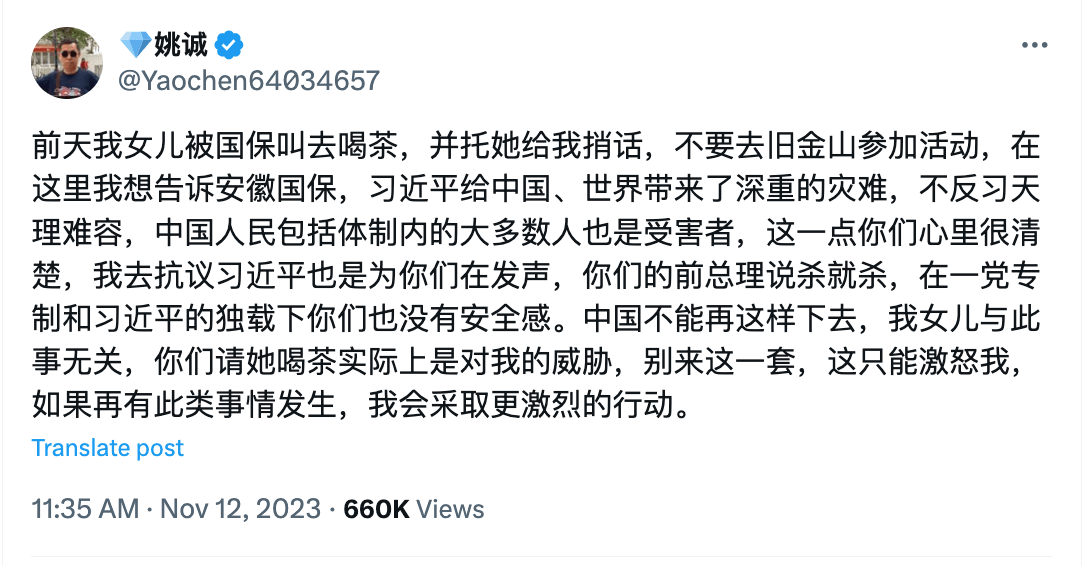

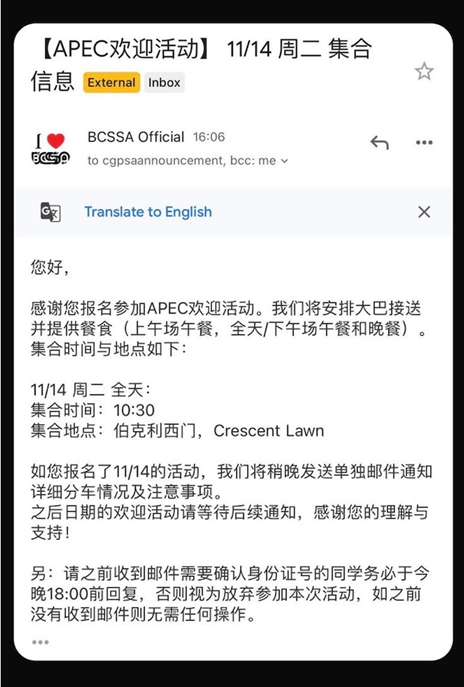
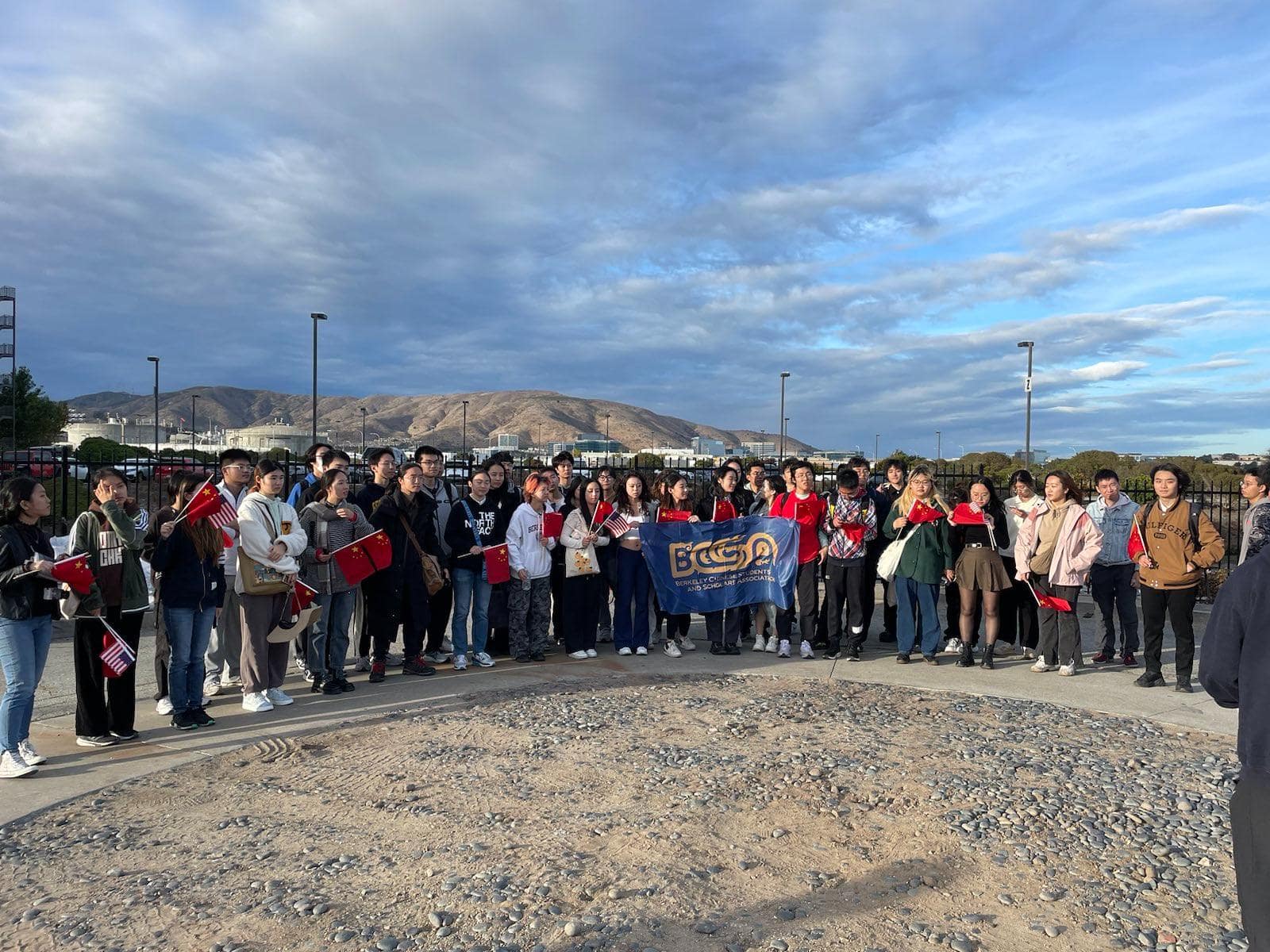
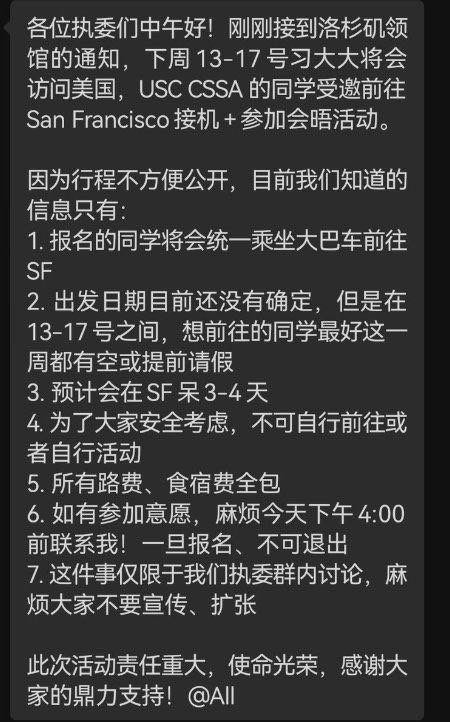
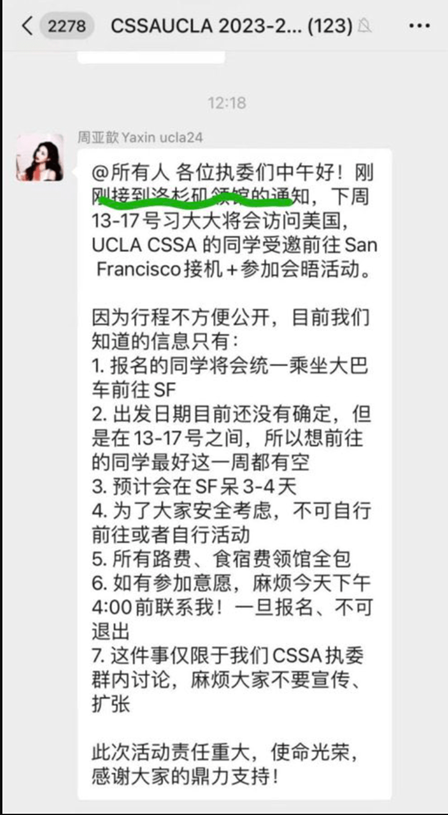
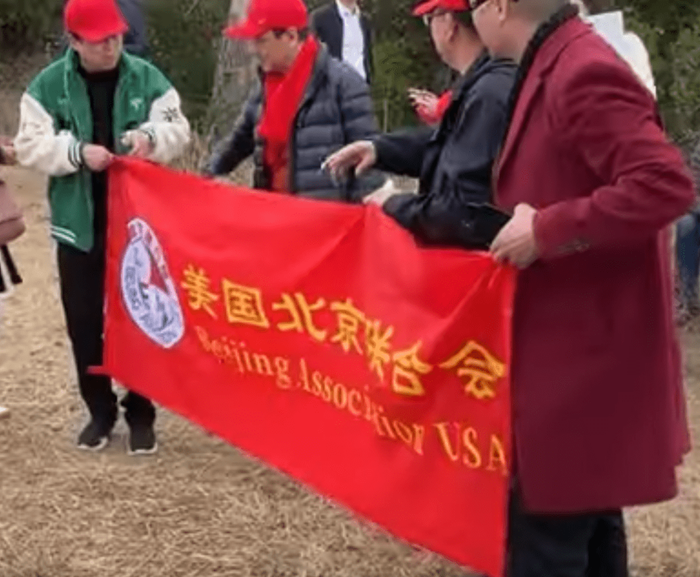
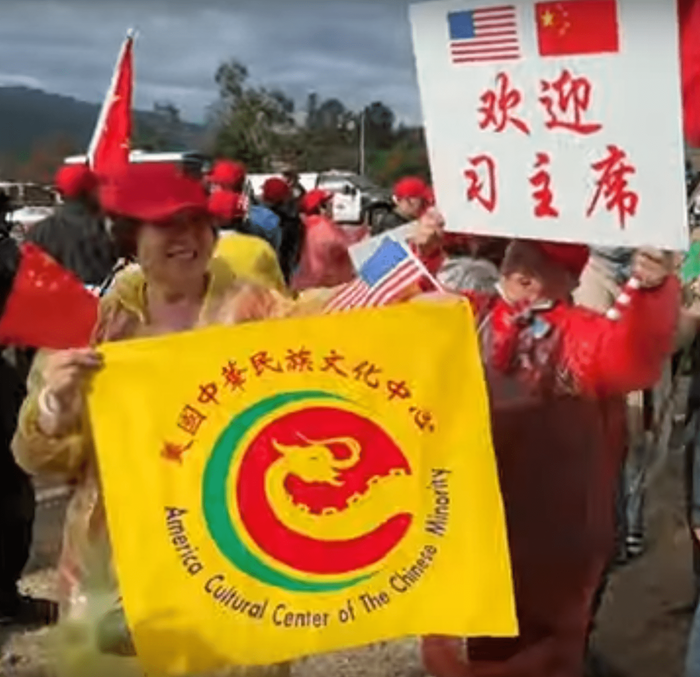
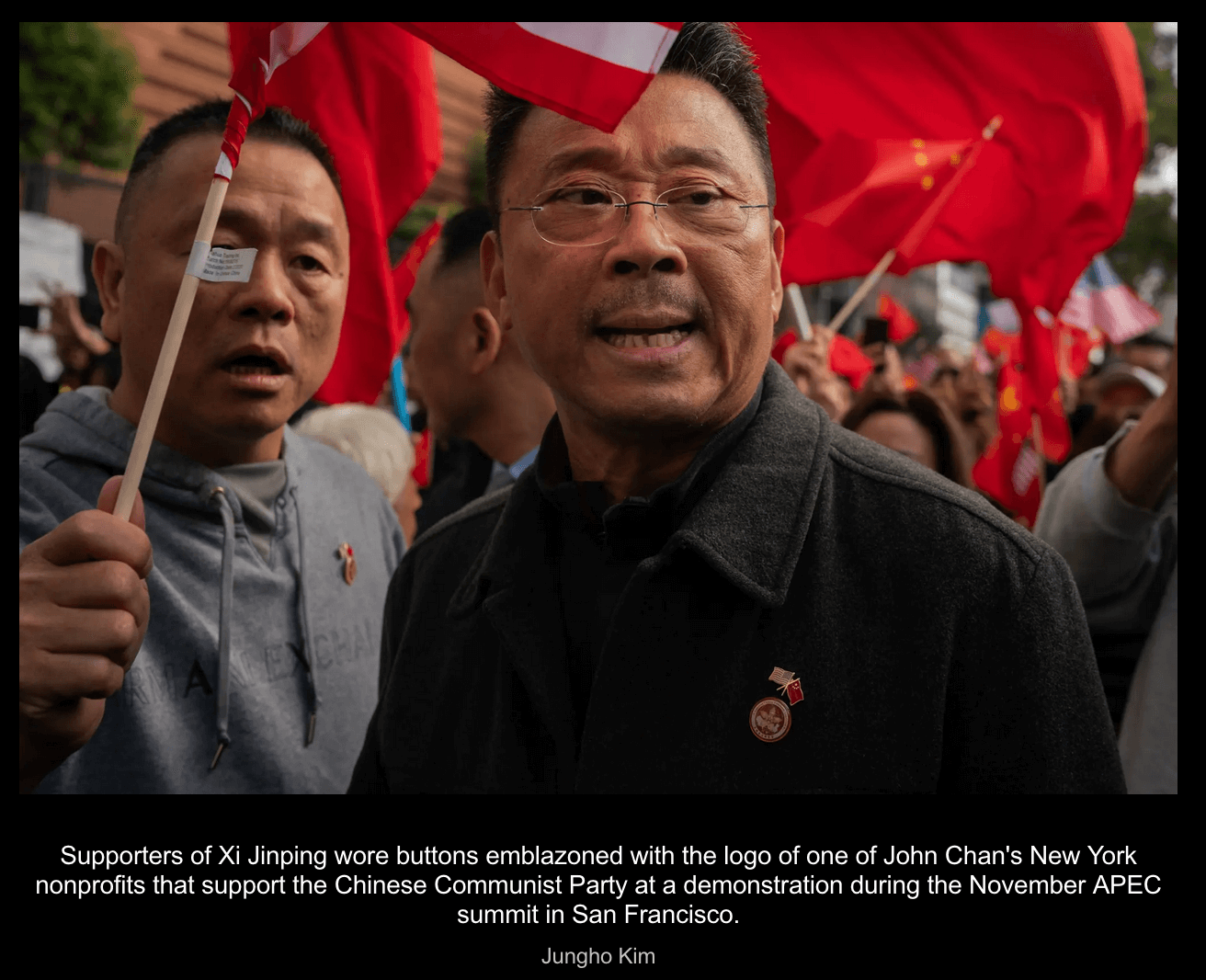
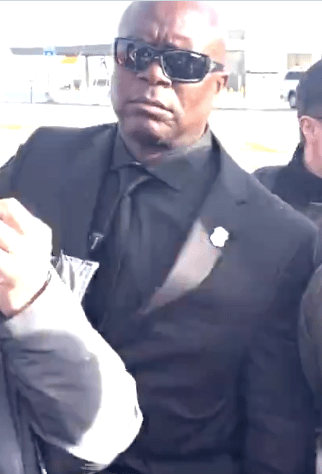
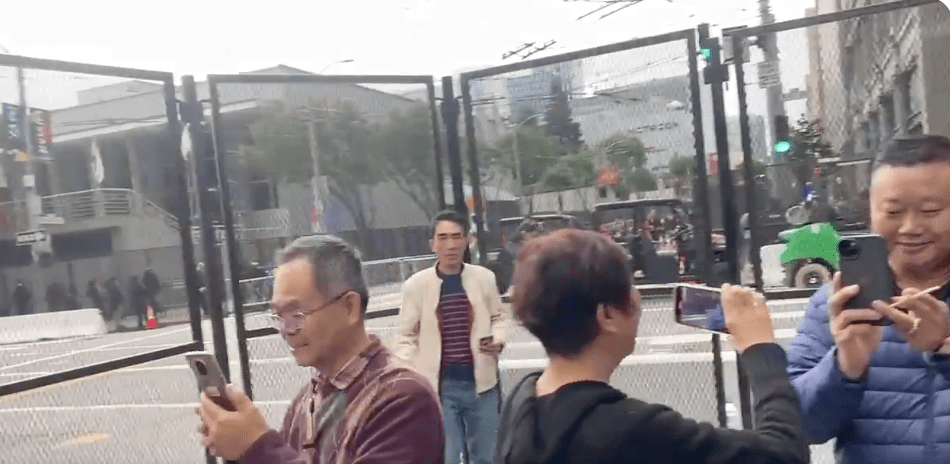
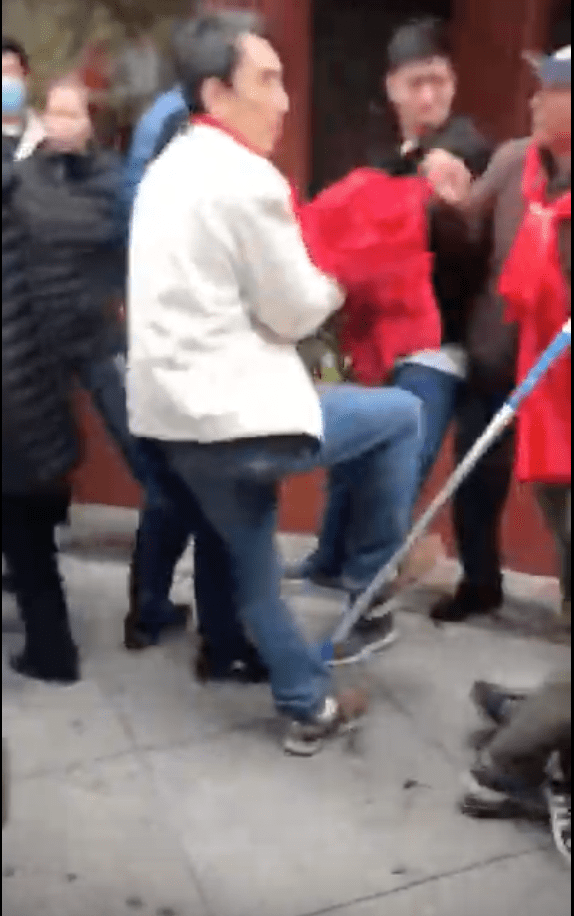
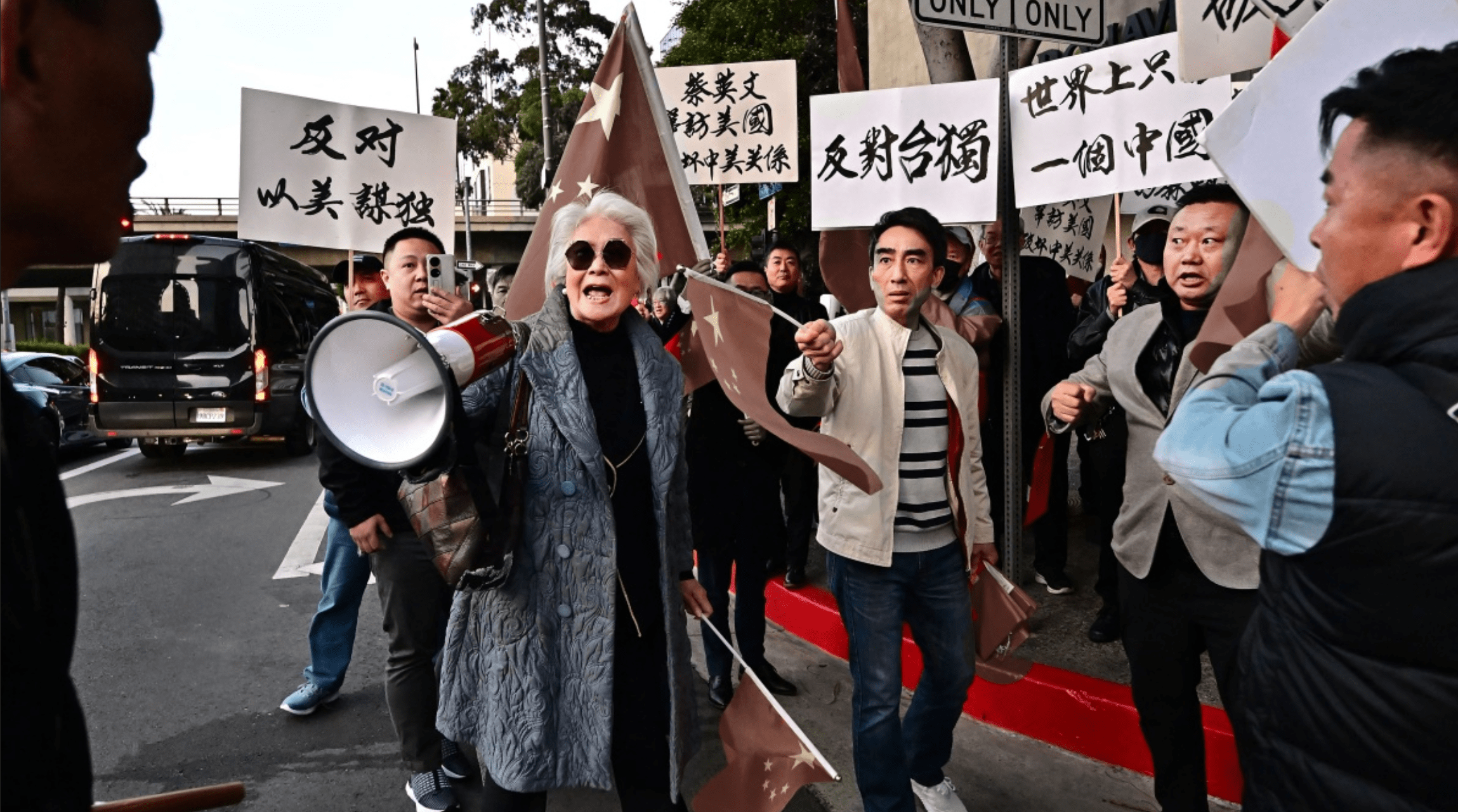
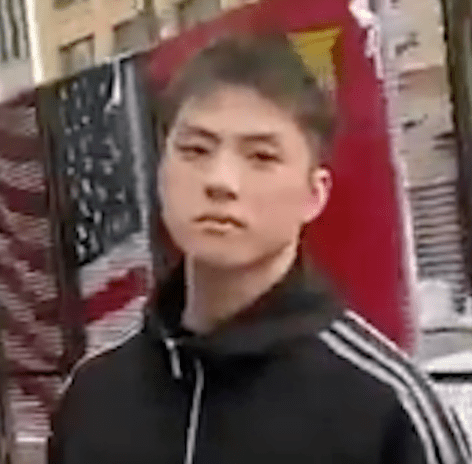
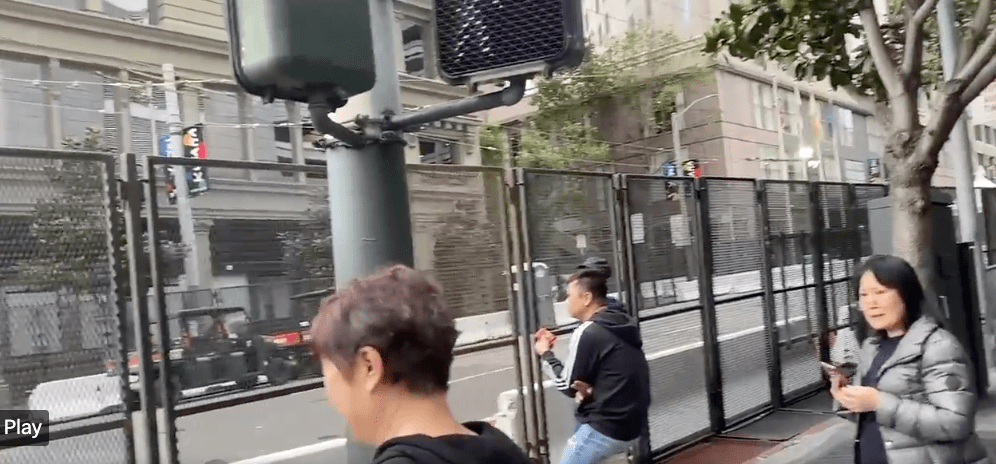
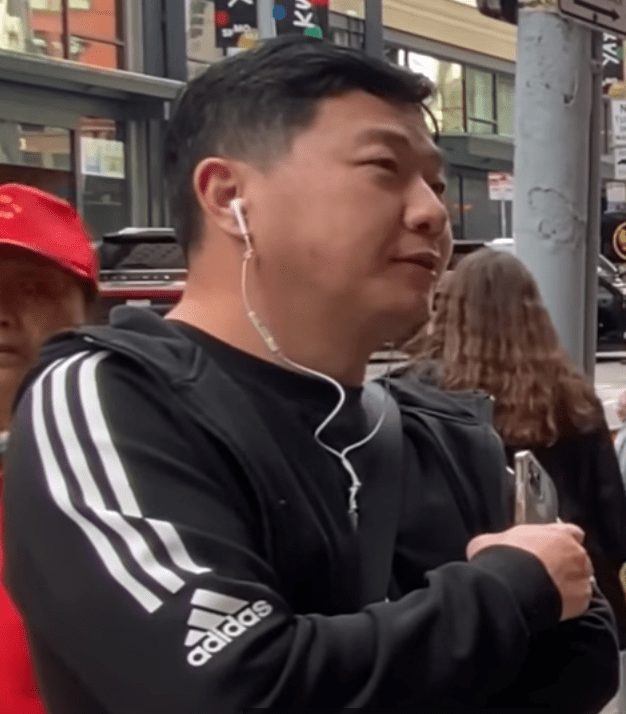
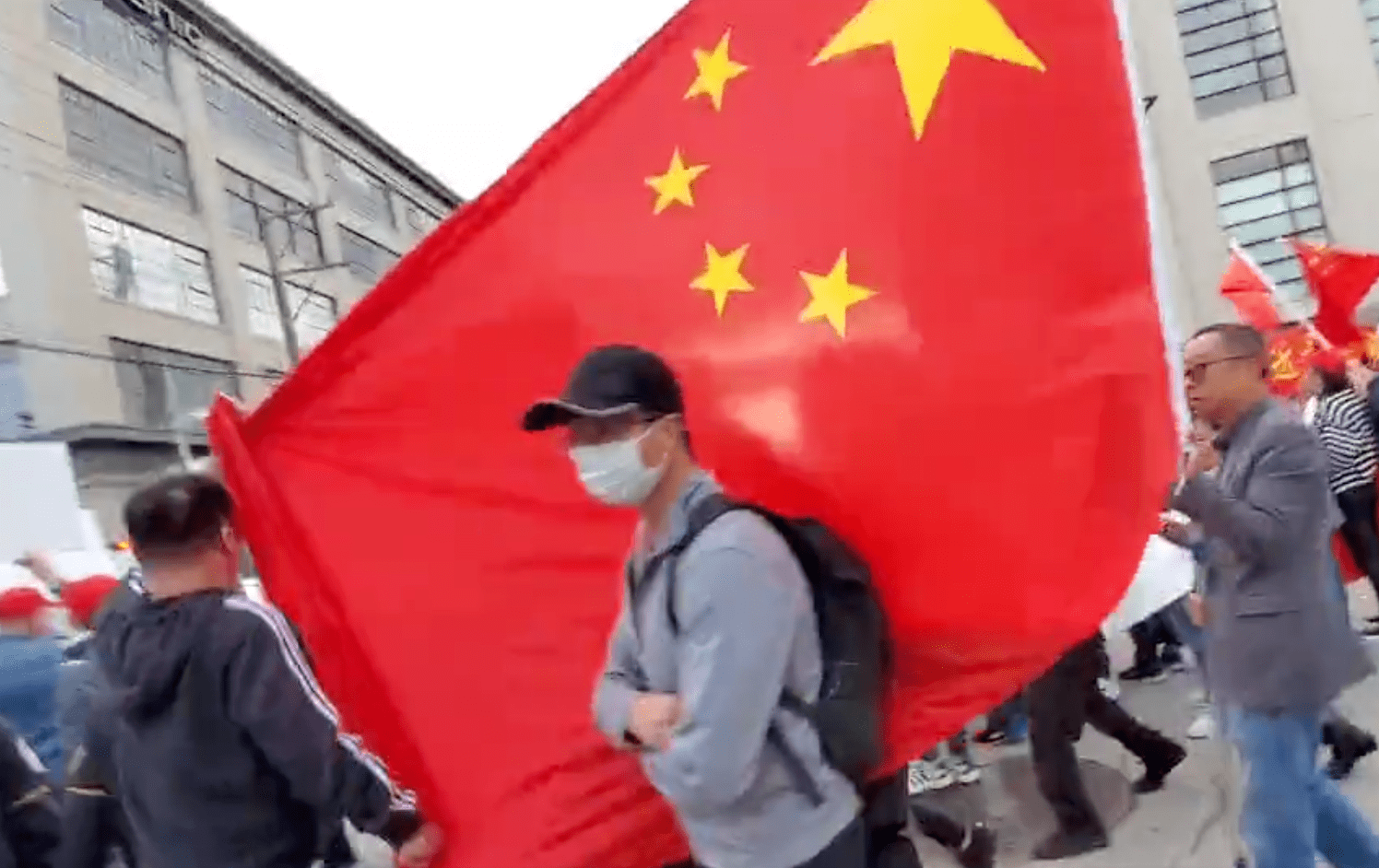
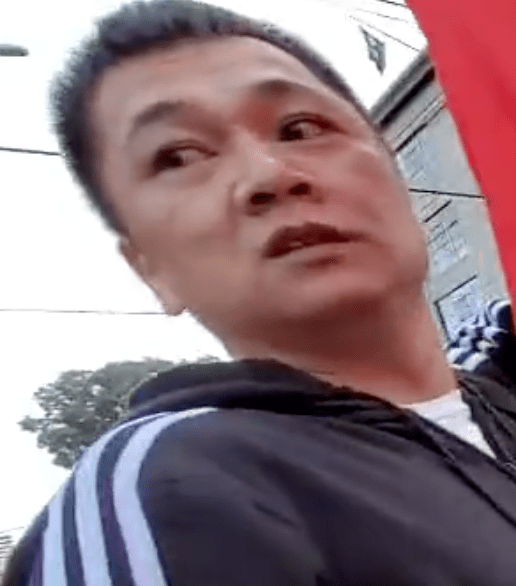
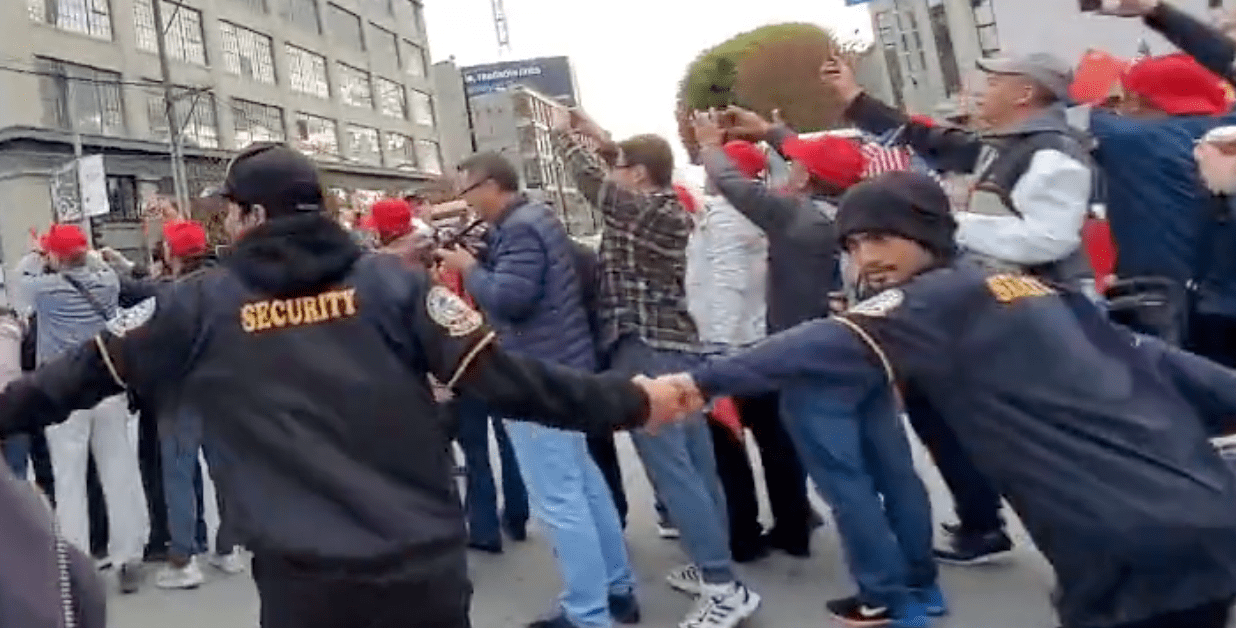
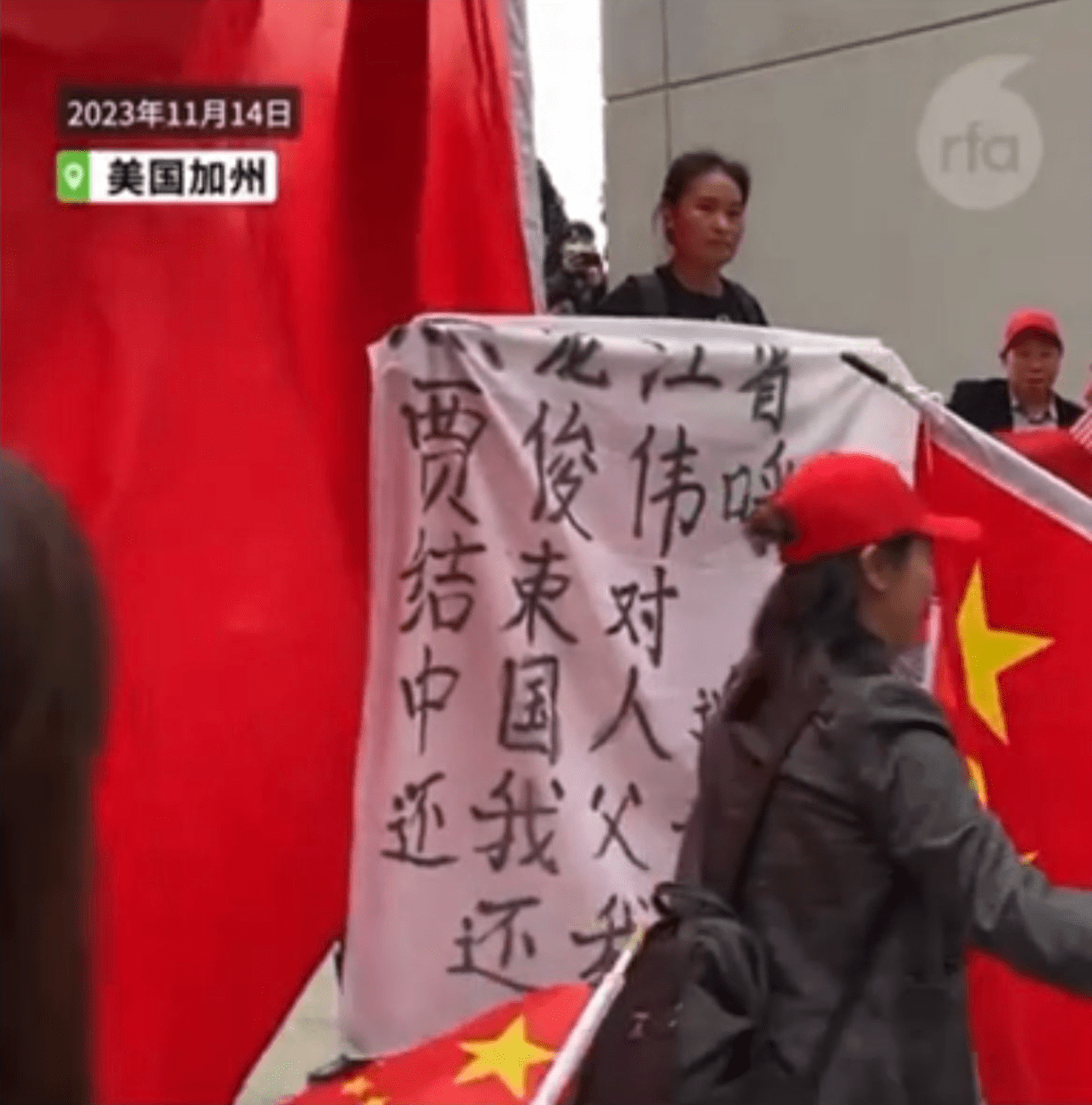
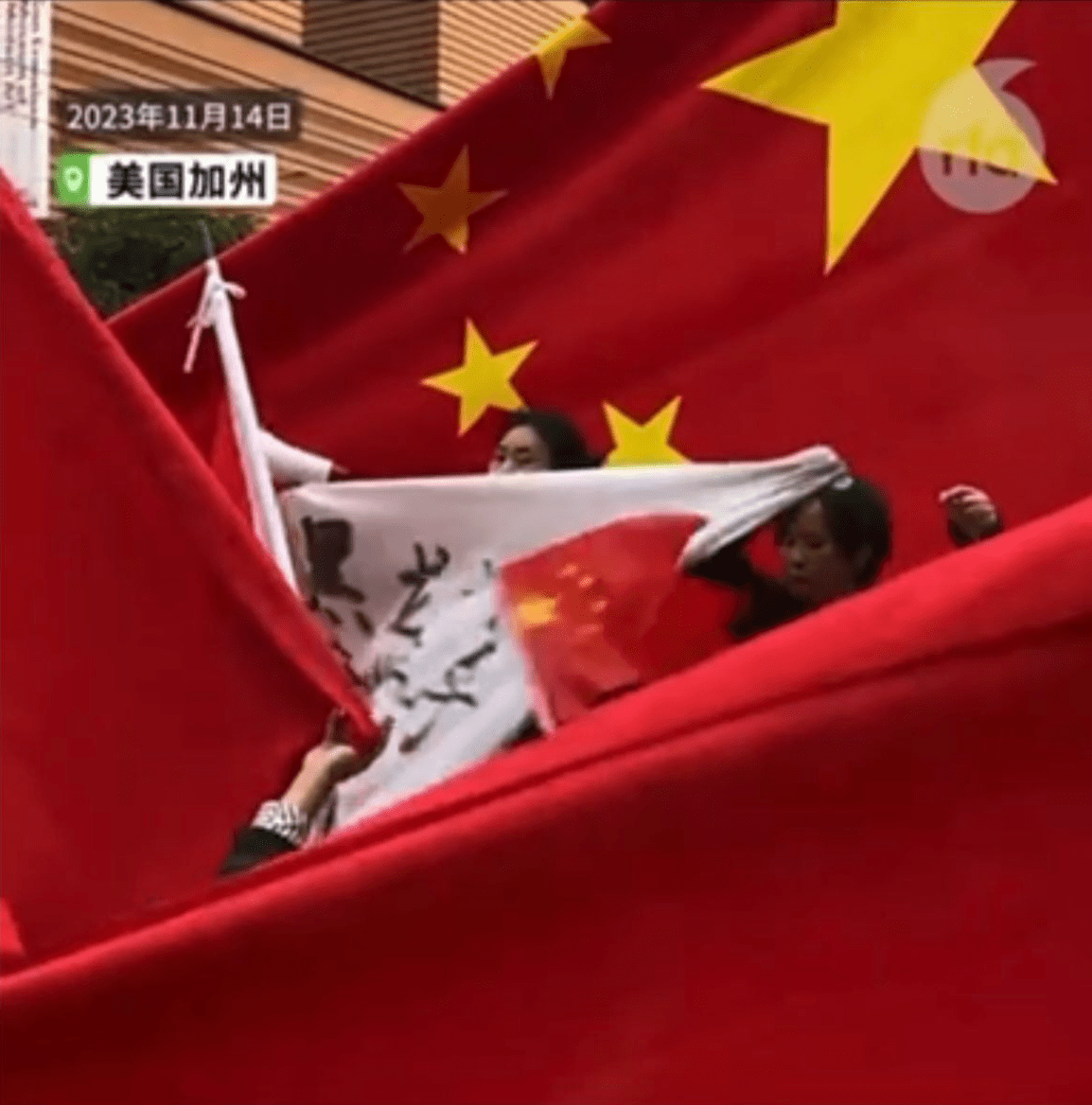
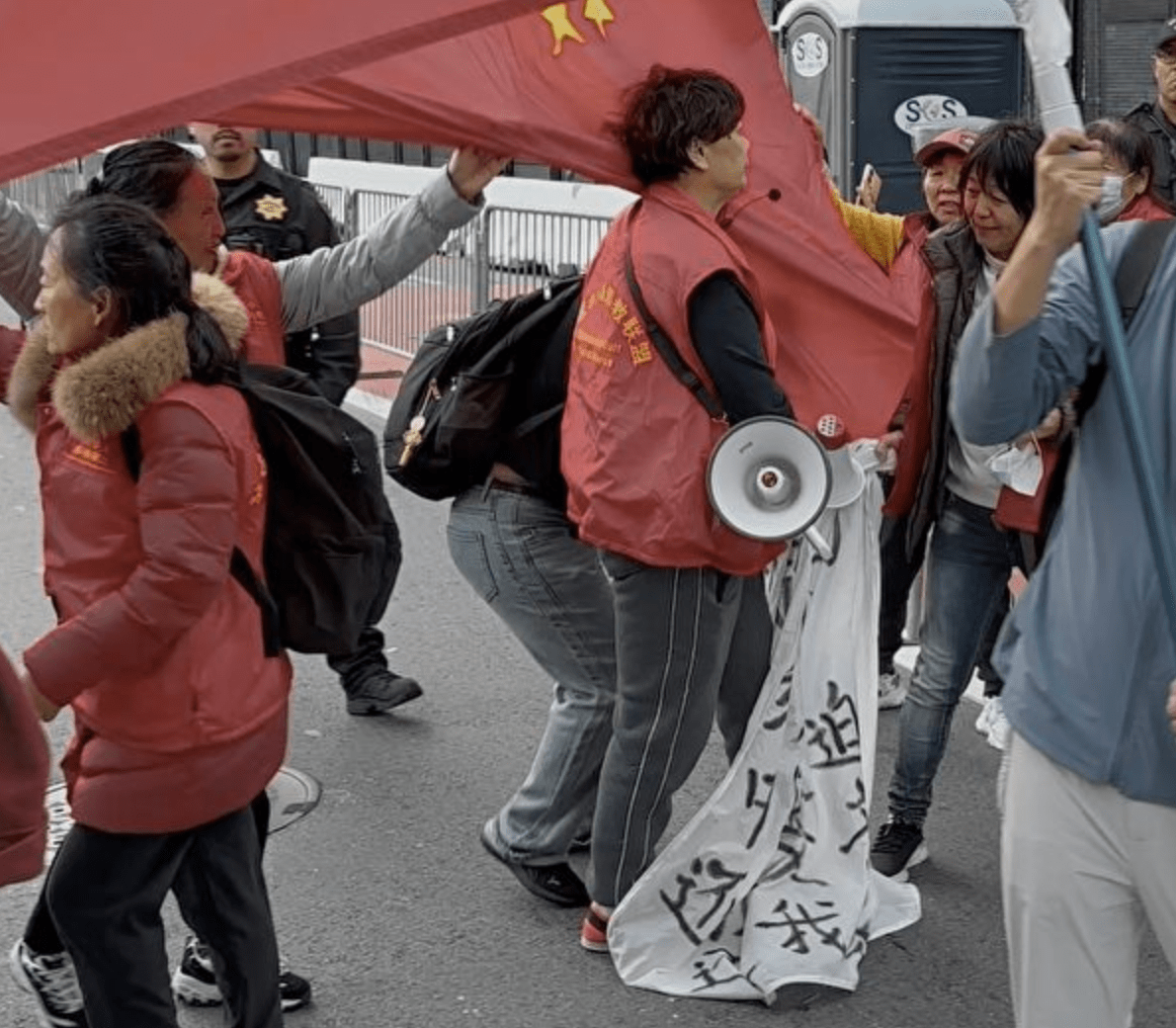
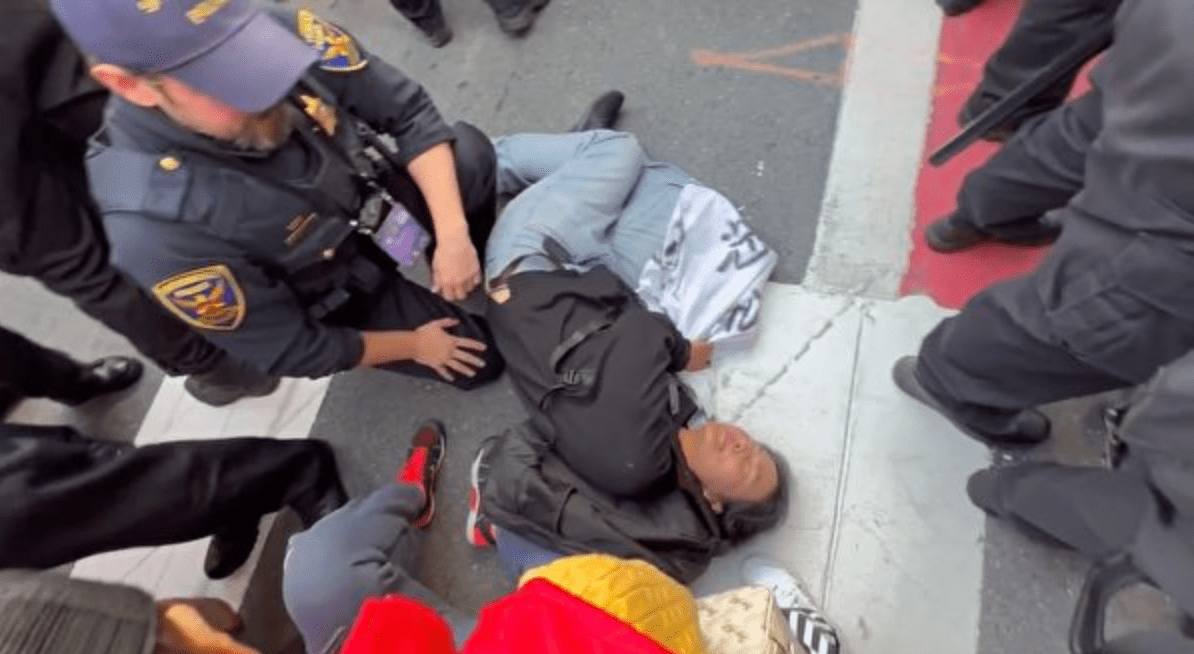

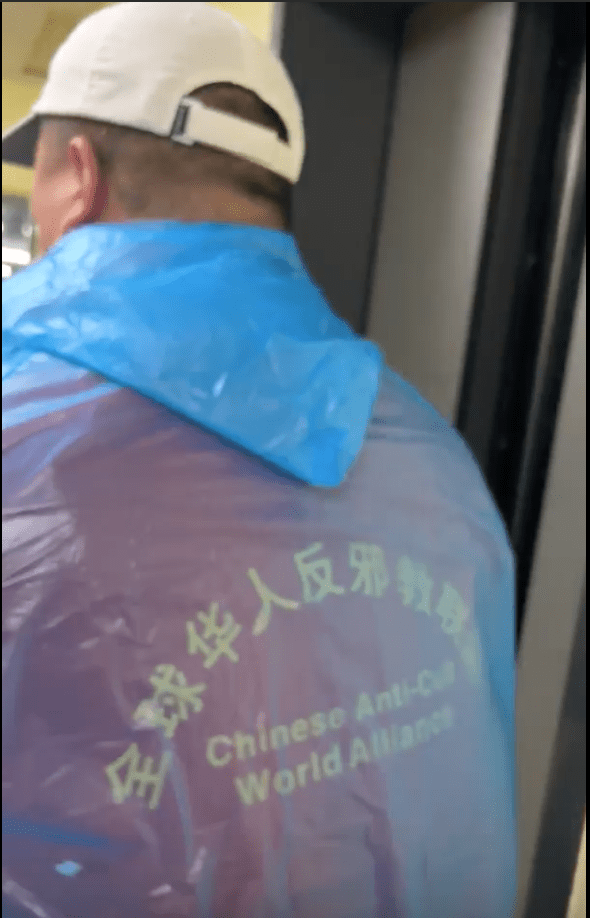
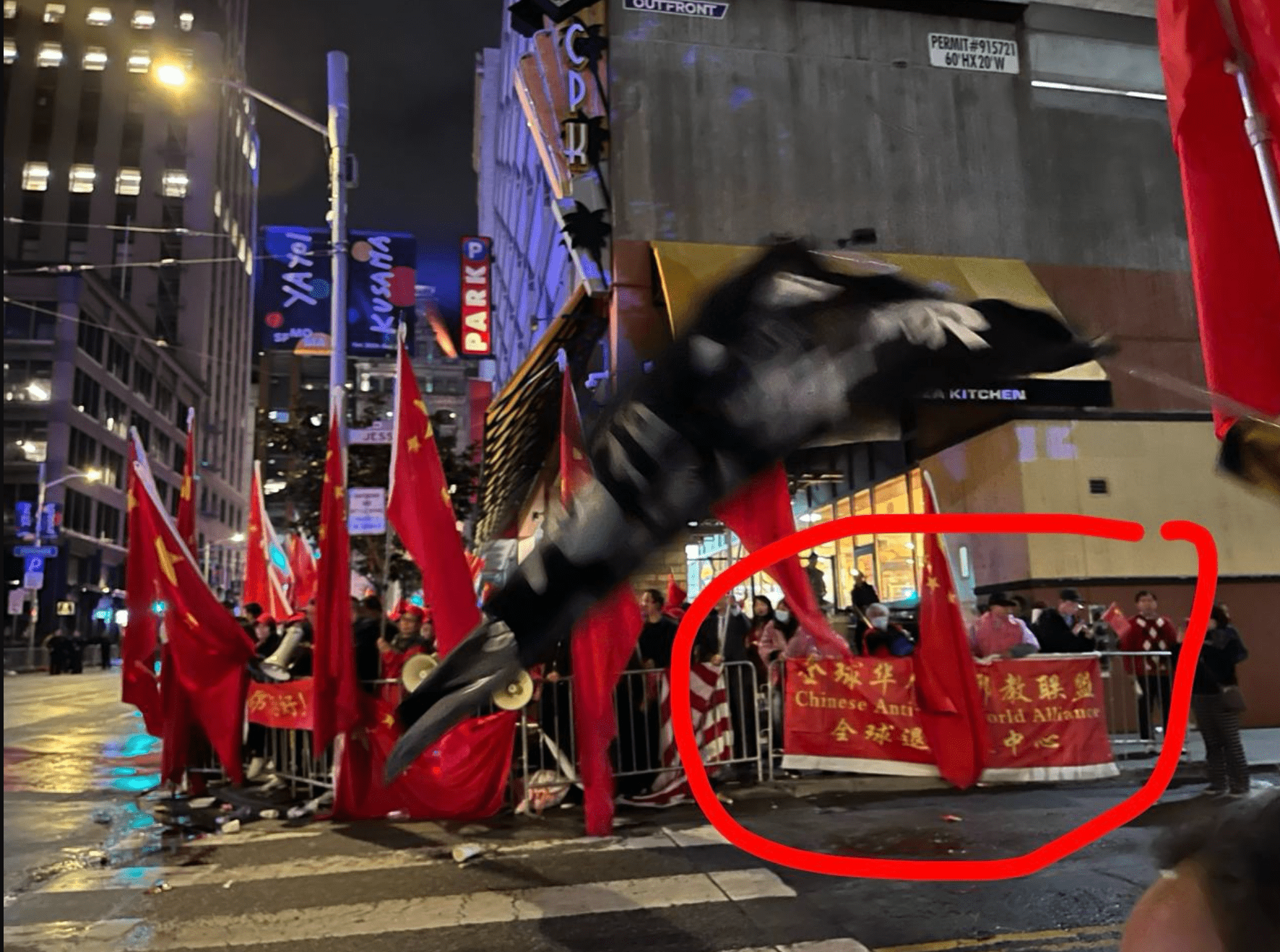
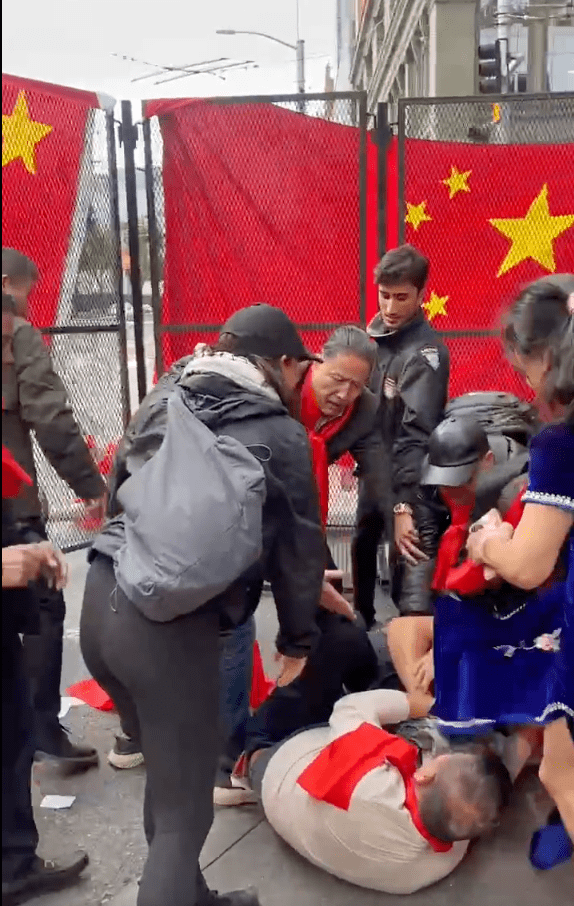
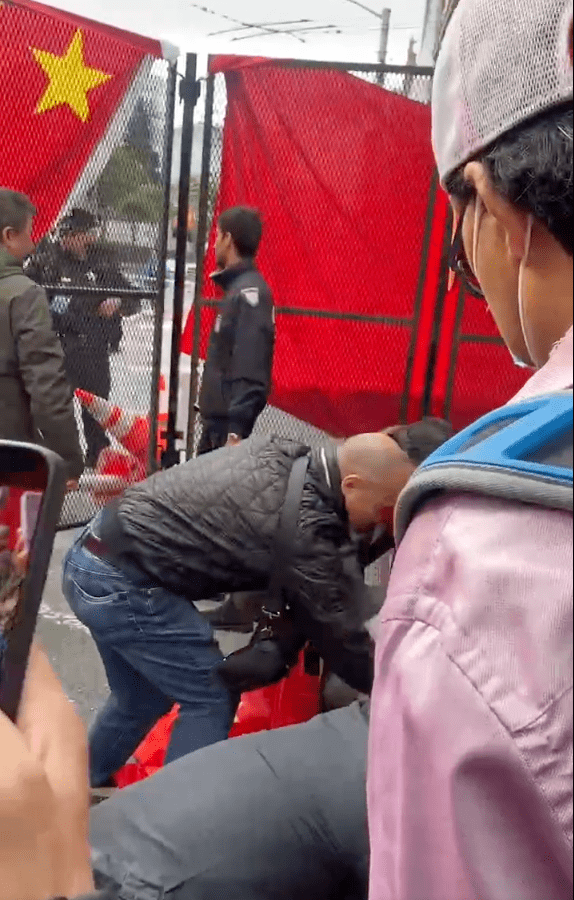
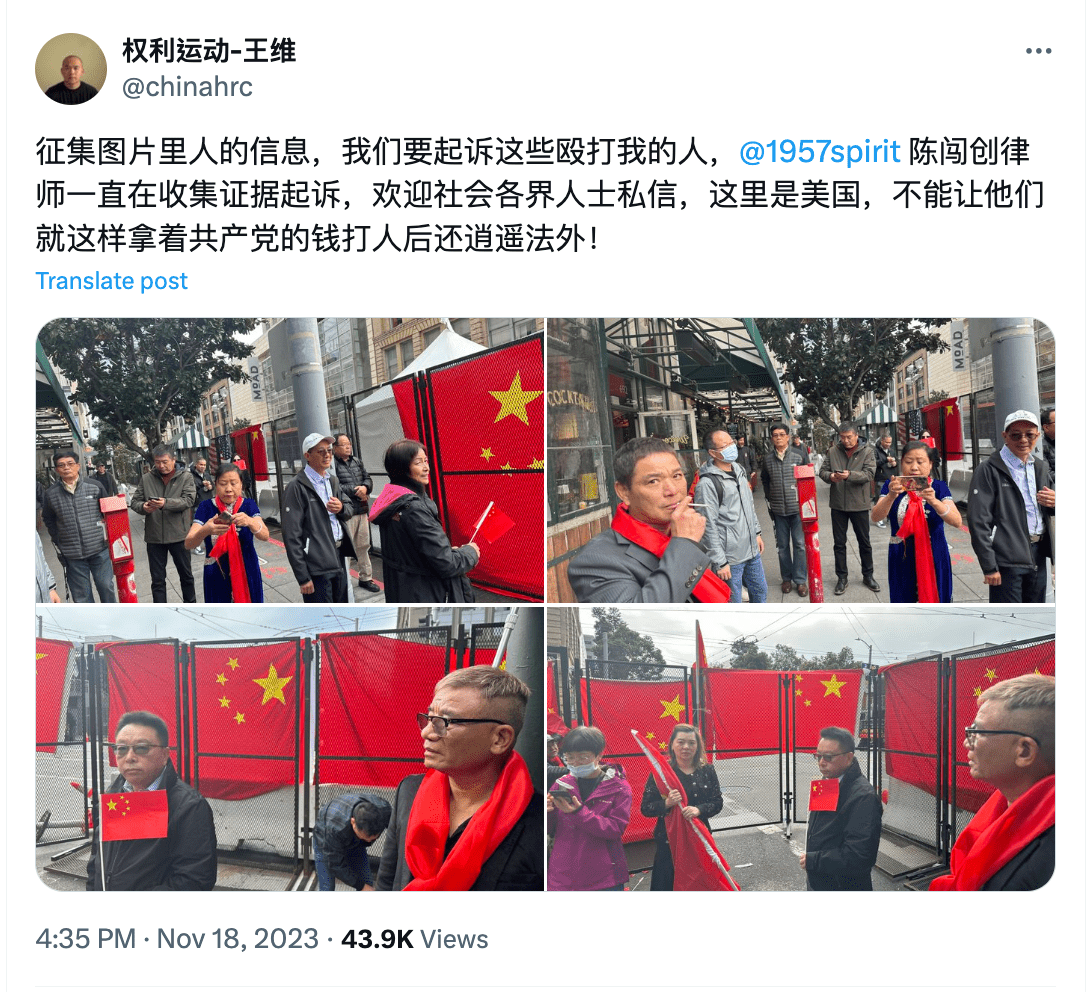

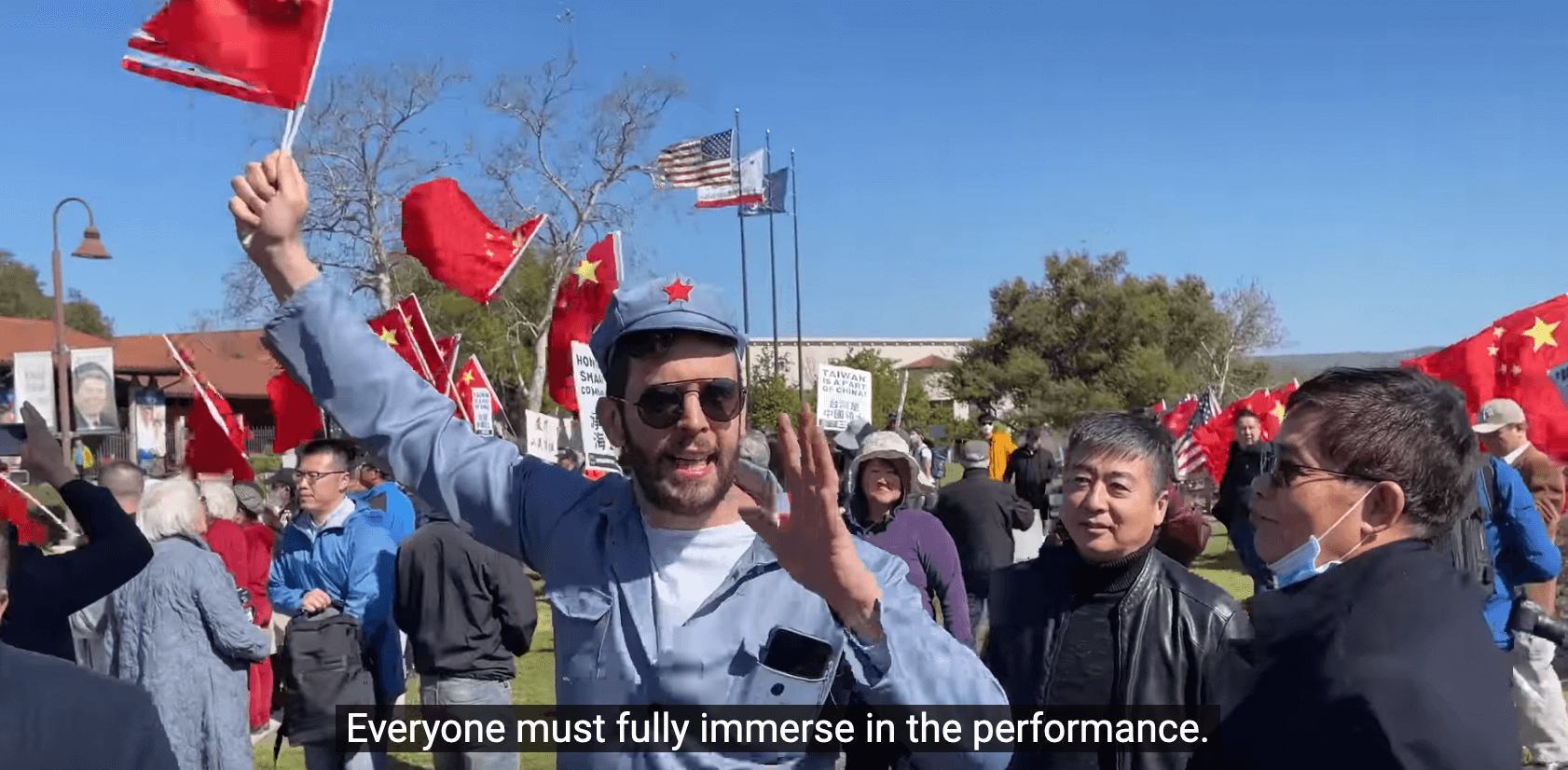
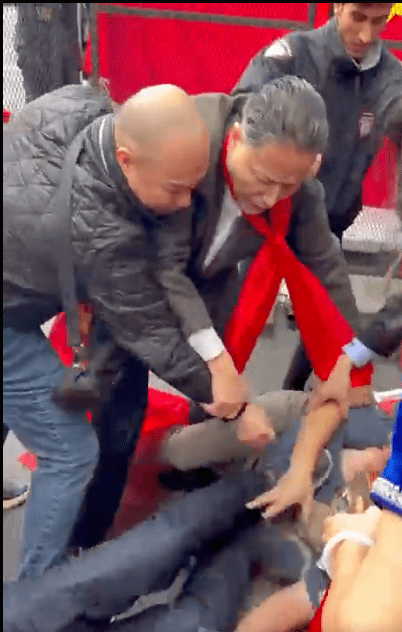
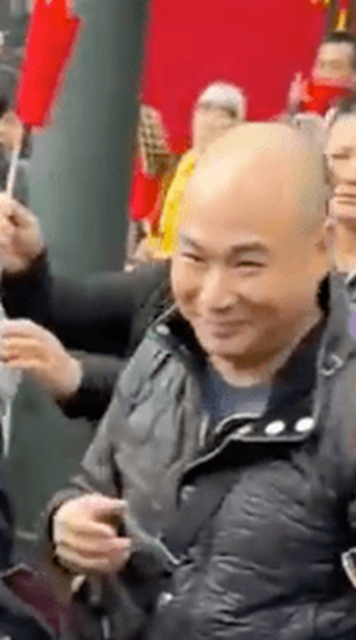
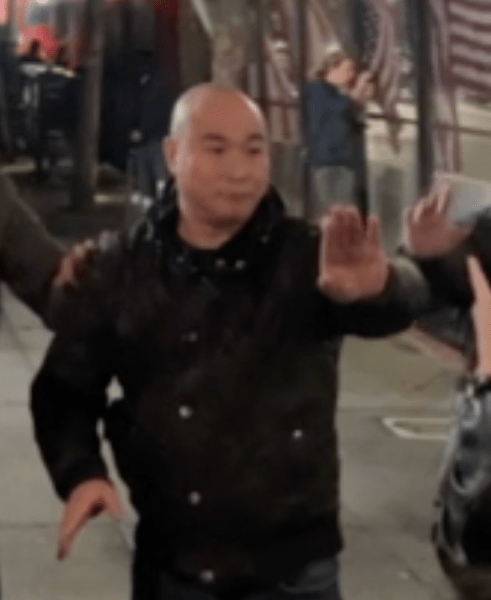
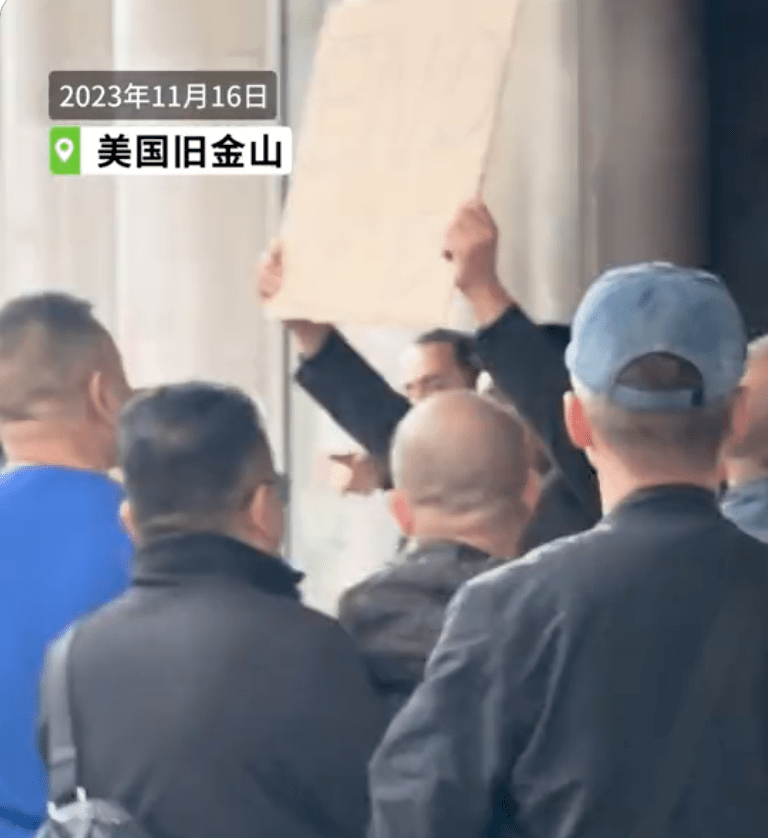
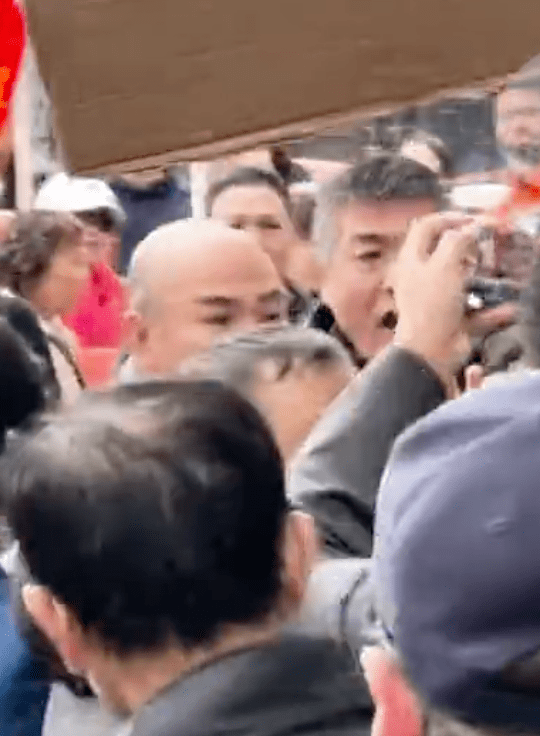
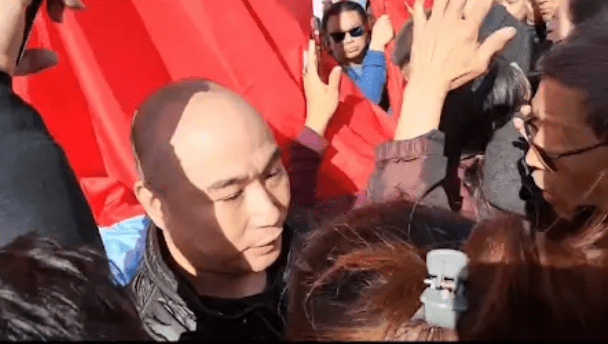
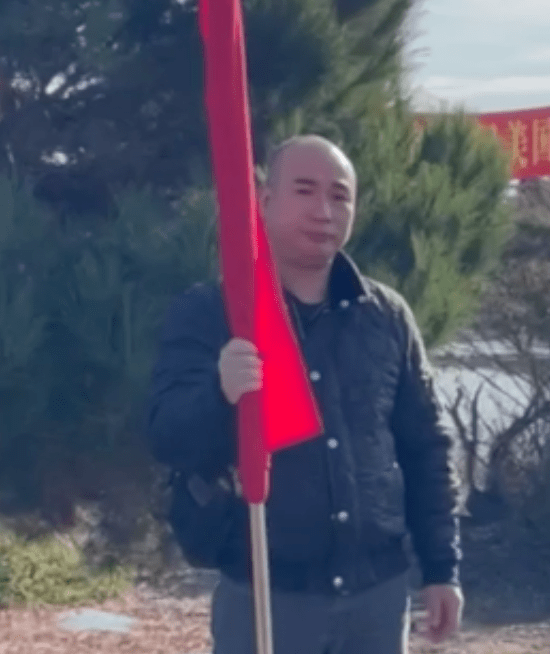
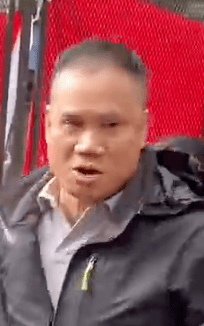
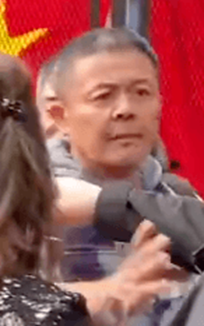
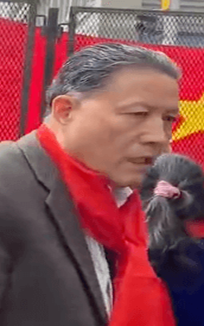
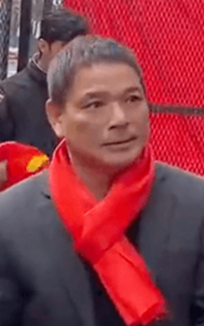
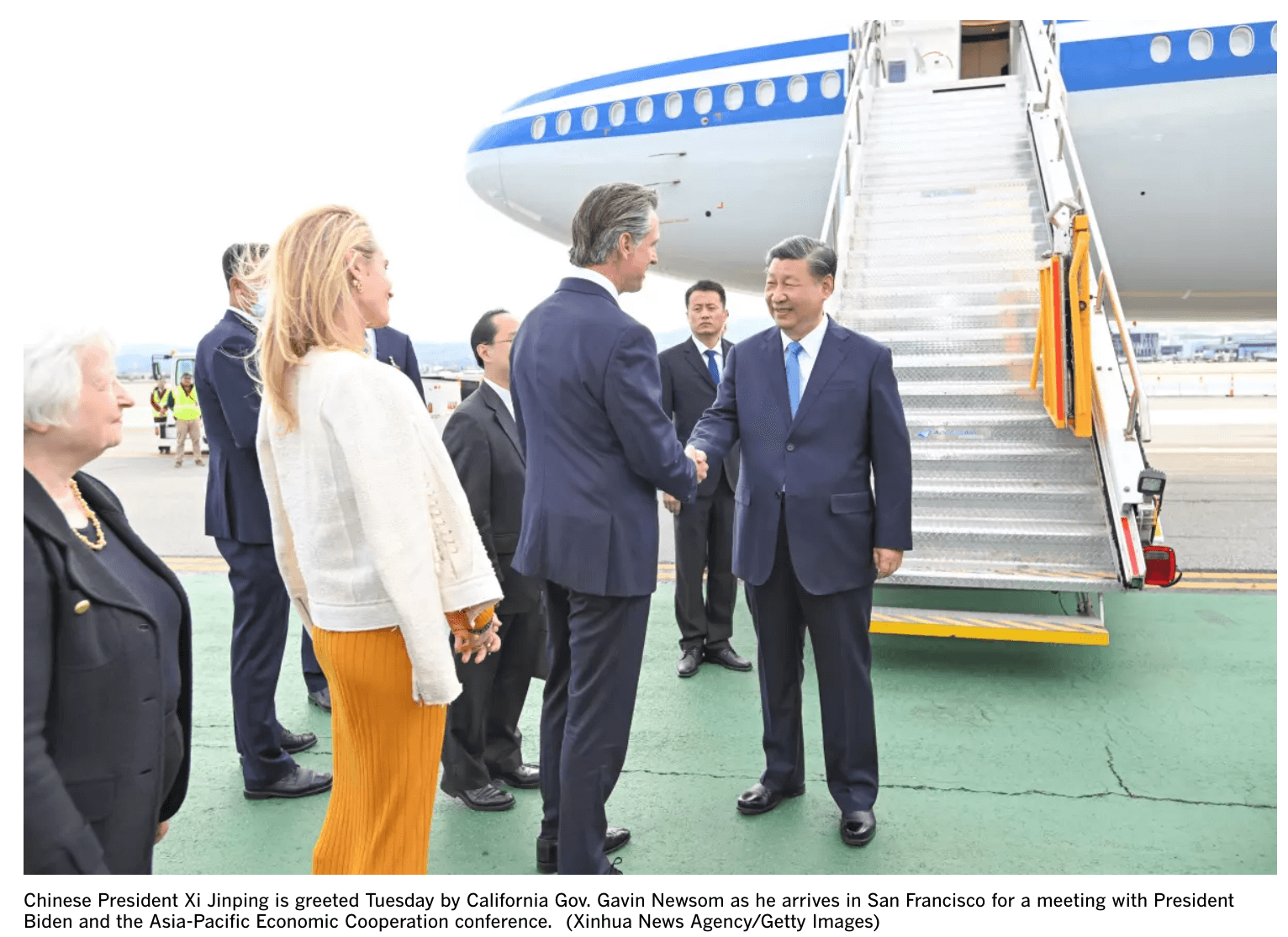
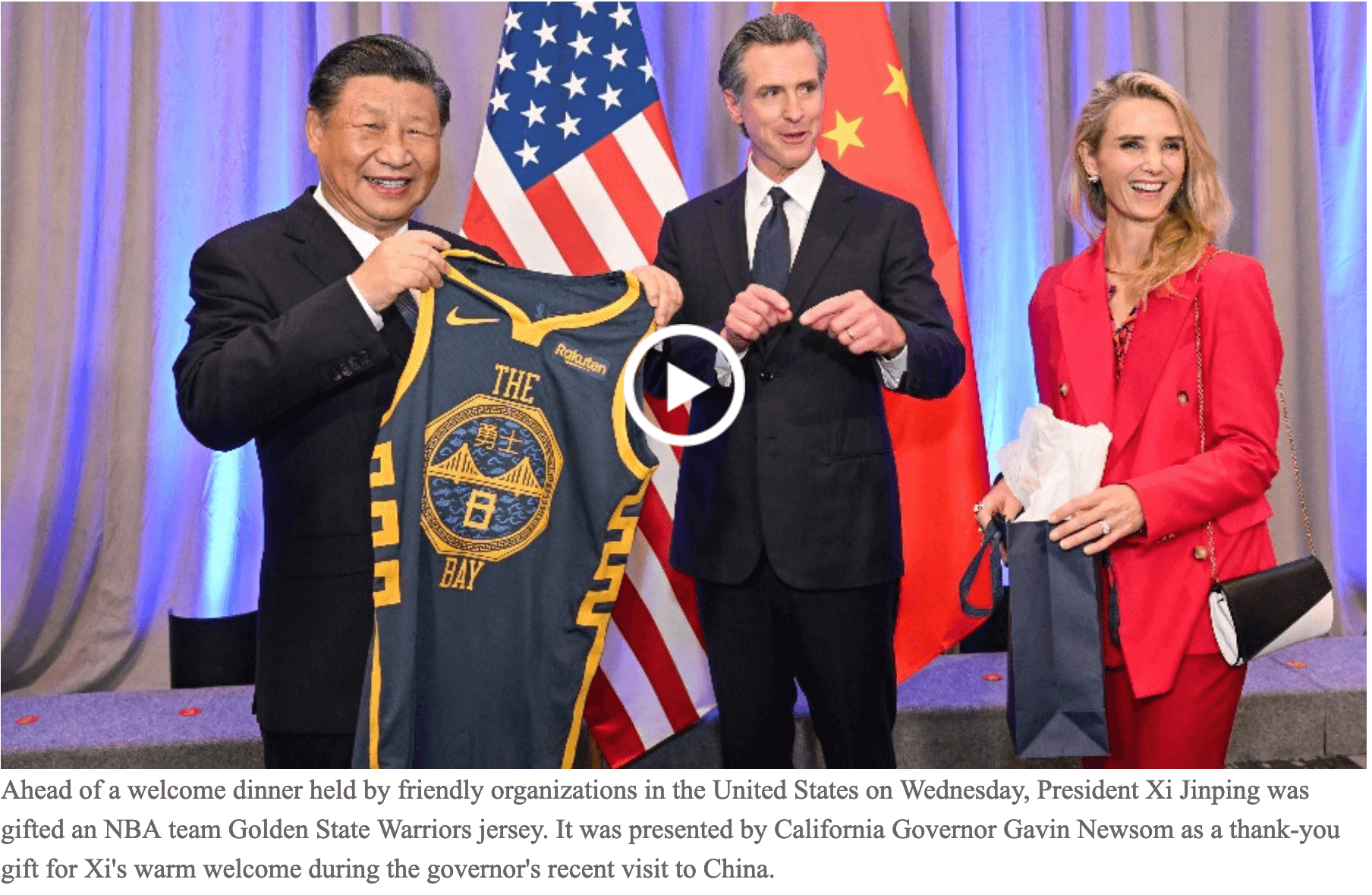

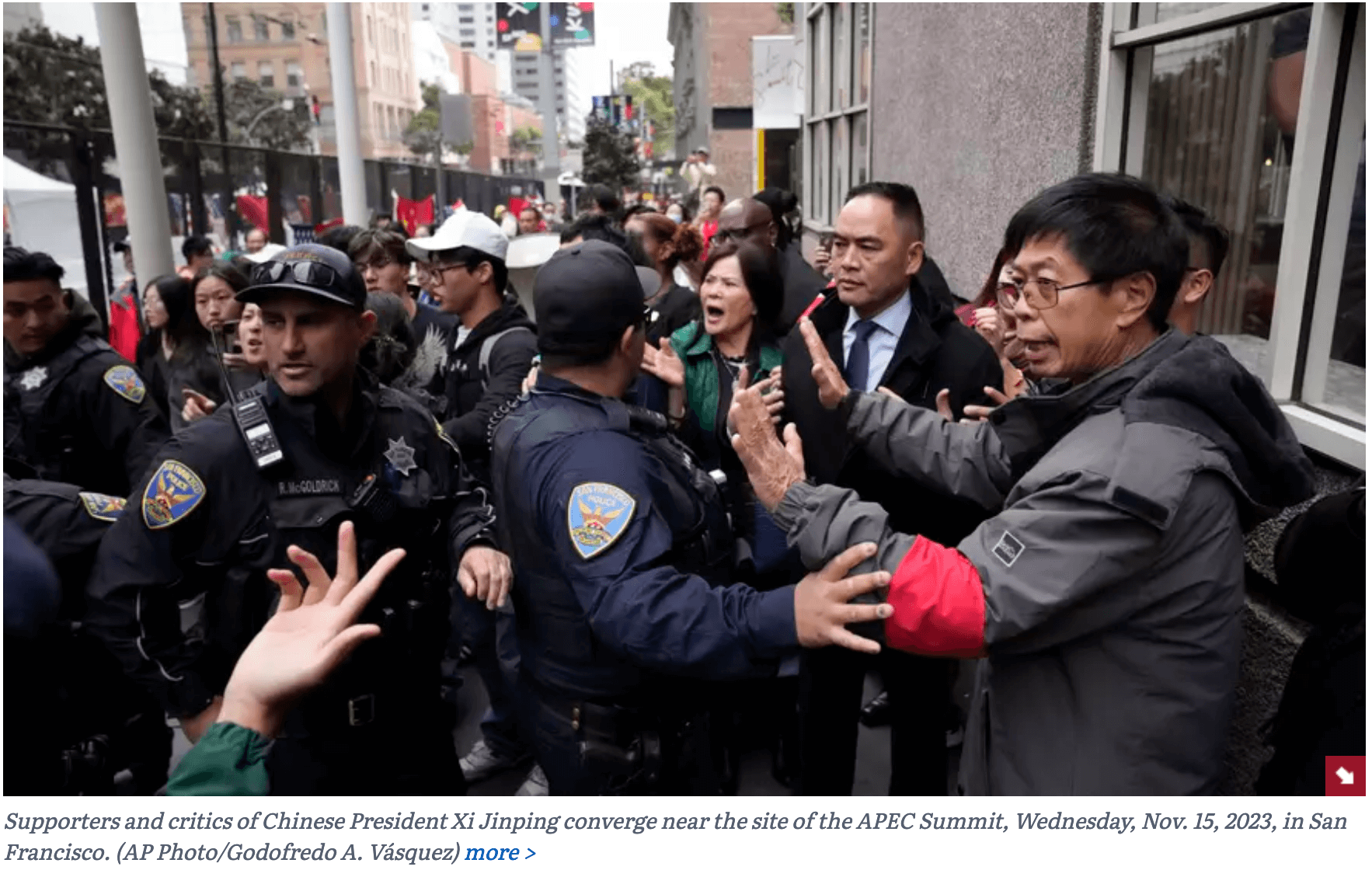

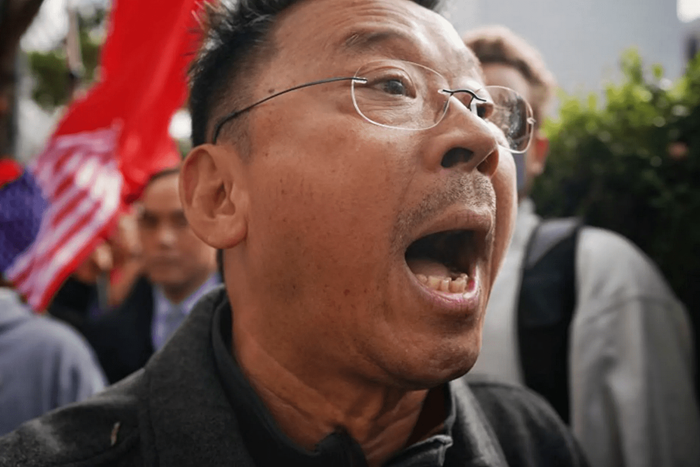
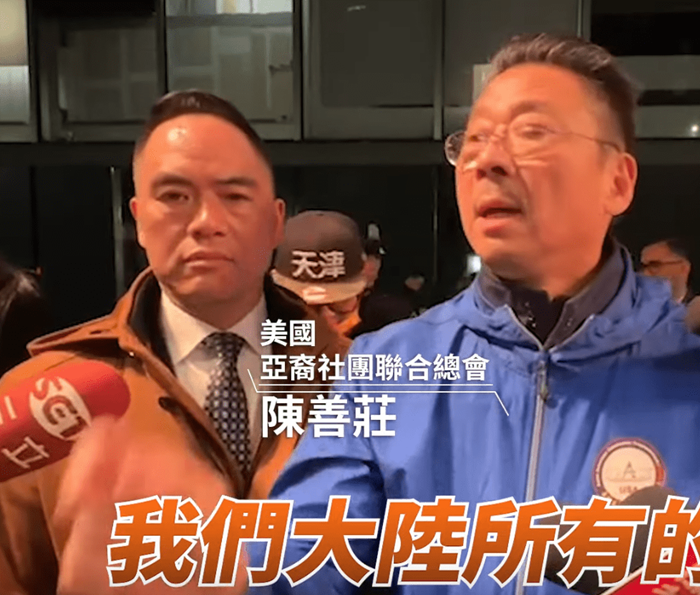
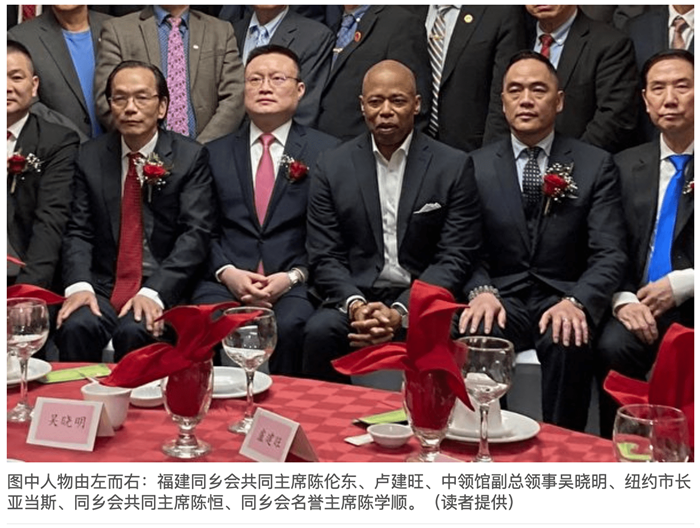
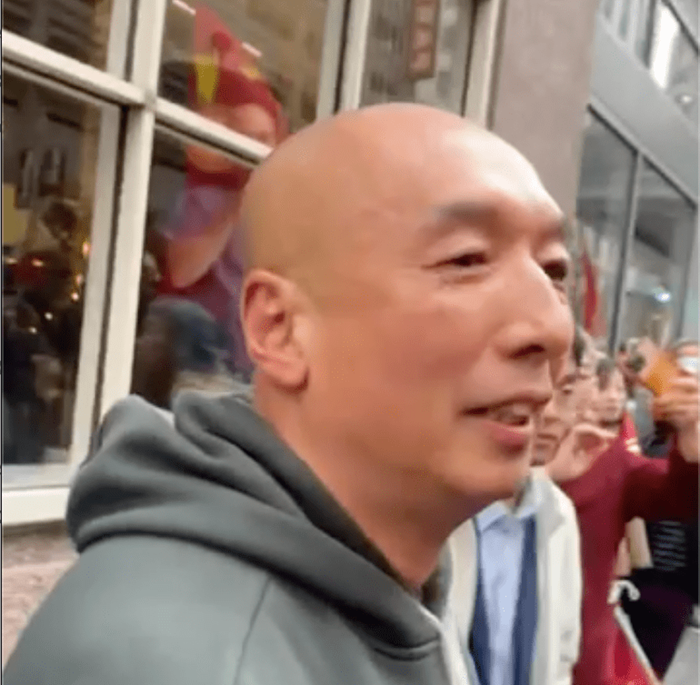
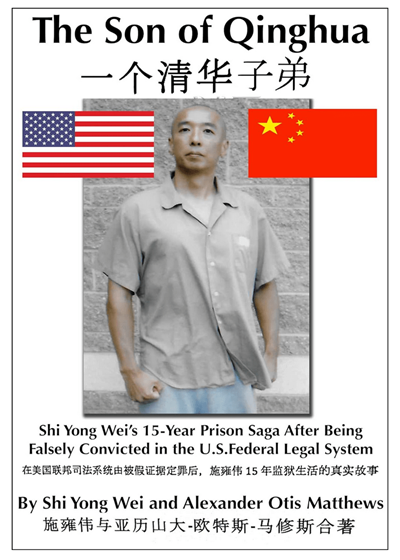
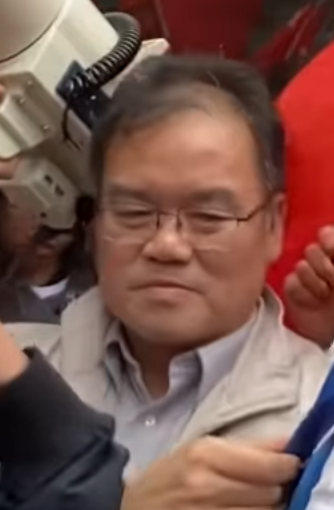
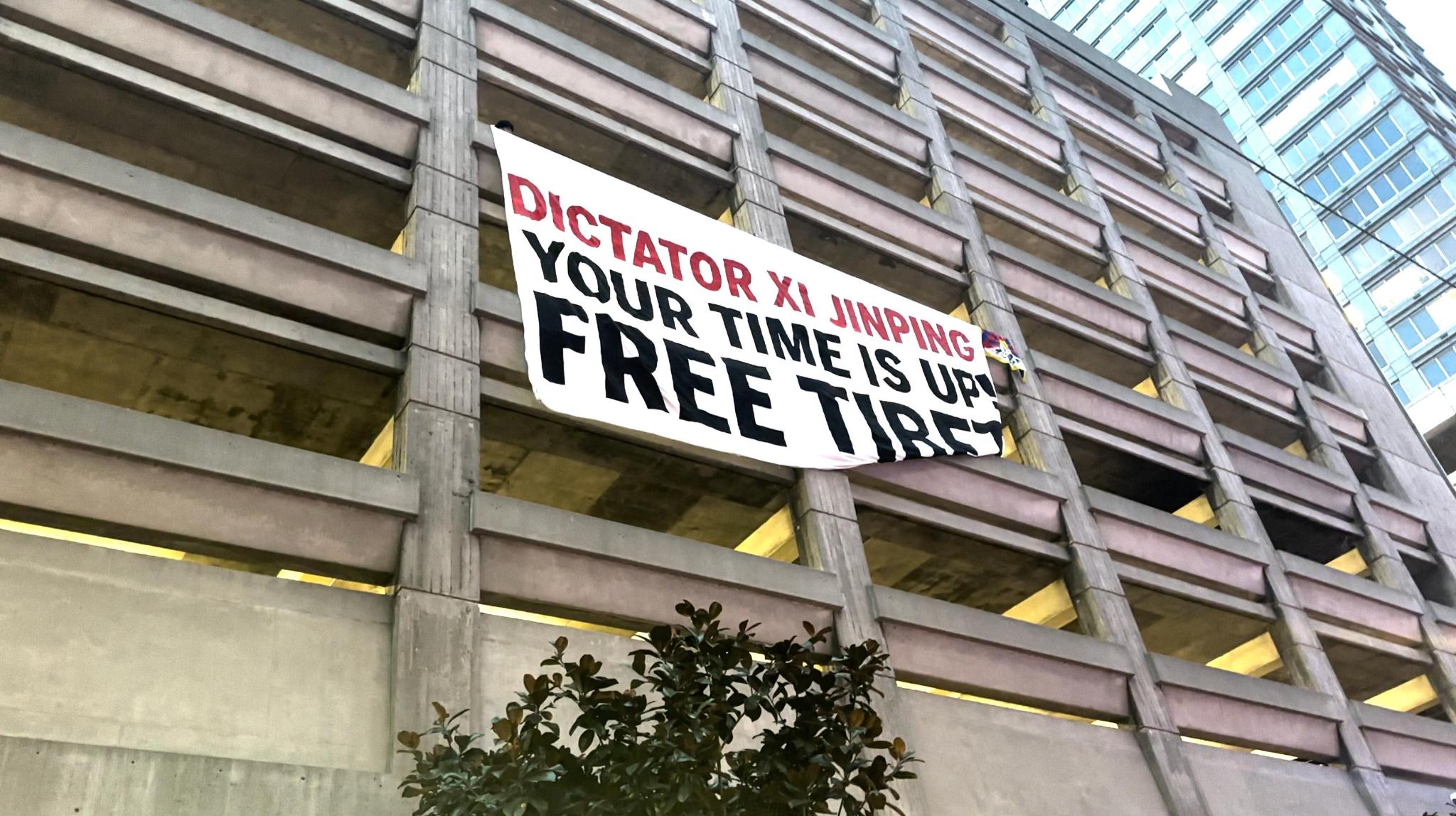
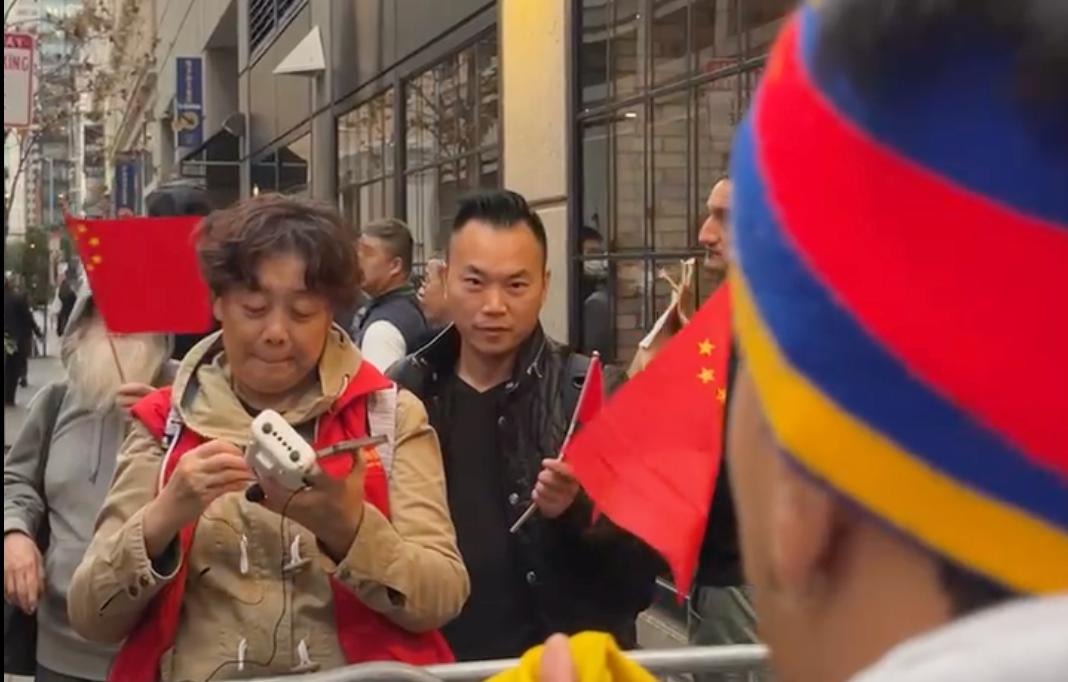
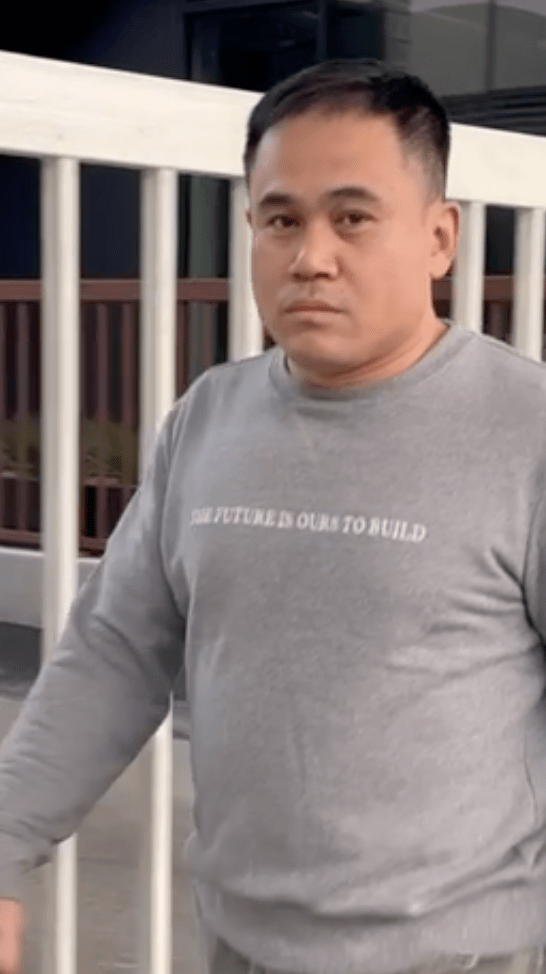
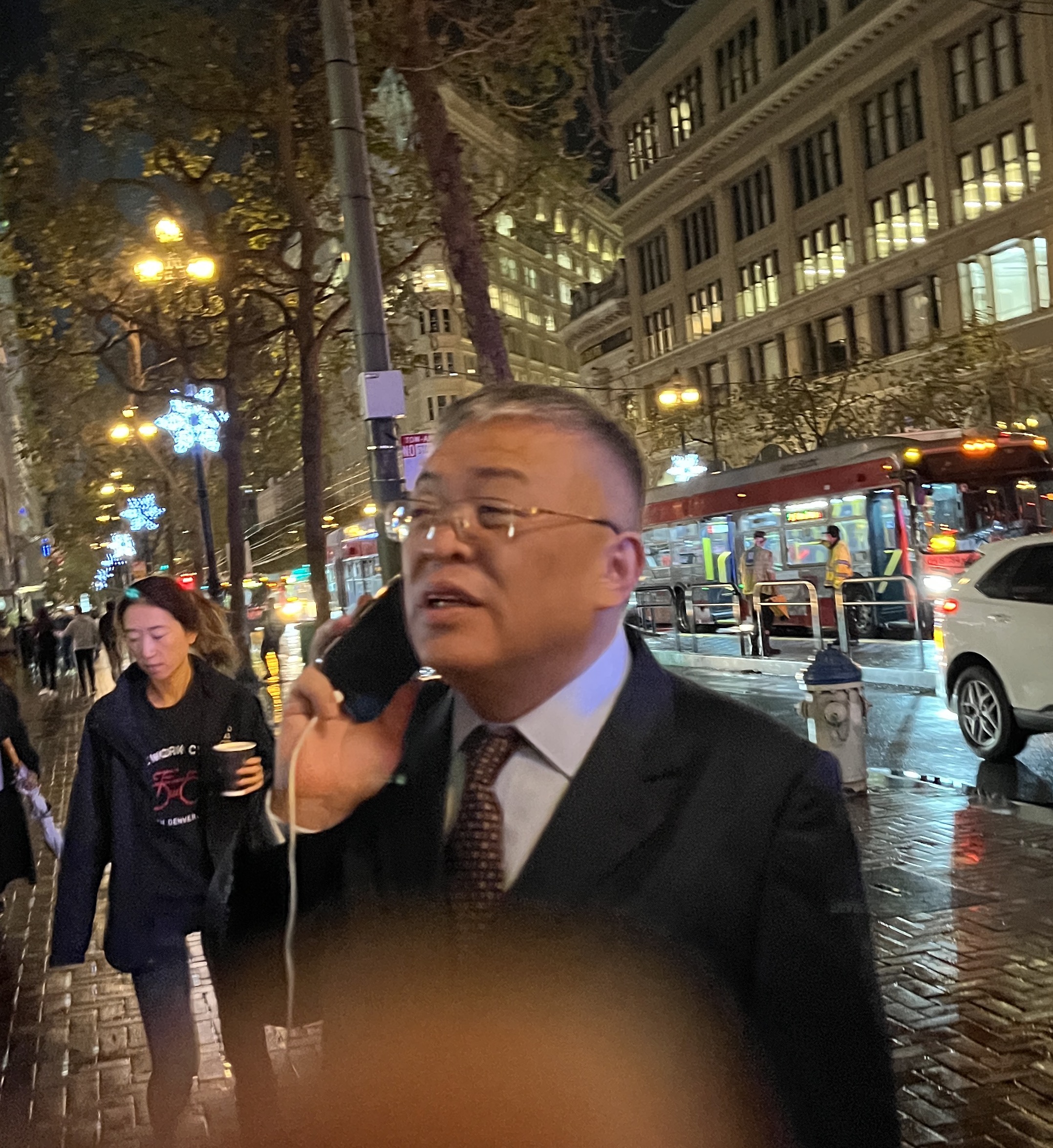
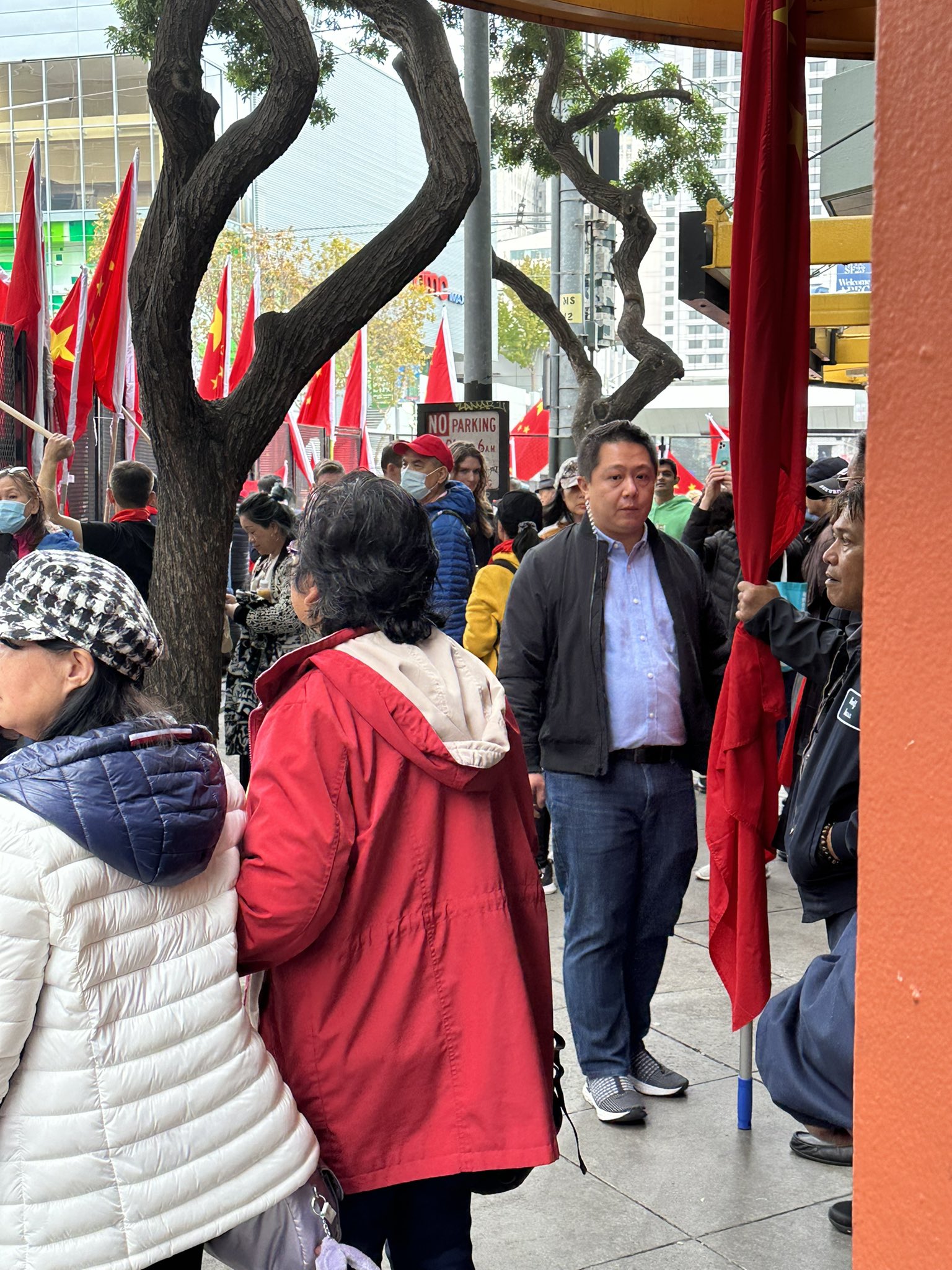
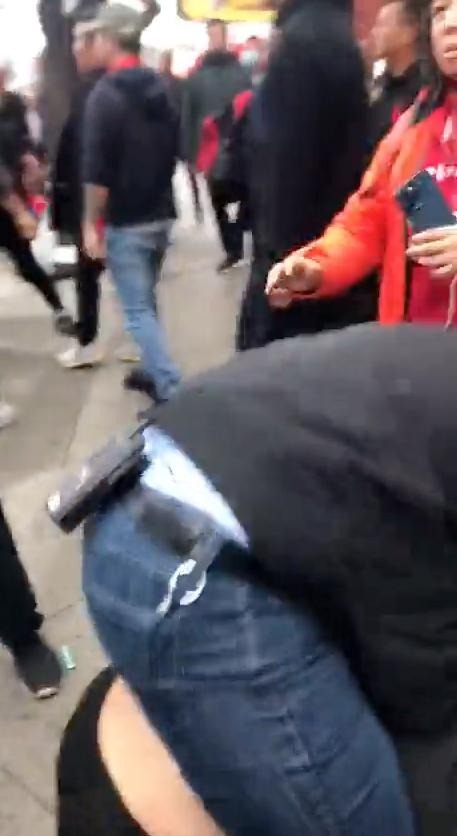
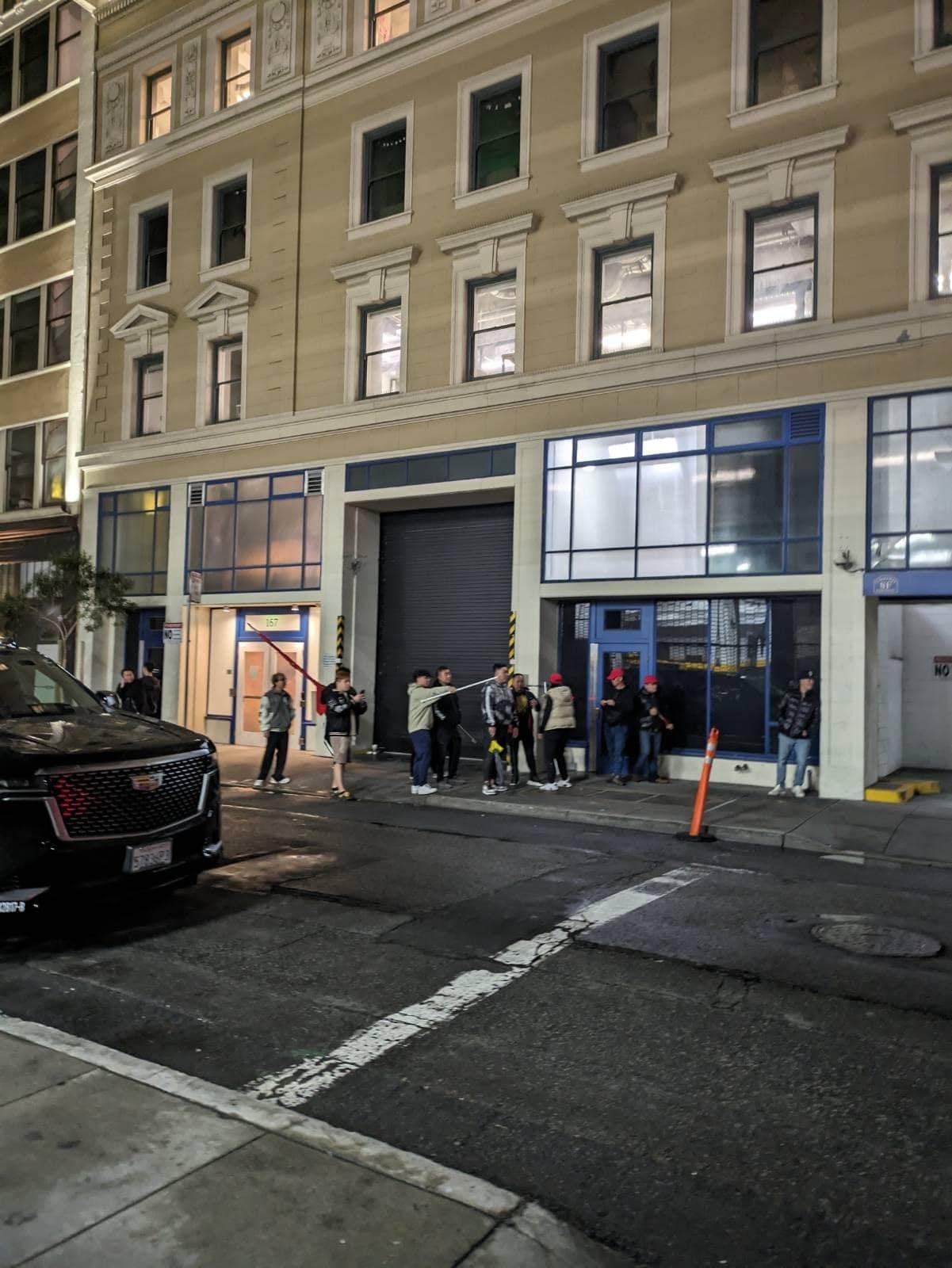
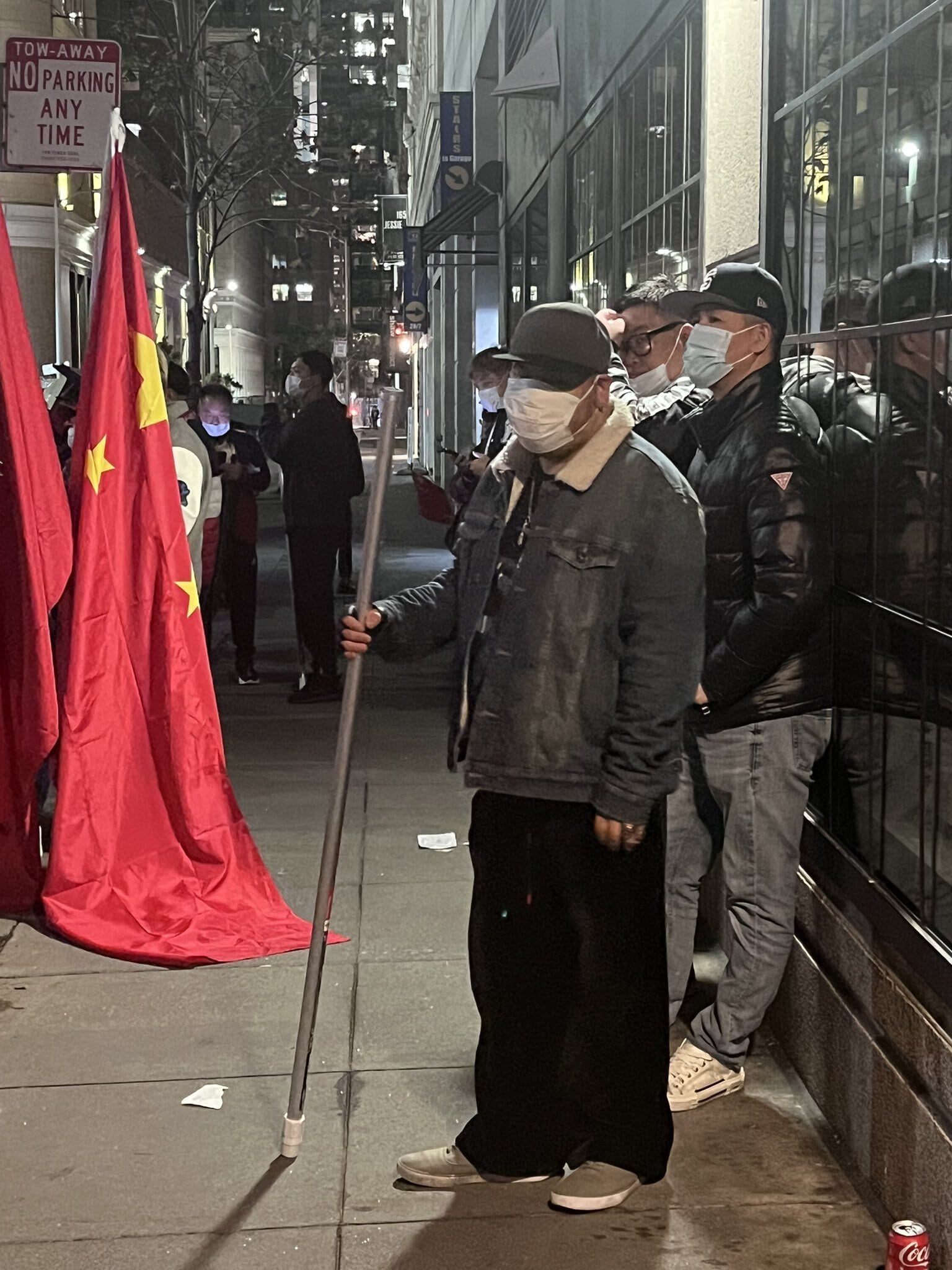
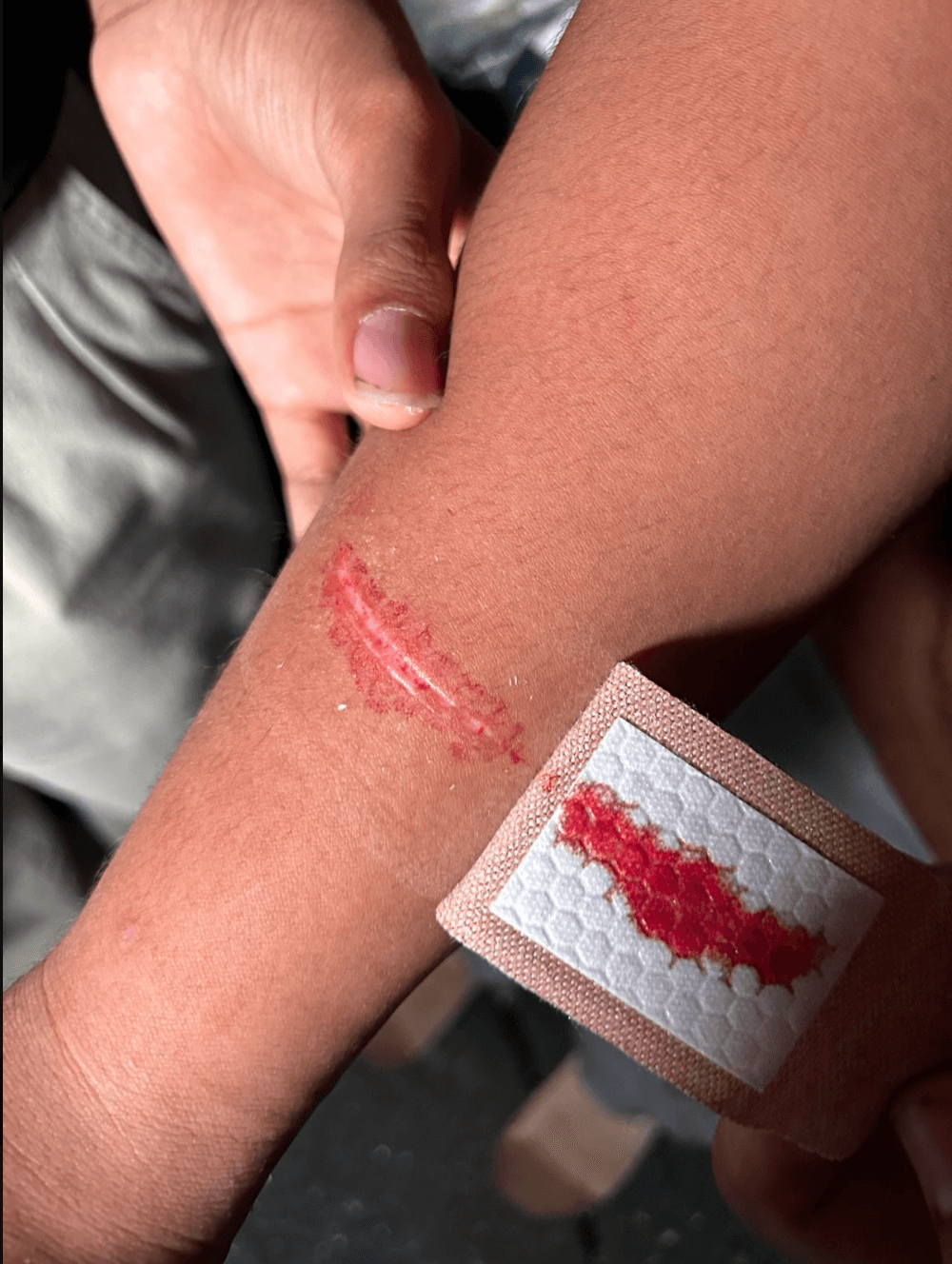
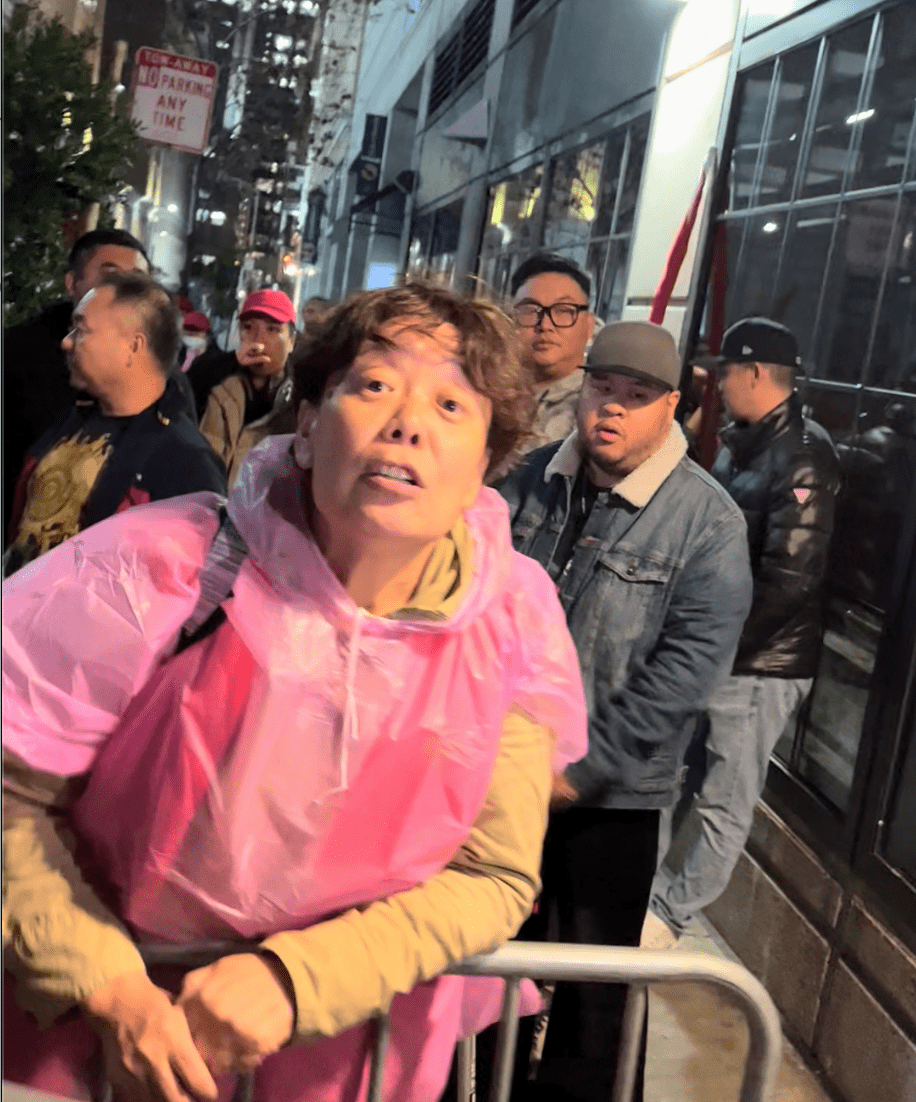
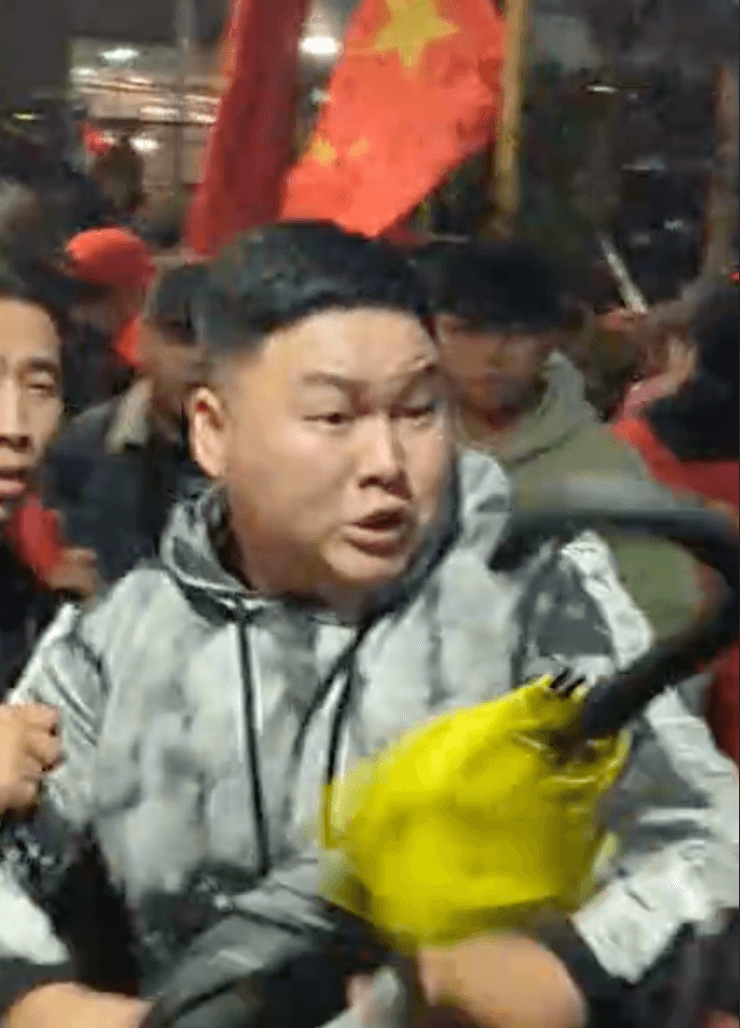
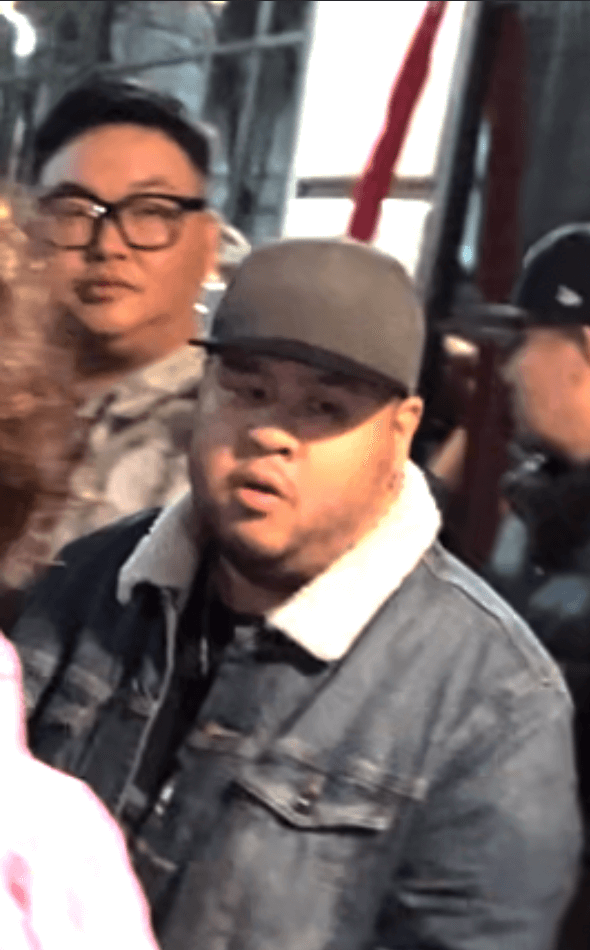
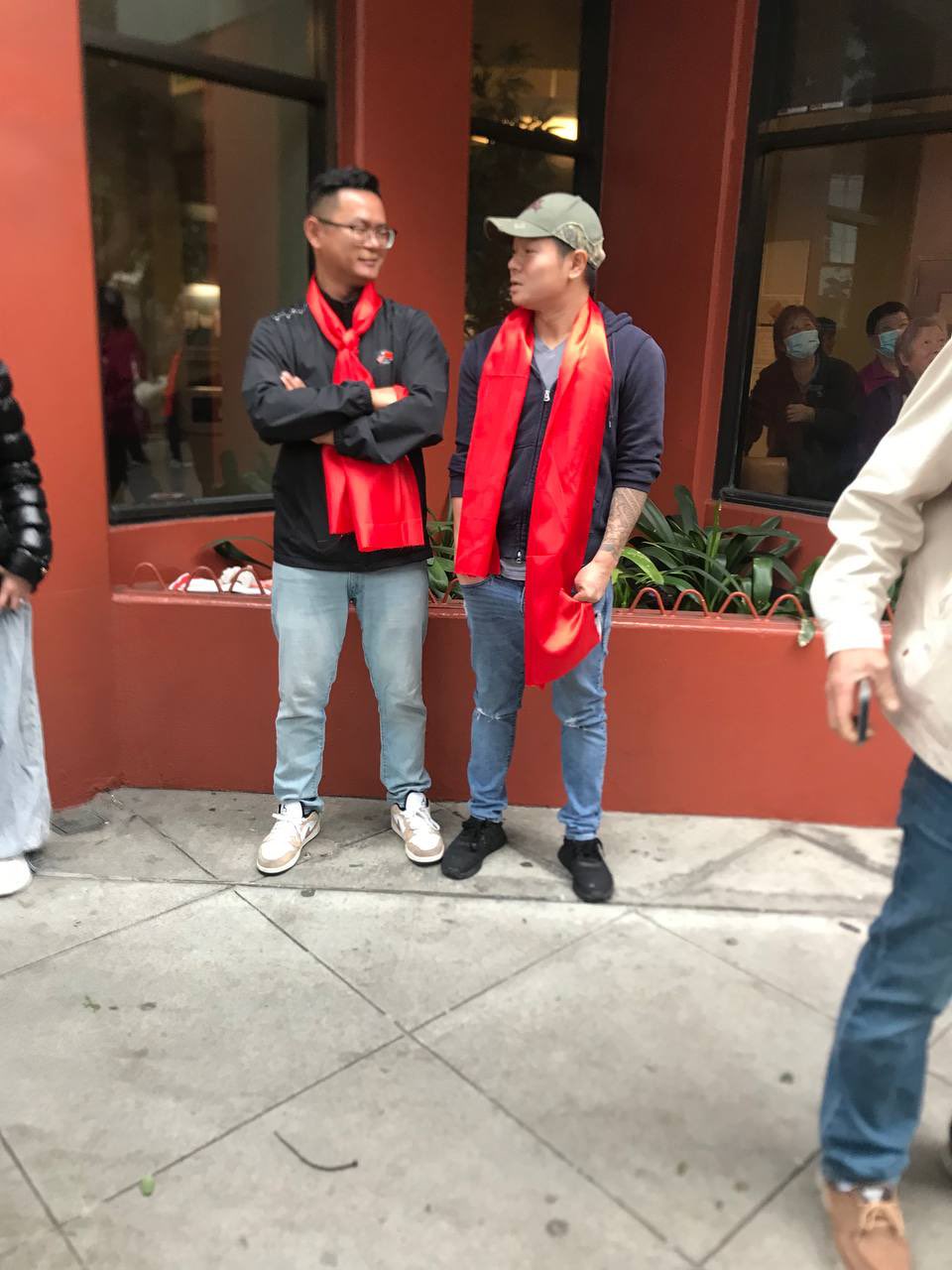
.png)
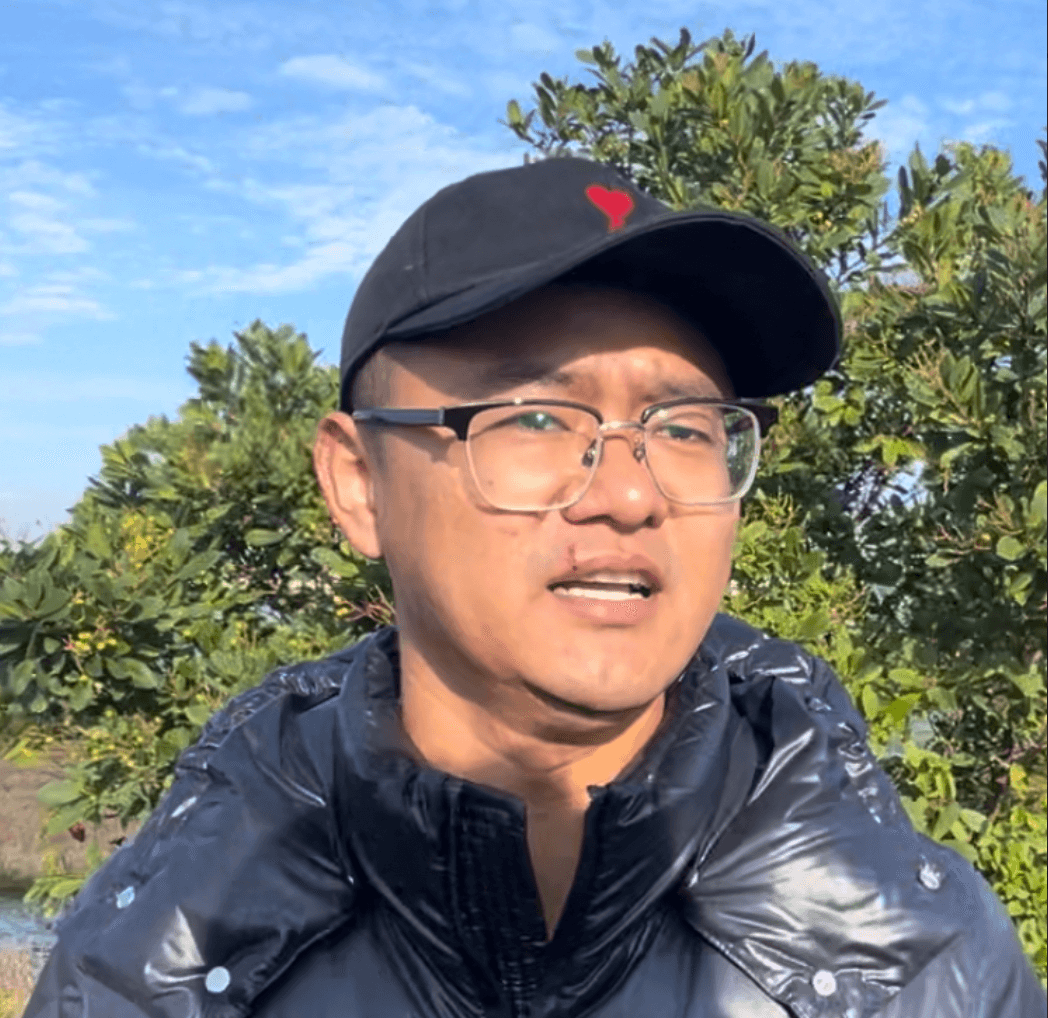
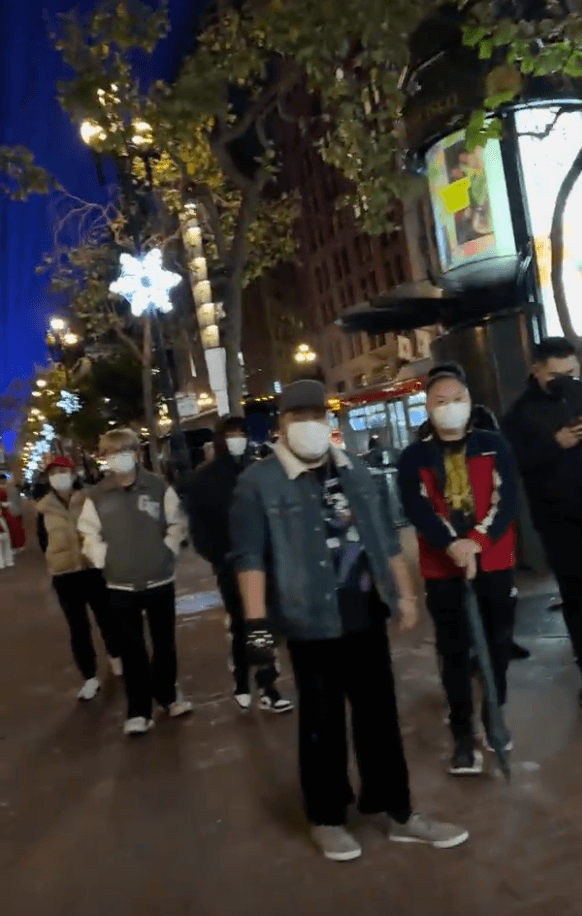
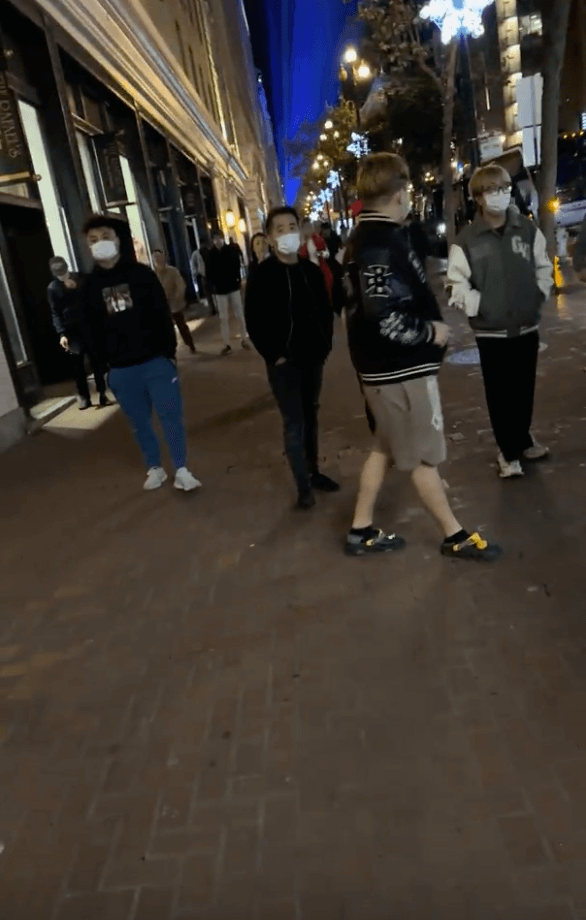
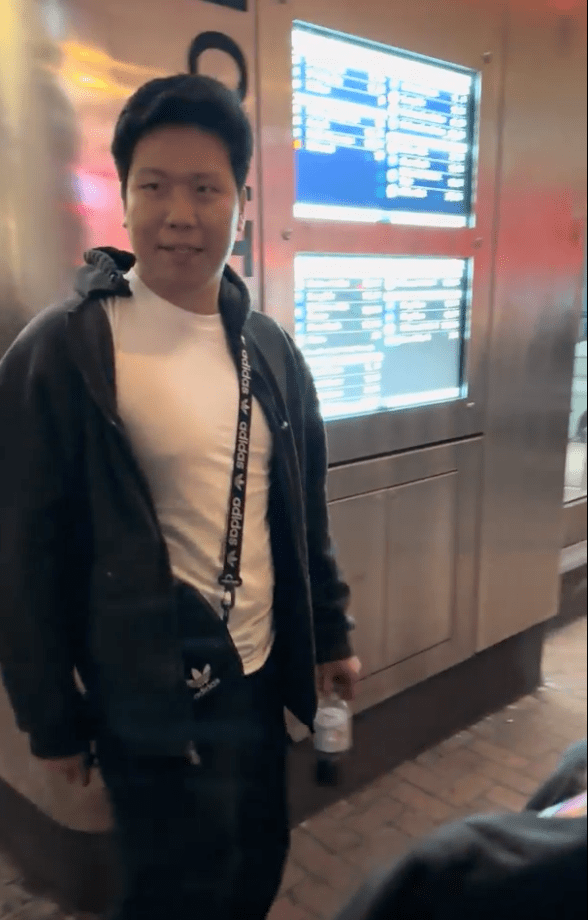
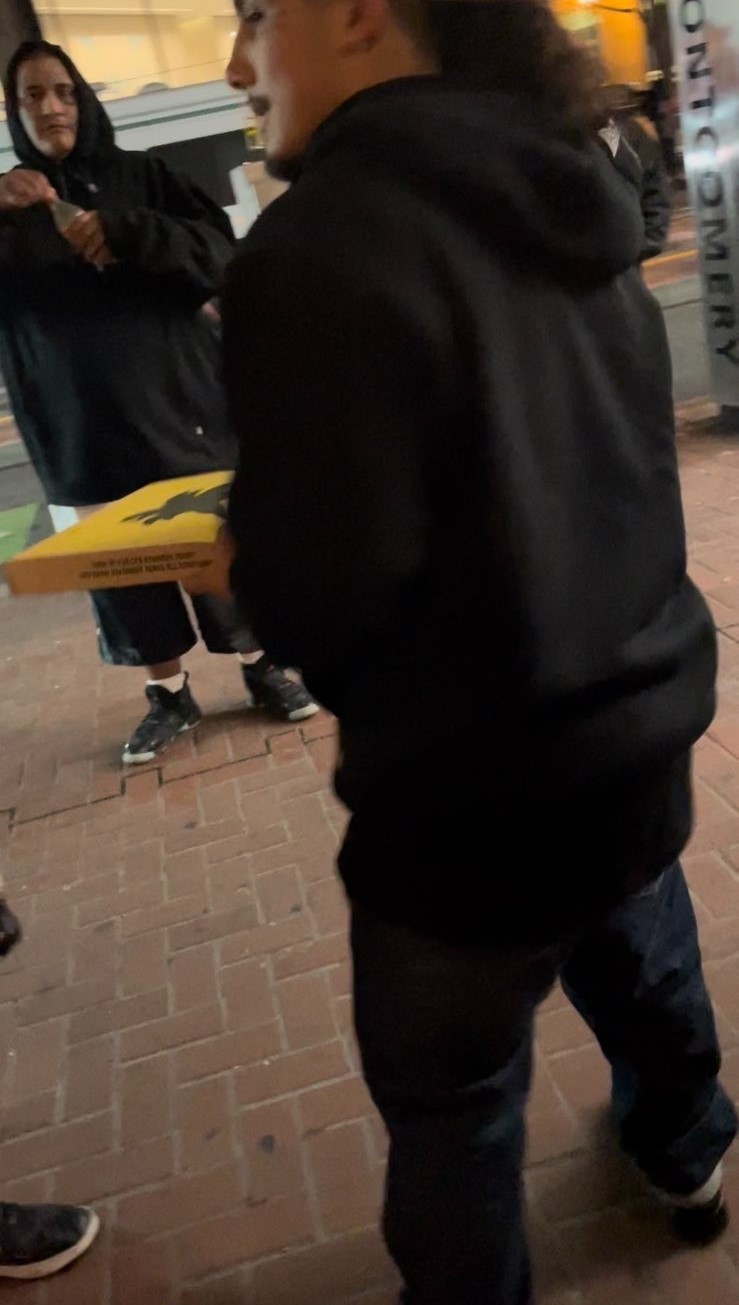
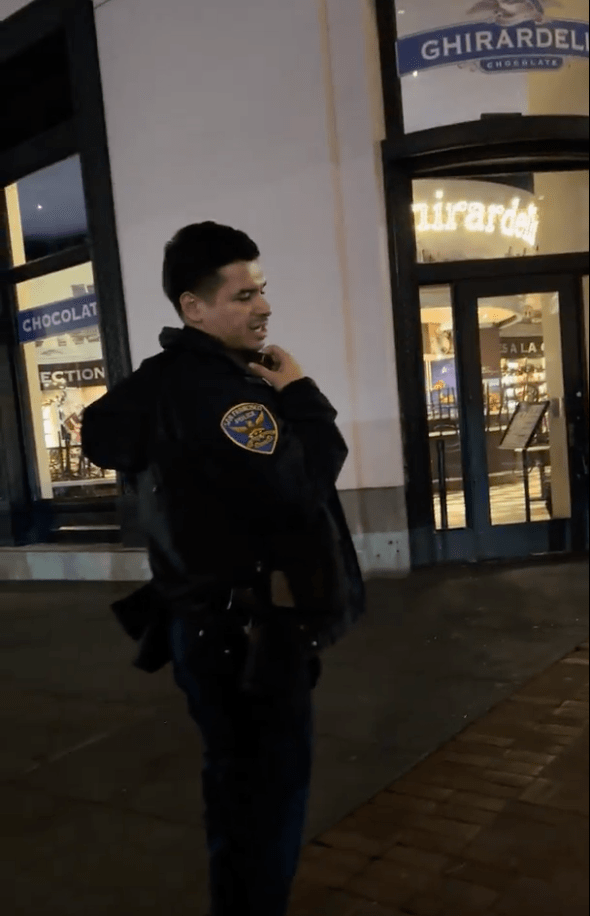
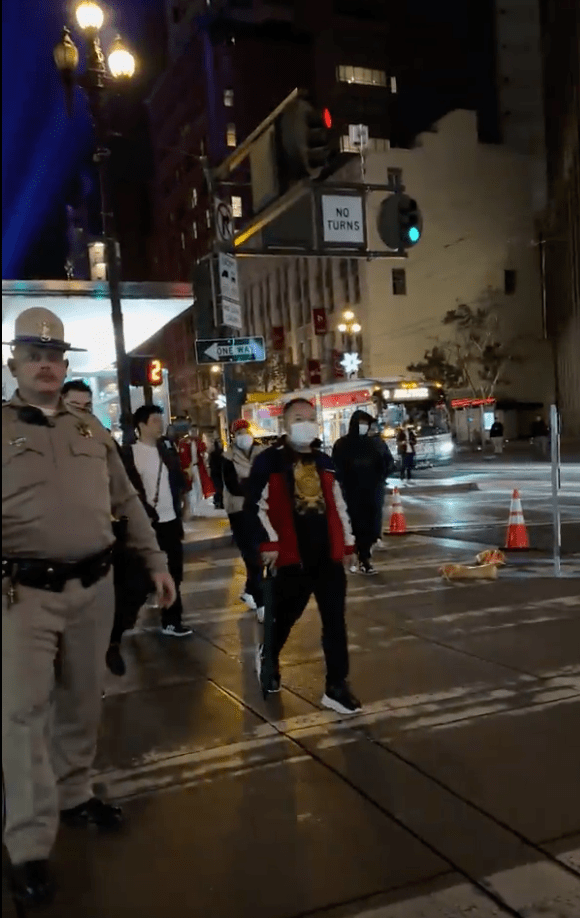
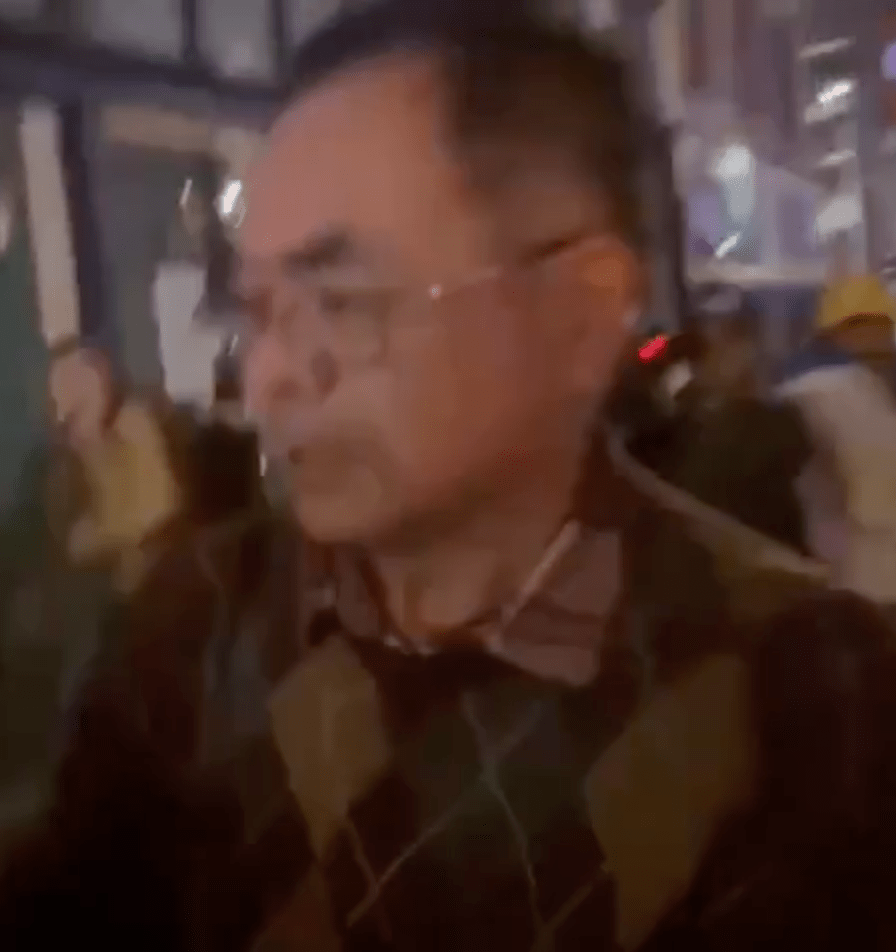
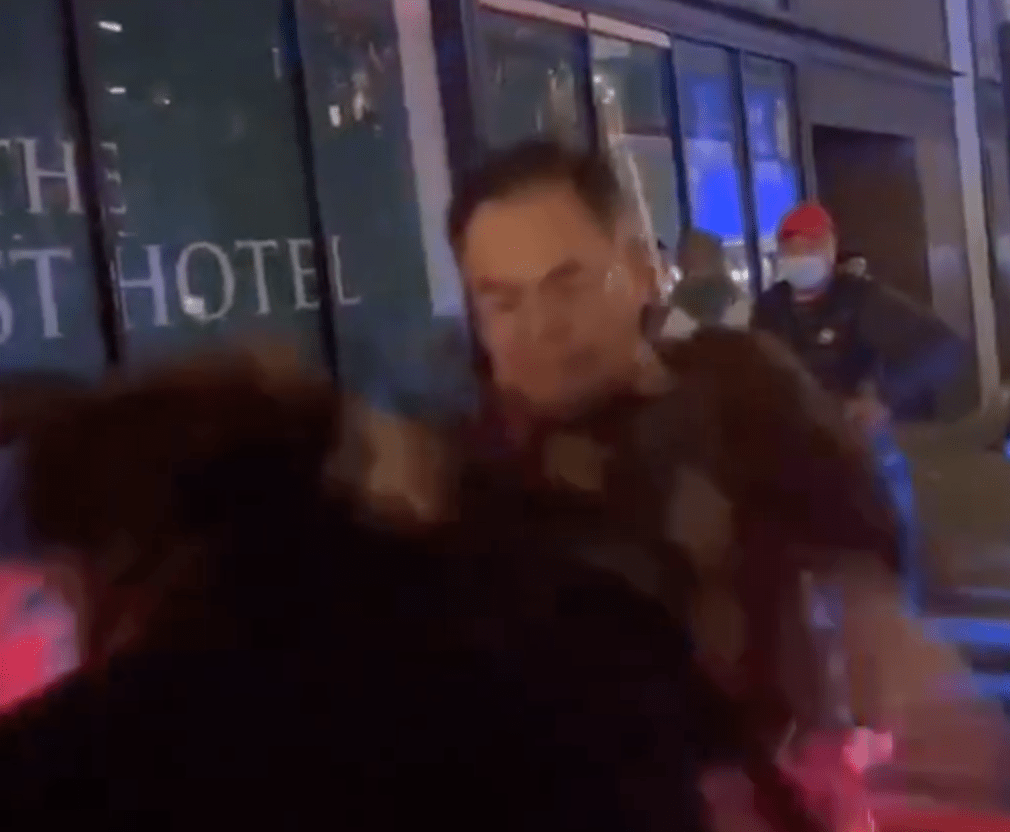
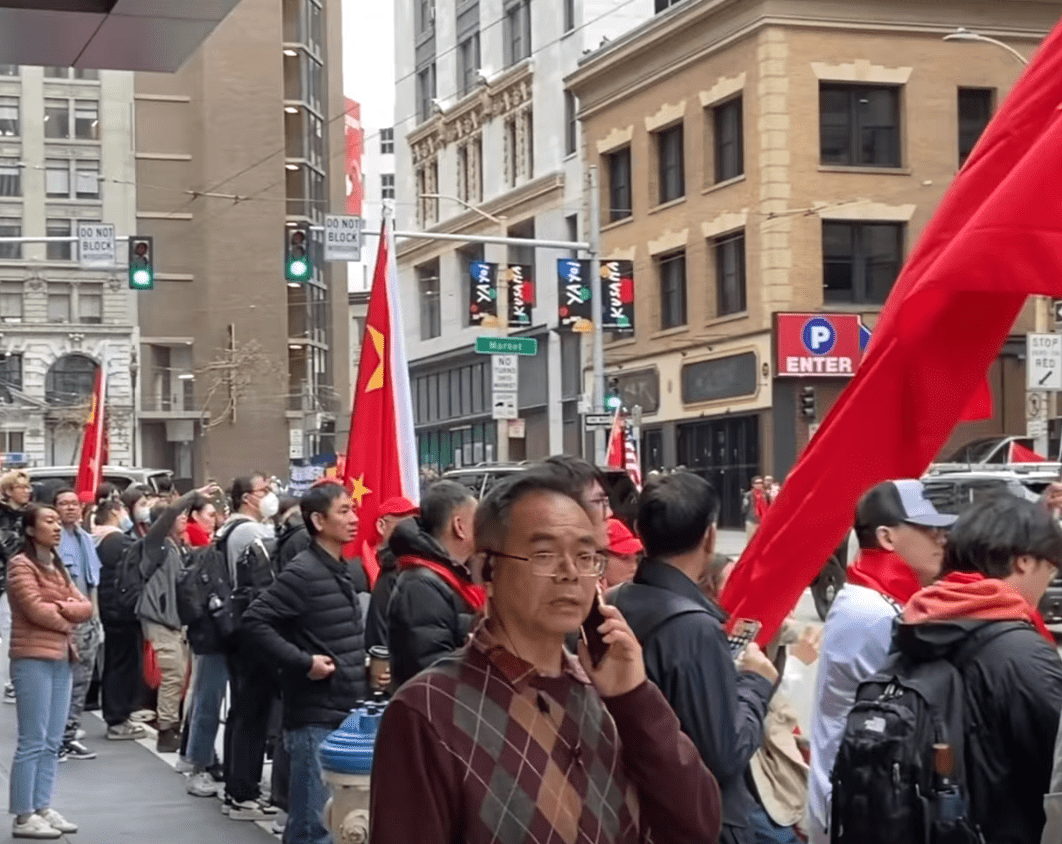
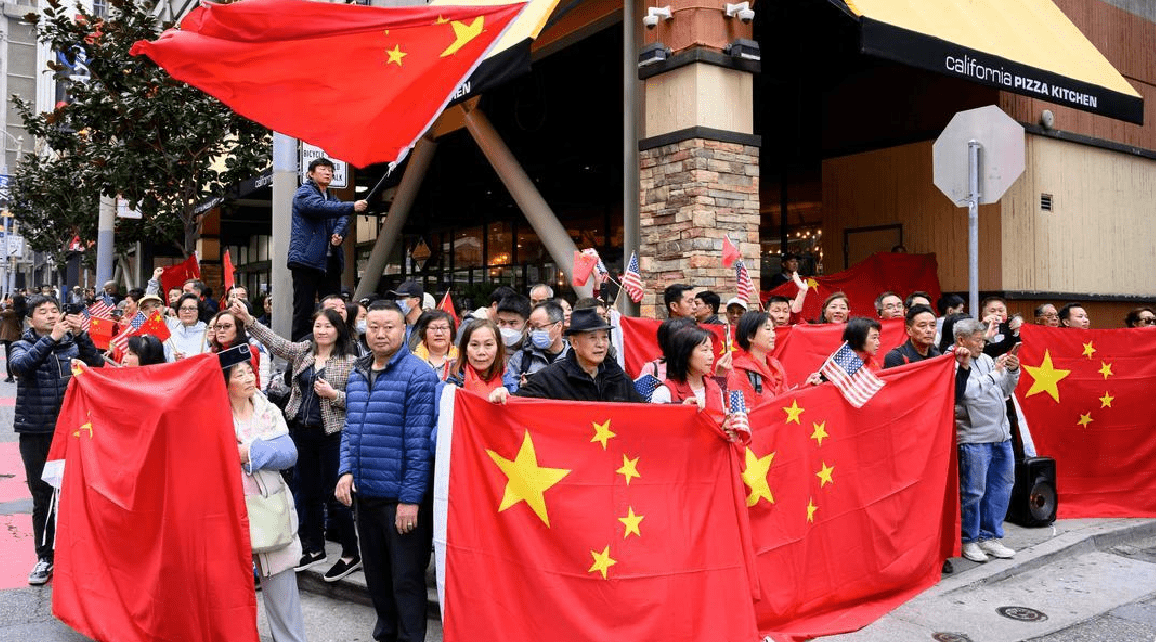
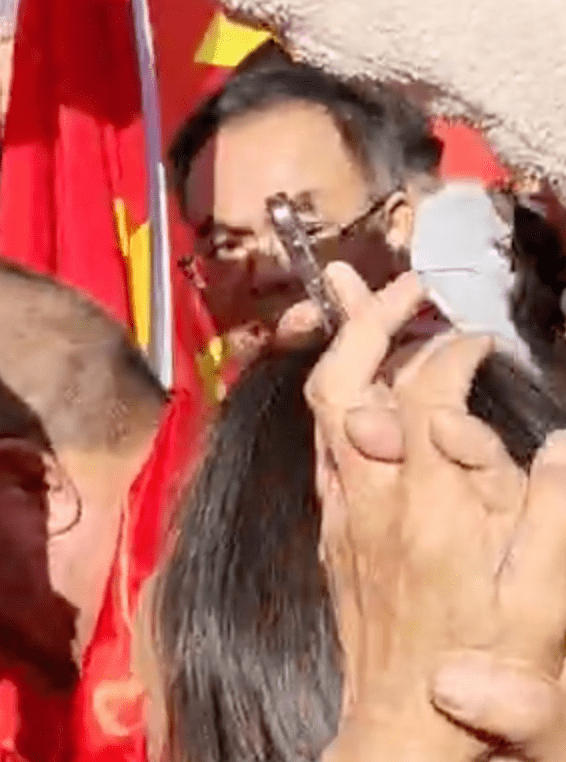
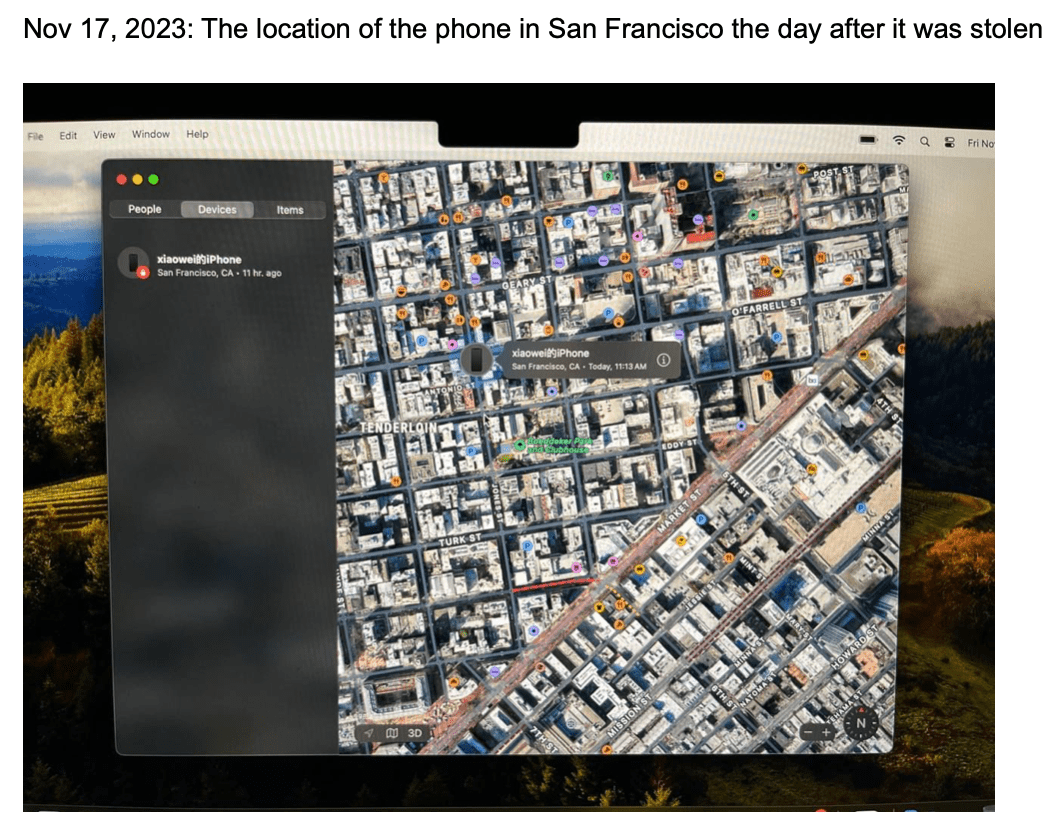
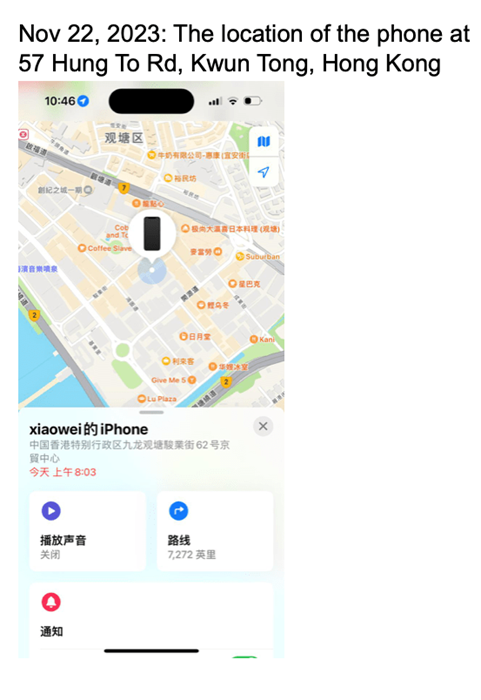
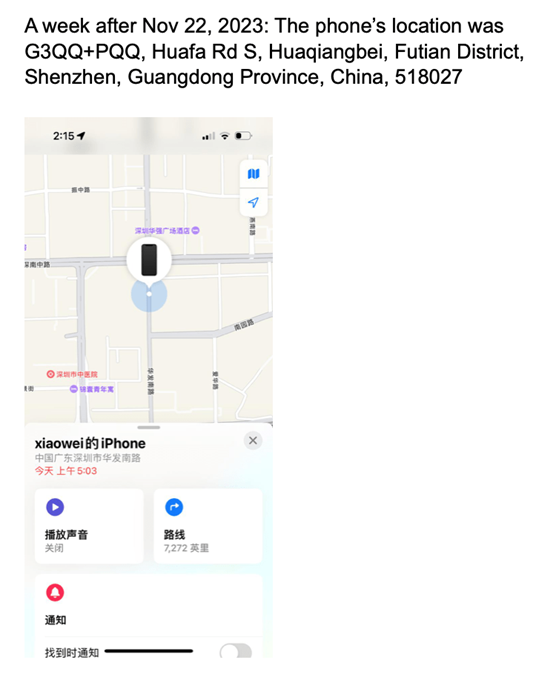
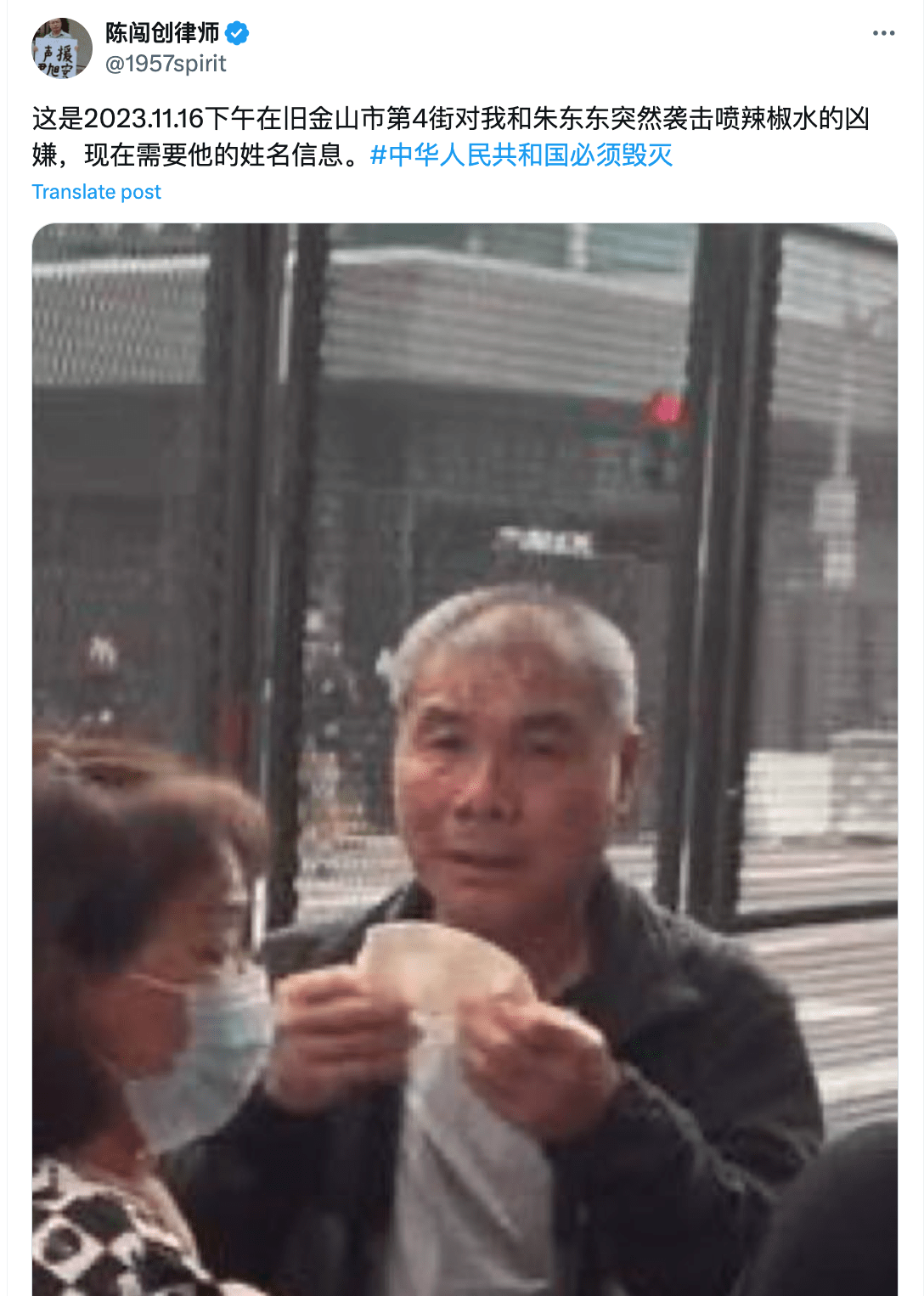
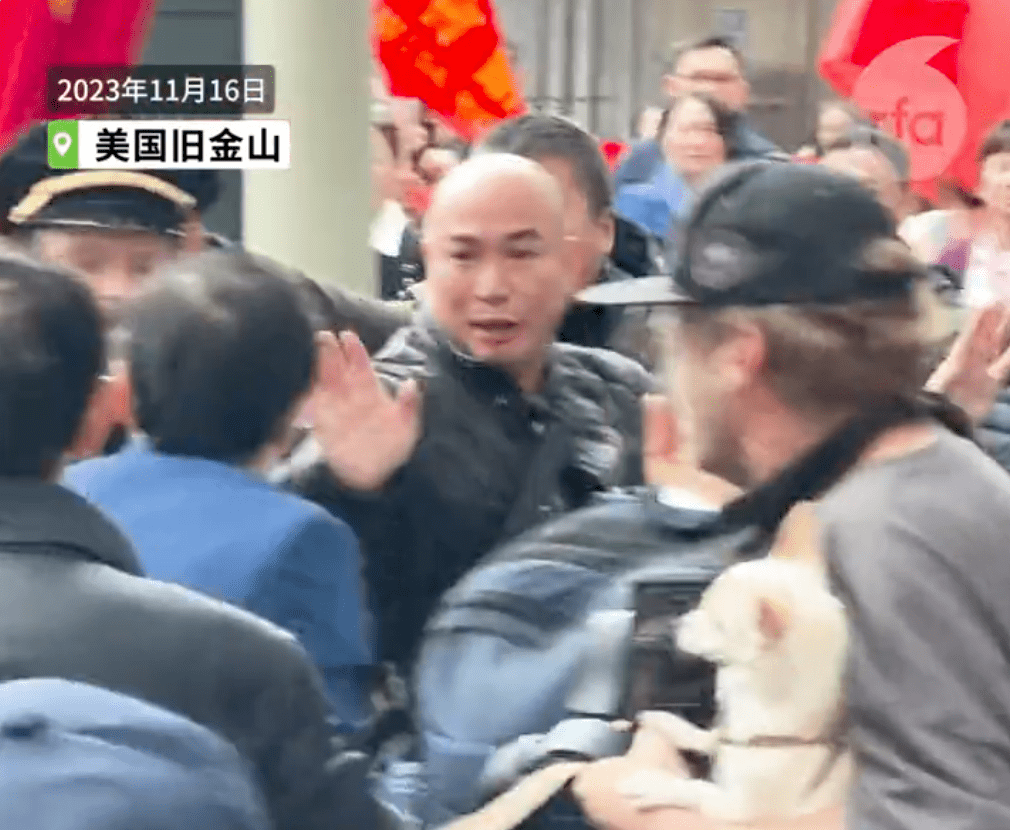
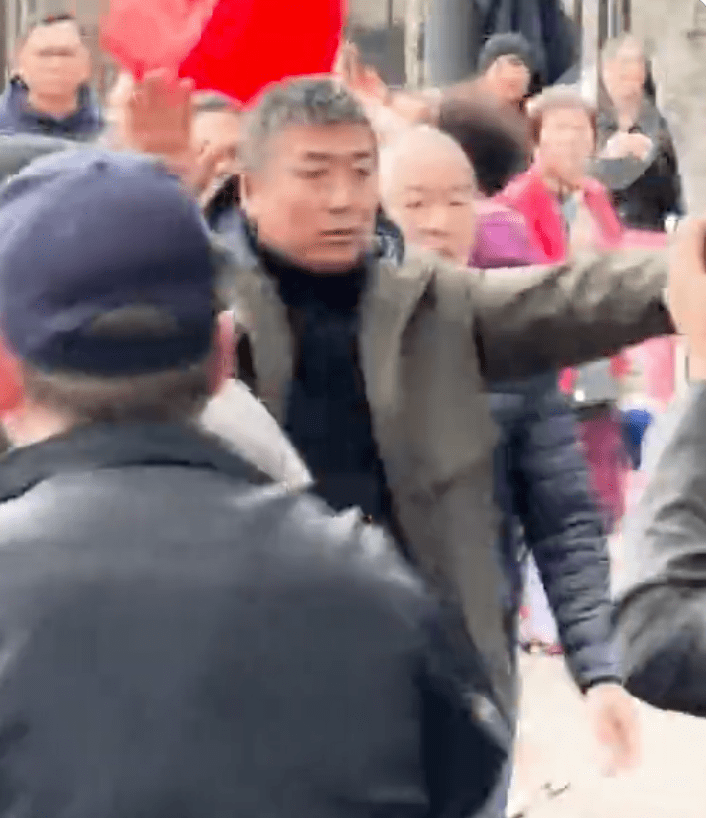
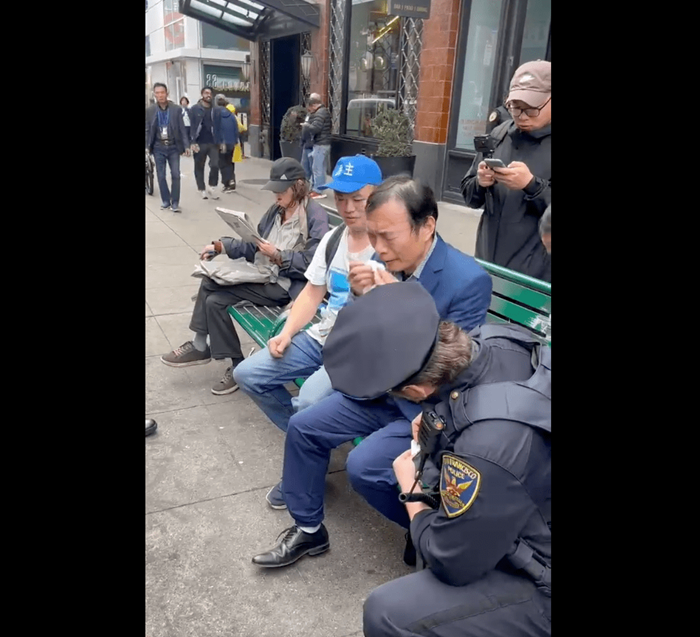
.png)
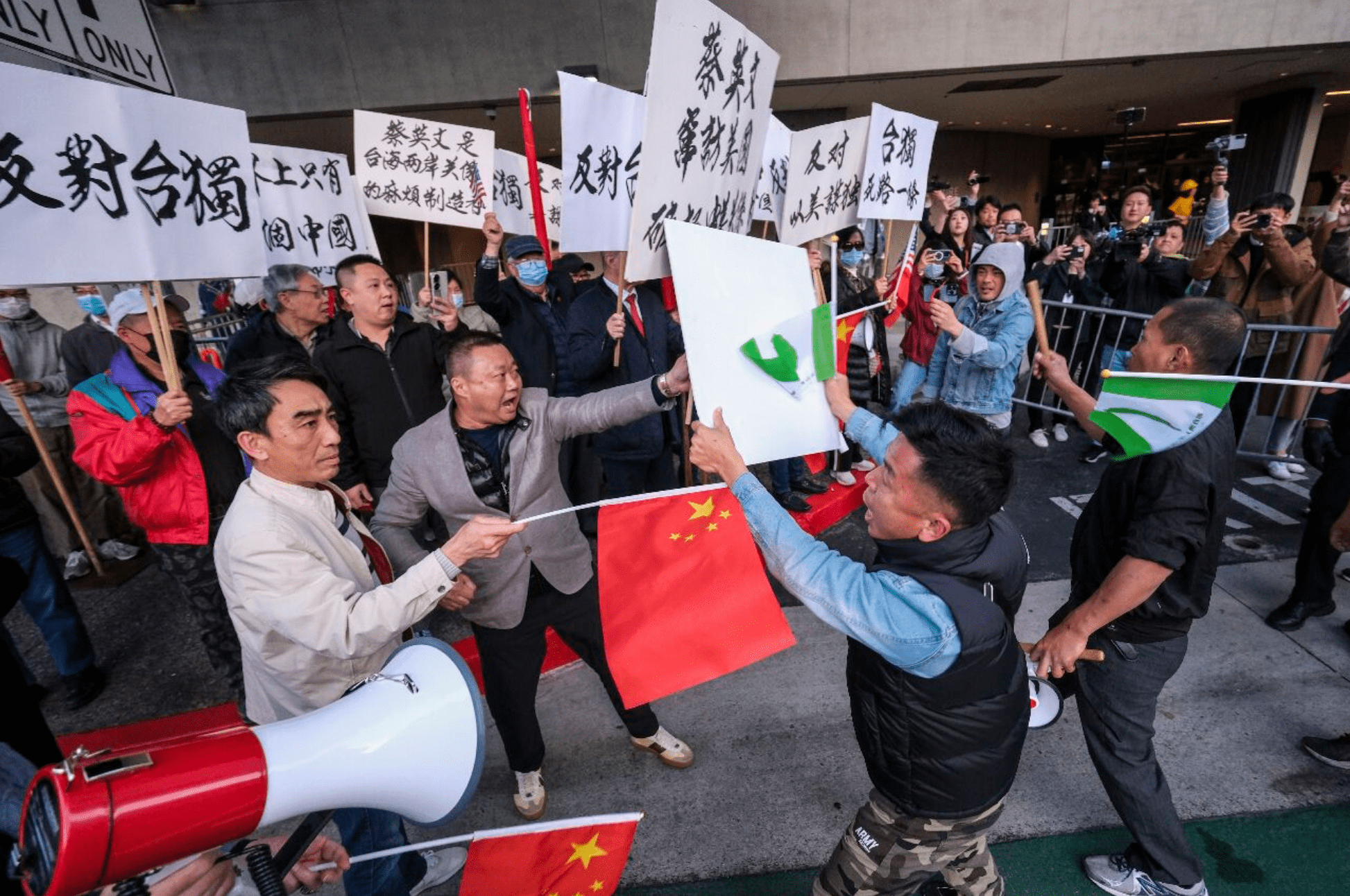
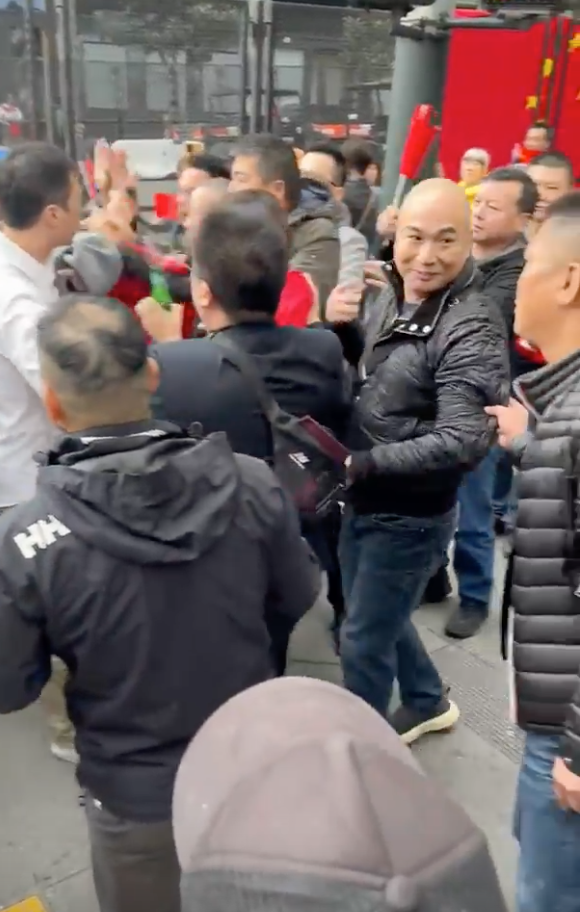
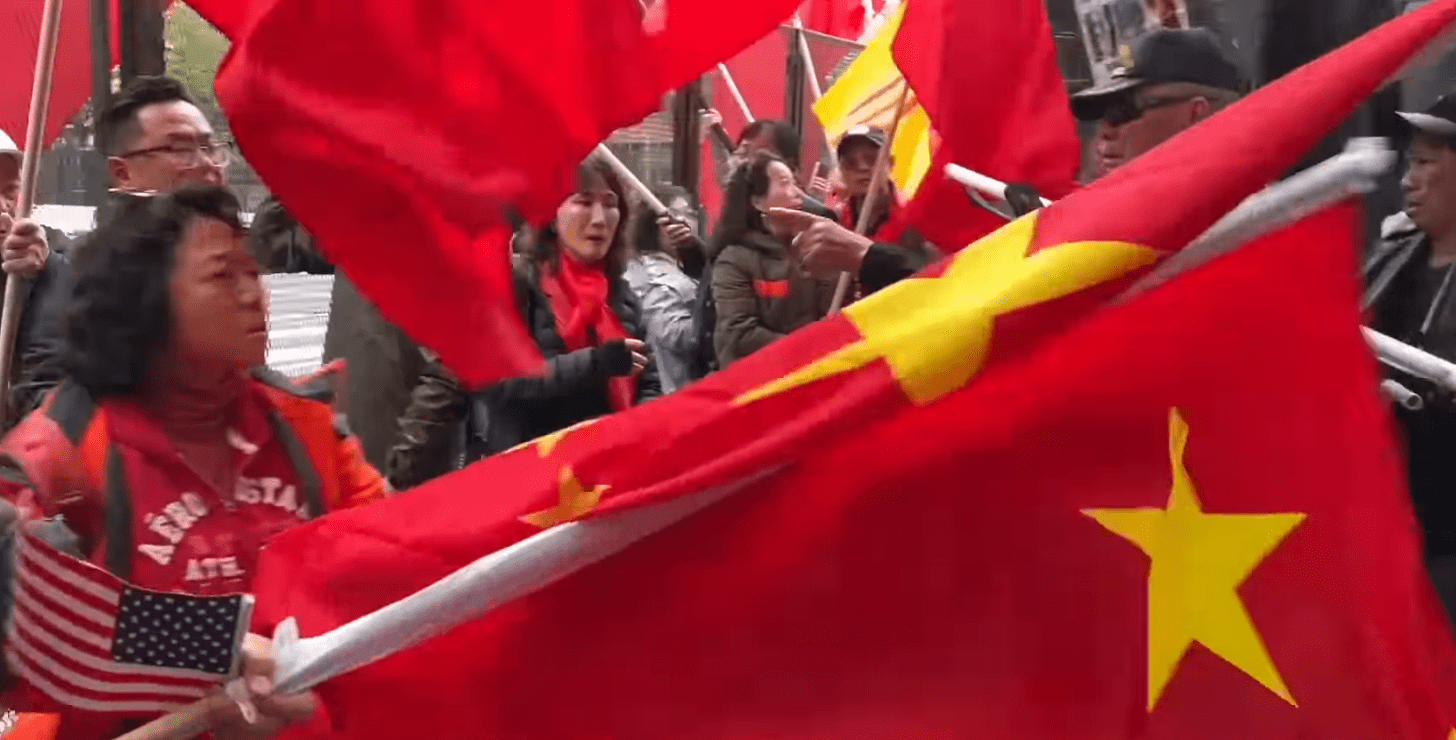
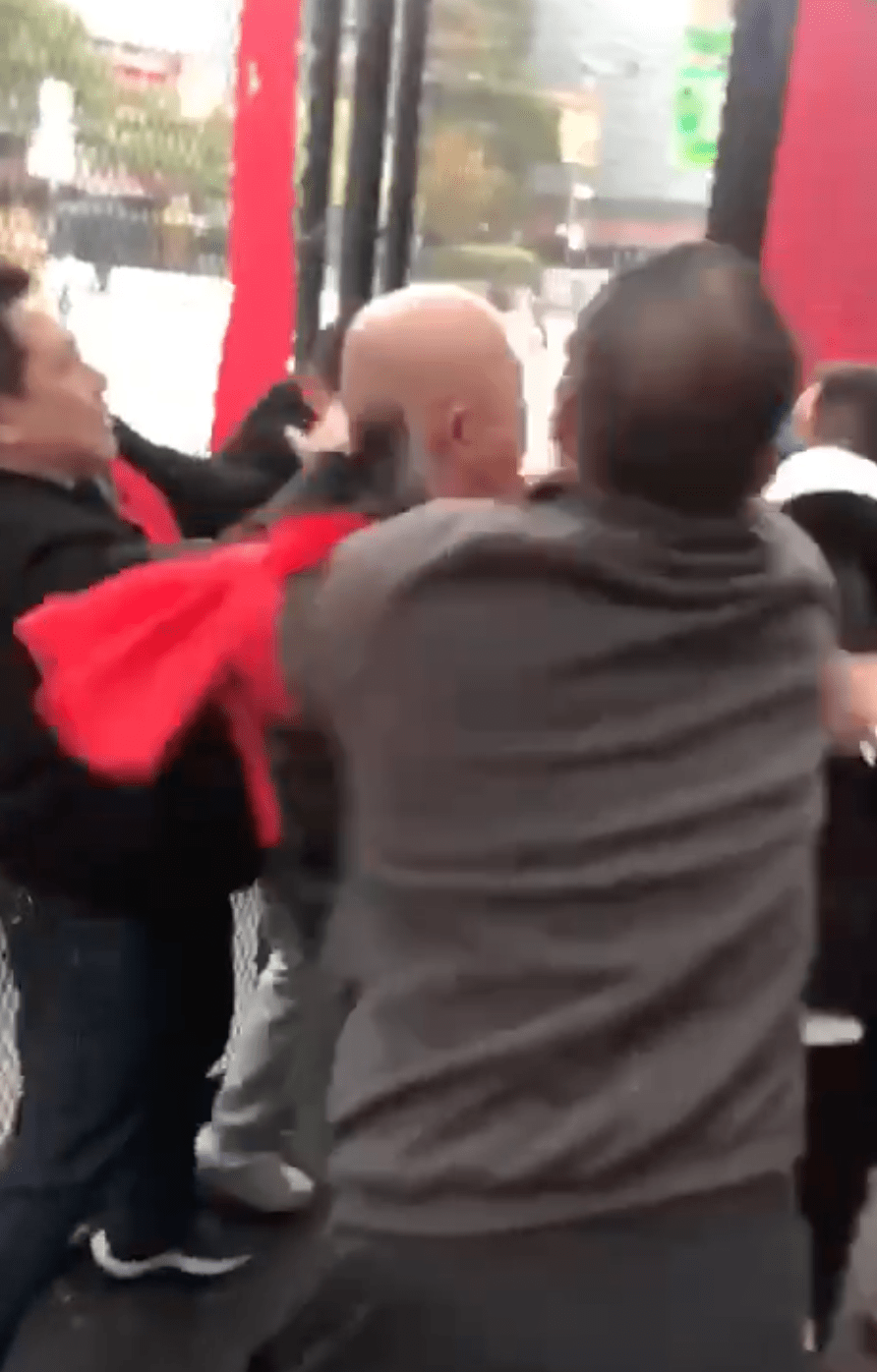
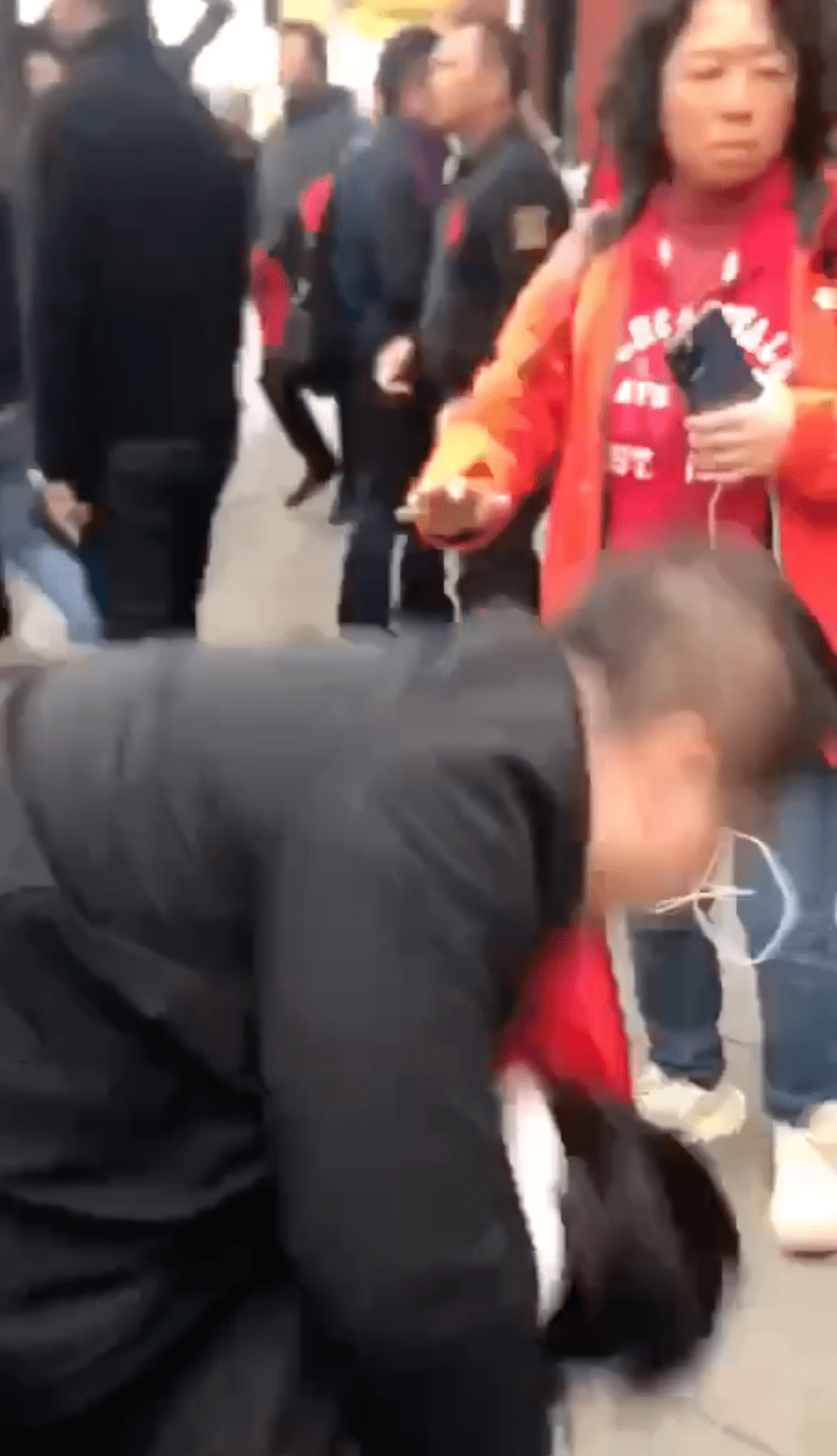
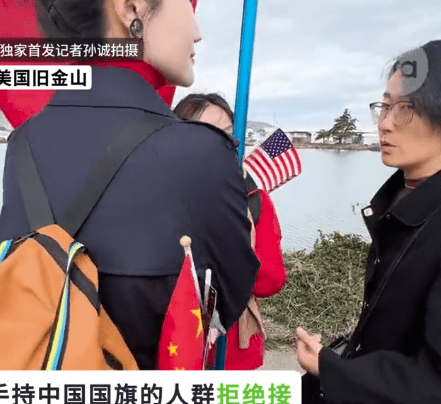
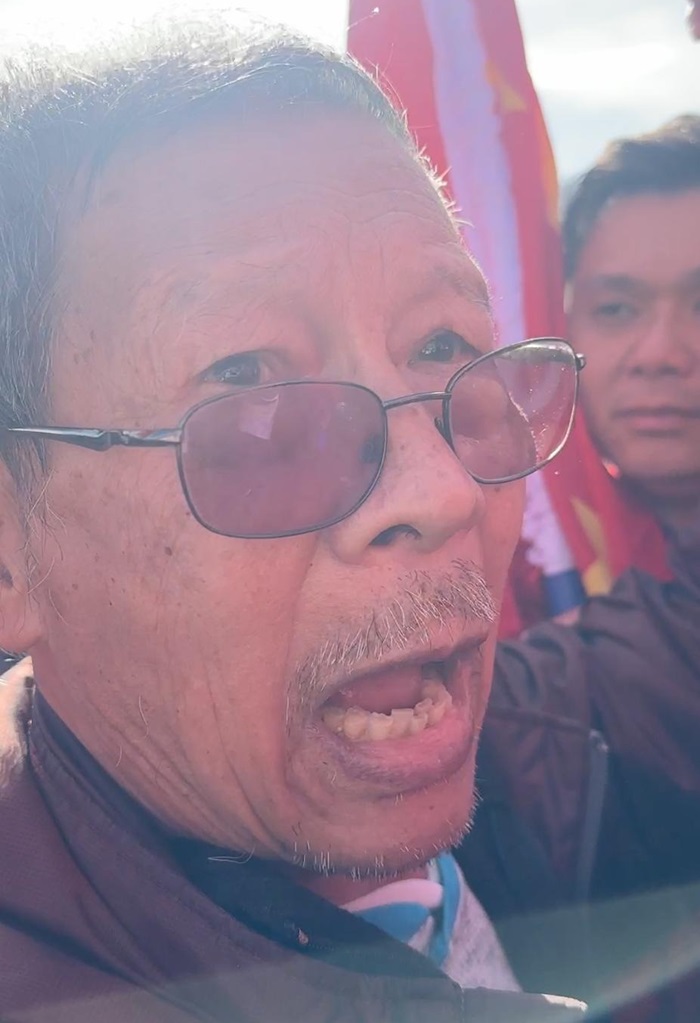
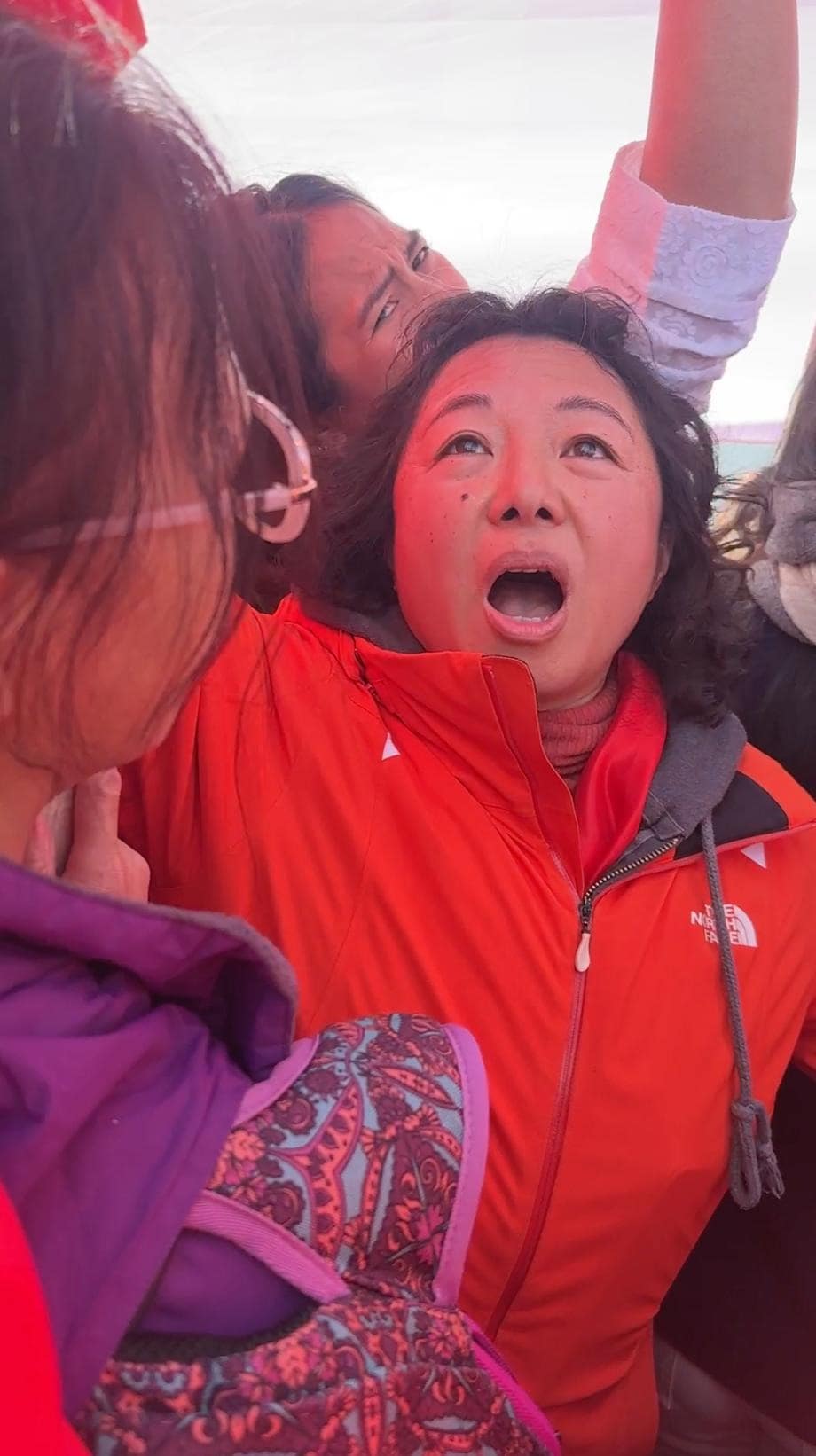

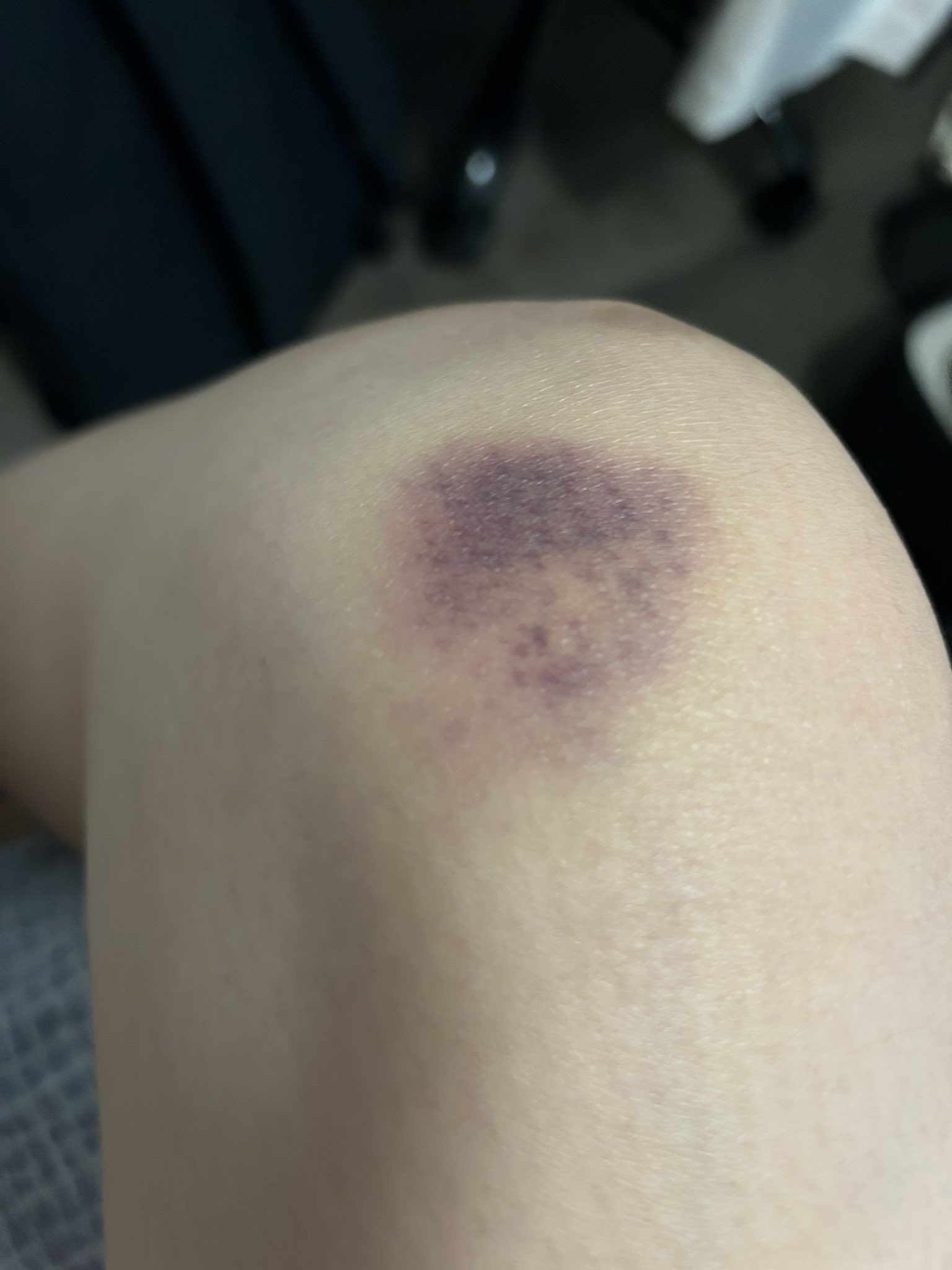

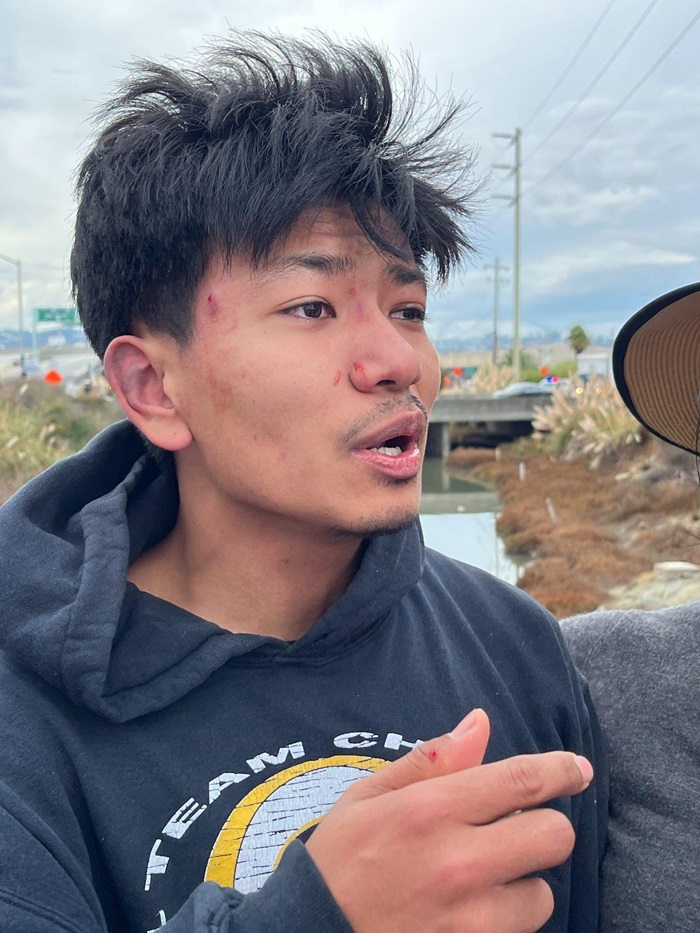
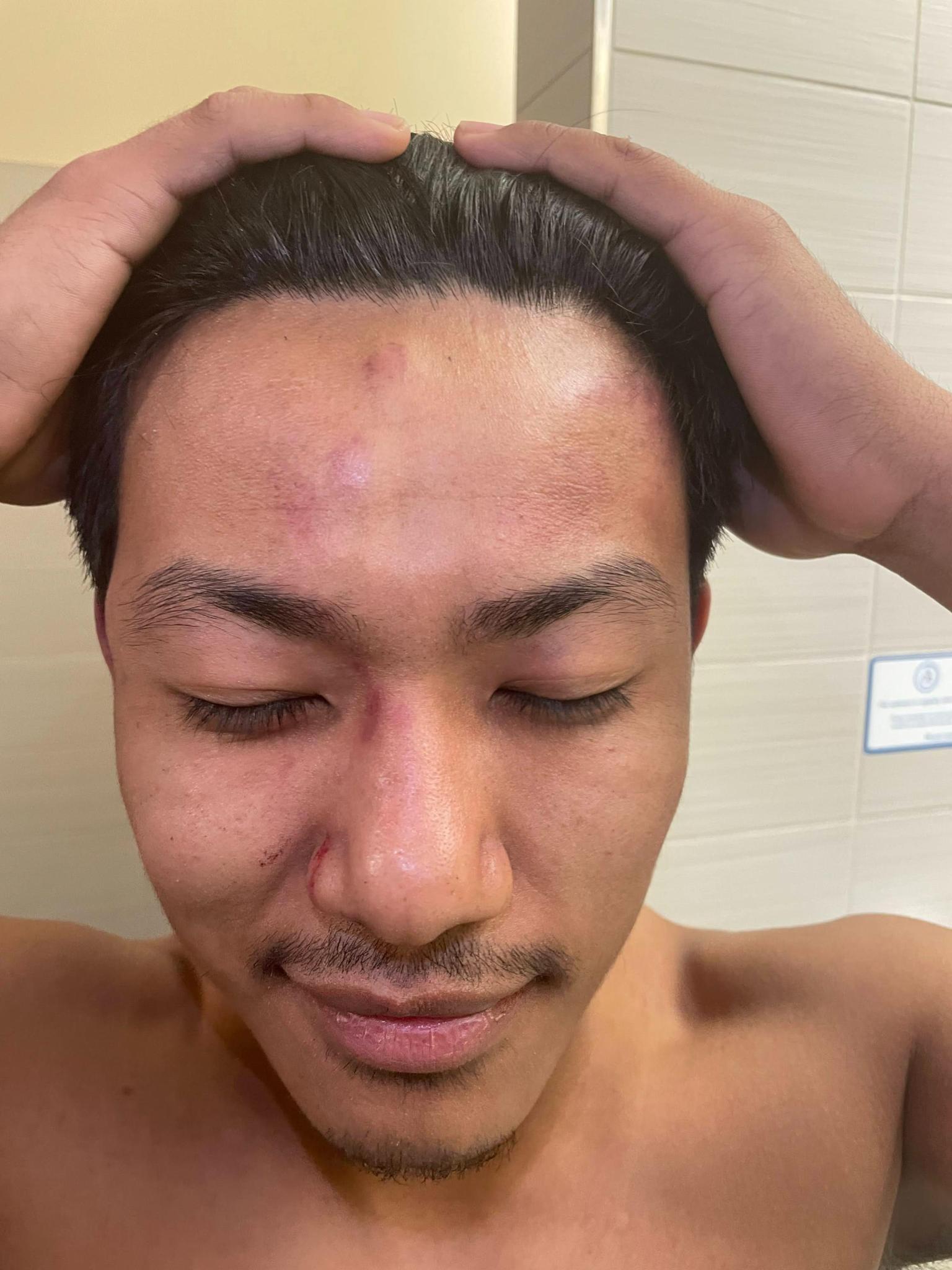
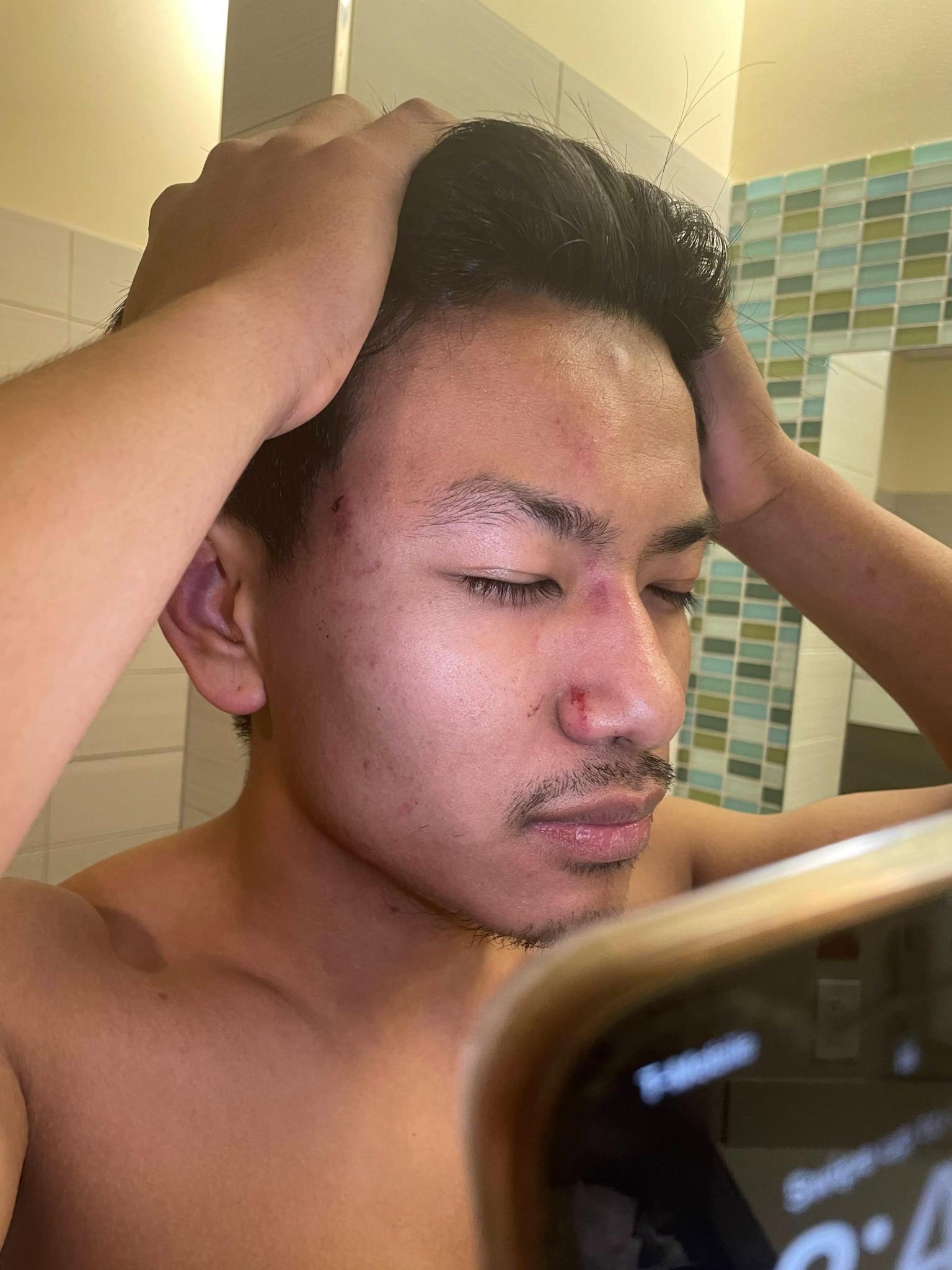
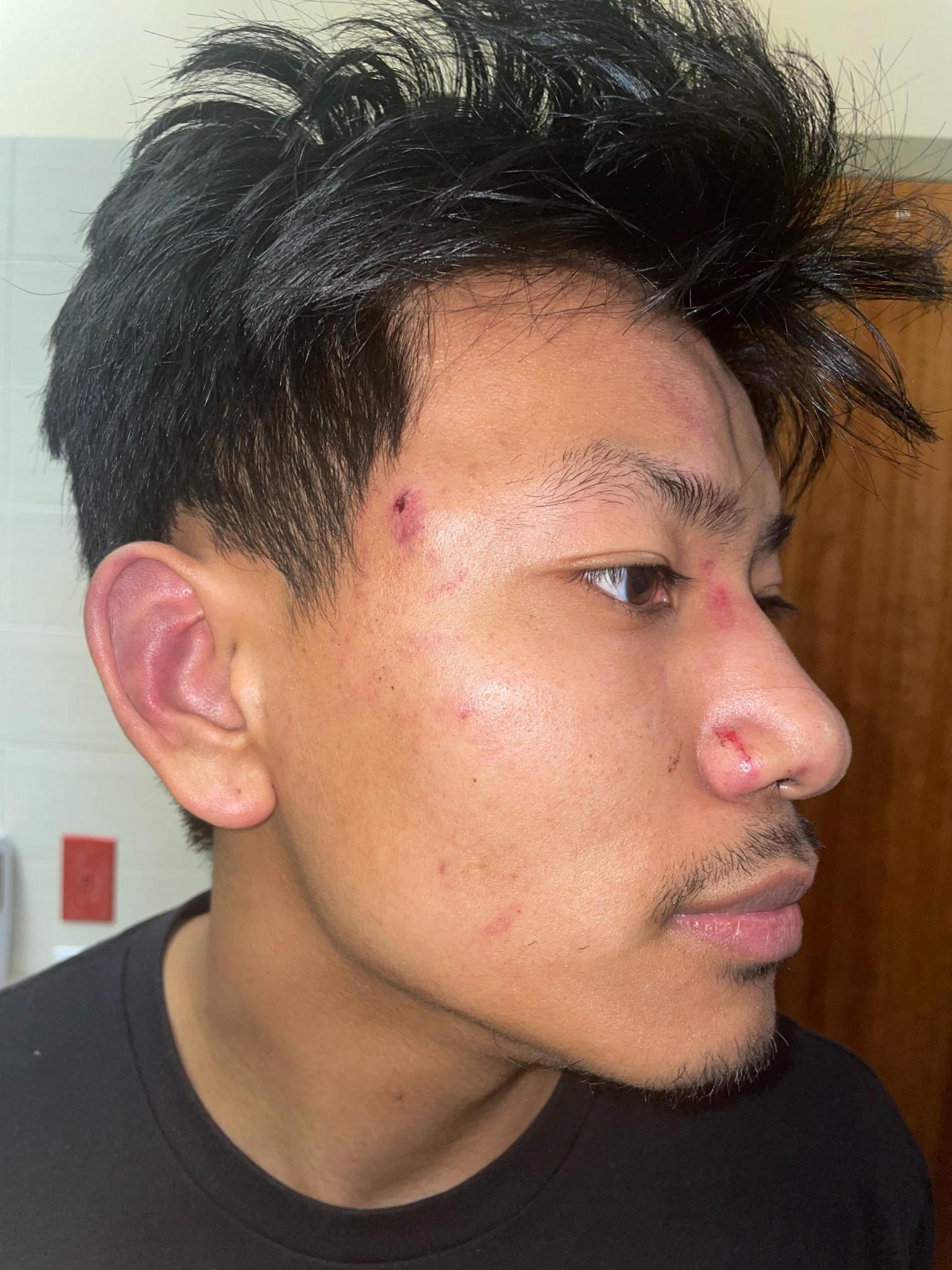
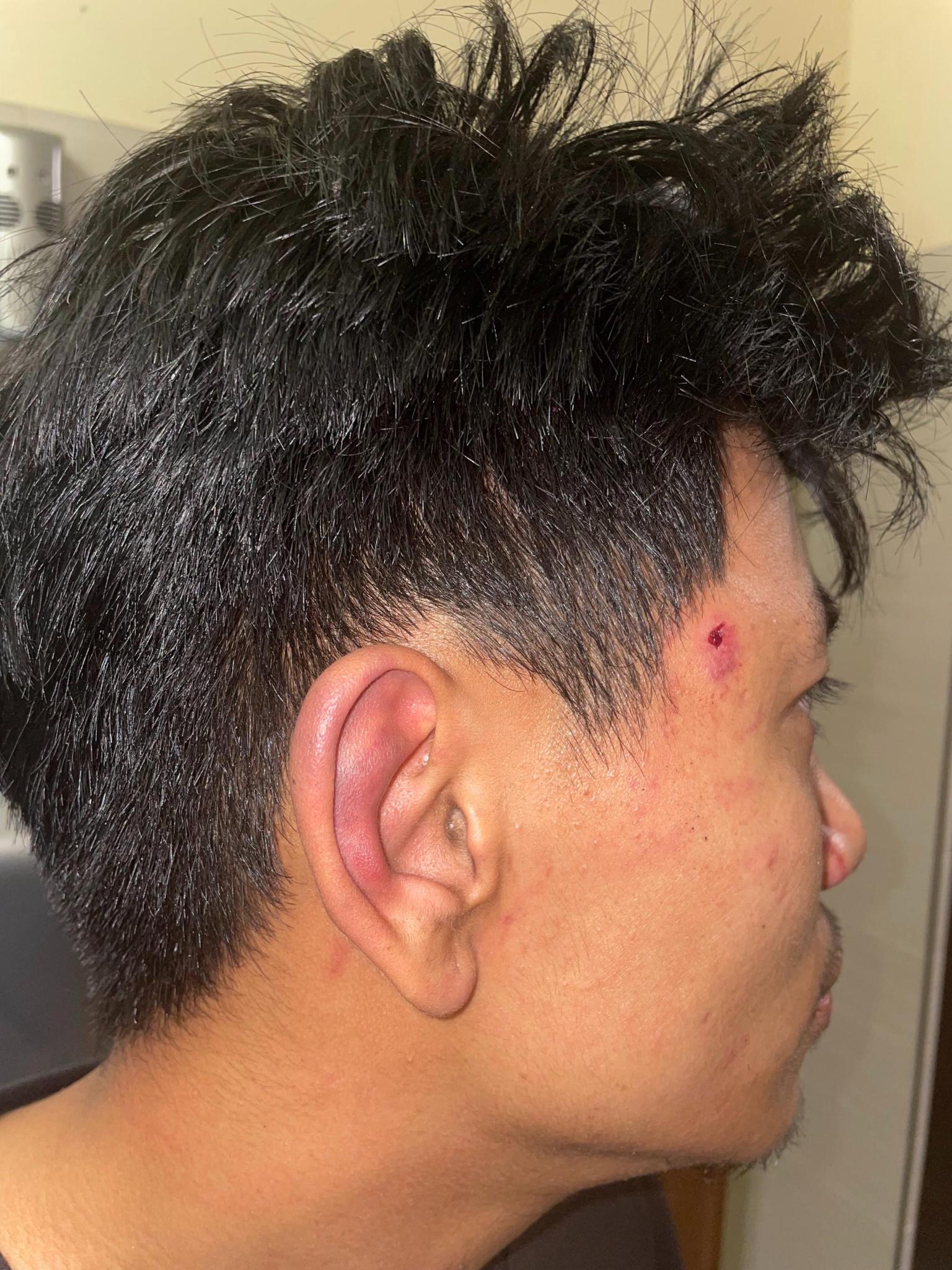
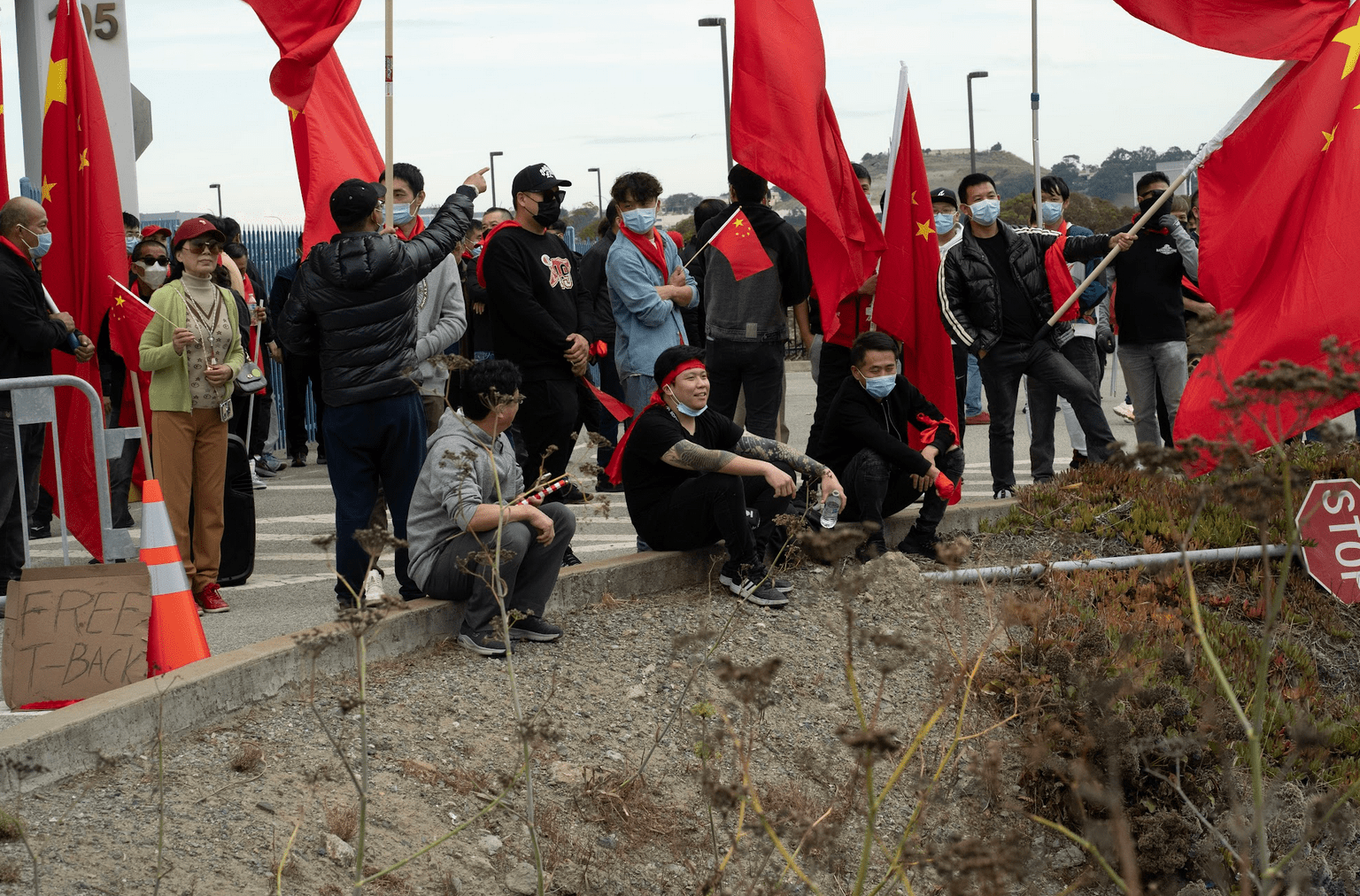
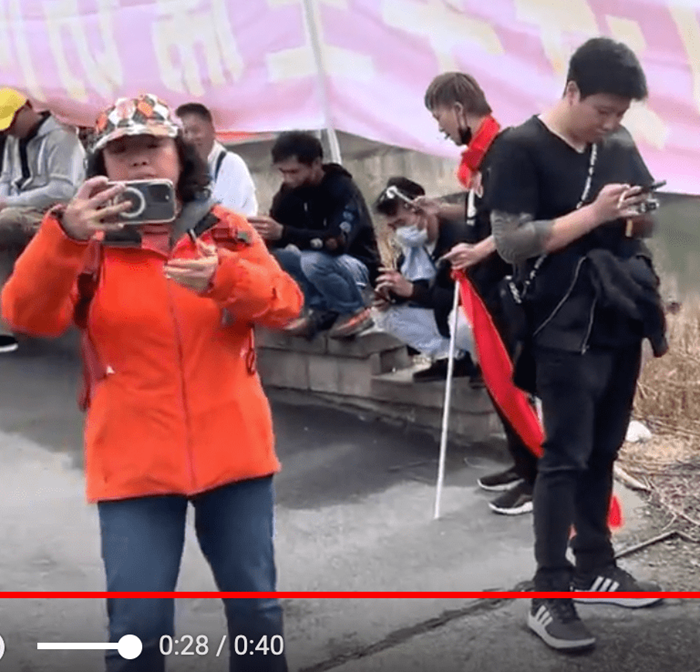
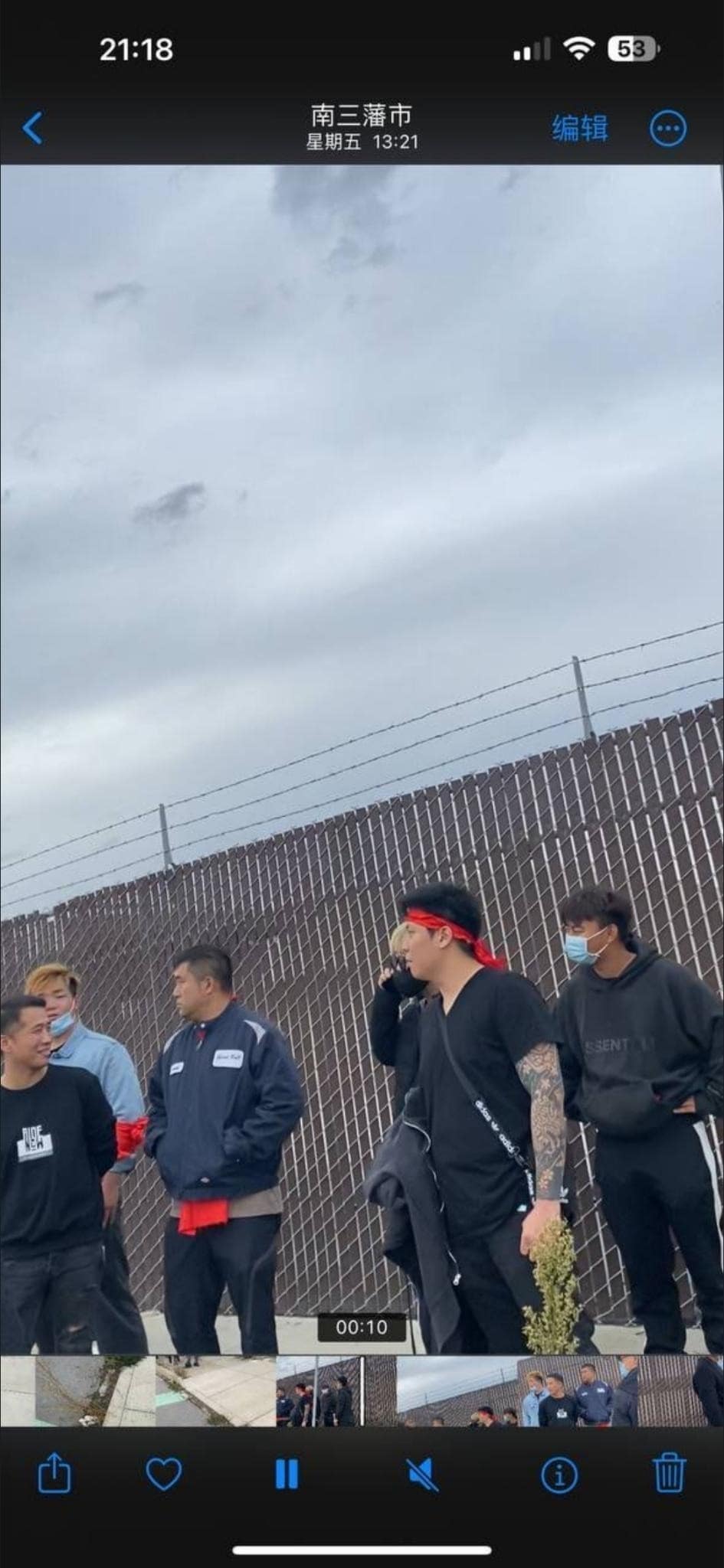
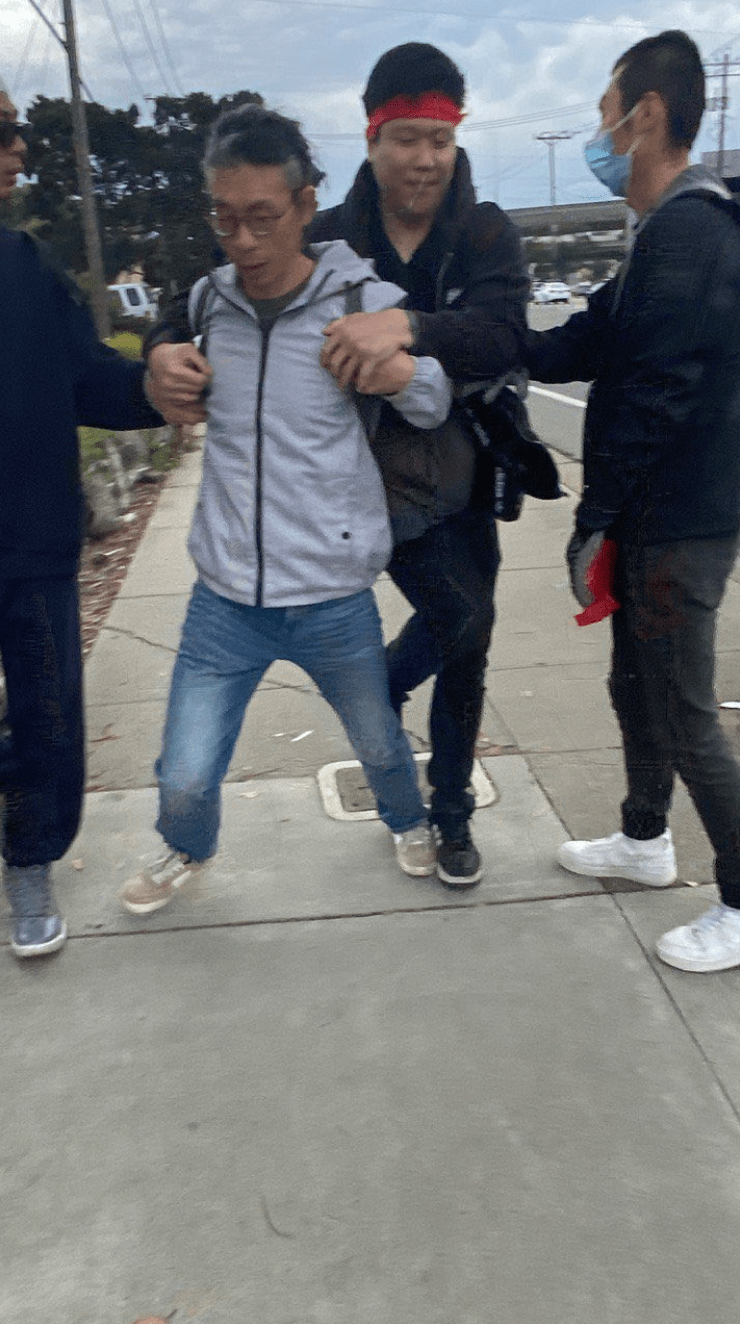
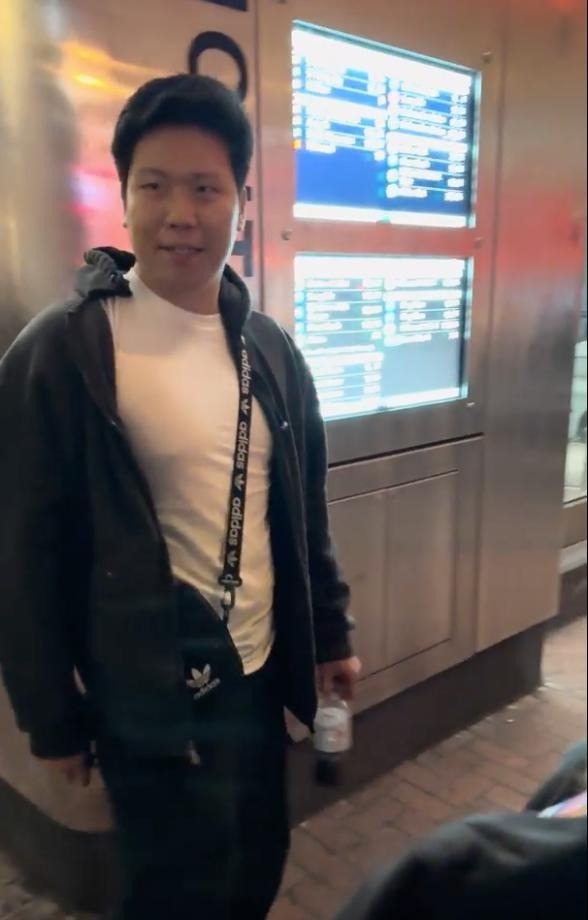
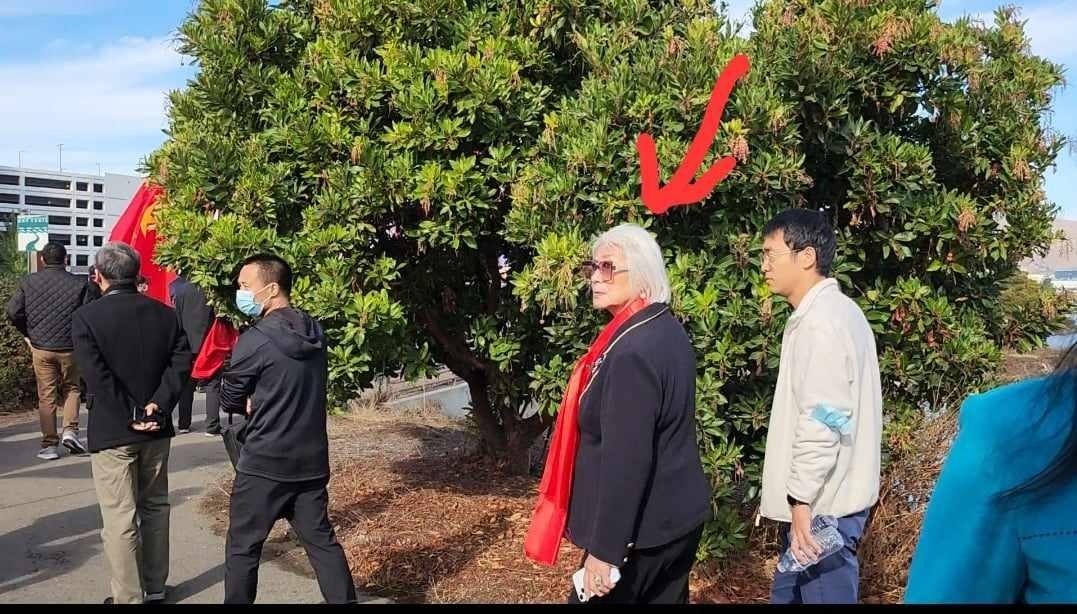
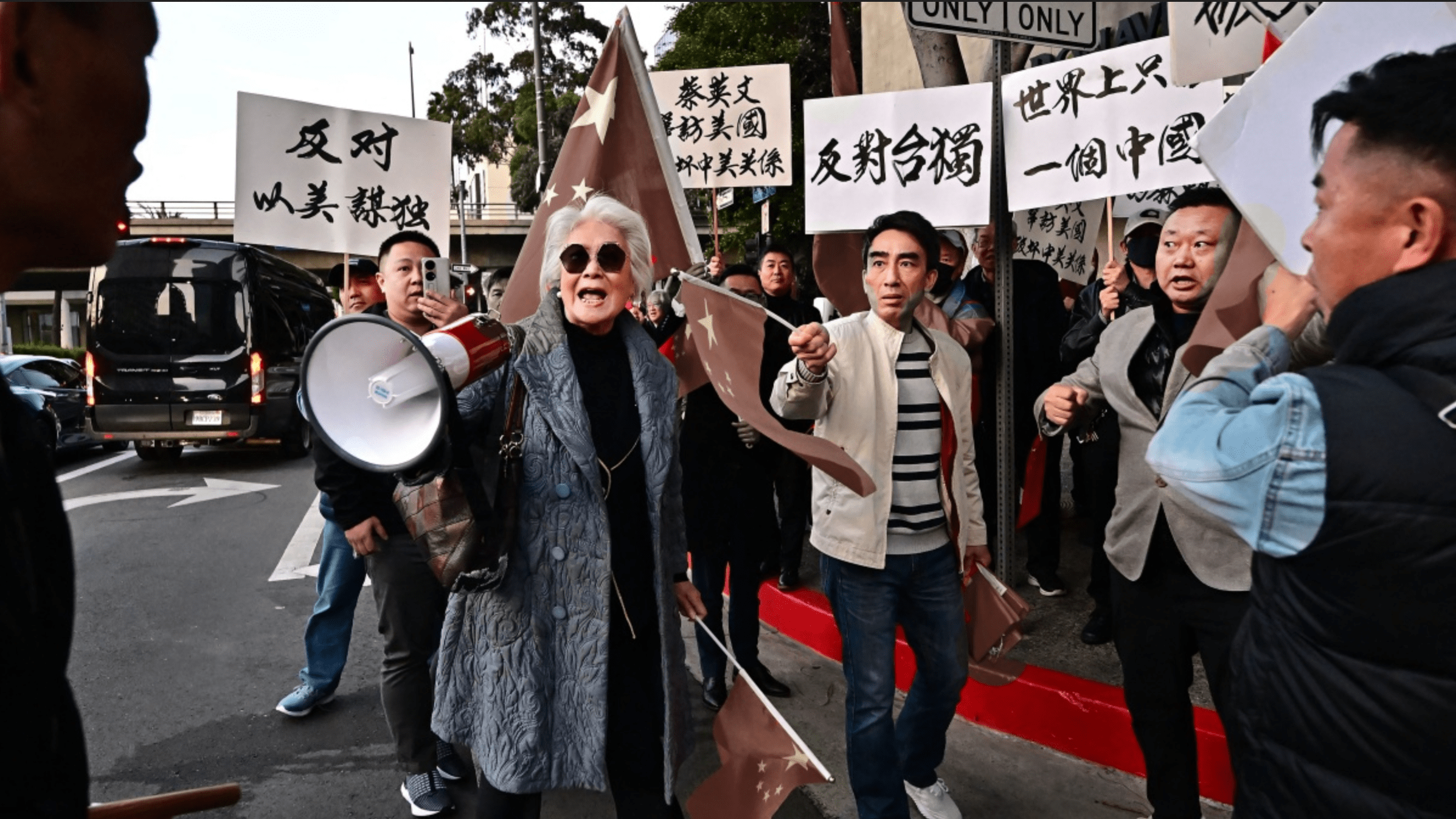
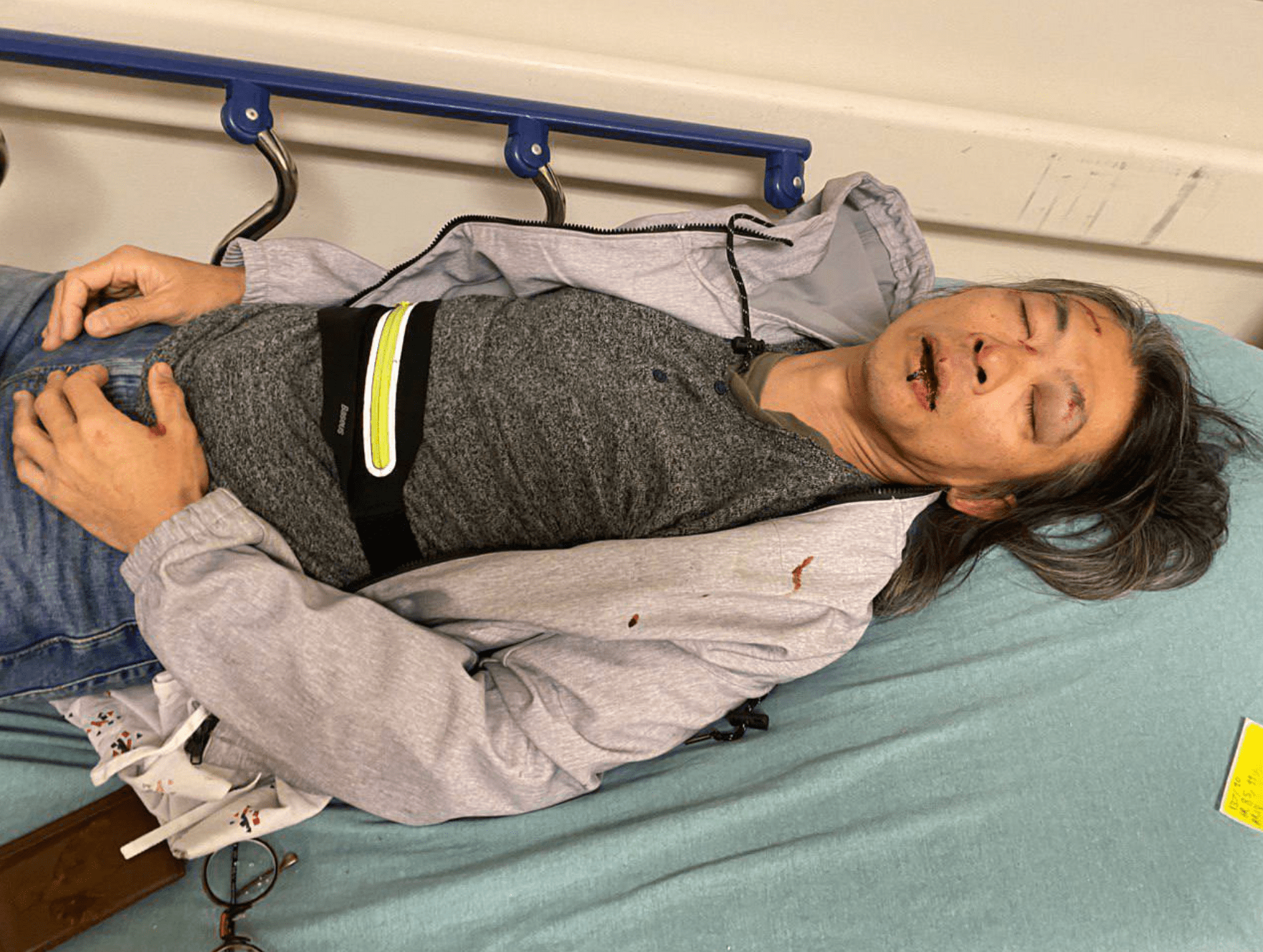
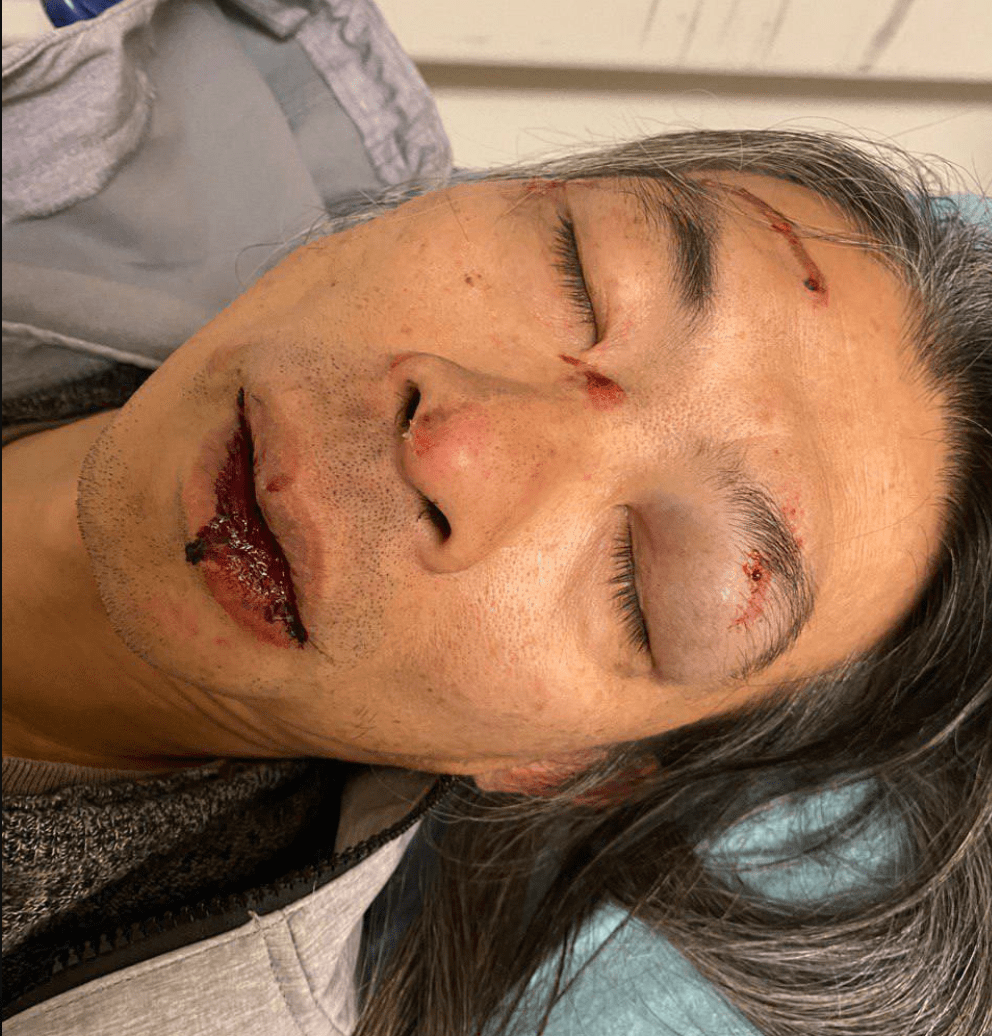
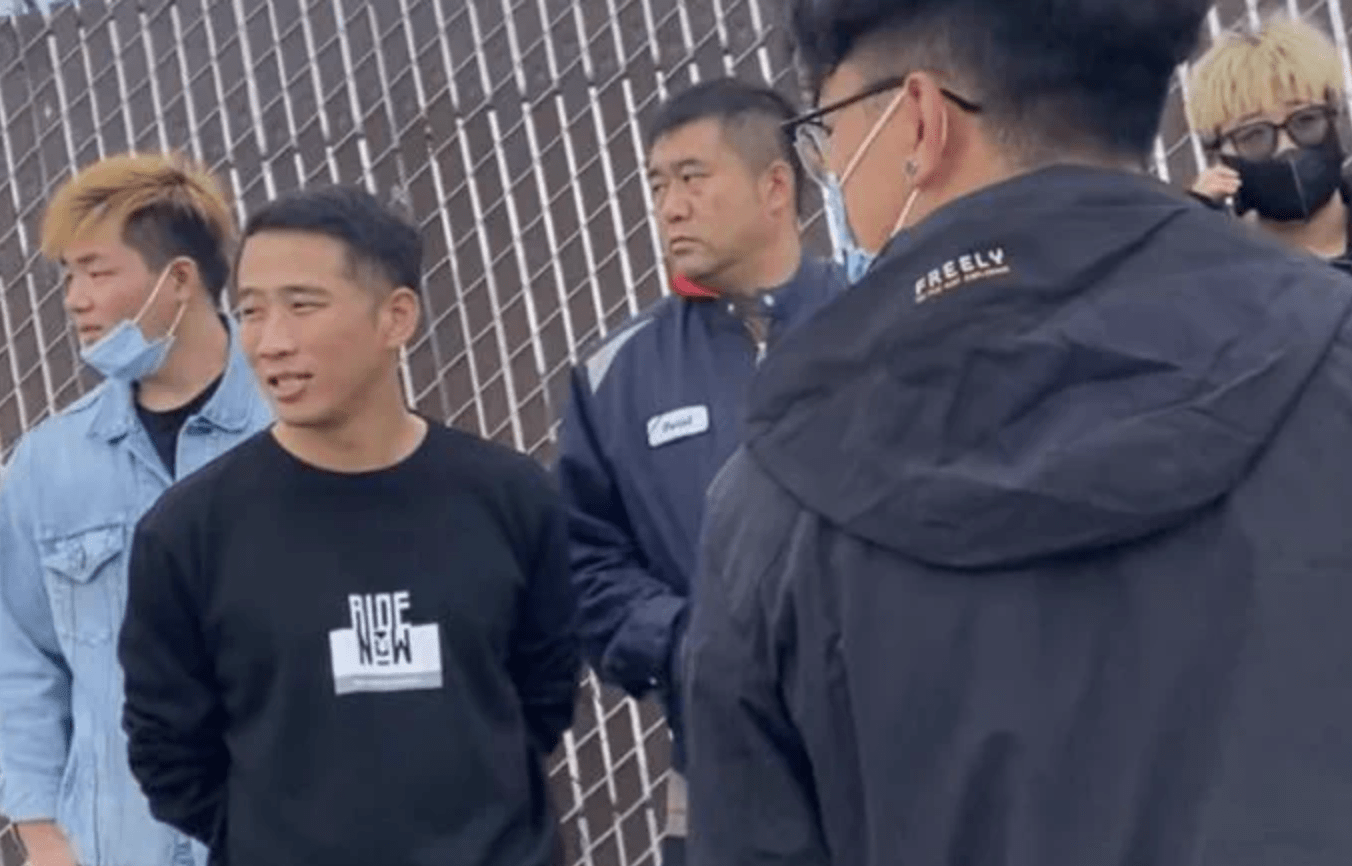
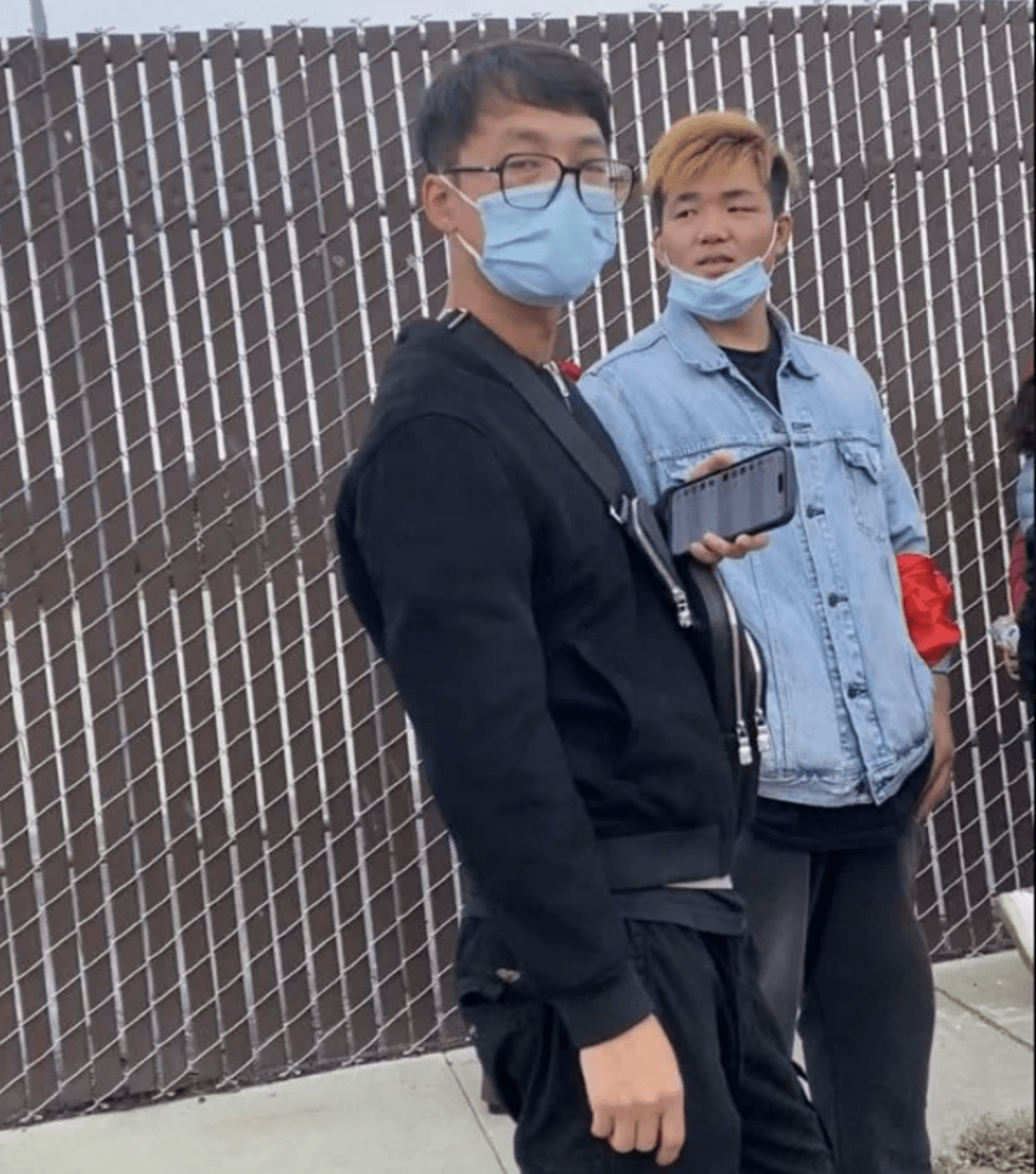
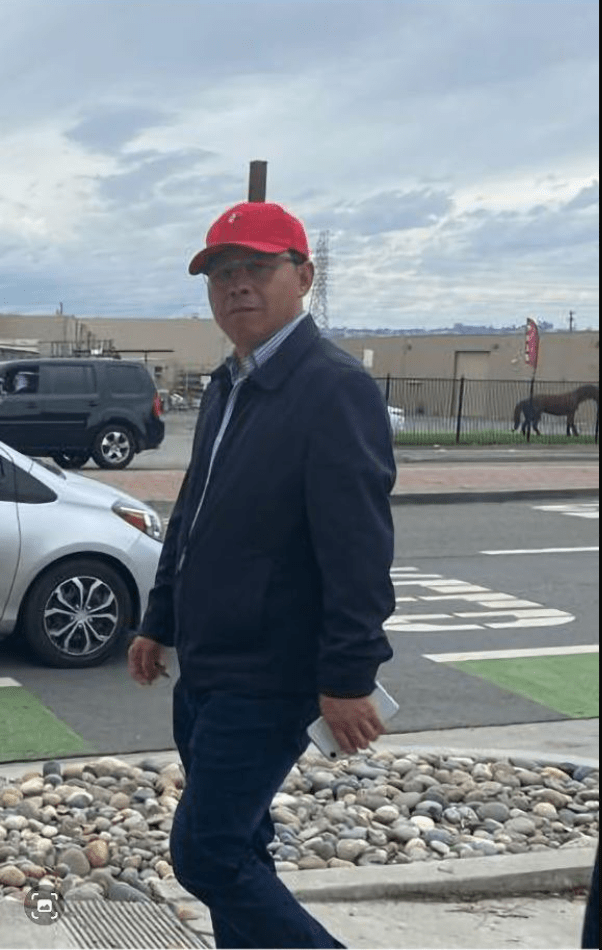
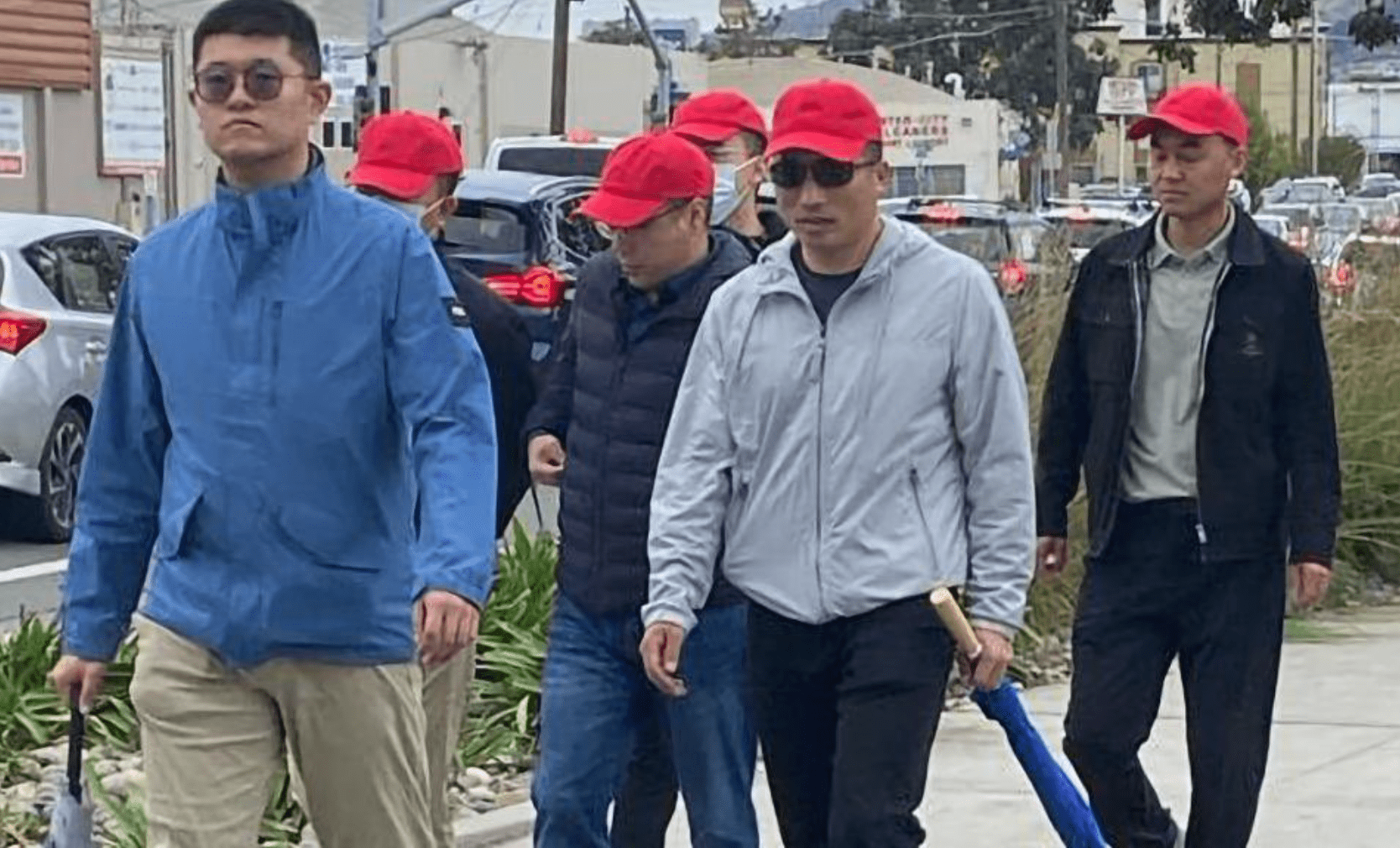
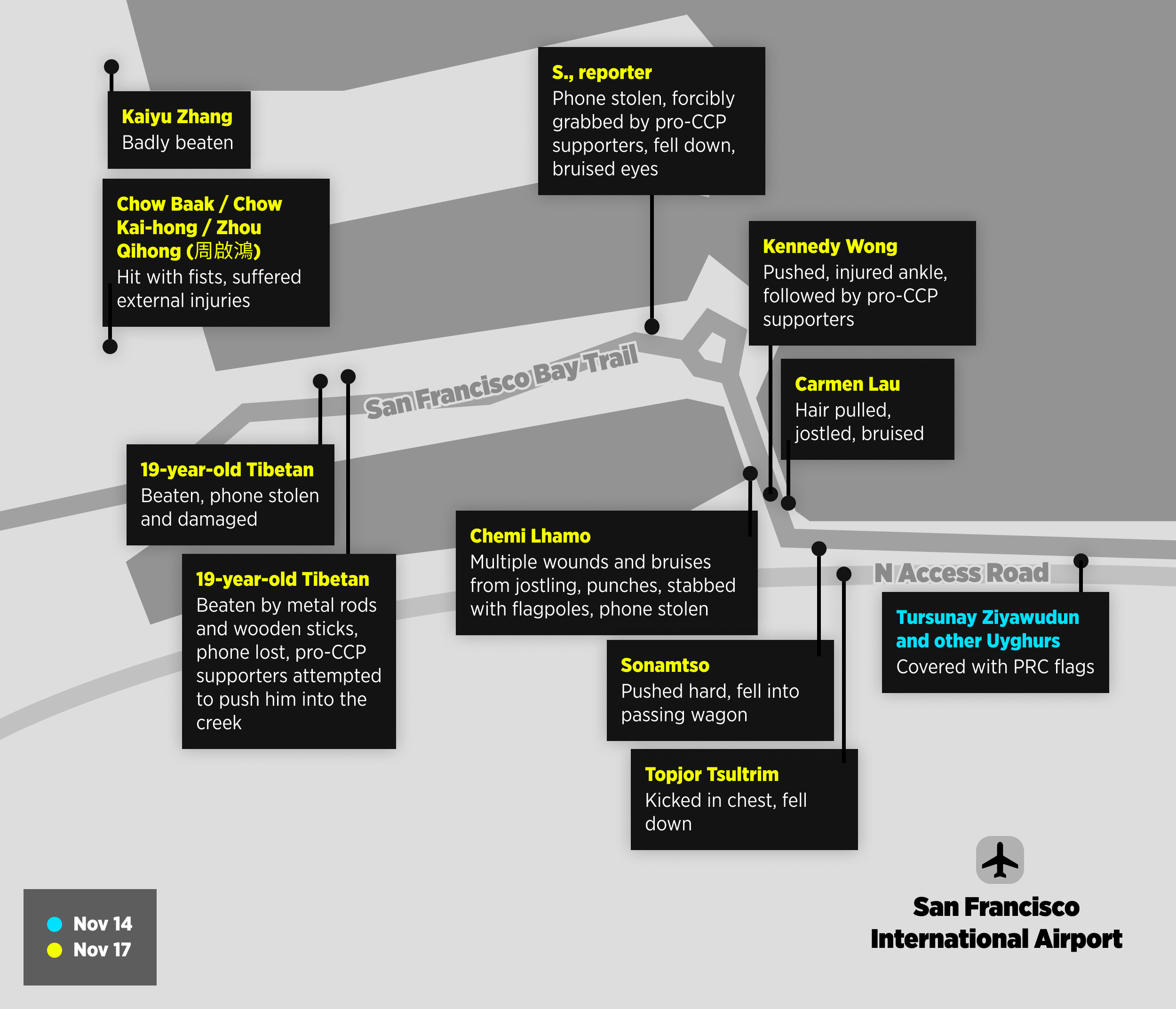
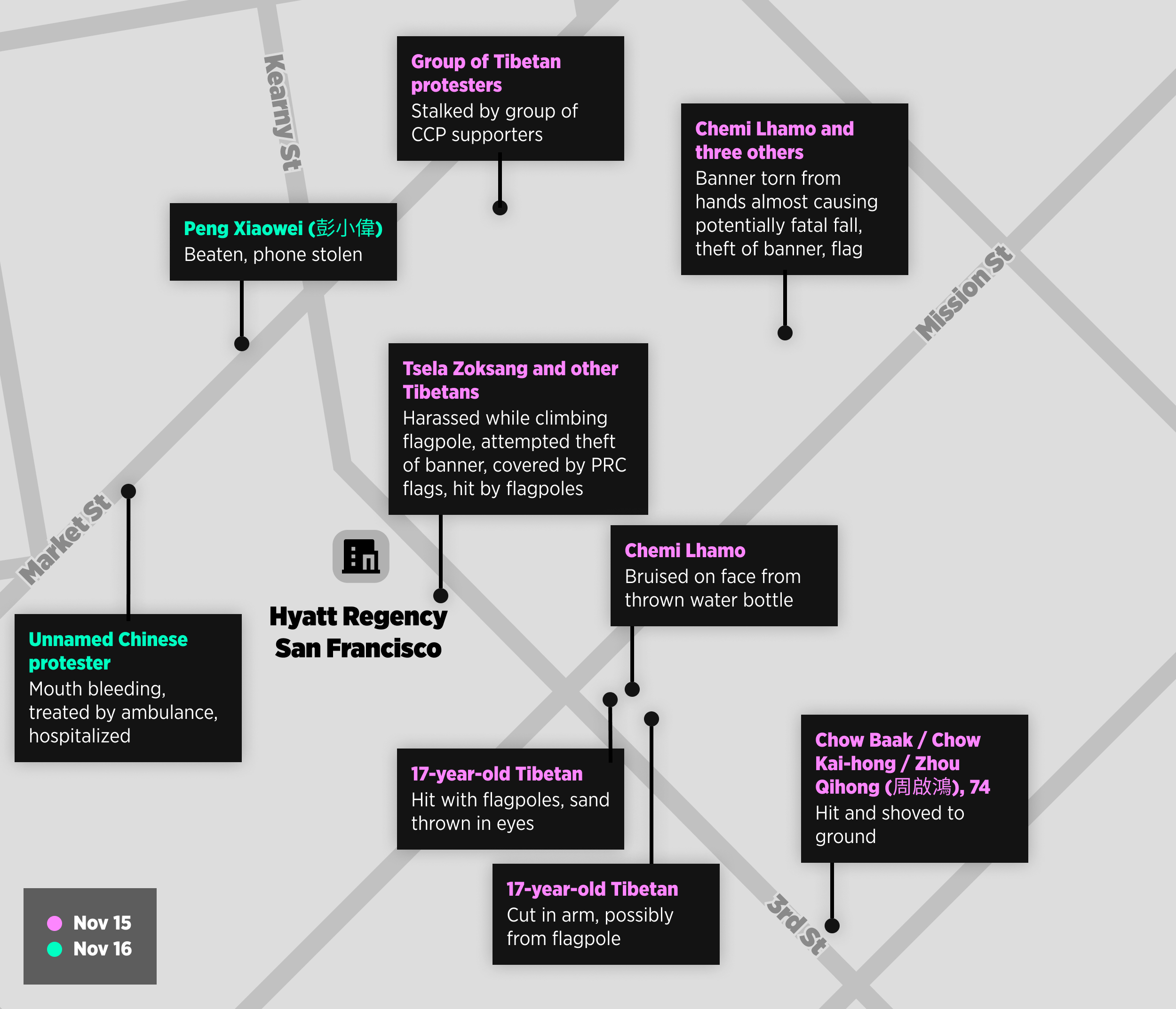
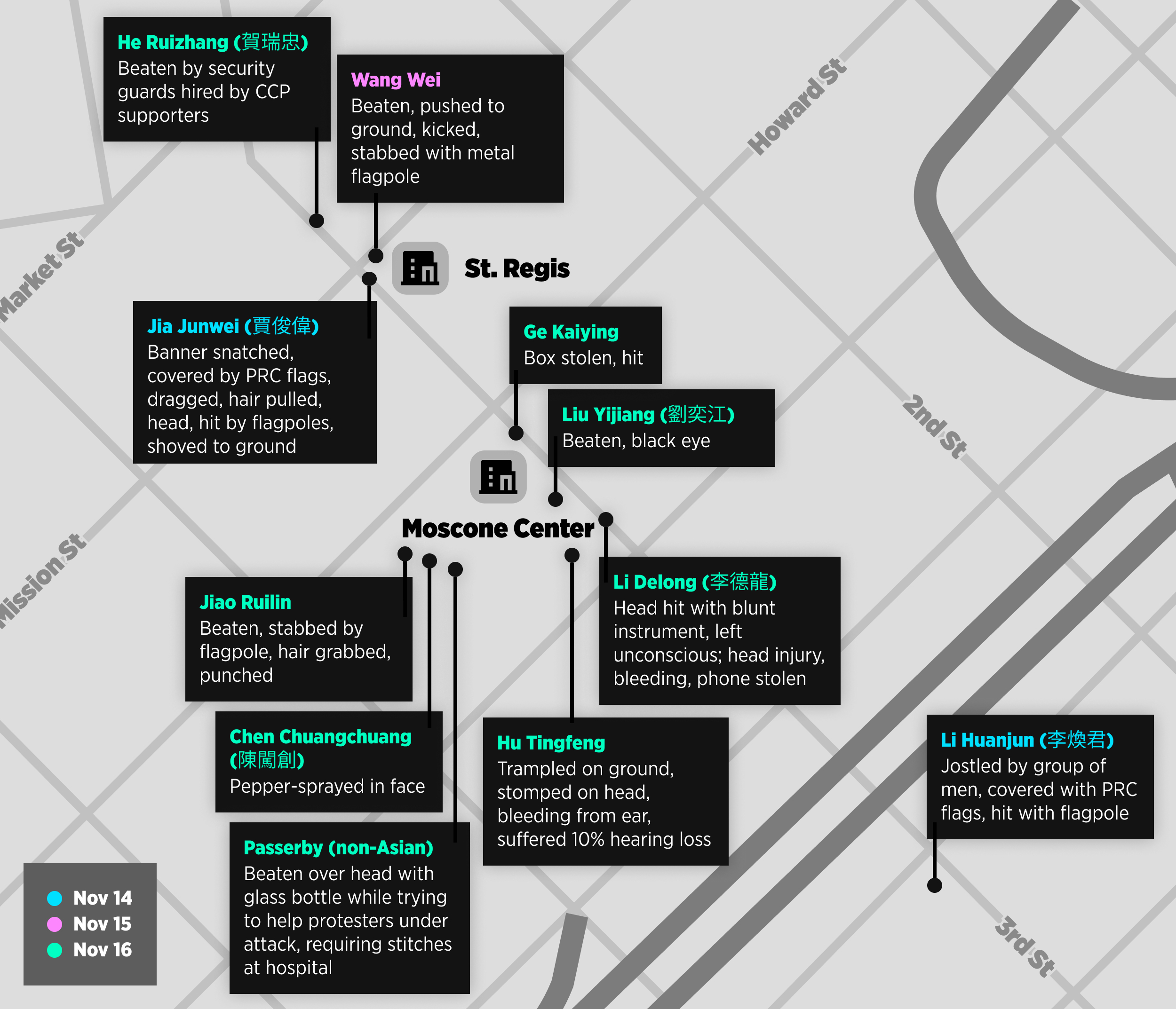


 Katie Boller Gosewisch
 Sr. Patricia Ebegbulem, SSL
 Sr. Licia Joseph, SMI
 Kimberly Mazcyk (SFS’90)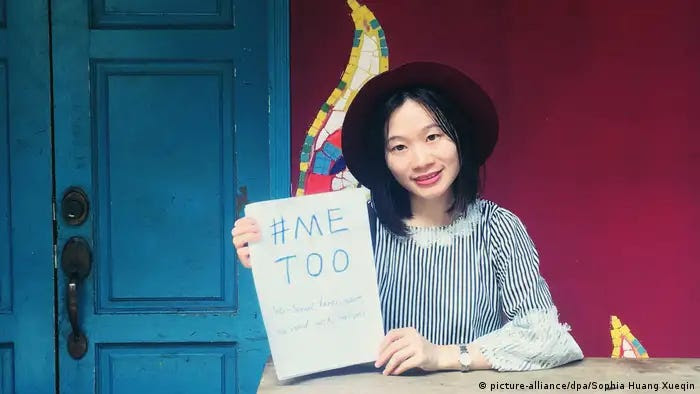
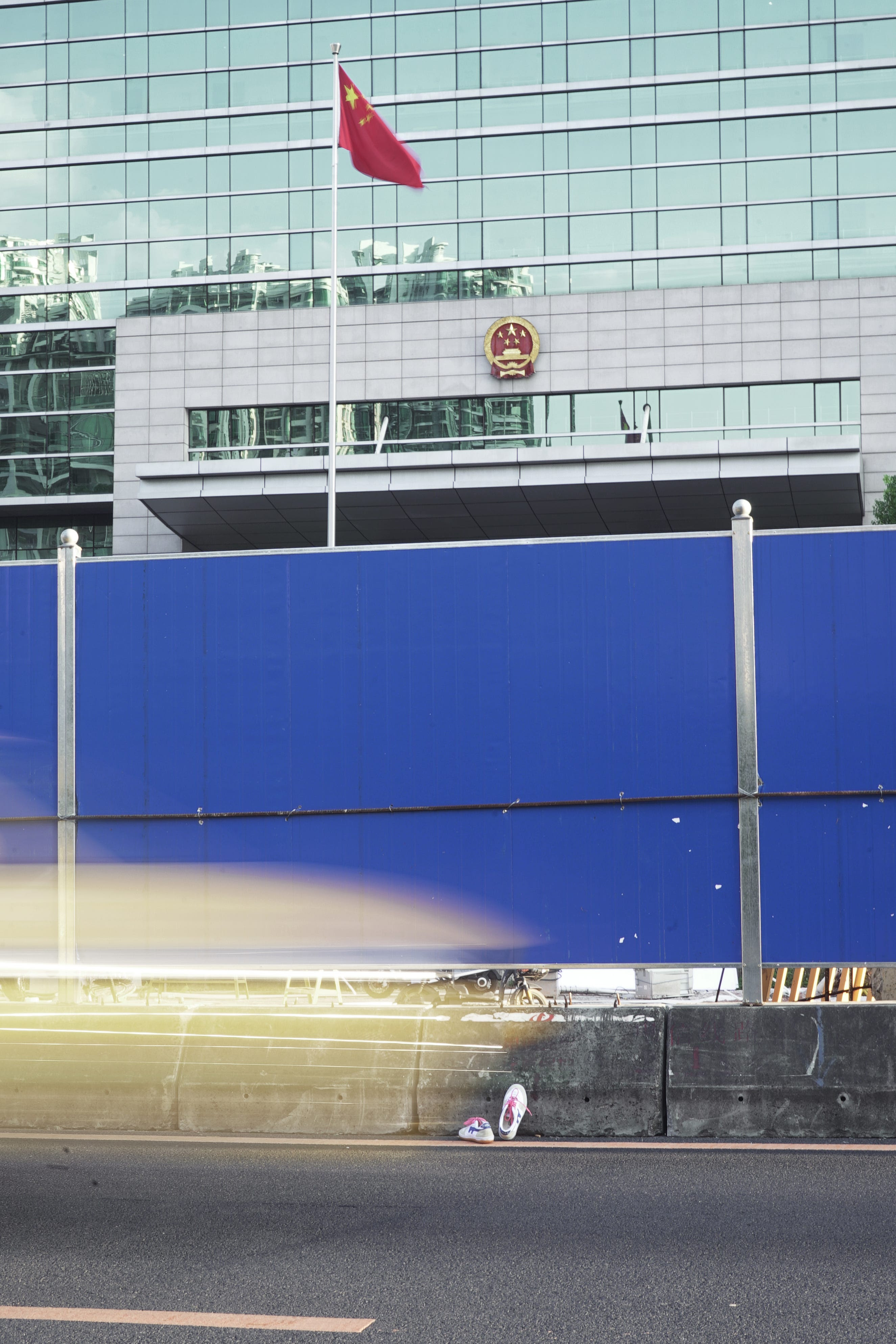

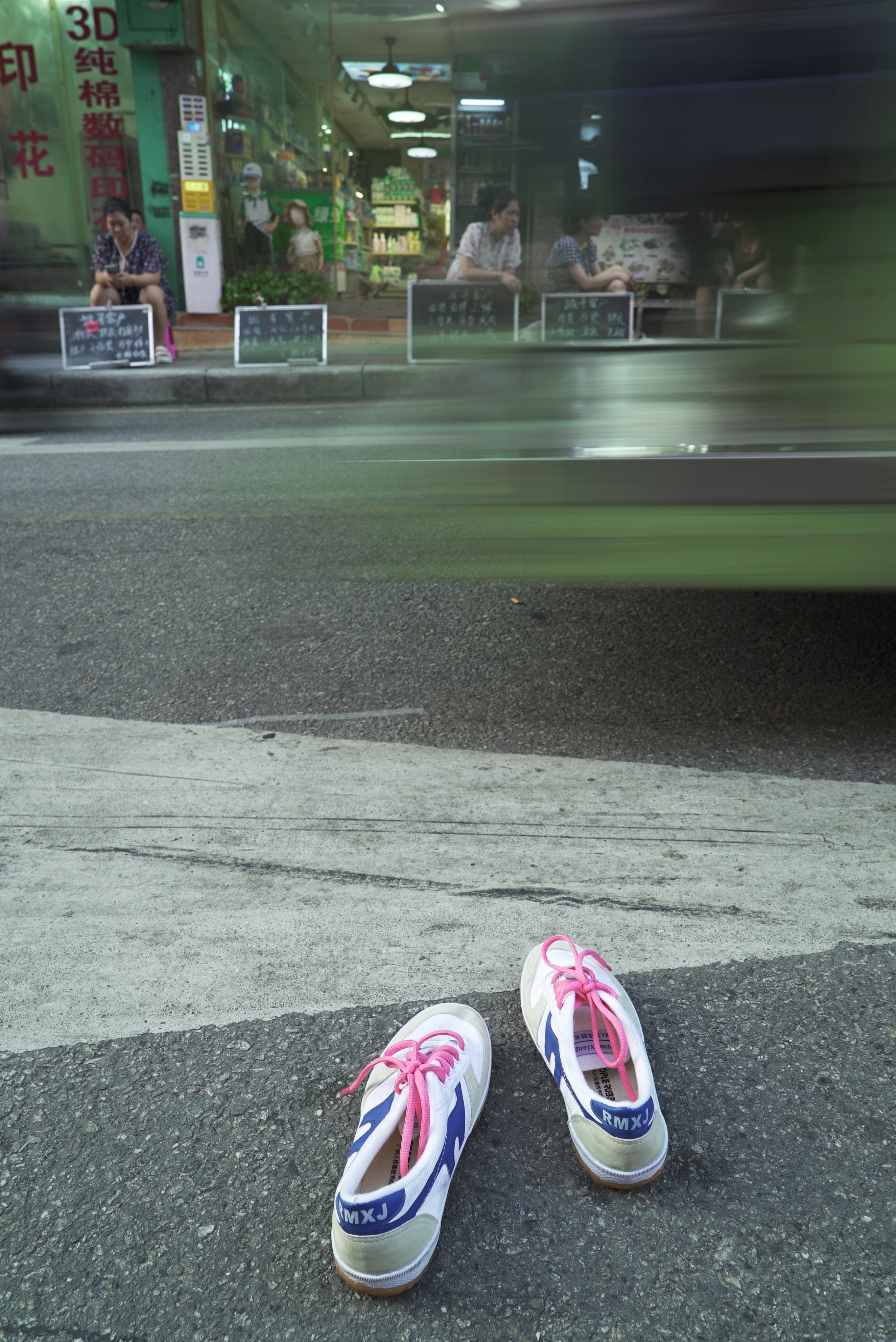


 Fraudsters often initiate conversations on WhatsApp using wrong number-type messages. Credit:Screenshot provided to ProPublica by the Global Anti-Scam Organization